Sitting, back straight, (legs cross if possible), palms up resting on legs or knees. Try to focus my eyes a little beyond the tip of my nose. Long slow deep breaths. Aums. Mantra of choice. (Sri Ram Jay Ram Jay Jay Ram was my first one), many different ways to say/sing it.
If you are beginning meditation for the first time, it can be frustrating. Do not try to block thoughts or feelings from coming. Rather, allow them to come, acknowledge them, and then let them go. Don't dwell on them or pass judgement on them. Become the witness.
was introduced to Vipassana meditation in India 30 years ago while backpacking. Went on a 10 day retreat and it was amazing.
It is supposedly the technique taught by Guatama the Buddha himself. Quite straight forward and very effective. Popular throughout India and Nepal.
Quite an old organisation works on a voluntary basis so the retreats are free with the ability to make a donation of your choice.
I was surprised to see Vipassana here on nostr. I didn't dig in so I'm not sure who it is exactly.
Anyway, I recommend it. It is a technique I always come back to.
I don't suppose it has a name. Or maybe it does.
I close my eyes usually... Focus on my breath for a while.
Follow my mind wherever it wants to go.
All the while quietly reminding myself I don't need to go anywhere.
I already am.
And hold it here. Or go again. As many times as I want.
Love.
Not sure what it's called when you focus on your breath until you start to disassociate from your consciousness and start observing ideas as the resonant signals of metaphysical beings trying to influence the physical world through humans like meat puppets. But, that kind.
I can’t remember where I read it—I think in one of the many popular happiness books that were published over the last decade—but the author talked about how reading novels puts your mind in a similar state as traditional meditation. I like the idea of reading novels as a serious meditative practice; it’s one I regularly engage in!
Vipassana meditation.
Look it up. Do one of their incredible (free, donate at the end if you get anything out of it) 10 day starter courses.
Very intense, but it literally changes your brain wiring and sets you up for your own mediation going forwards. I did the course 10 years ago, and I'm still practising every morning.
I know. Apologies, I'm on my last day of vacation today. This Sunday we will be back on normal schedule - Sundays 11AM Eastern, Wednesdays 9PM Eastern. Much Love 🙏🧡💜🫂
😉 In my experience, it's a powerful tool for inner freedom. To stay healthy on your own as best as possible, to unleash your inner powers, and to heighten mind and body awareness.
Hi Lyn,
I have been meditating for seven years. I learned Vipassana as taught by S.N. Goenka (in the Tradition of Sayagyi U Ba Khin) during a ten-day silent retreat at Dhamma Palava in Poland. Since then, I have practised daily, usually twice a day. I have also attended another retreat and am planning my next one. Goenka’s technique is rooted in the traditional teachings of the Buddha. It is non-religious, universal, and focused on liberation from suffering.
There are over 200 locations worldwide that offer instruction in this tradition.
For those looking to grasp the basics, there are several apps available. I have tried many, but one truly stands out: Waking Up. This app teaches a combination of different techniques and provides numerous additional insights. It is a genuine marvel.
With metta.
PS. For more information, you can visit the following links:
About S.N. Goenka:
Lyn, I cannot recommend Sam Harris‘s Waking Up app
Highly enough.
There’s a lot of good content there, but Sam’s daily meditations (nonduality) are absolutely stellar.
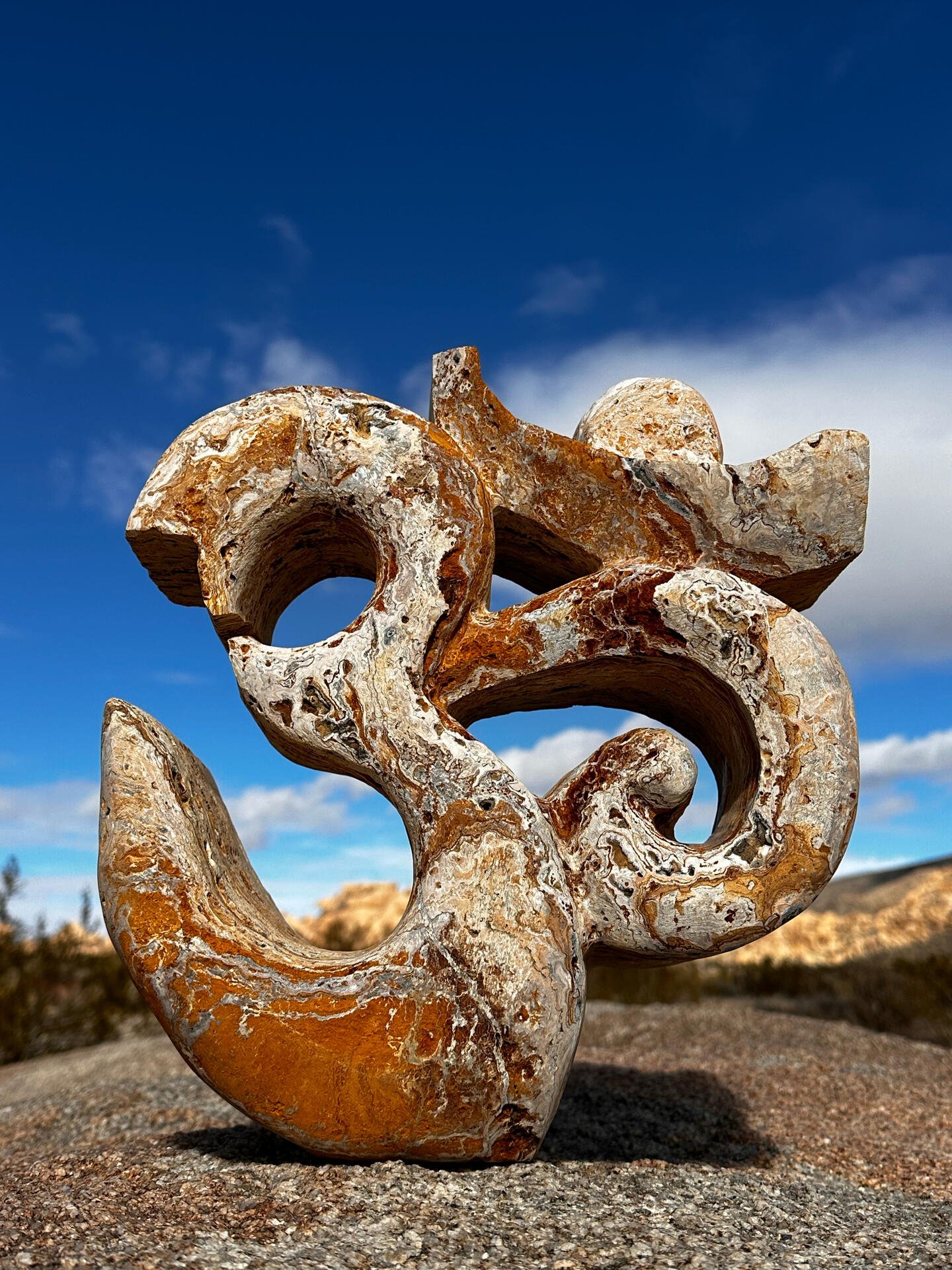
Mindfulness. Mantra repetition. And I consider aspects of my sculpture process to be meditation when I’m in a flow state.
If you’re looking to get started I’d recommend guided meditations from Jack Kornfield or Sri Swami Satchidananda. I started with stuff from them years ago and eventually just developed a practice that works for me.
They say that you meet yourself when you meditate 😄 I don't mean that as an offense at all, I hear you. I find myself very annoying at times during meditation. But that's exactly the stuff to honestly process. Sadhguru put this something like that: "If you sit in silence and it's unbearable, then you are not keeping yourself good company."
I can spend a day walking or hiking by myself, and I actually enjoy that. No phone, no music, no people, just me.
So I don’t know if I found myself annoying during meditation or if I found meditation annoying, but I recall that staying still for so long felt like a waste of time and energy, and didn’t bring me anything positive for the rest of my day.
Fair enough 😉
Performing an activity where your sense organs are highly active and your mind 'distracted' with your natural surroundings is different though.
The reality of how you and your mind works reveals itself much more strongly when you are in silence with yourself, having reduced the activity of the sense organs to a minimum.
Once you master that kinda silence, the awareness it brings can be applied to any activity in life.
Looks like a loop 😉 A meditation practice has the power to change your subconscious reaction patterns. So, in between 'pray' and 'pray' there should be some less issues over time.
I can recommend "Mindfulness In Plain English".
Best intro to Vipassana out there.
Beyond that, "The Mind, Illuminated" is a great handbook to follow as well.
Started with Zen training, now Tibetan (Mahayana).
Shamatha Viphashana (mindfulness-awareness) is the technical varient.
My teachers (US) were taught by Chogyam Trungpa Rinpoche who was inspired to form the Shambala path, secular teachings tailored specifically for the western mindset.
Pema Chödrön is probably the most recognized active author/teacher from this lineage.
For 30 minutes, I sit on my bed with my back straight and practice a form of meditation where I aim to clear my mind completely, not focusing on anything in particular.
After this meditation session, I move on to my stretching routine.
Finally, I perform core strengthening exercises.
I started with formal breath focus practice but nowadays I mostly do “self inquiry “ where I turn attention on itself to look for the looker, the seat of attention. Very very very interesting stuff.
We make meditation so complicated. Like nutrition and exercise, meditation is simple but very hard. You have to commit to sitting still in an upright position and paying attention to what is happening in and around your body. Try to do this 10 mins a day for 30 days straight and you will feel learn more about meditation than reading any book/article.
I have been meditating in the fabled Himalayas for the past 5 decades, and had the rare privilege of living most of those years with a realised master of meditation.
I have been constantly impressed with all that you give so freely from what you have learned, and if I can return that favour in some small way, I would be very happy to.
Please feel free to connect any time.
Been meditating for about 10 years. Last 5 years or so have been mostly using the Waking Up app, which is inspired by Dzogchen/non-dual mindfulness. Super interesting.