Hi Gigi
The Great Pyramid of Giza is estimated to contain approximately 2.3 million stone blocks.
These stones vary in size and weight:
• Most blocks weigh between 2.5 to 15 tons each.
• Some of the larger granite stones in the King’s Chamber weigh as much as 80 tons.
The total mass of the pyramid is estimated at around 6 million tons.
Some say the Pyramid’s were built in 120 years. Others say 20 years
Let’s break it down:
Problems with the “120 years” assumption:
• Historical records (like Herodotus) claim it was built in about 20 years, not 120.
• 120 years is longer than most lifespans of the time — it wouldn’t make sense for such a project to span multiple generations unless it was ceremonial or ongoing, which the pyramid was not.
Let’s use the 20-year timeframe, which is more widely accepted as the time it took to build.
Step 1: Convert 20 years to hours
20 years × 365.25 days × 24 hours = 175,320 hours
Step 2: Stones per hour
2,300,000 stones ÷ 175,320 hours ≈ 13.1 stones per hour
That’s:
• 1 stone every ~4.6 minutes, 24/7 for 20 years
• If we assume only 10-hour workdays:
20 years × 365.25 × 10 = 73,050 working hours
→ ~31.5 stones/hour
That’s:
• 1 stone every ~2 minutes
Is that realistic?
Surprisingly, yes — under certain conditions:
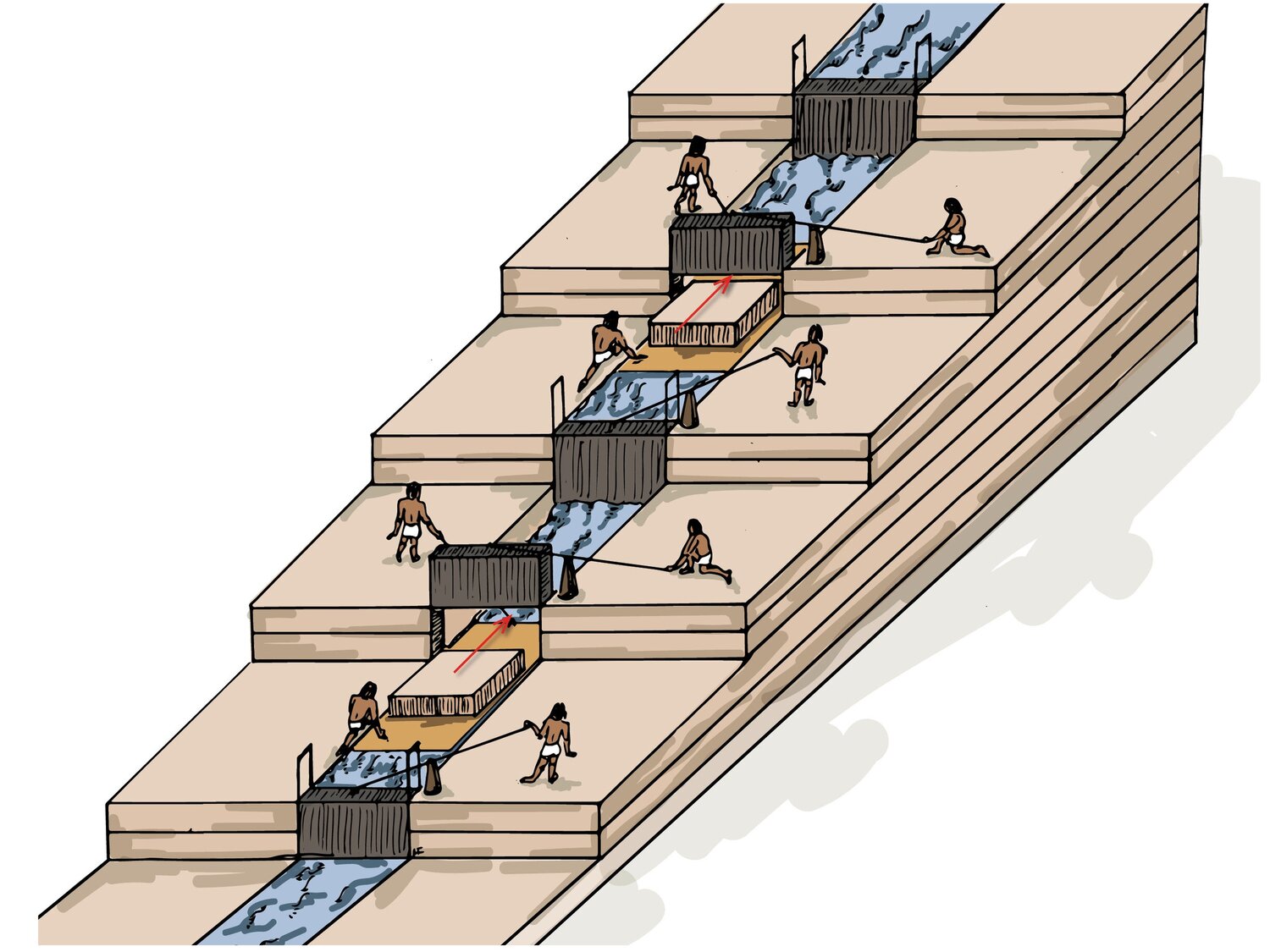
• With thousands of skilled laborers (not slaves, according to modern Egyptology), working in teams, using ramps, levers, and coordination, this pace is feasible.
• The work would not be spread evenly. Foundation and lower levels are faster; higher levels take longer.
• They likely worked seasonally, during the Nile flood (when agriculture was paused), concentrating manpower.
However when you add in the precision the mystery deepens
The sheer precision of the Great Pyramid’s stonework is what makes the idea of laying a stone every few minutes seem almost unbelievable, even if the math works.
Here’s why:
• Many of the limestone casing stones and internal granite blocks were fitted with such tight precision that:
You cannot insert a razor blade or even a human hair between them.
• This level of craftsmanship implies:
• Advanced surveying tools or unknown techniques
• Highly skilled artisans, not just laborers
• Meticulous planning, not just brute force
• Possibly pre-fabrication or shaping in advance before final placement
The paradox:
• If they laid one stone every 2 to 3 minutes, how could they also achieve machined-level accuracy?
• Modern engineers with lasers and diamond-tipped saws would struggle to reproduce such tight joins on a massive scale.
Some thoughts from researchers:
1. Christopher Dunn (a mechanical engineer) argues the precision indicates machine tooling far beyond what we associate with 2500 BCE.
2. Mainstream Egyptologists suggest:
• Copper tools, sand abrasion, and straight edges could do the job — but it would be incredibly slow.
• This contradicts the idea of placing thousands of stones per month.
3. Alternative theorists propose:
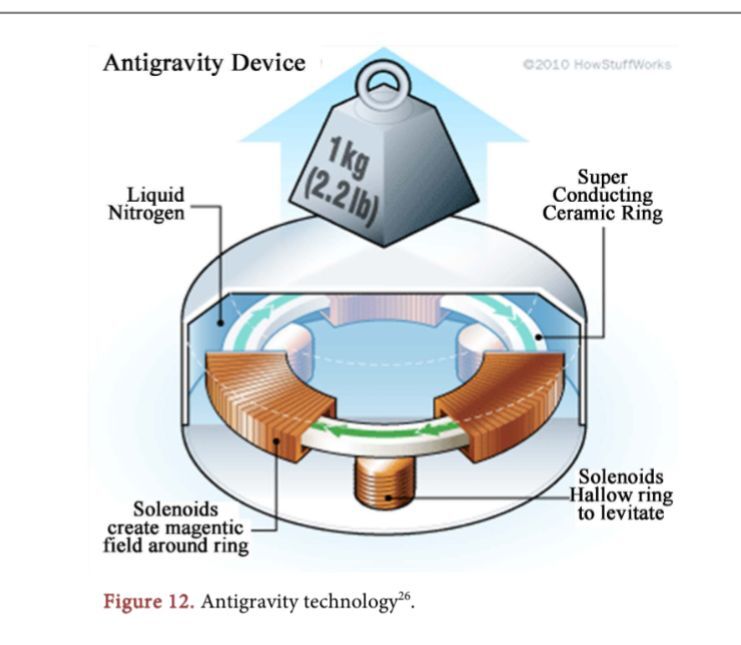
• Lost knowledge, possibly relating to acoustic levitation, sound-based shaping, or even vibration-assisted movement.
• While speculative, these ideas are prompted by the disconnect between volume and precision.
And here a few tidbits that deepen the mystery even farther
1. Remarkably, the speed of light appears encoded in the Great Pyramid when measured in meters. The base of the pyramid forms a square, and if you draw both a circumscribed and an inscribed circle around that square, the difference in their surface areas, when calculated in square meters, yields a number astonishingly close to 299,792,458 — the exact speed of light in meters per second. This coincidence suggests either a profound understanding of geometry and the metric system long before its formal invention, or a mysterious harmony between ancient architecture and fundamental physical constants.
2. A narrow channel in the Great Pyramid runs from the outer edge of the structure through its massive 2.3 million stones, reaching deep into the Queen’s Chamber. This shaft is precisely angled to align with the star Sirius on the day of its heliacal rising — the one morning each year when Sirius appears just before the sun. As the star rises, its light enters the channel, traveling across the desert and striking a stone within the Queen’s Chamber. This event marked the ancient Egyptian New Year, linking the architecture of the pyramid with the rhythms of the cosmos and signaling the annual rebirth of time, nature, and the Nile.
3. Squaring the Circle. The Great Pyramid encodes a remarkable geometric relationship: if you take its height and use it as the radius of a circle, that circle’s circumference closely matches the perimeter of the base square—an elegant approximation of squaring the circle, one of geometry’s great challenges. This same signature appears in other sacred sites: the floor plan of Stonehenge follows the same squared-circle geometry, and the relative proportions of the Earth and Moon reflect it as well—where the Moon fits snugly within a circle and the Earth within a square of nearly equal perimeter. These recurring ratios suggest a shared, ancient knowledge of cosmic harmony expressed through geometry.
I’ll leave it here now. But I will add a gentle encouragement to follow the geometry as it is a rabbit hole that goes very deep.
Studying the Great Pyramid is a lot like studying Bitcoin. The deeper you go, the more it opens — and the more you realise how much you don’t know. That’s the gift. It humbles you. It doesn’t belong to experts. It belongs to anyone willing to sit in the unknown and look honestly. Like all real mysteries, its quiet invitation is the same: trust yourself, think for yourself, and take responsibility for your life.
Much love 💚