DoomsdaysCW

DoomsdaysCW's avatar
DoomsdaysCW
npub1sanc...jgxu
Fmr Journalist📰 and occasional Librarian 📚, #IndigenousAlly living on #Wabanaki land🌄. #NonBinary :nonbinary_flag: #Queer :QueerCat_Aromantic: #ActuallyAutistic♾️ Pronouns: They, them, per, person, human. #Environmentalist🌳 #DemocraticSocialist🌹 Student of #Archaeology 💀& #History 📜 #NoNukes☢️ Anti-#Oligarchy🎩 #NoWar☮️ #GetMoneyOut💰#HumanRights🕵️‍♂️ #CeasefireNow🇵🇸 #BLM✊🏿 #IndigenousRights 🌿 #WaterIsLife💧Anti-#Corruption🔍 #ClimateCrisis🌍 #RightToRepair 🪛 #SolarPunkSunday 🌞
#WellsME - #PackBasket #Workshop: #ExplorerPack at the #WellsReserveAtLaudholm Saturday, January 31, 2026, 9:00am – 3:00pm Join us to make your very own pack basket with Wood Thrush Wilderness owner and educator Jessica Steele! Reservations Required To reserve your space, please email suzanne@wellsnerr.org or call (207) 646-1555 x116. Pricing Members: $100.00 Non-Members: $125.00 Location Mather Auditorium This event is handicap accessible "Join us to make your own pack basket with Jessica Steele from Wood Thrush Wilderness! Participants have the option to choose from three different basket sizes. Please see details below and register for the basket of your choice! (Please note the size, time, and cost differences for each option). - Explorer Pack Basket (10-12" tall), 9am-3pm, $100/member and $125/non-member - Guide Pack Basket (17" tall), 9am-5pm, $120/member and $150/non-member - Expedition Pack Basket (21" tall), 9am-6pm, $136/member and $170/non-member Making a pack basket can be a fun and rewarding project and a perfect gift! A pack basket is a traditional type of backpack used for carrying items while hiking, hunting, or for general outdoor activities. Pack baskets have a long history dating back centuries and have been used by various cultures around the world. Here in Maine our Maine Guides walked the woods with these packs to transport supplies and game through rugged terrain. In this course, we will weave a 10-12” tall basket with premium reed. We will go over the history of pack baskets and what materials have been used. The instructor will go through the process of making the basket step-by-step ensuring all will walk away with a finished basket. The baskets will have a base and feet along with pack straps. We will bring a variety of color straps and even color reeds to add a little color to your basket. Walk away with a pack basket and the knowledge for life! All level weavers are welcome EVEN if you have never weaved!" FMI - #SolarPunkSunday #MaineEvents #Laudholm #BasketWeaving #BasketWorkshops #PackBaskets #TraditionalArts
#WellsME - #WednesdayWalk at the #WellsReserveAtLaudholm Wednesday, January 21, 2026, 10:30am – 12:00pm Explore nature through observation and a creative lens. "The natural world has long been a source of respite, creativity, and wonder. Join #NormaFox, certified interpretive guide and #WellsReserve docent and ranger, for a series of walks to explore nature through artistic lenses and different seasons. Wednesday walks run bi-weekly through April. A variety of trails and topics will be incorporated so repeat participation is most welcome. Join us for one or for all! Please arrive prepared with appropriate footwear and clothing for the conditions. The distance and duration of this guided walk will vary depending on the chosen trail. Approximately 1 mile and 1.5 hours. This walk is geared towards adults, but ages 12 and older are welcome." Cost: Free, though Reservations Required Please call Caryn at (207) 646-1555 x 110 or email caryn@wellsnerr.org to reserve your space. FMI: #SolarPunkSunday #MaineEvents #Laudholm #NatureWalks #SpendTimeInNature
#VirtualEvent - Best Crops for #SchoolGardens & Orchards Thursday, January 22, 2026 at 6:00 pm "January is a key time for dreaming up a bountiful garden space! Join #SeedStLouis staff for a virtual presentation on our top recommendations for edible school and youth garden spaces. This presentation will detail various options for vegetables, perennials, and orchard plants that consider safety, youth interest, curriculum connections, the academic calendar, attainable maintenance, and reliable crop varieties accessible through Seed St. Louis." #SolarPunkSunday #SeedSaintLouis #GrowYourOwn #GrowYourOwnFood #SchoolGarden #SchoolOrchards #SpendTimeInNature #NatureBasedLearning #MoreGreenTimeLessScreenTime
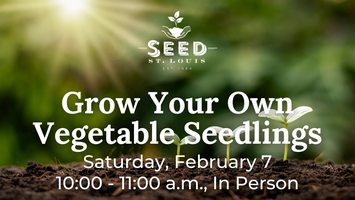
#InPerson and #VirtualClass - #SaintLouisMO - Grow Your Own Vegetable Seedlings (In Person) By #SeedSaintLouis In Person - Saturday, Feb 7, 2026 from 10am to 11am CST Virtually - Thursday, January 29, 2026 6:00-7:00 pm! "It's time to start your vegetable and herb seedlings! Chani Sorkin, Seed St. Louis' Director of Community Projects, will cover the basics of starting seeds, what supplies you will need, and general tips and tricks so you have happy, healthy seedlings to grow bountiful food come spring. At this in person class, each person will be planting a few of their own seeds to take home. This in person class will be located at the Delmar Divine at 5501 Delmar Blvd., St. Louis, MO 63112 in the Berges Conference Room. There is free street parking all along Belt Avenue. We are also offering this as a virtual class on Thursday, January 29th, 6:00-7:00 pm! Seed St. Louis may photograph and record portions of this event for promotional purposes. By registering for this event, you grant permission for your image to appear in a public media production and in print and digital materials. Delmar Divine 5501 Delmar Boulevard St. Louis, MO 63112 Preregistration required. Cost is free." "Since 1984 Seed St. Louis has connected people to the land, to their food, and to each other. We are a 501c3 nonprofit who supports a network of over 250 #CommunityGardens, #SchoolGardens, and #UrbanOrchards in neighborhoods throughout the St. Louis region. Our purpose is to provide communities with the tools, education, and empowerment to grow their own food." Learn more, sign up. #SolarPunkSunday #SeedStarting #Gardening #GardeningClasses #FoodSecurity #GrowYourOwn #GrowYourOwnFood #Missouri
How to Start a #SchoolGarden: Your Complete Guide Excerpt: "Benefits of school gardens 1. School gardens help children learn. Gardening is the study of life. The simple act of caring for living soil and plants gives children a foundation for understanding the principles of birth, growth, maturity, death, competition, cooperation and many other lessons that transfer to human lives. In a school garden, children experience these lessons ‘hands on’ through a learning method that is rich and inclusive to varied learning abilities. The results teachers see every day are now supported by science: school gardens can help our children learn better, both academically and emotionally. For more information, read School Gardens: Can They Make Our Children Smarter? 2. Gardening together strengthens ties between school and community. School gardening programs offer opportunities for community members to get involved, reducing the social isolation of seniors with skills to share and connecting children to older generations. They also help connect schools to local businesses and groups when they request sponsorship or volunteer assistance. 3. Getting their hands dirty helps connect children with nature. Children who garden get a close-up look at natural processes and the living organisms that thrive in these environments. By learning to care for a living, breathing #ecosystem, children develop an understanding of nature’s importance in their lives and the lives of other beings. This fosters a culture of #EnvironmentalStewardship. 4. Gardening strengthens children’s immune systems. There’s more and more evidence that getting #dirty exposes us to a variety of #microbes that can fortify our health and balance our immune systems against our overly sterilized world. This is particularly true for children who benefit from reduced allergies and asthma when exposed early in life to #dirt and the outdoors. The #VitaminD they absorb when gardening doesn’t hurt, either! 5. Working in a school garden helps children stay active, reducing obesity. Teachers across the country agree: when children garden, they move their bodies more than when passively listening in a classroom. Jumping, bending, lifting, and stretching all take place during a typical gardening session. This is one of the objectives of gardening in school that most can agree is necessary given our increasingly sedentary way of life. 6. Gardening moderates moods and eases anxiety. There’s some evidence that exposure to the beneficial microbes in soil can help regulate the neurotransmitters affecting our brain’s emotional state. A whole practice involving exposing yourself to green spaces to lift the mood has even emerged globally, with convincing results. But gardens are more than just another green space: they’re hands-on, outdoor classrooms that teach children self-regulation and mindfulness—both of which have been shown to decrease anxiety and depression. 7. Children who garden at school develop empathy and practice risk. Teachers who garden with their students notice increased empathy towards other students and the organisms living in their school patch. That’s because tending to a ‘bug hotel’ or watching birds and earthworms thrive in the garden helps children understand the interdependency of nature. A garden also provides the perfect place for children to learn about boundaries and responsibility by practicing new activities in a safe space. Using a paring knife, trying out a hammer, or balancing on the edge of a raised bed are all ways for children to test their edges and learn new skills in a supportive environment. 8. Teaching and food gardens improve children’s diets. Academics and journalists agree: children who garden eat more fresh vegetables. This extends beyond what they nibble on during classroom gardening time. Apparently just having a garden at school increases their intake of vegetables at home. And that’s good news for parents, teachers, and kids." Learn more: #SolarPunkSunday #SchoolGardens #FoodSecurity #NatureBasedLearning #MoreGreenTimeLessScreenTime #GrowYourOwn #GrowYourOwnFood
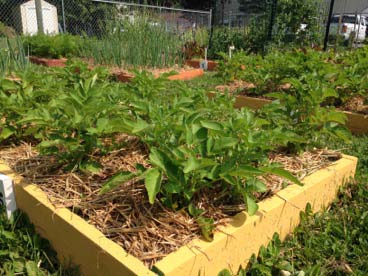
Bulletin #2761, #ContainerGardening Series: #GardeningInSmallSpaces Developed by Extension Specialists Richard E. Durham and Deborah B. Hill, University of Kentucky. Adapted for Maine by Associate Extension Professors Donna Coffin, Kathy Hopkins, and Frank Wertheim, and Extension Agriculture Coordinator Casey Bowie, The University of Maine. Reviewed by Associate Extension Professor Marjorie Peronto, The University of Maine. Revised by Donna Coffin, Extension Professor, Pamela Hargest, Horticulture Professional and Kate Garland, Horticulture Professional, University of Maine Cooperative Extension. "Gardening, in one form or another, is often described as one of the most popular hobbies in the United States, and rightly so. Involvement by people in gardening activities helps promote healthy habits including: - Exercise - Healthy food - Food safety & security - Stress & anxiety reduction So, most would agree that gardening is a worthwhile endeavor. However, when most people think of a garden, they imagine a large field that has been plowed with long, neat rows spaced 3 or 4 feet apart to allow cultivation by a tractor or tiller. Gardening on such a scale is impossible for city dwellers, considering that residential lot sizes continue to decrease and more and more people are choosing to live in townhomes, condominiums, or apartments. Our modern landscapes have little enough room for outdoor leisure in general, not to mention gardening. Nevertheless, you would be surprised at the number of vegetables that can be produced in a very small area. A cherry tomato seedling project in Piscataquis County averaged over $9.50 worth of cherry tomatoes from each seedling. When gardening in a small space, there is little need for spacing plants in rows, so planting can be more efficient. Also, placing plants in a bed or container reduces the need to walk in or closely around your plants. This reduces the chance that soils will become compacted and need frequent tilling. And with a little planning, even residents of apartments and condominiums can grow vegetables on their patios. Raised-bed and container gardening may also allow those with limited mobility to garden. This publication will outline three common methods for gardening in small spaces: - Raised-bed gardening - Square Foot Gardening - Layer gardening" Learn more: #SolarPunkSunday #GrowYourOwnFood #GrowYourOwn #GardeningInMaine #FoodSecurity