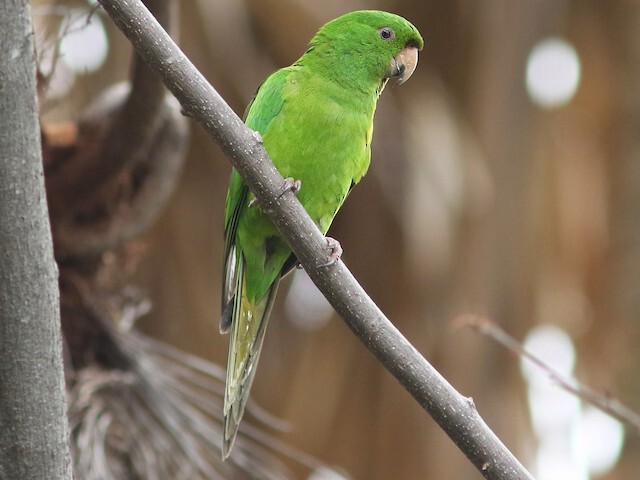
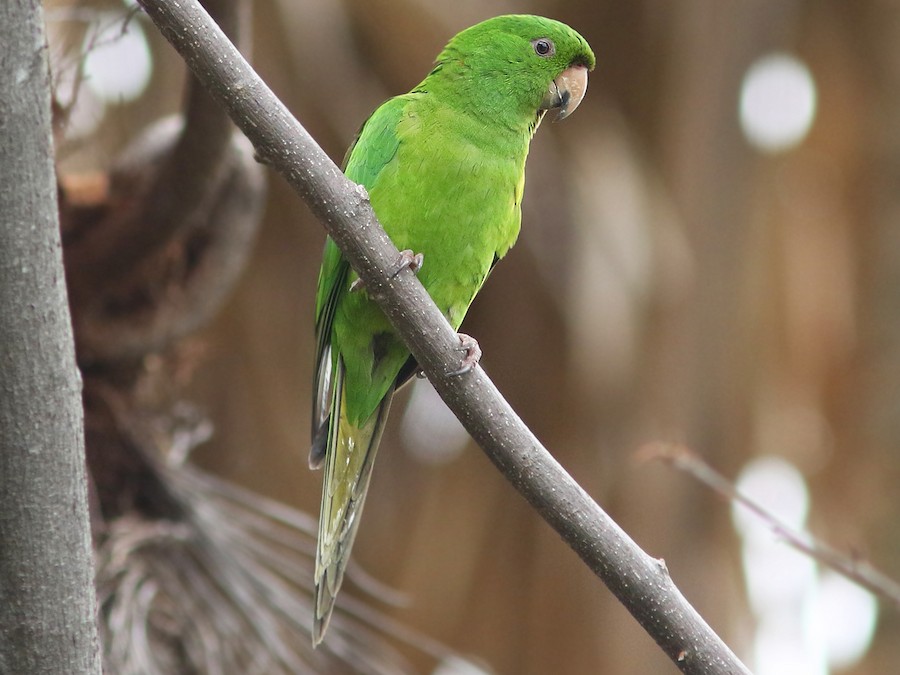
Pacific Parakeet Fairly large, all-green parakeet (occasionally has a few orange flecks on head and neck) with stout pale bill and pointed tail. Favors tropical forests and plantations, where often occurs in fairly large flocks. Not readily separated in the field from Green Parakeet except by assumptions based on range: Pacific occurs in Pacific lowlands of Chiapas and northern Central America, whereas Green occurs in interior valleys of Chiapas. Larger than Orange-fronted Parakeet with plain head pattern and no blue in the wings. Link: Photo Location: Mexico image
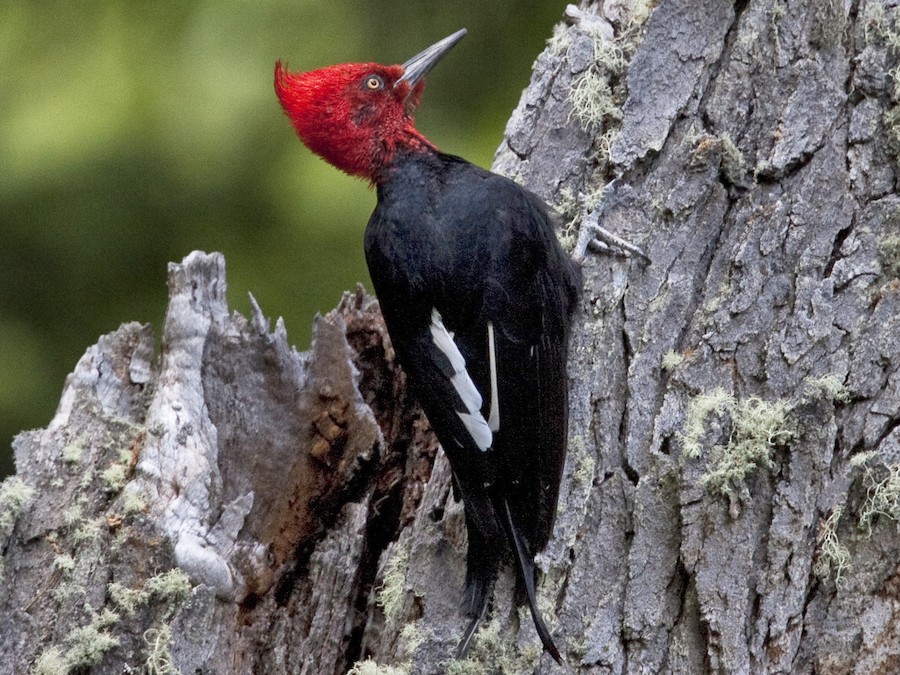
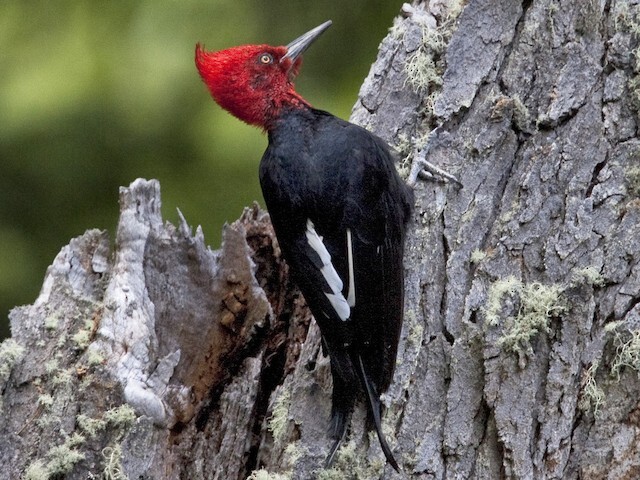
Magellanic Woodpecker Very large black woodpecker of native forests with large diameter trees, from dense, bamboo-choked temperate rainforest to rather open and stunted woodlands in drier areas. Ranges widely in large territories, often in pairs or family groups. Can be very confiding, feeding quietly at close range, when best located by strong taps as it digs out grubs from rotting wood. Male has a flame-red head while the female’s head is black with a distinctive recurved crest. Drumming is a loud, resonant, rapid double-rap that carries well. Link: Photo Location: Argentina image
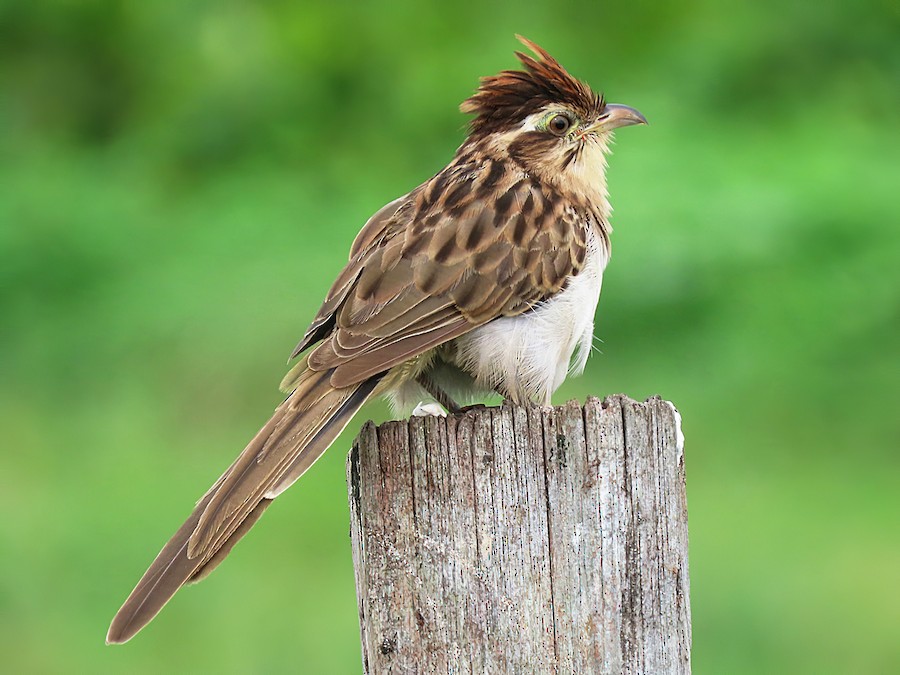
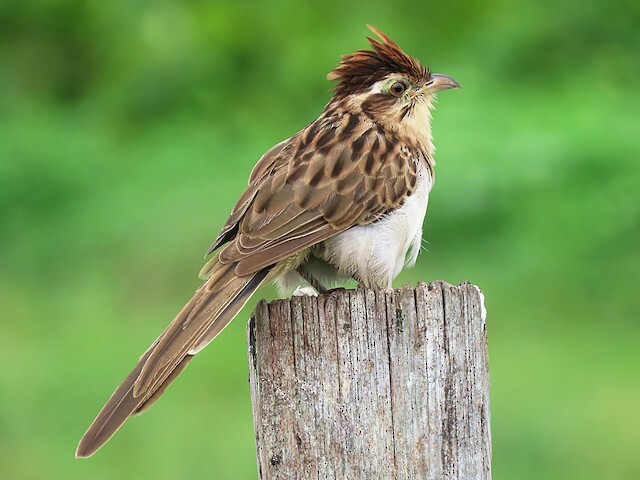
Striped Cuckoo Long-tailed, fairly small cuckoo of tropical lowlands, rarely seen unless singing its loud and far-carrying song, usually from a fence or other low perch. Most of the time it is furtive, feeding on or near the ground in dense growth. Found in scrubby woodland and edge, overgrown weedy fields, and thickets, often with dense grasses. Note the striped upperparts and plain buffy underparts. While singing it often raises and lowers its dark crest. Link: Photo Location: French Guiana image
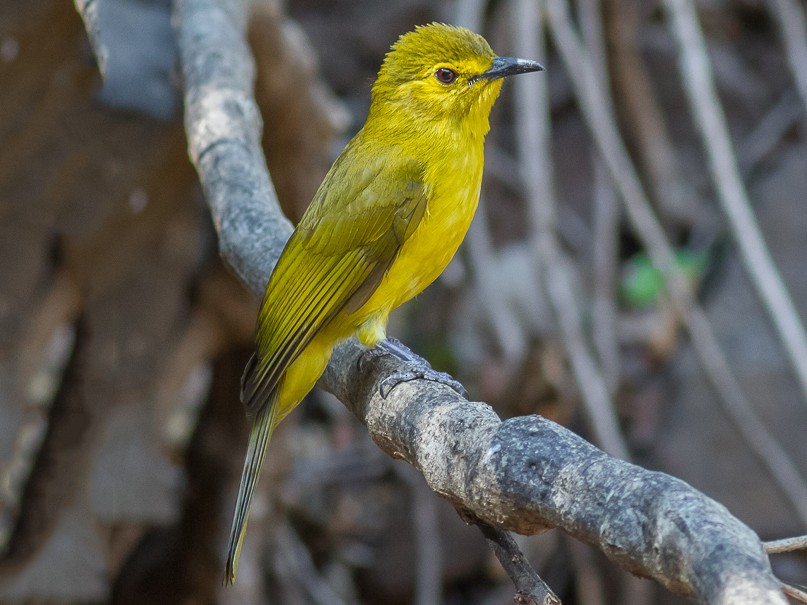
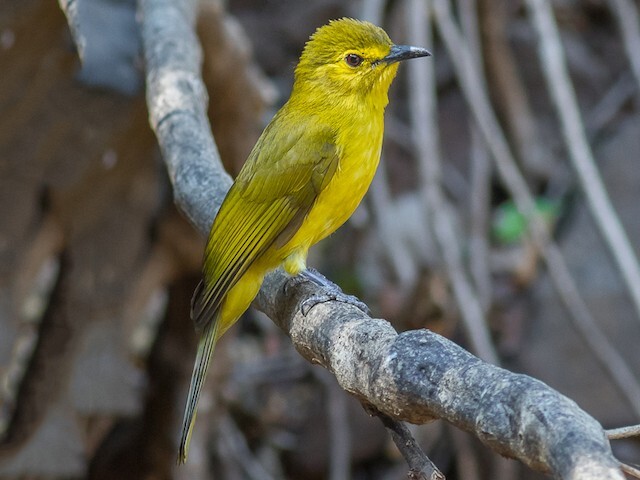
Yellow-browed Bulbul Yellow-green bulbul with a clean face and dark eyes. Inhabits foothill and lower montane forests; often in moist areas. Commonly encountered in pairs or small flocks, but will also join mixed-species flocks. Typically sticks to cover. Song is comprised of cheery whistles mixed with slurred warbles. Calls include warbles, clear β€œweeeep” notes, and short nasal notes. Link: Photo Location: India image
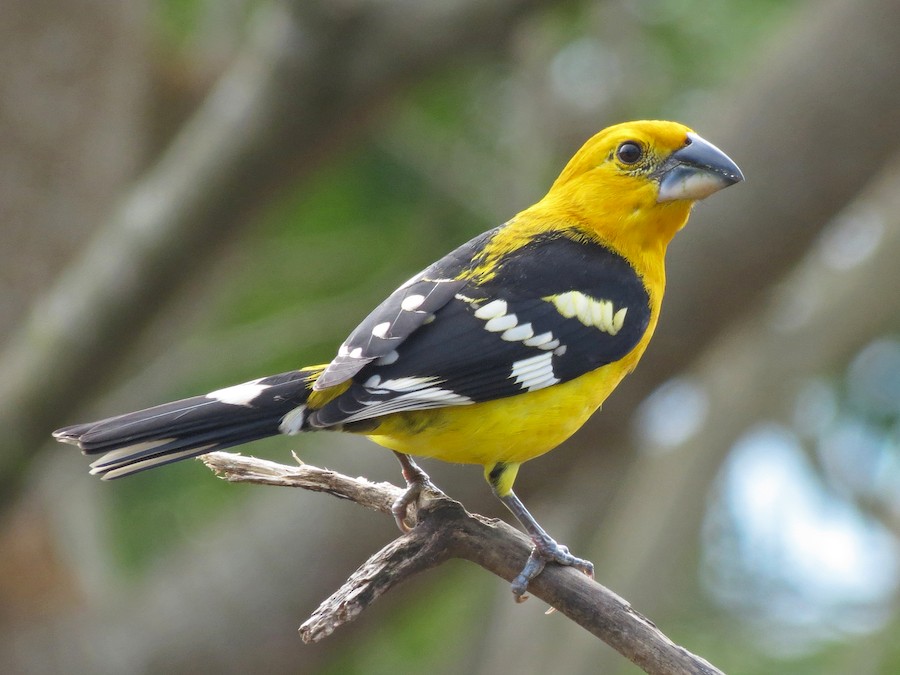
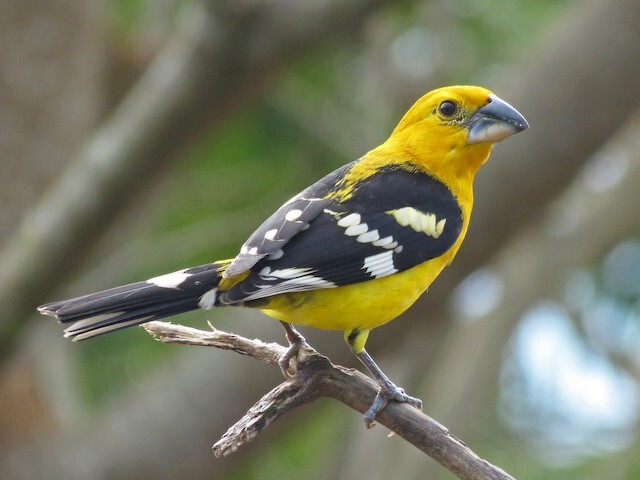
Yellow Grosbeak Big, bright grosbeak of foothills and highlands; also lowlands locally in west Mexico. Found in tropical forest and edges, brushy woodlands, and shade-coffee plantations. Usually seen singly, occasionally in small groups, feeding quietly at all levels in fruiting trees. Note the very stout bill and white wing markings. Male is unmistakable: brilliant yellow overall in most of Mexico, but rich golden yellow in Chiapas and Guatemala. Female similar to female Flame-colored Tanager but bigger, with massive bill and white (not yellow) vent. Link: Photo Location: Mexico image
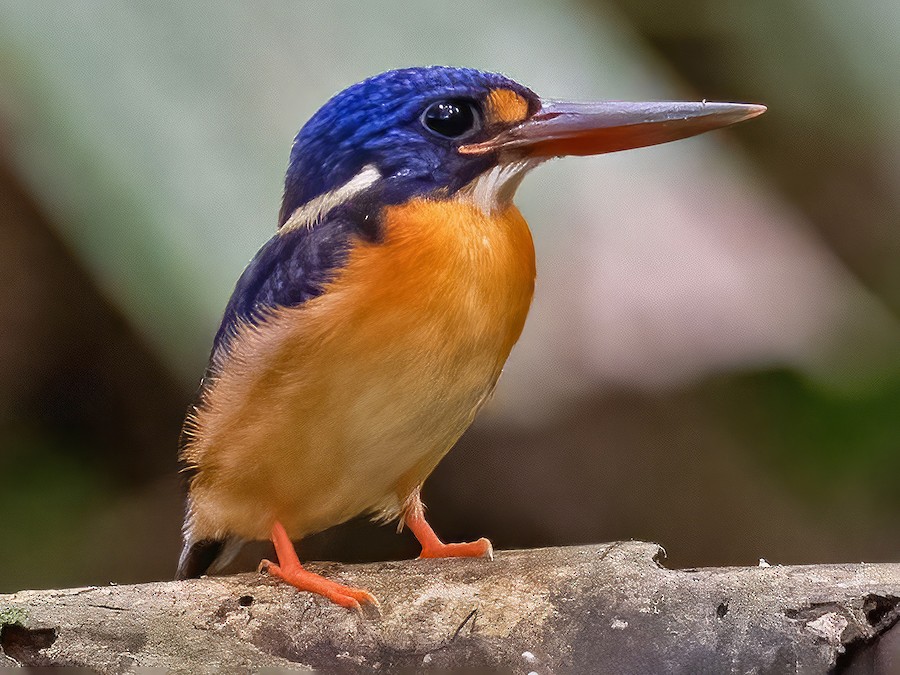
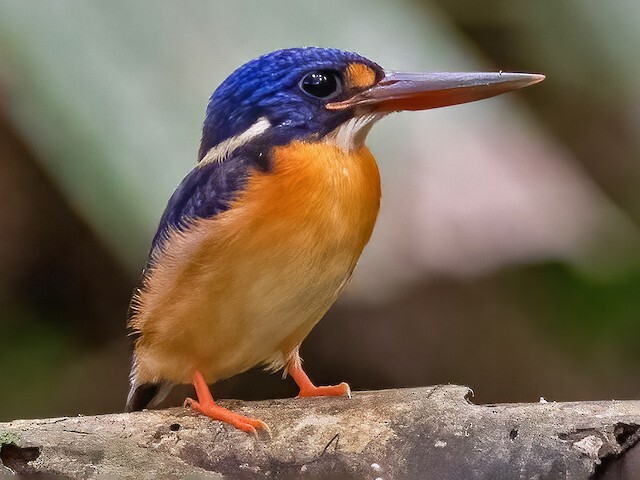
New Britain Dwarf-Kingfisher A small kingfisher with deep purplish-blue upperparts and fiery orange underparts with a white neck spot and bright orange legs. Bill is blackish-red above and purer red below, but appears entirely red in the field. Prefers mature and dense secondary forest, often perching low. No other dwarf-kingfisher shares its range. Told from Common Kingfisher by smaller size and red rather than black bill. Call apparently nearly identical to that of other Melanesian dwarf-kingfishers: a high-pitched, weak repetitive whistle, often given in flight. Link: Photo Location: Papua New Guinea image
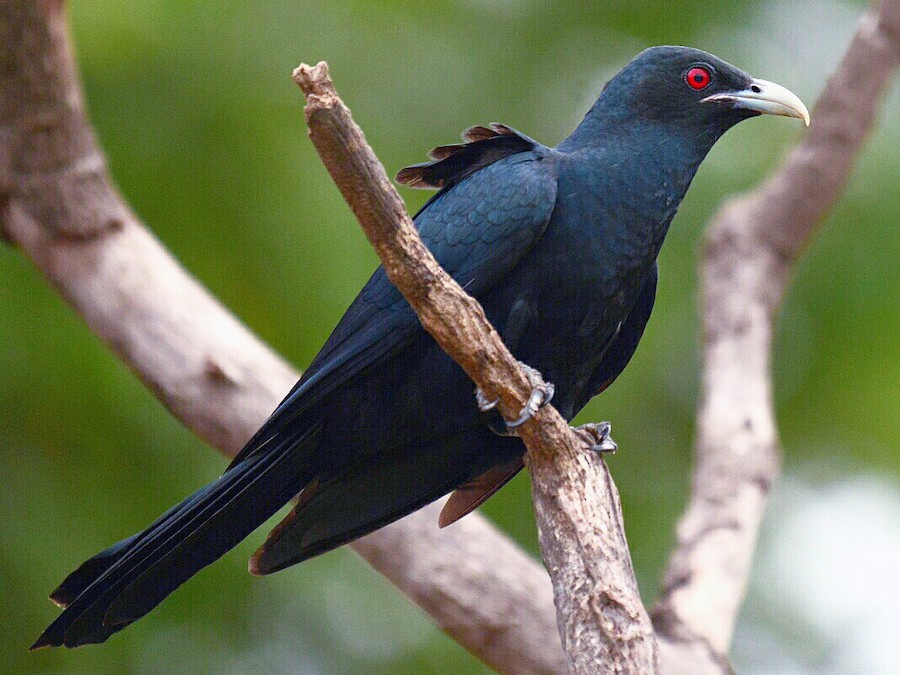
Asian Koel A large cuckoo, distinctive in all plumages, but usually secretive, keeping to the interior of dense trees in many habitats, even inner cities and fields. Adult males glossy black with dull lime-green bill; females and immatures blackish brown with white dots on the wings and strong streaking on head and throat. Adults have ruby-red eyes. Females lay eggs in the nests of other large birds, including crows, shrikes, and starlings. Song is a loud, persistent β€œko-EL!” similar to a peacock’s call. Link: Photo Location: India image
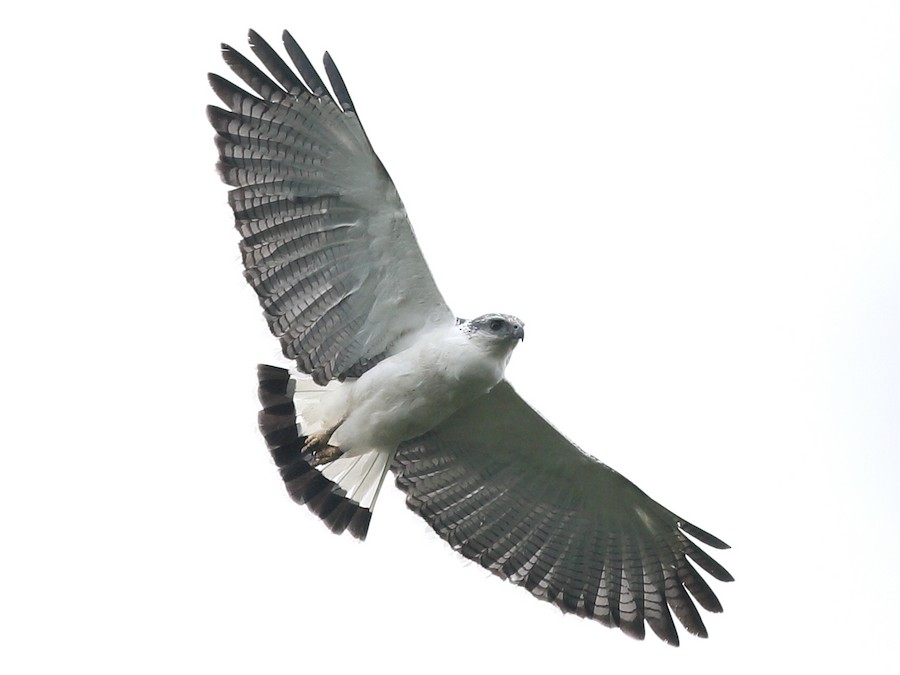
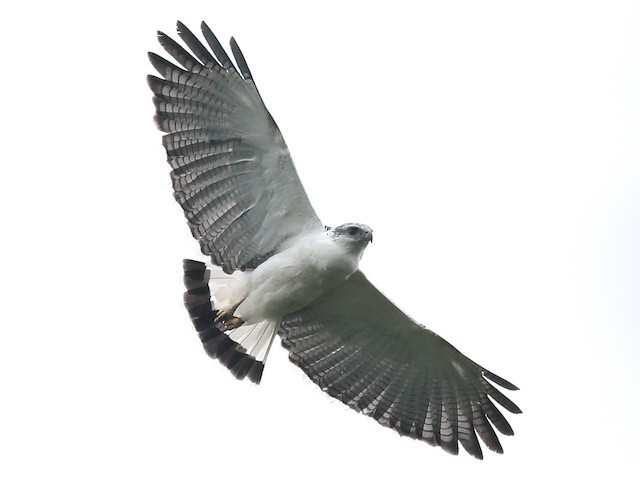
Gray-backed Hawk An endangered raptor found only in western Ecuador and immediately adjacent parts of Peru. It has white underparts, dark gray back and wings, and gray streaks on the head. Its tail is white with a thick black band near the tip that is especially evident in flight. Restricted to areas where extensive forest cover remains. Prefers dry and semi-humid areas; not normally present in the wetter forests of northwestern Ecuador, but may occasionally wander into them. Link: Photo Location: Ecuador image
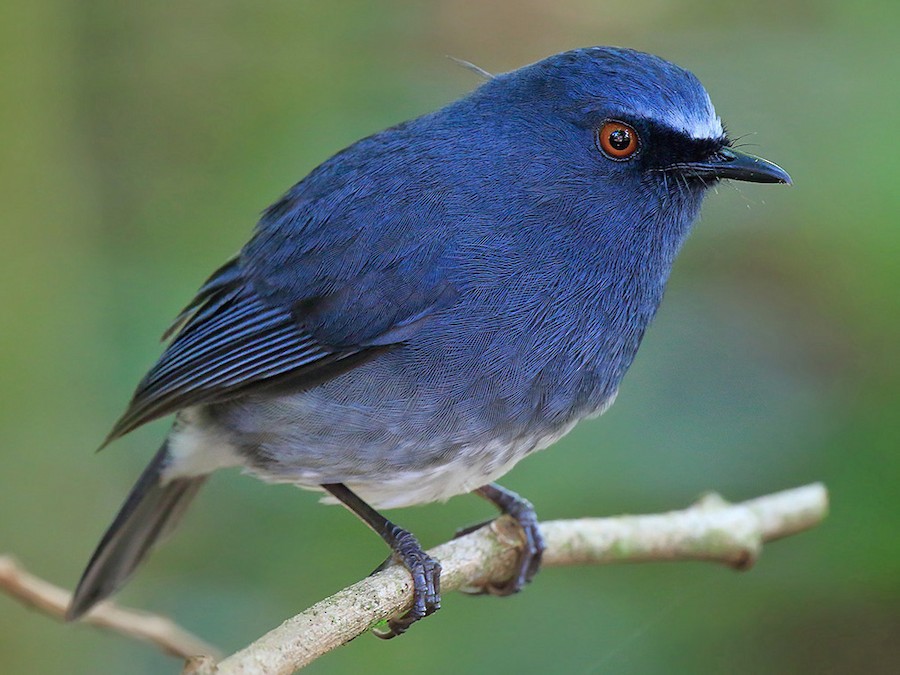
White-bellied Sholakili Small blue-gray bird with a pale belly and frosty forehead. Found in foothill and montane areas at 1000-2200 meters of elevation, where it inhabits sholas (patches of stunted montane forest separated by open grassy areas), as well as adjacent second growth. Forages unobtrusively in dense undergrowth, often in wet areas. Song is beautifully melodic and thrush-like, full of ringing and buzzing notes. Link: Photo Location: India image
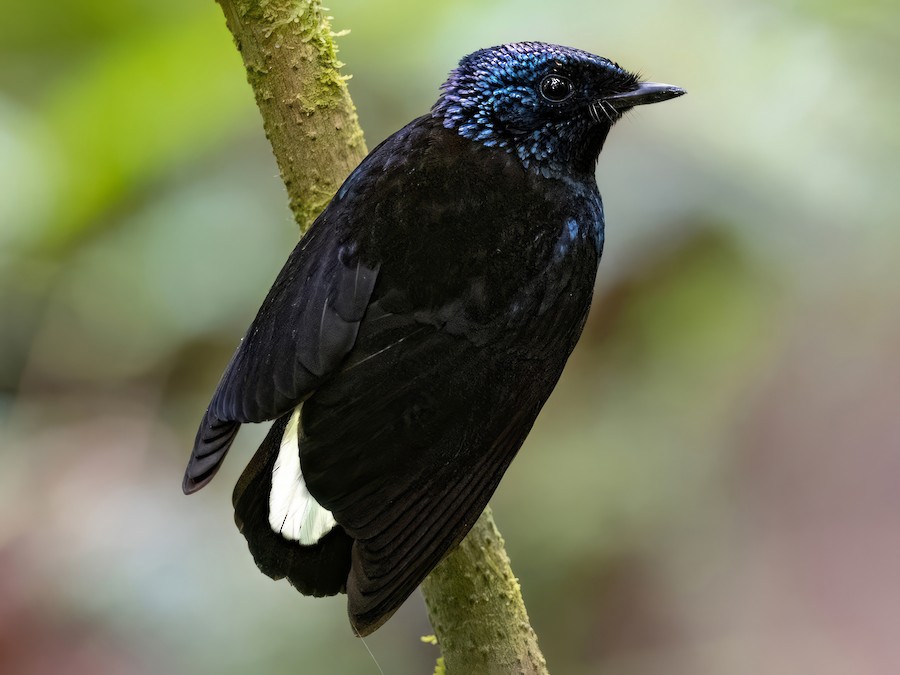
Taveuni Silktail Small and stub-tailed, appearing mostly dark. Shows vivid electric-blue speckling on chest, back, and head, brilliant blue in direct light. Shocking pure white rump and upper tail are diagnostic and obvious. Reliant on primary forest. Voice includes a drawn-out mournful whistle, similar to a squeaky bike wheel. Link: Photo Location: Fiji image