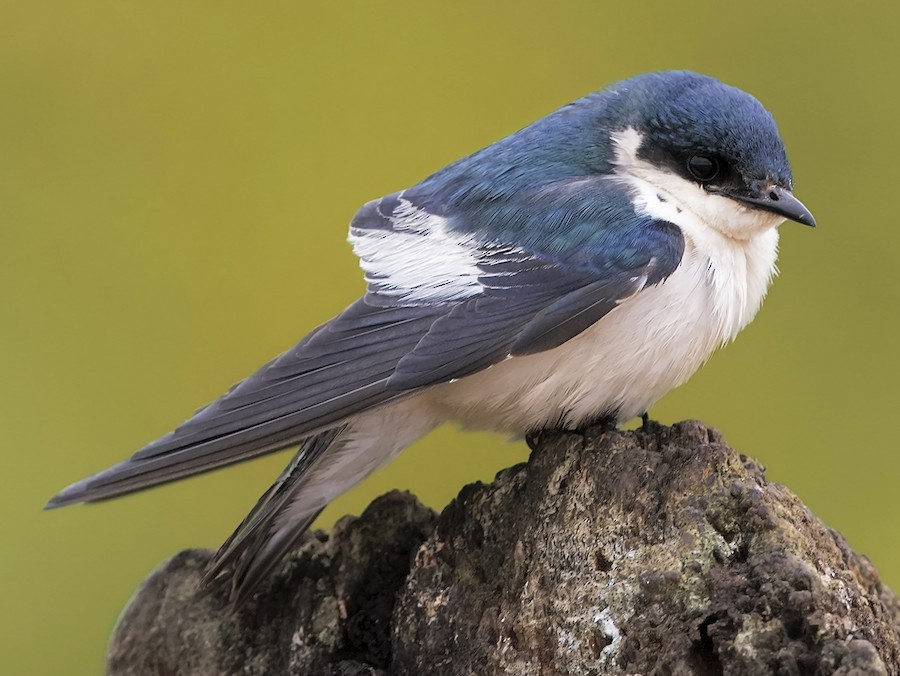
White-winged Swallow Common swallow in tropical lowlands with a glossy blue-green back. Large white wing patches are easily visible in flight and on perched birds. Forked tail and gleaming white rump are also obvious in flight. Typically forages low over water. Pairs or groups frequently perch on snags in rivers and lakes. Link: Photo Location: Brazil image
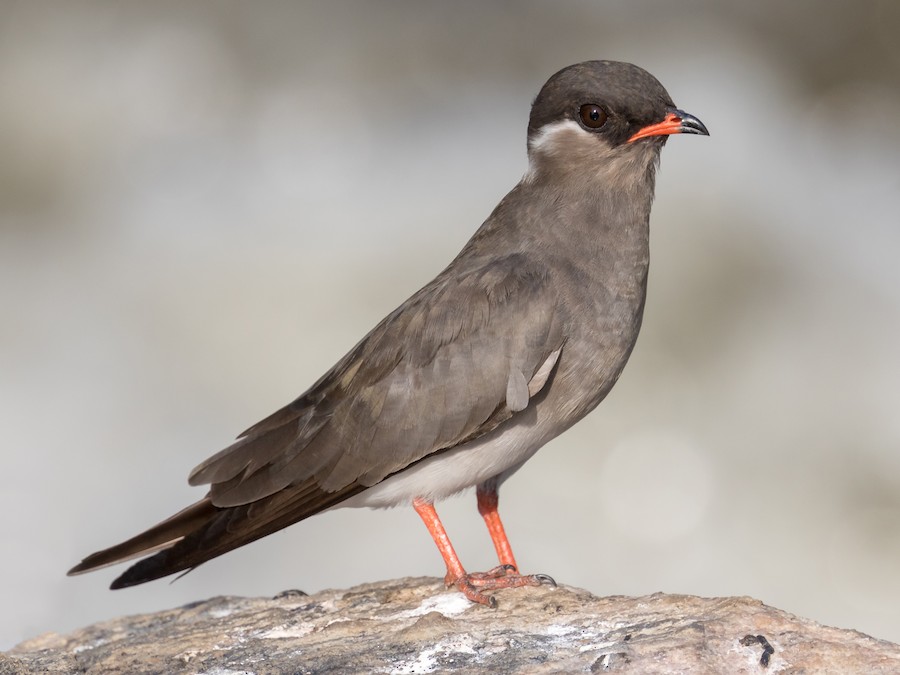
Rock Pratincole Small, dark, short-legged pratincole. In flight, shows a white rump and white stripes under the wings. Found mainly on rocks in fast-flowing rivers. Locally will also use sandbars in rivers and rocky islands in lakes. The call is a high-pitched and quickly repeated “kek.” Separated from other pratincoles by its combination of small size, dark coloration, and stripes under the wings. Link: Photo Location: Uganda image
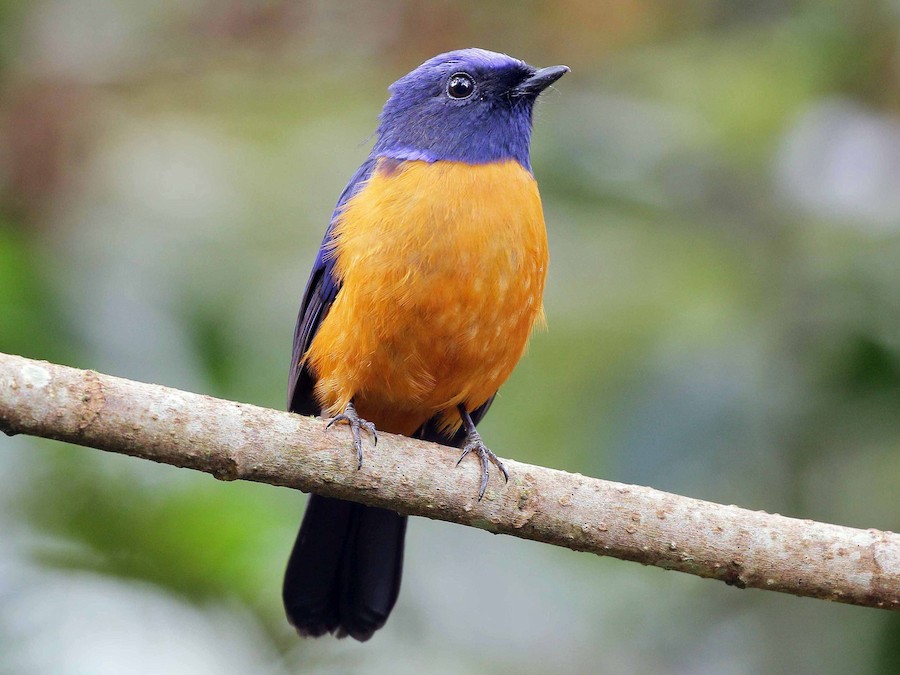
Rufous-vented Niltava Chunky flycatcher of Sumatran highland forests. Male is bright royal blue above with a darker face and orange underparts. Female is brown overall with extensive gray on the underparts and gray tinges on the nape and wings. Inhabits montane broadleaved forests. Moves with mixed flocks and makes sallies from perches. Song is a bright but wavering series of tinkling whistles. Link: Photo Location: Malaysia image
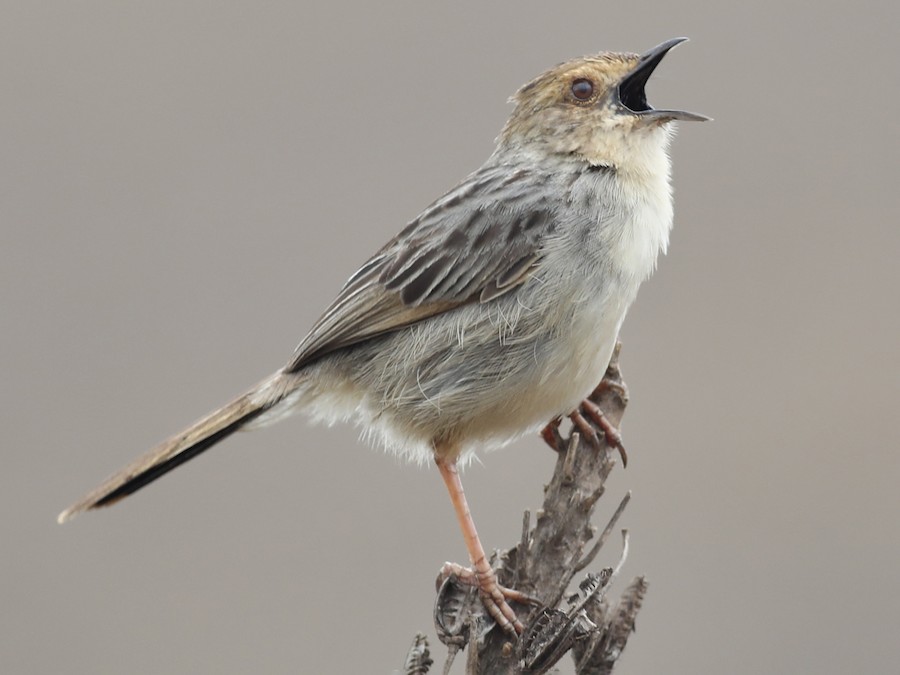
Lynes's Cisticola Medium-sized, streak-backed cisticola of middle-elevation uplands. Found in grassland and savanna on rocky slopes with a mix of bushes, grass, and often aloes. Generally inconspicuous; seen singly or in pairs. Vocalizations include a short, explosive, accelerating trill, and rising wails. Similar to Rattling Cisticola, but has more rufous in the face and a longer tail. As with all cisticolas, habitat and voice are important cues in identification. Link: Photo Location: Tanzania image
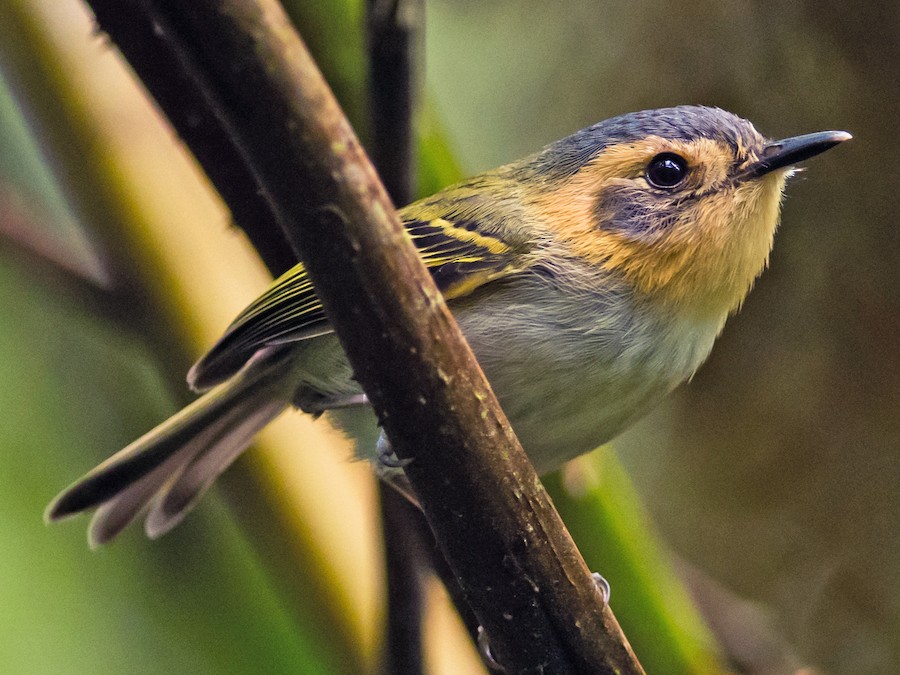
Ochre-faced Tody-Flycatcher Tiny flycatcher of dense vine-tangled, woody habitats including forest edges and second growth where it is easily overlooked. Distinctive plumage with a gray crown and a cinnamon face wrapping around a darker ear patch. It is olive above and paler below with two yellowish wing bars. The song is a low and sharp “trrrp” easily mistaken for a frog or an insect. Link: Photo Location: Brazil image
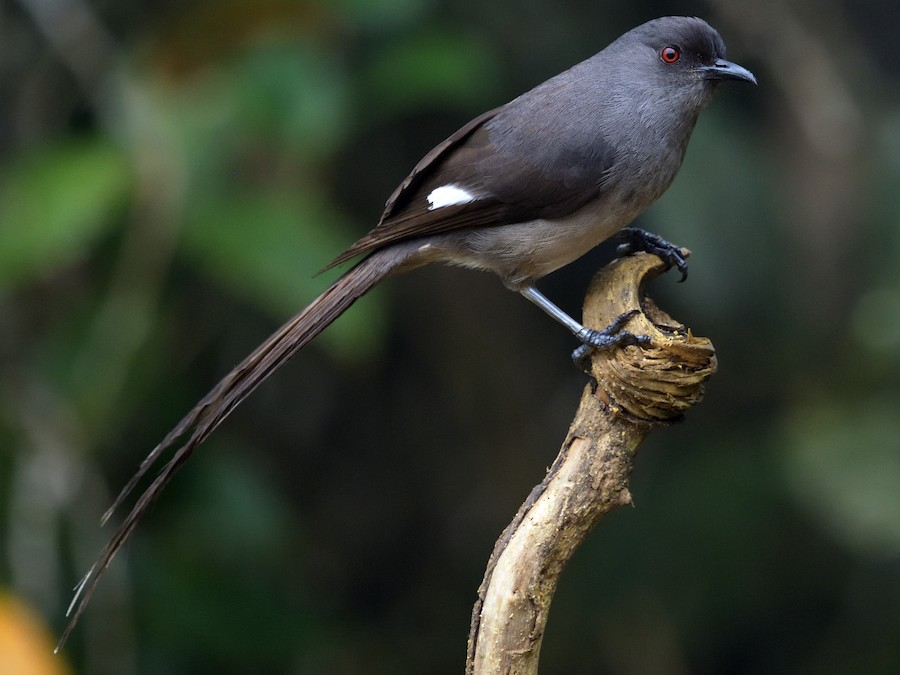
Long-tailed Sibia Truly long-tailed, even for a sibia, this bird appears rather dainty and small-headed in comparison with most of its relatives. Gray overall, darker on the wings and tail. Mostly lacks the contrasting patterns of other sibias, with only a small white patch near the wingtip. Forages in flocks in open hill forests, edges, and adjacent scrubby second growth. Despite striking appearance, often heard before it’s seen: listen for its loud chittering rattle. Link: Photo Location: Malaysia image
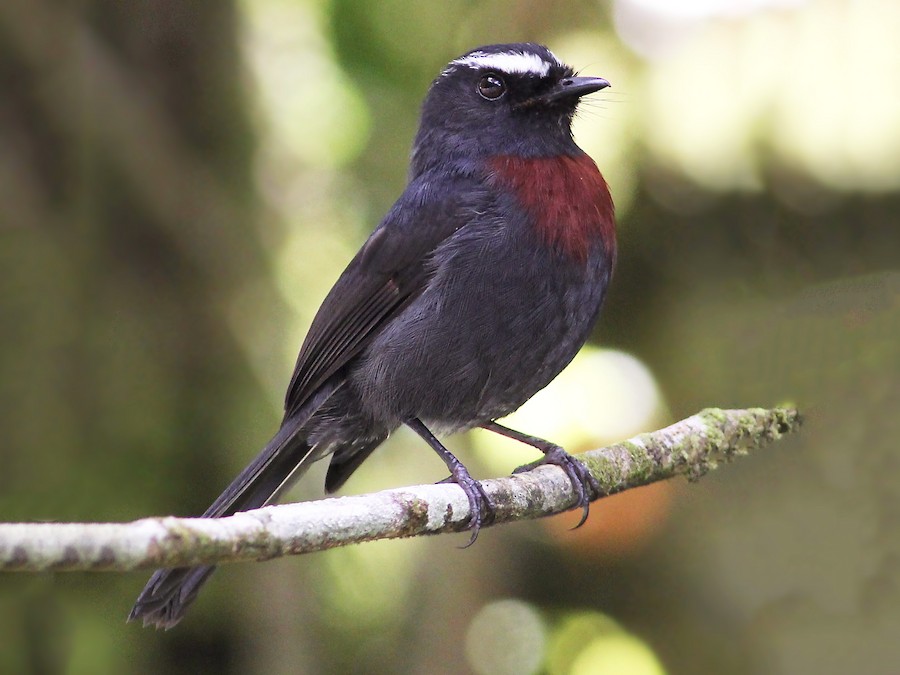
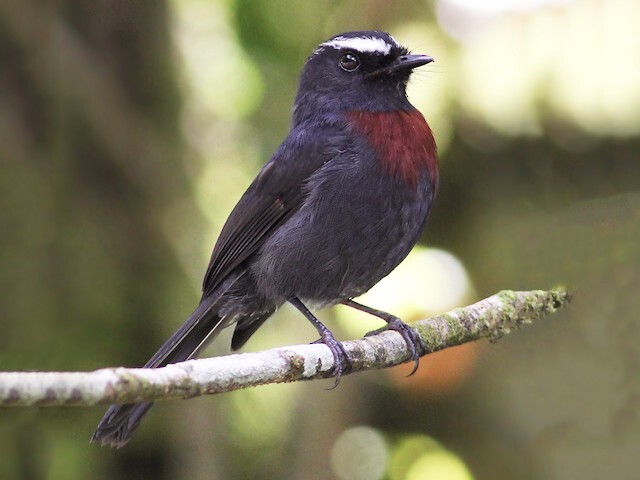
Maroon-belted Chat-Tyrant Small flycatcher found near streams in Andean cloud forest. Plumage is mostly gray with a chestnut breast patch and bold white eyebrows that really stand out in the dark forest. Most common vocalization is a drawn out, high pitched “peeeeeer” that can be heard over the sound of rushing water. When agitated, also gives a raucous series of “pee-didit” calls. Formerly lumped with Chestnut-bellied Chat-Tyrant. Link: Photo Location: Peru image
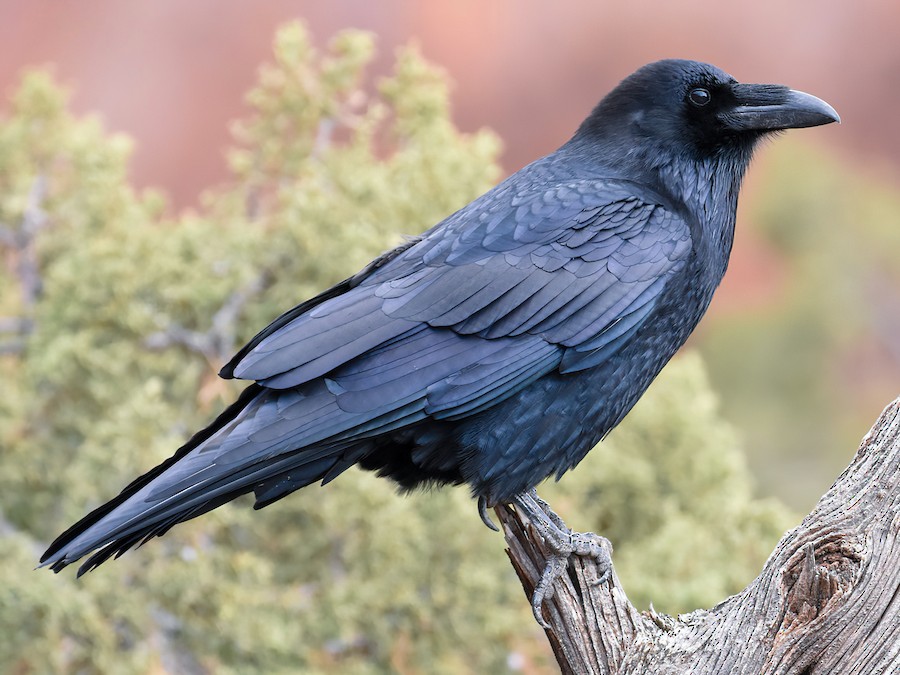
Common Raven Large, glossy-black bird with a wedge-shaped tail. Larger than a crow with a longer, thicker bill. Distinctive shape in flight, with rather long, swept-back wings and long tail. Note smoother, steadier wingbeats compared with faster, choppier wingbeats of crows. Extensive range throughout the Northern Hemisphere. Found in a wide variety of habitats, including desert, coniferous forest, coastlines, sagebrush, tundra, and grasslands. Often solitary or in pairs, but can gather in small groups. Typical call is a loud, guttural croak, but makes an astonishing variety of other strange noises. Compare with Chihuahuan Raven in the southwestern U.S. and Mexico, and with various large, all-dark crows and ravens in Europe and Asia. Link: Photo Location: United States image
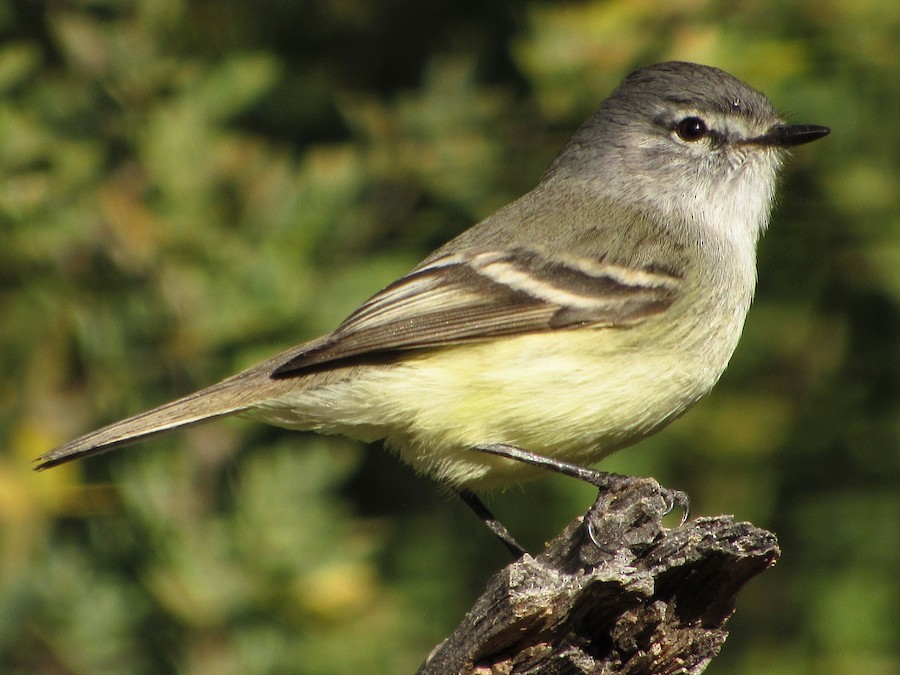
Straneck's Tyrannulet Small flycatcher with a gray head, an olive-brown back, a whitish throat, and a yellow belly. Note the white eyebrow and broken eye-ring. Occurs in woodland and scrub; migrates to the northeast during the austral winter. The song is a single note followed by a trill: “twie tirrrrrrrrrrrrrrrrrr.” The similar White-crested Tyrannulet has a different song and is also slightly larger, with a white crown patch that is often concealed. Link: Photo Location: Argentina image
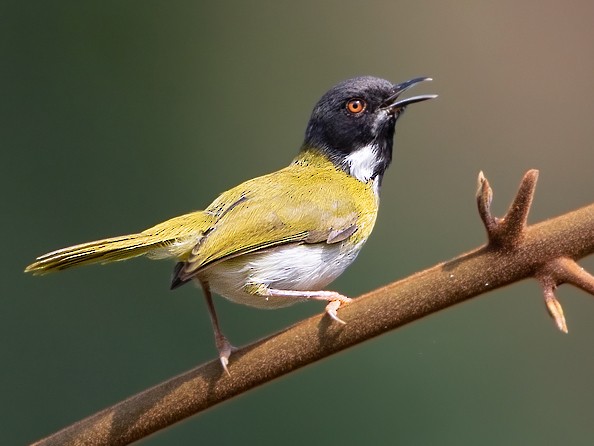
Masked Apalis A small, slender warbler with greenish upperparts and reddish eyes; gray crown and cheeks are separated from the black throat by a striking white moustache. Juvenile has a green crown and a yellow throat. Locally common at scattered locations in lowland forest below 1500 meters of elevation, preferring the lower strata of primary and secondary forest and scrub in clearings. Pairs give a continuous buzzy “dree-lip, dreep-lip, dree-lip” and a dry “strik-strik-strik.” Masked Apalis looks similar to some montane forest apalises, but Black-throated Apalis has a striking yellow-orange belly, and Black-faced Apalis, an Albertine Rift endemic, has a black crown and the moustachial streak reduced to a neck spot. Link: Photo Location: Angola image