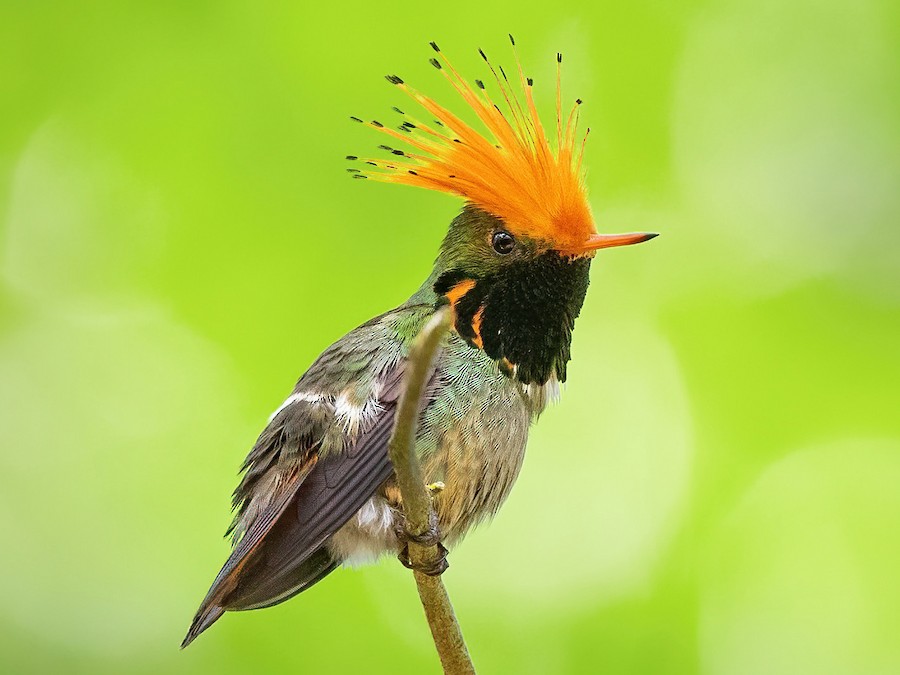
Rufous-crested Coquette Tiny hummingbird; male is striking with fabulous spiky orange crest, each feather tipped in black. Otherwise greenish with dark throat and conspicuous white band across rump. Female much less obvious; look for very small size, rufous forehead and throat, and white band across rump. Range usually helps to eliminate other similar species of coquette; note especially similarity to Spangled Coquette. Found more often in edges than other coquettes, especially brushy clearings or roadsides with flowering bushes. Link: Photo Location: Peru image
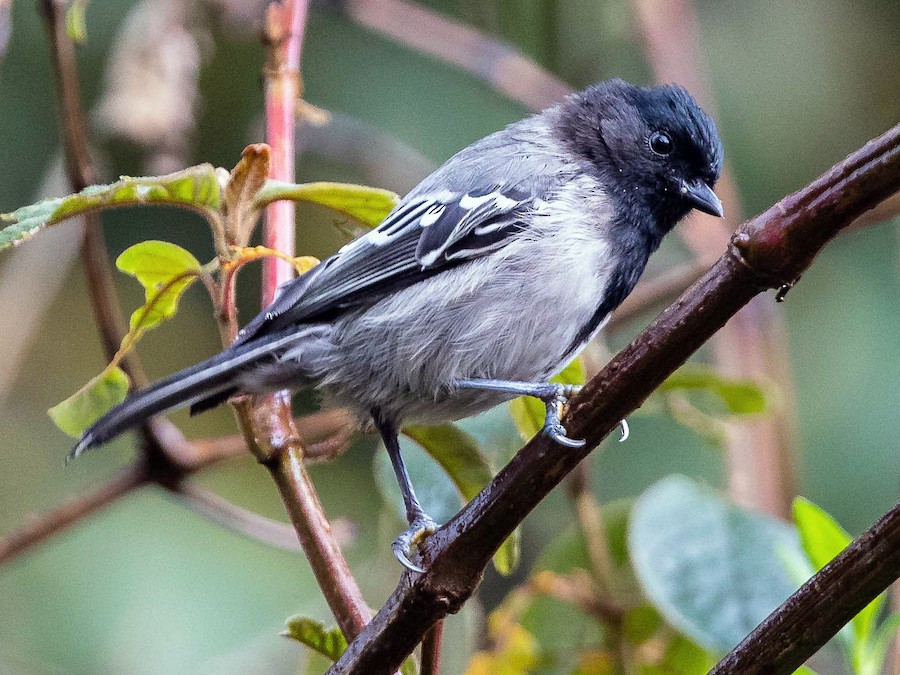
Stripe-breasted Tit Typical tit with a black, white, and gray pattern. The black hood continues as a dark stripe down the center of the underparts. There are white edgings on much of the wing and the outer tail. Found in middle and high-elevation humid forest of the Albertine Rift. Usually in pairs or small groups, readily joining mixed-species flocks. Gives typical tit vocalizations including the classic β€œdree di-di-di” call and other whistled and chatty calls. Link: Photo Location: Uganda image
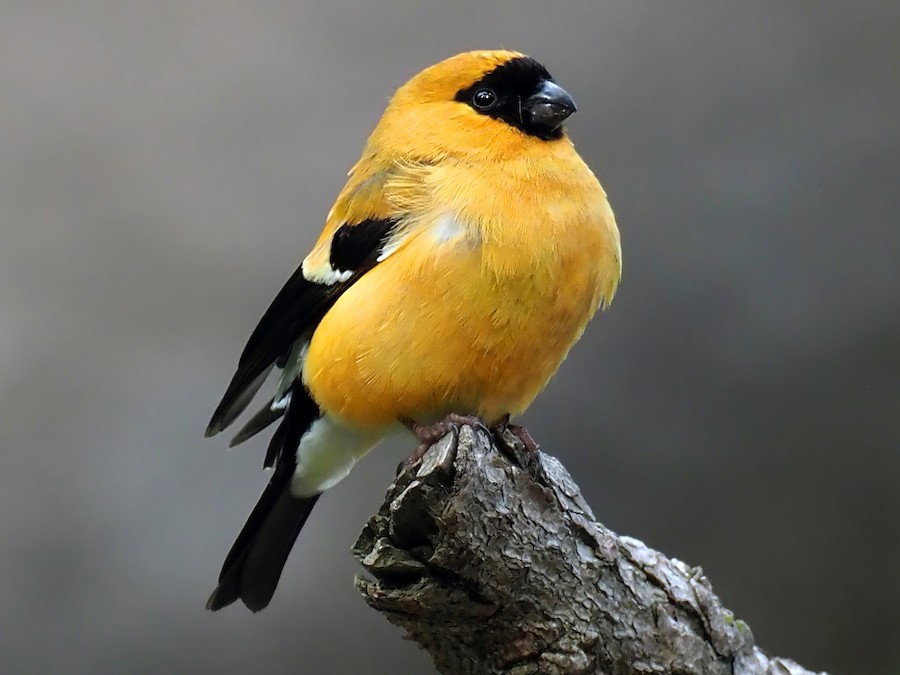
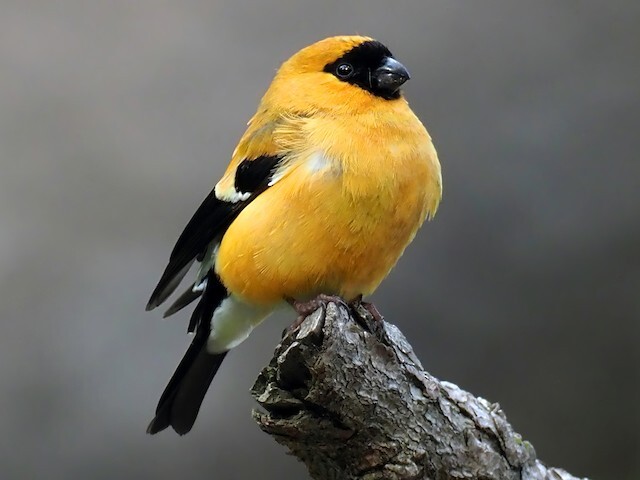
Orange Bullfinch A small, brightly colored bullfinch. The male is orange with black mask, wings, and tail. The female is similar but duller, with gray behind the neck, a pale brown back, and yellow-brown underparts. Found in open conifer forests. Uses its stubby bill to look for berries, buds, and seeds as it forages on the ground. The song is a pleasant jumble of short, mellow whistles and fluting notes. The call includes soft β€œtew” notes delivered in ones and twos. Link: Photo Location: India image
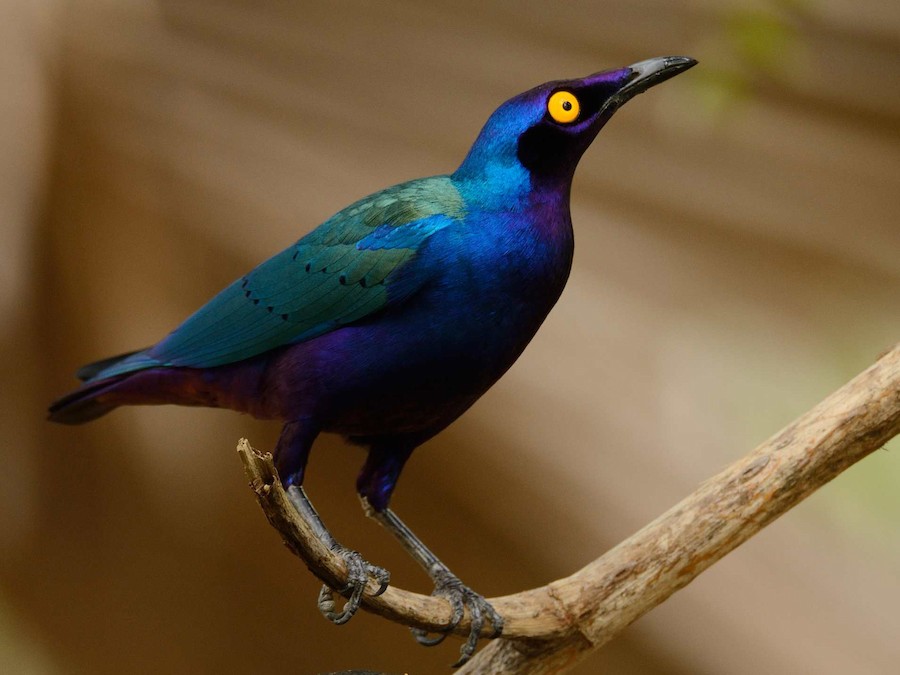
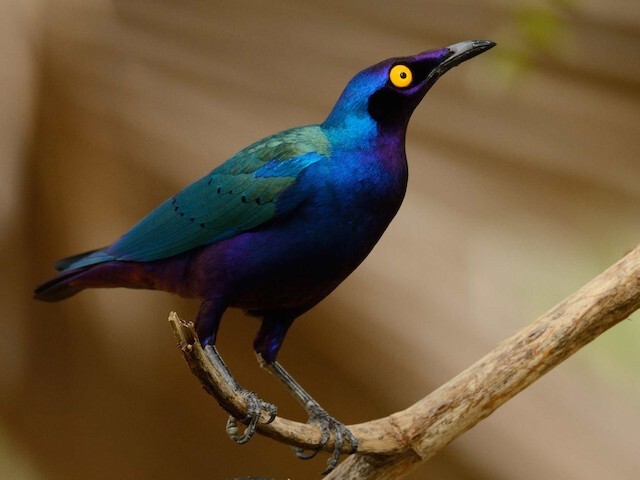
Purple Starling A chunky, large, short-tailed starling. Mostly iridescent purple, with a greenish back and a huge yellow-orange eye. Found in a wide variety of savanna habitats, from moist broadleaf woodland to dry thorn savanna and thornscrub. Usually in flocks, which can be large and often include other species of starlings. Similar to other savanna-dwelling starlings, but easily separated by the huge eye and the abundance of purple in the plumage. The vocalizations include liquid swirling calls, nasal squeals, and simple chatters. Link: Photo Location: Gambia image
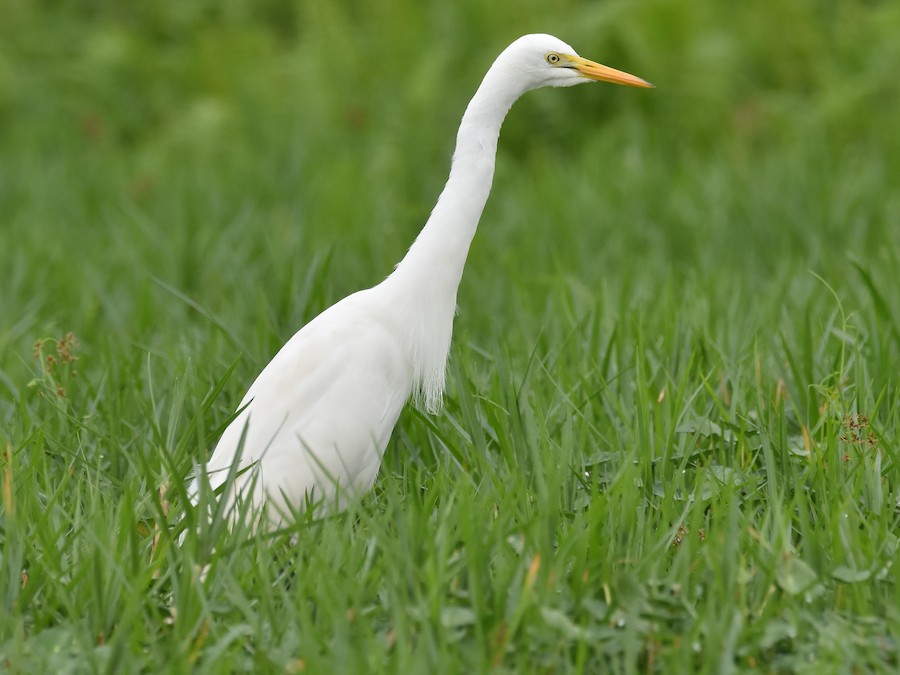
Yellow-billed Egret A stocky egret that is larger than Western Cattle and Little Egrets, but smaller than the Great Egret. Often confusing and difficult to identify, this bird is truly intermediate between potential confusion species. Things to look for include a yellow bill (brighter during breeding season) that is shorter than Great Egret but longer than Cattle Egret, a relatively rounded head, and shorter legs than Great Egret, approaching Cattle Egret. Like most egret species, associates with all types of water bodies including wet fields, often flocking with other egrets. Link: Photo Location: Uganda image
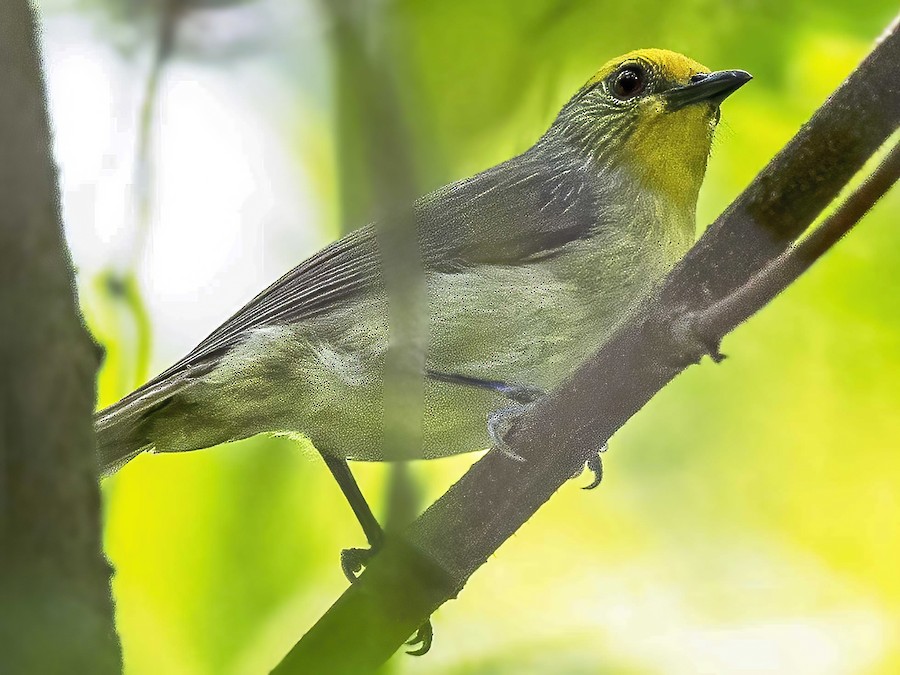
Golden-crowned Babbler A fairly small bird of lowland and foothill forest, open wooded areas with developed understory, bamboo, and tall grass. Has a gray back and cheek with fine pale streaks, dark wings and tail with white outer tail feathers, white underparts, and a yellow throat and crown. Note the slender black bill. Often joins mixed-species flocks. Somewhat similar to female Mugimaki Flycatcher, but differs in behavior and in its yellow crown. Gives soft β€œwhip” calls while feeding. Link: Photo Location: Philippines image
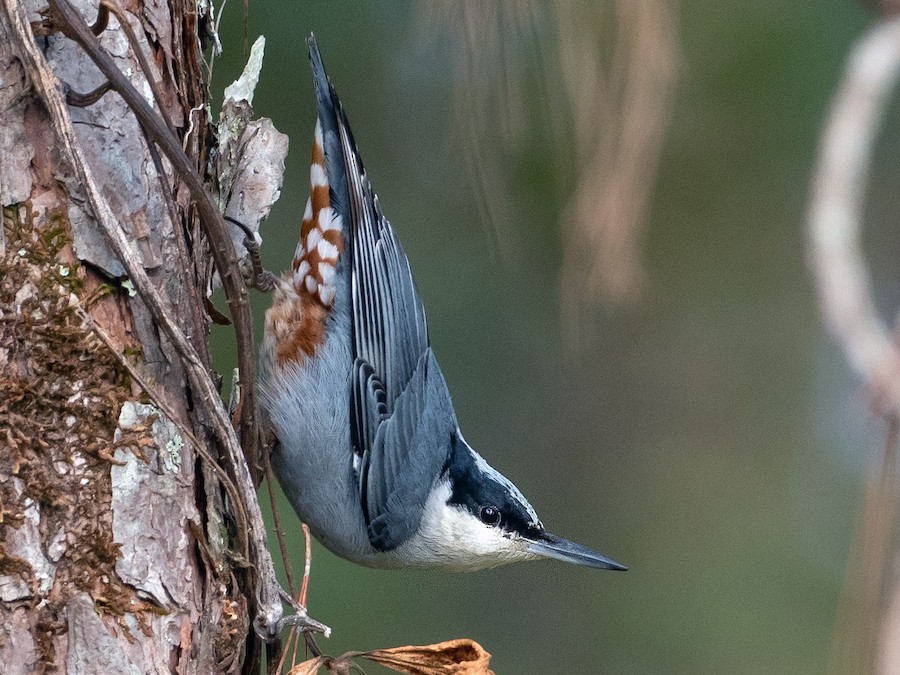
Giant Nuthatch The largest nuthatch in the world, about the size of a bulbul. Coloration similar to many other nuthatches: gray above and white below, with a thick black line through the eye. Picky in its habitat preferences and as a result generally uncommon or absent through much of its range; requires extensive stands of mature tall pines in foothills and montane regions. Can be quite loud, giving a hoarse chatter reminiscent of a corvid; also gives a clipped fluty whistle. Link: Photo Location: Thailand image
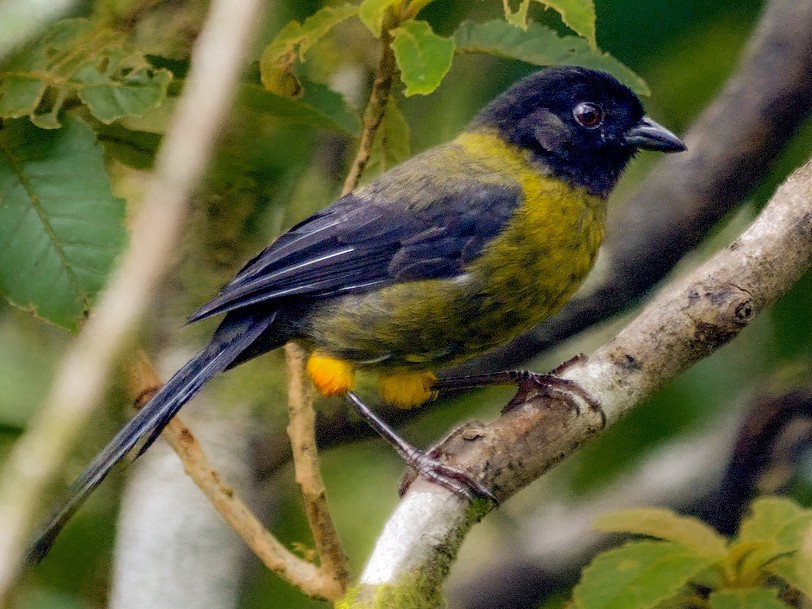
Yellow-green Brushfinch Hefty, long-tailed finch with a very limited range in western Panama. Its olive-greenish body with contrasting black head and bright yellow tufts at the base of each leg make this bird distinctive. Poorly known, but behavior apparently similar to Yellow-thighed Finch (no range overlap); found close to the ground, working through low tangles and bushes in pairs or small groups. Sometimes ventures up into the middle levels. Prefers forest and edges. Link: Photo Location: Panama image
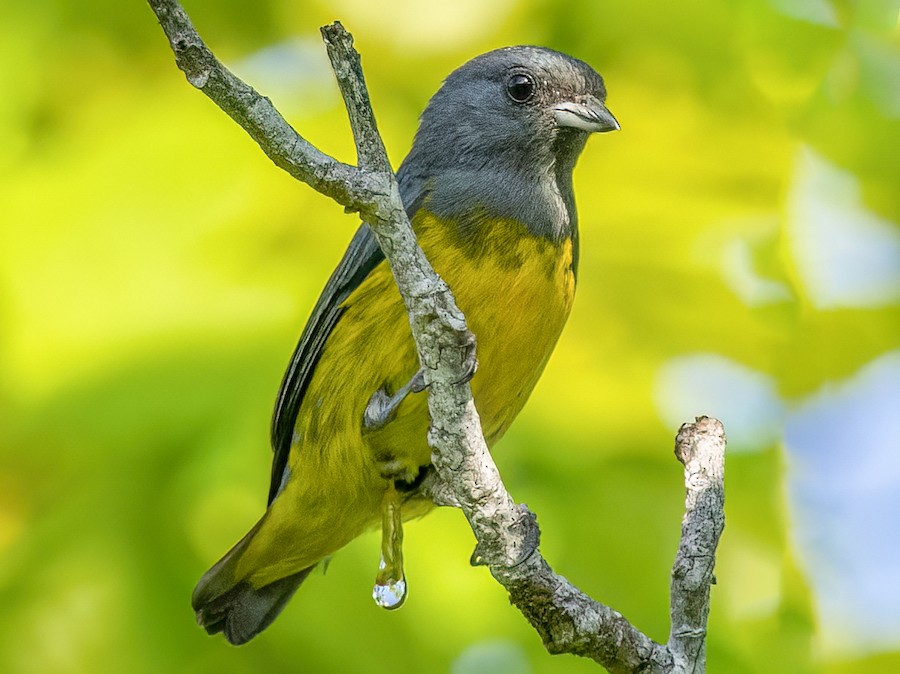
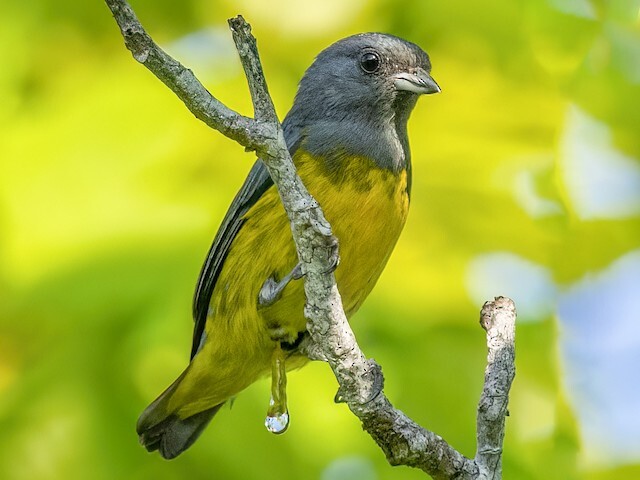
Plumbeous Euphonia A small mosly gray finch with a yellow belly and contrasting pale bluish bill. Rather uncommon and generally restricted to scrub habitats and taller secondary forests on weathered, sandy soils. Sexes are similar. Like other euphonias, feeds on fruit, often in pairs, sometimes traveling long distances between food sources. Most frequently seen perched on high bare branches; may follow mixed-species flocks. Combination of mostly gray plumage and lack of yellow on forehead distinguishes this species from other euphonias. One vocalization is a jumble of notes preceded by a sharp, inflected note; other sounds similar to those of other euphonias. Link: Photo Location: Suriname image