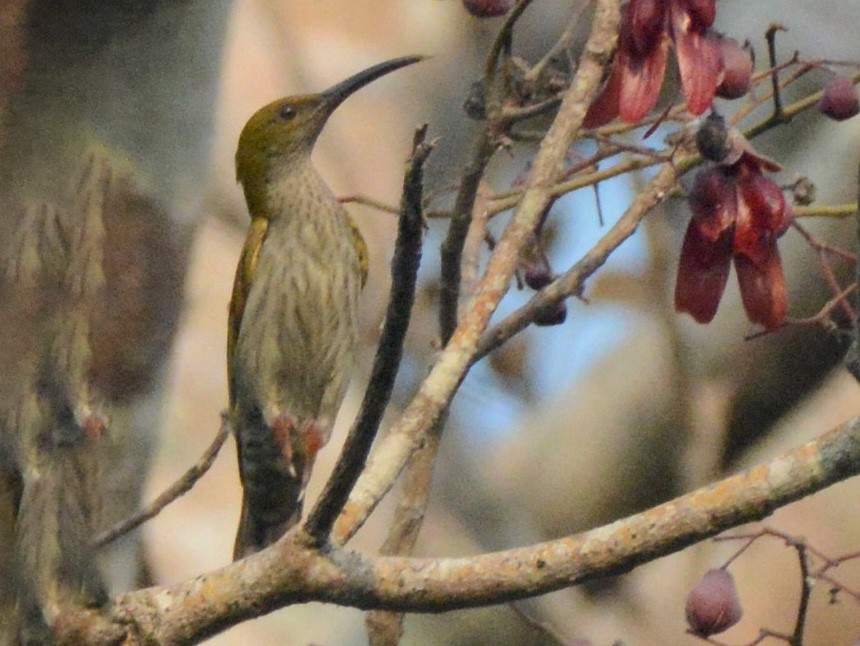
Streaky-breasted Spiderhunter Generic-looking spiderhunter, olive-green above with a streaky gray breast. The only spiderhunter on Java with well-defined streaking on dull gray underparts; the only other streaked spiderhunter is Long-billed, which has a much more impressive bill, as well as poorly-defined streaks and a yellow-washed belly. Immatures with unstreaked underparts may be confusing if seen, but general shape and patterning, as well as the presence of an adult, should be helpful. A species of foothill forests, where it forages in forest and forest edge habitats. Gives harsh, noisy chattering calls. Link: Photo Location: Indonesia image
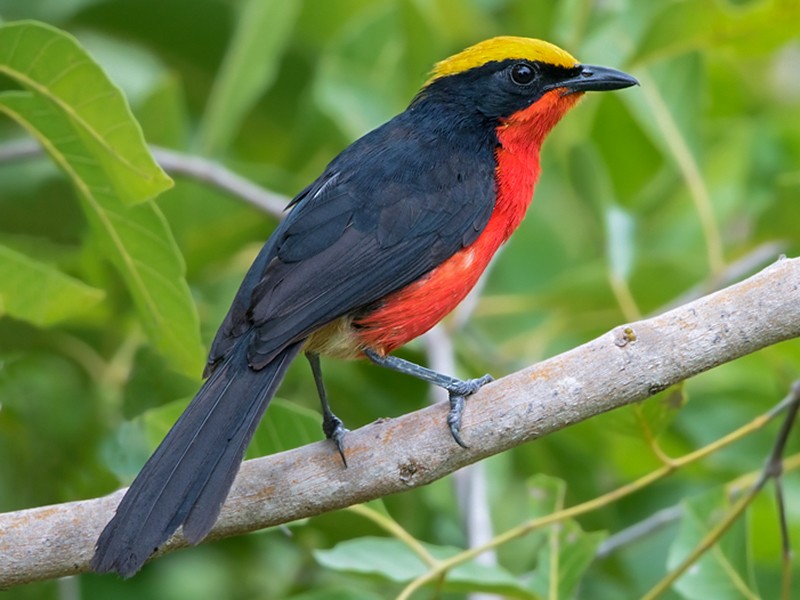
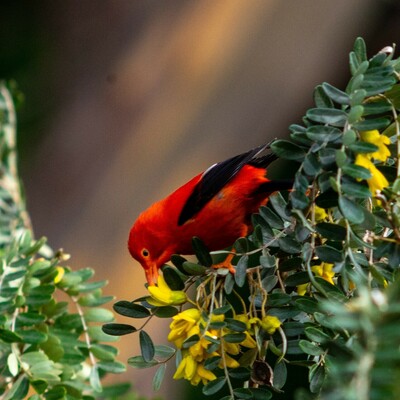
Yellow-crowned Gonolek A striking black-and-crimson bushshrike with a yellow-orange crown. Juvenile is duller, browner above and yellowish underneath. Singles and pairs forage alone or sometimes in mixed-species flocks in moist or dry savanna using dense tangles, where it prefers thicker trunks but will also hop on the open ground; also uses coastal scrub and mangroves. Calls are variable, but mostly comprise loud ringing whistles answered by clicks, electric buzzing, and grating notes in a synchronized duet. Link: Photo Location: Ghana image
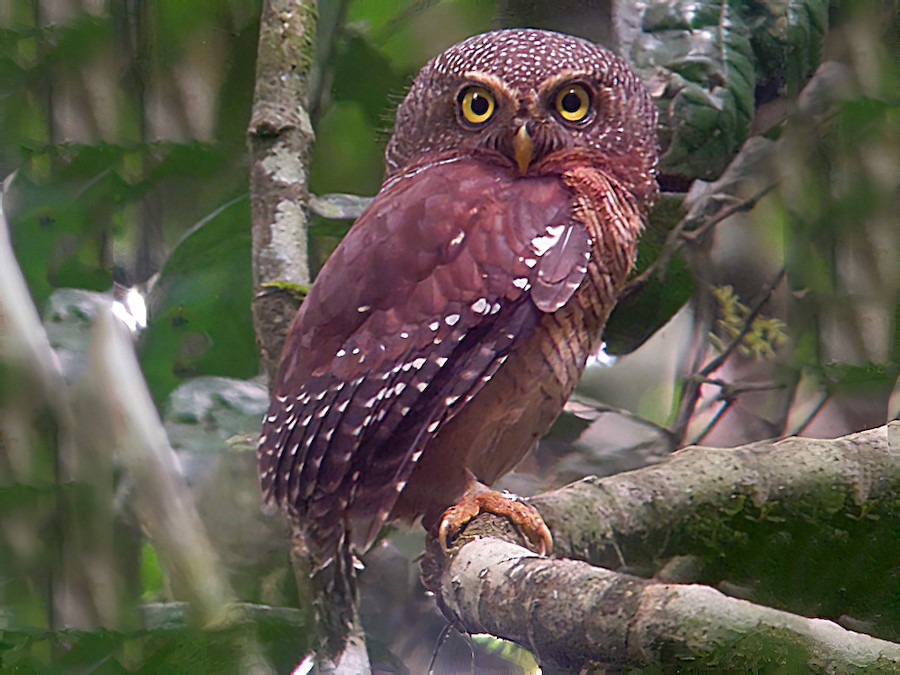
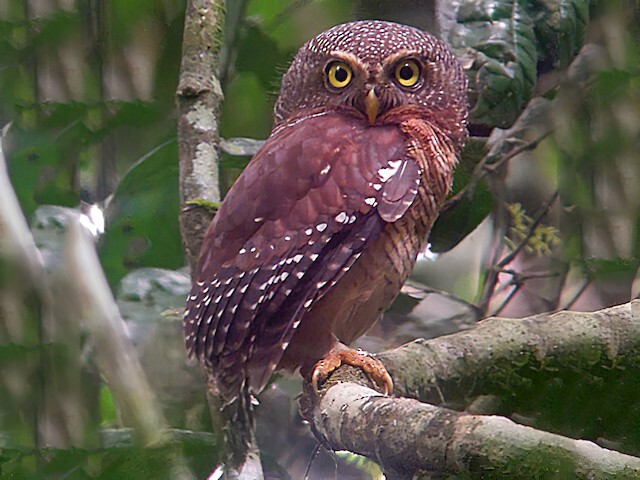
Sjöstedt's Owlet A small owlet of lowland and foothill forest interior with intricate barring patterns over most of its body, including the buff-and-black underparts, the gray-and-white head, the rufous back, and the black-and-white wings and tail. Primarily nocturnal, but sometimes calls around first light. Distinctive song is a series of 4-8 trilled hoots. Link: Photo Location: Cameroon image
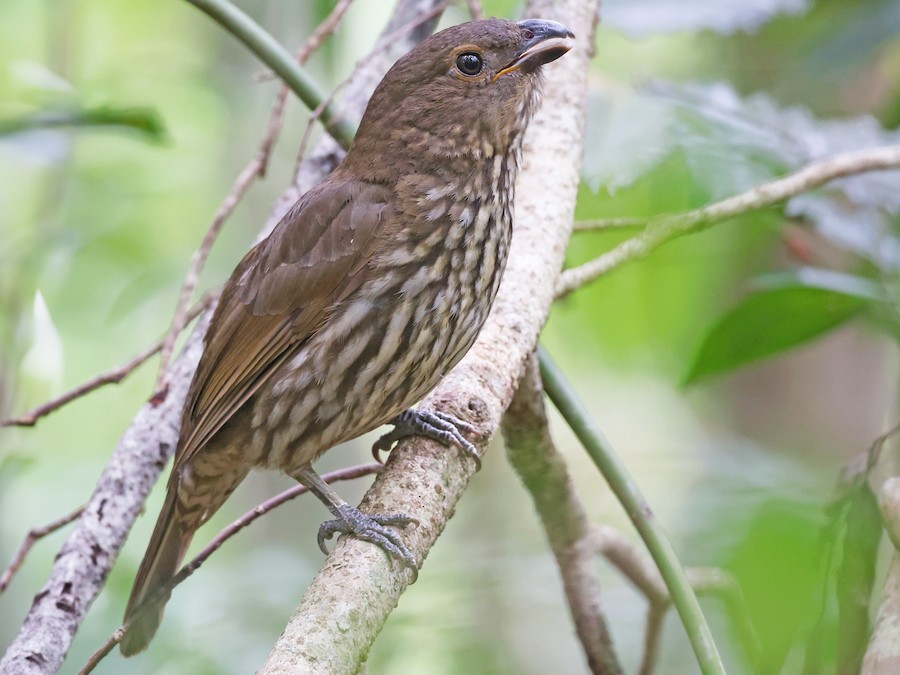
Tooth-billed Bowerbird Medium-sized, chunky rainforest bird, found in a small area of higher-elevation rainforest in coastal northern Queensland. Dark brown upperparts and pale underparts with blurry brown streaking. Bill has serration that resembles teeth. Male clears a section of rainforest floor and decorates it with fresh green leaves when breeding. Calls include wide range of whistles, hisses, and squeaks; known to mimic other birds. Link: Photo Location: Australia image
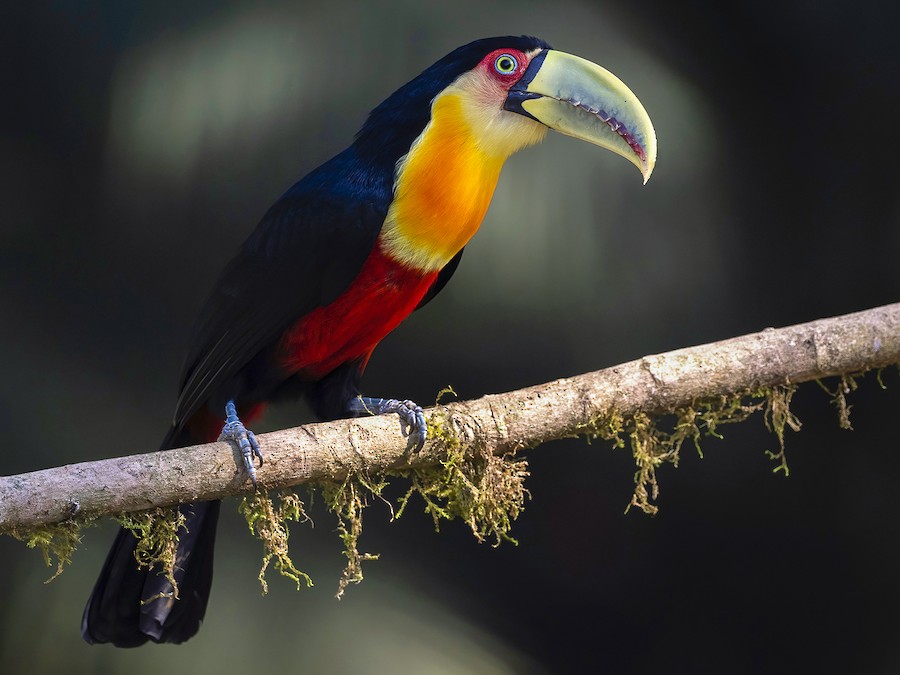
Red-breasted Toucan Large toucan with a red belly, vent, and rump, a greenish bill, a white and yellow throat and breast. The upperparts are mostly black. Note the prominent bare red skin around the pale eyes and a black ring around the base of the bill. Found mostly in montane forests but also in lowland forests, second growth, and plantations. Call is as series of “grreekk” notes. Link: Photo Location: Brazil image
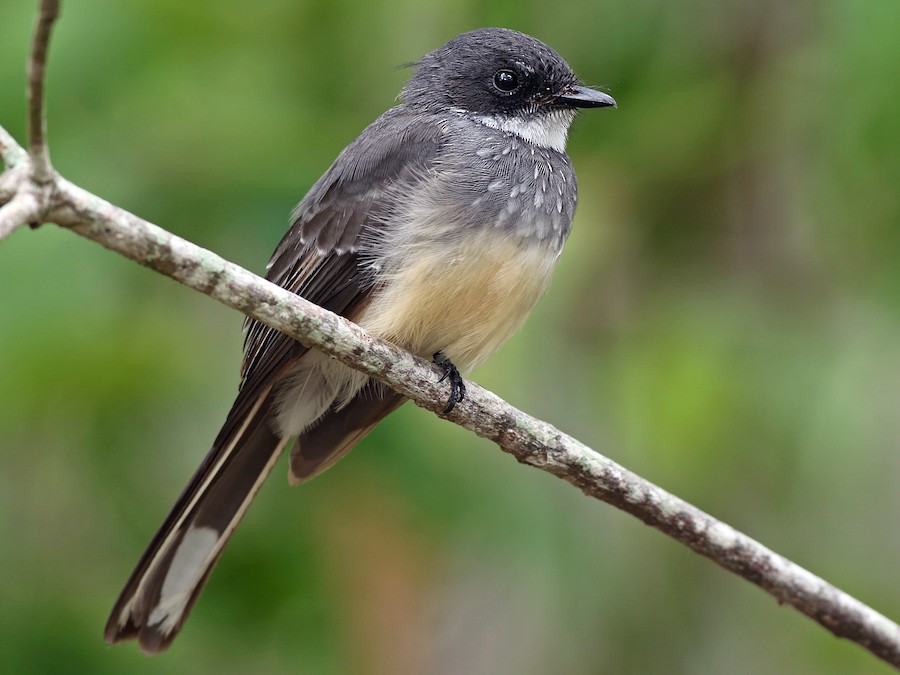
Northern Fantail Small songbird with long tail, slim bill. Dark gray above, pale below, with a variably dark gray chest band. Often droops tail, showing very long white tips to tail feathers. Gray Fantail has pale wingbars, a narrower thin black breast band, and more prominent eyebrow. Inhabits dense vegetation of paperbark forests, mangroves, and swamps. Link: Photo Location: Australia image
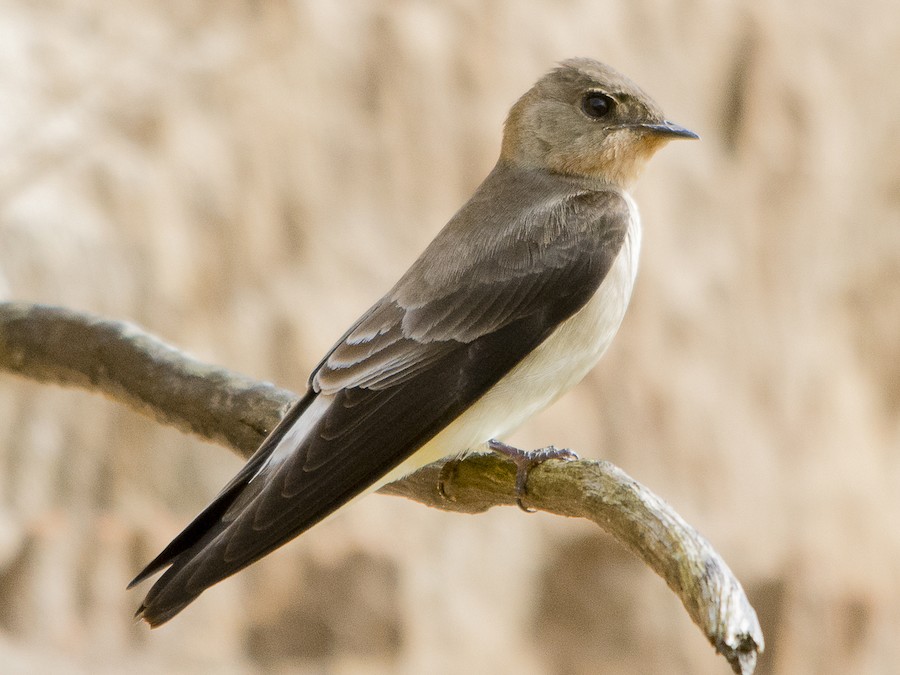
Southern Rough-winged Swallow Plain brownish swallow, common and widespread through the Neotropics. Very similar to Northern Rough-winged Swallow, but look for contrasting pale rump in flight and tawny throat; also, note that ranges only overlap in Central America. Found in open habitats including fields, rivers, and lakes, often in small loose flocks. Link: Photo Location: Trinidad and Tobago image
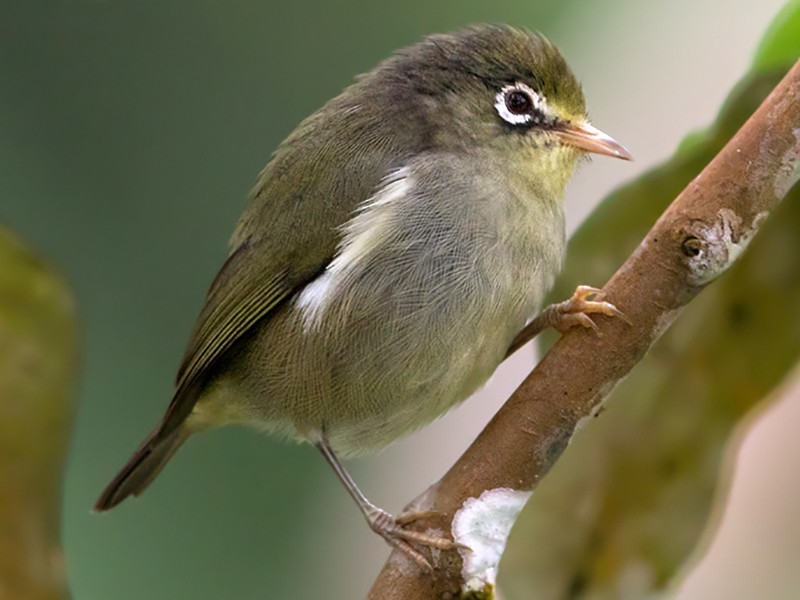
Sao Tome White-eye A small, active, mostly dull olive-green and gray warbler-like bird with a yellowish throat and a white eye-ring that is obvious with a good view. Endemic to São Tomé, where small groups regularly join mixed-species flocks. A fairly common resident in the canopy and middle levels of primary and secondary forest and tall trees in woodland, most common between 400 and 1600 meters of elevation. Calls include a dry, reedy trilling with some musical notes interspersed. Sao Tome White-eye may join the same flocks as Black-capped Speirops, which is slightly larger and has a dark cap. Link: Photo Location: São Tomé and Príncipe image
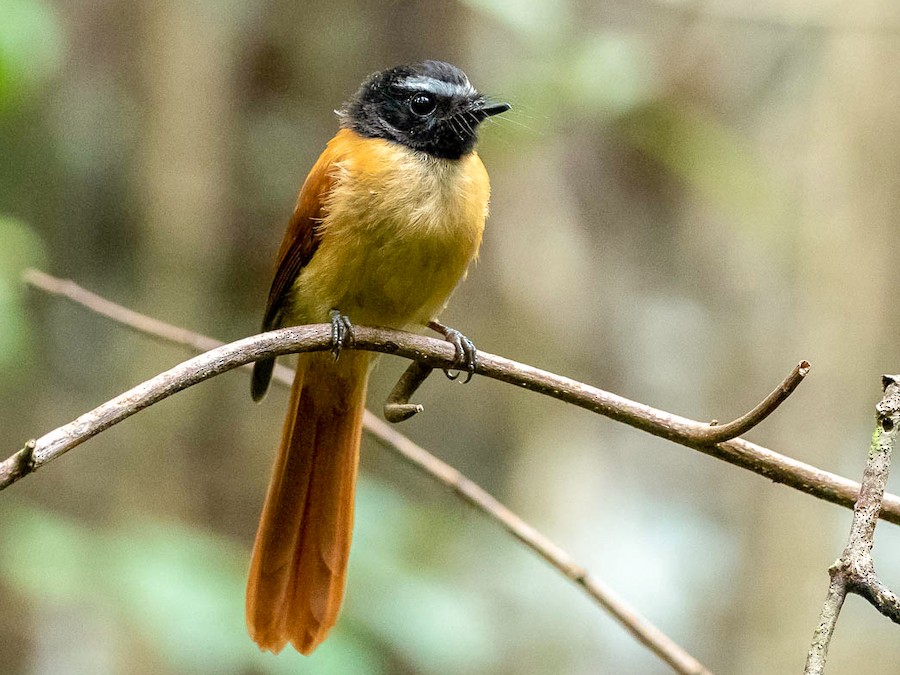
Black-and-cinnamon Fantail A fairly small, long-tailed bird of montane forest on Mindanao. Rufous above with darker wings, a tail frequently held cocked and fanned, pale orange underparts, a black hood, and a broad white eyebrow. Forages in the understory for insects and often joins mixed-species flocks. Bundok Flycatcher and Eyebrowed Thrush both have orange chest, a black head, and a white brow, but Black-and-cinnamon Fantail is larger than the flycatcher and smaller than the thrush, with a totally different shape and habits. Voice includes a sharp “gyuk!” or grating chatter. Link: Photo Location: Philippines image
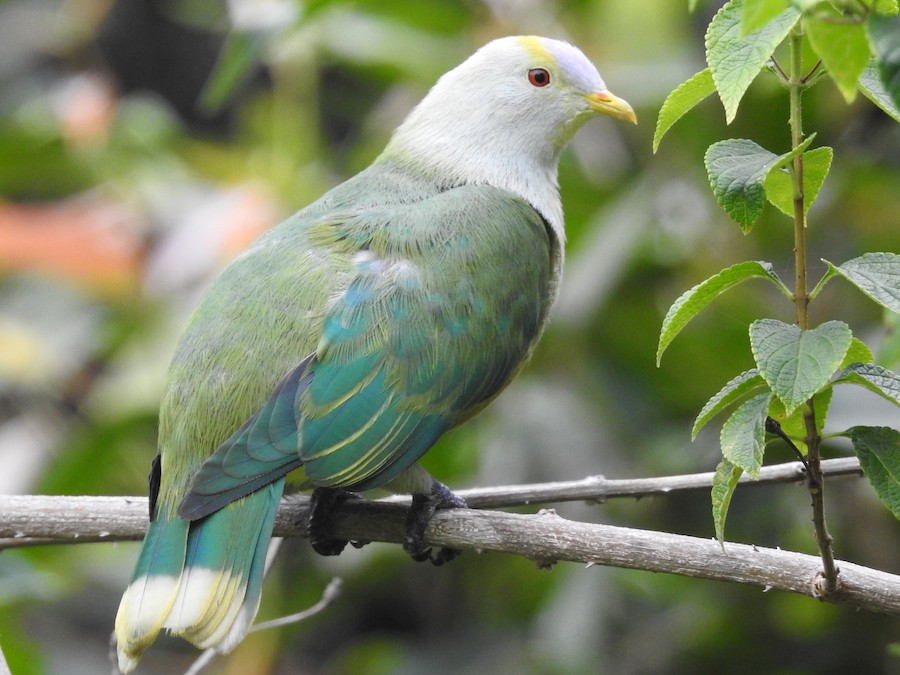
Raiatea Fruit-Dove An unmistakable dove with a bright silver head, neck, and chest, dark green wings, a light green belly, and a yellowish tint to the forehead. Bill is bright banana yellow. Unique within its range. Call is a typical dove-like cooing, starting with “wooo wooo” followed by sounds likened to a taunting laughter. Link: Photo Location: French Polynesia image