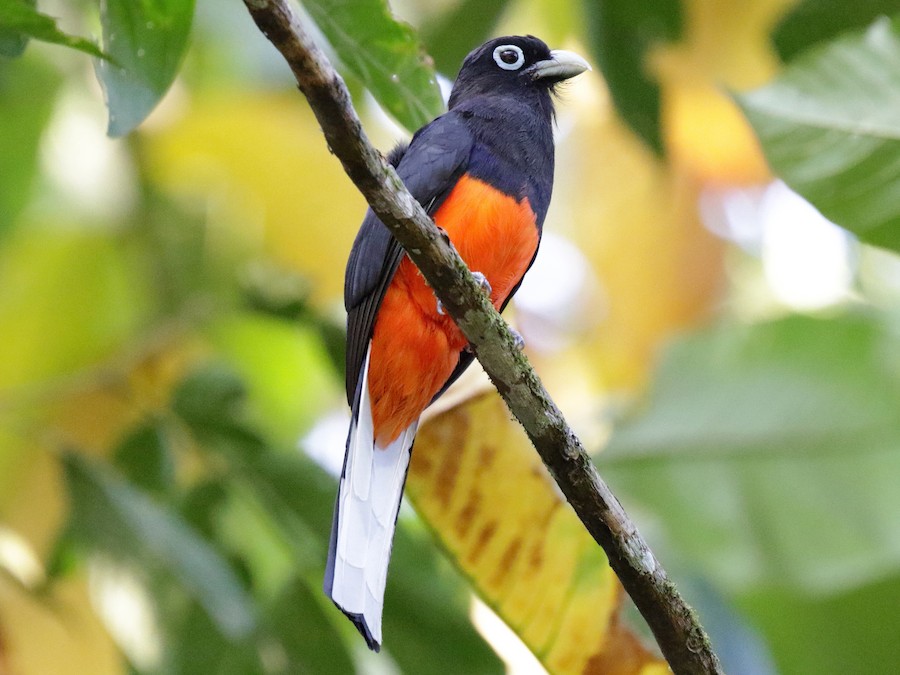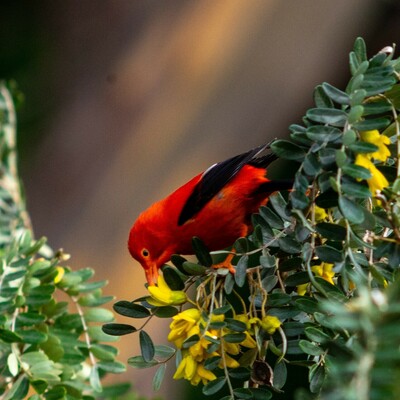
Gosling's Bunting A bunting with cinnamon underparts, black-and-brown mottled upperparts, and a black-and-orange bill. The male’s head is boldly striped black-and-white and the throat is pale gray. The female’s head is less contrasting, with gray and buff stripes, and the throat is streaked blackish-brown. Juvenile is duller than adult. Prefers rocky outcrops, quarries, and gullies in arid and moist savanna and semi-desert, favoring open ground. Often found in pairs. It is often detected by its grating song. The similar Cinnamon-breasted Bunting differs from Gosling’s Bunting by having a black (not gray or blackish-brown streaked) throat and less rusty wings; birds in northern Ethiopia/Eritrea may be part of a hybrid swarm. House Bunting has a streaked (not solid) throat and breast. Link: Photo Location: Ghana image
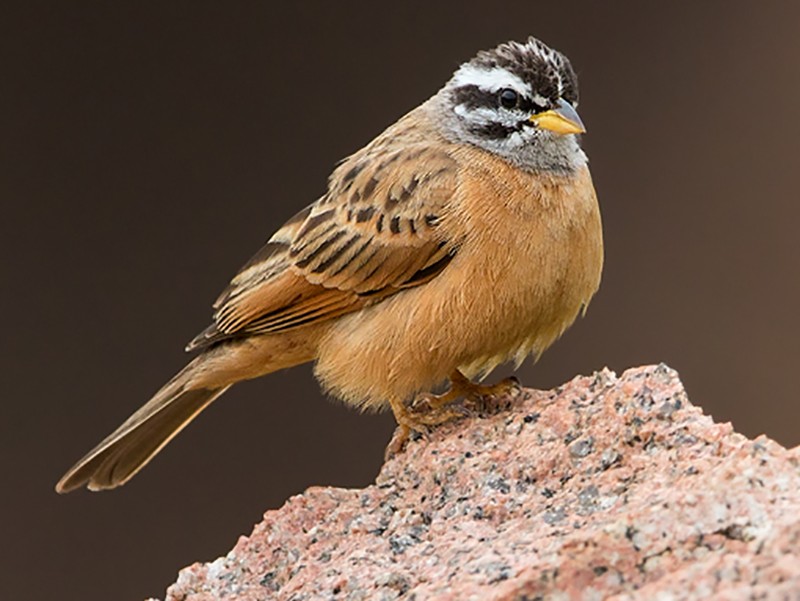
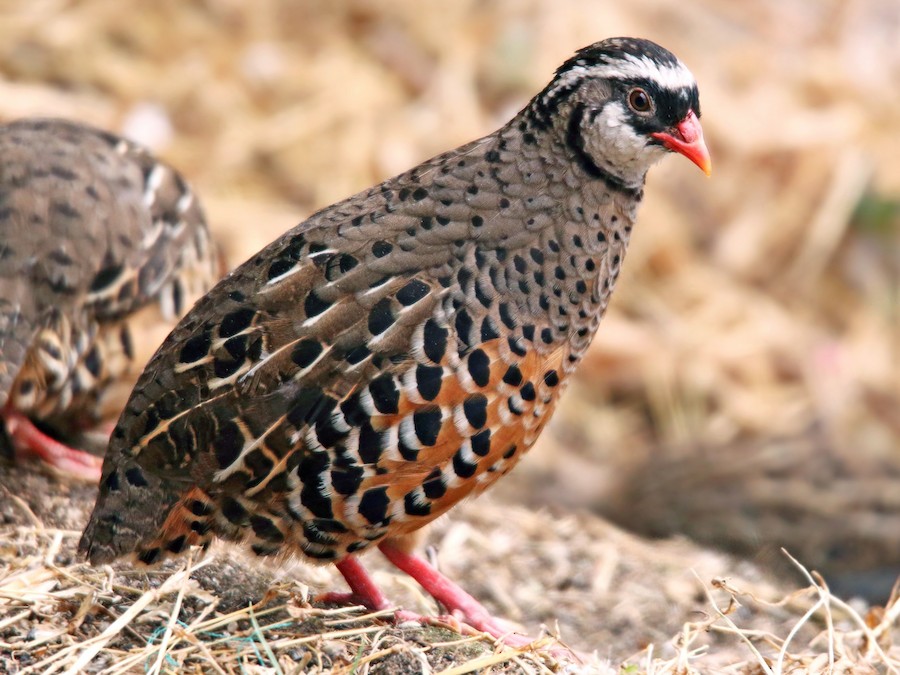
Painted Bush-Quail Attractive and strikingly marked quail with a red bill and legs. Endemic to peninsular India. Males have a white eyebrow and throat that contrast with overall dark plumage. Mostly found in high altitude grasslands of the Western Ghats in south India; populations elsewhere in the peninsula are poorly known. Rather elusive, but can be seen foraging in small groups by roadsides early morning and late evening. Most often detected by its repeated, high pitched “kri-kri” calls during the breeding season. Link: Photo Location: India image
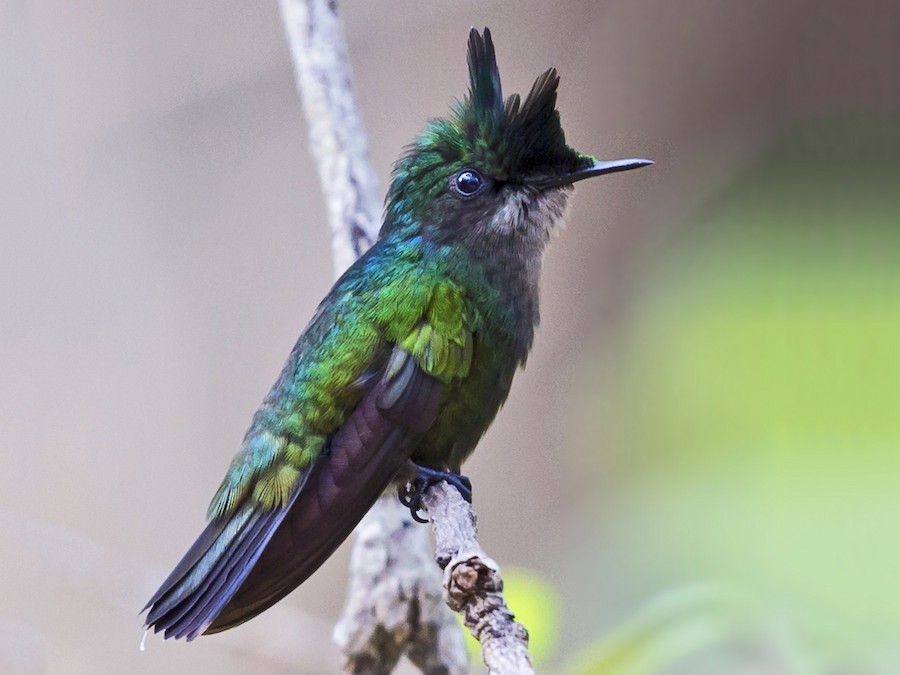
Antillean Crested Hummingbird A perky, inquisitive inhabitant of woodlands, scrub, parks, and gardens. Note the mohawklike crest (except on young males), the rather short bill, and dark gray (adult males) to dingy (immatures and females) underparts. The female Puerto Rican Emerald lacks a crest, is often whiter below, and has a blackish face. The female Blue-headed Hummingbird also lacks a crest plus it has a longer bill and a longer tail that is blue. Calls include a high thin “pit” or “tsit” as well as various high-pitched twitterings. Link: Photo Location: Virgin Islands (British) image
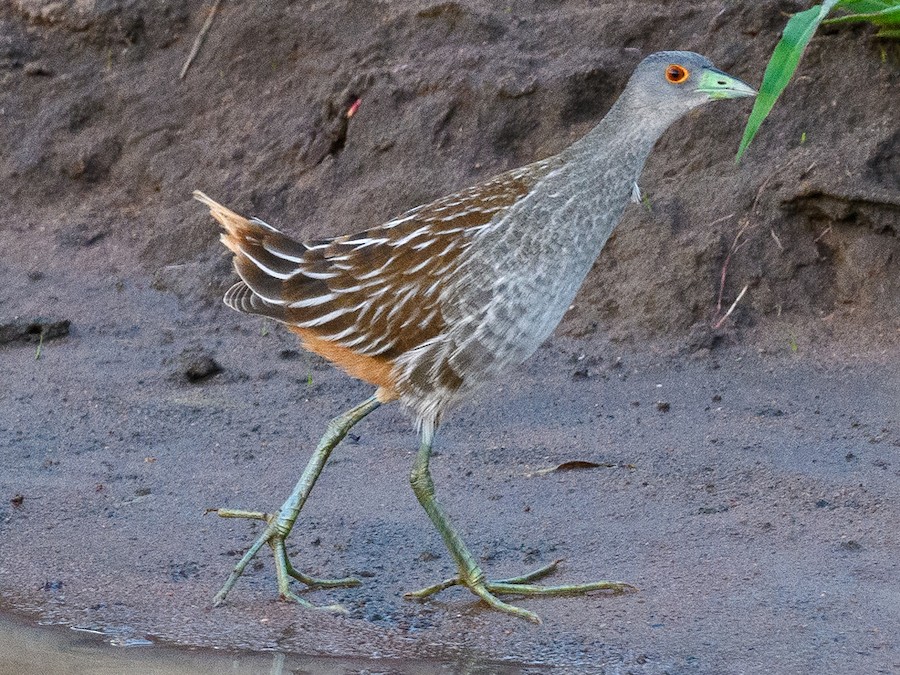
Striped Crake Small brown crake with conspicuous striping on the back. The underparts are brown in the male and gray in the female. Both sexes show a buff patch under the tail. Found in marsh and seasonally flooded grassland. Shy, inconspicuous, and generally scarce. Unlikely to be seen by those not expressly looking for it. The call is a long, dry, high-pitched trill. Link: Photo Location: South Africa image
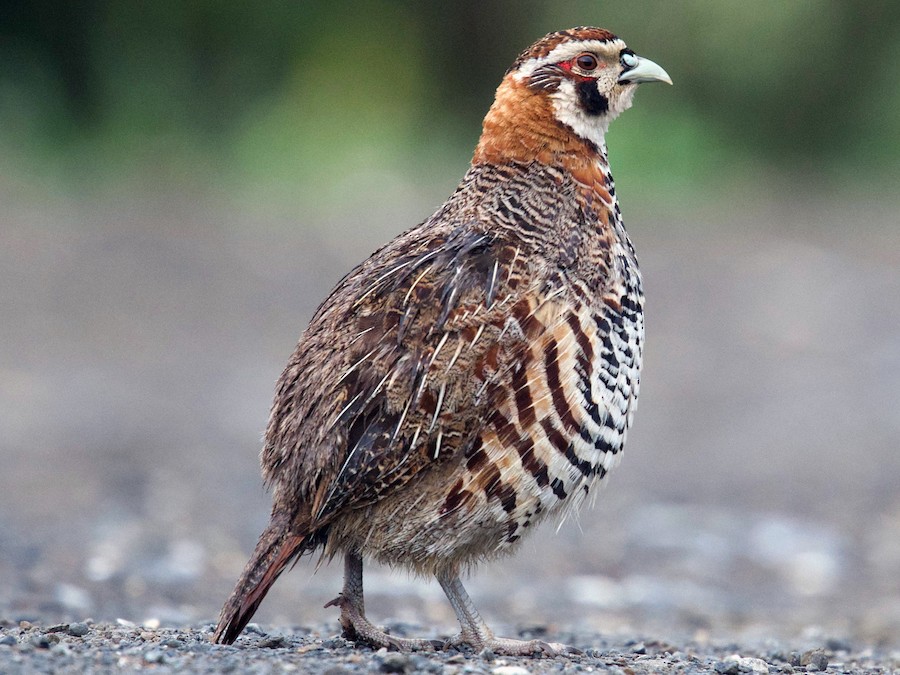
Tibetan Partridge An ornate small terrestrial bird of Tibetan highlands, usually dry hillsides and valleys with sparse shrub cover. Often seen hurrying along with a bobbing gait when surprised on a roadside or in pastures. Browish overall, with black-and-white face pattern and bright orange neck. Can be quite tame, especially in protected areas around monasteries, where often fed. Link: Photo Location: China image
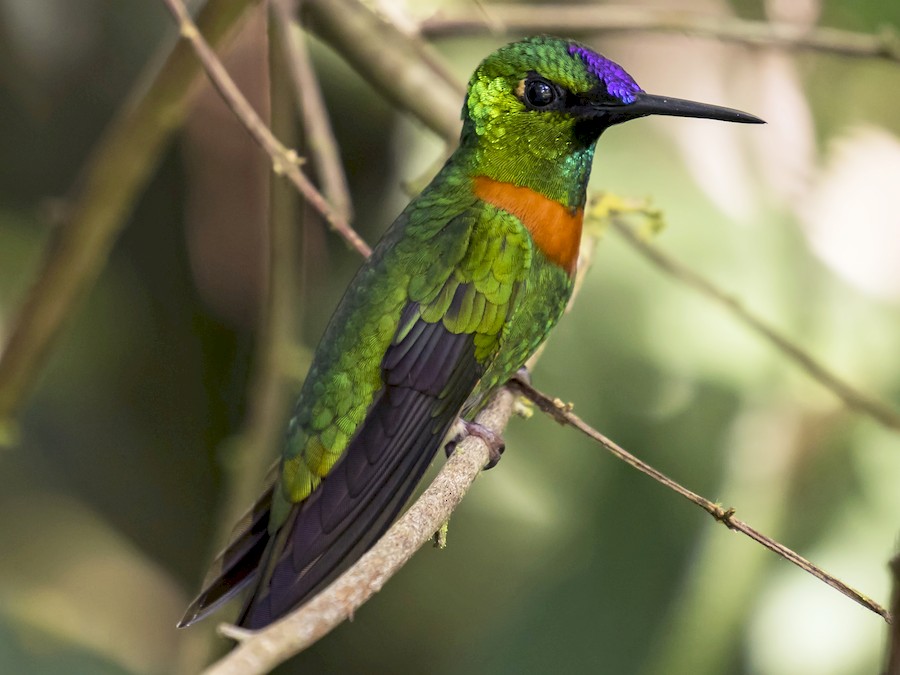
Gould's Jewelfront Chunky hummingbird with a stout bill. Glittering green with a huge orange breast patch and purple forehead. Male has a black chin; female lacks this and has a short, whitish mustache stripe. Mainly a lowland species, but ranges well up into the eastern foothills of the Andes in some areas. Rather scarce in mature humid forest; occasionally visits feeders. Link: Photo Location: Peru image
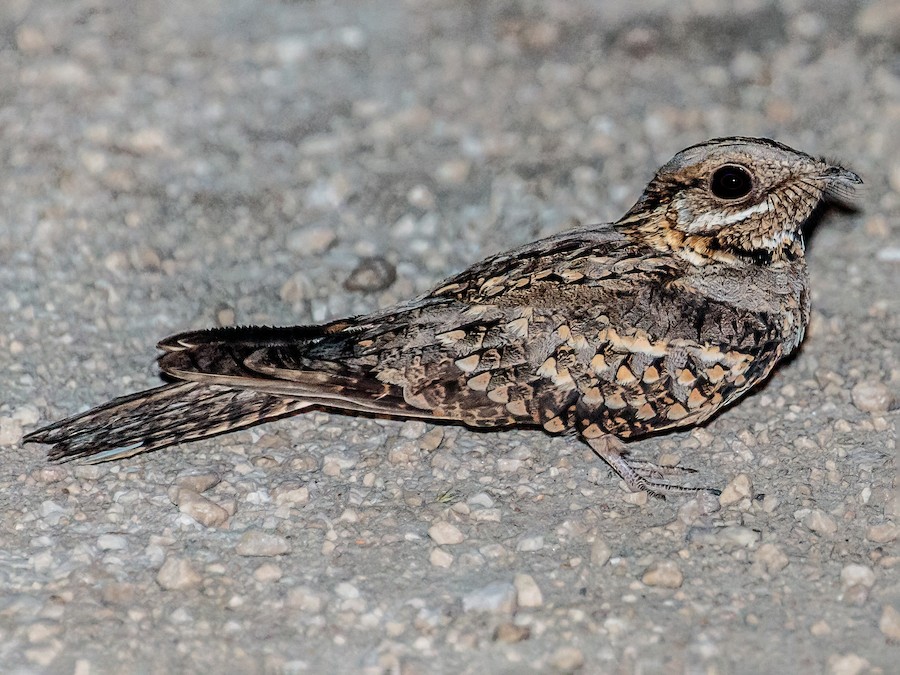
Red-necked Nightjar Resembles Eurasian Nightjar, but larger with a rufous collar and upper breast and lacks the dark “forearms” seen on Eurasian Nightjar. Note the prominent pale tips on the wing coverts. Most active at dusk when hawks for flying insects. Voice is a distinctive repetitive “tuok-tuok-tuok” rising and falling in volume. Haunts sparsely to moderately vegetated open areas such as rocky hillsides, pinewoods, and semidesert in the breeding season and winters in similar habitats in West Africa. Link: Photo Location: Spain image
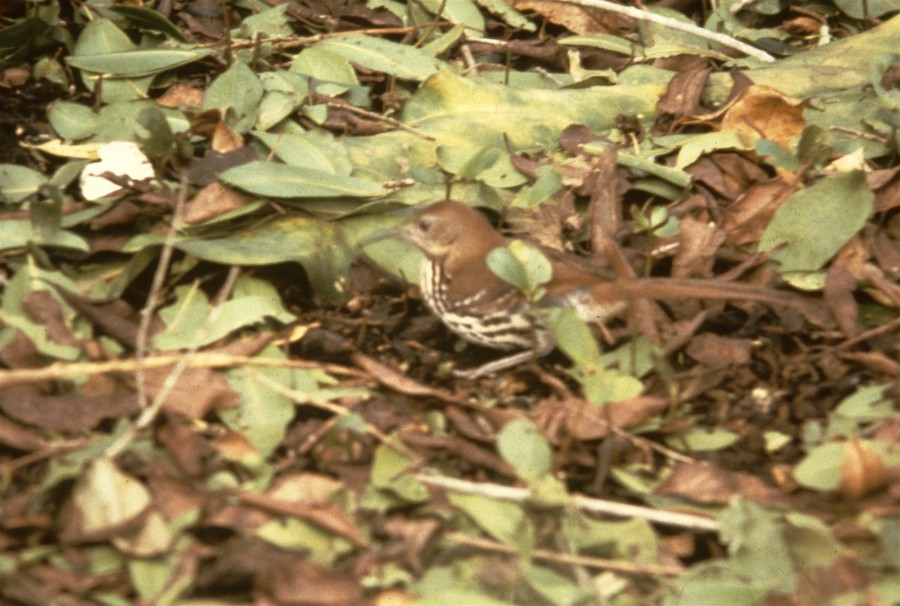
Cozumel Thrasher This striking bird is found only on Cozumel Island near the east coast of Mexico’s Yucatán Peninsula, and is likely extinct. It has not been seen with any certainty since 2004; the decline has been attributed to a series of devastating hurricanes as well as introduced predators. It has a long tail, curved bill, spotted underparts, and a piercing yellow eye. No other thrasher is known from the island. Skulks in dense, scrubby tangles and dark forest understory, where it is quite hard to see. Link: Photo Location: Mexico image
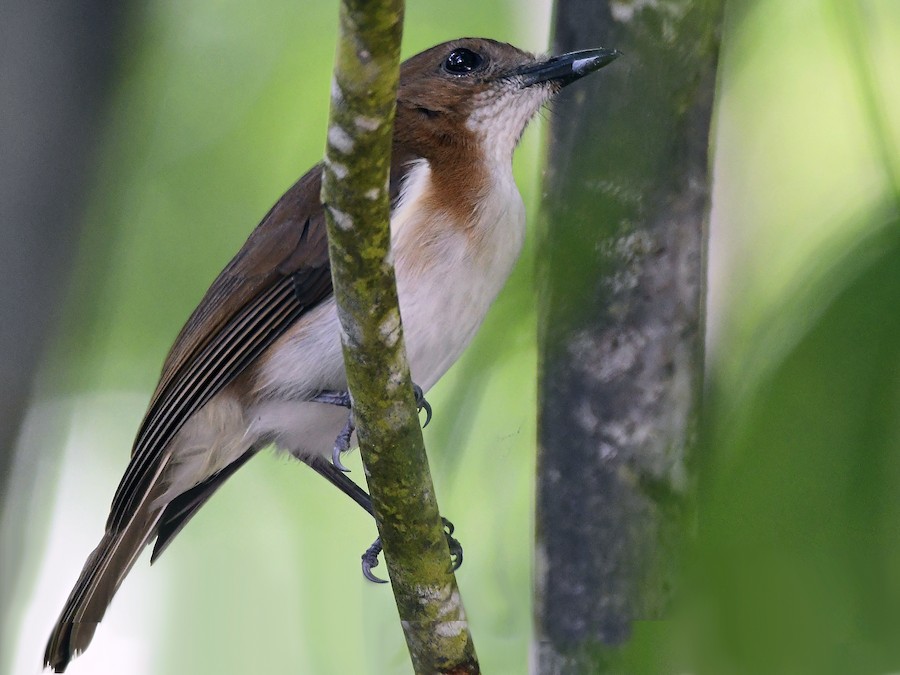
White-vented Whistler Warm brown above and white below with a faint cinnamon wash near the “shoulders” that give it a “vested” appearance. Can be similar to Negros Jungle-Flycatcher, which is generally found at higher altitudes. Look for a combination of longer, smaller-headed profile, and incomplete, diffuse breast band in present species. Found from the central Philippines south to islands off Borneo’s northeastern coast, where it inhabits lowland to submontane forests. Frequently moves with mixed flocks, often in lower levels of forest, but can be found up into the canopy. Gives high, thin, clean-sounding whistles as well as various warbled and whistled notes. Link: Photo Location: Philippines image
Baird's Trogon Unique trogon with dark purplish head and breast, turquoise back, white undertail, and pale blue bill and eyering. No white band between chest and belly. Female mostly gray with red belly, perhaps most similar to Slaty-tailed Trogon but note pale blue eyering, gray bill, and thin white bars on undertail. Limited range. Look for a bird sitting upright and still at middle levels in the forest, slowly turning head searching for prey. Usually single or in pairs. Song is a fairly fast, accelerating series of cluck notes. Link: Photo Location: Costa Rica image