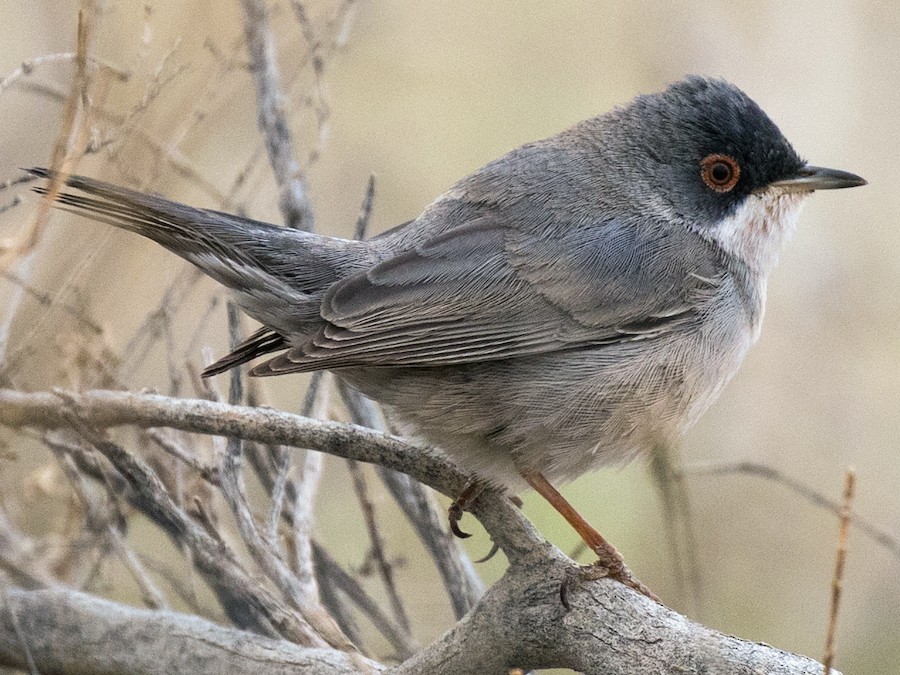
Menetries's Warbler Small, pale gray-buff Curruca warbler. Often cocks its contrastingly dark tail while feeding on the ground. Males have a blackish hood (unlike bolder black hood of the similar Sardinian Warbler), gradually merging into paler neck and mantle. In all plumages wings very plain. Females and young have cold-toned underparts, lacking warmer flanks of Sardinian Warbler. Breeds in tamarisk scrub, vegetated desert, and semi-desert wadis. Winters in arid zones, desert wadis, and plains. Song a short scratchy whistle about 2-3 seconds long with longer pauses. Call a low "trrrrrr. Link: Photo Location: Uzbekistan image
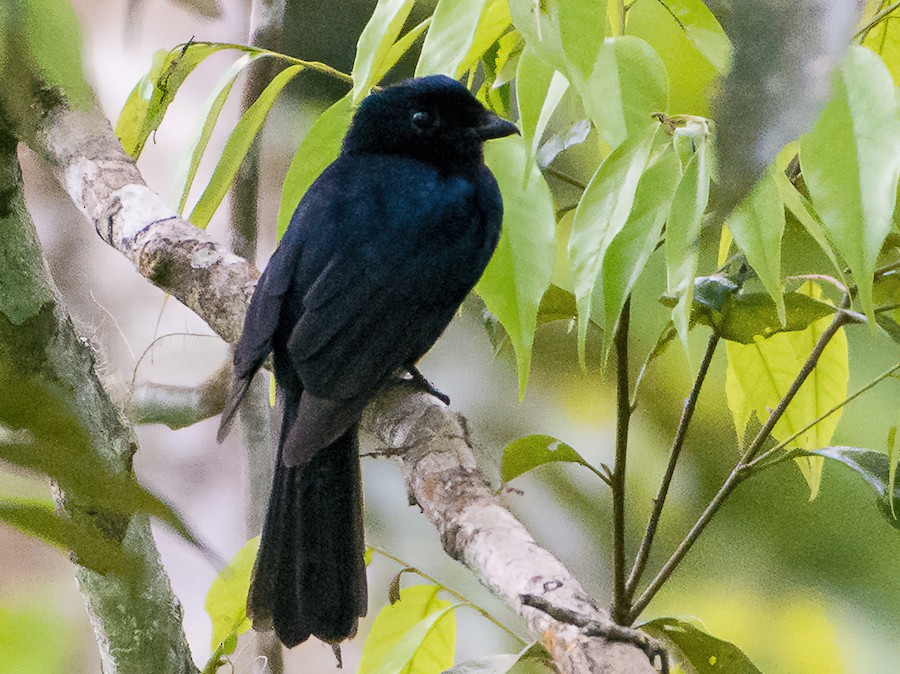
Drongo Fantail A medium-sized bird of forest interior, from the foothill to the mid-mountains. An all-black bird with bluish gloss, long tail, flattened crown and hooked bill. Sits very upright in the midstory where it sallies to catch insects often disturbed by other species in mixed flocks. Very similar to a Spangled Drongo which it mimics the plumage of, but smaller and lacks a forked tail. Voice, a scratchy, drongolike song and a piercing, nasal “geh-geh-geh!” call. Link: Photo Location: Indonesia image
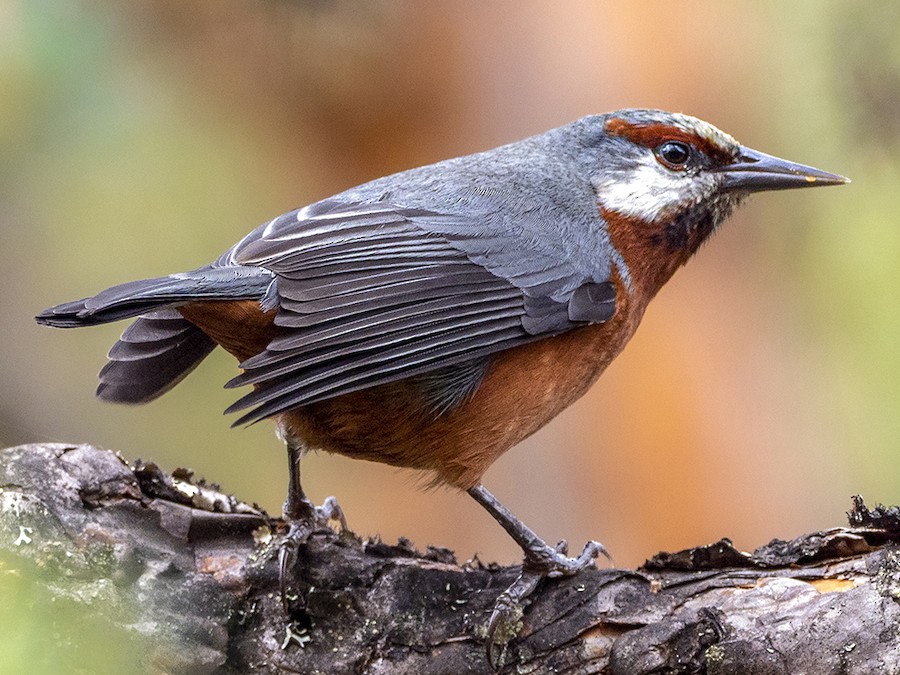
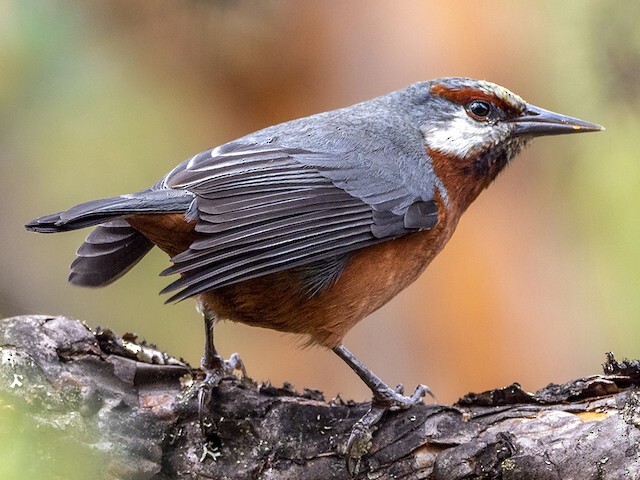
Giant Conebill Scarce to locally fairly common (rare in Chile) nomadic bird of Polylepis woodland in the high Andes. Found as singles or pairs, foraging by creeping on trunks and branches of Polylepis trees, at times in association with mixed-species feeding flocks. Can be confiding, and at other times may fly off long distances in search of other Polylepis patches. No similar species: note pointed bill, white cheeks, and bright rusty underparts, which blend well with Polylepis bark. Link: Photo Location: Ecuador image
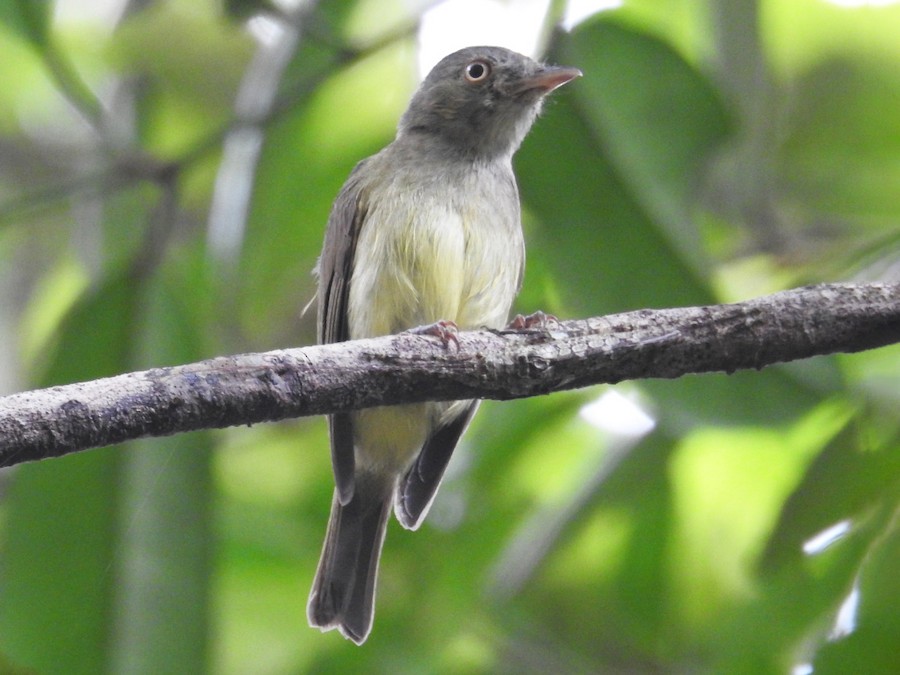
Saffron-crested Tyrant-Manakin A small, inconspicuous bird, much more often heard than seen. Most easily recognized by its striking pale orange eyes; also note gray face and longish bill with pale mandible. Yellow crown patch, though large, is difficult to see in the field. One of the characteristic bird species of white sand forests, occurring in both scrubby and taller forest types. Feeds on fruit and may be seen at fruiting trees and shrubs, though it tends not to be as numerous as other manakins. Best detected by its incessant call: a nasal barking, rather similar to call of Dusky-chested Flycatcher. Display song of male is a bizarre series of twangs, unlike any other bird species in range. Distinguished from Pale-bellied Tyrant-Manakin by paler, oranger eye and by yellower belly. Link: Photo Location: Colombia image
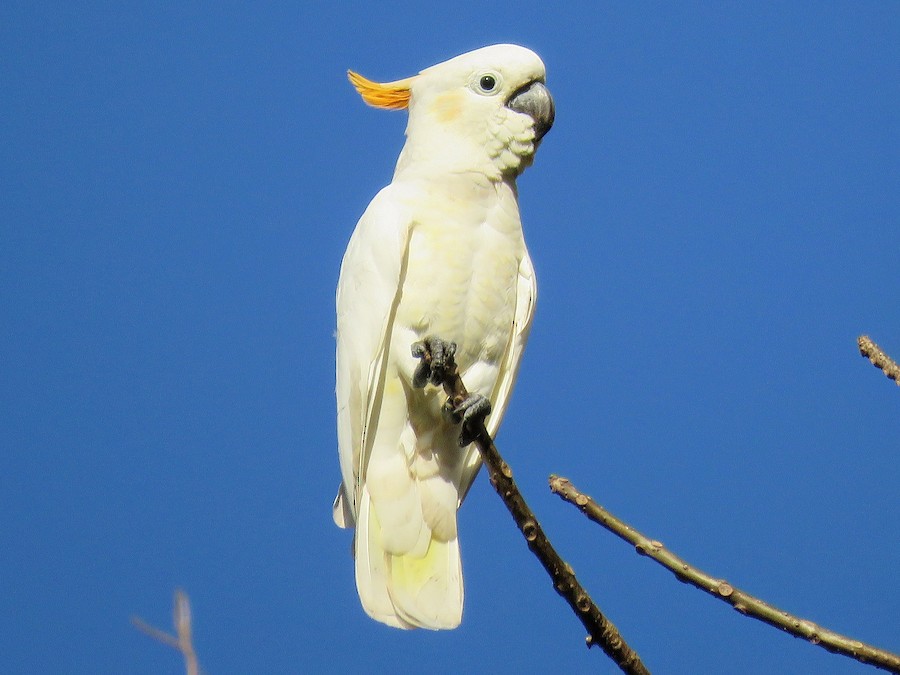
Citron-crested Cockatoo A medium-sized white cockatoo with an orange crest; endemic to the island of Sumba, where it is highly threatened by trapping and habitat loss. Raucous and social, usually seen in large flocks flying noisily over forested areas. Treated by some taxonomies as a subspecies of the more widespread Yellow-crested Cockatoo (no range overlap). Link: Photo Location: Indonesia image
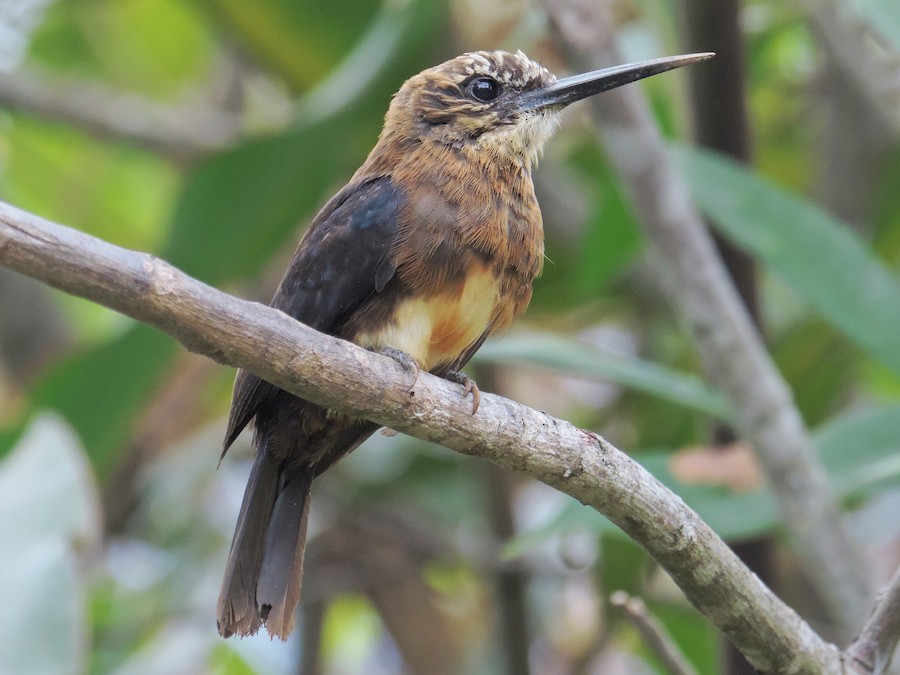
Brown Jacamar A small-headed bird with a long slender bill. Mostly brown with a glossy bluish black, wings, and tail that contrasts with a white chin and belly. Northern subspecies have buffy underparts. Normally sits upright on an exposed branch; often in groups where they sally out to catch insects. Found at the border and in the canopy of forests and savanna woodlands. Link: Photo Location: Colombia image
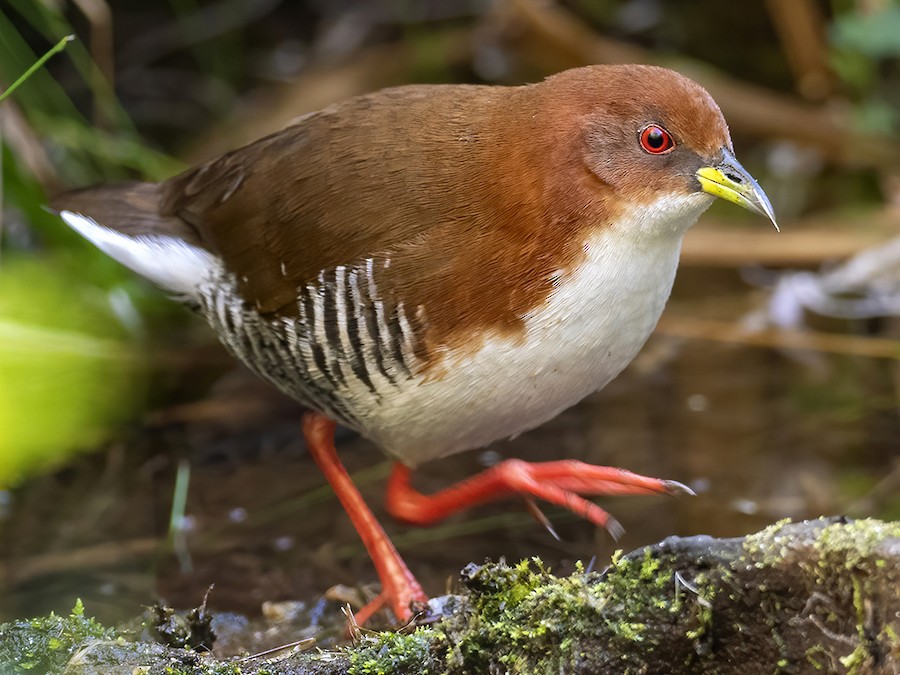
Red-and-white Crake Uncommon and very difficult to see; usually detected by voice, a throaty chatter. Favors wetlands with tall coarse grasses. Note rufous head, brownish back, and white throat and breast with black-and-white broken stripes on the flanks and vent. Lacks the dark cap of the similar Rufous-sided Crake. Link: Photo Location: Brazil image