There’s a new claim that “essentially, all that happened was Trump got tired, took control and forced it on Netanyahu, and this is basically the same deal that could have been reached a year earlier,” with the disturbing implication, that’s horrible to say, that IDF soldiers died in vain for a cause that had already been achieved.
So, let’s revisit the plans that were laid out by both the current and former American administrations to see if they match up. For example, the Biden plan from June 1, 2024, which was met with considerable enthusiasm, and was even later acknowledged as Netanyahu’s plan.
I want to highlight the difference.
In the first phase, the IDF should have already pulled back to roughly its current position, and then it was just about releasing humanitarian hostages. As if not all of them are “humanitarian.”
Then it transitioned to discussing the release of living hostages. In this phase, the IDF would withdraw from all of Gaza, until the last centimetre, while all the dead hostages remain in Gaza.
It’s as different as day and night.
Here, everyone is returning, including the dead, and the IDF is still in half of Gaza. This isn’t just about some desire to maintain an occupation or garrison force, but rather to ensure that Hamas disarms — something that didn’t happen in the Biden proposal.
So now let’s move on to the Witkoff plan, much closer to us, much better for Israel, but still different. There was talk of releasing half of the dead hostages, but then a temporary ceasefire for two months of negotiations to end the war, and then the IDF would withdraw from more places than it is now, and there would be a guarantee that the war would not be renewed.
Once again, we see that there was no connection between the IDF remaining on the ground and the promise that Hamas would disarm, especially while some of the hostages are still there. The greatness of this outline is this issue.
I also want to say something general about the matter of responsibility.
As ridiculous as it was on October 7 and afterwards to hear from Netanyahu’s supporters that the one who is to blame is the IDF chief of staff, the Shin Bet chief, the attorney general and the Military Advocate General, and that Netanyahu has no part in it — it’s as ridiculous as it is that now they’re saying, “Thank you Trump and thank you Nitzan Alon, and thank you to all of them and to the Qatari prime minister, and Netanyahu and Ron Dermer have nothing to do with it at all.”
Indeed, Netanyahu had a very large part in the failure of October 7, and he also has a very large part together with Dermer in this deal.
By the way, how does that connect to what Kushner said tonight in Egypt? He said that both the prime minister and Dermer made very big compromises and took risks to see the end of the war.
I would like to make a suggestion. Once upon a time, when there was only one channel and people didn’t like the commentators, they said, “Watch the game without the commentary.”
I say, let’s watch Trump and Netanyahu’s move without the commentary, because there are a lot of conversations, and this and that, and slander, and sometimes even quotes, but in practice there has never been a president and a prime minister who acted like this, and the results are evident from Iran, through the Golan Heights, through the embassy and now Gaza.
My initial thoughts on the deal.
There’s no phase two. That's clear to everyone, right? Phase two might happen someday, but it’s unrelated to what’s just been signed.
The deal signed now is a hostage release deal. It doesn’t imply anything about the future. Theoretically, fantasies could come true: Emiratis and allies dismantling tunnels, an international body formed, Tony Blair governing Gaza.
All this could happen in theory, but it’s not part of the current tactical negotiations. What we have now is a hostage deal, and a ceasefire while talks continue in good faith.
There’s the question of course: who decides if talks are happening in good faith?
Under Trump, Israel has previously said “Talks aren’t genuine or productive,” and resumed fighting. But this time, I don’t think we’ll see IDF tanks rushing back into Gaza, like what happened when the last two ceasefires ended.
The big question is: Are we moving towards the Lebanese model Israel mentioned? In other words, the IDF stays beyond the international border and strikes targets from the air when it detects buildups or threats.
Attempts to harm Israel are obvious. But what we’re talking about is buildup efforts, like digging more tunnels or building more arms-producing lathes. This is what Israel is aiming for. The reasonable assumption in Jerusalem is that President Trump will approve it.
That’s one point.
The IDF will withdraw to the 53% line. It was 57% initially, then dropped to 53% when the hostages will be freed.
The talks afterwards are based on the principle of Israeli withdrawal in return for demilitarization and dismantling. Of course, we all assume that Hamas won’t disarm willingly, and the Emiratis and other international forces won’t achieve this quickly either.
Now, regarding the hostage issue. I’ll admit than when I hear people say that Israel is “making peace with enemies,” I smell Oslo in the air, and the implications it carries. This isn’t peace, and these are bitter enemies, still on their knees.
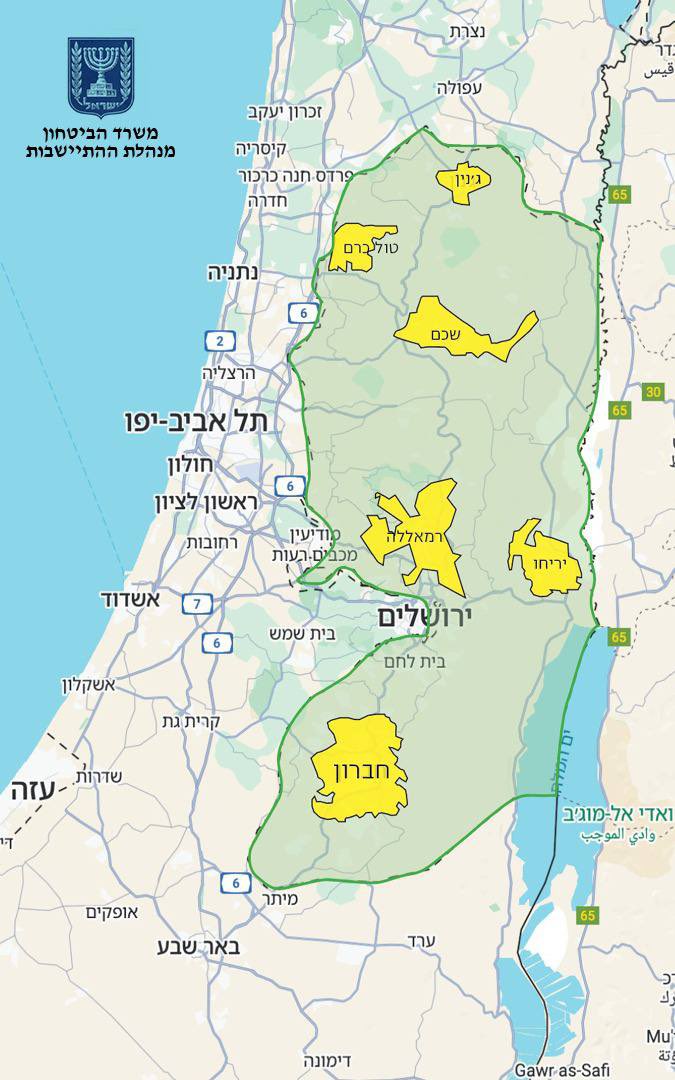
The prospect of opening an embassy in Ramallah is, of course, all very exciting for Paris. So as a local, let me suggest some potential locations for France’s embassy in Ramallah.
If Macron wants his ambassador to be near the Palestinian Authority headquarters, he can put Paris’ embassy on Yahya Ayyash street. Also known as “The Engineer,” Ayyash was the brain behind Hamas’ wave of suicide bombings in the 1990s. By the time Israel eliminated him in 1996, his work had left some 100 Israeli civilians dead and 400 wounded.
Not what France is looking for? Sure. If Macron doesn’t want to be in the heart of the Palestinian capital, he could put the embassy in Al-Bireh, a one mile walk from the Ramallah grave of Palestinian leader Yasser Arafat. Al-Bireh also has its own landmarks, such as Dalal Mughrabi Square.
Born in Lebanon, Mughrabi rose to fame in 1978 after hijacking an Israeli civilian bus and carrying out a massacre that left 38 Israelis dead, including 13 children. Known as the Coastal Road Massacre, it was the deadliest terror attack in Israel’s history until October 7.
But perhaps the French President doesn’t want his embassy next to a square named after a terrorist. That’s quite understandable. Maybe placing it next to a school is more appropriate? In that case, Paris’ ambassador can set up shop next to Amin al-Husseini Elementary School in Al-Bireh, named after Haj Amin al-Husseini.
Jerusalem’s Grand Mufti during the British Mandate, al-Husseini moved to Berlin in November 1941, and met with Adolf Hitler three weeks later. As part of his alliance with the Nazis, al-Husseini, amongst other things, recruited Muslim men to fight in the German Waffen-SS.
Truth be told, wherever France decides to plant its flag, it won’t be far from a shrine to someone who thought Jewish blood was cheap. The only question is whether Macron cares to notice.
bird.makeup - Tweet
🚨France is considering opening an embassy in Ramallah following its recognition of a Palestinian state next month, according to Emmanuel Ma...