
**Astronomy Picture of the Day**
29 December 2025
**M1: The Crab Nebula**
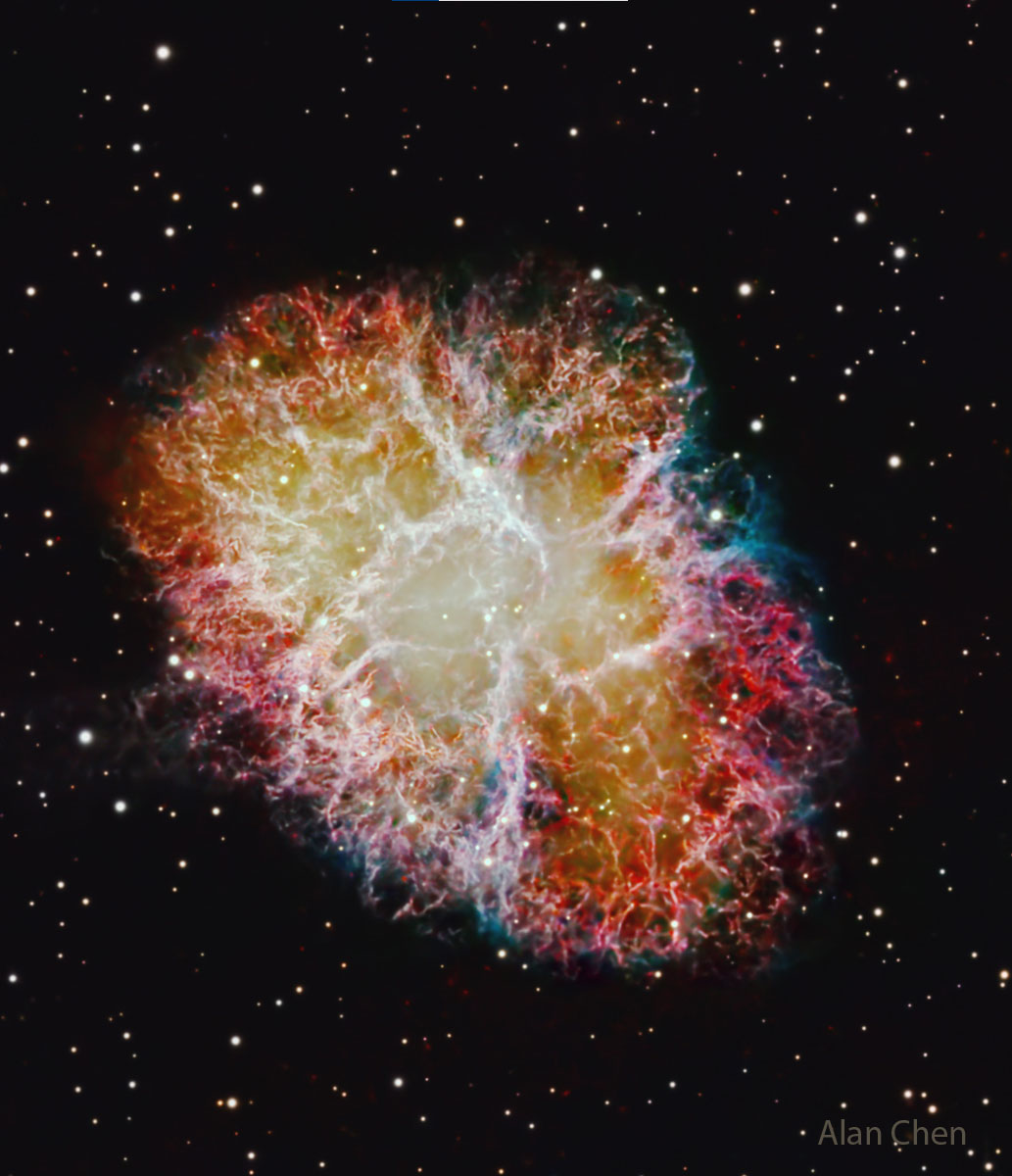 Image Credit & Copyright:
Alan Chen
This is the mess that is left when a star explodes. The Crab Nebula, the result of a supernova seen in 1054 AD, is filled with mysterious filaments. The filaments are not only tremendously complex but appear to have less mass than expelled in the original supernova and a higher speed than expected from a free explosion. The featured image was taken by an amateur astronomer in Leesburg, Florida, USA over three nights last month. It was captured in three primary colors but with extra detail provided by specific emission by hydrogen gas. The Crab Nebula spans about 10 light years. In the Nebula's very center lies a pulsar: a neutron star as massive as the Sun but with only the size of a small town. The Crab Pulsar rotates about 30 times each second. Explore the Universe: Random APOD Generator
#APOD #Galaxy #SpaceMission #SpaceInnovation #Astrogeology
Image Credit & Copyright:
Alan Chen
This is the mess that is left when a star explodes. The Crab Nebula, the result of a supernova seen in 1054 AD, is filled with mysterious filaments. The filaments are not only tremendously complex but appear to have less mass than expelled in the original supernova and a higher speed than expected from a free explosion. The featured image was taken by an amateur astronomer in Leesburg, Florida, USA over three nights last month. It was captured in three primary colors but with extra detail provided by specific emission by hydrogen gas. The Crab Nebula spans about 10 light years. In the Nebula's very center lies a pulsar: a neutron star as massive as the Sun but with only the size of a small town. The Crab Pulsar rotates about 30 times each second. Explore the Universe: Random APOD Generator
#APOD #Galaxy #SpaceMission #SpaceInnovation #Astrogeology
Image Credit & Copyright:
Alan Chen
This is the mess that is left when a star explodes. The Crab Nebula, the result of a supernova seen in 1054 AD, is filled with mysterious filaments. The filaments are not only tremendously complex but appear to have less mass than expelled in the original supernova and a higher speed than expected from a free explosion. The featured image was taken by an amateur astronomer in Leesburg, Florida, USA over three nights last month. It was captured in three primary colors but with extra detail provided by specific emission by hydrogen gas. The Crab Nebula spans about 10 light years. In the Nebula's very center lies a pulsar: a neutron star as massive as the Sun but with only the size of a small town. The Crab Pulsar rotates about 30 times each second. Explore the Universe: Random APOD Generator
#APOD #Galaxy #SpaceMission #SpaceInnovation #Astrogeology
APOD: 2025 December 29 – M1: The Crab Nebula
A different astronomy and space science
related image is featured each day, along with a brief explanation.
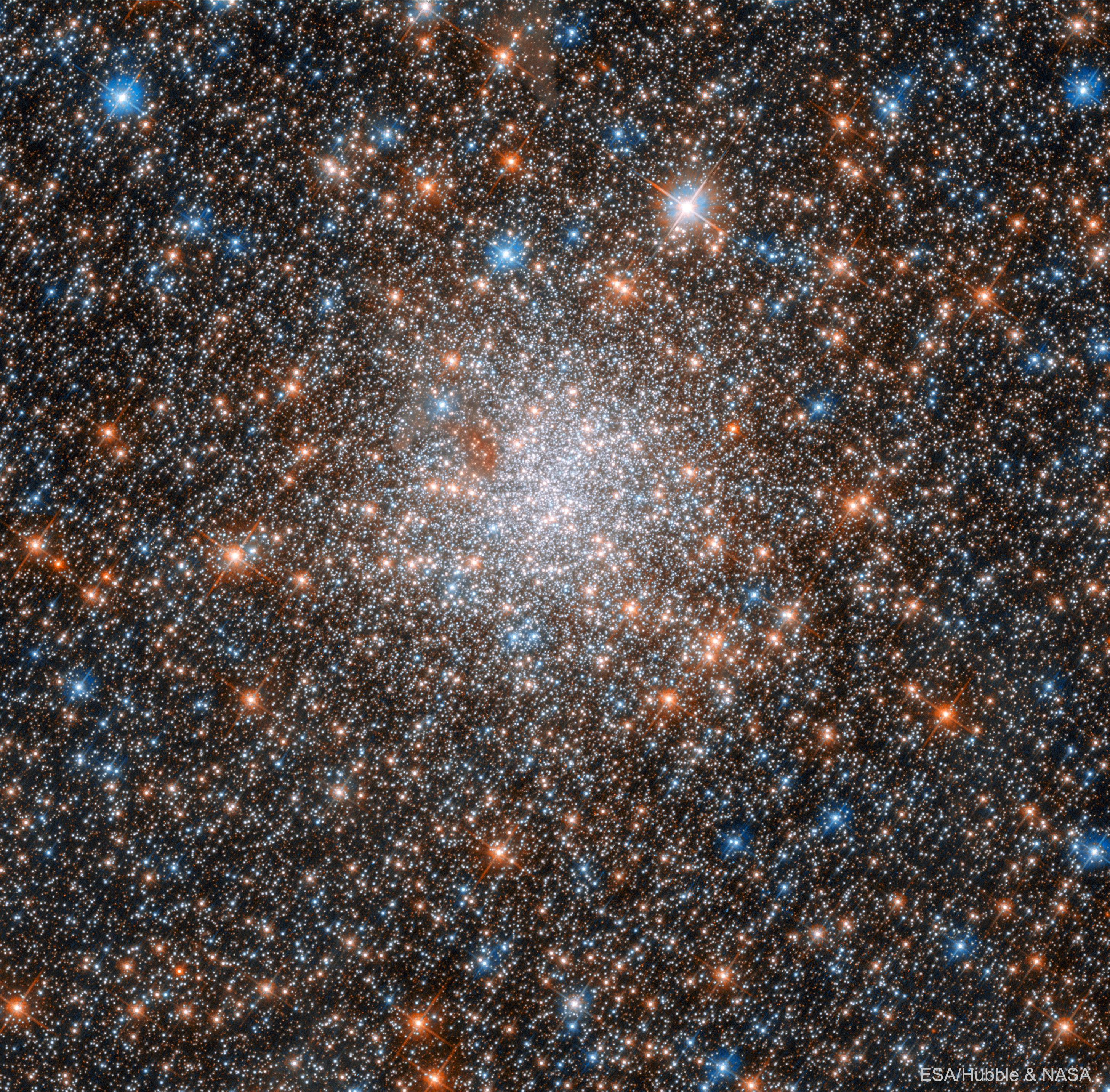 *Image creditor details unavailable via API. Visit linked page below for full info.*
Jewels don't shine this bright -- only stars do. And almost every spot in this jewel-box of an image from the Hubble Space Telescope is a star. Now, some stars are more red than our Sun, and some more blue -- but all of them are much farther away. Although it takes light about 8 minutes to reach Earth from the Sun, NGC 1898 is so far away that it takes light about 160,000 years to get here. This huge ball of stars, NGC 1898, is called a globular cluster and resides in the central bar of the Large Magellanic Cloud (LMC) -- a satellite galaxy of our Milky Way Galaxy. The featured multi-colored image includes light from the infrared to the ultraviolet and was taken to help determine if the stars of NGC 1898 all formed at the same time or at different times. There are increasing indications that most globular clusters formed stars in stages, and that, in particular, stars from NGC 1898 formed shortly after ancient encounters with the Small Magellanic Cloud (SMC) and our Milky Way Galaxy. Space Telescopes Live: Where are Hubble and Webb looking right now?
#APOD #Astrobiology #Astrophoto #Meteorology #LunarMission
*Image creditor details unavailable via API. Visit linked page below for full info.*
Jewels don't shine this bright -- only stars do. And almost every spot in this jewel-box of an image from the Hubble Space Telescope is a star. Now, some stars are more red than our Sun, and some more blue -- but all of them are much farther away. Although it takes light about 8 minutes to reach Earth from the Sun, NGC 1898 is so far away that it takes light about 160,000 years to get here. This huge ball of stars, NGC 1898, is called a globular cluster and resides in the central bar of the Large Magellanic Cloud (LMC) -- a satellite galaxy of our Milky Way Galaxy. The featured multi-colored image includes light from the infrared to the ultraviolet and was taken to help determine if the stars of NGC 1898 all formed at the same time or at different times. There are increasing indications that most globular clusters formed stars in stages, and that, in particular, stars from NGC 1898 formed shortly after ancient encounters with the Small Magellanic Cloud (SMC) and our Milky Way Galaxy. Space Telescopes Live: Where are Hubble and Webb looking right now?
#APOD #Astrobiology #Astrophoto #Meteorology #LunarMission
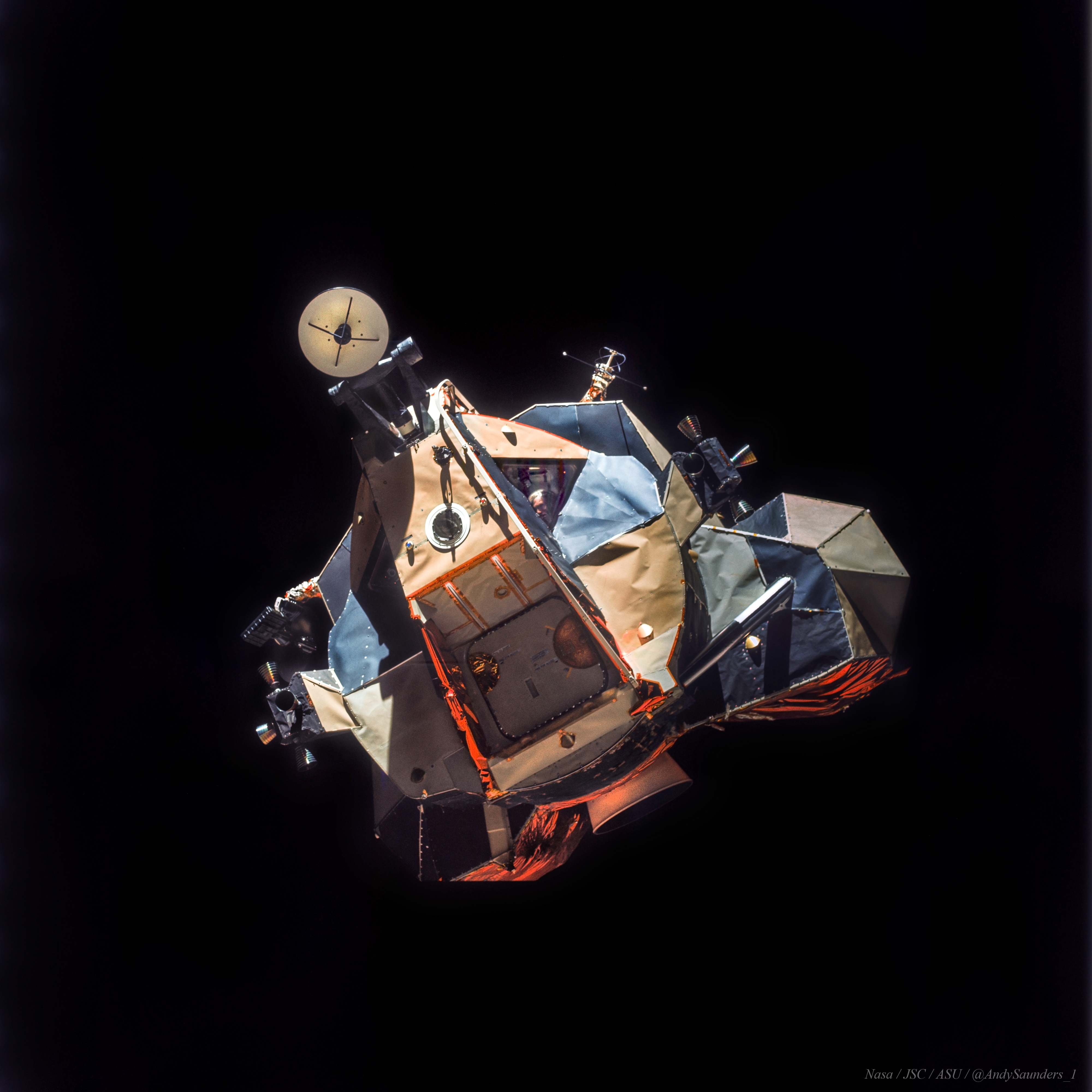 *Image creditor details unavailable via API. Visit linked page below for full info.*
Awkward and angular looking, Apollo 17's lunar module Challenger was designed for flight in the near vacuum of space. Digitally enhanced and reprocessed, this picture taken from Apollo 17's command module America shows Challenger's ascent stage in lunar orbit. Small reaction control thrusters are at the sides of the moonship with the bell of the ascent rocket engine underneath. The hatch that allowed access to the lunar surface is seen at the front, with a round radar antenna at the top. Mission commander Gene Cernan is clearly visible through the triangular window. This spaceship performed gracefully, landing on the Moon and returning the Apollo astronauts to the orbiting command module in December of 1972. So where is Challenger now? While its descent stage remains at the Apollo 17 landing site in the Taurus-Littrow valley, the ascent stage pictured was intentionally crashed nearby after being jettisoned from the command module prior to the astronauts' return to planet Earth.
#APOD #CosmosJourney #Astrophotography #AstronomyLovers #GalacticAdventures
*Image creditor details unavailable via API. Visit linked page below for full info.*
Awkward and angular looking, Apollo 17's lunar module Challenger was designed for flight in the near vacuum of space. Digitally enhanced and reprocessed, this picture taken from Apollo 17's command module America shows Challenger's ascent stage in lunar orbit. Small reaction control thrusters are at the sides of the moonship with the bell of the ascent rocket engine underneath. The hatch that allowed access to the lunar surface is seen at the front, with a round radar antenna at the top. Mission commander Gene Cernan is clearly visible through the triangular window. This spaceship performed gracefully, landing on the Moon and returning the Apollo astronauts to the orbiting command module in December of 1972. So where is Challenger now? While its descent stage remains at the Apollo 17 landing site in the Taurus-Littrow valley, the ascent stage pictured was intentionally crashed nearby after being jettisoned from the command module prior to the astronauts' return to planet Earth.
#APOD #CosmosJourney #Astrophotography #AstronomyLovers #GalacticAdventures
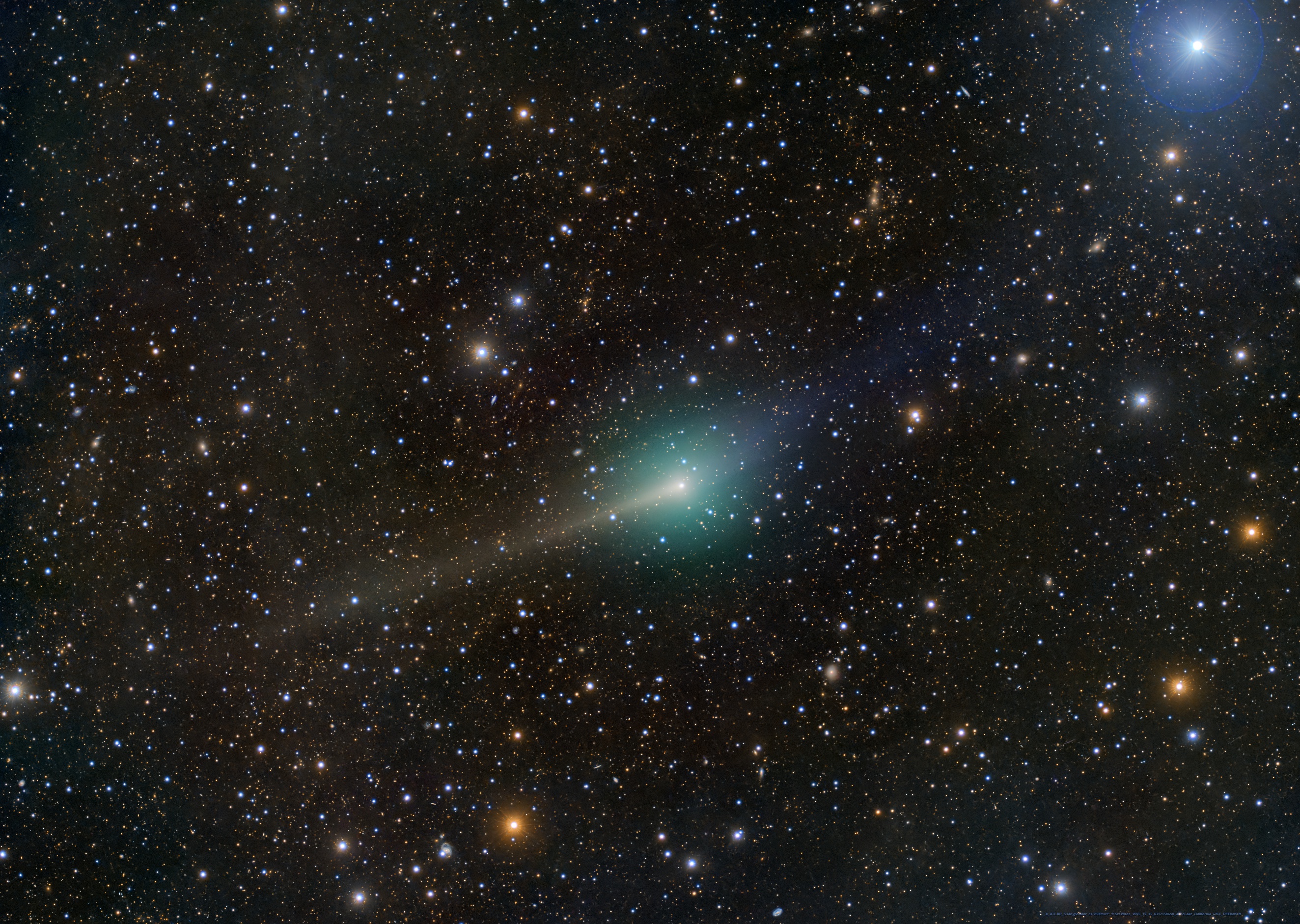 Image Credit & Copyright: Dan Bartlett
Attention grabbing interstellar visitor 3I/ATLAS made its not-so-close flyby of our fair planet on December 19 at a distance of 1.8 astronomical units. That's about 900 light-seconds. Still, this deep exposure captures the comet from another star system as it gently swept across a faint background of stars in the constellation Leo about 4 days earlier, on the night of December 15. Though faint, colors emphasized in the image data, show off the comet's yellowish dust tail and bluish ion tail along with a greenish tinged coma. And even while scrutinized by arrays of telescopes and spacecraft from planet Earth, 3I ATLAS is headed out of the Solar System. It's presently moving outward along a hyperbolic trajectory at about 64 kilometers per second relative to the Sun, too fast to be bound the Sun's gravity.
#APOD #SpaceExploration #Astrophysics #SpaceObservatory #SpaceMissions
Image Credit & Copyright: Dan Bartlett
Attention grabbing interstellar visitor 3I/ATLAS made its not-so-close flyby of our fair planet on December 19 at a distance of 1.8 astronomical units. That's about 900 light-seconds. Still, this deep exposure captures the comet from another star system as it gently swept across a faint background of stars in the constellation Leo about 4 days earlier, on the night of December 15. Though faint, colors emphasized in the image data, show off the comet's yellowish dust tail and bluish ion tail along with a greenish tinged coma. And even while scrutinized by arrays of telescopes and spacecraft from planet Earth, 3I ATLAS is headed out of the Solar System. It's presently moving outward along a hyperbolic trajectory at about 64 kilometers per second relative to the Sun, too fast to be bound the Sun's gravity.
#APOD #SpaceExploration #Astrophysics #SpaceObservatory #SpaceMissions
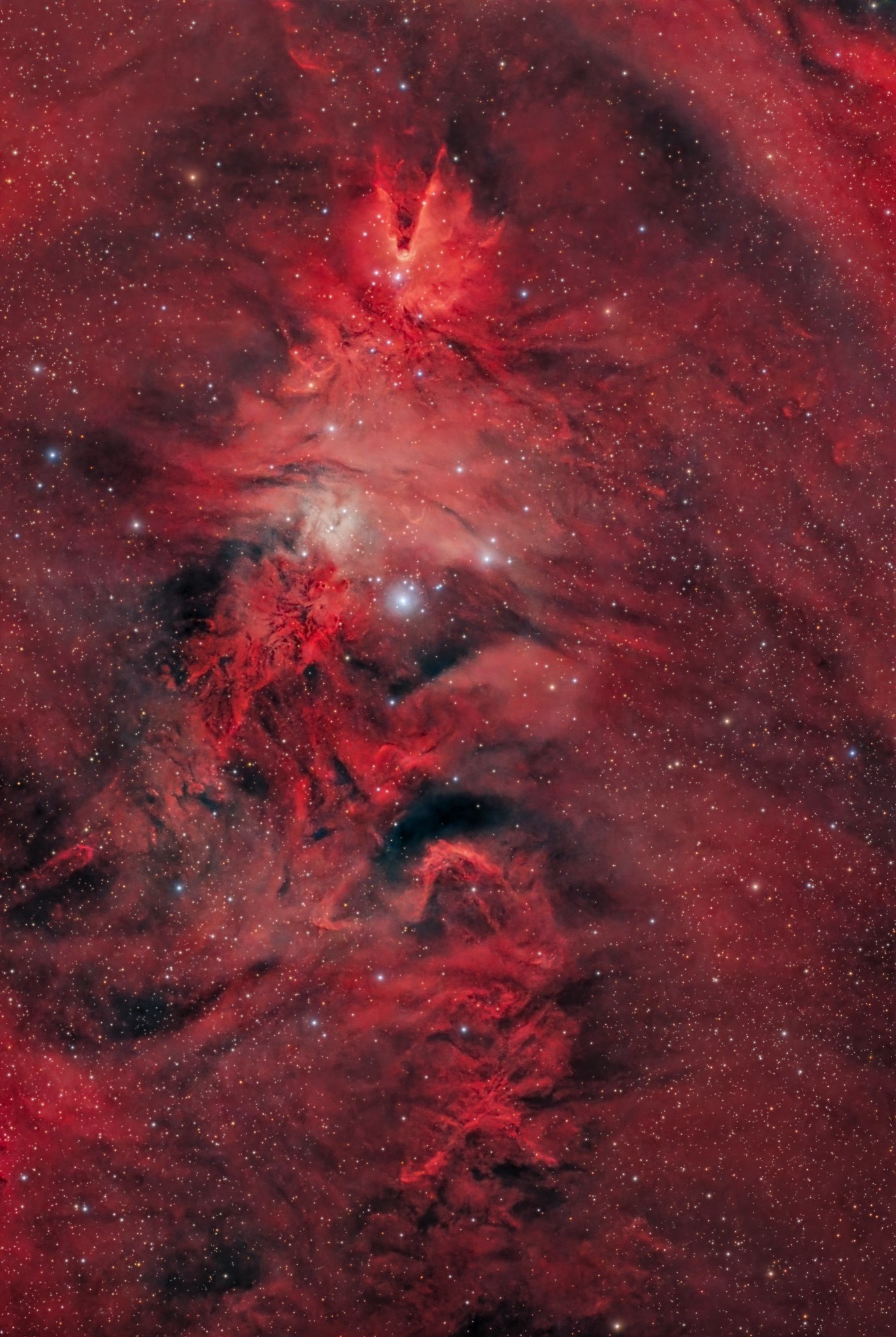 Image Credit & Copyright: Michael Kalika
A star forming region cataloged as NGC 2264, this beautiful but complex arrangement of interstellar gas and dust is about 2,700 light-years distant in the faint but fanciful constellation Monoceros, the Unicorn. Seen toward the celestial equator and near the plane of our Milky Way galaxy, the seasonal skyscape mixes reddish emission nebulae excited by energetic light from newborn stars with dark interstellar dust clouds. Where the otherwise obscuring dust clouds lie close to the hot, young stars, they also reflect starlight, forming blue reflection nebulae. In fact, bright variable star S Monocerotis is immersed in a blue-tinted haze near center. Arrayed with a simple triangular outline above S Monocerotis, the stars of NGC 2264 are popularly known as the Christmas Tree star cluster. Carved by energetic starlight, the Cone Nebula sits upside down at the apex of this cosmic Christmas tree while the dusty, convoluted pelt of glowing gas and dust under the tree is called the Fox Fur Nebula. This rich telescopic frame spans about 1.5 degrees or 3 full moons on the sky top to bottom, covering nearly 80 light-years at the distance of NGC 2264.
#APOD #Meteorology #Exploration #Space #SpaceMission
Image Credit & Copyright: Michael Kalika
A star forming region cataloged as NGC 2264, this beautiful but complex arrangement of interstellar gas and dust is about 2,700 light-years distant in the faint but fanciful constellation Monoceros, the Unicorn. Seen toward the celestial equator and near the plane of our Milky Way galaxy, the seasonal skyscape mixes reddish emission nebulae excited by energetic light from newborn stars with dark interstellar dust clouds. Where the otherwise obscuring dust clouds lie close to the hot, young stars, they also reflect starlight, forming blue reflection nebulae. In fact, bright variable star S Monocerotis is immersed in a blue-tinted haze near center. Arrayed with a simple triangular outline above S Monocerotis, the stars of NGC 2264 are popularly known as the Christmas Tree star cluster. Carved by energetic starlight, the Cone Nebula sits upside down at the apex of this cosmic Christmas tree while the dusty, convoluted pelt of glowing gas and dust under the tree is called the Fox Fur Nebula. This rich telescopic frame spans about 1.5 degrees or 3 full moons on the sky top to bottom, covering nearly 80 light-years at the distance of NGC 2264.
#APOD #Meteorology #Exploration #Space #SpaceMission