
**Astronomy Picture of the Day**
20 May 2024
**Aurora Dome Sky**
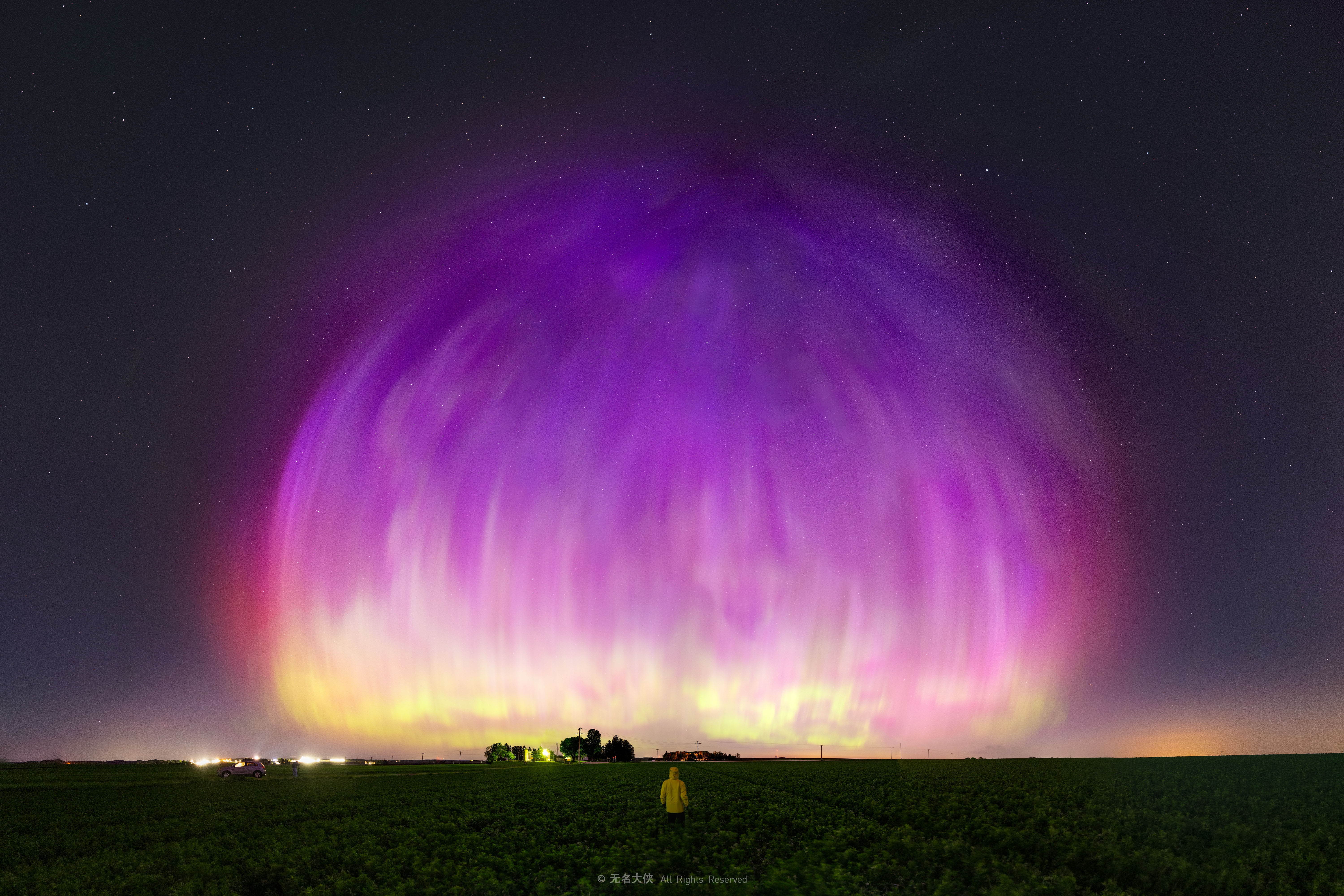 Image Credit & Copyright:
Xuecheng Liu &
Yuxuan Liu
It seemed like night, but part of the sky glowed purple. It was the now famous night of May 10, 2024, when people over much of the world reported beautiful aurora-filled skies. The featured image was captured this night during early morning hours from Arlington, Wisconsin, USA. The panorama is a composite of several 6-second exposures covering two thirds of the visible sky, with north in the center, and processed to heighten the colors and remove electrical wires. The photographer (in the foreground) reported that the aurora appeared to flow from a point overhead but illuminated the sky only toward the north. The aurora's energetic particles originated from CMEs ejected from our Sun over sunspot AR 6443 a few days before. This large active region rotated to the far side of the Sun last week, but may well survive to rotate back toward the Earth next week.
#APOD #AstronomyClub #Astronomy #Stargazing #SpaceStation
Image Credit & Copyright:
Xuecheng Liu &
Yuxuan Liu
It seemed like night, but part of the sky glowed purple. It was the now famous night of May 10, 2024, when people over much of the world reported beautiful aurora-filled skies. The featured image was captured this night during early morning hours from Arlington, Wisconsin, USA. The panorama is a composite of several 6-second exposures covering two thirds of the visible sky, with north in the center, and processed to heighten the colors and remove electrical wires. The photographer (in the foreground) reported that the aurora appeared to flow from a point overhead but illuminated the sky only toward the north. The aurora's energetic particles originated from CMEs ejected from our Sun over sunspot AR 6443 a few days before. This large active region rotated to the far side of the Sun last week, but may well survive to rotate back toward the Earth next week.
#APOD #AstronomyClub #Astronomy #Stargazing #SpaceStation
Image Credit & Copyright:
Xuecheng Liu &
Yuxuan Liu
It seemed like night, but part of the sky glowed purple. It was the now famous night of May 10, 2024, when people over much of the world reported beautiful aurora-filled skies. The featured image was captured this night during early morning hours from Arlington, Wisconsin, USA. The panorama is a composite of several 6-second exposures covering two thirds of the visible sky, with north in the center, and processed to heighten the colors and remove electrical wires. The photographer (in the foreground) reported that the aurora appeared to flow from a point overhead but illuminated the sky only toward the north. The aurora's energetic particles originated from CMEs ejected from our Sun over sunspot AR 6443 a few days before. This large active region rotated to the far side of the Sun last week, but may well survive to rotate back toward the Earth next week.
#APOD #AstronomyClub #Astronomy #Stargazing #SpaceStation
APOD: 2024 May 20 – Aurora Dome Sky
A different astronomy and space science
related image is featured each day, along with a brief explanation.
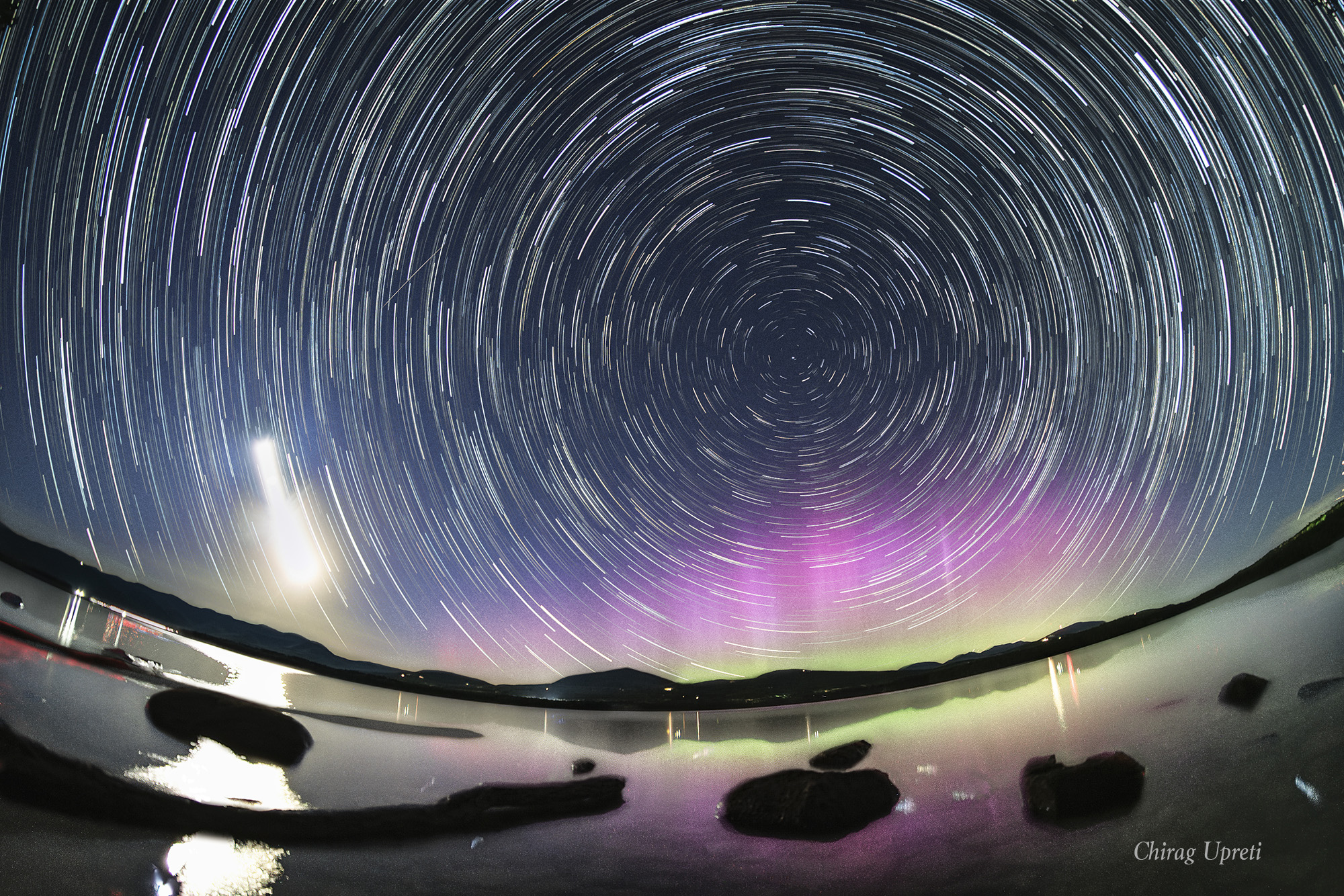 Image Credit & Copyright: Chirag Upreti
Graceful star trail arcs reflect planet Earth's daily rotation in this colorful night skyscape. To create the timelapse composite, on May 12 consecutive exposures were recorded with a camera fixed to a tripod on the shores of the Ashokan Reservoir, in the Catskills region of New York, USA. North star Polaris is near the center of the star trail arcs. The broad trail of a waxing crescent Moon is on the left, casting a strong reflection across the reservoir waters. With intense solar activity driving recent geomagnetic storms, the colorful aurora borealis or northern lights, rare to the region, shine under Polaris and the north celestial pole. AuroraSaurus: Report your aurora observations
#APOD #NASA #Astrochemistry #Cosmology #Meteorology
Image Credit & Copyright: Chirag Upreti
Graceful star trail arcs reflect planet Earth's daily rotation in this colorful night skyscape. To create the timelapse composite, on May 12 consecutive exposures were recorded with a camera fixed to a tripod on the shores of the Ashokan Reservoir, in the Catskills region of New York, USA. North star Polaris is near the center of the star trail arcs. The broad trail of a waxing crescent Moon is on the left, casting a strong reflection across the reservoir waters. With intense solar activity driving recent geomagnetic storms, the colorful aurora borealis or northern lights, rare to the region, shine under Polaris and the north celestial pole. AuroraSaurus: Report your aurora observations
#APOD #NASA #Astrochemistry #Cosmology #Meteorology
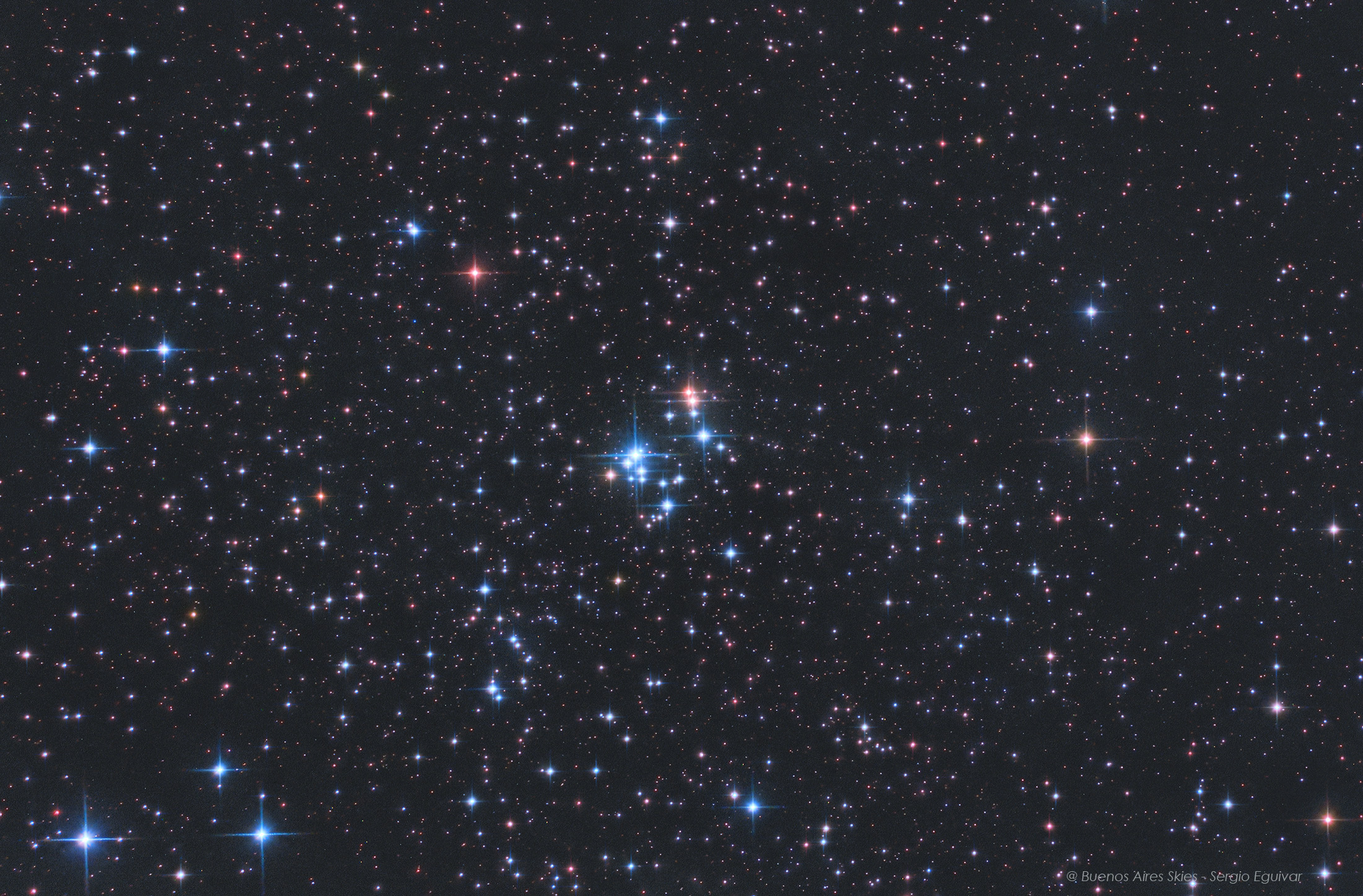 Image Credit & Copyright: Sergio Eguivar
For the mostly harmless denizens of planet Earth, the brighter stars of open cluster NGC 2169 seem to form a cosmic 37. Did you expect 42? From our perspective, the improbable numerical asterism appears solely by chance. It lies at an estimated distance of 3,300 light-years toward the constellation Orion. As far as galactic or open star clusters go, NGC 2169 is a small one, spanning about 7 light-years. Formed at the same time from the same cloud of dust and gas, the stars of NGC 2169 are only about 11 million years old. Such clusters are expected to disperse over time as they encounter other stars, interstellar clouds, and experience gravitational tides while hitchhiking through the galaxy. Over four billion years ago, our own Sun was likely formed in a similar open cluster of stars. Gallery: Earth Aurora from Solar Active Region 3664
#APOD #SpaceResearch #Astroeducation #PlanetaryExploration #LunarExploration
Image Credit & Copyright: Sergio Eguivar
For the mostly harmless denizens of planet Earth, the brighter stars of open cluster NGC 2169 seem to form a cosmic 37. Did you expect 42? From our perspective, the improbable numerical asterism appears solely by chance. It lies at an estimated distance of 3,300 light-years toward the constellation Orion. As far as galactic or open star clusters go, NGC 2169 is a small one, spanning about 7 light-years. Formed at the same time from the same cloud of dust and gas, the stars of NGC 2169 are only about 11 million years old. Such clusters are expected to disperse over time as they encounter other stars, interstellar clouds, and experience gravitational tides while hitchhiking through the galaxy. Over four billion years ago, our own Sun was likely formed in a similar open cluster of stars. Gallery: Earth Aurora from Solar Active Region 3664
#APOD #SpaceResearch #Astroeducation #PlanetaryExploration #LunarExploration
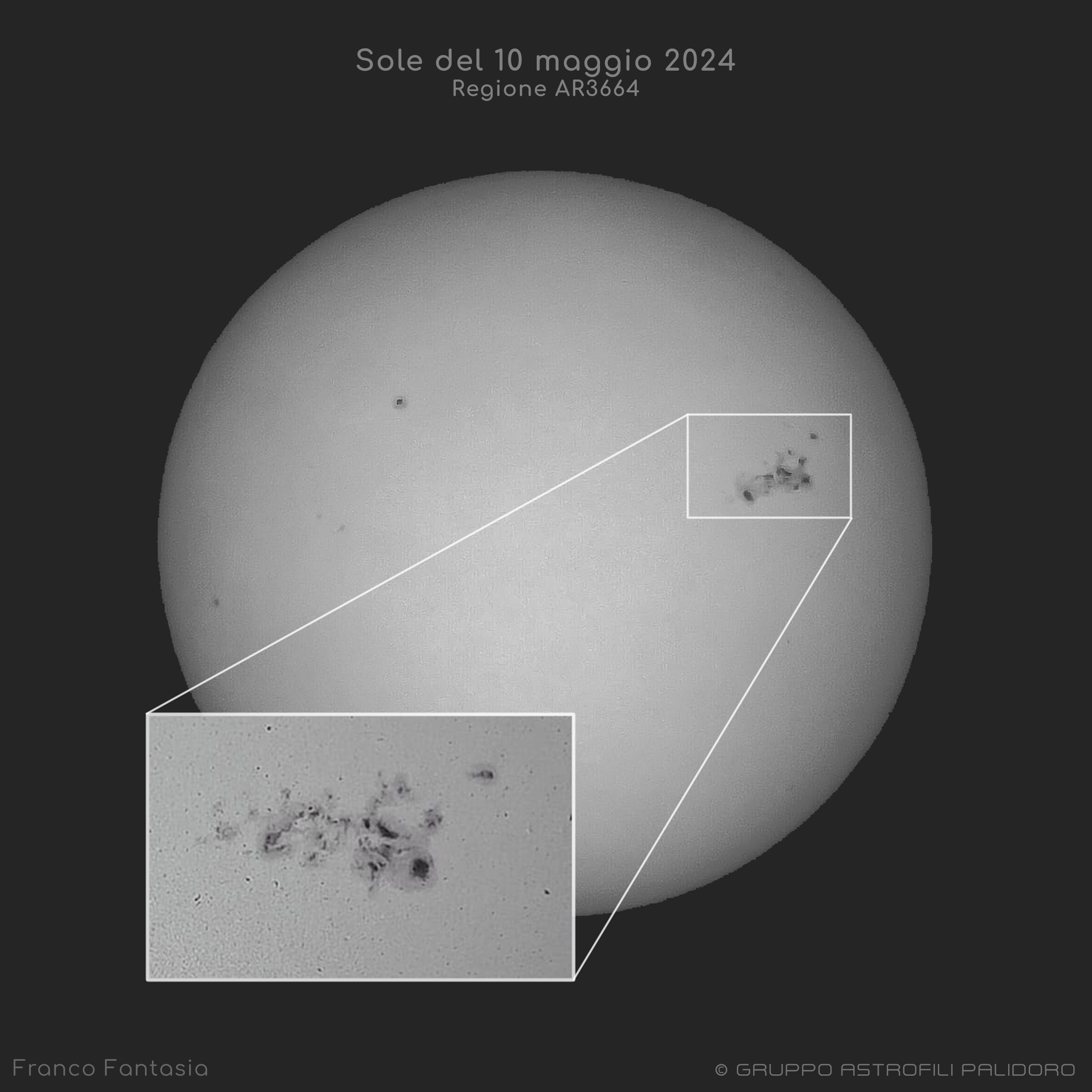 Image Credit & Copyright:
Franco Fantasia &
Guiseppe Conzo
(Gruppo Astrofili Palidoro)
Right now, one of the largest sunspot groups in recent history is crossing the Sun. Active Region 3664 is not only big -- it's violent, throwing off clouds of particles into the Solar System. Some of these CMEs are already impacting the Earth, and others might follow. At the extreme, these solar storms could cause some Earth-orbiting satellites to malfunction, the Earth's atmosphere to slightly distort, and electrical power grids to surge. When impacting Earth's upper atmosphere, these particles can produce beautiful auroras, with some auroras already being reported unusually far south. Pictured here, AR3664 and its dark sunspots were captured yesterday in visible light from Rome, Italy. The AR3664 sunspot group is so large that it is visible just with glasses designed to view last month's total solar eclipse. This weekend, skygazing enthusiasts will be keenly watching the night skies all over the globe for bright and unusual auroras. Gallery: Active Region 6443 on the Sun
#APOD #SpaceIndustry #BlackHoles #Astrophoto #Astrophysics
Image Credit & Copyright:
Franco Fantasia &
Guiseppe Conzo
(Gruppo Astrofili Palidoro)
Right now, one of the largest sunspot groups in recent history is crossing the Sun. Active Region 3664 is not only big -- it's violent, throwing off clouds of particles into the Solar System. Some of these CMEs are already impacting the Earth, and others might follow. At the extreme, these solar storms could cause some Earth-orbiting satellites to malfunction, the Earth's atmosphere to slightly distort, and electrical power grids to surge. When impacting Earth's upper atmosphere, these particles can produce beautiful auroras, with some auroras already being reported unusually far south. Pictured here, AR3664 and its dark sunspots were captured yesterday in visible light from Rome, Italy. The AR3664 sunspot group is so large that it is visible just with glasses designed to view last month's total solar eclipse. This weekend, skygazing enthusiasts will be keenly watching the night skies all over the globe for bright and unusual auroras. Gallery: Active Region 6443 on the Sun
#APOD #SpaceIndustry #BlackHoles #Astrophoto #Astrophysics
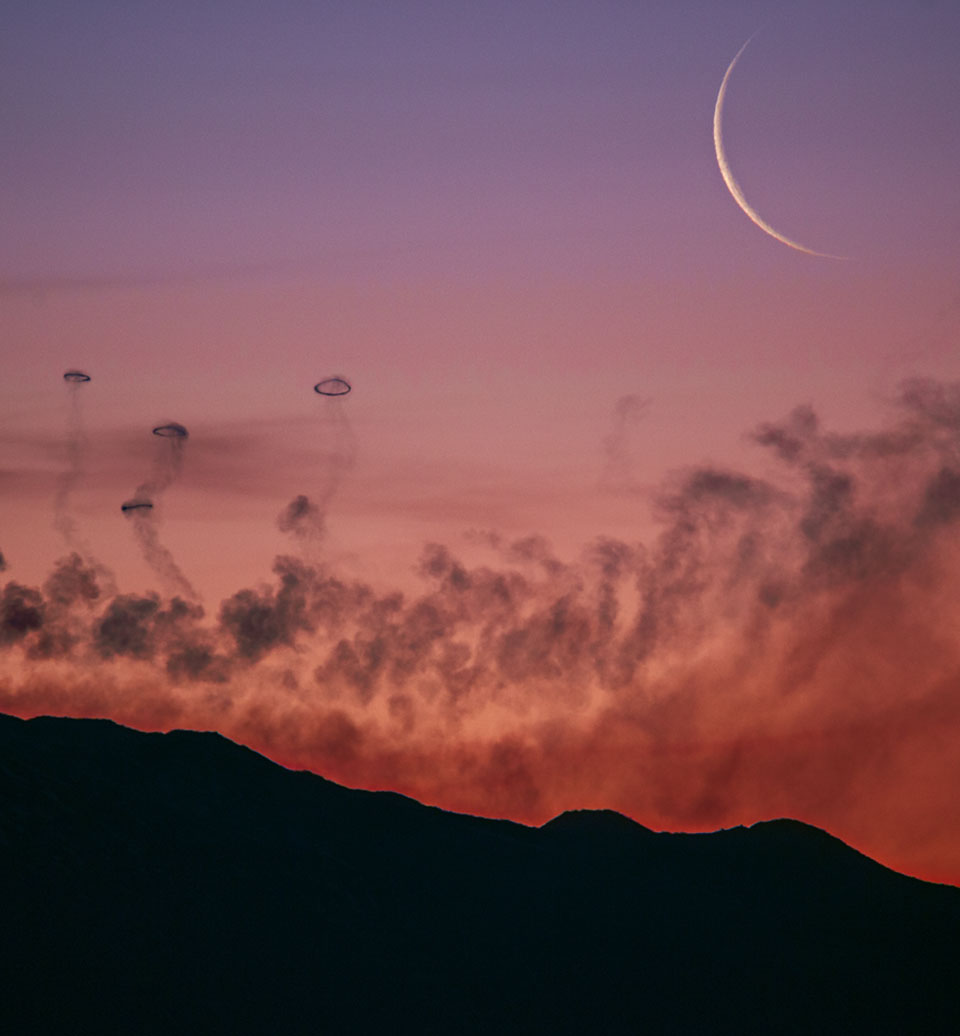 Image Credit & Copyright:
Dario Giannobile
Yes, but can your volcano do this? To the surprise of some, Mt. Etna emits, on occasion, smoke rings. Technically known as vortex rings, the walls of the volcano slightly slow the outside of emitted smoke puffs, causing the inside gas to move faster. A circle of low pressure develops so that the emitted puff of volcanic gas and ash loops around in a ring, a familiar geometric structure that can be surprisingly stable as it rises. Smoke rings are quite rare and need a coincidence of the right geometry of the vent, the right speed of ejected smoke, and the relative calmness of the outside atmosphere. In the featured image taken about two weeks ago from Gangi, Sicily, Italy, multiple volcanic smoke rings are visible. The scene is shaded by the red light of a dawn Sun, while a crescent Moon is visible in the background.
#APOD #AstronautLife #Galaxy #GalaxyExploration #RocketLaunch
Image Credit & Copyright:
Dario Giannobile
Yes, but can your volcano do this? To the surprise of some, Mt. Etna emits, on occasion, smoke rings. Technically known as vortex rings, the walls of the volcano slightly slow the outside of emitted smoke puffs, causing the inside gas to move faster. A circle of low pressure develops so that the emitted puff of volcanic gas and ash loops around in a ring, a familiar geometric structure that can be surprisingly stable as it rises. Smoke rings are quite rare and need a coincidence of the right geometry of the vent, the right speed of ejected smoke, and the relative calmness of the outside atmosphere. In the featured image taken about two weeks ago from Gangi, Sicily, Italy, multiple volcanic smoke rings are visible. The scene is shaded by the red light of a dawn Sun, while a crescent Moon is visible in the background.
#APOD #AstronautLife #Galaxy #GalaxyExploration #RocketLaunch
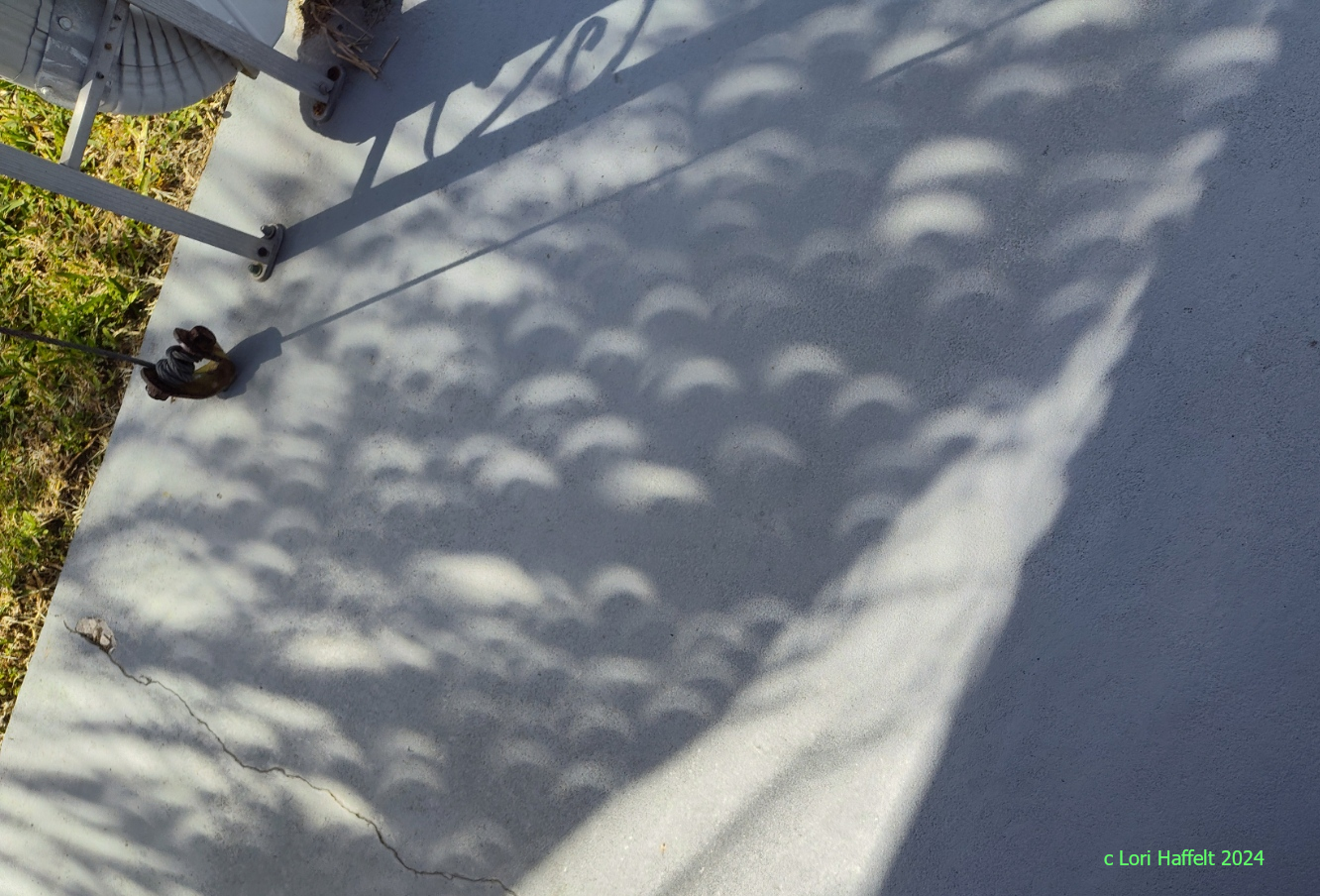 Image Credit & Copyright: Lori Haffelt
Only those along the narrow track of the Moon's shadow on April 8 saw a total solar eclipse. But most of North America still saw a partial eclipse of the Sun. From Clearwater, Florida, USA this single snapshot captured multiple images of that more widely viewed celestial event without observing the Sun directly. In the shade of a palm tree, criss-crossing fronds are projecting recognizable eclipse images on the ground, pinhole camera style. In Clearwater the maximum eclipse phase was about 53 percent. Solar Eclipse Imagery: Notable Submissions to APOD
#APOD #Astronomy #PlanetaryExploration #Astronauts #Astrogeology
Image Credit & Copyright: Lori Haffelt
Only those along the narrow track of the Moon's shadow on April 8 saw a total solar eclipse. But most of North America still saw a partial eclipse of the Sun. From Clearwater, Florida, USA this single snapshot captured multiple images of that more widely viewed celestial event without observing the Sun directly. In the shade of a palm tree, criss-crossing fronds are projecting recognizable eclipse images on the ground, pinhole camera style. In Clearwater the maximum eclipse phase was about 53 percent. Solar Eclipse Imagery: Notable Submissions to APOD
#APOD #Astronomy #PlanetaryExploration #Astronauts #Astrogeology
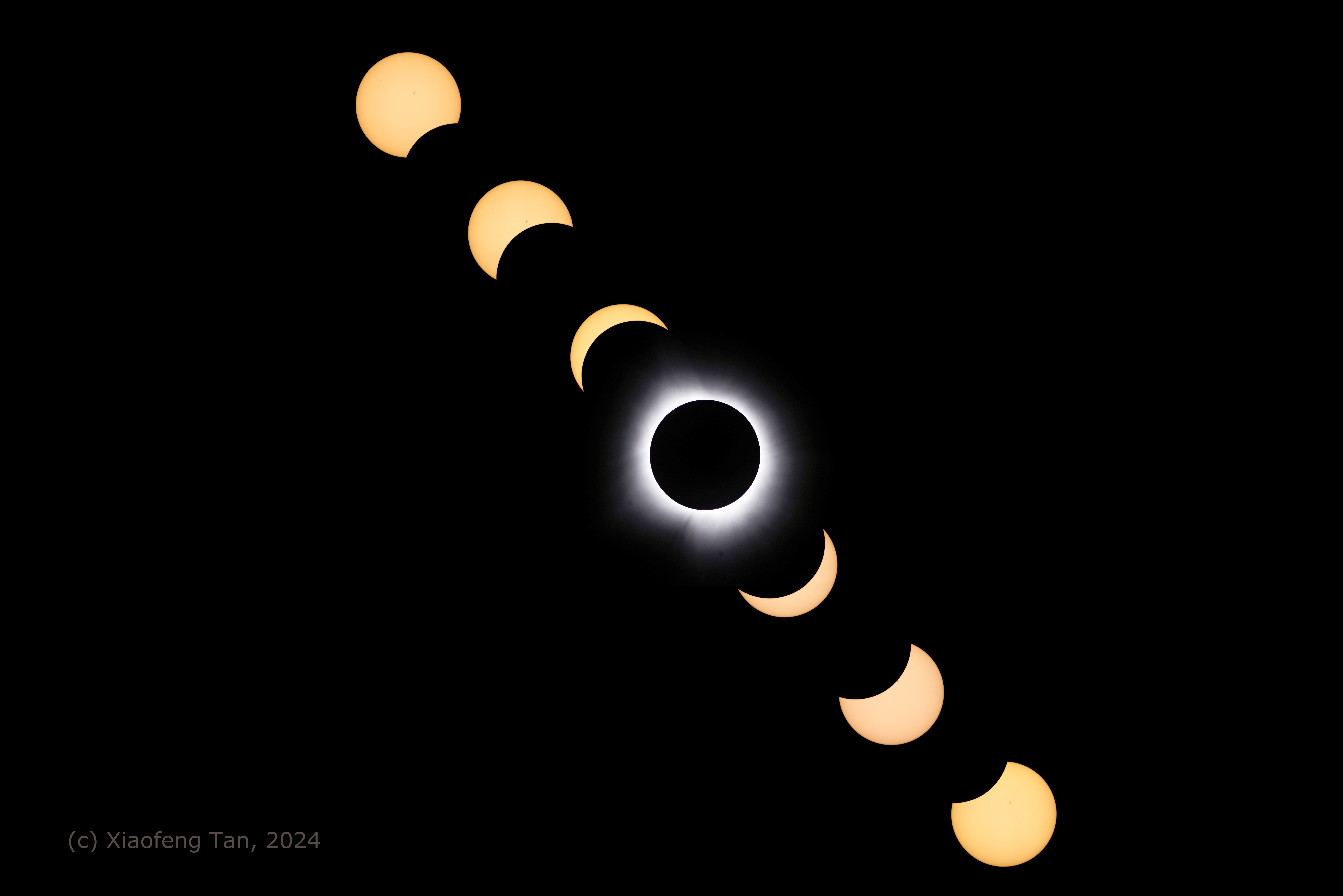 Image Credit & Copyright: April 8's
Start at the upper left above and you can follow the progress of April 8's total eclipse of the Sun in seven sharp, separate exposures. The image sequence was recorded with a telescope and camera located within the narrow path of totality as the Moon's shadow swept across Newport, Vermont, USA. At center is a spectacular view of the solar corona. The tenuous outer atmosphere of the Sun is only easily visible to the eye in clear dark skies during the total eclipse phase. Seen from Newport, the total phase for this solar eclipse lasted about 3 minutes and 26 seconds. Monday's Eclipse Imagery: Notable Submissions to APOD
#APOD #Astrodata #Astroinformatics #Astrobiology #SpaceAdventures
Image Credit & Copyright: April 8's
Start at the upper left above and you can follow the progress of April 8's total eclipse of the Sun in seven sharp, separate exposures. The image sequence was recorded with a telescope and camera located within the narrow path of totality as the Moon's shadow swept across Newport, Vermont, USA. At center is a spectacular view of the solar corona. The tenuous outer atmosphere of the Sun is only easily visible to the eye in clear dark skies during the total eclipse phase. Seen from Newport, the total phase for this solar eclipse lasted about 3 minutes and 26 seconds. Monday's Eclipse Imagery: Notable Submissions to APOD
#APOD #Astrodata #Astroinformatics #Astrobiology #SpaceAdventures
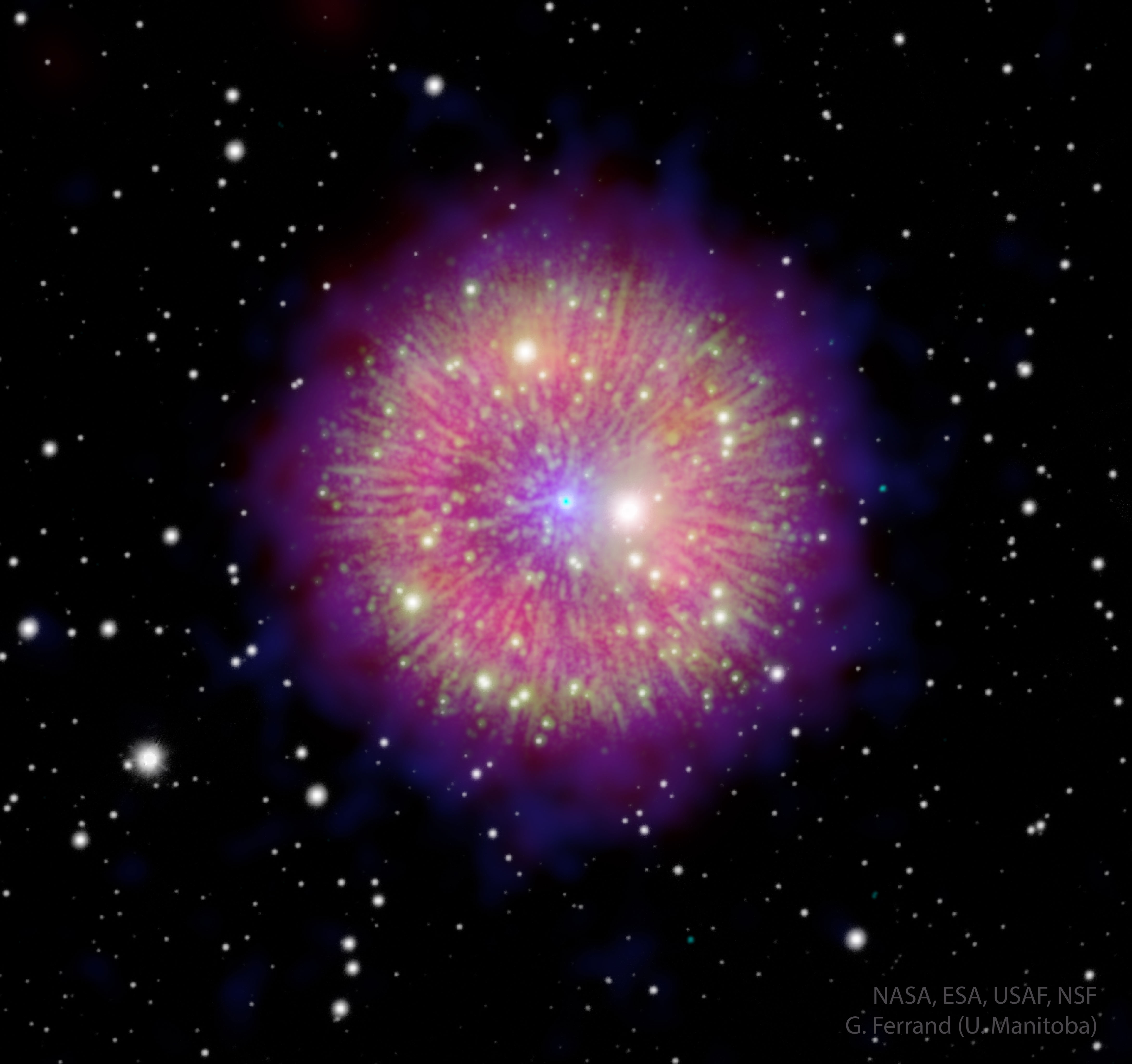 *Image creditor details unavailable via API. Visit linked page below for full info.*
What created this unusual celestial firework? The nebula, dubbed Pa 30, appears in the same sky direction now as a bright "guest star" did in the year 1181. Although Pa 30's filaments look similar to that created by a nova (for example GK Per), and a planetary nebula (for example NGC 6751), some astronomers now propose that it was created by a rare type of supernova: a thermonuclear Type Iax, and so is (also) named SN 1181. In this model, the supernova was not the result of the detonation of a single star, but rather a blast that occurred when two white dwarf stars spiraled together and merged. The blue dot in the center is hypothesized to be a zombie star, the remnant white dwarf that somehow survived this supernova-level explosion. The featured image combines images and data obtained with infrared (WISE), visible (MDM, Pan-STARRS), and X-ray (Chandra, XMM) telescopes. Future observations and analyses may tell us more. NASA Coverage: Total Solar Eclipse of 2024 April 8
#APOD #Astrospace #Astrogeek #AstronomyFacts #SpaceIndustry
*Image creditor details unavailable via API. Visit linked page below for full info.*
What created this unusual celestial firework? The nebula, dubbed Pa 30, appears in the same sky direction now as a bright "guest star" did in the year 1181. Although Pa 30's filaments look similar to that created by a nova (for example GK Per), and a planetary nebula (for example NGC 6751), some astronomers now propose that it was created by a rare type of supernova: a thermonuclear Type Iax, and so is (also) named SN 1181. In this model, the supernova was not the result of the detonation of a single star, but rather a blast that occurred when two white dwarf stars spiraled together and merged. The blue dot in the center is hypothesized to be a zombie star, the remnant white dwarf that somehow survived this supernova-level explosion. The featured image combines images and data obtained with infrared (WISE), visible (MDM, Pan-STARRS), and X-ray (Chandra, XMM) telescopes. Future observations and analyses may tell us more. NASA Coverage: Total Solar Eclipse of 2024 April 8
#APOD #Astrospace #Astrogeek #AstronomyFacts #SpaceIndustry