
**Astronomy Picture of the Day**
05 March 2024
**NGC 2170: Angel Nebula Abstract Art**
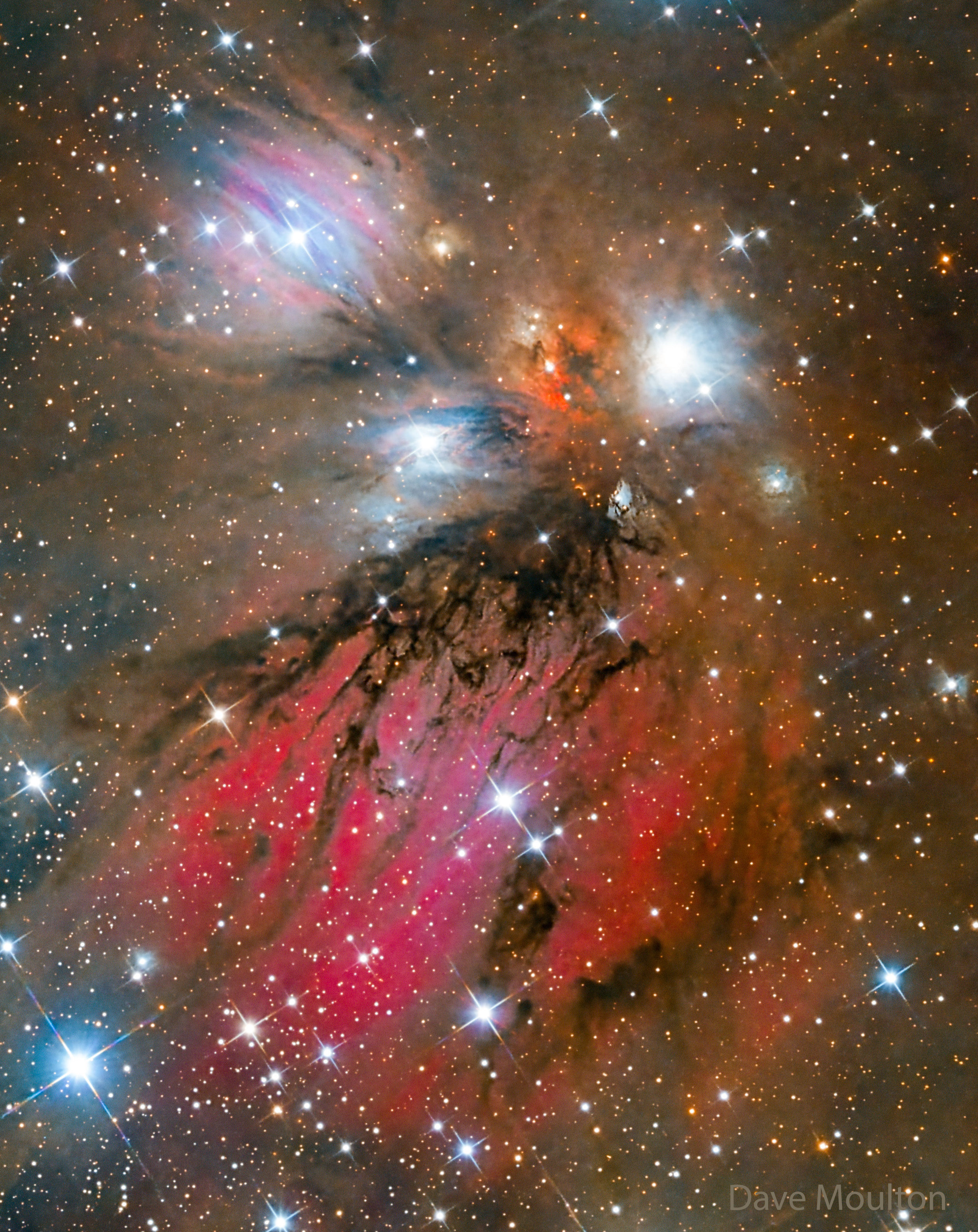 Image Credit & Copyright:
David Moulton
Is this a painting or a photograph? In this celestial abstract art composed with a cosmic brush, dusty nebula NGC 2170, also known as the Angel Nebula, shines just above the image center. Reflecting the light of nearby hot stars, NGC 2170 is joined by other bluish reflection nebulae, a red emission region, many dark absorption nebulae, and a backdrop of colorful stars. Like the common household items that abstract painters often choose for their subjects, the clouds of gas, dust, and hot stars featured here are also commonly found in a setting like this one -- a massive, star-forming molecular cloud in the constellation of the Unicorn (Monoceros). The giant molecular cloud, Mon R2, is impressively close, estimated to be only 2,400 light-years or so away. At that distance, this canvas would be over 60 light-years across.
#APOD #Astrogeology #AstronautLife #Astrozone #AstronomyFacts
Image Credit & Copyright:
David Moulton
Is this a painting or a photograph? In this celestial abstract art composed with a cosmic brush, dusty nebula NGC 2170, also known as the Angel Nebula, shines just above the image center. Reflecting the light of nearby hot stars, NGC 2170 is joined by other bluish reflection nebulae, a red emission region, many dark absorption nebulae, and a backdrop of colorful stars. Like the common household items that abstract painters often choose for their subjects, the clouds of gas, dust, and hot stars featured here are also commonly found in a setting like this one -- a massive, star-forming molecular cloud in the constellation of the Unicorn (Monoceros). The giant molecular cloud, Mon R2, is impressively close, estimated to be only 2,400 light-years or so away. At that distance, this canvas would be over 60 light-years across.
#APOD #Astrogeology #AstronautLife #Astrozone #AstronomyFacts
Image Credit & Copyright:
David Moulton
Is this a painting or a photograph? In this celestial abstract art composed with a cosmic brush, dusty nebula NGC 2170, also known as the Angel Nebula, shines just above the image center. Reflecting the light of nearby hot stars, NGC 2170 is joined by other bluish reflection nebulae, a red emission region, many dark absorption nebulae, and a backdrop of colorful stars. Like the common household items that abstract painters often choose for their subjects, the clouds of gas, dust, and hot stars featured here are also commonly found in a setting like this one -- a massive, star-forming molecular cloud in the constellation of the Unicorn (Monoceros). The giant molecular cloud, Mon R2, is impressively close, estimated to be only 2,400 light-years or so away. At that distance, this canvas would be over 60 light-years across.
#APOD #Astrogeology #AstronautLife #Astrozone #AstronomyFacts
APOD: 2024 March 5 – NGC 2170: Angel Nebula Abstract Art
A different astronomy and space science
related image is featured each day, along with a brief explanation.
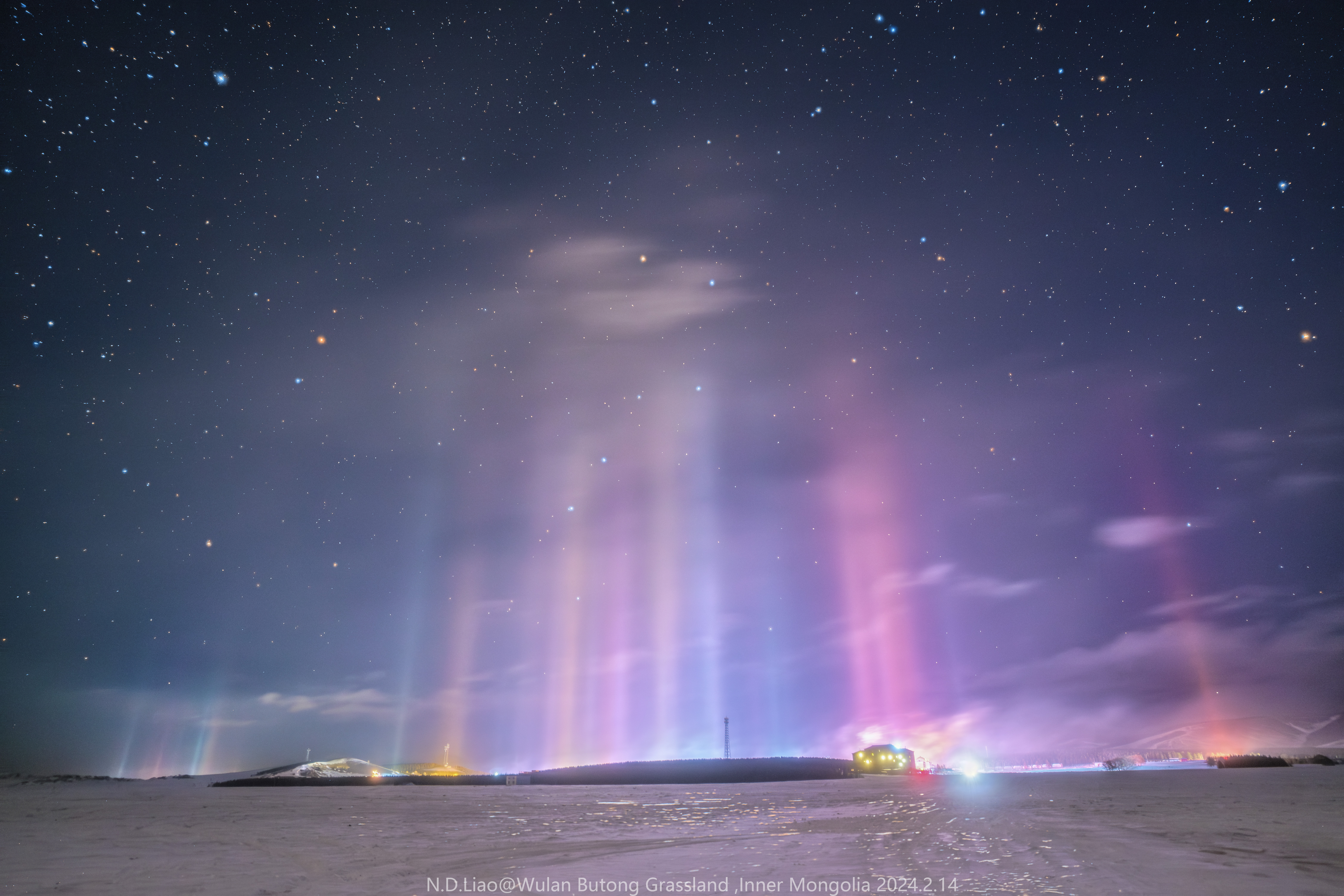 Image Credit & Copyright:
N. D. Liao
What's happening across that field? Pictured here are not auroras but nearby light pillars, a phenomenon typically much closer. In most places on Earth, a lucky viewer can see a Sun pillar, a column of light appearing to extend up from the Sun caused by flat fluttering ice-crystals reflecting sunlight from the upper atmosphere. Usually, these ice crystals evaporate before reaching the ground. During freezing temperatures, however, flat fluttering ice crystals may form near the ground in a form of light snow sometimes known as a crystal fog. These ice crystals may then reflect ground lights in columns not unlike a Sun pillar. The featured image was taken last month across the Wulan Butong Grasslands in Inner Mongolia, China.
#APOD #SpaceTech #Astrofans #Astrophotography #Universe
Image Credit & Copyright:
N. D. Liao
What's happening across that field? Pictured here are not auroras but nearby light pillars, a phenomenon typically much closer. In most places on Earth, a lucky viewer can see a Sun pillar, a column of light appearing to extend up from the Sun caused by flat fluttering ice-crystals reflecting sunlight from the upper atmosphere. Usually, these ice crystals evaporate before reaching the ground. During freezing temperatures, however, flat fluttering ice crystals may form near the ground in a form of light snow sometimes known as a crystal fog. These ice crystals may then reflect ground lights in columns not unlike a Sun pillar. The featured image was taken last month across the Wulan Butong Grasslands in Inner Mongolia, China.
#APOD #SpaceTech #Astrofans #Astrophotography #Universe
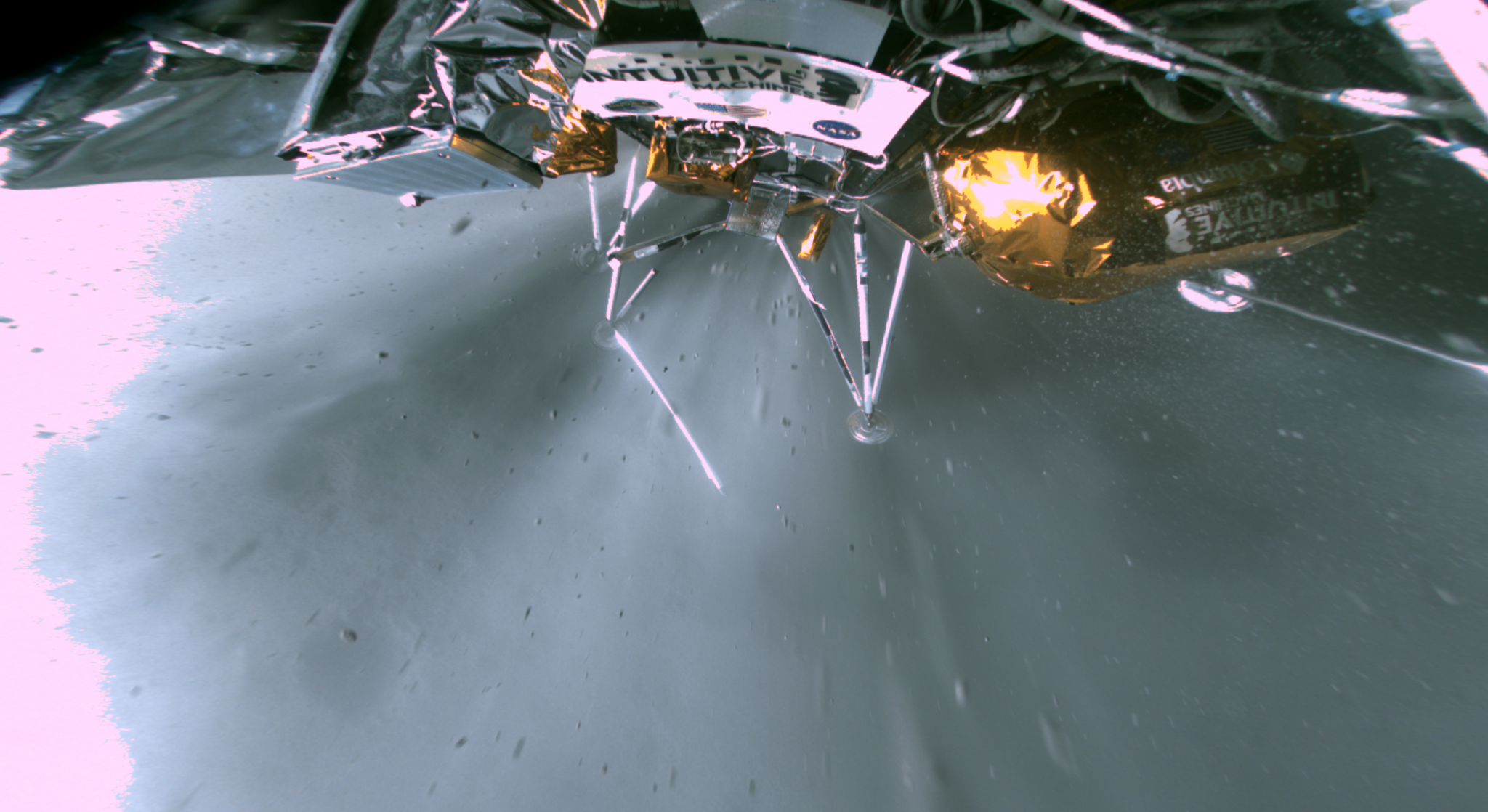 *Image creditor details unavailable via API. Visit linked page below for full info.*
Methalox rocket engine firing, Odysseus' landing legs absorb first contact with the lunar surface in this wide-angle snapshot from a camera on board the robotic Intuitive Machines Nova-C moon lander. Following the landing on February 22, broken landing legs, visible in the image, ultimately left the lander at rest but tilted. Odysseus' gentle lean into a sloping lunar surface preserved the phone booth-sized lander's ability to operate, collect solar power, and return images and data to Earth. Its exact landing site in the Moon's far south polar region was imaged by NASA's Lunar Reconnaissance Orbiter. Donated by NASA, the American flag seen on the lander's central panel is 1970 Apollo program flight hardware.
#APOD #Astronomy #Astroinformatics #Science #Astrogeology
*Image creditor details unavailable via API. Visit linked page below for full info.*
Methalox rocket engine firing, Odysseus' landing legs absorb first contact with the lunar surface in this wide-angle snapshot from a camera on board the robotic Intuitive Machines Nova-C moon lander. Following the landing on February 22, broken landing legs, visible in the image, ultimately left the lander at rest but tilted. Odysseus' gentle lean into a sloping lunar surface preserved the phone booth-sized lander's ability to operate, collect solar power, and return images and data to Earth. Its exact landing site in the Moon's far south polar region was imaged by NASA's Lunar Reconnaissance Orbiter. Donated by NASA, the American flag seen on the lander's central panel is 1970 Apollo program flight hardware.
#APOD #Astronomy #Astroinformatics #Science #Astrogeology
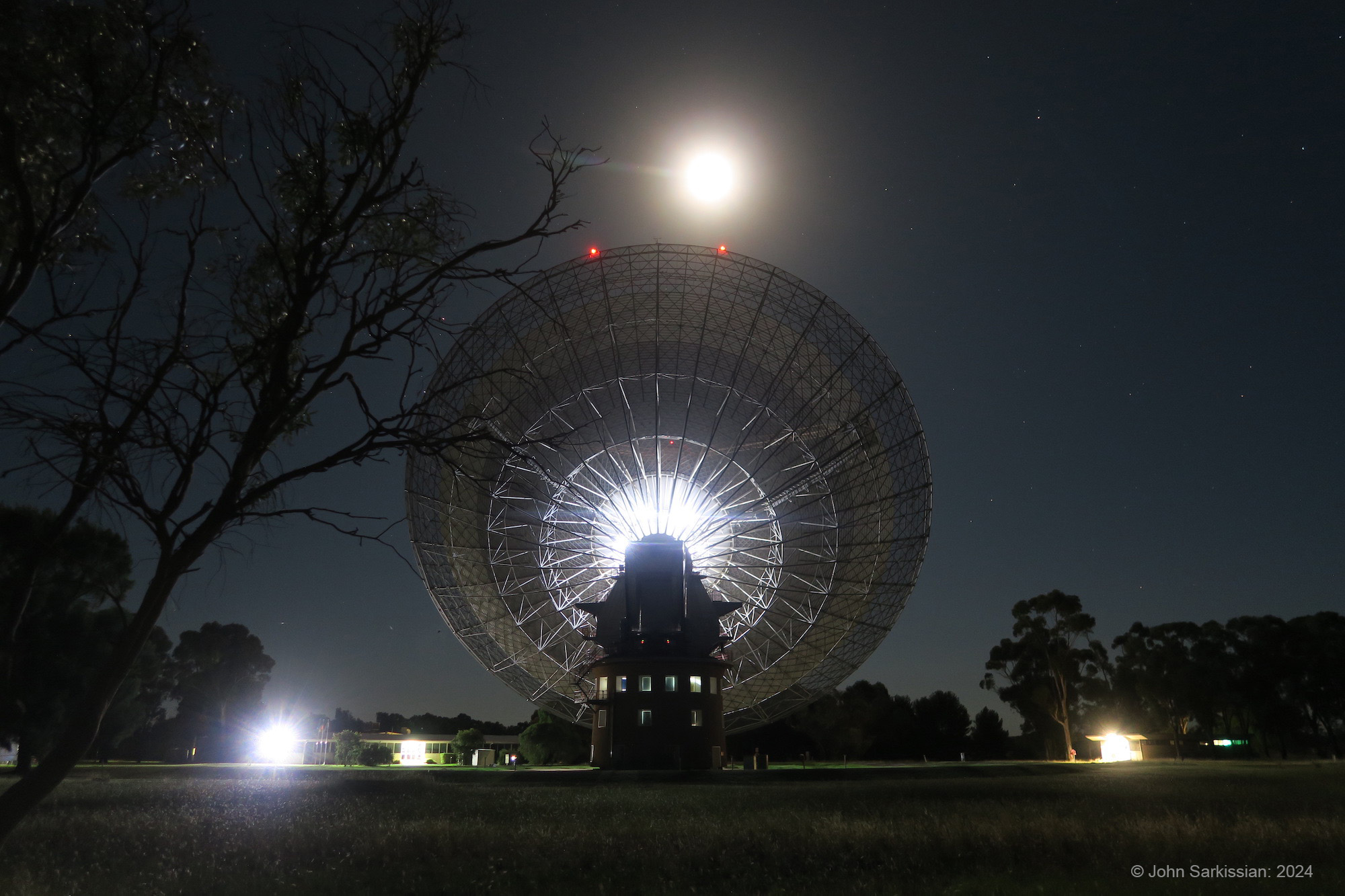 Image Credit & Copyright: John Sarkissian
Murriyang, the CSIRO’s Parkes radio telescope points toward a nearly Full Moon in this image from New South Wales, Australia, planet Earth. Bathed in moonlight, the 64 meter dish is receiving weak radio signals from Odysseus, following the robotic lander's February 22 touch down some 300 kilometers north of the Moon's south pole. The landing of Odysseus represents the first U.S. landing on the Moon since the Apollo 17 mission in 1972. Odysseus' tilted orientation on the lunar surface prevents its high-gain antenna from pointing toward Earth. But the sensitivity of the large, steerable Parkes dish significantly improved the reception of data from the experiments delivered to the lunar surface by the robotic moon lander. Of course the Parkes Radio Telescope dish became famous for its superior lunar television reception during the Apollo 11 mission in 1969, allowing denizens of planet Earth to watch the first moonwalk.
#APOD #Cosmology #SpaceIndustry #Astrochemistry #Astronomy
Image Credit & Copyright: John Sarkissian
Murriyang, the CSIRO’s Parkes radio telescope points toward a nearly Full Moon in this image from New South Wales, Australia, planet Earth. Bathed in moonlight, the 64 meter dish is receiving weak radio signals from Odysseus, following the robotic lander's February 22 touch down some 300 kilometers north of the Moon's south pole. The landing of Odysseus represents the first U.S. landing on the Moon since the Apollo 17 mission in 1972. Odysseus' tilted orientation on the lunar surface prevents its high-gain antenna from pointing toward Earth. But the sensitivity of the large, steerable Parkes dish significantly improved the reception of data from the experiments delivered to the lunar surface by the robotic moon lander. Of course the Parkes Radio Telescope dish became famous for its superior lunar television reception during the Apollo 11 mission in 1969, allowing denizens of planet Earth to watch the first moonwalk.
#APOD #Cosmology #SpaceIndustry #Astrochemistry #Astronomy
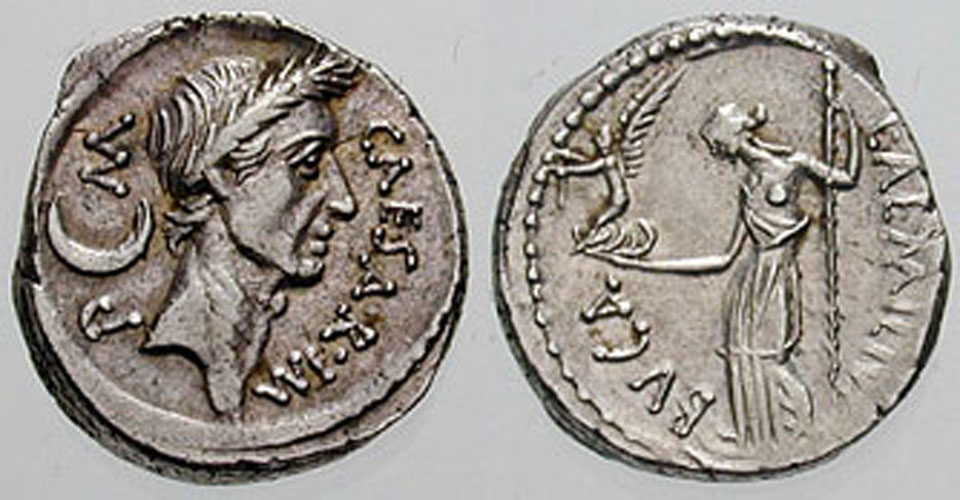 *Image creditor details unavailable via API. Visit linked page below for full info.*
In 46 BC Julius Caesar reformed the calendar system. Based on advice by astronomer Sosigenes of Alexandria, the Julian calendar included one leap day every four years to account for the fact that an Earth year is slightly more than 365 days long. In modern terms, the time it takes for the planet to orbit the Sun once is 365.24219 mean solar days. So if calendar years contained exactly 365 days they would drift from the Earth's year by about 1 day every 4 years and eventually July (named for Julius Caesar himself) would occur during the northern hemisphere winter. By adopting a leap year with an extra day every four years, the Julian calendar year would drift much less. In 1582 Pope Gregory XIII provided the further fine-tuning that leap days should not occur in years ending in 00, unless divisible by 400. This Gregorian Calendar system is the one in wide use today. Of course, tidal friction in the Earth-Moon system slows Earth's rotation and gradually lengthens the day by about 1.4 milliseconds per century. That means that leap days like today will not be necessary, about 4 million years from now. This Roman silver coin, a denarius, depicts Julius Caesar (left) and Venus, Roman goddess of love.
#APOD #BlackHoleDiscovery #SpaceFacts #SpaceTech #Astroinformatics
*Image creditor details unavailable via API. Visit linked page below for full info.*
In 46 BC Julius Caesar reformed the calendar system. Based on advice by astronomer Sosigenes of Alexandria, the Julian calendar included one leap day every four years to account for the fact that an Earth year is slightly more than 365 days long. In modern terms, the time it takes for the planet to orbit the Sun once is 365.24219 mean solar days. So if calendar years contained exactly 365 days they would drift from the Earth's year by about 1 day every 4 years and eventually July (named for Julius Caesar himself) would occur during the northern hemisphere winter. By adopting a leap year with an extra day every four years, the Julian calendar year would drift much less. In 1582 Pope Gregory XIII provided the further fine-tuning that leap days should not occur in years ending in 00, unless divisible by 400. This Gregorian Calendar system is the one in wide use today. Of course, tidal friction in the Earth-Moon system slows Earth's rotation and gradually lengthens the day by about 1.4 milliseconds per century. That means that leap days like today will not be necessary, about 4 million years from now. This Roman silver coin, a denarius, depicts Julius Caesar (left) and Venus, Roman goddess of love.
#APOD #BlackHoleDiscovery #SpaceFacts #SpaceTech #Astroinformatics
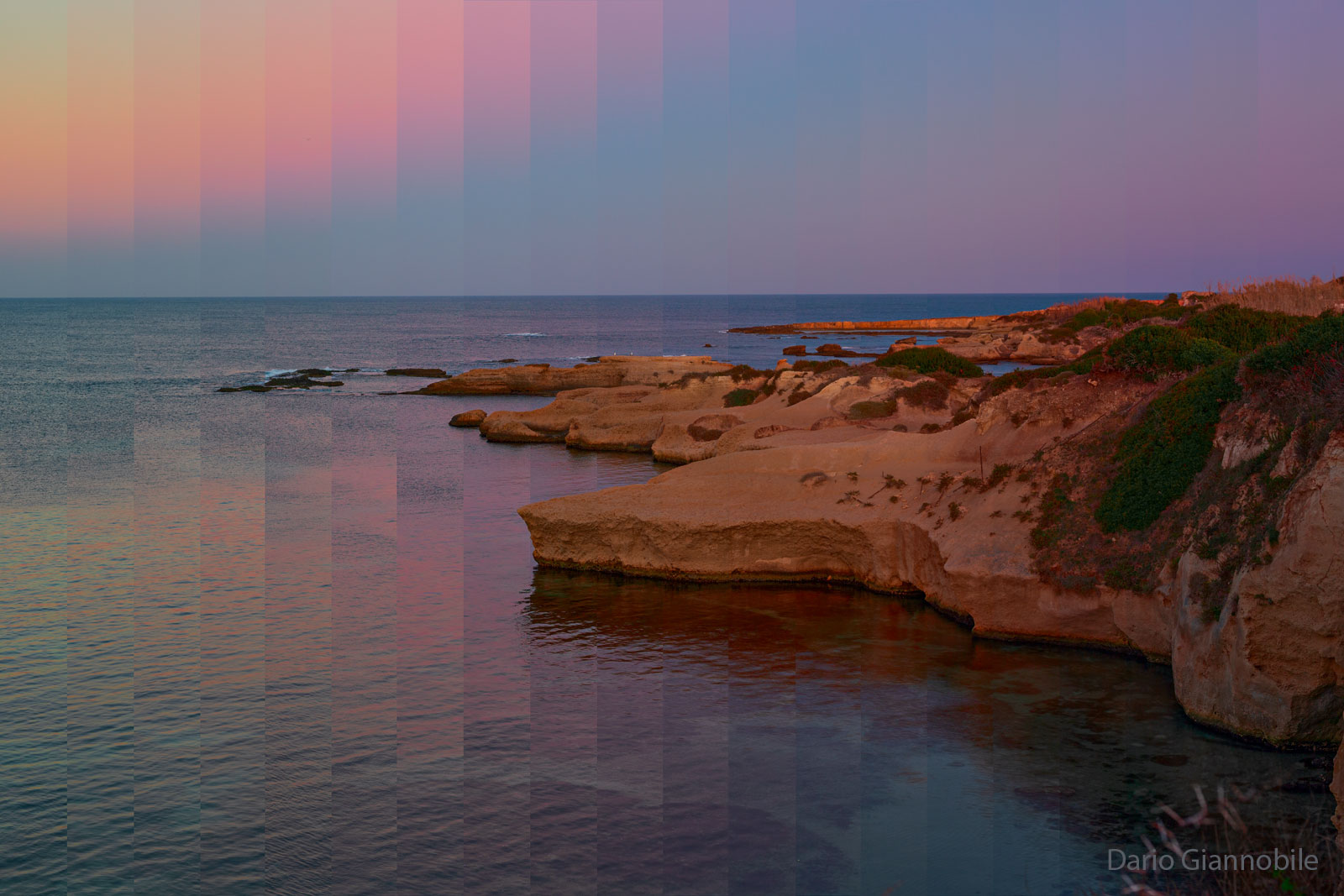 Image Credit & Copyright:
Dario Giannobile
How does the sky turn dark at night? In stages, and with different characteristic colors rising from the horizon. The featured image shows, left to right, increasingly late twilight times after sunset in 20 different vertical bands. The picture was taken last month in Syracuse, Sicily, Italy, in the direction opposite the Sun. On the far left is the pre-sunset upper sky. Toward the right, prominent bands include the Belt of Venus, the Blue Band, the Horizon Band, and the Red Band. As the dark shadow of the Earth rises, the colors in these bands are caused by direct sunlight reflecting from air and aerosols in the Earth's atmosphere, multiple reflections sometimes involving a reddened sunset, and refraction. In practice, these bands can be diffuse and hard to discern, and their colors can depend on colors near the setting Sun. Finally, the Sun completely sets and the sky becomes dark. Don't despair -- the whole thing will happen in reverse when the Sun rises again in the morning.
#APOD #CosmosJourney #Meteorology #Astrophysics #GalaxyExploration
Image Credit & Copyright:
Dario Giannobile
How does the sky turn dark at night? In stages, and with different characteristic colors rising from the horizon. The featured image shows, left to right, increasingly late twilight times after sunset in 20 different vertical bands. The picture was taken last month in Syracuse, Sicily, Italy, in the direction opposite the Sun. On the far left is the pre-sunset upper sky. Toward the right, prominent bands include the Belt of Venus, the Blue Band, the Horizon Band, and the Red Band. As the dark shadow of the Earth rises, the colors in these bands are caused by direct sunlight reflecting from air and aerosols in the Earth's atmosphere, multiple reflections sometimes involving a reddened sunset, and refraction. In practice, these bands can be diffuse and hard to discern, and their colors can depend on colors near the setting Sun. Finally, the Sun completely sets and the sky becomes dark. Don't despair -- the whole thing will happen in reverse when the Sun rises again in the morning.
#APOD #CosmosJourney #Meteorology #Astrophysics #GalaxyExploration
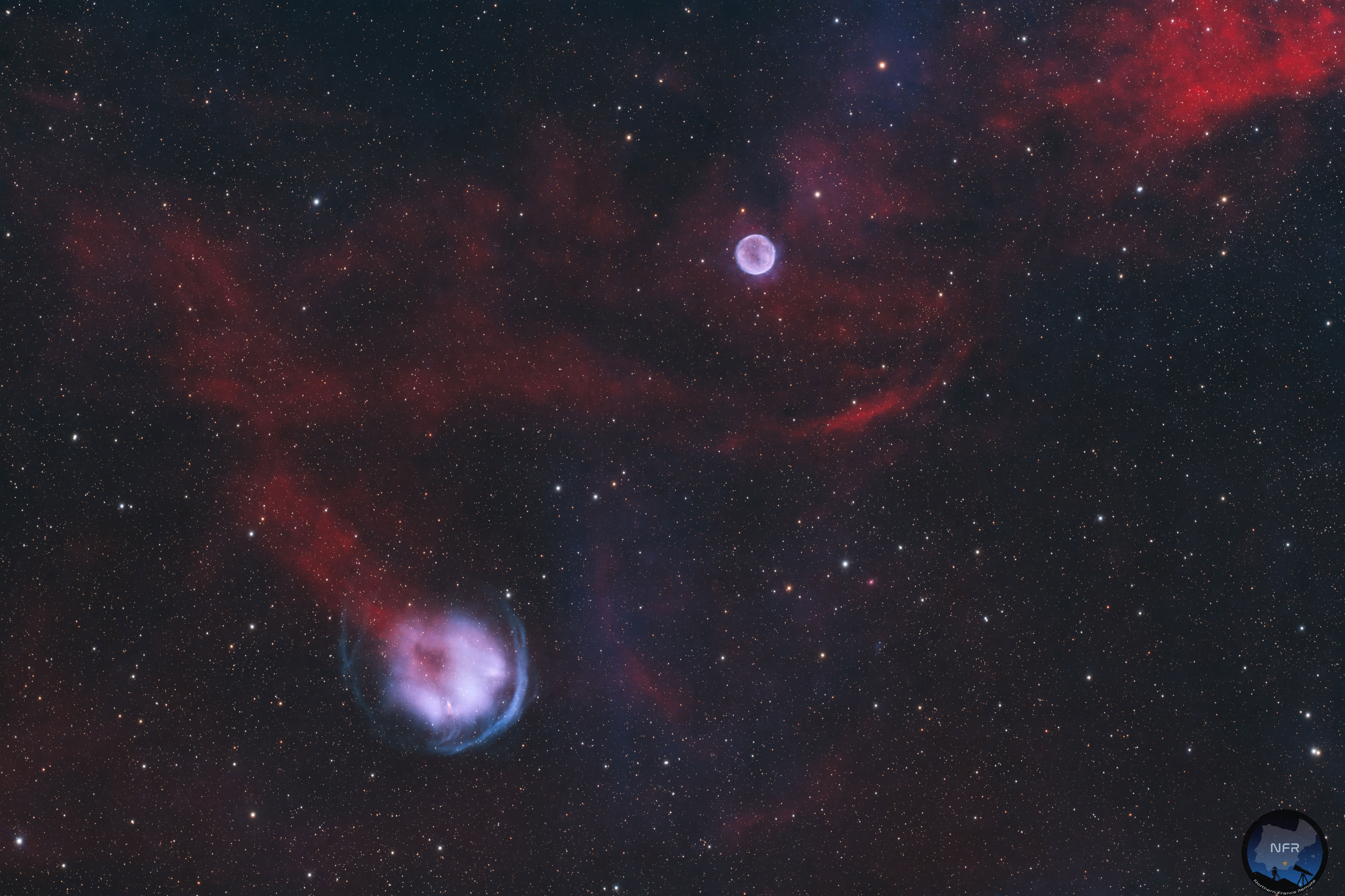 Image Credit & Copyright:
Julien Cadena &
Mickael Coulon;
Text: Natalia Lewandowska
(SUNY Oswego)
Planetary nebulae like Heckathorn-Fesen-Gull 1 (HFG1) and Abell 6 in the constellation Cassiopeia are remnants from the last phase of a medium sized star like our Sun. In spite of their shapes, planetary nebulae have nothing in common with actual planets. Located in the bottom left part of the featured photo, HFG1 was created by the binary star system V664 Cas, which consists of a white dwarf star and a red giant star. Both stars orbit their center of mass over about half an Earth day. Traveling with the entire nebula at a speed about 300 times faster than the fastest train on Earth, V664 Cas generates a bluish arc shaped shock wave. The wave interacts most strongly with the surrounding interstellar medium in the areas where the arc is brightest. After roughly 10,000 years, planetary nebulae become invisible due to a lack of ultraviolet light being emitted by the stars that create them. Displaying beautiful shapes and structures, planetary nebulae are highly desired objects for astrophotographers.
#APOD #Astrodata #SpaceResearch #LunarExploration #Astrophoto
Image Credit & Copyright:
Julien Cadena &
Mickael Coulon;
Text: Natalia Lewandowska
(SUNY Oswego)
Planetary nebulae like Heckathorn-Fesen-Gull 1 (HFG1) and Abell 6 in the constellation Cassiopeia are remnants from the last phase of a medium sized star like our Sun. In spite of their shapes, planetary nebulae have nothing in common with actual planets. Located in the bottom left part of the featured photo, HFG1 was created by the binary star system V664 Cas, which consists of a white dwarf star and a red giant star. Both stars orbit their center of mass over about half an Earth day. Traveling with the entire nebula at a speed about 300 times faster than the fastest train on Earth, V664 Cas generates a bluish arc shaped shock wave. The wave interacts most strongly with the surrounding interstellar medium in the areas where the arc is brightest. After roughly 10,000 years, planetary nebulae become invisible due to a lack of ultraviolet light being emitted by the stars that create them. Displaying beautiful shapes and structures, planetary nebulae are highly desired objects for astrophotographers.
#APOD #Astrodata #SpaceResearch #LunarExploration #Astrophoto
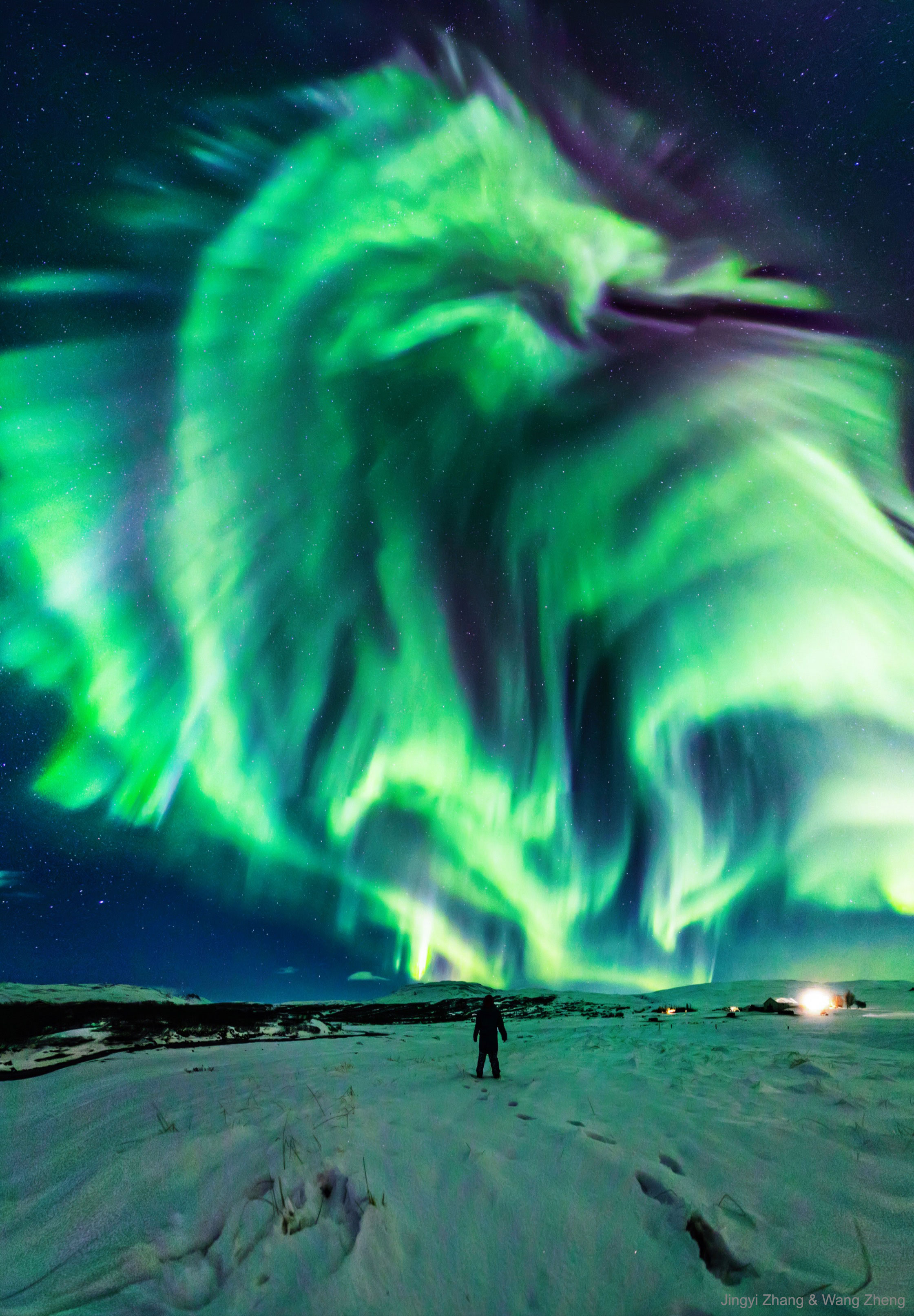 Image Credit & Copyright:
Jingyi Zhang & Wang Zheng
Have you ever seen a dragon in the sky? Although real flying dragons don't exist, a huge dragon-shaped aurora developed in the sky over Iceland in 2019. The aurora was caused by a hole in the Sun's corona that expelled charged particles into a solar wind that followed a changing interplanetary magnetic field to Earth's magnetosphere. As some of those particles then struck Earth's atmosphere, they excited atoms which subsequently emitted light: aurora. This iconic display was so enthralling that the photographer's mother ran out to see it and was captured in the foreground. Our active Sun continues to show an unusually high number of prominences, filaments, sunspots, and large active regions as solar maximum approaches in 2025.
#APOD #PlanetaryScience #Astrochemistry #Research #Meteorology
Image Credit & Copyright:
Jingyi Zhang & Wang Zheng
Have you ever seen a dragon in the sky? Although real flying dragons don't exist, a huge dragon-shaped aurora developed in the sky over Iceland in 2019. The aurora was caused by a hole in the Sun's corona that expelled charged particles into a solar wind that followed a changing interplanetary magnetic field to Earth's magnetosphere. As some of those particles then struck Earth's atmosphere, they excited atoms which subsequently emitted light: aurora. This iconic display was so enthralling that the photographer's mother ran out to see it and was captured in the foreground. Our active Sun continues to show an unusually high number of prominences, filaments, sunspots, and large active regions as solar maximum approaches in 2025.
#APOD #PlanetaryScience #Astrochemistry #Research #Meteorology
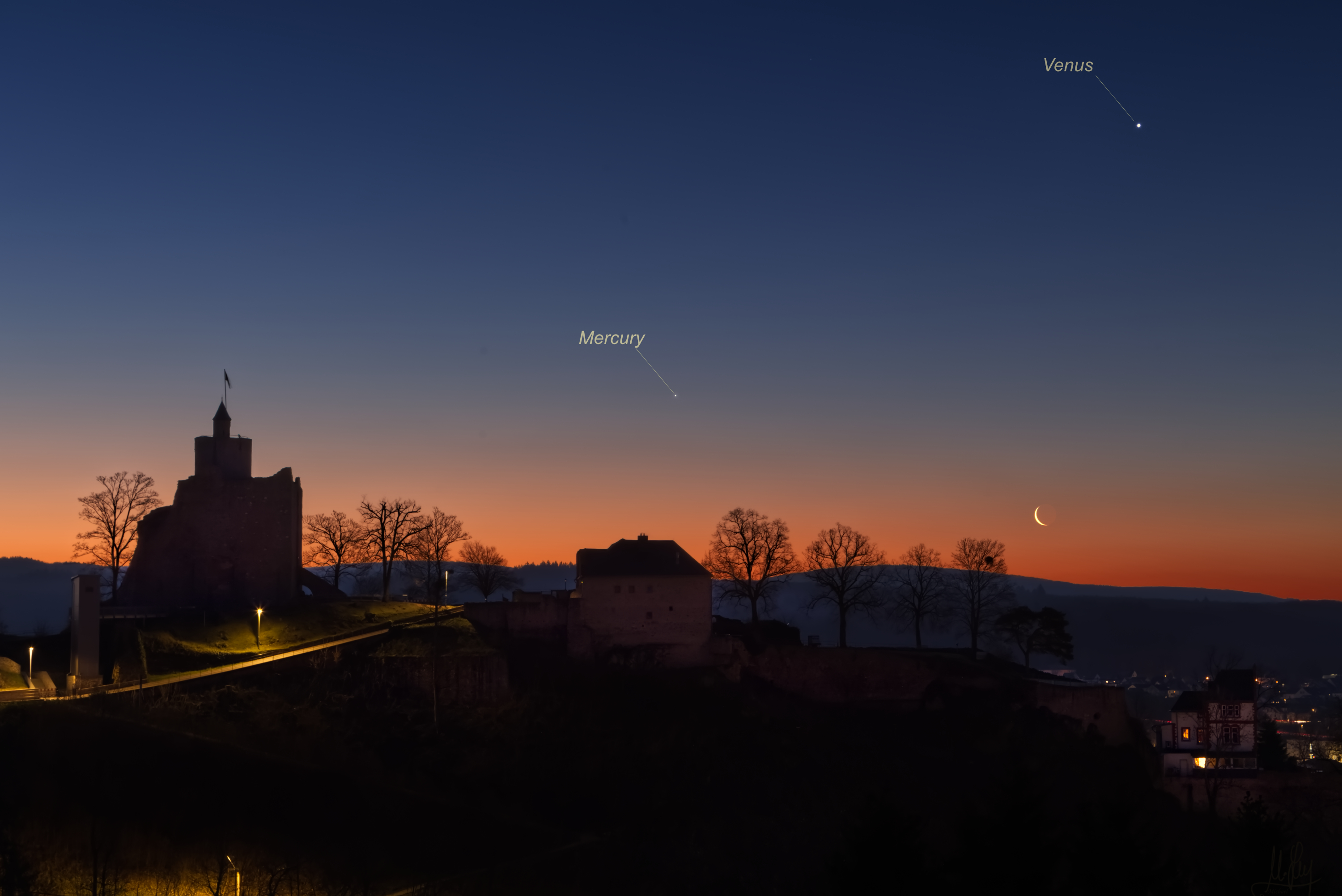 Image Credit & Copyright: Michael Luy
Yesterday, the Moon was New. But on January 9, early morning risers around planet Earth were treated to the sight of an old Moon, low in the east as the sky grew bright before dawn. Above the city of Saarburg in Rhineland-Palatinate, western Germany, this simple snapshot found the waning Moon's sunlit crescent just before sunrise. But also never wandering far from the Sun in Earth's sky, inner planets Venus and Mercury shared the cold morning skyview. In the foreground are the historic city's tower and castle with ruins from the 10th century.
#APOD #StarCluster #Astrozone #SpaceMissions #Astrogeology
Image Credit & Copyright: Michael Luy
Yesterday, the Moon was New. But on January 9, early morning risers around planet Earth were treated to the sight of an old Moon, low in the east as the sky grew bright before dawn. Above the city of Saarburg in Rhineland-Palatinate, western Germany, this simple snapshot found the waning Moon's sunlit crescent just before sunrise. But also never wandering far from the Sun in Earth's sky, inner planets Venus and Mercury shared the cold morning skyview. In the foreground are the historic city's tower and castle with ruins from the 10th century.
#APOD #StarCluster #Astrozone #SpaceMissions #Astrogeology