AilliA

AilliA's avatar
AilliA
AilliA@aillia.link
npub1ajll...d9u3
I believe that anything that is not voluntary is coercion. This makes me a voluntaryist in earthly terms and an alien on Earth, where coercion is normalized.
Just got back from the mountains, scrolled through the news: endless stupid politics that'll be forgotten by tomorrow. Nothing sharpens perspective like fighting for your life up there... The actual big story: http://annas-archive.org just got suspended! Official mirrors (all managed by Anna's Archive) are: Latest domains: check Wikipedia
Stuck at base camp with truly terrible internet and weather 😅 Huge thanks to #XmrBazaar dev Anarkio: his zero-bloat scripts make bazaar run beautifully, even in the most remote spots with awful connections. It really opens doors for people who have very few choices❤️ Funny twist: Tor actually feels faster than clearnet here! My regular accounts barely load, but #Monero-related stuff works great :) Merry Christmas & a very Happy New Year to everyone🎄✨
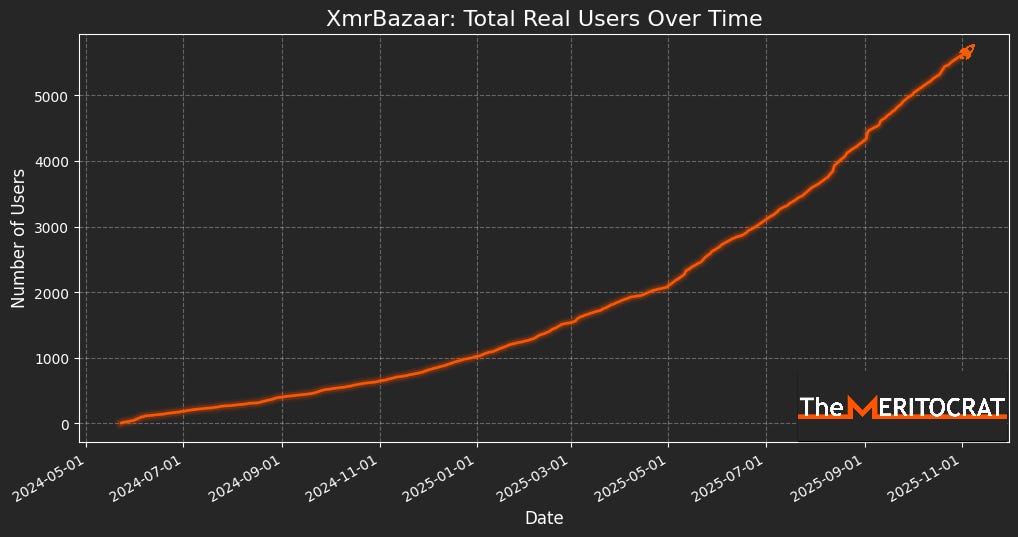
Exponential growth is our secret weapon: not just for markets, but because states won’t spot the threat until it’s way too late. As Albert A. Bartlett said: “The greatest shortcoming of the human race is our inability to understand the exponential function.” We humans are notoriously bad at wrapping our heads around exponential growth, and luckily, politicians aren’t even our sharpest minds ;) Here are three classic riddles to prove it (sharing in case you haven’t seen them yet), because grasping exponentials might be the most underlearned lesson in history. - Bacteria Doubling Riddle: A Petri dish starts with a smattering of bacteria. Every second, their numbers double. The dish fills completely after one minute. When was it half full? - Paper Folding Riddle: Grab a sheet of paper and fold it in half. Then fold it again. If you could keep at it 50 times, how thick do you think it’d end up? ;) - Chessboard Wheat Riddle: Perhaps the oldest tale of exponential growth hails from ancient India. Legend has it a king offered the chess inventor any reward for such a marvelous game. The inventor asked for one grain of wheat on the first square of the chessboard (64 squares total), two on the second, four on the third, and so on — doubling each time. How many grains at the end?