
Tommi › FOSDEM 🤯
Tommi › FOSDEM 🤯
npub1drf5...fpxa
If I wanted to make this bio accurate, it would change every few hours.
Figuring out my identity, 64 bits at a time.
Learning at nostr:npub159r5766lv4uf66nue6xy23k4lqc84h4gfp5cjzvfet9rqnnmn8ts8uxrh2, working with nostr:npub17f3jl3althkr6ukayqeruqjs58g4azpv0vq2l35k9cckgtc2y8jqwhhrka and nostr:npub1gejhzhd3d5lxd6gwx39edkjdvgyw3kw4sqs9pdpkgqadzkztaw6spz9nq6.
Words and pictures originally published by me are licensed under CC BY-NC-SA 4.0
🍉🖤🩷
Personal website: https://tommi.space/
Digital ID: https://keyoxide.org/surfing@tommi.space
Now in: Rotterdam, Netherlands
pronouns: they/he
#
[Federating knowledge: exploring ways to bridge wikis and notes]( )Join the workshop at #39C3!
NEW DATE: **Day 4, 13:40** @ [Free Knowledge Habitat Workshop Area](
)Join the workshop at #39C3!
NEW DATE: **Day 4, 13:40** @ [Free Knowledge Habitat Workshop Area](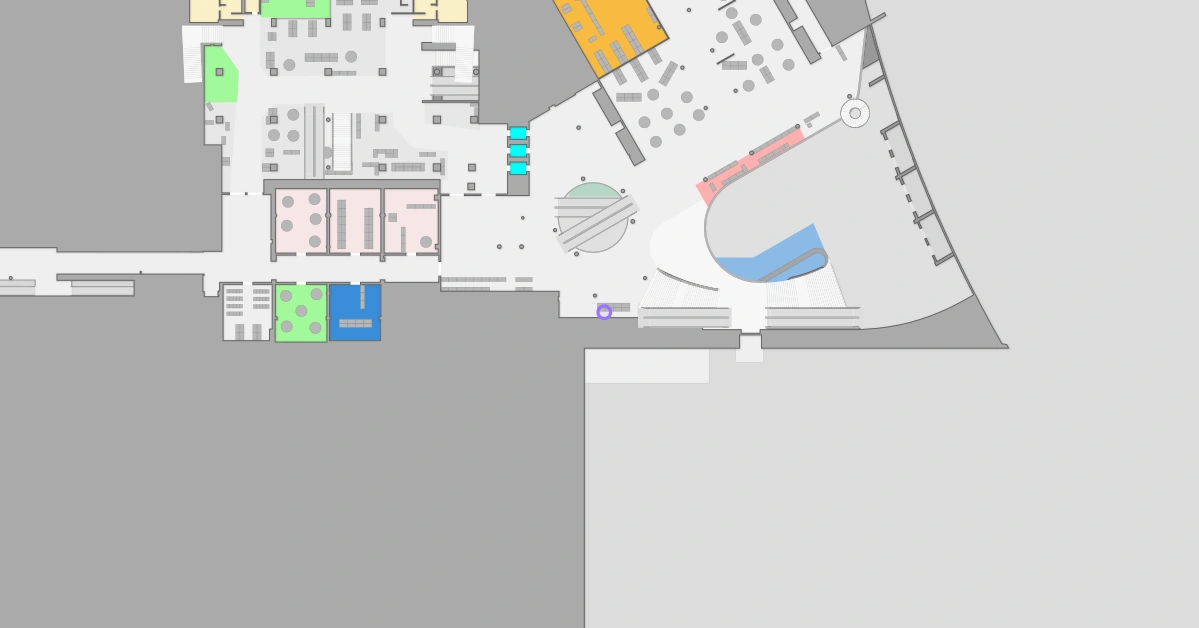 ).
*Most people and organisations have their very own way of acquiring, organising, archiving, sharing, and collaborating on knowledge repositories. A broad spectrum of opinions and approaches resulted in a diverse and rich ecosystem of knowledge management solutions. Nevertheless, this also implies scattered and disconnected knowledge sources. What would it mean to build bridges among wikis and federate knowledge?*
This workshop is going to be heavily centred on a twofold discussion, exploring the challenge of federated knowledge starting from two questions.<li>What does it mean to <em>federate</em> knowledge repositories?</li><li>Instead of pursuing a silver-bullet solution to embrace all use-cases, what would it mean to foster and enable interoperability for different software?</li>
These questions stem from years of questioning and wondering how to integrate my personal note-taking and collective, participatory knowledge management at work, in organisations, institutions, and informal collectives. Recently, I began actively researching this topic as I started playing with the [MediaWiki API]( ) to cross-synchronise my local Markdown notes and the [XPUB wiki]( ), the public learning wiki of the [Experimental Publishing]( ) master. I am puzzled by taking advantage of the potential of a specific software (in this case, MediaWiki) while fearing of being locked-in.
Some further, more specific, insights and questions:<li>Local-first approaches and software (e.g. <a href="https://github.com/p2panda/reflection" target="_blank" rel="nofollow noopener">Reflection</a>)</li><li>Interesting experiments based on existing protocols, such as <a href="https://ibis.wiki" target="_blank" rel="nofollow noopener">Ibis</a></li><li>What do we take of semi-open and obscure yet very cool initiatives like <a href="https://anytype.io" target="_blank" rel="nofollow noopener">Anytype</a></li><li>The power and the limits of plain-text: how to enable collaboration on simple Markdown files and build on top of it, as <a href="https://obsidian.md" target="_blank" rel="nofollow noopener">Obsidian</a> does</li>
Cc: @npub1k6ef...gqwv @p2panda @Obsidian @Wikimedia Deutschland @DWeb
#knowledge #FreeKnowledge #wiki #MediaWiki #API #Obsidian #Anytype #Ibis #IbisWiki #Reflection #CCC #Federation #federatedKnowledge #docs #PKM #knowledgeManagement #personalKnowledgeManagement #collectiveKnowledgeManagement #DWeb #decentralization #ActivityPub
).
*Most people and organisations have their very own way of acquiring, organising, archiving, sharing, and collaborating on knowledge repositories. A broad spectrum of opinions and approaches resulted in a diverse and rich ecosystem of knowledge management solutions. Nevertheless, this also implies scattered and disconnected knowledge sources. What would it mean to build bridges among wikis and federate knowledge?*
This workshop is going to be heavily centred on a twofold discussion, exploring the challenge of federated knowledge starting from two questions.<li>What does it mean to <em>federate</em> knowledge repositories?</li><li>Instead of pursuing a silver-bullet solution to embrace all use-cases, what would it mean to foster and enable interoperability for different software?</li>
These questions stem from years of questioning and wondering how to integrate my personal note-taking and collective, participatory knowledge management at work, in organisations, institutions, and informal collectives. Recently, I began actively researching this topic as I started playing with the [MediaWiki API]( ) to cross-synchronise my local Markdown notes and the [XPUB wiki]( ), the public learning wiki of the [Experimental Publishing]( ) master. I am puzzled by taking advantage of the potential of a specific software (in this case, MediaWiki) while fearing of being locked-in.
Some further, more specific, insights and questions:<li>Local-first approaches and software (e.g. <a href="https://github.com/p2panda/reflection" target="_blank" rel="nofollow noopener">Reflection</a>)</li><li>Interesting experiments based on existing protocols, such as <a href="https://ibis.wiki" target="_blank" rel="nofollow noopener">Ibis</a></li><li>What do we take of semi-open and obscure yet very cool initiatives like <a href="https://anytype.io" target="_blank" rel="nofollow noopener">Anytype</a></li><li>The power and the limits of plain-text: how to enable collaboration on simple Markdown files and build on top of it, as <a href="https://obsidian.md" target="_blank" rel="nofollow noopener">Obsidian</a> does</li>
Cc: @npub1k6ef...gqwv @p2panda @Obsidian @Wikimedia Deutschland @DWeb
#knowledge #FreeKnowledge #wiki #MediaWiki #API #Obsidian #Anytype #Ibis #IbisWiki #Reflection #CCC #Federation #federatedKnowledge #docs #PKM #knowledgeManagement #personalKnowledgeManagement #collectiveKnowledgeManagement #DWeb #decentralization #ActivityPub
Federating knowledge: exploring ways to bridge wikis and notes Free Knowledge Habitat 39c3
Most people and organizations have their very own way of acquiring, organizing, archiving, sharing, and collaborating on knowledge repositories. A ...
c3nav
Free Knowledge Habitat
Self-organized Sessions, L4, Hall X Foyer, Level 1
MediaWiki
API - MediaWiki
XPUB & Lens-Based wiki
xpubliverse