Thread
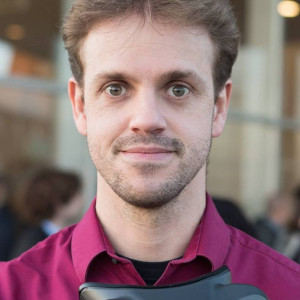
Klaus Wuestefeld is most famous for Prevayler (2003), the earliest implementation of event sourcing that I came across.
His ideas around p2p sovereign computing where intellectually dishonest though. Everyone wants sovereign computing, that's a no-brainer, but scalable decentralization is a hard problem that nostr too hasn't solved yet (the scalable part).
It's like coming up with "world peace" as a great idea. No shit. We all want world peace. But it's the how that's kind of hard. I'm doer, the self-proclaimed visionaries out there can take their "great ideas" and stick them somewhere.
Replies (8)
That's unfair. Most of the stuff was really good (for the time and money spent) and was working just fine. He pushed hard. When you try to change things at that scale there is no way to not make mistakes. Remember, this was before Tor became usable. And Tor is basically the protocol for sharing your own internet, just without the web of trust component.
it's kinda lame how these things seem to be plagued by toxic personalities
i think that getting protocols specified is the hardest part and after that meh whatever... you support the version that fits your business model and your philosophy
nostr has reached a point where certain initial ideas in its data structure are showing some real issues of usability, the kind numbers especially, because they don't directly relate to the thing they mean (IMO kinds should be 16 character max strings)
i think it's fair to say that bitcoin has mostly solved the decentralised scalability problem for one domain though, the nakamoto consensus achieves decentralisation without coercion or partiality that we see with stuff like mastodon etc
The fact that Bitcoin needs a single chain of blocks is a centralizing factor in itself. Nostr is much more decentralized because it doesnt need a chain. We can have transactions everywhere. There is no need for consensus.
Nostr wouldnt work for a global ledger but it does work for most other applications.
Uh oh next thing you say we don't need a global ledger either and then where is bitcoin.
Have you heard about a global Cashu ledger? ;)
Just googled it, a bitcoin derivative. So there is bitcoin but it's hidden a bit. An attempt to hide bitcoin's Achilles heel, the global ledger?
Banks in my town create fiat money by lending it into existence and keep a ledger who in my town has what balance. There are several banks to choose from. Decentralization in the real world.
For the time and money spent lol.
yep, things weren't easy back then. Remember, that most laptops struggled to connect to WIFI in those days. Linux didn't even have drivers for most boards. Then imagine redesigning sockets on top of that mess.