# Careless Whisper: WhatsApp and Signal can leak data from silent receipts __Just saw this video () from Daniel Boctor about a type of exploit that can be used to determine your phone model, whether the screen is locked, unlocked or the app is active, whether you're on Wi-Fi or cellular and much more just from sending malformed messages and analyzing the silent delivery receipts. All an attacker needs, is your phone number. Couple that with the recent WhatsApp leak (https://www.univie.ac.at/en/news/detail/forscherinnen-entdecken-grosse-sicherheitsluecke-in-whatsapp) (and we don't know if anyone else exploited it aside from the security researchers) and we have a pretty devastating situation with WhatsApp in particular.__ __The original source can be found here:__ https://arxiv.org/pdf/2411.11194 __As of now, it seems a fix is not available and neither WhatsApp/Meta or Signal/Signal Foundation have shown any interest in fixing it, which I find quite concerning. Just thought I would share this, so you can be aware. The video is also pretty good, so I suggest you watch that, even after reading the paper first.__ Source :
Je viens de voir cette vidĂ©o () de Daniel Boctor sur un type d'exploit qui peut ĂȘtre utilisĂ© pour dĂ©terminer le modĂšle de votre tĂ©lĂ©phone, si l'Ă©cran est verrouillĂ© ou dĂ©verrouillĂ©, si l'application est active, si vous ĂȘtes connectĂ© au Wi-Fi ou au rĂ©seau cellulaire, et bien plus encore, simplement en envoyant des messages malformĂ©s et en analysant les accusĂ©s de rĂ©ception silencieux. Tout ce dont un pirate a besoin, c'est de votre numĂ©ro de tĂ©lĂ©phone. Ajoutez Ă  cela la rĂ©cente fuite de WhatsApp (https://www.univie.ac.at/en/news/detail/forscherinnen-entdecken-grosse-sicherheitsluecke-in-whatsapp) (et nous ne savons pas si quelqu'un d'autre l'a exploitĂ©e Ă  part les chercheurs en sĂ©curitĂ©) et nous nous retrouvons dans une situation assez catastrophique, en particulier avec WhatsApp. La source originale se trouve ici : https://arxiv.org/pdf/2411.11194 À l'heure actuelle, il semble qu'aucun correctif ne soit disponible et ni WhatsApp/Meta ni Signal/Signal Foundation ne semblent intĂ©ressĂ©s par la rĂ©solution du problĂšme, ce que je trouve assez prĂ©occupant. Je tenais simplement Ă  vous en faire part afin que vous en soyez informĂ©s. La vidĂ©o est Ă©galement trĂšs intĂ©ressante, je vous suggĂšre donc de la regarder, mĂȘme aprĂšs avoir lu l'article. Source :
# 🌍 Le paradoxe vert de Bitcoin : pourquoi 70 % de son Ă©nergie vient d’ailleurs
 lĂ  oĂč personne ne veut l’acheter ### Introduction : une rĂ©volution invisible Pendant des annĂ©es, le Bitcoin a Ă©tĂ© prĂ©sentĂ© comme un gouffre Ă©nergĂ©tique — une menace pour le climat, un gaspillage industriel Ă  l’ùre de la sobriĂ©tĂ© carbone. Pourtant, une mutation silencieuse a eu lieu. En 2025, **le minage de Bitcoin n’est plus un consommateur d’énergie — il en est devenu un _rĂ©cupĂ©rateur_, un _stabilisateur_, voire un _catalyseur vert_**. Les chiffres parlent d’eux-mĂȘmes : - **Puissance continue mondiale** : 12,8 Ă  41,8 GW (soit l’équivalent de 10 Ă  30 centrales nuclĂ©aires en fonctionnement permanent) - **Consommation annuelle estimĂ©e** : entre 112 et 366 TWh — certes massive, mais dĂ©sormais **largement dĂ©corrĂ©lĂ©e des rĂ©seaux classiques**. - **EfficacitĂ© Ă©nergĂ©tique des ASIC** : 12 Ă  30,5 J/TH — une progression de 60 % en 3 ans, grĂące Ă  des gĂ©nĂ©rations de puces 3 nm et Ă  des refroidissements avancĂ©s. - **CoĂ»t marginal de production d’un BTC** : $34 616 Ă  $98 632 — reflĂ©tant non pas un gaspillage, mais une **stratĂ©gie de valorisation de ressources Ă©conomiquement mortes**. Mais derriĂšre ces nombres, c’est **une logique systĂ©mique** qui est en train de bouleverser la lecture environnementale du Proof-of-Work. ## 🔋 70 % du minage repose sur de l’énergie _Ă©conomiquement rĂ©siduelle_ — voire _nĂ©gative_ Contrairement aux reprĂ©sentations caricaturales, **le minage de Bitcoin ne se branche pas sur le rĂ©seau domestique**. Il va lĂ  oĂč l’électricitĂ© est _non commercialisable_ — trop Ă©loignĂ©e, trop intermittente, ou trop coĂ»teuse Ă  transporter. En 2025, la rĂ©partition est sans ambiguĂŻtĂ© : | | | | | ------------------------------------------------------------------------------- | ------ | ---------------------------------------------------------------------------------------------------- | | **Surplus d’énergies renouvelables** (Ă©olien/solaire excĂ©dentaire, curtailment) | ≈ 40 % | Énergie _perdue_ si non utilisĂ©e — valeur proche de zĂ©ro, voire nĂ©gative (frais d’arrĂȘt de turbines) | | **Gaz torchĂ© / mĂ©thane de dĂ©charge** | ≈ 30 % | Gaz _dĂ©truit par combustion_ ou _relĂąchĂ©_ — valoriser via le minage rĂ©duit les GES ×84 | | **Chaleur rĂ©cupĂ©rĂ©e (data heat reuse)** | ≈ 2 % | Co-produit industriel — dans les pays froids, il couvre jusqu’à **70 % du coĂ»t net Ă©nergĂ©tique** | | **RĂ©seau bas-coĂ»t / nuclĂ©aire excĂ©dentaire / hydraulique sous-utilisĂ©e** | ≈ 25 % | Énergie non exportable ou non rentable Ă  vendre sur le marchĂ© spot | | **Autres / incertitudes** | ≈ 3 % | — | 👉 **Conclusion fondamentale** : _~70 % de la puissance miniĂšre mondiale est alimentĂ©e par de l’énergie qui, sans Bitcoin, serait soit perdue, soit Ă©mise sous forme de mĂ©thane, soit brĂ»lĂ©e gratuitement._ Ce n’est plus une anecdote. C’est un **modĂšle structurel**. ![Bitcoin Miners by Power Source](https://media.licdn.com/dms/image/v2/D4E12AQEGuErC8lBDJw/article-inline_image-shrink_1000_1488/B4EZqrqyB4HUAQ-/0/1763816711082?e=1765411200&v=beta&t=SXxMxX9tOtO-S3RIHm0ZXiDlJ7FPQ29gB49HY5N0OwA) ![Emission Intensity Across Sectors](https://media.licdn.com/dms/image/v2/D4E12AQGVpRSIb7lt7A/article-inline_image-shrink_1500_2232/B4EZqrqyCOHoAU-/0/1763816710934?e=1765411200&v=beta&t=9mJRZRaput7t5s669EDduOqU7WLo0N279UzY4QUFqFw) ![Messari](https://media.licdn.com/dms/image/v2/D4E12AQEDDKo0C-f63A/article-inline_image-shrink_1500_2232/B4EZqrqyCmKkAU-/0/1763816711571?e=1765411200&v=beta&t=M11-EkzpX0V8lQBRN4CdA4VOvxcmGSTFxk8SjreK8kw) ## đŸŒ± Trois leviers de transformation environnementale — dĂ©jĂ  Ă  l’Ɠuvre ### 1. **L’absorption d’excĂ©dents renouvelables : le stabilisateur invisible** Le minage est **la charge flexible la plus rĂ©active et la plus scalable** au monde : > Selon Duke University (fĂ©v. 2025), les mineurs atteignent une **rĂ©duction de charge de 95 % en moins de 2 minutes** lors des pics de demande — contre 20 Ă  40 % pour les autres charges (ex : Ă©lectrolyseurs, batteries). RĂ©sultat ? Des parcs Ă©oliens/solaires deviennent **rentables lĂ  oĂč ils Ă©taient inviables**. En Islande, au Texas, en Scandinavie — des opĂ©rateurs intĂšgrent le minage _dĂšs la phase de conception_ du projet renouvelable. ### 2. **La neutralisation du mĂ©thane : une externalitĂ© _positive_** Le mĂ©thane (CH₄) a un **potentiel de rĂ©chauffement global 84 fois supĂ©rieur au CO₂ sur 20 ans**. Or, chaque MWh produit Ă  partir de gaz torchĂ© Ă©vite : - la combustion Ă  ciel ouvert (flaring → CO₂ + suies) - ou pire : le _venting_ (Ă©mission directe de CH₄). Aujourd’hui, des sociĂ©tĂ©s comme **MARA** ou **Stranded Energy** convertissent des sites pĂ©troliers en **centrales miniĂšres mobiles**, captant 95 % du mĂ©thane autrefois perdu. → _Non seulement le minage ne creuse pas le trou carbone — il le rebouche._ ### 3. **La chaleur, un sous-produit valorisĂ©** Un mineur consomme 100 % d’électricitĂ© — et rejette **90 % de cette Ă©nergie sous forme de chaleur**. Dans les climats froids (Canada, Finlande, Islande, SibĂ©rie), cela devient un **service Ă©nergĂ©tique** : - Chauffage de serres agricoles (ex : _BitcoinHeating_ en SuĂšde) - Piscines municipales (ex : _Heatmine_ Ă  Helsinki) - RĂ©seaux de chaleur urbains > D’aprĂšs l’_International District Energy Association_ (juil. 2025) : **1 MW de chaleur rĂ©cupĂ©rĂ©e = 455 tonnes de CO₂ Ă©vitĂ©es/an** vs. une chaudiĂšre au fioul. Le minage n’est plus un _coĂ»t_ — c’est un **co-produit**. ## 📚 Un consensus scientifique Ă©mergent Les donnĂ©es ne sont plus contestables : - **Cambridge (avr. 2025)** : **52,4 % d’énergie durable** dans le mix miniĂ© — _et une contribution active Ă  la stabilitĂ© des rĂ©seaux_. - **PNAS (2024)** : l’association _Bitcoin + hydrogĂšne vert_ permet d’augmenter la capacitĂ© Ă©olienne de **+73 %**. - **Journal of Cleaner Production (2024)** : dans 96 % des cas, le minage avec renouvelables est **plus rentable que la production d’hydrogĂšne**. - **IEEE Access (2025)** : ROI de **57,7 %** pour un systĂšme PV + minage — contre **12,5 %** avec batteries seules. Et surtout : > « _Le minage n’est pas concurrentiel — il est complĂ©mentaire. Il achĂšte ce que personne ne veut, quand personne ne veut l’acheter._ » > — **Lal & You, ACS Sustainable Chemistry & Engineering (2023)** ## 🌐 Une presse enfin alignĂ©e sur la rĂ©alitĂ© Il y a trois ans, les gros titres parlaient de « _Bitcoin dĂ©vore la planĂšte_ ». Aujourd’hui ? ✅ **89,5 %** des articles de presse gĂ©nĂ©raliste sont _positifs ou nuancĂ©s_ ✅ **91 %** dans la presse spĂ©cialisĂ©e climat/durabilitĂ© ✅ **80 %** des Ă©tudes _peer-reviewed_ soulignent des **externalitĂ©s positives** Parmi les titres marquants : - **BBC** : _« Bitcoin brings renewable power to rural Africa »_ - **Reuters** : _« MARA’s flaring-to-mining operation slashes methane »_ - **Financial Times** : _« Bitcoin can deliver environmental and social benefits »_ - **Technology Review** : _« Bitcoin mining saved an iconic African national park »_ - **Wall Street Journal** : _« Bhutan used hydropower Bitcoin mining to raise public wages by 65 % »_ ## 🔼 Conclusion : le minage comme infrastructure de transition Le minage de Bitcoin en 2025 incarne une **nouvelle logique Ă©nergĂ©tique** : > **Ce n’est pas la quantitĂ© d’énergie qui compte — c’est sa _valeur marginale_.** LĂ  oĂč l’électricitĂ© a un coĂ»t social (coupures, pics tarifaires, Ă©missions), le minage s’éteint. LĂ  oĂč elle est un dĂ©chet (surplus, gaz, chaleur), il s’allume — et la transforme en monnaie, en chaleur, en stabilitĂ©, en dĂ©veloppement. Il ne s’agit plus de justifier le Proof-of-Work. Il s’agit de **le reconnaĂźtre comme une infrastructure de dĂ©carbonation flexible, dĂ©centralisĂ©e et rentable** — peut-ĂȘtre _la plus efficace jamais dĂ©ployĂ©e Ă  l’échelle mondiale_. Et si, finalement, **le “gaspillage” Ă©tait ailleurs — dans les systĂšmes incapables de valoriser leurs propres excĂ©dents ?** ![Historical Cost to Mine One BTC](https://media.licdn.com/dms/image/v2/D4E12AQGgTUwPtdL-sQ/article-inline_image-shrink_1500_2232/B4EZqrqx8XHMAU-/0/1763816710509?e=1765411200&v=beta&t=Mx8a-fTIYEXdwq9KLzqUheqz3whrMXO8qeNBGXUZILM) -​-- _Sources : Cambridge Bitcoin Electricity Consumption Index (CBECI), Duke University (2025), PNAS, Journal of Cleaner Production, IEA, Renewables Now, Bloomberg, Reuters, The Financial Times, et 20 Ă©tudes peer-reviewed publiĂ©es depuis 2021._ 📌 DonnĂ©es consolidĂ©es via [batcoinz.com]() & [ccaf.io]() [Source]()
# 🌍 Bitcoin's green paradox: why 70% of its energy comes from elsewhere... where no one wants to buy it ### Introduction: an invisible revolution For years, Bitcoin has been portrayed as an energy drain—a threat to the climate, an industrial waste in the age of carbon sobriety. Yet a silent transformation has taken place. In 2025, **Bitcoin mining is no longer an energy consumer—it has become an _energy recapturer_, a _stabilizer_, even a _green catalyst_**. The numbers speak for themselves: - **Global continuous power**: 12.8 to 41.8 GW (equivalent to 10 to 30 nuclear power plants operating continuously) - **Estimated annual consumption**: between 112 and 366 TWh — certainly massive, but now **largely uncorrelated with conventional grids**. - **Energy efficiency of ASICs**: 12 to 30.5 J/TH — a 60% improvement in three years, thanks to 3 nm chip generations and advanced cooling systems. - **Marginal cost of producing one BTC**: $34,616 to $98,632 — reflecting not waste, but a **strategy to valorize economically dead resources**. But behind these numbers is **a systemic logic** that is revolutionizing the environmental interpretation of Proof-of-Work. ## 🔋 70% of mining relies on _economically residual_ — even _negative_ — energy Contrary to caricatural representations, **Bitcoin mining does not plug into the domestic grid**. It goes where electricity is _unmarketable_ — too remote, too intermittent, or too costly to transport. In 2025, the distribution is clear: | | | | | ------------------------------------------------------------- | ------ | ----------------------------------------------------------------------------------------- | | **Surplus renewable energy** (excess wind/solar, curtailment) | ≈ 40 % | Energy _lost_ if not used — value close to zero or even negative (turbine shutdown costs) | | **Flared gas/landfill methane** | ≈ 30 % | Gas destroyed by combustion or released — recovery via mining reduces GHGs ×84 | | **Recovered heat (data heat reuse)** | ≈ 2 % | Industrial co-product — in cold countries, it covers up to **70% of the net energy cost** | | **Low-cost grid / surplus nuclear / underutilized hydro** | ≈ 25 % | Energy that cannot be exported or is not profitable to sell on the spot market | | **Other / uncertainties** | ≈ 3 % | — | 👉 **Fundamental conclusion**: _~70% of global mining power is fueled by energy that, without Bitcoin, would either be lost, emitted as methane, or burned for free._ This is no longer anecdotal. It is a **structural pattern**. ![Bitcoin Miners by Power Source](https://media.licdn.com/dms/image/v2/D4E12AQEGuErC8lBDJw/article-inline_image-shrink_1000_1488/B4EZqrqyB4HUAQ-/0/1763816711082?e=1765411200&v=beta&t=SXxMxX9tOtO-S3RIHm0ZXiDlJ7FPQ29gB49HY5N0OwA) ![Emission Intensity Across Sectors](https://media.licdn.com/dms/image/v2/D4E12AQGVpRSIb7lt7A/article-inline_image-shrink_1500_2232/B4EZqrqyCOHoAU-/0/1763816710934?e=1765411200&v=beta&t=9mJRZRaput7t5s669EDduOqU7WLo0N279UzY4QUFqFw) ![Messari](https://media.licdn.com/dms/image/v2/D4E12AQEDDKo0C-f63A/article-inline_image-shrink_1500_2232/B4EZqrqyCmKkAU-/0/1763816711571?e=1765411200&v=beta&t=M11-EkzpX0V8lQBRN4CdA4VOvxcmGSTFxk8SjreK8kw) ## đŸŒ± Three levers for environmental transformation — already at work ### 1. **Absorbing renewable surpluses: the invisible stabilizer** Mining is **the most responsive and scalable flexible load** in the world: > According to Duke University (Feb. 2025), miners achieve a **95% load reduction in less than 2 minutes** during peak demand — compared to 20-40% for other loads (e.g., electrolysers, batteries). The result? Wind/solar farms become **profitable where they were previously unviable**. In Iceland, Texas, and Scandinavia, operators are integrating mining _from the design phase_ of renewable projects. ### 2. **Methane neutralization: a _positive_ externality** Methane (CH₄) has a **global warming potential 84 times greater than CO₂ over 20 years**. However, each MWh produced from flared gas avoids: - open-air combustion (flaring → CO₂ + soot) - or worse: venting (direct emission of CH₄). Today, companies such as **MARA** and **Stranded Energy** are converting oil sites into **mobile mining plants**, capturing 95% of the methane that was previously lost. → _Not only does mining not increase the carbon footprint—it reduces it._ ### 3. **Heat, a valuable by-product** A miner consumes 100% electricity—and releases **90% of that energy as heat**. In cold climates (Canada, Finland, Iceland, Siberia), this becomes an **energy service**: - Heating agricultural greenhouses (e.g., _BitcoinHeating_ in Sweden) - Municipal swimming pools (e.g., _Heatmine_ in Helsinki) - District heating networks > According to the _International District Energy Association_ (July 2025): **1 MW of recovered heat = 455 tons of CO₂ avoided/year** vs. an oil-fired boiler. Mining is no longer a _cost_ — it is a **by-product**. ## 📚 An emerging scientific consensus The data is no longer debatable: - **Cambridge (Apr. 2025)**: **52.4% sustainable energy** in the mining mix — _and an active contribution to grid stability_. - **PNAS (2024)**: the combination of _Bitcoin + green hydrogen_ increases wind power capacity by **+73%**. - **Journal of Cleaner Production (2024)**: in 96% of cases, mining with renewables is **more profitable than hydrogen production**. - **IEEE Access (2025)**: ROI of **57.7%** for a PV + mining system — compared to **12.5%** with batteries alone. And above all: > “Mining is not competitive — it is complementary. It buys what nobody wants, when nobody wants to buy it.” > — **Lal & You, ACS Sustainable Chemistry & Engineering (2023)** ## 🌐 A press finally in line with reality Three years ago, headlines read “Bitcoin is devouring the planet.” Today? ✅ **89.5%** of mainstream press articles are positive or nuanced ✅ **91%** in the climate/sustainability press ✅ **80%** of peer-reviewed studies highlight **positive externalities** Among the notable headlines: - **BBC**: “Bitcoin brings renewable power to rural Africa” - **Reuters**: “MARA's flaring-to-mining operation slashes methane” - **Financial Times**: “Bitcoin can deliver environmental and social benefits” - **Technology Review**: “Bitcoin mining saved an iconic African national park” - **Wall Street Journal**: “Bhutan used hydropower Bitcoin mining to raise public wages by 65%” ## 🔼 Conclusion: mining as transitional infrastructure Bitcoin mining in 2025 embodies a **new energy logic**: > **It's not the amount of energy that matters — it's its marginal value.** Where electricity has a social cost (outages, price spikes, emissions), mining shuts down. Where it is waste (surplus, gas, heat), it turns on — and transforms it into currency, heat, stability, development. It is no longer a question of justifying Proof-of-Work. It is a question of **recognizing it as a flexible, decentralized, and profitable decarbonization infrastructure** — perhaps _the most effective ever deployed on a global scale_. What if, in the end, **the “waste” lies elsewhere — in systems incapable of valorizing their own surpluses?** ![Historical Cost to Mine One BTC](https://media.licdn.com/dms/image/v2/D4E12AQGgTUwPtdL-sQ/article-inline_image-shrink_1500_2232/B4EZqrqx8XHMAU-/0/1763816710509?e=1765411200&v=beta&t=Mx8a-fTIYEXdwq9KLzqUheqz3whrMXO8qeNBGXUZILM) -​-- _Sources: Cambridge Bitcoin Electricity Consumption Index (CBECI), Duke University (2025), PNAS, Journal of Cleaner Production, IEA, Renewables Now, Bloomberg, Reuters, The Financial Times, and 20 peer-reviewed studies published since 2021._ 📌 Data consolidated via [batcoinz.com]() & [ccaf.io]() [Source]()
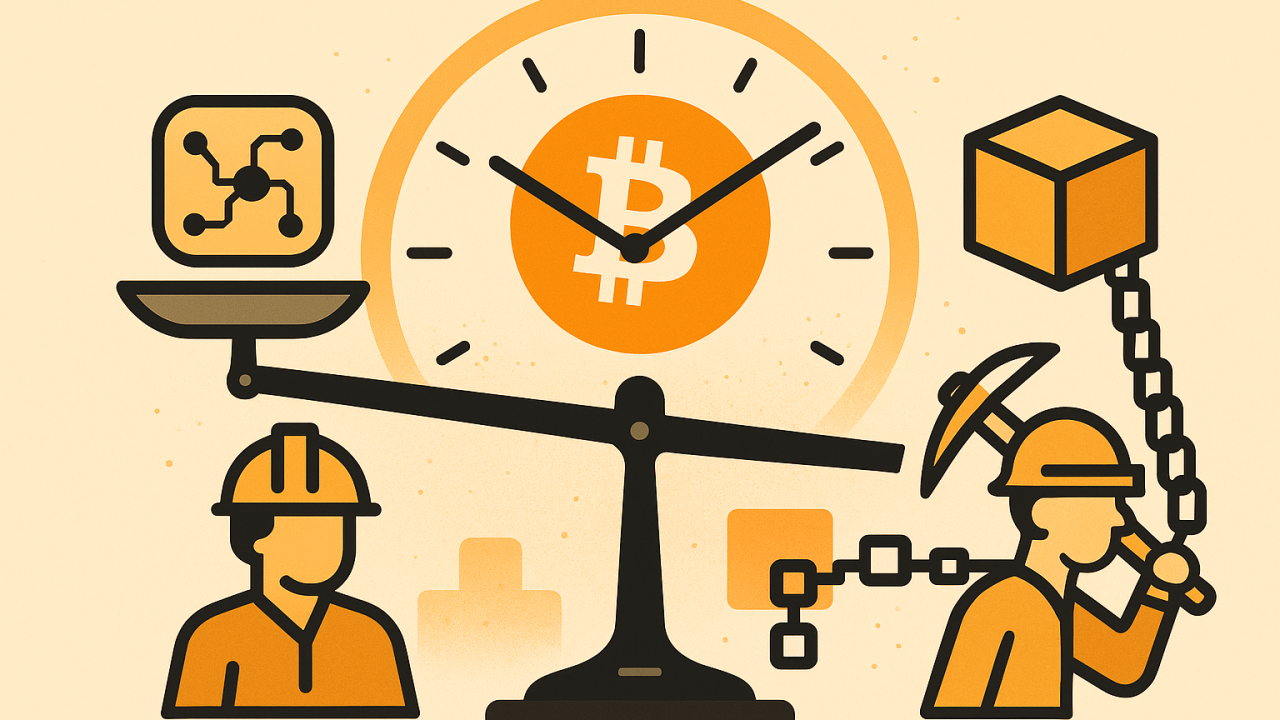
# L'erreur du "security budget" de Bitcoin pour les miners de blocs https://media.licdn.com/dms/image/v2/D4E12AQEFRl1KGagdYw/article-cover_image-shrink_720_1280/B4EZpuQ40FKgAI-/0/1762786516827?e=1765411200&v=beta&t=goLHUaZGJHxwcm6a5WlFf07ViM3J53gqRU4fiiEVWSs ### Rappel introductif Bitcoin repose sur un "**smart contrat" (script de dĂ©pense Bitcoin)** entre deux types d’acteurs : **les nƓuds** et **les mineurs**. Ce contrat, entiĂšrement inscrit dans le code du protocole, permet au systĂšme de fonctionner de maniĂšre stable sans autoritĂ© centrale ni coordination humaine directe. Les **nƓuds** reprĂ©sentent la partie lĂ©gislative du rĂ©seau. Ils fixent et appliquent les rĂšgles de validitĂ© des blocs, contrĂŽlent la difficultĂ© du travail Ă  fournir et dĂ©terminent quelle chaĂźne de blocs doit ĂȘtre considĂ©rĂ©e comme lĂ©gitime. Ils jouent aussi le rĂŽle de **registre collectif** : chaque nƓud valide les transactions, conserve une copie intĂ©grale de l’historique et rejette automatiquement tout bloc qui ne respecte pas les rĂšgles du consensus. La vĂ©ritable sĂ©curitĂ© du rĂ©seau rĂ©side ici, dans la **redondance des vĂ©rifications** et dans la **cryptographie des portefeuilles**, oĂč la longueur des clĂ©s privĂ©es empĂȘche toute falsification de signature. Les **mineurs**, eux, forment le pouvoir exĂ©cutif de ce contrat. Leur mission consiste Ă  produire des blocs conformes aux rĂšgles dĂ©finies par les nƓuds. Leur rĂ©compense — la coinbase et les frais de transaction — n’a de valeur que si les nƓuds reconnaissent leur travail comme valide. Les mineurs participent donc Ă  une compĂ©tition de calcul purement probabiliste : chacun cherche, au hasard, une preuve de travail qui satisfait la difficultĂ© fixĂ©e. Sur le plan technique, cette activitĂ© de minage est ce qui permet la **synchronisation partielle** d’un rĂ©seau mondial sans horloge centrale. Chaque bloc trouvĂ© agit comme un **point de repĂšre temporel partagĂ©** : il marque une Ă©tape commune pour tous les nƓuds, malgrĂ© la latence et les diffĂ©rences de propagation entre eux. La preuve de travail sert ici de **signal d’ordre**, permettant Ă  l’ensemble du systĂšme de maintenir un rythme de fonctionnement commun et vĂ©rifiable. Ce n’est pas une sĂ©curitĂ© cryptographique au sens strict — celle-ci rĂ©side dans les clĂ©s privĂ©es des portefeuilles —, mais un **mĂ©canisme d’horodatage distribuĂ©**. Le calcul minier transforme l’énergie en temps mesurĂ© : il ne protĂšge pas le registre, il lui donne un **rythme**. Les nƓuds, en retour, utilisent ce rythme pour maintenir la cohĂ©rence du registre et rejeter les blocs produits hors des rĂšgles. Ainsi, le minage n’est pas une armĂ©e protĂ©geant la blockchain, mais une **fonction de synchronisation probabiliste**. Il organise la coexistence d’acteurs honnĂȘtes et opportunistes dans un mĂȘme jeu oĂč la triche est dissuadĂ©e par la logique du protocole : un bloc invalide n’a aucune valeur. Ce **contrat auto-rĂ©gulĂ©** fonctionne comme un systĂšme d’équilibre dynamique. Les mineurs apportent leur puissance de calcul pour tenter d’inscrire le prochain bloc, mais les nƓuds ajustent en permanence la difficultĂ© du travail afin de maintenir un rythme moyen d’environ dix minutes par bloc. Si la puissance mondiale augmente, la difficultĂ© s’élĂšve ; si elle diminue, elle baisse. Le protocole « se moque » donc de la puissance absolue en circulation : il maintient simplement un **intervalle de temps constant** entre les blocs, assurant une compĂ©tition toujours Ă©quitable. Les nƓuds jouent ici le rĂŽle de **gardien du temps** : ils mesurent le rythme de production des blocs et recalibrent la difficultĂ© de calcul pour prĂ©server la cadence du systĂšme. Cet espace de dix minutes agit comme une **horloge commune** — un battement collectif mesurĂ©, non produit. Si les blocs arrivent trop vite, les nƓuds rendent le calcul plus difficile ; s’ils arrivent trop lentement, ils le facilitent. Les mineurs, quant Ă  eux, fournissent les « oscillations » de calcul (hachages par seconde), tandis que les nƓuds en extraient une frĂ©quence stable, utilisable comme variable de rĂ©gulation. Dans une horloge classique, le temps est mesurĂ© par la **frĂ©quence d’un oscillateur** : un cristal vibre, un circuit compte les impulsions. Dans Bitcoin, les **hachages** produits par les mineurs jouent un rĂŽle Ă©quivalent — mais la stabilitĂ© du temps ne vient pas de la vitesse de ces hachages, elle vient de la maniĂšre dont les nƓuds les **mesurent** et en rĂ©gulent la cadence. Ce n’est donc pas la puissance qui crĂ©e la sĂ©curitĂ©, mais la mesure collective qui transforme un flux chaotique de calculs en une suite ordonnĂ©e de blocs. > La sĂ©curitĂ© n'est donc pas dans le minage des blocs, ce minage est une mesure utilisĂ©e par les nƓuds pour leur synchronisation qui assure par les noeuds une protection contre les doubles dĂ©penses. MĂȘme si la puissance mondiale de minage varie fortement, le protocole continue de battre Ă  la mĂȘme cadence. Les nƓuds maintiennent la cohĂ©rence du registre et la stabilitĂ© du temps ; les mineurs, la production rĂ©guliĂšre des blocs. **Cette rĂ©gulation dĂ©couple totalement le fonctionnement du rĂ©seau des fluctuations Ă©conomiques du marchĂ© minier.** Sur le plan Ă©conomique, la **sĂ©curitĂ© rĂ©elle** ne dĂ©pend ni du nombre de mineurs ni de la puissance engagĂ©e, mais du **rapport de forces entre participants honnĂȘtes et adversaires**, ainsi que du **flux de rĂ©munĂ©ration** que le protocole distribue. Une attaque ne devient rationnelle que si la valeur qu’elle permet de dĂ©tourner dĂ©passe le coĂ»t d’opportunitĂ© du minage honnĂȘte — un seuil rarement atteignable. Bitcoin (les noeuds) se prĂ©sente ainsi comme une **constitution algorithmique** : les rĂšgles y sont codĂ©es, leur application est collective, et la sanction — le rejet automatique des blocs invalides — est immĂ©diate. Les nƓuds incarnent la souverainetĂ© des rĂšgles ; les mineurs, la force d’exĂ©cution. L’ajustement de difficultĂ© agit comme un arbitre neutre, maintenant la rĂ©gularitĂ© du temps sans qu’aucune autoritĂ© ne puisse l’altĂ©rer. En rĂ©sumĂ©, Bitcoin n’est pas une Ă©conomie fondĂ©e sur la puissance, mais sur la **mesure du temps et la loyautĂ© au code**. Il n’a pas besoin d’une armĂ©e de mineurs, seulement d’un consensus sur les rĂšgles et d’un mĂ©canisme Ă©quitable de compĂ©tition. Ce contrat tacite entre calcul et validation fait de la blockchain un **systĂšme d’horodatage universel**, oĂč la confiance est remplacĂ©e par la rĂ©gularitĂ© d’un rythme partagĂ©. ### Pourquoi le concept de « security budget » de Bitcoin pour les mineurs est une erreur de comprĂ©hension L’expression « security budget » est souvent employĂ©e pour dĂ©signer la somme dĂ©pensĂ©e en rĂ©compenses (subvention et frais) versĂ©e aux mineurs, censĂ©e reprĂ©senter le « prix » de la sĂ©curitĂ© de Bitcoin. Ce terme, **hĂ©ritĂ© d’une analogie comptable, a cependant conduit Ă  une erreur d’interprĂ©tation fondamentale** : il suppose qu’il existerait un _budget fixe et nĂ©cessaire_ pour garantir la sĂ©curitĂ© du rĂ©seau, comme si Bitcoin devait continuellement « acheter » sa propre survie. En rĂ©alitĂ©, **la sĂ©curitĂ© n’est pas budgĂ©tisĂ©e, mais Ă©merge d’un Ă©quilibre Ă©conomique et temporel autorĂ©gulĂ©.** **Une confusion entre flux et stock** Le « budget » suppose une ressource finie, dĂ©pensĂ©e pour obtenir un service mesurable. Or, dans Bitcoin, la rĂ©compense versĂ©e aux mineurs n’est pas un coĂ»t programmĂ© Ă  dĂ©penser pour acheter la sĂ©curitĂ© ; c’est un **flux endogĂšne**, ajustĂ© en continu par le marchĂ© des frais et la rĂšgle de difficultĂ©. Le rĂ©seau ne dĂ©pense rien : il distribue un revenu proportionnel Ă  la raretĂ© des blocs et Ă  la demande d’inclusion des transactions. **Une mĂ©prise sur la causalitĂ©** L’idĂ©e de « budget » laisse entendre que plus les mineurs reçoivent, plus la sĂ©curitĂ© augmente, comme si la dĂ©pense prĂ©cĂ©dait la sĂ»retĂ©. **En rĂ©alitĂ©, la fiabilitĂ© des mesures de l'horloge rĂ©sulte de la compĂ©tition probabiliste et du contrĂŽle de la difficultĂ©, non du montant distribuĂ©.** – Si le hashrate chute, la difficultĂ© s’ajuste pour maintenir le rythme des blocs ; la sĂ©curitĂ© logique de la mesure reste intacte tant que la majoritĂ© honnĂȘte subsiste. **Ainsi, Bitcoin ne « paie » pas sa sĂ©curitĂ© : il rĂšgle un prix de marchĂ© pour le travail rĂ©ussi, dont la valeur est dĂ©terminĂ©e par la demande de mesure de temps pour rĂ©aliser un effort donnĂ©, en en dĂ©duit "un temps universel par le volume de travail accompli avec une puissance ajustĂ©e".** **Un contresens sur le rĂŽle du travail** Le travail n’achĂšte pas la sĂ©curitĂ©, il horodate l’ordre des Ă©vĂ©nements. **La preuve de travail (PoW) ne protĂšge pas le systĂšme par dĂ©pense d’énergie, mais par sa contribution Ă  la fonction de mĂ©tronome alĂ©atoire et dĂ©centralisĂ©** : elle synchronise un rĂ©seau asynchrone en imposant une limite physique Ă  la vitesse de falsification. L’énergie dĂ©pensĂ©e est un _coĂ»t d’opportunitĂ©_ qui rend la réécriture de l’histoire Ă©conomiquement irrationnelle, pas une assurance contractĂ©e auprĂšs des mineurs. **Une confusion entre coĂ»t marginal et coĂ»t total** La sĂ©curitĂ© de Bitcoin dĂ©pend du coĂ»t marginal de l’attaque Ă  un instant donnĂ©, non du coĂ»t total historique du minage. MĂȘme si la puissance mondiale baisse, une attaque reste aussi coĂ»teuse que le coĂ»t actuel pour dĂ©passer la difficultĂ© : **le passĂ© dĂ©pensĂ© n’est pas un budget amorti, il n’a aucune valeur dĂ©fensive accumulĂ©e.** Autrement dit, la sĂ©curitĂ© est _instantanĂ©e_, non cumulative. **Une fausse analogie avec un service d’assurance** Certains commentateurs assimilent le mining Ă  un service de dĂ©fense que le protocole devrait rĂ©munĂ©rer continuellement pour ne pas perdre sa sĂ©curitĂ©. Cette vision est fausse : – Les mineurs ne protĂšgent rien d’extĂ©rieur ; ils participent Ă  un jeu dont le seul rĂ©sultat valide est un bloc acceptĂ©. – Le protocole ne peut pas « acheter » leur loyautĂ© ; il ne rĂ©compense que la conformitĂ© aux rĂšgles. **La sĂ©curitĂ© dĂ©coule de la vĂ©rification automatique, pas de la confiance envers les mineurs.** **Argument 1 : « Si la rĂ©compense diminue, les mineurs partiront, donc la sĂ©curitĂ© baissera. »** **PondĂ©ration :** – Oui, un hashrate plus faible rĂ©duit le coĂ»t absolu d’une attaque, mais la difficultĂ© baisse aussi, prĂ©servant la cadence des blocs. – Ce qui change, c’est la sĂ©curitĂ© Ă©conomique (le coĂ»t d’un 51 %), pas la sĂ©curitĂ© logique du consensus. – **À long terme, la transition vers un modĂšle Ă  frais (fee-only era) rend cette dynamique plus sensible ; d’oĂč la nĂ©cessitĂ© d’un marchĂ© actif des frais, mais non d’un « budget » au sens fixe.** **Argument 2 : « Les mineurs assurent la sĂ©curitĂ©, donc ils doivent ĂȘtre payĂ©s Ă  hauteur du risque. »** **PondĂ©ration :** – Les mineurs ne « protĂšgent » pas ; ils produisent des blocs conformes pour obtenir un revenu alĂ©atoire. – Leur incitation repose sur l’espĂ©rance de gain, non sur une rĂ©munĂ©ration proportionnelle au risque. – **Leur rĂŽle est neutre : ils n’ont ni la responsabilitĂ© ni la capacitĂ© d’assurer la sĂ©curitĂ© hors du protocole de validation, leur travail important ou faible est mesurĂ© pour maintenir l'espace de temps entre les blocs.** **Argument 3 : « La baisse du security budget entraĂźnera une centralisation. »** **PondĂ©ration :** – Ce risque existe si le seuil de rentabilitĂ© devient trop Ă©levĂ©. – Toutefois, **la centralisation dĂ©coule davantage des Ă©conomies d’échelle Ă©nergĂ©tiques et de la concentration gĂ©ographique que du montant global des rĂ©compenses.** – Une difficultĂ© moindre permet d’ailleurs Ă  des mineurs plus modestes de concourir Ă  nouveau ; la dĂ©centralisation n’est donc pas directement corrĂ©lĂ©e au budget total. **Argument 4 : « Sans un budget minimal, Bitcoin sera vulnĂ©rable quand les subventions cesseront. »** **PondĂ©ration :** – C’est la critique la plus sĂ©rieuse (Budish 2018) mais pour 2140. – Toutefois, la rĂ©munĂ©ration de la sĂ©curitĂ© par les frais d’inclusion est _endogĂšne_ : si la demande de finalitĂ© augmente, les frais s’ajustent. – De plus, **la sĂ©curitĂ© dĂ©pend du ratio attaque/coĂ»t, non d’un montant absolu : si la valeur attaquable reste infĂ©rieure au coĂ»t de renversement, l’équilibre demeure stable.** **Argument 5 : « Le budget de sĂ©curitĂ© mesure la santĂ© Ă©conomique du protocole. »** **PondĂ©ration :** – C’est un indicateur comptable utile (pour suivre les flux vers les mineurs), mais il ne mesure pas la sĂ©curitĂ©. – **La vraie mĂ©trique est l’inĂ©galitĂ© de non-rentabilitĂ© :** k × (R_b × P + C_h) > V_a, oĂč : - **k** : nombre de blocs de confirmation nĂ©cessaires - **R_b** : rĂ©compense par bloc (subvention + frais) - **P** : prix du bitcoin - **C_h** : coĂ»t opĂ©rationnel de production d’un bloc - **V_a** : valeur Ă©conomique que l’attaquant pourrait dĂ©tourner > Tant que cette condition est respectĂ©e, la sĂ©curitĂ© Ă©conomique est assurĂ©e, quel que soit le niveau global du « budget ». ### La sĂ©curitĂ© de Bitcoin n’a pas de prix fixe > **La sĂ©curitĂ© de Bitcoin n’est pas un service Ă  financer, mais une propriĂ©tĂ© Ă©mergente d’un jeu d’incitations et d’ajustements automatiques.** > **Le protocole n’achĂšte pas la sĂ©curitĂ© ; le noeuds crĂ©ent un environnement oĂč la tricherie devient Ă©conomiquement irrationnelle, afin de synchroniser le rĂ©seau sans biais. La sĂ©curitĂ©, elle, vient de la cryptographie utilisĂ©e sur les wallets.** **Les flux vers les mineurs ne sont pas un « budget », mais un** **_thermomĂštre de tension_** **: ils reflĂštent la demande de finalitĂ© et la compĂ©tition pour l’espace de bloc.** RĂ©duire Bitcoin Ă  une simple question de budget revient Ă  mĂ©connaĂźtre sa nature profonde : un systĂšme oĂč la sĂ©curitĂ© est une **consĂ©quence logique du consensus et de la vĂ©rification**, non un coĂ»t d’exploitation. ### La valeur des bitcoins n'a aucun rapport avec leur coĂ»t de production Certains avancent que le bitcoin devrait avoir une valeur minimale, c’est-Ă -dire au coĂ»t Ă©nergĂ©tique et matĂ©riel du minage. Cette idĂ©e paraĂźt intuitive : si miner coĂ»te cher, le prix devrait au moins couvrir cette dĂ©pense, sinon les mineurs cesseraient leur activitĂ©. Pourtant, cette interprĂ©tation confond **valeur Ă©conomique** et **coĂ»t de production**, deux notions distinctes dans la tradition de l’économie de marchĂ© — et, d’un point de vue mĂ©thodologique, sans lien de causalitĂ© directe. **Le coĂ»t de production n’est pas la cause de la valeur** Dans une Ă©conomie fondĂ©e sur la subjectivitĂ© des Ă©changes, la valeur d’un bien n’est pas dĂ©terminĂ©e par la quantitĂ© de travail ou d’énergie qu’il a fallu pour le produire, mais par **l’évaluation que les acteurs font de son utilitĂ© marginale** : ce qu’ils sont prĂȘts Ă  Ă©changer pour l’obtenir. Un bloc minĂ© est rĂ©munĂ©rĂ© non parce qu’il « coĂ»te » un certain nombre de kilowattheures, mais parce qu’il permet d’obtenir un bitcoin reconnu par le rĂ©seau comme valide et transfĂ©rable. Si demain la demande d’échange en bitcoin s’effondre, le prix peut chuter en dessous du coĂ»t de production sans que le protocole ne soit affectĂ©. Le marchĂ© ajustera simplement le hashrate et la difficultĂ© Ă  la baisse. **Le coĂ»t se forme Ă  partir du prix, non l’inverse** Le mĂ©canisme d’ajustement du mining illustre ce renversement causal. Quand le prix du bitcoin monte, de nouveaux mineurs entrent, augmentant la difficultĂ© et donc le coĂ»t marginal de production ; quand le prix baisse, des mineurs se retirent, la difficultĂ© diminue et le coĂ»t moyen suit. Le coĂ»t de production s’adapte au prix d’équilibre de marchĂ©, pas l’inverse. Autrement dit : **le prix de marchĂ© dĂ©termine le coĂ»t viable**, et non le coĂ»t qui fixe le prix. Le coĂ»t de production n’est donc pas un plancher thĂ©orique de valeur, mais la _consĂ©quence_ du prix observĂ© et de la compĂ©tition pour l’obtenir. **Bitcoin n’a pas de valeur « intrinsĂšque » mesurable** La croyance en une valeur minimale liĂ©e Ă  l’énergie consommĂ©e repose sur une analogie avec les biens physiques. Mais Bitcoin n’est pas un bien matĂ©riel : c’est un **registre de propriĂ©tĂ© dĂ©centralisĂ©**. Sa valeur dĂ©coule de la confiance collective dans la validitĂ© de ce registre et dans sa raretĂ© algorithmique. Ni l’électricitĂ©, ni le silicium, ni le travail des mineurs ne confĂšrent Ă  l’unitĂ© monĂ©taire une valeur intrinsĂšque ; ils servent seulement Ă  en garantir l’émission et la cohĂ©rence temporelle. Si l’électricitĂ© devenait gratuite ou si des algorithmes plus efficaces divisaient le coĂ»t du hash, la valeur du bitcoin ne serait pas affectĂ©e ; seul le coĂ»t d’entrĂ©e dans la compĂ©tition miniĂšre changerait. **Le marchĂ© efface toute corrĂ©lation stable** Historiquement, la corrĂ©lation entre le coĂ»t de production estimĂ© et le prix du bitcoin est variable et instable : – lors des bull-runs, le prix s’élĂšve bien au-delĂ  du coĂ»t marginal ; – lors des chutes prolongĂ©es, il passe souvent en dessous sans que le protocole s’arrĂȘte ; – le retarget de difficultĂ© corrige ces dĂ©sĂ©quilibres en maintenant le rythme des blocs. Cela prouve que le systĂšme fonctionne sans rĂ©fĂ©rence Ă  une valeur minimale « Ă©nergĂ©tique ». **Le coĂ»t du minage est un prix d’équilibre, pas une valeur plancher** Ce que certains appellent « coĂ»t de production » est en rĂ©alitĂ© le **prix d’équilibre instantanĂ©** du service de preuve de travail : un point oĂč les revenus attendus compensent le coĂ»t marginal d’électricitĂ©. Si le prix du bitcoin tombe, les mineurs Ă  coĂ»ts Ă©levĂ©s se retirent, abaissant le coĂ»t moyen et ramenant le rĂ©seau vers un nouvel Ă©quilibre. **La production n’est jamais dĂ©truite faute de « budget », elle se rĂ©organise.** ### Conclusion Associer une valeur minimale du bitcoin Ă  son coĂ»t de production, c’est inverser le sens de la causalitĂ© Ă©conomique. Le coĂ»t ne fonde pas la valeur ; il en dĂ©coule. La dĂ©pense Ă©nergĂ©tique ne crĂ©e pas le prix, elle rĂ©vĂšle la compĂ©tition pour un bien dĂ©jĂ  reconnu comme utile. Le protocole, par son ajustement de difficultĂ©, neutralise d’ailleurs tout lien direct entre puissance, coĂ»t et valeur : il garantit seulement la cadence des blocs, pas leur prix. Ainsi, **le bitcoin n’a pas de valeur « Ă©nergĂ©tique » (mais une mesure Ă©nergĂ©tique)**, seulement **une valeur d’usage et d’échange dĂ©terminĂ©e par la confiance dans ses propriĂ©tĂ©s : raretĂ© algorithmique, neutralitĂ©, rĂ©sistance Ă  la censure et prĂ©visibilitĂ© monĂ©taire.** Le coĂ»t de production n’est qu’un effet secondaire du prix de marchĂ©, jamais sa cause, ni un plancher garanti de sa valeur. -​- ### Pourquoi 10 minutes (environ entre les blocs), 2 016 blocs (ajustement de la difficultĂ©), 210 000 blocs (halving) ? Il y a des contraintes techniques, il y a des simulations de la latence sur le rĂ©seau internet, il y a des simulation Ă©conomique sur le coĂ»t de l'opportunitĂ© ramenĂ©e au dĂ©lais, il y a 1000 raisons, certaines initiales et d'autres "dĂ©couvertes", mais quand on s'en Ă©carte, plus rien ne va, sauf Ă  des compromis refusĂ©s sur Bitcoin. Les nƓuds refuseraient tout bloc invalide ou non conforme Ă  la chaĂźne majoritaire. Les transactions resteraient protĂ©gĂ©es par la cryptographie des clĂ©s privĂ©es, qui rend impossible toute falsification des signatures. Le risque de double dĂ©pense n’apparaĂźtrait que si une entitĂ© parvenait Ă  contrĂŽler durablement la majoritĂ© de la puissance de calcul — une situation hautement improbable Ă  l’échelle du rĂ©seau global — et, mĂȘme dans ce cas, chaque nouveau bloc provoque une **revĂ©rification intĂ©grale** de la validitĂ© des prĂ©cĂ©dents, ce qui renforce la rĂ©silience du protocole. Mais durant une pĂ©riode de rĂ©ajustement du rythme des blocs, lorsque la puissance de calcul globale varie fortement, des dĂ©sĂ©quilibres temporaires peuvent apparaĂźtre : - **Blocs trop rapides** : la difficultĂ© n’a pas encore eu le temps de s’ajuster. Le risque de double dĂ©pense s’accroĂźt lĂ©gĂšrement, car plusieurs mineurs peuvent trouver des blocs presque simultanĂ©ment, avant que le rĂ©seau n’ait propagĂ© le prĂ©cĂ©dent. Il peut alors survenir davantage de **rĂ©organisations** (rĂ©orgs) oĂč la chaĂźne majoritaire se redĂ©finit Ă  mesure que les blocs se propagent et que les nƓuds tranchent. - **Blocs trop lents** : le rĂ©seau peut se fragmenter en sous-chaĂźnes divergentes pendant quelques instants, car la lenteur de propagation allonge les dĂ©lais de confirmation. Les rĂ©orgs deviennent alors plus rares mais aussi plus longues, avec des **conflits prolongĂ©s** entre versions concurrentes de la chaĂźne avant que la majoritĂ© ne se reconstitue. Ces Ă©pisodes n’altĂšrent pas la sĂ©curitĂ© fondamentale de Bitcoin, mais ils peuvent temporairement affecter la fluiditĂ© du consensus et la latence perçue. Le protocole les corrige automatiquement Ă  chaque rĂ©ajustement de difficultĂ©, ramenant progressivement le rĂ©seau vers un rythme d’équilibre. Il est intĂ©ressant de noter que **de nombreuses autres blockchains** ont choisi de contourner ces contraintes physiques en introduisant des notions d’**Ă©tats ou de finalitĂ© explicite** : une transaction est considĂ©rĂ©e irrĂ©versible aprĂšs validation par un nombre fixe de blocs ou par un mĂ©canisme de vote interne. Cette approche rĂ©duit le besoin de recalcul et amĂ©liore la rapiditĂ© apparente du consensus, mais elle affaiblit la transparence du contrĂŽle collectif : – si une attaque ou une falsification passe la barriĂšre de la finalitĂ©, elle peut rester **invisible et irrĂ©versible**, car les nƓuds ne revalident plus intĂ©gralement les anciens blocs ; – inversement, si une divergence profonde est dĂ©tectĂ©e, le rĂ©seau peut se **figer durablement**, incapable de trancher entre plusieurs Ă©tats contradictoires. Bitcoin, en conservant un modĂšle de **validation continue et sans finalitĂ© arbitraire**, assume le coĂ»t computationnel de la rigueur : chaque bloc revĂ©rifie les prĂ©cĂ©dents, chaque nƓud participe Ă  la mesure du temps commun, et la cohĂ©rence du registre ne dĂ©pend jamais d’une dĂ©cision humaine ou d’un vote majoritaire, mais d’une **mesure partagĂ©e de l’effort accompli dans le temps**. > En ce sens, le maintien du rythme moyen de dix minutes n’est pas une contrainte technique mais un pilier de la stabilitĂ© : il garantit que la mesure du temps, et donc de la vĂ©ritĂ© commune du registre, reste indĂ©pendante de la vitesse du monde physique comme des volontĂ©s humaines. On peut voir l’intervalle moyen de dix minutes entre les blocs comme une **fenĂȘtre de stabilitĂ© comportementale** : un compromis entre la vitesse technique du rĂ©seau et le rythme humain des dĂ©cisions opportunistes. Cet espace de temps laisse aux acteurs la possibilitĂ© d’évaluer leurs incitations Ă  tricher ou Ă  rester honnĂȘtes, tout en empĂȘchant que ces choix puissent se traduire en actions exploitables avant que le consensus n’ait consolidĂ© les blocs prĂ©cĂ©dents. Autrement dit, Bitcoin ne cherche pas Ă  battre le temps rĂ©el, mais Ă  **synchroniser un systĂšme d’intentions humaines et de calculs mĂ©caniques** dans une mĂȘme cadence mesurĂ©e. PassĂ© un certain seuil de rapiditĂ©, le jugement et la rationalitĂ© Ă©conomique des acteurs fluctuent plus vite que le protocole ne peut les absorber : les motivations changent avant que les actions ne soient validĂ©es. Le dĂ©lai de dix minutes agit alors comme une **latence de sĂ©curitĂ©**, un amortisseur entre la logique humaine de l’opportunitĂ© et la logique algorithmique de la vĂ©rification — une mesure de stabilitĂ© adaptĂ©e Ă  la vitesse de notre Ăšre numĂ©rique. ### Les Ă©poques de rĂ©ajustement : la mesure du temps et le rythme de mise en circulation Bitcoin repose sur deux horloges internes, chacune gouvernant un aspect distinct de son Ă©quilibre : – la **rĂ©gulation du temps**, assurĂ©e par l’ajustement de la difficultĂ© ; – et le **rythme de mise en circulation**, dĂ©fini par la dĂ©croissance de la rĂ©compense, dite halving. Le premier cycle, celui de la **difficultĂ©**, intervient tous les **2 016 blocs** (environ deux semaines). Les nƓuds y mesurent le temps rĂ©el Ă©coulĂ© pour produire ces blocs et le comparent Ă  la durĂ©e thĂ©orique de quatorze jours. Si la production a Ă©tĂ© plus rapide, la difficultĂ© augmente ; si elle a Ă©tĂ© plus lente, elle diminue. Cette variation, bornĂ©e par un facteur quatre, maintient la rĂ©gularitĂ© du battement du rĂ©seau. Ce mĂ©canisme n’ajuste pas la puissance de calcul, mais la **mesure commune du temps** : il transforme un ensemble de hachages indĂ©pendants en une cadence collective, perceptible et vĂ©rifiable par tous les nƓuds. Le second cycle, le **halving**, survient tous les **210 000 blocs**, soit environ tous les quatre ans. Il ne crĂ©e pas la raretĂ© — celle-ci rĂ©sulte de la topologie des UTXO et de la division effective des unitĂ©s existantes —, mais il **oriente la vitesse d’émission** des nouveaux bitcoins. Le halving agit donc comme un mĂ©tronome Ă©conomique : il module le flux d’introduction des unitĂ©s dans le systĂšme sans altĂ©rer la structure interne de la monnaie. En combinant ces deux boucles, Bitcoin relie la **stabilitĂ© temporelle** Ă  la **progression de la circulation** : – le **rĂ©ajustement de difficultĂ©** garantit la constance du rythme, indĂ©pendamment du niveau de puissance disponible ; – le **halving** organise la transition progressive entre une phase d’émission et une phase de maturitĂ© oĂč la circulation devient quasi stationnaire. Ce double mĂ©canisme traduit la logique fondamentale du protocole : le temps n’est pas imposĂ©, il est **mesurĂ© collectivement** ; la valeur ne vient pas de la dĂ©pense, mais de la **traçabilitĂ© et de la cohĂ©rence** des unitĂ©s inscrites dans le registre. Ainsi, la difficultĂ© rĂšgle le tempo, le halving module le souffle Ă©conomique, et la vĂ©ritable raretĂ© — celle qui fait de chaque bitcoin un fragment unique du registre — rĂ©side dans la **distribution finie et vĂ©rifiable des UTXO**, non dans la cadence du minage. DerniĂšre prĂ©cision : la raretĂ© vĂ©ritable se manifeste dans la granularitĂ© des **UTXO**, c’est-Ă -dire dans la structure effective du registre, le nombre de dĂ©pense possibles sur le rĂ©seau, tandis que le halving n’organise pas la raretĂ© mais le **rythme de mise en circulation**. [Source]() #Bitcoin #ProofOfWork #Decentralization #Consensus #Mining #DifficultyAdjustment #BitcoinEconomics #NakamotoConsensus
# The Bitcoin “security budget” error for block miners https://media.licdn.com/dms/image/v2/D4E12AQEFRl1KGagdYw/article-cover_image-shrink_720_1280/B4EZpuQ40FKgAI-/0/1762786516827?e=1765411200&v=beta&t=goLHUaZGJHxwcm6a5WlFf07ViM3J53gqRU4fiiEVWSs ### Introductory reminder Bitcoin is based on a “**smart contract” (Bitcoin spending script)** between two types of actors: **nodes** and **miners**. This contract, which is entirely written into the protocol code, allows the system to operate stably without a central authority or direct human coordination. The **nodes** represent the legislative part of the network. They set and enforce the rules for block validity, control the difficulty of the work to be done, and determine which blockchain should be considered legitimate. They also act as a **collective ledger**: each node validates transactions, keeps a complete copy of the history, and automatically rejects any block that does not comply with the consensus rules. The true security of the network lies here, in the **redundancy of checks** and in the **cryptography of wallets**, where the length of private keys prevents any falsification of signatures. The **miners**, for their part, form the executive power of this contract. Their mission is to produce blocks that comply with the rules defined by the nodes. Their reward—the coinbase and transaction fees—is only valuable if the nodes recognize their work as valid. Miners therefore participate in a purely probabilistic calculation competition: each one randomly searches for a proof of work that satisfies the set difficulty. Technically speaking, this mining activity is what enables the **partial synchronization** of a global network without a central clock. Each block found acts as a **shared time reference point**: it marks a common milestone for all nodes, despite latency and propagation differences between them. The proof of work serves here as a **signal**, allowing the entire system to maintain a common and verifiable operating rhythm. This is not cryptographic security in the strict sense—that resides in the private keys of wallets—but a **distributed timestamping mechanism**. Mining transforms energy into measured time: it does not protect the ledger, it gives it a **rhythm**. The nodes, in turn, use this rhythm to maintain the consistency of the ledger and reject blocks that are produced outside the rules. Thus, mining is not an army protecting the blockchain, but a **probabilistic synchronization function**. It organizes the coexistence of honest and opportunistic actors in the same game, where cheating is discouraged by the logic of the protocol: an invalid block has no value. This **self-regulating contract** functions as a dynamic equilibrium system. Miners contribute their computing power to try to register the next block, but the nodes constantly adjust the difficulty of the work to maintain an average pace of about ten minutes per block. If global power increases, the difficulty rises; if it decreases, it falls. The protocol therefore “ignores” the absolute power in circulation: it simply maintains a **constant time interval** between blocks, ensuring that competition is always fair. The nodes act as **timekeepers**: they measure the rate of block production and recalibrate the computational difficulty to maintain the system's pace. This ten-minute interval acts as a **common clock**—a measured, non-produced collective beat. If the blocks arrive too quickly, the nodes make the calculation more difficult; if they arrive too slowly, they make it easier. Miners, for their part, provide the computational “oscillations” (hashes per second), while nodes extract a stable frequency from them, which can be used as a regulatory variable. In a conventional clock, time is measured by the **frequency of an oscillator**: a crystal vibrates, a circuit counts the pulses. In Bitcoin, the **hashes** produced by miners play an equivalent role—but the stability of time does not come from the speed of these hashes, it comes from the way the nodes **measure** them and regulate their pace. It is therefore not power that creates security, but collective measurement that transforms a chaotic flow of calculations into an orderly sequence of blocks. > Security does not therefore lie in the mining of blocks; mining is a measure used by nodes for synchronization, which ensures protection against double spending by the nodes. Even if global mining power varies greatly, the protocol continues to beat at the same pace. Nodes maintain the consistency of the ledger and the stability of time; miners maintain the regular production of blocks. **This regulation completely decouples the functioning of the network from economic fluctuations in the mining market.** Economically speaking, **real security** does not depend on the number of miners or the power involved, but on the **balance of power between honest participants and adversaries**, as well as the **flow of remuneration** distributed by the protocol. An attack only becomes rational if the value it allows to be diverted exceeds the opportunity cost of honest mining—a threshold that is rarely achievable. Bitcoin (the nodes) thus presents itself as an **algorithmic constitution**: the rules are coded, their application is collective, and the sanction—the automatic rejection of invalid blocks—is immediate. The nodes embody the sovereignty of the rules; the miners, the enforcement power. The difficulty adjustment acts as a neutral arbiter, maintaining the regularity of time without any authority being able to alter it. In short, Bitcoin is not an economy based on power, but on **time measurement and loyalty to code**. It does not need an army of miners, only a consensus on the rules and a fair competition mechanism. This tacit contract between computation and validation makes the blockchain a **universal timestamping system**, where trust is replaced by the regularity of a shared rhythm. ### Why Bitcoin's concept of a “security budget” for miners is a misunderstanding The term “security budget” is often used to refer to the amount spent on rewards (subsidies and fees) paid to miners, which is supposed to represent the “price” of Bitcoin's security. However, this term, **derived from an accounting analogy, has led to a fundamental misinterpretation**: it assumes that there is a fixed and necessary budget to guarantee the security of the network, as if Bitcoin had to continually “buy” its own survival. In reality, security is not budgeted, but emerges from a self-regulating economic and temporal equilibrium. **Confusion between flow and stock** The “budget” implies a finite resource, spent to obtain a measurable service. However, in Bitcoin, the reward paid to miners is not a programmed cost to be spent to buy security; it is an **endogenous flow**, continuously adjusted by the fee market and the difficulty rule. The network spends nothing: it distributes income proportional to the scarcity of blocks and the demand for transaction inclusion. **A misunderstanding of causality** The idea of a “budget” suggests that the more miners receive, the more security increases, as if spending preceded security. **In reality, the reliability of clock measurements results from probabilistic competition and difficulty control, not from the amount distributed.** – If the hashrate drops, the difficulty adjusts to maintain the block rate; the logical security of the measurement remains intact as long as the honest majority remains. **Thus, Bitcoin does not “pay” for its security: it pays a market price for successful work, the value of which is determined by the demand for time measurement to perform a given effort, deducing “a universal time by the volume of work accomplished with adjusted power.”** **A misinterpretation of the role of work** Work does not buy security, it time-stamps the order of events. **Proof of work (PoW) does not protect the system by expending energy, but by contributing to the function of a random and decentralized metronome**: it synchronizes an asynchronous network by imposing a physical limit on the speed of falsification. The energy expended is an opportunity cost that makes rewriting history economically irrational, not insurance taken out with miners. **Confusion between marginal cost and total cost** Bitcoin's security depends on the marginal cost of the attack at a given moment, not the total historical cost of mining. Even if global power declines, an attack remains as costly as the current cost of exceeding the difficulty: **the past expenditure is not an amortized budget, it has no accumulated defensive value.** In other words, security is _instantaneous_, not cumulative. **A false analogy with an insurance service** Some commentators equate mining with a defense service that the protocol should continually pay for in order not to lose its security. This view is false: – Miners do not protect anything external; they participate in a game whose only valid result is an accepted block. – The protocol cannot “buy” their loyalty; it only rewards compliance with the rules. **Security comes from automatic verification, not trust in miners.** **Argument 1: “If the reward decreases, miners will leave, so security will decline.”** **Weighting:** – Yes, a lower hashrate reduces the absolute cost of an attack, but the difficulty also decreases, preserving the block rate. – What changes is economic security (the cost of a 51% attack), not the logical security of the consensus. – ** In the long term, the transition to a fee-only era makes this dynamic more sensitive; hence the need for an active fee market, but not a fixed “budget.”** **Argument 2: “Miners provide security, so they should be paid according to the risk.”** **Weighting:** – Miners do not “protect”; they produce compliant blocks to obtain a random income. – Their incentive is based on the expectation of gain, not on remuneration proportional to risk. – **Their role is neutral: they have neither the responsibility nor the ability to ensure security outside the validation protocol; their work, whether significant or insignificant, is measured to maintain the time interval between blocks.** **Argument 3: “Lowering the security budget will lead to centralization.”** **Weighting:** – This risk exists if the break-even point becomes too high. – However, **centralization stems more from economies of scale in energy and geographic concentration than from the overall amount of rewards.** – Lower difficulty also allows smaller miners to compete again, so decentralization is not directly correlated with the total budget. **Argument 4: “Without a minimum budget, Bitcoin will be vulnerable when subsidies end.”** **Weighting:** – This is the most serious criticism (Budish 2018) but for 2140. – However, security remuneration through inclusion fees is _endogenous_: if demand for finality increases, fees adjust. – Furthermore, **security depends on the attack/cost ratio, not on an absolute amount: if the attackable value remains lower than the reversal cost, the equilibrium remains stable.** **Argument 5: “The security budget measures the economic health of the protocol.”** **Weighting:** – It is a useful accounting indicator (for tracking flows to miners), but it does not measure security. – **The true metric is the inequality of unprofitability:** k × (R_b × P + C_h) > V_a, where: - **k**: number of confirmation blocks required - **R_b**: reward per block (subsidy + fees) - **P**: price of bitcoin - **C_h**: operational cost of producing a block - **V_a**: economic value that the attacker could divert > As long as this condition is met, economic security is assured, regardless of the overall level of the “budget.” ### Bitcoin security has no fixed price > **Bitcoin security is not a service to be financed, but an emergent property of a set of incentives and automatic adjustments.** > **The protocol does not purchase security; the nodes create an environment where cheating becomes economically irrational, in order to synchronize the network without bias. Security comes from the cryptography used on wallets.** **Flows to miners are not a “budget,” but a** **_tension thermometer_** **: they reflect the demand for finality and competition for block space.** Reducing Bitcoin to a simple question of budget is to misunderstand its fundamental nature: a system where security is a logical consequence of consensus and verification, not an operating cost. ### The value of bitcoins has no relation to their production cost Some argue that bitcoin should have a minimum value, i.e., the energy and material cost of mining. This idea seems intuitive: if mining is expensive, the price should at least cover this expense, otherwise miners would cease their activity. However, this interpretation confuses **economic value** and **production cost**, two distinct concepts in the tradition of market economics—and, from a methodological point of view, without any direct causal link. **Production cost is not the cause of value** In an economy based on the subjectivity of exchanges, the value of a good is not determined by the amount of labor or energy required to produce it, but by **the actors' assessment of its marginal utility**: what they are willing to exchange to obtain it. A mined block is remunerated not because it “costs” a certain number of kilowatt-hours, but because it allows the miner to obtain a bitcoin that is recognized by the network as valid and transferable. If tomorrow the demand for bitcoin exchange collapses, the price may fall below the cost of production without affecting the protocol. The market will simply adjust the hashrate and difficulty downward. **The cost is based on the price, not the other way around** The mining adjustment mechanism illustrates this causal reversal. When the price of bitcoin rises, new miners enter the market, increasing the difficulty and therefore the marginal cost of production; when the price falls, miners withdraw, the difficulty decreases, and the average cost follows suit. The cost of production adapts to the market equilibrium price, not the other way around. In other words: **the market price determines the viable cost**, not the cost that sets the price. The cost of production is therefore not a theoretical floor value, but the consequence of the observed price and the competition to obtain it. **Bitcoin has no measurable “intrinsic” value** The belief in a minimum value linked to the energy consumed is based on an analogy with physical goods. But Bitcoin is not a material good: it is a **decentralized property registry**. Its value derives from collective trust in the validity of this registry and its algorithmic scarcity. Neither electricity, silicon, nor the work of miners give the monetary unit intrinsic value; they only serve to guarantee its issuance and temporal consistency. If electricity became free or if more efficient algorithms divided the cost of hashing, the value of Bitcoin would not be affected; only the cost of entering the mining competition would change. **The market erases any stable correlation** Historically, the correlation between the estimated production cost and the price of bitcoin has been variable and unstable: – during bull runs, the price rises well above the marginal cost; – during prolonged declines, it often falls below it without the protocol stopping; – the difficulty retarget corrects these imbalances by maintaining the block rate. This proves that the system works without reference to a minimum “energy” value. **The cost of mining is an equilibrium price, not a floor value** What some call the “production cost” is actually the **instantaneous equilibrium price** of the proof-of-work service: a point where expected revenues offset the marginal cost of electricity. If the price of bitcoin falls, high-cost miners withdraw, lowering the average cost and bringing the network back to a new equilibrium. **Production is never destroyed due to lack of “budget”; it reorganizes itself.** ### Conclusion Linking a minimum value for bitcoin to its production cost is to reverse the direction of economic causality. Cost does not determine value; it derives from it. Energy expenditure does not create the price; it reveals competition for a good that is already recognized as useful. The protocol, through its difficulty adjustment, neutralizes any direct link between power, cost, and value: it only guarantees the rate of blocks, not their price. Thus, **bitcoin has no “energy” value (but an energy measurement),** only **a use and exchange value determined by confidence in its properties: algorithmic scarcity, neutrality, resistance to censorship, and monetary predictability.** The cost of production is only a side effect of the market price, never its cause, nor a guaranteed floor for its value. -​- ### Why 10 minutes (approximately between blocks), 2,016 blocks (difficulty adjustment), 210,000 blocks (halving)? There are technical constraints, there are simulations of latency on the internet, there are economic simulations of the opportunity cost in terms of time, there are 1,000 reasons, some initial and others “discovered,” but when we deviate from them, nothing works anymore, except for compromises that are rejected on Bitcoin. The nodes would reject any block that is invalid or does not comply with the majority chain. Transactions would remain protected by private key cryptography, which makes it impossible to falsify signatures. The risk of double spending would only arise if an entity managed to gain lasting control of the majority of the computing power—a highly unlikely situation on the scale of the global network—and even in this case, each new block triggers a **full re-verification** of the validity of the previous ones, which reinforces the resilience of the protocol. However, during a period of block rate readjustment, when the overall computing power varies significantly, temporary imbalances may occur: - **Blocks too fast**: the difficulty has not yet had time to adjust. The risk of double spending increases slightly, as several miners may find blocks almost simultaneously, before the network has propagated the previous one. This can lead to more **reorganizations** (reorgs) where the majority chain is redefined as blocks propagate and nodes make decisions. - **Blocks too slow**: the network may fragment into divergent sub-chains for a few moments, as slow propagation lengthens confirmation times. Reorgs then become rarer but also longer, with **prolonged conflicts** between competing versions of the chain before the majority is reestablished. These episodes do not alter the fundamental security of Bitcoin, but they can temporarily affect the fluidity of consensus and perceived latency. The protocol automatically corrects them with each difficulty readjustment, gradually bringing the network back to a balanced pace. It is interesting to note that **many other blockchains** have chosen to circumvent these physical constraints by introducing notions of **explicit states or finality**: a transaction is considered irreversible after validation by a fixed number of blocks or by an internal voting mechanism. This approach reduces the need for recalculation and improves the apparent speed of consensus, but it weakens the transparency of collective control: – if an attack or falsification passes the finality barrier, it can remain **invisible and irreversible**, as nodes no longer fully revalidate old blocks; – conversely, if a deep divergence is detected, the network can become **permanently frozen**, unable to decide between several contradictory states. Bitcoin, by maintaining a model of **continuous validation without arbitrary finality**, assumes the computational cost of rigor: each block rechecks the previous ones, each node participates in measuring common time, and the consistency of the ledger never depends on a human decision or a majority vote, but on a **shared measure of the effort accomplished over time**. > In this sense, maintaining the average pace of ten minutes is not a technical constraint but a pillar of stability: it ensures that the measurement of time, and therefore the common truth of the ledger, remains independent of the speed of the physical world and human will. The average ten-minute interval between blocks can be seen as a **window of behavioral stability**: a compromise between the technical speed of the network and the human pace of opportunistic decisions. This time frame allows actors to evaluate their incentives to cheat or remain honest, while preventing these choices from translating into exploitable actions before the consensus has consolidated the previous blocks. In other words, Bitcoin does not seek to beat real time, but to **synchronize a system of human intentions and mechanical calculations** at the same measured pace. Beyond a certain threshold of speed, the judgment and economic rationality of actors fluctuate faster than the protocol can absorb them: motivations change before actions are validated. The ten-minute delay then acts as a **security latency**, a buffer between the human logic of opportunity and the algorithmic logic of verification—a measure of stability adapted to the speed of our digital age. ### Periods of readjustment: the measurement of time and the pace of circulation Bitcoin relies on two internal clocks, each governing a distinct aspect of its balance: – **time regulation**, ensured by difficulty adjustment; – and the **pace of circulation**, defined by the decrease in reward, known as halving. The first cycle, that of **difficulty**, occurs every **2,016 blocks** (approximately two weeks). The nodes measure the actual time taken to produce these blocks and compare it to the theoretical duration of fourteen days. If production has been faster, the difficulty increases; if it has been slower, it decreases. This variation, limited by a factor of four, maintains the regularity of the network's beat. This mechanism does not adjust computing power, but rather the **common measure of time**: it transforms a set of independent hashes into a collective cadence that is perceptible and verifiable by all nodes. The second cycle, **halving**, occurs every **210,000 blocks**, or approximately every four years. It does not create scarcity—this results from the topology of UTXOs and the effective division of existing units—but it **guides the rate of issuance** of new bitcoins. Halving therefore acts as an economic metronome: it modulates the flow of units into the system without altering the internal structure of the currency. By combining these two loops, Bitcoin links **temporal stability** to **progress in circulation**: – **difficulty readjustment** ensures a constant pace, regardless of the level of power available; – **halving** organizes the gradual transition from an issuance phase to a maturity phase where circulation becomes virtually stationary. This dual mechanism reflects the fundamental logic of the protocol: time is not imposed, it is **measured collectively**; value does not come from expenditure, but from the **traceability and consistency** of the units recorded in the ledger. Thus, difficulty sets the tempo, halving modulates the economic momentum, and true scarcity—the scarcity that makes each bitcoin a unique fragment of the ledger—lies in the finite and verifiable distribution of UTXOs, not in the pace of mining. One final clarification: true scarcity manifests itself in the granularity of **UTXOs**, i.e., in the actual structure of the ledger, the number of possible expenditures on the network, while halving does not organize scarcity but rather the **rate of circulation**. [Source]() #Bitcoin #ProofOfWork #Decentralization #Consensus #Mining #DifficultyAdjustment #BitcoinEconomics #NakamotoConsensus
Interview from #PlanBLugano Check what the guys from are doing. Cool demo with an NFC tag to login into a website or to open a door đŸšȘ They should go live in Q1 2026 with their project, so don't hesitate to contact them to beta test. PS: there was lots of background noise in the room, I had to use AI to remove the noise. #PlanB
At #PlanBLugano I interviewed Daniel from His company supports circular economy in developing countries. He buys product from them and pay them in sats. Keychain and mini surf board, upcycling from used board that the kids cannot surf on it anymore with Bitcoin related backstreet art from StreetCyber from Barcelona. #PlanB
Guess with whom I ran into at #PlanBLugano ? Uncle Rockstar Dev. He gave me a cool NFC card with his image on it and when you tap it to your phone, you got laser eyes ! đŸ€© Read my feedback from the conference here:
On my way to Lugano PlanB conference with @Saidah - Ask a Bitcoiner 21 Questions