Pienza, Italy, might be the first planned renaissance city in the world, founded by Pope Pious II in 1459, it employed 20,000 laborers and craftsmen and was nearly complete in just three years, by 1462. The town covers an old medieval village and birthplace of the pope, and at 0.36km² it is nearly ideally sized for a pedestrian town of around 3,000. Before it could be completed the pope died and most construction stopped. It remains almost as it was in the 1460s, but now the medieval core probably has less than half the population. A UNESCO heritage site since 1996.
https://hell.twtr.plus/media/53ed8bc5dc28df69e455208709ba8d9cd07bb3a947d9815a3749c94e46bc5498.file
People have this strange idea that people under feudalism lived in some sort of abject tyranny. Of course they didn't. Even serfs had established rights alongside their duties, and lords (whether they were knights or monks) had moral and economic reasons to maintain a balance of give and take. Social mobility was more common than we think and the elite lived far closer to the people than today.
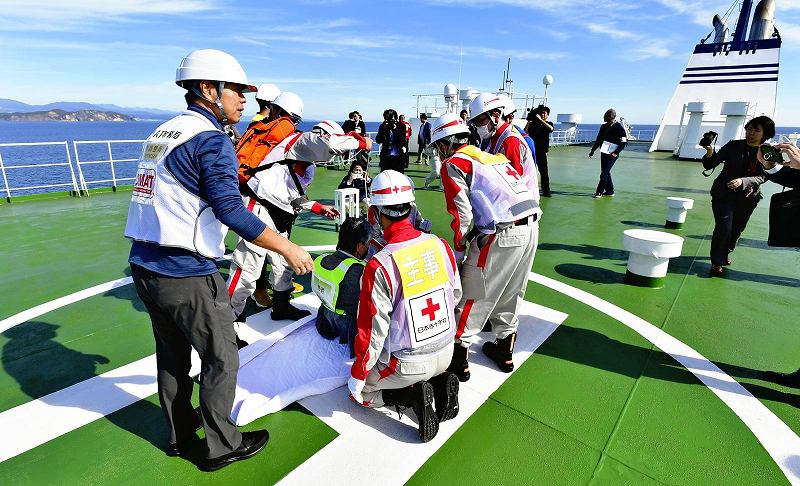
Preparing the use of car ferries as hospital ships to be dispatched to disaster zones is of course a good idea, but in Japan most disasters are earthquake or tsunami related, so relying on hospital ships might not be a good idea. Diesel powered hospital trains for rural and inland areas should also be prepared. Rail is comparatively easy to maintain and repair, often more so than port structures. In the aftermath of the 2011 quakes the government deployed hover landing craft to ferry supplies where ports were destroyed or blocked by sunken vessels.
"He walked much and contemplated, and he had in the head of his cane a pen and inkhorn, carried always a notebook in his pocket, and as soon as a thought darted, he presently entered it into his booke, or otherwise might have lost it. He had drawne the designe of the book into chapters, and knew whereabout it would come in. Thus that booke was made." — John Aubrey, 1626-1697
https://hell.twtr.plus/media/0067512630533b291d8c51faa9979804da607e23ddb78d6967f22c3ac4bbc2eb.file
RT @jtworr@twitter.com:
‘[Editing The Salisbury Review] cost me many thousand hours of unpaid labour, a hideous character assassination in Private Eye, three lawsuits, two interrogations, one expulsion, the loss of a university career in Britain, unendingly contemptuous reviews, Tory suspicion, and the hatred of decent liberals everywhere. And it was worth it.’ - Sir Roger Scruton
https://hell.twtr.plus/media/508c9ed005b1f78104289bab8cfa75d654012d85b5d7cbaa1abb2aa3f252fde0.file