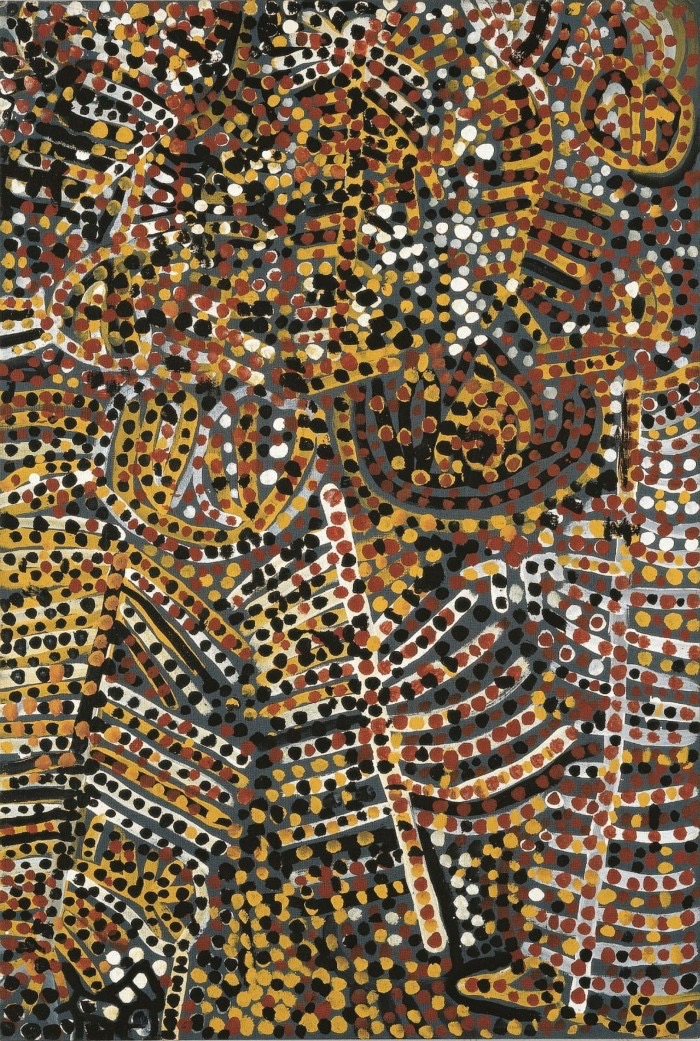
Emily Kam Kngwarray #WomensArt #WomensCreativity image
Emily Kam Kngwarray, Aboriginal artist and Anmatyerre elder #WomensArt #WomensCreativity image
The SCORE Act is flawed because… It fails to require Title IX compliance, thus undermining federal and state laws that require equitable treatment of female athletes. Few institutions—especially low-resourced Division I schools—will have sufficient funds to support pay-for-play revenue sports, gender equity, and Olympic or other low-revenue-producing teams. Instead, they’re likely to prioritize revenue sports (football, men’s basketball). It gives the NCAA almost total control of college athletics in perpetuity in return for college athletes giving up employee rights, receiving limited economic benefits, and getting insufficient health, athletic injury, transfer rights, and other protections. It establishes a pay-for-play college sports system that will result in academic institutions treating players as expendable employees as opposed to students seeking educational degrees. If their playing performance falters, cash payments will not be renewed if more talented prospects are available in the transfer portal. The College Athletics Reform Act (CARA) is a better alternative because… It addresses the most pressing athlete protection issues in college sports: the regulation of sports agents, the assurance of athletes’ NIL (Name, Image, Likeness) rights, and an enforcement system more likely to protect all athletes, including women, rather than the commercial interests of a few. It provides a blueprint for moving forward with a bipartisan Congressional Commission that will have the time and information needed to develop solutions to those issues that have created the current legislative stalemate. It will allow Democrats and Republicans to address what all can agree to now in the spirit of nonpartisan support and then move forward together over the next two years, assisted by experts who understand the complex issues involved, so that college sports will better serve our athletes and higher education institutions.
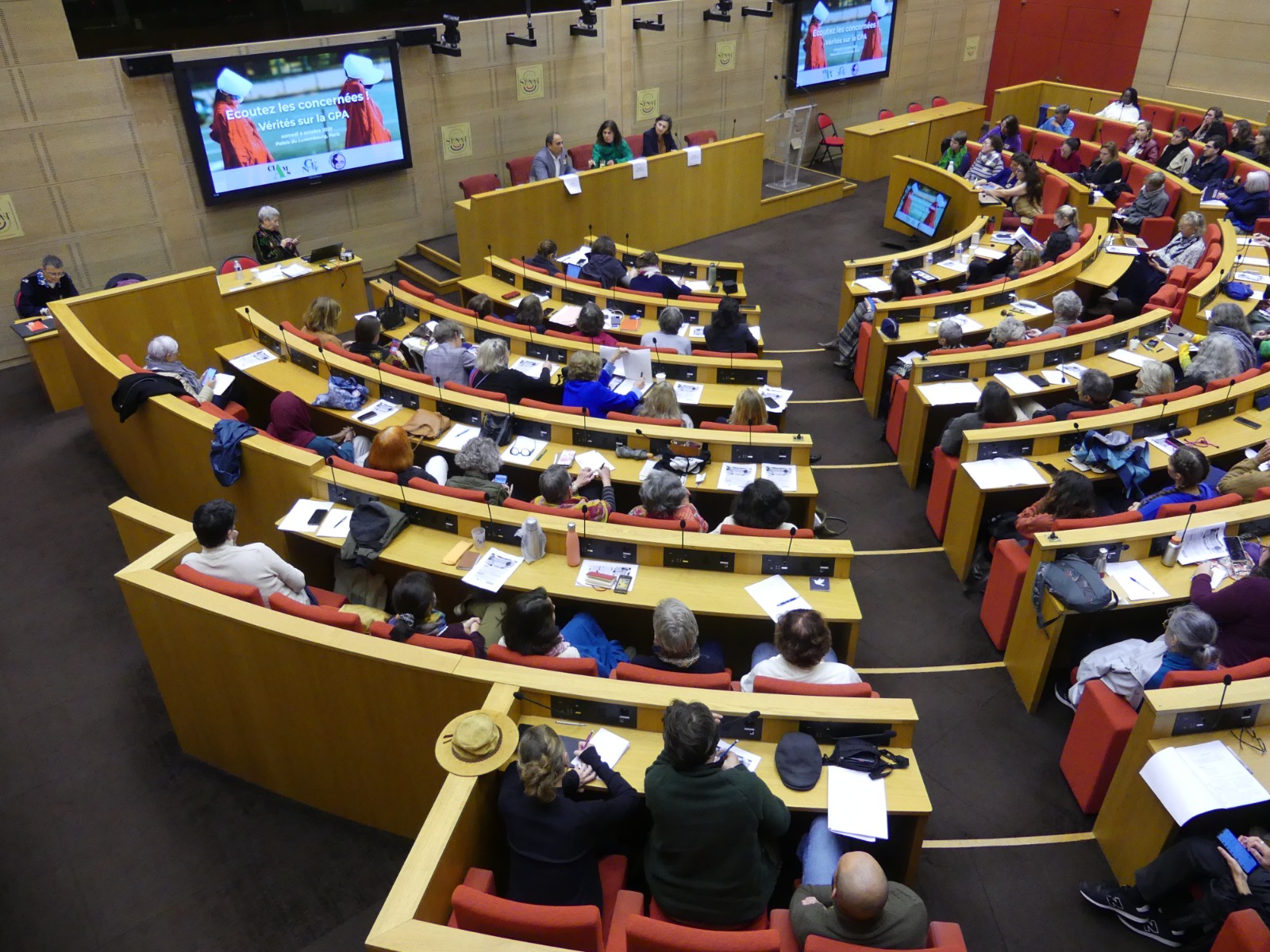
These testimonies of surrogate mothers are truly cautionary tales! In Paris, France, and Brighton, UK, women committed to fighting violence against women listened attentively and empathetically to the testimonies of former surrogate mothers. Both conferences concluded with a standing ovation, reflecting a firm and collective commitment to protecting all women from surrogacy. Yes, surrogacy must be abolished everywhere in the world.
Now here's a guest post, by Ian David, on Jennifer Bilek's Substack guaranteed to give most of us the creeps... This is why the ‘culture war’ isn’t really about culture anymore. It’s become a stress test on every human boundary - biological, symbolic, reproductive, and economic. All these fronts are now interconnected, each one flowing into the others through feedback loops no one has charted and no one realistically could. Nothing happens in isolation anymore. Meanwhile - and this is where most gender-critical discourse seems fatally behind the curve - the categories they claim to be fighting so hard to defend are being liquefied in real time. CRISPR-derived gametes, uterine transplants, brain-organoid puberty models, LLM-driven identity simulators, neurofeedback ‘gender journey’ apps. None of this is sci-fi; all of it is funded, peer-reviewed, and accelerating. Ignore the techno-science layer - Haraway, Plant, Preciado, even Firestone, plus the whole xenofeminist/biohacking stack -, and you cede the actual battlefield to those explicitly aligned with queer/trans ontology. You can yell at clouds all you like, but the real struggle over bodies, data, and reproductive futures is happening in clean rooms and server farms. Almost nobody is talking about that. Which is why Cass and the puberty-blocker trials it gave birth to should be seen as mere skirmishes. The real contest - over who defines the next iteration of the human - is unfolding upstream, in biotechnology, computation, and the philosophical frameworks that legitimise them. Treating brief moments as equilibrium-restoring ‘wins’ is precisely how you get blindsided.
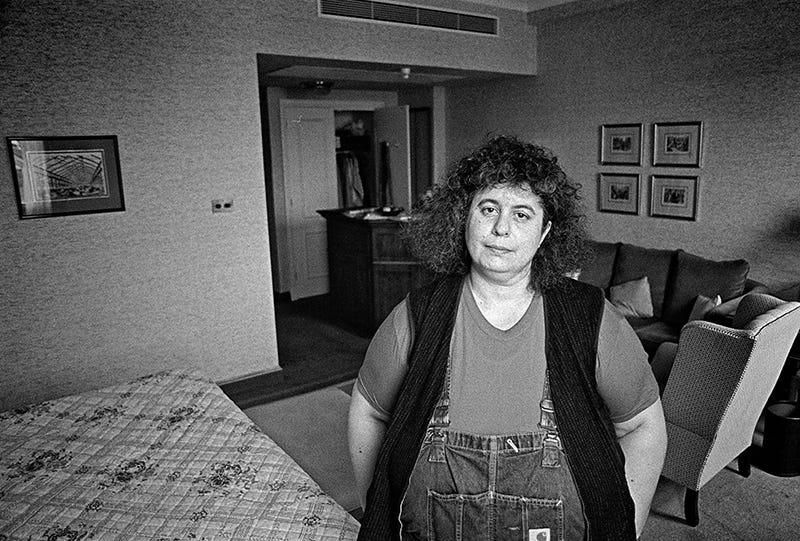
This piece is very, very good. Here are my favorite tidbits, but there are other excellent points as well. Before you make any remarks about radical feminism, you need to actually read radical feminist literature. Not Instagram infographics. Not reels. Not “threads.” Actual books, essays, texts. You can’t critique something you haven’t read. (Well, you can, but then you’re just shouting garbage into the void.) Us women need to do better at disagreeing with each other and critiquing each other. I don’t believe in a blind sisterhood in the sense that if a woman is doing harmful, anti-woman things, I’ll let it slide because she’s a woman. BUT what I won’t do is go feral on her, publicly shame, attack, or immediately ascribe malice to her; what I will do is talk to her, explain why she’s wrong, disagree, even critique, but I won’t go down the route of being downright fucking nasty. Andrea Dworkin’s "Right-Wing Women" is a perfect example of this. Although she heavily critiques right-wing women, and there’s a lot to critique, because right-wing women have done some really fucked up shit, which hurts more because they’re women, Andrea tactfully, empathically, assertively and passionately critiques and analyses them. She doesn’t resort to insults, slurs, or shaming, nor does she go easy on them or try to diminish the harm they cause. She shows them “love” in a way, tough love. We can do the same. And let’s direct some of the aggressive-ass smoke we spew towards women towards the men who actually hurt us. When you start ascribing arbitrary things like clothing, cosmetics, personality, hobbies, hairstyles, names, and appearance to a specific “gender” or “sex”, you are doing sooo much damage. It is straight-up sexism and misogyny. To suggest that being a woman or man is anything other than XX and XY, larger gametes, smaller gametes, is insanity. A female is still a woman if she doesn’t have breasts, a uterus, or has short hair, facial hair, you misogynistic prick. We need to abolish gender.
Over the past 20 years, the oyster population in Mississippi’s Gulf waters has been devastated by natural disasters such as Hurricane Katrina as well as manmade disasters like the Deepwater Horizon oil spill. These tragic events devasted the oyster environment in Mississippi. One of the key contributing factors helping to restore the oyster population is the work of Demi Johnson, an African American teenager who resides in Mississippi. Demi’s conservation efforts started when she was a mere seventh grader. Her initial interest started when she was searching for a project to earn her Girl Scout badge. Demi stated in an interview with reporter John Yang, “So I found out about this from my Girl Scout leader. So, there’s a thing called a Silver Award, and you have to do a project for your community, something community based, and she kind of put it up in the air. She was like, ‘hey you can do oyster gardening at my pier.’ And I was like, okay, ‘I’ll do it. Like, it doesn’t sound too bad. And you know, it’s something easy for me to do.’” No one could imagine at the time this would become a life changing endeavor for all involved – Demi, Mississippi and the greater community. Demi’s oyster conservation efforts have had a major significant ecological impact on Mississippi’s Gulf waters. Her project, centered on the cultivation of oysters at Schooner Pier in Biloxi, has contributed to the restoration of oyster reefs, which play an essential role in the marine ecosystem. The restoration of oyster reefs is vital as they serve as natural water filters, removing pollutants from the water, and as protective barriers against storm surges. Moreover, oyster reefs provide habitat for a variety of marine life, thus supporting biodiversity. Demi’s project has directly contributed to these ecological benefits by producing 1,000 oysters which are expected to spawn millions more, enhancing the sustainability and health of the local marine environment. Demi traveled to Washington, D.C. as one of the top 15 finalists for the Slingshot Challenge for her Mississippi Oyster Gardening Project. She became one of the award recipients. The top 15 were selected out of 2,100 submissions. Demi created a video titled “Off Bottom Oysters” and was up for the People’s Choice Award. She won the 2025 Significant Achievement Award for “Off Bottom Oysters” and won a $1,000 scholarship. She donated her winnings back to the Mississippi Oyster Gardening Program. image
Lydia Abarca, a founding member of the Dance Theater of Harlem, in a 1975 portrait that made her the first ballerina of African descent, on the cover of "Dance" magazine. image