Before #Bitcoin, another peer-to-peer revolution quietly rewired the internet: #BitTorrent. #BramCohen realised that splitting a big file into many tiny pieces was the most efficient way to move it online. Instead of one server sending everything, uploads became a cooperative effort: many peers, one task. There’s a nice irony here. Two of the most successful peer-to-peer networks in history – BitTorrent and Bitcoin – were both launched by solo developers who designed systems that only become unstoppable once everyone else joins. Their first clients reflected that. Bram’s original BitTorrent client, written in Python, was functional but not friendly. #Satoshi’s Bitcoin 0.1 client bootstrapped over #IRC and had plenty of hard-coded quirks. Rough edges. Strong ideas. And yet, by 2004, more than 20 million people had downloaded BitTorrent. Media companies tried to crush it. The protocol survived. The swarm reorganised. The playbook was written. BitTorrent proved that millions of strangers can form an ad-hoc network to reliably perform a task without any central coordinator. Bitcoin uses the same model – but for money. Where BitTorrent moves files and pieces, Bitcoin moves transactions and blocks. Each Bitcoin node joins a mesh the way a BitTorrent client joins a swarm. There is no central switch to flip. Turn off one node, and others route around it. Bram Cohen would later put it simply: “Bitcoin is like BitTorrent for money.” We’ve captured this chapter in “The History of Bitcoin by Smashtoshi” with artwork by Robert Alice (@robertalice_21 on X), an artist whose work maps #blockchains and their histories into museum-grade objects and installations. The piece appears in the History of Bitcoin Collector’s Book and on our interactive timeline. You can explore the full story here:
Before #Bitcoin, there was #Hashcash. In 1997, @npub1qg8j...24kw came up with a clever idea to fight email spam: make sending email cost a little bit of computation. Hashcash worked by taking email metadata plus a random number, running it through a hash function, and trying to produce a hash that started with a certain number of zeroes. Most attempts failed. You had to keep trying new random numbers until you found a valid hash. For normal users, that extra work was small. For spammers sending millions of emails, it became very expensive. Hashcash effectively added a “postage fee” in the form of computation. This was one of the first real-world uses of what we now call #proofofwork. Hashcash itself wasn’t a currency – each proof was tied to a single email and couldn’t be reused as money. But it showed something important: you can link real-world scarcity (computing power and energy) to digital information. That idea – digital scarcity backed by proof of work – became a key building block for later electronic cash experiments, including Bitcoin. We captured this moment in The History of Bitcoin by Smashtoshi with the artwork: “PROOF OF WORK” by ROBNESS (ROBNESSOFFICIAL). It appears in the Collector’s Book and on our interactive timeline. Read the full article by Aaron van Wirdum:
Before #Bitcoin, there was #Ecash. David Chaum’s #Digicash, built on blind signatures, was one of the first serious attempts at true digital cash. At one point, there were even rumours that Microsoft and Visa were seriously interested, and several Cypherpunks went to work at Digicash to help push the tech forward. But Ecash never really went mainstream. Usage stayed low. Some said there wasn’t enough demand for digital cash yet. Others felt Chaum didn’t have the business skills to scale it into the wider financial world. By 1997, after leadership changes and a move to Silicon Valley, Digicash filed for bankruptcy. Still, its impact was huge. It proved to a whole generation of hackers, cryptographers, and privacy activists that digital cash was technically possible. The idea worked – it just needed a different architecture and a different moment in time. Bitcoin would eventually be both. We captured this moment in The History of Bitcoin by Smashtoshi with the artwork: “SEEING THE VALUE OF BLIND SIGNATURES” by Jack Kaido (thisjackkaido). It appears in the Collector’s Book and on our interactive timeline. Read the full article by Aaron van Wirdum:
Before #Bitcoin, there was crypto anarchy. Tim May watched his friend Phil Salin build AMIX – an early online marketplace for information. Salin imagined people buying guides, reports, software, expert advice. May thought bigger. The most valuable information wouldn’t be public reports, but secrets. Trade secrets. Classified documents. Information people would pay serious money for. He imagined “BlackNets”: encrypted markets where people operated under pseudonyms, traded information, and paid with electronic cash. Governments would try to kill it – but code running worldwide would be very hard to stop. May saw two futures: 1️⃣ A surveilled internet – every message, site and transaction logged. 2️⃣ A #cryptographic internet – strong crypto everywhere, individuals using electronic cash, reputation and proofs instead of trusting the state. That second path, he believed, would lead to crypto anarchy. In 1988 he wrote The Crypto Anarchist Manifesto and handed it out at Crypto ’88. A quiet beginning to the revolution Bitcoin would later ignite. We’ve captured this moment in The History of Bitcoin by Smashtoshi with the artwork “MAKING A MANIFESTO” by @nicedayJules overon X, featured in the Collector’s Book and our interactive timeline. Read the full article by Aaron van Wirdum here: 🔗 #Art #BitcoinArt #Zap ⚡️
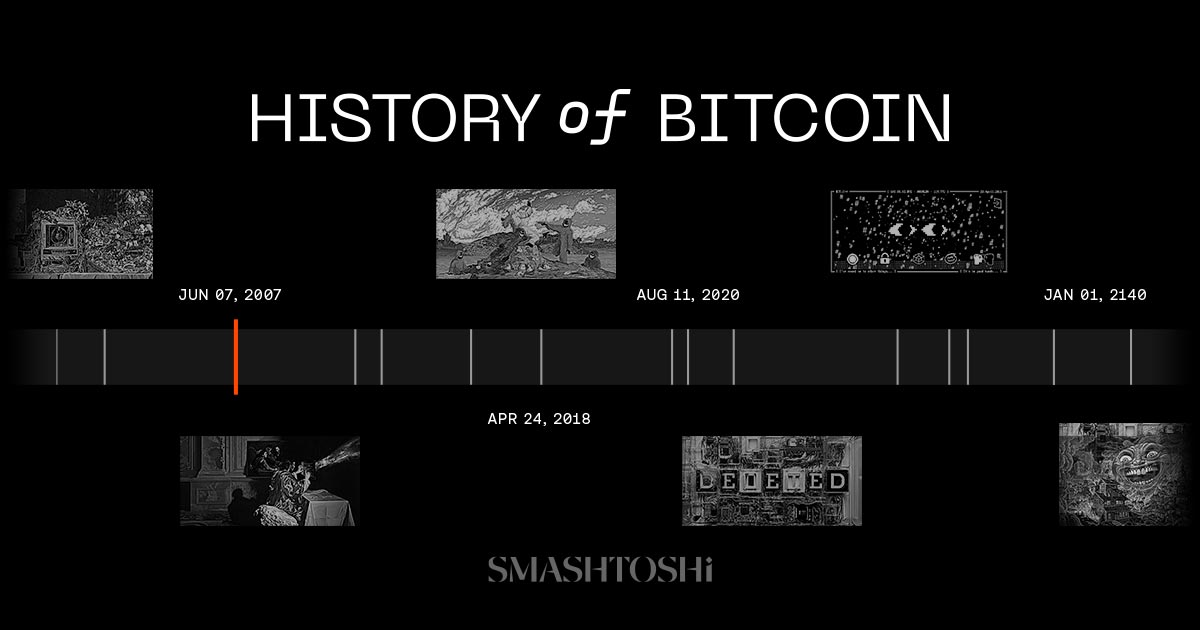
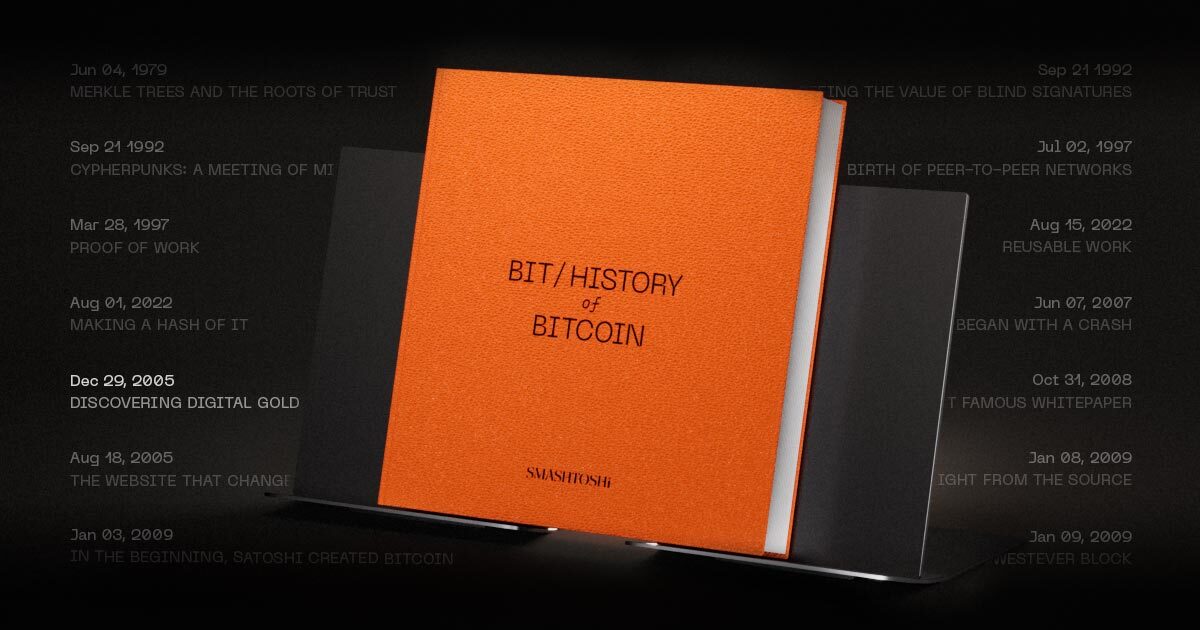
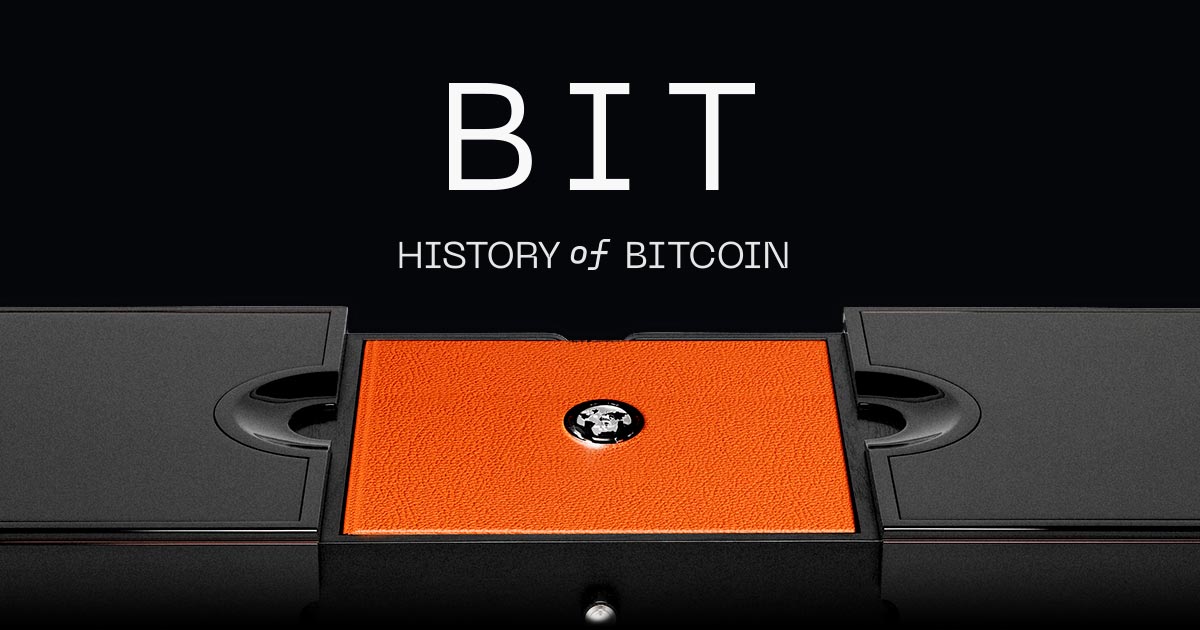
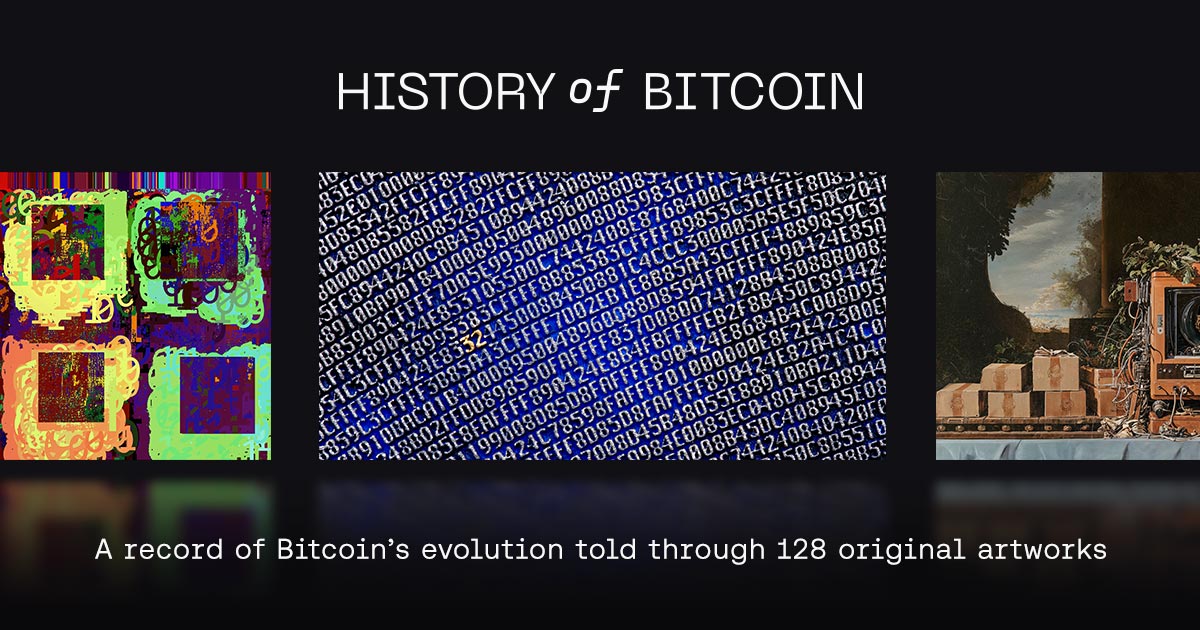
The History of Bitcoin - Launch 4.5 years. 128 artists. 100+ pioneer interviews. 300+ contributors. Born of open, global collaboration, this project mirrors the spirit that forged Bitcoin itself. What it is A free, deeply researched interactive timeline of Bitcoin’s history. An ultra-premium Collector’s Edition art book. A singular First Edition auctioned in support of My First Bitcoin. The Timeline 128 key moments - from cypherpunk origins to the mavericks who advanced Bitcoin. Free, forever. The Book Collector’s Edition: 256 pages, gallery-quality papers, limited to 2,140 copies, presented with a steel stand engraved with the Bitcoin Whitepaper. Each book carries a unique fragment of Bitcoin’s original source code, together forming the complete codebase, forever linking every collector. The First Edition (1-of-1) Housed in a museum-grade enclosure carved from 5,000-year-old fossilised oak, featuring a Bitcoin emblem by #AspreyStudio. Auction by @npub1rujw...00fg in partnership with Bitcoin MENA @The Bitcoin Conference. Proceeds to My First Bitcoin. Dates & Events Public sale: 10 December. Sign up now for 48-hour early access. First events: London • Amsterdam • Manchester • New York • Dubai • Abu Dhabi. Explore & RSVP Timeline: Collector’s Edition: First Edition: Events: For those who see #Bitcoin as #art, movement, and myth - welcome to The History of Bitcoin. #BitcoinArt #HistoryOfBitcoin #Introductions #Zap #Zaps