Africa is showing the world what Bitcoin is actually for. At the African Bitcoin Conference in Mauritius, you see it up close. When banks fail and currencies collapse, people build their own solutions. Real innovation is happening in Africa while the Western world sleeps. My latest Forbes article: @White Noise https://www.forbes.com/sites/digital-assets/2025/12/05/africa-turns-to-bitcoin-for-real-financial-solutions/
The cracks in the fiat system are becoming impossible to ignore. I spoke with Archie from @Bitcoin Archive about why governments can’t print trust, how central banks are panicking as debt spirals deepen, and why Bitcoin is becoming the escape hatch for a world losing faith in money. We also disussed the new global order, hyperinflation, and the end of monetary privacy, and why Bitcoiners saw this collapse coming.... With aĀ special guest appearanceĀ from Ozzy. Watch the full conversation on @Roxom TV. image
Had an amazing time in Prague and got to visit SatoshiLabs, home of Trezor and @npub1mftv...rkl3 . Recorded a brilliant pod with Marcel about Bitcoin Dada, Grafton about Vexl, and Efrat about her ā€˜You’re The Voice’ podcast. Always great hanging out with Isabella, a phenomenal freedom fighter and educator for Get Based, as dedicated as ever. It was a lovely surprise bumping into Nick Anthony from the Cato Institute. All these incredible people had one thing in common: Bitcoin as freedom money. Thank you to the Trezor team for being so welcoming and awesome. @Efrat Fenigson @Grafton @ Vexl @Isa āš”ļø
Harvard economist Matthew Ferranti has published a peer reviewed study showing that central banks preparing for sanctions risk should hold more than just gold. His model demonstrates that adding Bitcoin to reserves strengthens resilience when access to traditional assets is threatened. For the first time, a peer reviewed economics journal is treating Bitcoin as a credible reserve asset rather than speculation. What took them so long? A reminder that money can be weaponised, while Bitcoin remains neutral, borderless, and open to everyone. At the Financial Times Digital Asset Summit, the UK’s Economic Secretary to the Treasury, Emma Reynolds said Bitcoin ā€œisn’t for us.ā€ Ferranti’s study shows why the government must start researching Bitcoin’s role in reserves. This is the kind of research @Bitcoin Policy UK has consistently urged the Treasury and Parliament to conduct. Read the full paper: https://www.sciencedirect.com/science/article/pii/S0261560625001688 image
Runaway US debt is on target to hit $40T by Christmas. In the UK, the Office for Budget Responsibility flags us as one of the most indebted advanced economies. As Reuters put it: ā€œBritain’s economic problems are home-grown and a solution looks a long way off.ā€ Inflation saves the state, Bitcoin saves you. https://www.reuters.com/commentary/breakingviews/britains-economic-woes-are-sadly-home-grown-2025-09-05/ image
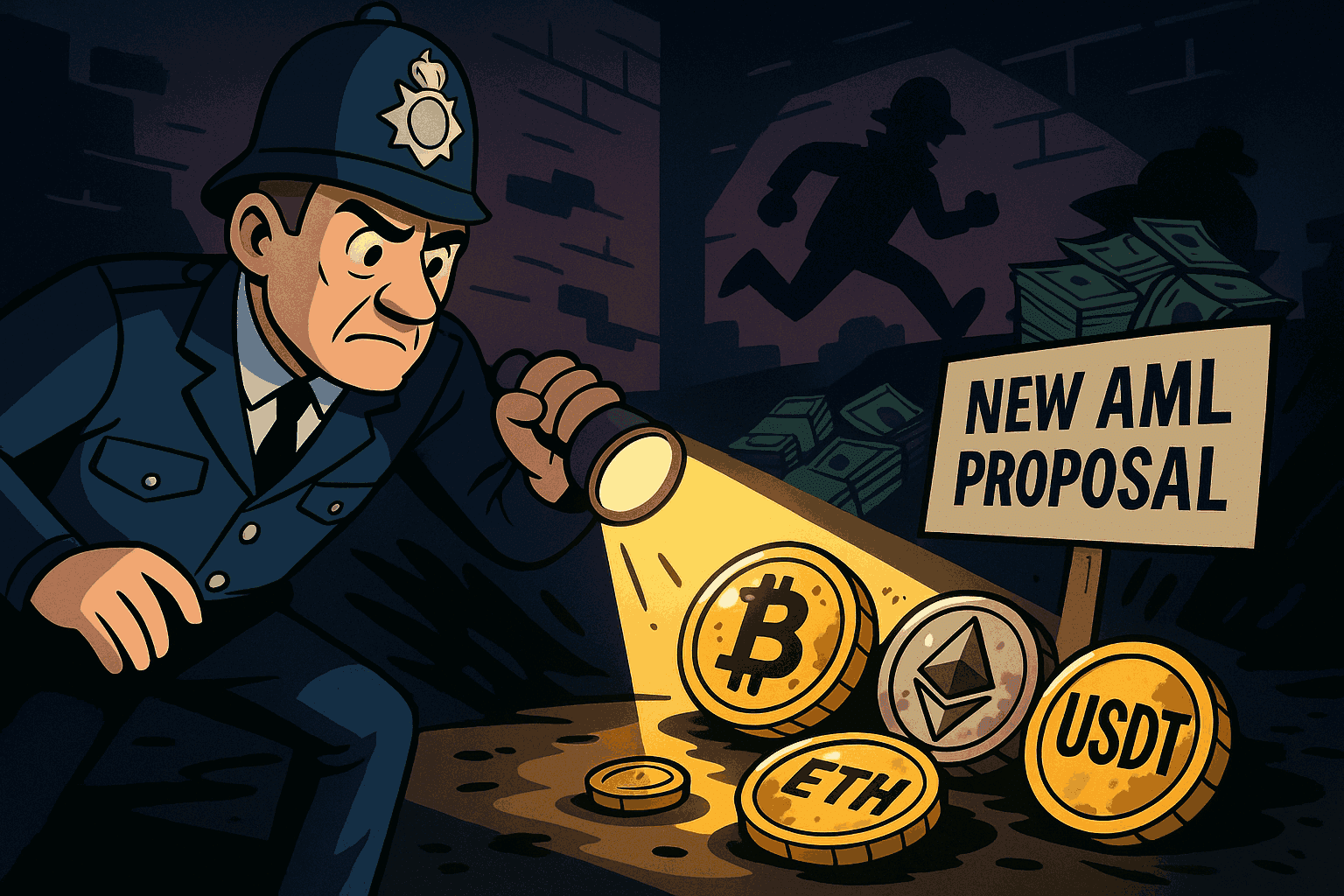
Is this how freedom ends in the UK? The UK’s latest ā€œcrypto AML rulesā€ slash ownership disclosures from 25% to 10%, pulling more people into disclosure regimes and expanding banking surveillance. These measures are framed as fighting crime. But similar rules in tradfi have existed for years and haven’t stopped fraud or money laundering. What they do create are honeypots of personal data, risks for law-abiding people, and deeper state oversight. This is about normalising authoritarian tools, not AML or safety. Decades of KYC and financial surveillance show how control creeps in rule by rule. That same authoritarian logic already governs speech, from the Online Safety Bill to Graham Linehan’s Heathrow detention over tweets. And now digital IDs are back on the table, linking finance, identity and turning everyday access into a system of control. Add in programmable money and street surveillance, and you have a panopticon, a 1984 scenario darker than Orwell imagined. The UK has offically sleepwalked into authoritarianism.