
Michael Saylor recently presented a compelling vision of global wealth distribution and Bitcoin’s future potential. Currently, Bitcoin’s market capitalization stands at $2 trillion, compared to traditional asset classes like real estate ($330T), bonds ($300T), and equities ($115T). However, Bitcoin’s unique properties, such as scarcity and decentralization, position it as a superior store of value for the future. Saylor projects that by 2045, Bitcoin’s value could skyrocket from $2T to an estimated $200T+, driven by growing adoption and its role as “digital gold.”
Saylor also highlighted the risks facing traditional assets, which lose over $10 trillion annually due to factors like regulation, taxation, economic instability, and competition. Bitcoin, in contrast, offers a hedge against these risks and is poised to capture a larger share of global wealth in the coming decades. If his predictions hold true, Bitcoin could reach an estimated price of $10 million per Bitcoin by 2045, representing a monumental increase in value.
#Siamstr #btc #bitcoin #nostr

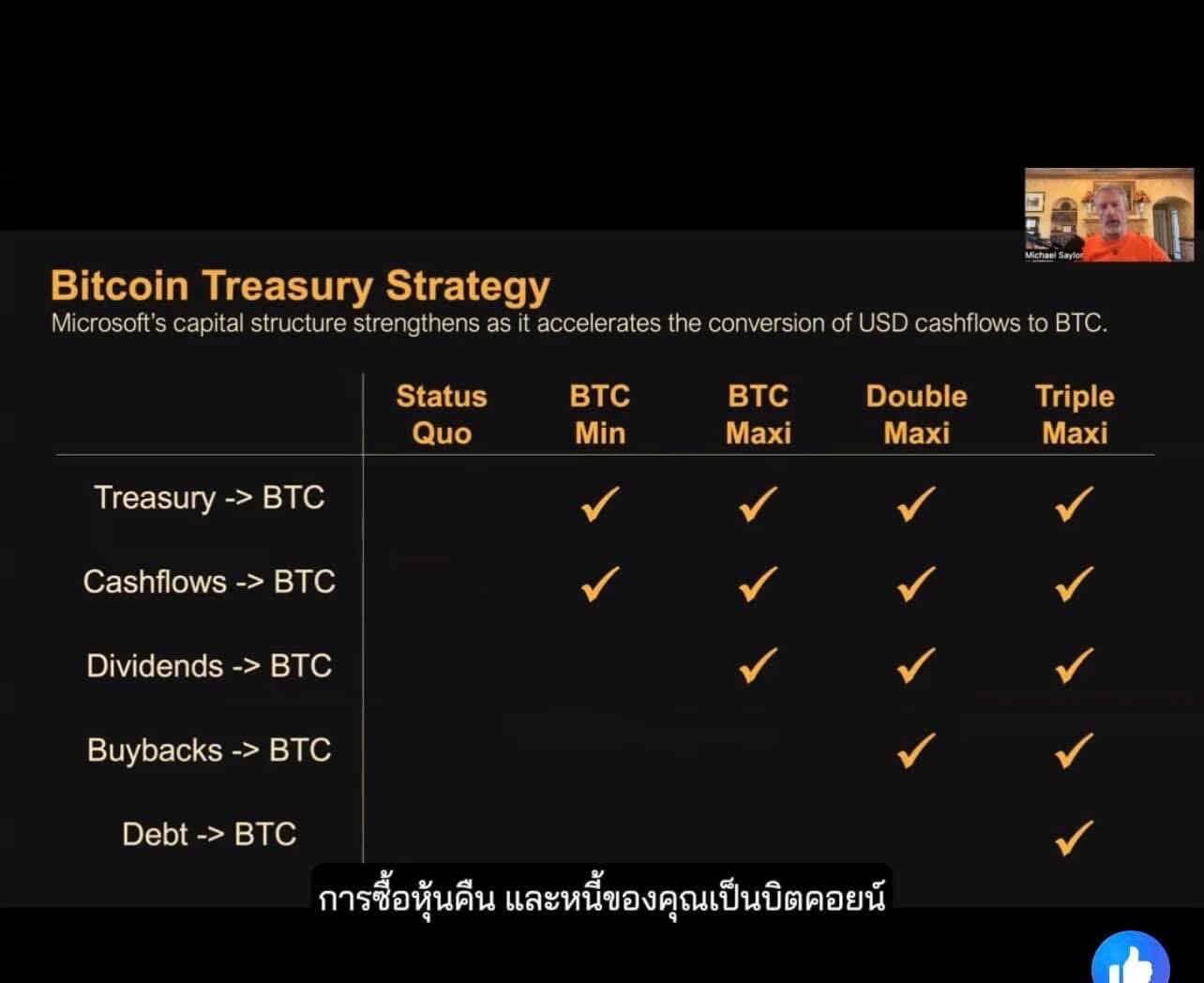 Michael Saylor’s Bitcoin treasury strategy focuses on converting company treasuries into Bitcoin, viewing it as a long-term store of value and a hedge against inflation. His approach involves varying levels of Bitcoin allocation, from a highly aggressive “Triple Maxi” strategy, where Bitcoin is the sole reserve asset, to a more conservative “BTC Min” approach, where Bitcoin is part of a diversified portfolio. By prioritizing Bitcoin over fiat, Saylor aims to preserve purchasing power and ensure future growth through its potential appreciation.
Saylor also emphasizes using cash flows, dividends, buybacks, and debt strategically to maximize shareholder value. MicroStrategy, for example, has used debt to acquire more Bitcoin, betting on its value increasing over time. This bold approach positions Bitcoin as the primary asset, with the belief that it will significantly outperform traditional reserve assets in the future, ultimately reshaping corporate treasury management.
#nostr #btc #bitcoin #siamstr
Michael Saylor’s Bitcoin treasury strategy focuses on converting company treasuries into Bitcoin, viewing it as a long-term store of value and a hedge against inflation. His approach involves varying levels of Bitcoin allocation, from a highly aggressive “Triple Maxi” strategy, where Bitcoin is the sole reserve asset, to a more conservative “BTC Min” approach, where Bitcoin is part of a diversified portfolio. By prioritizing Bitcoin over fiat, Saylor aims to preserve purchasing power and ensure future growth through its potential appreciation.
Saylor also emphasizes using cash flows, dividends, buybacks, and debt strategically to maximize shareholder value. MicroStrategy, for example, has used debt to acquire more Bitcoin, betting on its value increasing over time. This bold approach positions Bitcoin as the primary asset, with the belief that it will significantly outperform traditional reserve assets in the future, ultimately reshaping corporate treasury management.
#nostr #btc #bitcoin #siamstr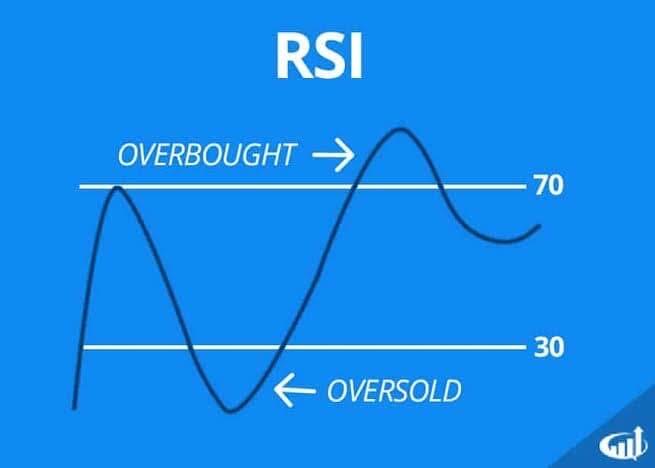 The Relative Strength Index (RSI) is a technical indicator used to measure the speed and strength of price movements in assets like Bitcoin. It helps identify whether an asset is overbought or oversold, which could signal potential price reversals. RSI is calculated on a scale from 0 to 100, with values above 70 indicating overbought conditions (potential price pullback) and below 30 suggesting oversold conditions (potential price rise).
To calculate RSI, first, calculate the daily price changes by subtracting the previous day’s closing price from the current day’s. Separate the positive changes (gains) and negative changes (losses). Then, calculate the average gain and average loss over a 14-day period. The Relative Strength (RS) is the ratio of average gain to average loss, and the RSI is computed using the formula:
This formula gives the RSI value, helping traders identify market conditions. For example, an RSI of 70 suggests Bitcoin may be overbought, while an RSI of 30 indicates it may be oversold. Many trading platforms automatically calculate RSI, making it easier for traders to monitor price trends.
#Siamstr #btc #bitcoin #nostr
The Relative Strength Index (RSI) is a technical indicator used to measure the speed and strength of price movements in assets like Bitcoin. It helps identify whether an asset is overbought or oversold, which could signal potential price reversals. RSI is calculated on a scale from 0 to 100, with values above 70 indicating overbought conditions (potential price pullback) and below 30 suggesting oversold conditions (potential price rise).
To calculate RSI, first, calculate the daily price changes by subtracting the previous day’s closing price from the current day’s. Separate the positive changes (gains) and negative changes (losses). Then, calculate the average gain and average loss over a 14-day period. The Relative Strength (RS) is the ratio of average gain to average loss, and the RSI is computed using the formula:
This formula gives the RSI value, helping traders identify market conditions. For example, an RSI of 70 suggests Bitcoin may be overbought, while an RSI of 30 indicates it may be oversold. Many trading platforms automatically calculate RSI, making it easier for traders to monitor price trends.
#Siamstr #btc #bitcoin #nostr First they ignore you, then they fight you and then they join you ! 🥳
#Siamstr #btc #bitcoin #nostr
First they ignore you, then they fight you and then they join you ! 🥳
#Siamstr #btc #bitcoin #nostr Mathematics Behind Bitcoin
Bitcoin’s security and functionality rely on cryptography, algorithms, and game theory:
1. Cryptographic Hash Functions (SHA-256):
• Creates unique, irreversible hashes for data security.
• Used in mining and verifying transactions.
2. Public-Key Cryptography (Elliptic Curve Cryptography):
• Private keys generate public keys and Bitcoin addresses.
• Ensures ownership and secures transactions without revealing private keys.
3. Proof of Work (PoW):
• Miners solve complex puzzles to validate transactions and add blocks.
• Prevents manipulation by making attacks computationally expensive.
4. Game Theory:
• Incentivizes honesty with rewards (block rewards/fees).
• Makes attacking the network cost-prohibitive.
5. Finite Supply & Halving:
• Bitcoin’s supply is capped at 21 million.
• Mining rewards halve every 4 years to control issuance and mimic scarcity.
6. Merkle Trees:
• Efficiently verify transactions using a hierarchical structure of hashes.
These principles ensure Bitcoin’s decentralization, security, and trustworthiness.
#Siamstr #btc #bitcoin #nostr
Mathematics Behind Bitcoin
Bitcoin’s security and functionality rely on cryptography, algorithms, and game theory:
1. Cryptographic Hash Functions (SHA-256):
• Creates unique, irreversible hashes for data security.
• Used in mining and verifying transactions.
2. Public-Key Cryptography (Elliptic Curve Cryptography):
• Private keys generate public keys and Bitcoin addresses.
• Ensures ownership and secures transactions without revealing private keys.
3. Proof of Work (PoW):
• Miners solve complex puzzles to validate transactions and add blocks.
• Prevents manipulation by making attacks computationally expensive.
4. Game Theory:
• Incentivizes honesty with rewards (block rewards/fees).
• Makes attacking the network cost-prohibitive.
5. Finite Supply & Halving:
• Bitcoin’s supply is capped at 21 million.
• Mining rewards halve every 4 years to control issuance and mimic scarcity.
6. Merkle Trees:
• Efficiently verify transactions using a hierarchical structure of hashes.
These principles ensure Bitcoin’s decentralization, security, and trustworthiness.
#Siamstr #btc #bitcoin #nostr