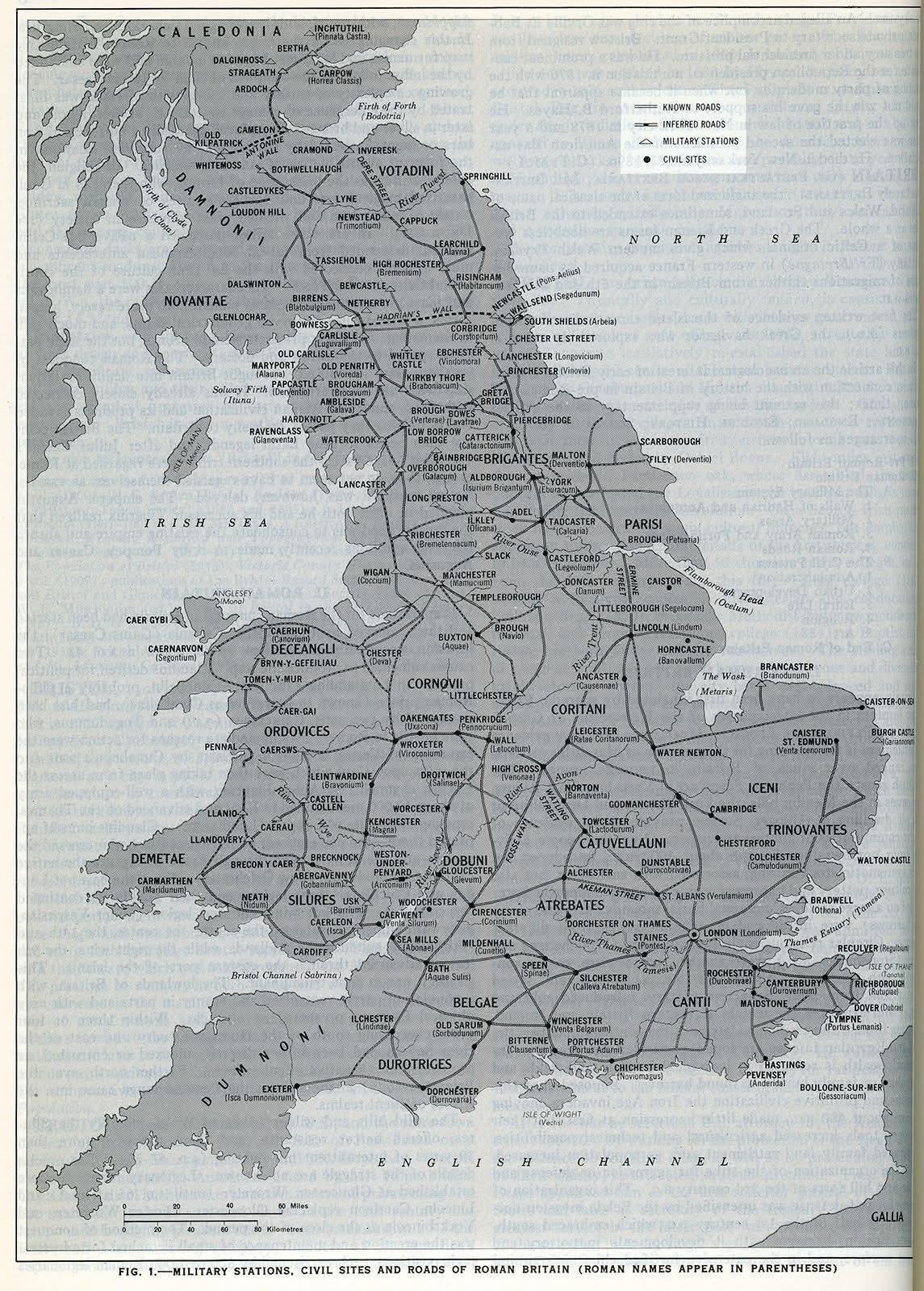
Archaeologists estimate there were roughly 8,000 to 10,000 miles (13,000–16,000 km) of Roman roads built across Roman Britain (Britannia) between the 1st and 4th Centuries AD. Of these, about 2,000 miles (3,200 km) are still visible, traceable, or form the basis of modern roads today. Built primarily by the Roman army, they connected forts, towns, ports, and military outposts across the province. #archaeohistories image
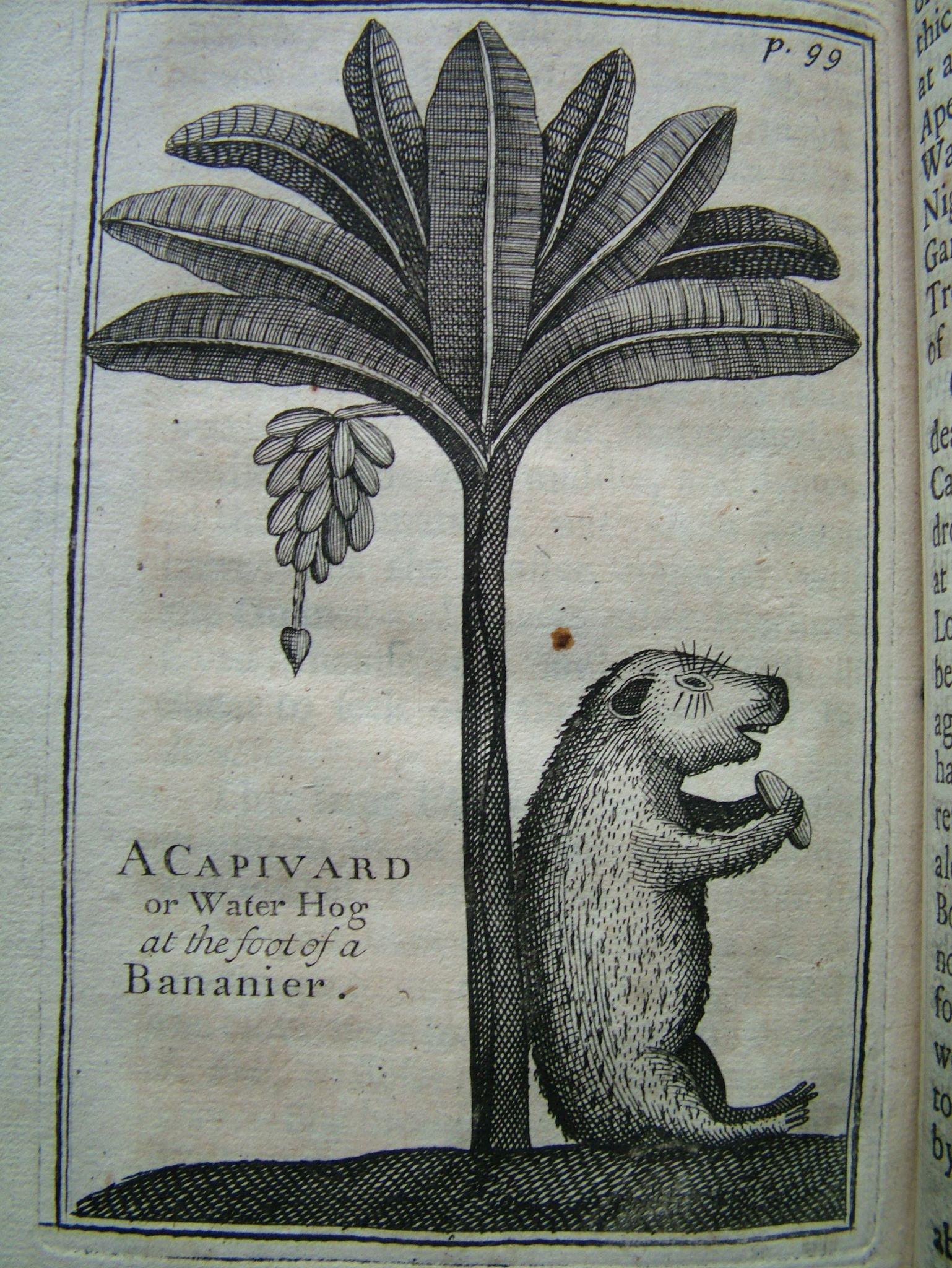
A 17th Century CE, illustration from an account of a voyage, by the French explorer and engineer François Froger; featuring a capybara (described as a "Water Hog") at the base of a banana tree. The image is from page 99 of a publication. The creature depicted is a capybara, the world's largest living rodent, native to South America. Capybaras are semi-aquatic herbivores that live near water bodies and have partially webbed feet. #archaeohistories image
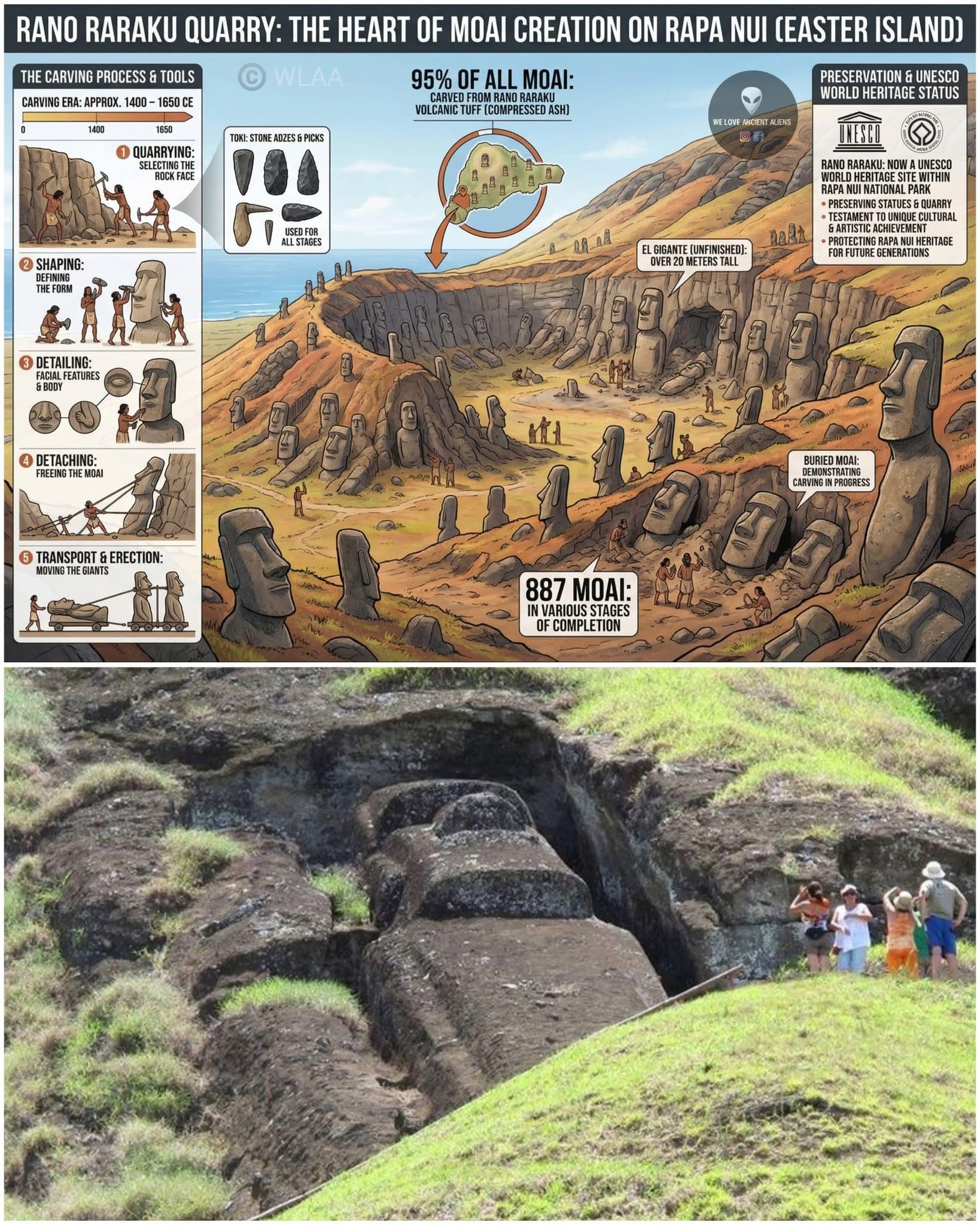
Rano Raraku quarry on Easter Island (Rapa Nui) served as principal source of stone for the island’s iconic Moai statues, with roughly 95% of all Moai carved from volcanic tuff extracted at this site. The quarry contains 887 Moai in various stages of completion, including many partially buried in the ground, providing a vivid record of carving process. These monumental statues were shaped exclusively with stone tools, known as toki, by the Rapa Nui people between approximately 1400-1650 CE. image