Redefining "harm" in the Endangered Species Act could undo decades of habitat protection for threatened species. The public has until May 19 to comment on the Trump Administration proposal to exclude habitat destruction from the definition. An ecologist and a law professor explain: https://buff.ly/Lguz0su image
The Trump administration is moving ahead with policy changes that would make it easier to fire some federal workers. Here are three stories from our archive about the rights of federal civil servants https://buff.ly/cn7yzD8 #DOGE
An urban planner offers three strategies that could help #Detroit’s next mayor build a just and resilient city by focusing on transitional neighborhoods. https://buff.ly/911DZuF
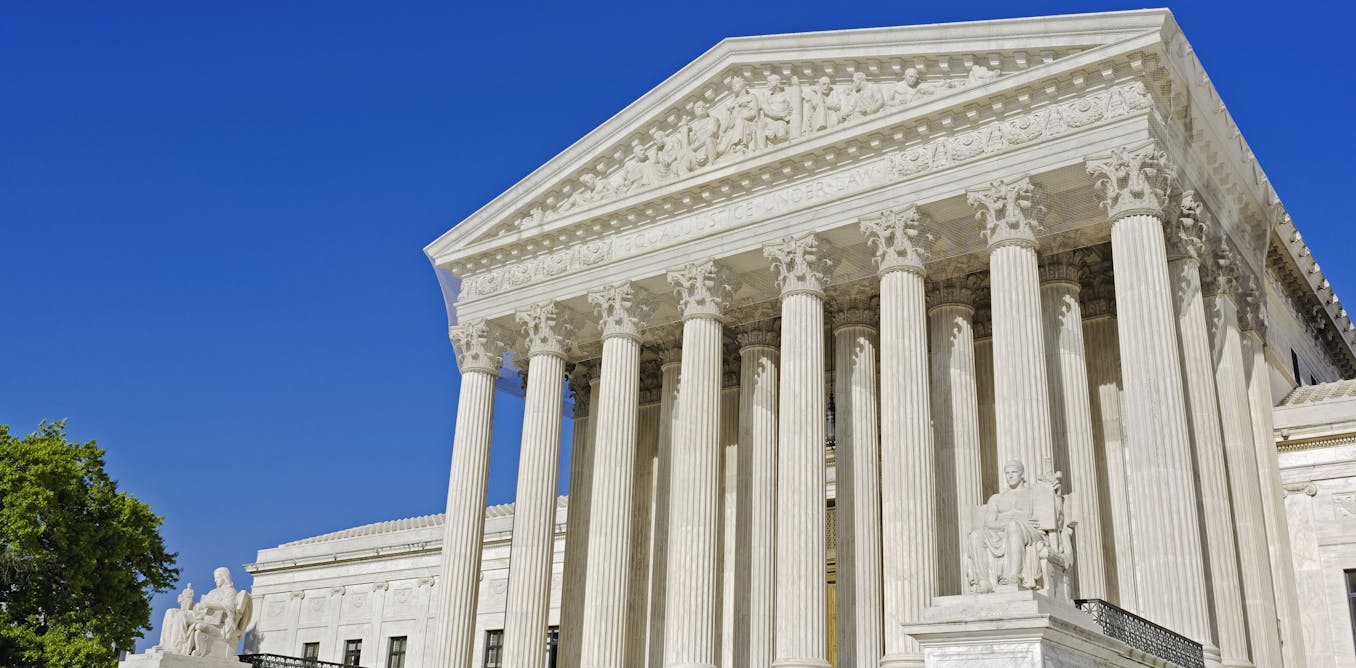
Can one judge block a president’s policy for the whole country? The Supreme Court just heard arguments over “nationwide injunctions” – temporary blocks that stop executive orders in their tracks. Big implications for immigration, DOGE & presidential power in general. A constitutional law scholar explains: #USPolitics #SCOTUS
How does the EPA know a pesticide is safe to use in my yard? The EPA must evaluate both the risks and the benefits of each pesticide – and revisit that analysis at least every 15 years for every pesticide used in the U.S. An agricultural science professor explains the process: https://buff.ly/4HJim9h
A foiled bomb plot targeting Lady Gaga's concert in Rio reveals how online platforms Discord, TikTok, and Reddit are used to radicalize teens through gamification of hate. Anthropology and information science professors explain:
The U.S. risks falling behind in high-performance computing without a clear, long-term national strategy, according to a computer science professor. These are the computers that are central to things like training #AI systems, forecasting the weather and modeling new medicines.
Celestial navigation in the Pacific involves tracking "star paths" and compensating for currents and winds. Navigators must also interpret swells and even the color of the sky to find their way. An anthropologist explains:
Pope Leo XIV's grandfather, born in Haiti, belonged to a class known as Creoles of color in New Orleans. An expert in 19th-century Haiti explains how this group occupied a unique position in the city's three-level racial order: https://buff.ly/bvcYMdT
Challenges to high-performance computing threaten US innovation