Ohio HB 116 clears the House Technology Committee 13-0 with bipartisan backing.
The bill creates the first US de minimis rule for Bitcoin: no capital-gains tax on purchases under $200, indexed for inflation.
#Bitcoin #UnitedStates #Daamus #Nostr
University of Wyoming posted a new video explaining Bitcoin with the Philosophy Professor Bradley Rettler
#Bitcoin #BTC #UnitedStates #US #Nostr #Damus
New peer-reviewed research study finds Bitcoin mining has the potential to significantly enhance the sustainability of the energy supply chain by using wasted resources, creating new business opportunities that align economic incentives with sustainability goals.
#Bitcoin #BTC #energy #Nostr #Damus
https://www.sciencedirect.com/science/article/pii/S2666954425000092
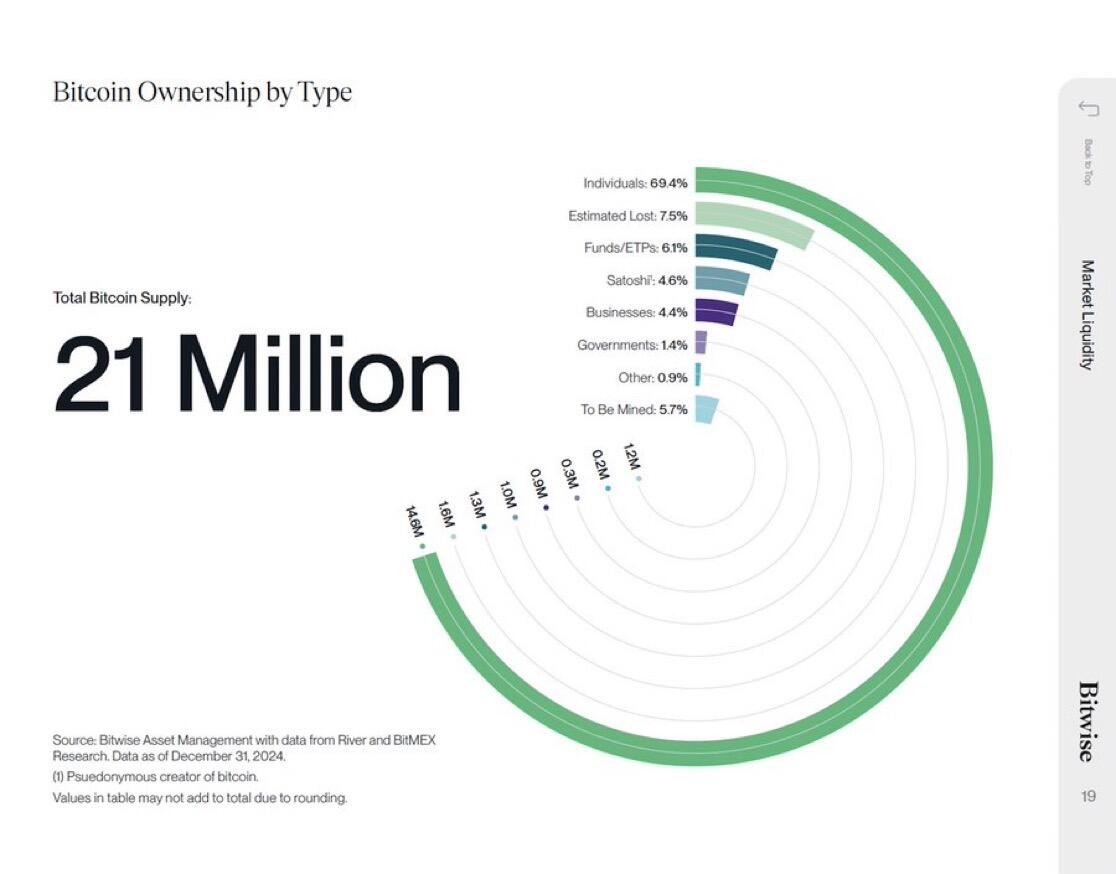
If companies and governments want to buy bitcoin, they’ll largely have to buy it from individuals who are willing to sell.
That market dynamic between buyers and sellers could get very interesting.
#Bitcoin #BTC #Nostr
If companies and governments want to buy bitcoin, they’ll largely have to buy it from individuals who are willing to sell.
That market dynamic between buyers and sellers could get very interesting.
#Bitcoin #BTC #Nostr
Lawyer @zackbshapiro explains how the legal classification of Samourai Wallet as an MSB sets a precedent for how similar non-custodial privacy tools might be viewed under U.S. law
On April 23, 2024, founders Keonne Rodriguez and William Lonergan Hill of Samourai Wallet, a non-custodial Bitcoin wallet known for its privacy features, were indicted by the Southern District of New York for operating an unlicensed money services business (MSB) and conspiring to commit money laundering. According to the indictment, #Samourai Wallet facilitated over $100 million in transactions derived from criminal activities such as dark web markets and various fraud schemes through its advanced privacy features, "Whirlpool" and "Ricochet". These services were designed to obscure the origins and destinations of Bitcoin transactions, purportedly to enhance user privacy. However, federal prosecutors argue that these features were aggressively marketed and used as tools for laundering criminal proceeds, while the operators willfully ignored mandatory MSB registration and Anti-Money Laundering (AML) program implementations.
This case marks a significant moment in the ongoing debate over financial privacy and the regulation of digital currencies. The legal classification of Samourai Wallet as an MSB sets a precedent for how similar non-custodial privacy tools might be viewed under U.S. law. Non-custodial wallets traditionally do not hold customer funds, differing from banks or traditional financial institutions that fall clearly under MSB regulations. However, the use of technology in Samourai that actively facilitates the obfuscation of fund sources and destinations blurs these lines, potentially broadening the scope of what might constitute an MSB. This case could lead to more stringent regulatory oversight and requirements for all #crypto wallet providers, especially those offering privacy-enhancing services. The outcome could also influence the balance between the need for regulatory compliance to prevent illegal activities and the rights to financial privacy for lawful users in the burgeoning landscape of digital currencies.