Every console generation, the internet likes to wage a console war. This generation’s fight seems to be Switch 2 vs. Steam Deck. And I think everyone arguing about it fundamentally misunderstands what the “war” even is. Let me explain. I was among the first people who bought the original Steam Deck. Mine showed up in 2022. And at no point did I think, “Ah yes. The Switch killer has arrived.” I actually liked what the Switch did. It was a low-cost handheld for my wife and kid to play what they liked. Which, at the time, was Nintendo games. My Steam Deck motivation was way simpler. I wanted to play PC games on the go. Until the Steam Deck, that basically wasn’t a real option unless you wanted to spend $2,000 to run Cyberpunk 2077 at 30 FPS on a “gaming laptop” that doubled as a space heater. There were PC games I owned for decades, like Septerra Core, that never had a console release. And suddenly I wasn’t tethered to a desk like it was 2004 and I was waiting for MSN Messenger to come back online. At the time, I didn’t even know the Steam Deck would run almost my entire library. I just figured: if it can play 10% of my games, it’s worth it. And it ended up being one of the best gaming investments I’ve ever made. Now fast forward to today. Despite my love for the Steam Deck, I would *love* to get a Switch 2 for my family. Problem is, neither my kid nor my wife wants it. My kid is busy playing Roblox on her iPad, as nature intended. My wife wanted something *more* comfortable than a Switch, still had Joy-Cons, and could play the Phoenix Wright Trilogy. So she didn’t get a Switch 2. She didn’t get a Steam Deck either. Not comfortable enough for her, and no detachable controls. She got a Lenovo Legion Go. Now if the Legion Go were a “console,” it would be a complete non-entity. If we’re being charitable, maybe it sold 400,000 units. That’s not even in the same solar system as Nintendo numbers. But the Legion Go is *not* a console. It’s a handheld PC. It literally ships with Windows. So comparing units sold isn’t apples-to-apples. It’s apples-to-a warehouse full of uncounted apples, because nobody even agrees on what counts as “a PC platform sale.” How many Dell Alienware desktops have been sold? How many HP laptops? Nobody knows. Nobody cares. We treat PCs as interchangeable objects that all run the same stuff, because functionally, they do. And that’s also true for handheld PCs. Valve sells a few models. Lenovo does. Asus does. MSI does. There are a dozen more from smaller OEMs, many based in China, and half of them sound like Amazon brand names generated by a dying CAPTCHA. It’s worth remembering that “handheld PC” is not a platform. It’s a form factor sitting on top of a platform, which is x86. At one point, Windows mattered. Now, because of Proton, Linux is basically as viable as Windows for gaming. It doesn’t matter if a game was made for Windows. It’ll probably run on Linux too, unless a developer decided to install kernel-level anti-cheat like they’re defending nuclear launch codes. In other words, this “platform” is wildly diverse. Handheld is one form factor. Desktop is another. So is a NUC. So is a laptop. And soon, thanks to FEX, it’ll include ARM devices too. So how does any of this affect Switch 2? Here’s the actual competition. Let’s take Monster Hunter Wilds, released February 2025. Capcom expected the bulk of sales to come from consoles. 10.7 million units sold. But 6.2 million of those were on PC. And when you buy Monster Hunter Wilds on PC, that *one* copy lets you play on a TV, a monitor, or a handheld. You can dock your handheld to your TV. You can stream your desktop to your phone. You can play it on a $4,000 rig or on a tiny handheld you bought because you told yourself it was “for travel.” *That* is what Nintendo is competing against. Not Steam Deck. The entire PC ecosystem. Now, am I saying PC is better than Switch 2? No. It’s genuinely nice that the Switch 2 has a cartridge slot. There’s something wonderful about physically owning a game. And Nintendo’s 1st party stuff is still magical. I don’t necessarily think it’s “better” than everything else, but it’s absolutely the Disney of video games. Sometimes you want Disney. Sometimes you don’t. Sometimes you want anime garbage with 14 systems stapled onto it and a UI designed by a committee of sleep-deprived interns. Sometimes you want Sword Art Online. And if you want Sword Art Online: Fatal Bullet, you’re probably playing it on PC, because it never got ported to Switch. Meanwhile, I got it on Steam at 90% off and I can play it on my Steam Deck… despite the game releasing 4 years before the Steam Deck even existed. So this Switch 2 vs. Steam Deck “console war” doesn’t really matter. If the Steam Deck didn’t exist, I’d still play Sword Art Online: Fatal Bullet on a PC. And I still wouldn’t be playing it on a Switch.
Castlevania is being ported to the SEGA Master System! This was a game that showed up on many platforms: DOS, C64, Amiga. But never the Master System. All of them were worse than the NES versions. But this Master System port looks like it might be better than the NES release because it really takes advantage of the Master System's graphical and sound prowess, with the colour and animations being quite beautiful. Of course, anyone who know about the Master System's history realizes that for each hit on the NES, they had their own answer. The answer to Castlevania on the Master System was Kenseiden. What differentiated Kenseiden from Castlevania was the samurai theme. Watching the Master System port of Castlevania side-by-side with Kenseiden, I think Castlevania might be better. But it's currently a work-in-progress.
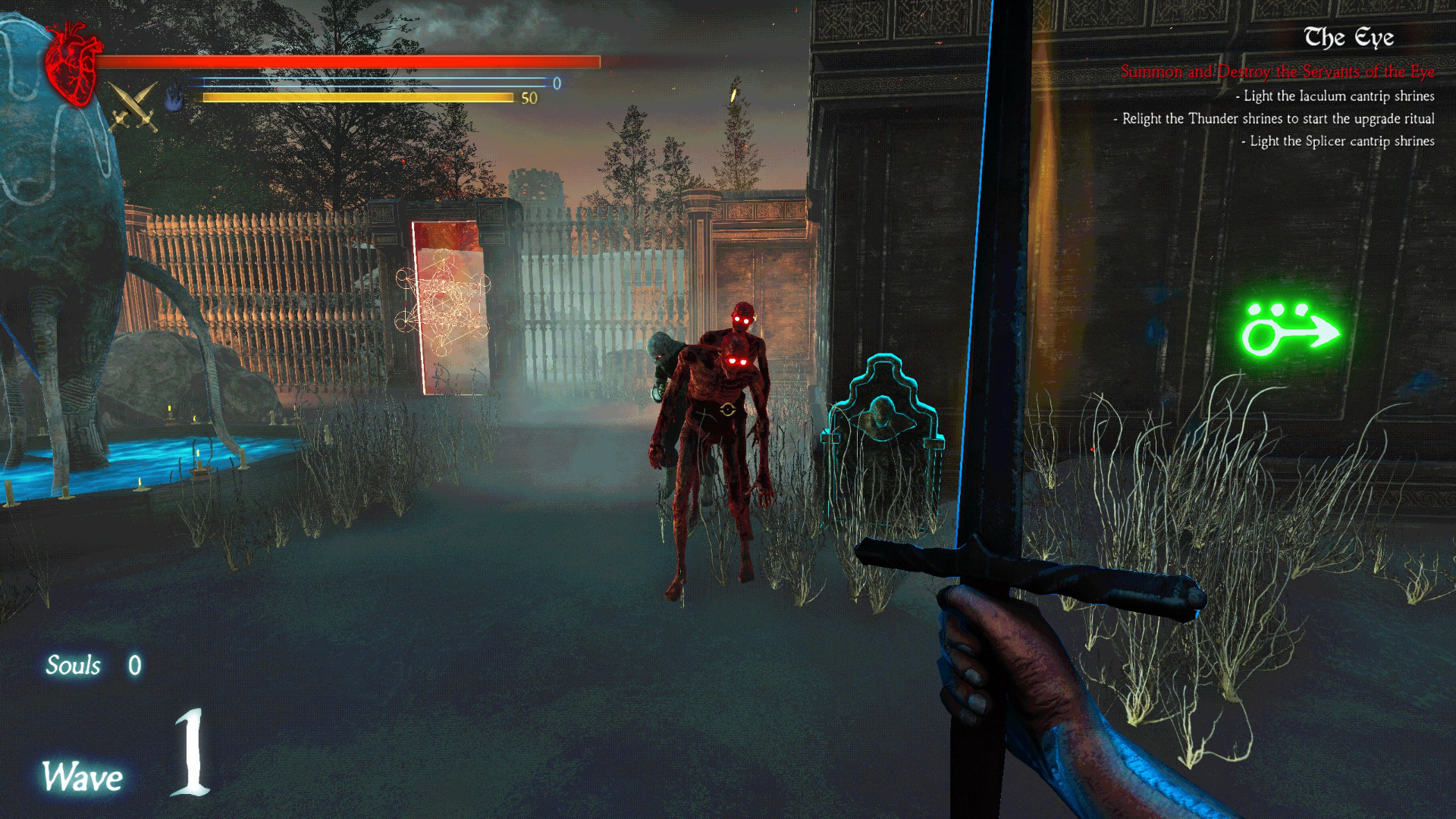
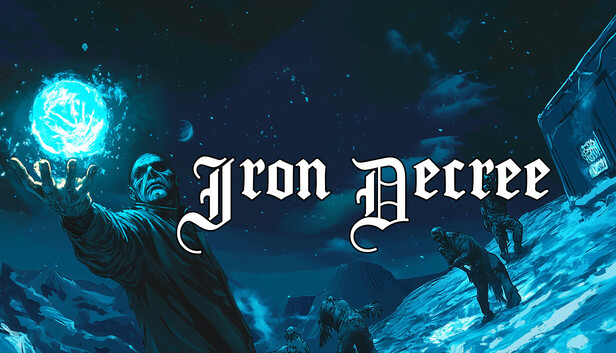
Iron Decree was released yesterday, and it's another winner for me. It's a 1st person dungeon crawler, with secondary FPS elements, but for the bulk of the game, you'll be swinging a sword. Mostly, you'll be finding treasure, levelling up, and killing undead hordes. But the big attraction is the online and LAN co-op where you can battle with up to four players. I haven't tried this out, but the single player campaign is pretty nice. Plays great on Linux, though I found I had to install some additional Unreal Engine stuff. And there was the occasional frame rate issue, which has become an annoyance with the engine (also occurs on Windows). Overall, mostly good. image
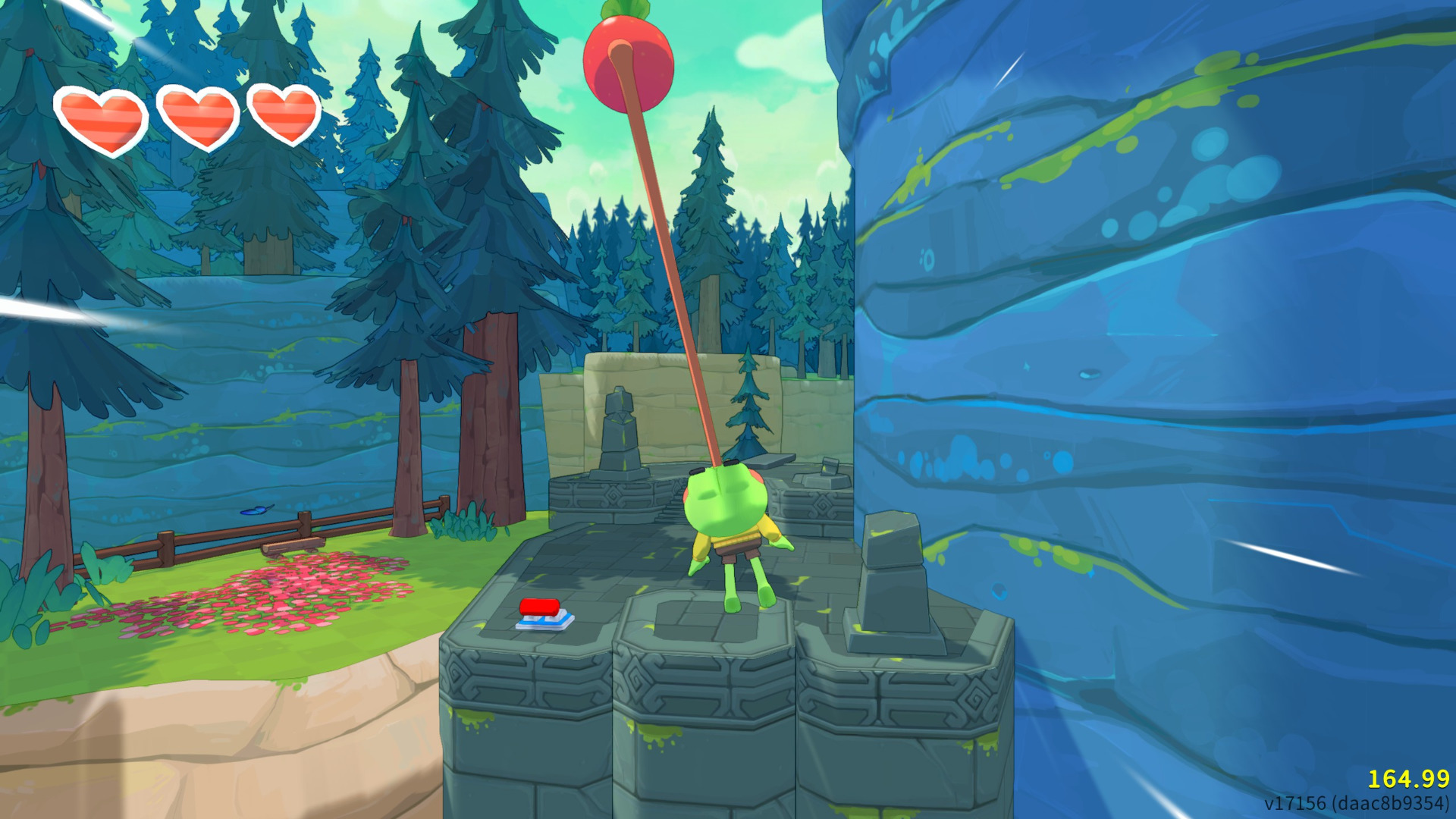
Big Hops was just released on Steam today! This one is a 3D collect-o-thon in the same vein of Super Mario 64. But the difference is that you got all the powers of a frog: big jumps, grabbing objects with your tongue, an enormous appetite. Of course, you do a lot of froggy parkour and this is used to great effect with different obstacles. Runs well on Linux. Not all that demanding either. You just need an Intel i5 2.8Ghz or higher, 4GB of RAM, and a GTX 1060 or better. On a RTX 3080 Ti, I was able to achieve a constant 165fps frame rate. image
Armadillo Racing was released in 1997. And only in arcades—no home releases ever. It's kind of like Ridge Racer. Except with armadillos instead of cars. I'm comparing it to Ridge Racer is because it's made by Namco, the same company that brought us Ridge Racer. But also Pac-Man. And Dig Dug. And Galaga.
These two Gen X women using a Coleco Adam for the first time are utterly hilarious. Especially when they realize the power supply of the computer is built into the printer, and it won’t function without it!
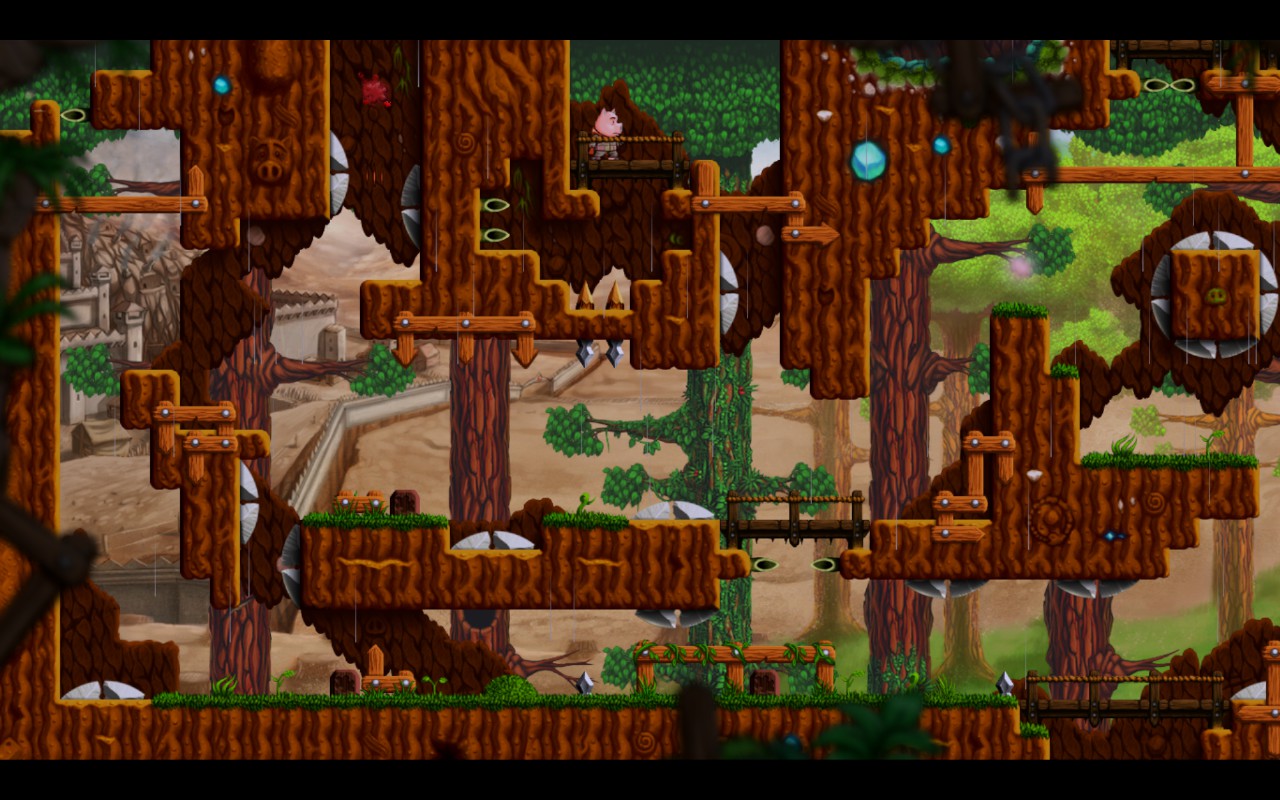
Released in 2013 on PC, Mr. Bree+ is a hard-as-nails platformer about a pig trying to get home to his family. You die constantly. That’s the point. In my view, it’s a hidden gem. If it feels like a Flash game, that’s because it is one. This is an expanded version of Mr. Bree: Returning Home, rebuilt from browser origins into a full PC release. Remember, early-2010s indie games grew out of Flash. It lowered the barrier to entry and let small teams ship real ideas, fast. Flash didn’t die because players stopped liking it. It died for political and platform reasons. Steam was rising, and a wave of Flash games migrated over. Some vanished. A few survived the transition. Mr. Bree+ is one of them. The hook is the level design. Traps everywhere. Spikes, nets, switches, fake-out platforms. You need precision and timing. There’s no coasting through levels. Every screen demands attention. Progression is clever. You start crippled. No jump. No real mobility. Abilities unlock over time, and earlier stages quietly recontextualize themselves once you return with better movement. Optional red “bad memory” collectibles unlock brutally hard bonus stages for people who want to suffer more. Visually, it holds up. Clean pixel art. Strong sprite work. Backgrounds can be deceptive, sometimes to a fault, but the overall presentation is confident. The music is better than it needs to be. Catchy. I caught myself tapping along more than once. It isn’t perfect. It’s short. About 2 to 3 hours if you stick to the main path. It’s capped at 30fps. Color shifts after repeated deaths can make visibility worse instead of better. These are real flaws. Still, it’s available on Steam today. Largely forgotten. Partly because it predates the indie boom. Partly because it never left PC. And partly because it never begged for attention. If you like punishing platformers with Flash DNA and no padding, this one’s worth remembering. image
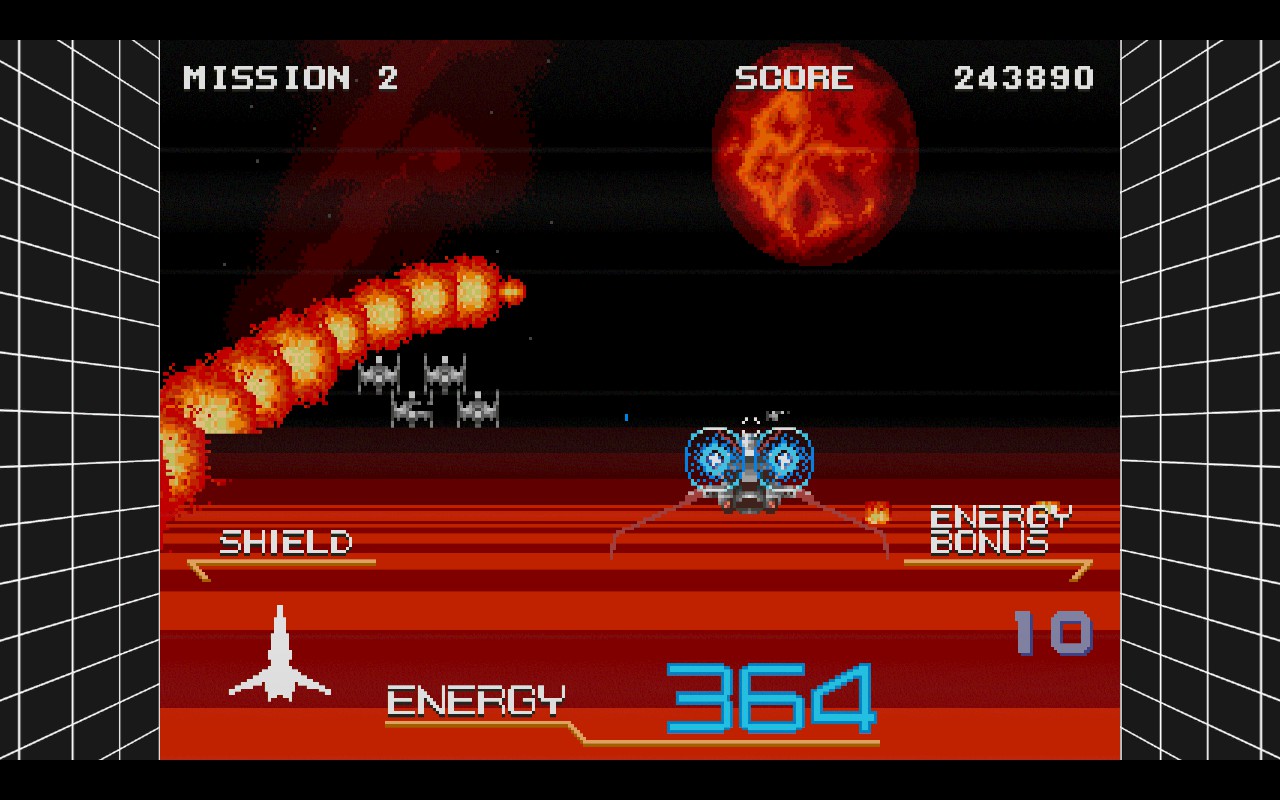
Released in 1991 for the Galaxy Force II on the Sega Genesis, this was a technical flex. Sega pushing sprite-scaling as hard as it possibly could. Big sprites. Fast motion. Backgrounds rushing toward you at speed in a way the Nintendo Entertainment System never could have approached. This is why people used to argue Genesis versus Super Nintendo specs. Games like this were the evidence. Pseudo-3D. Objects flying from distant dots to screen-filling threats. It looked like the arcade in your living room. Which really was impressive, because the arcade original ran on Sega’s Y Board and cost as much as a car if you bought the deluxe motion cabinet. But here’s the problem. Technical marvels rarely age well. Everything is built around spectacle. If you’re used to smooth 60FPS games, the Genesis version is rough. Frame rate dips. Sprite scaling jitters. Enemies pop in late. Aiming is imprecise. Steering feels slippery and punishing, especially on a D-pad. It’s hard in an unkind way. You do have to give it historical context. This is pre-polygons. Pre-Star Fox. Pre-Super FX. Sega brute-forced the illusion with raw sprite math, and for its time that was jaw-dropping. The arcade version ran at a locked 60FPS. The home port simply couldn’t keep up, and stretching the game out with lower frame rates made the difficulty worse, not better. I wouldn’t recommend picking this up unless you’re specifically curious about what the Genesis could do at its limits. As a tech demo, it’s fascinating. As a game, it’s awkward. And if you want a cleaner, more playable showcase of Sega’s ambition on the hardware, Virtua Racing makes a much stronger case. image
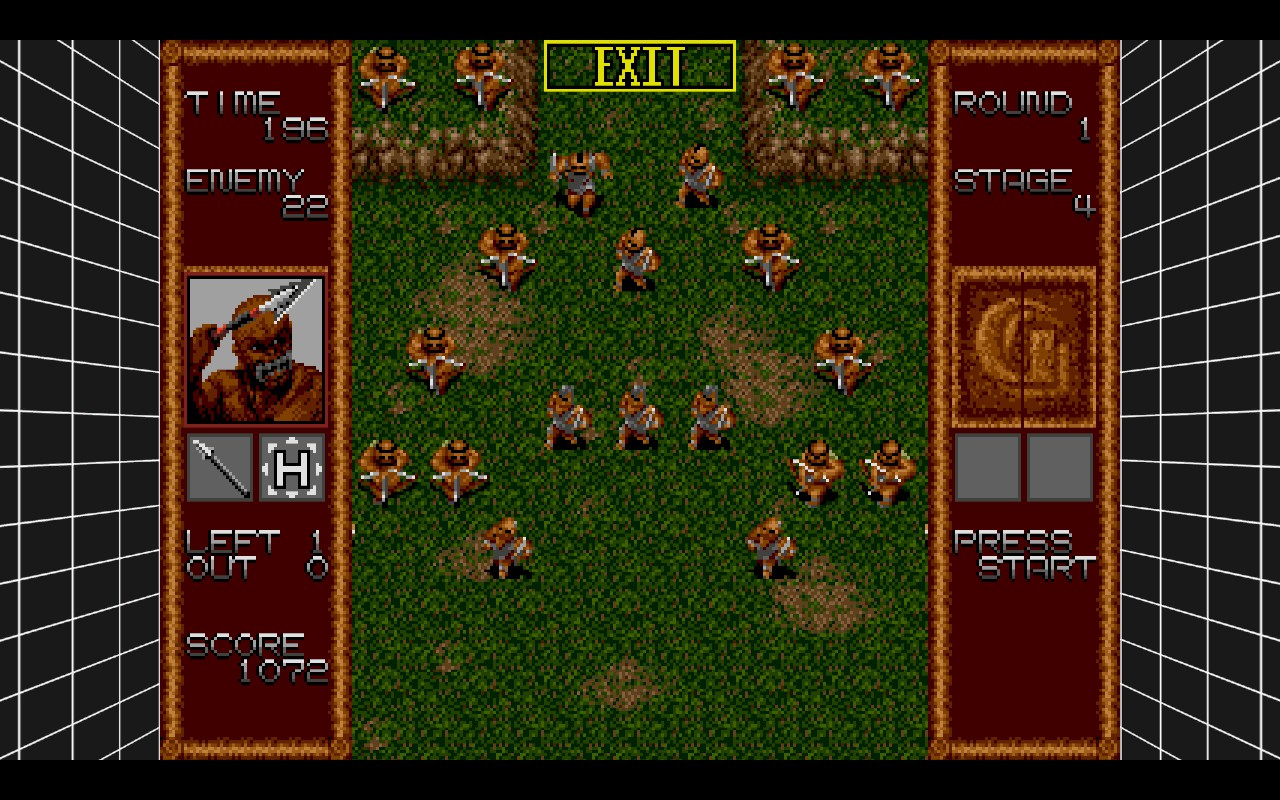
Released in 1991 for the SEGA Genesis, Gain Ground is a simple tactical shooter with a very clear goal. Either escort at least one of your characters to the exit or eliminate every enemy on the screen. You control a small squad, and every character comes with a different weapon and a specific quirk. Some shoot straight. Some bounce shots. Some stun. Some fire from the “wrong” hand, which actually matters because it changes how you peek around walls. Choosing who to bring is the entire game. Pick wrong, and you will feel it immediately. What’s interesting is how restrained everything is. Enemies move slowly. They fire slowly. Nothing rushes you. This gives you just enough breathing room to think, reposition, and exploit patterns. You are not fast, but you are faster than they are, and that difference is the core tension. It’s tactical in a very old-school way. Think of what we’d now call an RTS, stripped down to fixed screens, no scrolling, no base building, no economy, no resources. Just positioning, timing, and attrition. A skirmish, not a campaign. Played on a gamepad, not a mouse and keyboard. That restraint is probably why it doesn’t land with modern audiences. It’s slow. It’s deliberate. It asks for patience. But there’s something refreshing about a game that is purely about tactics instead of strategy. No tech trees. No harvesting. Just a clean problem and limited tools. The arcade roots show through everywhere. It was designed for co-op, and it shines there. Characters you lose don’t just die. They get captured, and you can rescue them if you’re careful. There’s even an infamous arcade bug where one stage never ends unless you sacrifice a character, which players assumed was intentional for years. Sega eventually made it optional in later releases. This is not one of the Genesis’ all-time greats. It’s not a system seller. It’s not a classic people evangelize without caveats. But it is absolutely playable, occasionally clever, and often tense in a way few games attempt anymore. Knowing it started life as a 1988 arcade game makes me more curious about that version. This feels like a design built for quarters first, and I suspect the arcade cabinet is where it really makes sense. image
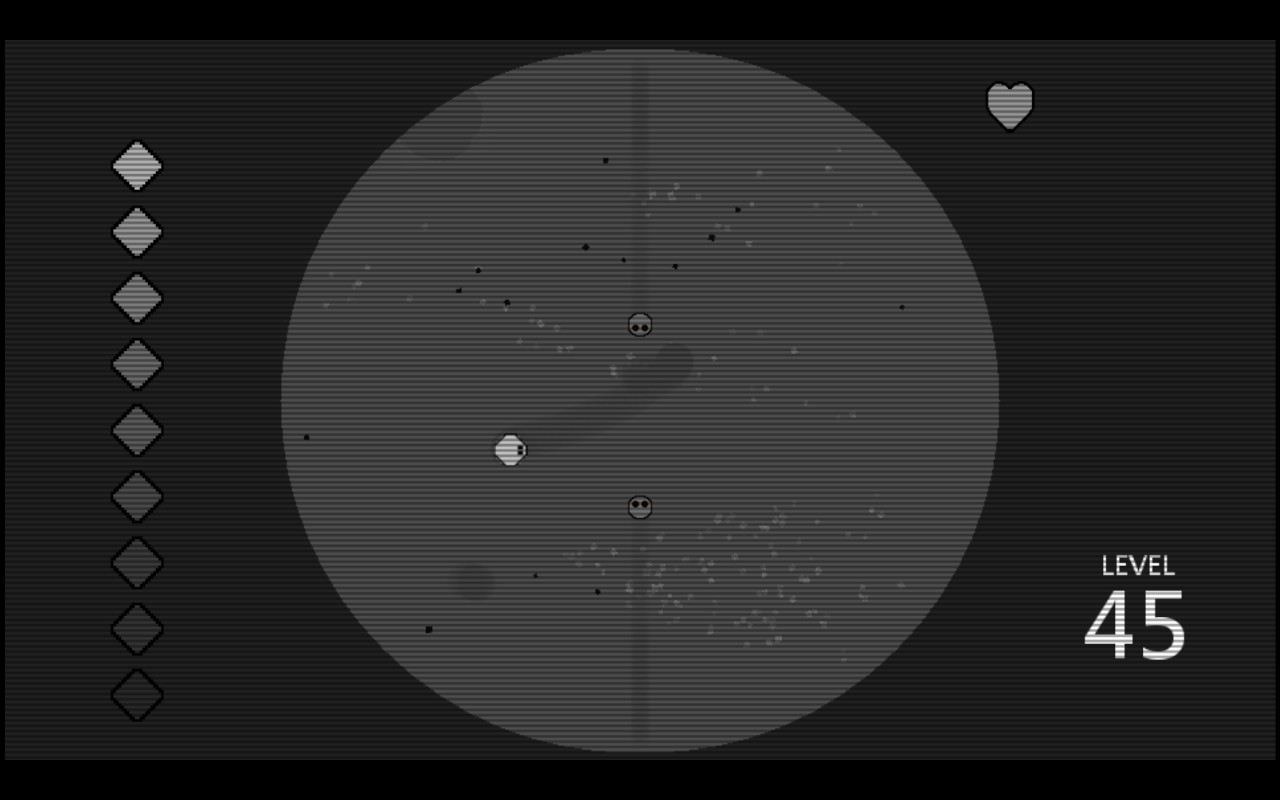
Shapes of Gray is no longer available on Steam. It’s been delisted, which is unfortunate, because I enjoyed it a lot. It’s a very simple arcade game with minimalist sprites. No colour. Pure grayscale, exactly as the title promises. You’re dropped into a small arena filled with shapes that all do different things. Some rush you. Some shoot at you. Everything is hostile. The goal is straightforward: clear the arena before it clears you. Each stage lasts only a few seconds. You’re timed, and the faster you finish, the higher your score. That short-burst structure makes it addictive. You fail, restart instantly, and try to shave off another second. It nails that pure pick-up-and-play arcade loop. What makes it interesting is how stripped down it is. It feels closer to Hotline Miami meets WarioWare than a traditional twin-stick shooter. The levels are micro-challenges. Blink and they’re over. Some last around ten seconds. That pacing gives it a jittery, twitchy energy that works. It was made by a solo developer at Secret Tunnel Entertainment, and it shows—in a good way. Limited budget. No excess. Just mechanics and iteration. Anyone curious about game design could learn something from it. The fun is in the constraints. It also had a second life on the Nintendo eShop for Wii U, where it was expanded with new modes, bosses, and GamePad-centric arcade play. It’s a shame it’s gone from Steam. Maybe a copy exists somewhere else. But for what it was—a small, odd, aggressively minimalist arcade game—it worked. And it worked because it didn’t try to be more than that. image