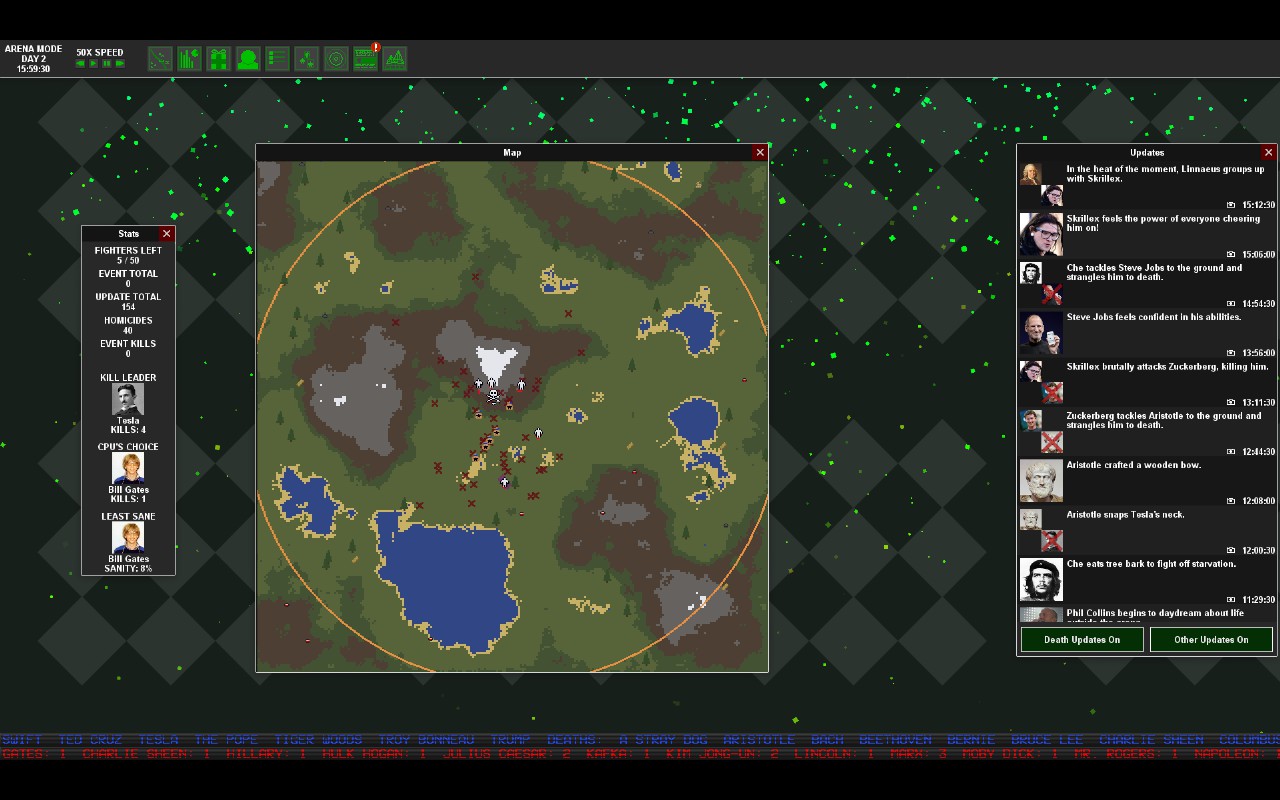
There’s nothing ultimate about Ultimate Arena. It’s more like watching fish in a bowl. You don’t really play so much as observe tiny sprites bouncing off each other, with the entire point being that they fight. The hook is the names. Bill Gates. Kim Jong-un. Aristotle. All thrown into the same absurd gladiator pit, because why not. Watching historical figures and tech CEOs slap each other around is the joke, and the game knows it. You can intervene if you want. Kill them yourself. Move them around. Peek at their stats. But that’s the extent of your agency. Mostly, you turn it on and let it run. Technically this puts it in idler territory. The game plays itself while you watch the chaos unfold. That chaos is amplified by Steam Workshop support, where people leaned hard into custom characters and nonsense scenarios. That’s where most of the life comes from. The other genuinely interesting detail is the size. About 10MB. That’s microscopic by modern standards. It launched at $4.99 in 2016, was built by a solo developer, and was effectively left unfinished after early access sales didn’t pan out. Bugs remain. Polish is thin. Updates stopped years ago. And yet, there’s something oddly compelling about how small and unambitious it is. A tiny, abandoned arena where pop culture figures fight forever, not because it’s deep or well made, but because it’s funny for five minutes. Sometimes that’s enough. image
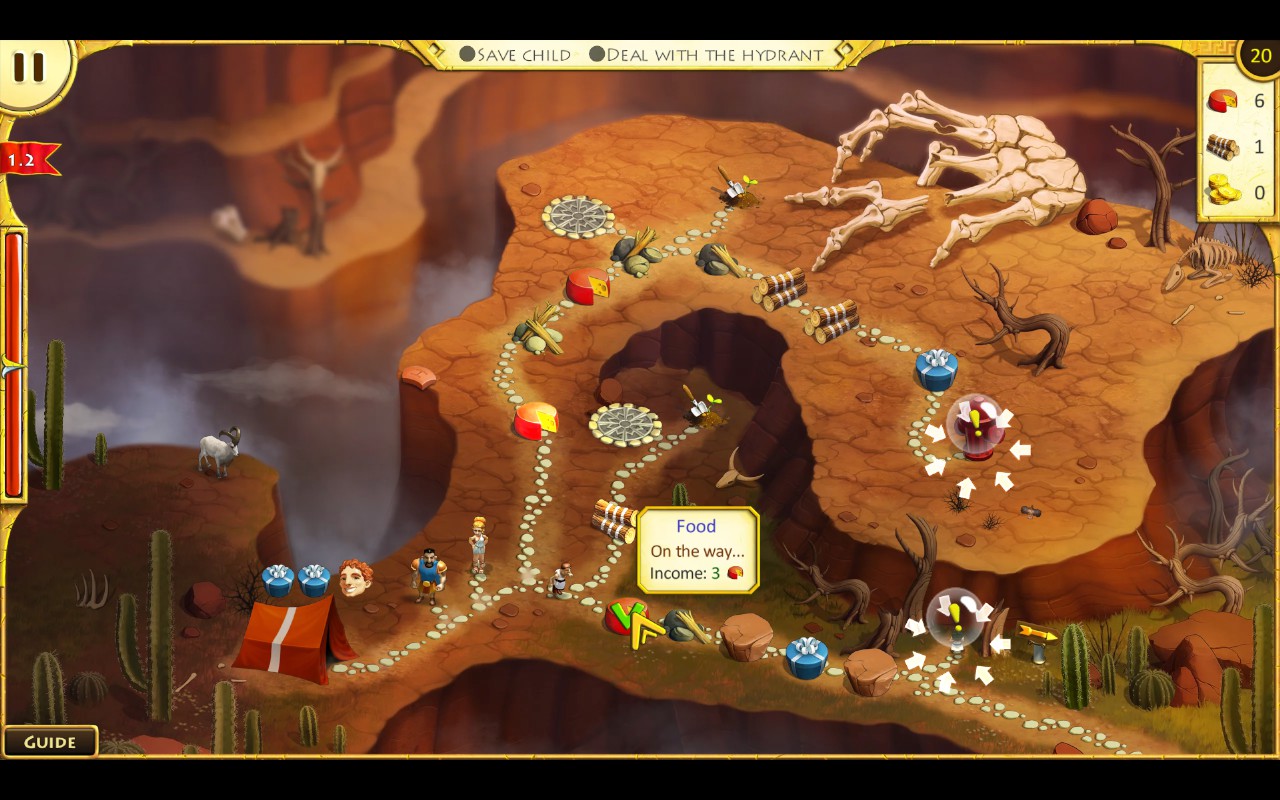
Just by virtue of how long 12 Labours of Hercules has been running and how many titles exist—19 games and counting—you’d think this franchise would come up more often in serious game discussions. It doesn’t. And I suspect I know why. Time management games, despite being hugely popular, get very little respect. When people don’t talk about them—and by people I mean gatekeepers, gaming historians, and the usual tastemakers—it’s usually because of who the audience is assumed to be. The typical fan is a woman, aged between 24-44. Be that as it may, I’m not a woman, and I clearly like these games. Of the 19 titles on Steam, I’ve bought 6. One of those is 12 Labours of Hercules V: Kids of Hellas. Mechanically, it’s exactly what you’d expect from the series. Gather food. Chop wood. Build bridges. Clear rocks. Do all of it as fast as possible. The twist this time is the premise. You’re rescuing children who’ve been zombified by enchanted toys courtesy of Ares. Before you advance to the next stage, those kids need to be dealt with. It’s silly. It’s also oddly effective. I’m not going to pretend this is innovative. It isn’t. But it is polished, intuitive, and easy to pick up. If you like time management games, this is as good as the genre gets. Over 50 short levels. Optional puzzles. Golems, hydras, hidden collectibles, and little jigsaw bonuses tucked away for completionists. You can even fast-forward time and chain actions together if you want to chase perfect runs. Visually and musically, a lot of the assets are reused from earlier entries. That sounds like a knock, but it isn’t. The art is clean and colourful, the animations are snappy, and the soundtrack fades into the background exactly the way it should. There are also some bizarre anachronisms—fire hydrants mixed into Greek mythology—that make no sense and somehow improve the whole thing. It’s also very easy. Critics have pointed that out repeatedly. But that’s kind of the point. This is a game you play in short sessions. It respects your time. Steam users seem to agree, with an 89% positive rating, which is about as strong an endorsement as this genre ever gets. Kids of Hellas won’t convert anyone who hates time management games. But for people who already like them—or people willing to admit they do—it’s a tight, confident entry in a long-running series that’s still quietly doing its thing. image
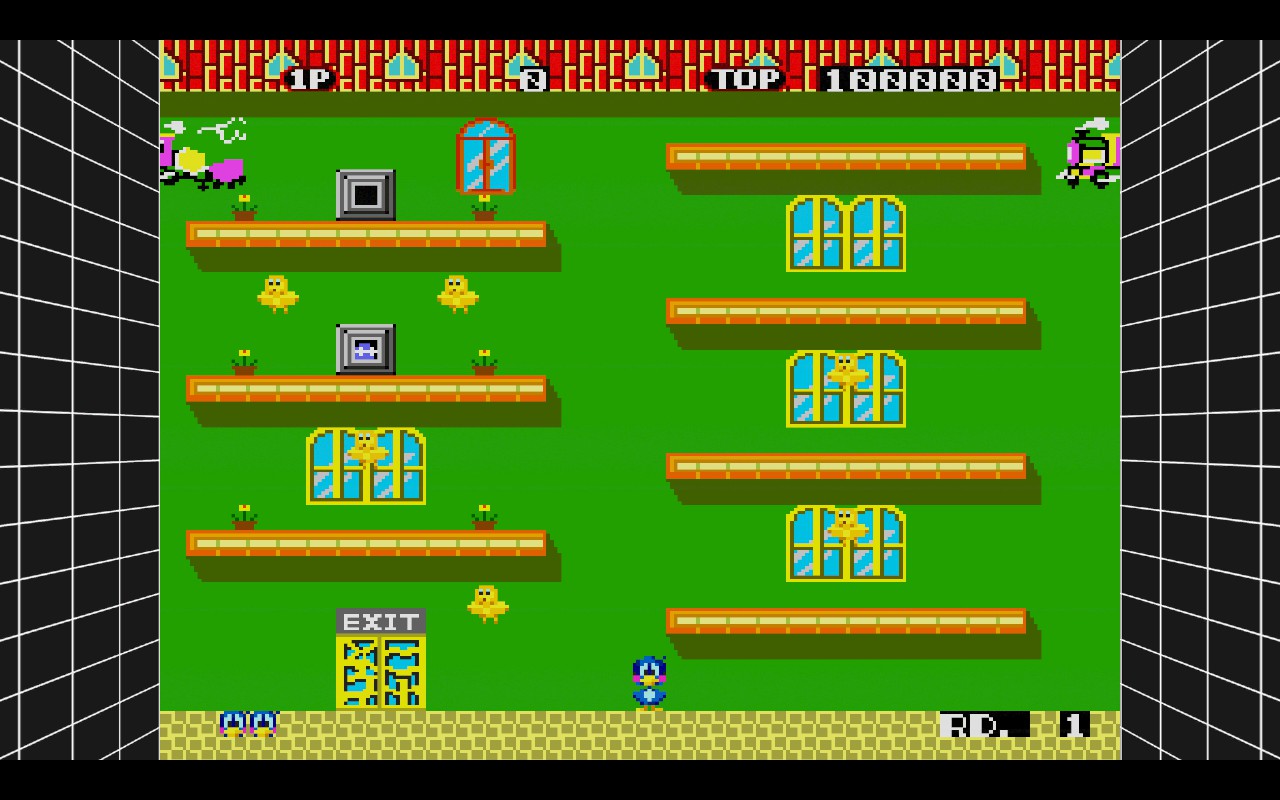
Flicky on the Sega Genesis is a bit of an oddity. At first glance, it stands out because it is one of Sega’s early arcade hits that actually made it to the Genesis. That matters because a lot of Sega’s foundational arcade games did not. Titles like Head On, Zaxxon, and Congo Bongo largely stayed behind, despite being the games that built Sega’s reputation in the early 80s. That gap comes from a basic difference between Sega and Nintendo. Sega started as an arcade company that later dabbled in home consoles. Nintendo started as a home console company that dabbled in arcades. You would expect Sega to aggressively port its arcade back catalog to the Genesis. Instead, they focused on showcasing later, flashier arcade experiences like Space Harrier and Out Run. The older stuff was mostly ignored. That is why Flicky feels unusual. It was an important game for Sega. Important enough that the blue bird from Flicky shows up in the original Sonic the Hedgehog. When Sonic smashes badniks and animals pop out, one of them is Flicky. That is not an accident. Sega clearly remembered the game, even if it did not push it very hard. Technically, Flicky was ahead of its time. It was graphically demanding in ways early microcomputers could not handle. PC-88, MSX, and similar Japanese computers could not do it justice. Even Sega’s own SG-1000 struggled. The Genesis version was the first home release that felt arcade-perfect. The colors were right. The backgrounds were right. The overall presentation finally matched the original. The gameplay will feel familiar if you know Mappy. It is a single-screen platformer built around evasion rather than combat. In Flicky, you are chased by cats while trying to escort birds to safety. The similarity is intentional. Sega was clearly aiming for something in the same lane, just with more polish. Whether they surpassed Mappy is debatable. In North America, Mappy probably has the stronger reputation. In Japan, Flicky landed better. As a home port, this Genesis version was excellent. It was arguably the best home version available until the Saturn era. The Sega CD port exists, but the audio is a mess. It sounds like Sega was trying to show off CD-quality sound, and instead ended up with something oddly mismatched and distracting. The game has since seen multiple re-releases. It showed up on Windows in 2010 and later as part of the Sega Mega Drive and Genesis Classics collection on Steam. That version is essentially the original Genesis ROM, wrapped in an emulator. The added background art is there to pad out the 4:3 screen, which makes it easy to spot the modern release. It is also a reminder of how Sega treats its history. Even in 1990, when this version released, Sega was not especially interested in its older catalog. That attitude has not changed much. They will release the occasional retro collection, but they do not want to be a retro company. That is understandable. Still, Flicky endures. A small game. A strange port. And one of the cleaner windows into Sega’s arcade DNA. This is a very good game. It is worth picking up. image
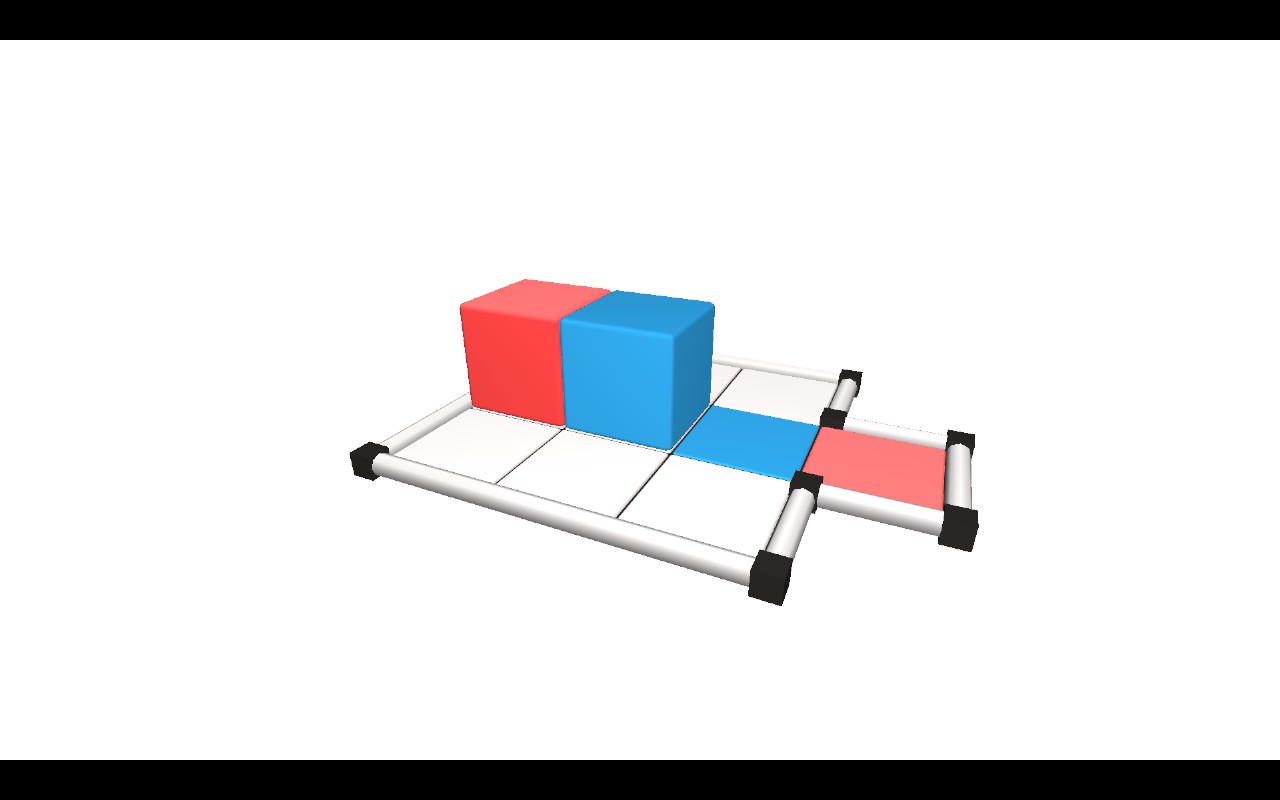
Whenever I talk about minimalist puzzlers, people lean in. Especially people who claim they do not play video games. So here is another one: Cubot. The premise is almost aggressively simple. You slide coloured cubes onto matching tiles. That is it. No story. No characters. No fluff. Everything is white. The floors. The walls. The void. The only real visual information comes from the cubes themselves. It looks like a design exercise that escaped a prototype folder and shipped anyway. Controls are dead simple. Keyboard. Xbox controller. PS3 controller. One finger is enough. The game was literally designed around minimal input. Here is the part people find surprising. All selected cubes move at the same time. Every move is global. That one constraint is where the game gets mean in a quiet way. You are not solving one problem. You are solving 3 or 4 at once, whether you like it or not. It was built by one person. A French developer who made the entire thing solo in a few months. 80 levels. 10 episodes. Buttons. Elevators. Teleporters. Color swappers. All layered on top of the same tiny rule set. No new controls. Just more consequences. The music barely exists. Soft ambient hum. Easy listening to the point of near-absence. It is there to keep your brain from getting itchy, not to be remembered. It runs on anything. Specs are irrelevant. Your GPU can stay bored. That is fine. This is a puzzle game. The work happens in your head. I will admit this. I am tired of minimalist puzzlers. The genre is crowded with games that mistake emptiness for depth. Cubot mostly avoids that trap. It is calm. It is clever. When it gets hard, it is hard because you misread the board, not because it is messing with you. It is also short. You can finish everything in under 75 minutes if you are paying attention. Some people do it much faster. And it costs C$2.19 at full price. Not a sale. Just the price. At that cost, it does not need to justify itself. It just needs to work. It does. image
Right now, there’s rancour amongst Nintendo fans. The Switch 2 had terrible holiday sales during 2025. It’s easy to see why. Switch 2 is obscenely expensive. Switch increased in price—despite being on the market for eight years. And they’re selling flagship franchise games for $90 (C$120 in Canada). But the other issue is that there were no compelling new 3rd party releases. Yes, Cyberpunk 2077 arrived. Except that game’s been on PC, Xbox, and PS5 for years. Where’s Clair Obscur: Expedition 33? Now it’s absolutely true that many Switch 2 owners buy it purely for the 1st party games. But this is just the core audience. What about everyone else? Nintendo used to be good at marketing to casual audiences. Well, it looks like that casual audience didn’t buy the Switch 2. Instead, they went for the Nex Playground—a product few people heard of until it sold like hotcakes during Black Friday. But the Nex Playground is inexpensive and is completely controllable with motion—a feature the main console makers abandoned. But it’s not just the low end that Nintendo finds challenging. All those premium PC handhelds are hurting them too. And I’m not just talking about the Steam Deck. Remember how pundits kept saying the Xbox brand is dead? Well, maybe the console. Meanwhile, the handheld Xbox ROG Ally sold like hotcakes, prompting production ramp-ups due to short supply. This is for a base model that costs $599 and a premium that is $999. People like to say these PC handhelds are not the same market as the Switch 2. But so long as we have conversations comparing the Switch 2 to the Steam Deck, Xbox ROG Ally, Legion Go, etc., we have to acknowledge they compete somewhat. Not only do these PC handhelds often beat Switch 2 in terms of specs but also library too. Sure, you can’t play Donkey Kong Bananza on a Steam Deck. But again, you can’t Clair Obscur: Expedition 33 on Switch 2—and that was Game of the Year. If it sounds like I’m cheerleading Nintendo’s demise—no. This is a company that’s given me so many happy memories, starting from that moment my mom gave me a Game Boy for Christmas. No one wants to see Nintendo go the way of SEGA. But we can’t pretend that Nintendo didn’t make a big misstep. My wife usually gets a new Nintendo console. Last year, she opted for a Legion Go because it feels like a more premium Switch with a bigger game library. Perhaps I could have got one for my daughter if it were priced competitively. But who are we kidding? She prefers Roblox on her iPad. And as for myself? The one game I wanted—Metroid Prime 4—was just not compelling enough to spend that much money, especially when so many better games are at a lower price. If Nintendo can’t win over my family, a family that really loves video games, who else are they failing to reach? The one game I wanted—Metroid Prime 4—was just not compelling enough to spend that much money on, especially when so many better games are at a lower price. If Nintendo can’t win over my family, a family that really loves video games, who else are they failing to reach?
I’ll never forget the time I mentioned that Fanwor – The Legend of Gemda no longer works on modern Linux. Then some guy on Mastodon came out of the woodwork and said he’d build a modern package. And within a day, he did it. Now it’s on GitHub.