UnHerd
The illusions of diversity
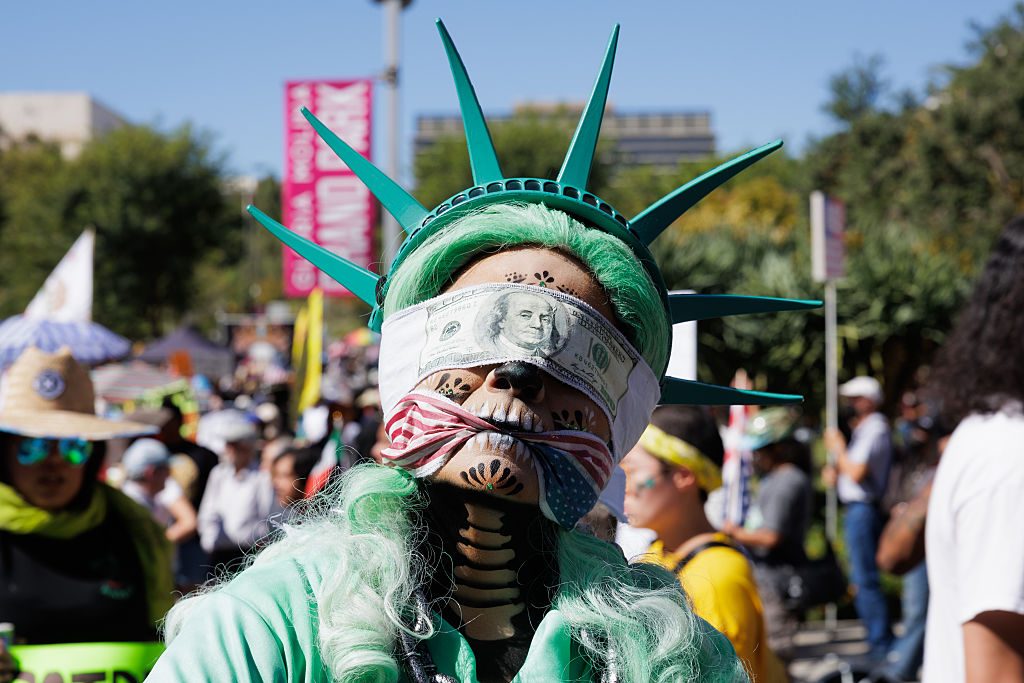
We are all so distinctive. And we believe a million different things. How dare you call us all the denizens of a single cosmology — and a counting-house ‘moneyworld’ at that!” Almost. But not really. What we are, mostly, of course, is moderns, and what that means is that we navigate a world mapped in money values. A world shaped by ever-more-powerful programmes for aggregating and augmenting “wealth” — wealth measured in dollars and cents. The masters of our universe are the financiers who look ceaselessly for ways to make their capital return new and bigger profits. We follow them, and pay tribute, when we can, with our little mutual funds. And we, too, as consumers and life-long market players, try to figure out how to win in the ledger book of existence: to buy the stuff we want for prices we can pay; to get ours at the auction block where we sell our wares, our time, our eyes, our minds. Indeed, we play the market with our whole beings, since we do everything we can to be rational self-maximisers in the continuous competition of the workforce, which demands that we conceive of ourselves as human capital, and “invest” in ourselves, through education and training, to optimise the ROI of our lives.
So what matters to the moneyworld? Money matters. What is “meaning” in the moneyworld? A billion dollars is meaning — everyone gets that. Are there other kinds of meaning? Sure, maybe. Like “happiness”, perhaps? True, we know it is a thing. But the good news is that economists can make you a model for it — denominated in dollars, naturally (they have no other units). What their models cannot capture is squishy at best. It might be real stuff, but it is so hard to quantify. Better pick a major in college that pays real dividends. In cash. You can puzzle about happiness after you make your first million. Let me be clear about my view here: money is fine. Yes, yes, it is indeed a powerful technology for coordinating human behaviours, and markets can do good things at scale — allocate resources, drive innovation — in ways that are unmatched by any other social system or set of beliefs. I get it. But the moneyworld is a world organised by price, a world of pure and continuous calculation. It is a world that only a machine could love — and the machines do love it. They run the numbers and keep the accounts. They have the data, and they use it — to monetise us, actually. Indeed, it is increasingly their world, and we only live in it — with many of us feeling more and more alienated and angry and unsure of what comes next.
https://archive.ph/CDq51