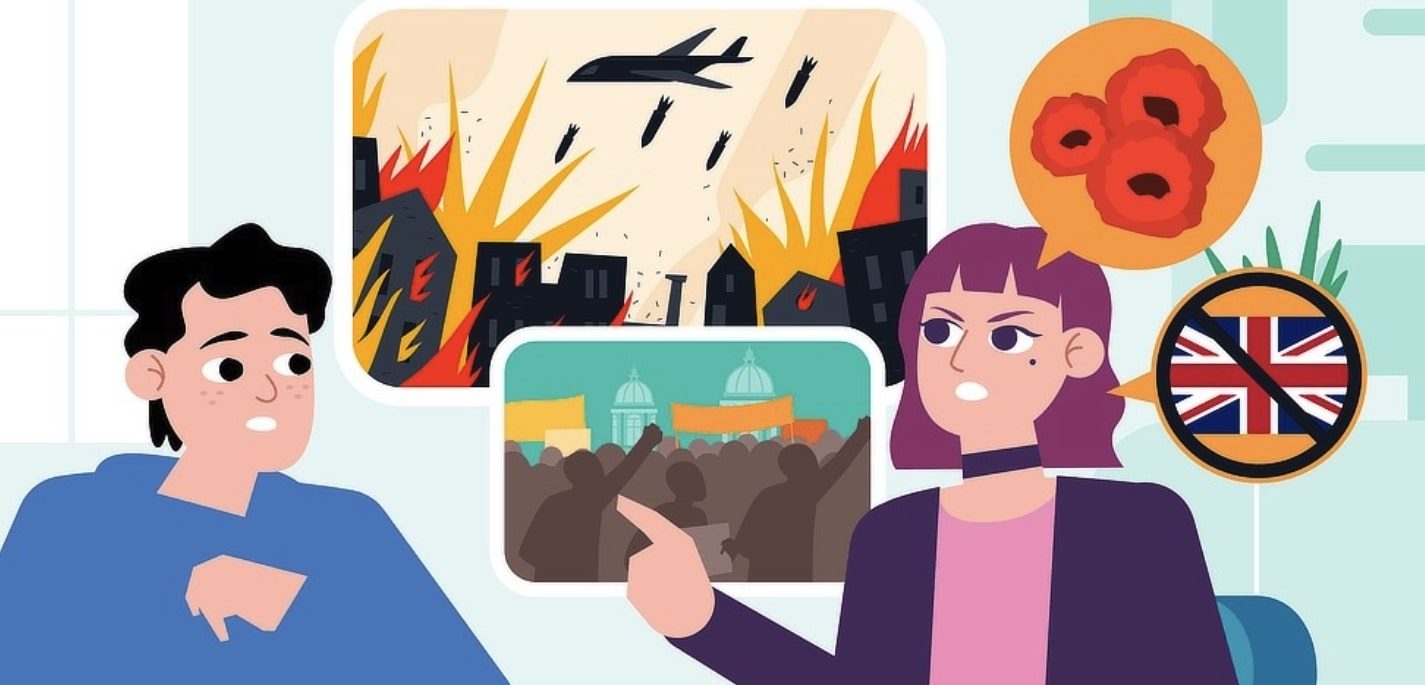
Over the weekend, Britain discovered that Hull City Council has a propaganda department. The council has created an online game aimed at teaching teenagers not to engage with “far-Right” online content; recently, it escaped containment and was played through by politically-engaged adults to alarm from some and derision from many more. The game itself was surely a sincere educational intervention, created by people who genuinely believe “far-Right” influencers to be the greatest source of “extremist” danger in Britain today. But its reception serves mostly to illustrate the mercurial quality of online culture, in which ideas can be pounced upon, re-worked, inverted and transformed near-instantaneously. And while this doesn’t render propaganda any less powerful — quite the contrary — it does mean that top-down, centrally controlled messaging is now laughably obsolete as a vector for propaganda. Of course, “Amelia” may have morphed again by tomorrow, into something wholly new and perhaps entirely perverse; or she may have disappeared again, forgotten as quickly as she was embraced. What’s clear either way, though, is that little short of unplugging the internet will succeed in regulating its subversive potential wholly into submission. For better or worse, the age of top-down message control is over. We should not be tempted by utopianism about the implications of this development, but we should recognise that any regime that fails to take it into account is in for a bumpy ride. https://archive.ph/3VoDz
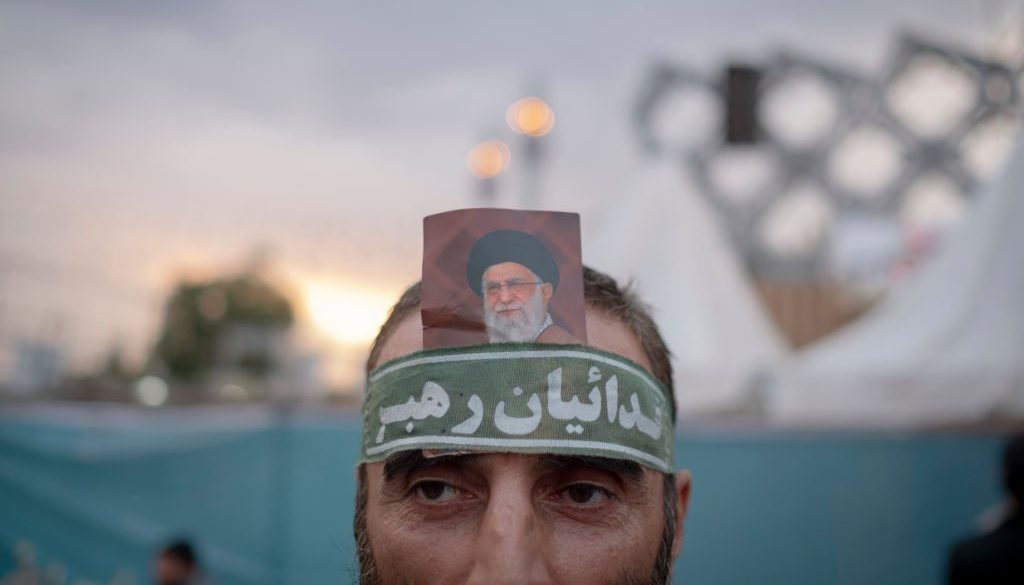
This is sadly true, Islam at the end of the day is a death cult. Like the mental fundies everything is about the rapture or next life and all the quicker may we get there thinking. The solidarity that is currently being shown between Iranians of different ages, classes and ethnicities is a far cry from the scenes I observed during the 2009 agitation, when bystanders watched with studied neutrality as protesters were dragged away to police torture chambers. Gone, too, is the inviolability of public property. These days, bystanders wade in with fists and kicks to save protesters from the security forces, while police stations and police cars are torched and — according to the semi-official Tasnim news agency — officers are killed. From the province of Kurdistan in the west to Baluchistan in the east and as far south as the refinery town of Abadan, no part of Iran is untouched. At least one small town, in the western province of Kermanshah, has been seized by rebels. The regime has responded by killing dozens of protesters before cutting the internet on Thursday night. Behind the blackout, as is clear from video and audio files that continue to trickle out, more protesters are dying, more public buildings are being attacked and more hospitals are becoming war zones as parents smash down mortuary doors and remove the bodies of their dead children before the authorities can surreptitiously bury them. Such confrontations are a throwback to the 1979 revolution, which advanced to the rhythm of Shia mourning ceremonies, each funeral being a magnet for more protests and more deaths. Khamenei lost the use of an arm when he was blown up early in the revolution. He is not a quitter but a quietly stolid fanatic who will leave the Islamic Republic horizontally or not at all. And he has yet to turn the full force of his killing machine on the protesters.
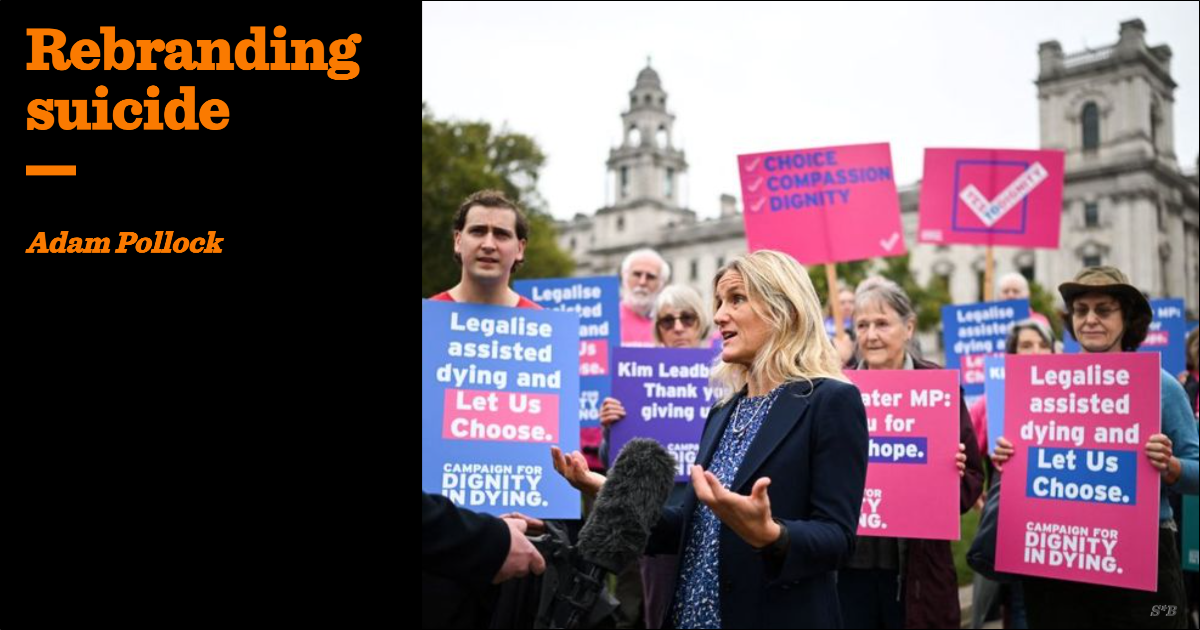
During Committee Stage scrutiny of the assisted suicide Bill in the House of Lords, a radical Labour Peer named Baroness Hayter sent shivers down the spines of all those who understand the importance of suicide prevention. On the first day of the Bill’s scrutiny following the Christmas recess, on Friday, 9 January, Baroness Hayter argued that assisted suicide “is not a life or death issue”, and asserted that it is not really suicide at all, simply because those concerned would die anyway. Hayter appeared to claim that terminally ill people who end their own lives cannot be said to have done so by suicide. Hayter has espoused similarly confounding nonsense on other occasions too. During the House of Lords select committee scrutiny of the assisted suicide Bill in the autumn, she made another revealing remark, arguing that the legislation would add “safeguards” for those who already “take their own lives early”. Hayter has also insisted that “suicide is not an offence” and that “people have an absolute right to commit suicide”. In a nation that funds suicide prevention campaigns and mourns every death by suicide as a tragedy, making such statements unqualified is remarkable. Suicide cannot be rebranded into compassion by the doublespeak of a grim band of fanatical campaigners. It remains what it has always been— the tragedy that is the deliberate, premature ending of a life — and it should continue to be the duty of both our laws and our culture to prevent it in all circumstances.
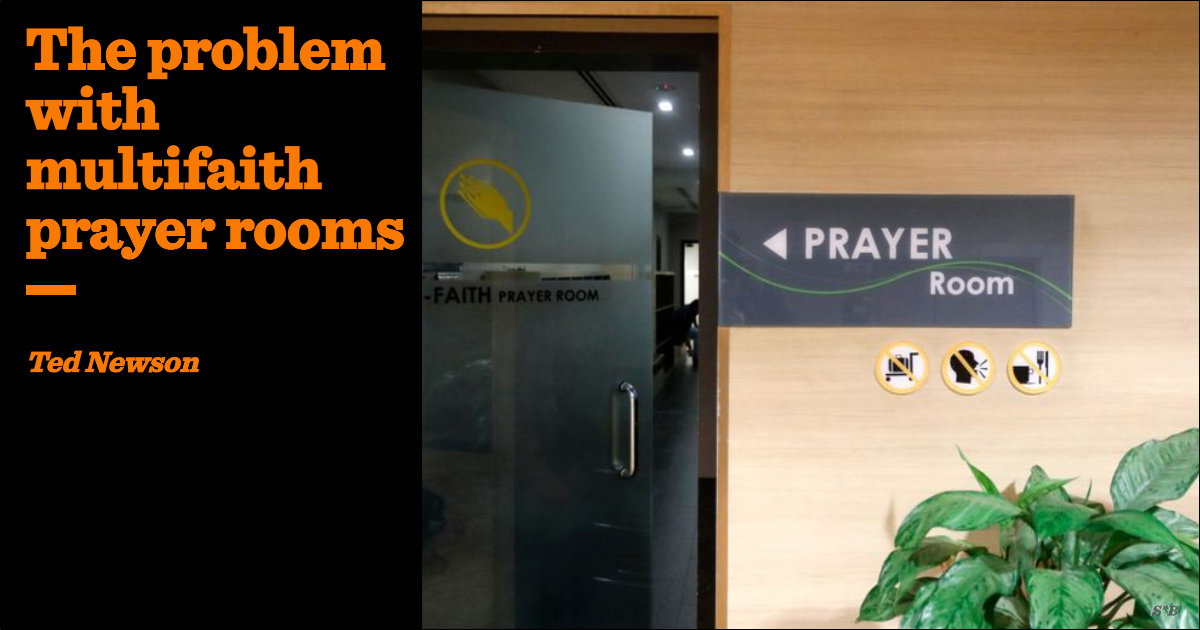
As I stood to pray, put my hands together, and closed my eyes, the staff member’s voice rang out, shouting at me to stop praying and leave the room. Despite being labelled a “multifaith room”, it was seemingly deemed unacceptable that I had my shoes on while praying. When I asked what I had done wrong and why I had to leave, the staff member grabbed me. As I protested, asking where the Christian space was, he angrily responded: “No Christians. Muslims only.” I had heard stories about prayer rooms being dominated by Muslim prayer. This is to some extent understandable: prayer rules are strict, and most Muslims pray five times a day. What I didn’t expect was to face such overt religious hostility in a country that boasts over 70 million Christians. To see my freedom of religion challenged for the first time, in a nation that has been Christian since the fourth century, was deeply chilling. It is now clear that all religious people must be willing to defend full religious freedoms in prayer spaces, even if it means upsetting fundamentalist community leaders — Muslim, Christian, or otherwise. Prayer rooms in the West were originally set up in public spaces to give religious communities a specific place to pray and worship, yet somehow many have morphed into intolerant spaces that de facto cater to only one group. In Britain, many of the prayer spaces in our universities are managed by Muslim student societies. This creates an obvious conflict of interest. At Newcastle University, for instance, the Islamic Society staged protests after plans were announced to convert a prayer room into a genuinely multifaith space. While the official concern cited was capacity, it is difficult to ignore the desire among many protestors to preserve existing religious segregation and favouritism. The fact that many multifaith spaces have gender segregated sections should signal to most observers that the primary concern is given to Muslim practices when creating prayer spaces. If prayer spaces are truly going to be for everyone, equal concern should be given to other major religions as well.
image
Vets have told BBC Panorama they feel under increasing pressure to make money for the big companies that employ them - and worry about the costly financial impact on pet owners. Prices charged by UK vets rose by 63% between 2016 and 2023, external, and the government's competition regulator has questioned whether the pet-care market - as it stands - is giving customers value for money. One anonymous vet, who works for the UK's largest vet care provider, IVC Evidensia, said that the company has introduced a new monitoring system that could encourage vets to offer pet owners costly tests and treatment options. A spokesperson for IVC told Panorama: "The group's vets and vet nurses never prioritise revenue or transaction value over and above the welfare of the animal in their care." A vet, who leads one of IVC's surgeries (and who does not want to be identified because they fear they could lose their job), has shared a new internal document with Panorama. The document uses a colour code to compare the company's UK-wide tests and treatment options and states that it is intended to help staff improve clinical care. It lists key performance indicators in categories that include average sales per patient, X-rays, ultrasound and lab tests. The vet is worried about the new policy: "We will have meetings every month, where one of the area teams will ask you how many blood tests, X-rays and ultrasounds you're doing." If a category is marked in green on the chart, the clinic would be judged to be among the company's top 25% of achievers in the UK. A red mark, on the other hand, would mean the clinic was in the bottom 25%. If this happens, the vet says, it might be asked to come up with a plan of action. The vet says this would create pressure to "upsell" services.
Today is Plough Monday - by tradition the start of the agricultural year. Plough Monday is the traditional start of the English agricultural year, observed on the first Monday after Epiphany (January 6). It originated in England's East Midlands and East Anglia regions and marked the end of the Christmas holidays when farm laborers returned to work. Historically, it was celebrated with various festivities, including music and decorated ploughs, and has references dating back to the late 15th century. Artist: John Berry (The Farmer, 1963) image
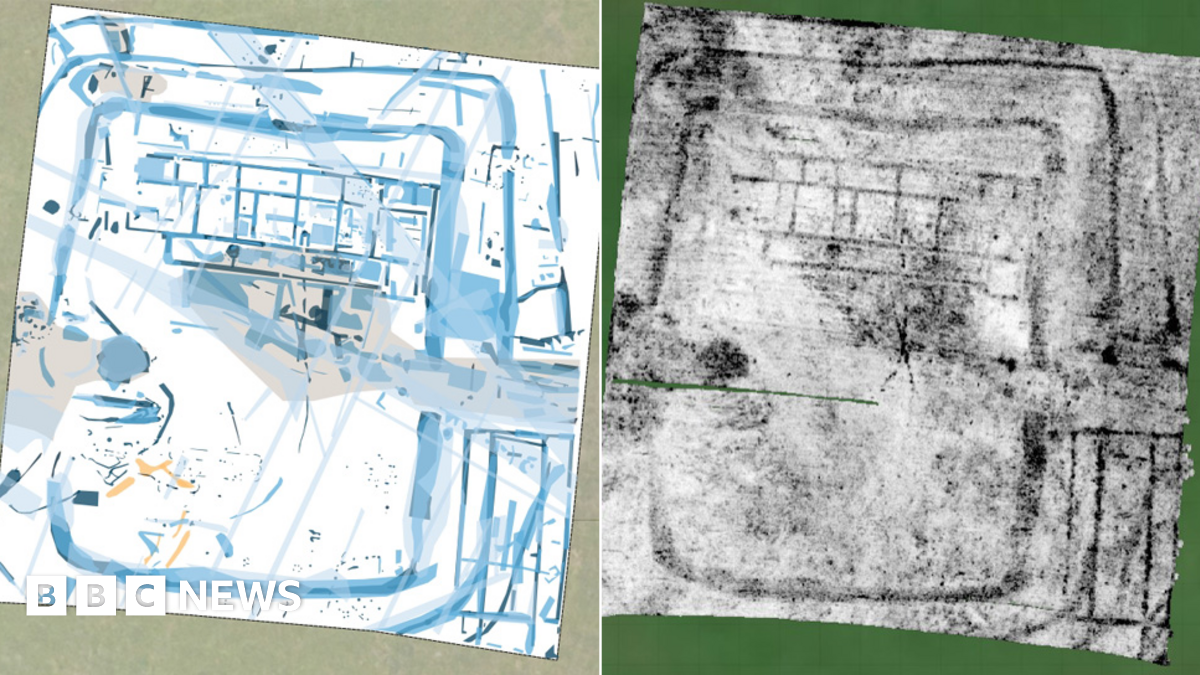
@TriptychTwins_WTF! Archaeologists have discovered the largest Roman villa ever found in Wales in an "amazing discovery" which they say has the potential to be "Port Talbot's Pompeii". "My eyes nearly popped out of my skull," said project lead Dr Alex Langlands, after ground penetrating radar revealed the "huge structure" in Margam Country Park. The location, in a historical deer park, is significant because the land has not been ploughed or built on, meaning the villa's remains - less than a metre below the surface - look to be well preserved. Those involved from Swansea University, Neath Port Talbot council and Margam Abbey Church said the discovery offered "unparalleled information about Wales' national story".