In A World Filled With Chaos, There Is Power Within Our Reach To Make A Difference
In A World Filled With Chaos, There Is Power Within Our Reach To Make A Difference
 Turn on the news, scroll through social media, or glance at the headlines, and the picture can feel overwhelming: wars abroad, political fights at home, and tragedies that seem to strike daily. We’re bombarded with stories of anger, loss, and uncertainty. It’s no wonder many people feel powerless, as though these problems are too big and too far gone for ordinary citizens to make any difference.
 Yet history, and everyday life, tell us something different. The truth is, meaningful change rarely begins at a global scale or within the halls of power. More often, it begins quietly, at a household level, when ordinary people decide to act.
A phone call, a meal delivered, or a timely conversation may never make national news, but these moments can ripple outward in ways that change lives for good.
I learned this the hard way during my decades as an undercover narcotics officer in Washington, D.C. My job was to investigate drug operations and bring criminals to justice. On paper, every arrest looked like a success. But after years on the job, I began to realize that arrests alone weren’t changing the deeper problems. Broken families, poverty, and addiction didn’t vanish when one person went to jail. Whole communities still lived with fear and instability.
As a police officer, I knew arrests were necessary. The streets were dangerous, and if we hadn’t done our jobs, the level of violence and homicide would have been far worse. Arrests protected the community, but I also knew that while arresting people could remove them from the streets, it couldn’t change their hearts.
Those individuals who were arrested still needed a deeper transformation. As a pastor, I’ve seen firsthand that lasting change only comes through faith. As an officer, I could put someone in handcuffs, but as a pastor, I see people truly set free, body, mind, and spirit.
I’ve learned that this transformation often begins not with punishment but with the presence of people who choose to show up when others are in crisis.
But presence only makes an impact if it’s met with urgency. When someone is brave enough to reach out for help, time matters. If they are met with silence or endless delays, trust evaporates. But if the response is immediate, it sends a message: “You matter, and we will not let you carry this alone.”
Help doesn’t have to be dramatic or expensive to be transformative. I’ve seen families kept afloat with what amounts to a couple hundred dollars, enough to cover groceries, transportation, or a utility bill. To some, that may not seem like much. But to the parent who doesn’t have to choose between food and rent, or to the child who makes it to a doctor’s appointment on time, it means stability, hope, and dignity.
Our communities are more diverse than ever, which only broadens the opportunities to serve. In Washington, D.C., I’ve witnessed this first-hand through my organization Boost Others, a nonprofit that helps fill the gaps in communities.
We recently met a family from Egypt who had moved to the United States with their four kids, including a 13-year-old daughter with cancer. Transportation to hospital appointments quickly became a crushing burden to this family, that’s where Boost Others stepped in and worked with local partners to provide the family with a car so they could drive their daughter to her treatments.
Families like this each carry unique burdens, but beneath the surface, their needs are remarkably similar: someone who will hear them, respond with urgency, and someone willing to stand in the gap.
This is where opportunities lie for all of us. You don’t need to run a nonprofit or work in law enforcement to make a difference. You don’t even need to solve every problem. What you can do is take notice. Check in on a neighbor. Offer to give a ride to a medical appointment. Step in when a coworker quietly mentions a financial struggle. Often, the best solutions are simple, and the most powerful impact comes from consistency.
It’s tempting to think that only sweeping policy changes or massive charitable donations will fix what’s broken in our world. But that thinking can paralyze us into doing nothing. The reality is that communities thrive when ordinary people take small steps, again and again. One person can’t solve global chaos, but one person can prevent a family from falling through the cracks. And when enough people adopt that mindset, the collective effect is greater than anything we imagine.
We may not be able to control the headlines, but we can control our response to them.
We can choose compassion over cynicism, presence over passivity, and urgency over delay. In a world that often feels out of control, that is the power within our reach.
Chaos is global, but change is local. If each of us embraced responsibility in our own neighborhoods, we’d discover that while we can’t stop all the storms, we can make our corner of the world a place of refuge and hope.
Views expressed in this article are opinions of the author and do not necessarily reflect the views of The Epoch Times or ZeroHedge.
Wed, 10/15/2025 - 23:25
Yet history, and everyday life, tell us something different. The truth is, meaningful change rarely begins at a global scale or within the halls of power. More often, it begins quietly, at a household level, when ordinary people decide to act.
A phone call, a meal delivered, or a timely conversation may never make national news, but these moments can ripple outward in ways that change lives for good.
I learned this the hard way during my decades as an undercover narcotics officer in Washington, D.C. My job was to investigate drug operations and bring criminals to justice. On paper, every arrest looked like a success. But after years on the job, I began to realize that arrests alone weren’t changing the deeper problems. Broken families, poverty, and addiction didn’t vanish when one person went to jail. Whole communities still lived with fear and instability.
As a police officer, I knew arrests were necessary. The streets were dangerous, and if we hadn’t done our jobs, the level of violence and homicide would have been far worse. Arrests protected the community, but I also knew that while arresting people could remove them from the streets, it couldn’t change their hearts.
Those individuals who were arrested still needed a deeper transformation. As a pastor, I’ve seen firsthand that lasting change only comes through faith. As an officer, I could put someone in handcuffs, but as a pastor, I see people truly set free, body, mind, and spirit.
I’ve learned that this transformation often begins not with punishment but with the presence of people who choose to show up when others are in crisis.
But presence only makes an impact if it’s met with urgency. When someone is brave enough to reach out for help, time matters. If they are met with silence or endless delays, trust evaporates. But if the response is immediate, it sends a message: “You matter, and we will not let you carry this alone.”
Help doesn’t have to be dramatic or expensive to be transformative. I’ve seen families kept afloat with what amounts to a couple hundred dollars, enough to cover groceries, transportation, or a utility bill. To some, that may not seem like much. But to the parent who doesn’t have to choose between food and rent, or to the child who makes it to a doctor’s appointment on time, it means stability, hope, and dignity.
Our communities are more diverse than ever, which only broadens the opportunities to serve. In Washington, D.C., I’ve witnessed this first-hand through my organization Boost Others, a nonprofit that helps fill the gaps in communities.
We recently met a family from Egypt who had moved to the United States with their four kids, including a 13-year-old daughter with cancer. Transportation to hospital appointments quickly became a crushing burden to this family, that’s where Boost Others stepped in and worked with local partners to provide the family with a car so they could drive their daughter to her treatments.
Families like this each carry unique burdens, but beneath the surface, their needs are remarkably similar: someone who will hear them, respond with urgency, and someone willing to stand in the gap.
This is where opportunities lie for all of us. You don’t need to run a nonprofit or work in law enforcement to make a difference. You don’t even need to solve every problem. What you can do is take notice. Check in on a neighbor. Offer to give a ride to a medical appointment. Step in when a coworker quietly mentions a financial struggle. Often, the best solutions are simple, and the most powerful impact comes from consistency.
It’s tempting to think that only sweeping policy changes or massive charitable donations will fix what’s broken in our world. But that thinking can paralyze us into doing nothing. The reality is that communities thrive when ordinary people take small steps, again and again. One person can’t solve global chaos, but one person can prevent a family from falling through the cracks. And when enough people adopt that mindset, the collective effect is greater than anything we imagine.
We may not be able to control the headlines, but we can control our response to them.
We can choose compassion over cynicism, presence over passivity, and urgency over delay. In a world that often feels out of control, that is the power within our reach.
Chaos is global, but change is local. If each of us embraced responsibility in our own neighborhoods, we’d discover that while we can’t stop all the storms, we can make our corner of the world a place of refuge and hope.
Views expressed in this article are opinions of the author and do not necessarily reflect the views of The Epoch Times or ZeroHedge.
Wed, 10/15/2025 - 23:25
The Epoch Times
In a World Filled With Chaos, There Is Power Within Our Reach to Make a Difference
Yet history, and everyday life, tell us something different. The truth is, meaningful change rarely begins at a global scale or within the halls of power. More often, it begins quietly, at a household level, when ordinary people decide to act.
A phone call, a meal delivered, or a timely conversation may never make national news, but these moments can ripple outward in ways that change lives for good.
I learned this the hard way during my decades as an undercover narcotics officer in Washington, D.C. My job was to investigate drug operations and bring criminals to justice. On paper, every arrest looked like a success. But after years on the job, I began to realize that arrests alone weren’t changing the deeper problems. Broken families, poverty, and addiction didn’t vanish when one person went to jail. Whole communities still lived with fear and instability.
As a police officer, I knew arrests were necessary. The streets were dangerous, and if we hadn’t done our jobs, the level of violence and homicide would have been far worse. Arrests protected the community, but I also knew that while arresting people could remove them from the streets, it couldn’t change their hearts.
Those individuals who were arrested still needed a deeper transformation. As a pastor, I’ve seen firsthand that lasting change only comes through faith. As an officer, I could put someone in handcuffs, but as a pastor, I see people truly set free, body, mind, and spirit.
I’ve learned that this transformation often begins not with punishment but with the presence of people who choose to show up when others are in crisis.
But presence only makes an impact if it’s met with urgency. When someone is brave enough to reach out for help, time matters. If they are met with silence or endless delays, trust evaporates. But if the response is immediate, it sends a message: “You matter, and we will not let you carry this alone.”
Help doesn’t have to be dramatic or expensive to be transformative. I’ve seen families kept afloat with what amounts to a couple hundred dollars, enough to cover groceries, transportation, or a utility bill. To some, that may not seem like much. But to the parent who doesn’t have to choose between food and rent, or to the child who makes it to a doctor’s appointment on time, it means stability, hope, and dignity.
Our communities are more diverse than ever, which only broadens the opportunities to serve. In Washington, D.C., I’ve witnessed this first-hand through my organization Boost Others, a nonprofit that helps fill the gaps in communities.
We recently met a family from Egypt who had moved to the United States with their four kids, including a 13-year-old daughter with cancer. Transportation to hospital appointments quickly became a crushing burden to this family, that’s where Boost Others stepped in and worked with local partners to provide the family with a car so they could drive their daughter to her treatments.
Families like this each carry unique burdens, but beneath the surface, their needs are remarkably similar: someone who will hear them, respond with urgency, and someone willing to stand in the gap.
This is where opportunities lie for all of us. You don’t need to run a nonprofit or work in law enforcement to make a difference. You don’t even need to solve every problem. What you can do is take notice. Check in on a neighbor. Offer to give a ride to a medical appointment. Step in when a coworker quietly mentions a financial struggle. Often, the best solutions are simple, and the most powerful impact comes from consistency.
It’s tempting to think that only sweeping policy changes or massive charitable donations will fix what’s broken in our world. But that thinking can paralyze us into doing nothing. The reality is that communities thrive when ordinary people take small steps, again and again. One person can’t solve global chaos, but one person can prevent a family from falling through the cracks. And when enough people adopt that mindset, the collective effect is greater than anything we imagine.
We may not be able to control the headlines, but we can control our response to them.
We can choose compassion over cynicism, presence over passivity, and urgency over delay. In a world that often feels out of control, that is the power within our reach.
Chaos is global, but change is local. If each of us embraced responsibility in our own neighborhoods, we’d discover that while we can’t stop all the storms, we can make our corner of the world a place of refuge and hope.
Views expressed in this article are opinions of the author and do not necessarily reflect the views of The Epoch Times or ZeroHedge.
Tyler Durden | Zero Hedge
Zero Hedge
In A World Filled With Chaos, There Is Power Within Our Reach To Make A Difference | ZeroHedge
ZeroHedge - On a long enough timeline, the survival rate for everyone drops to zero
 By extension, AI fiction writing is not improving and is truly terrible. Storytelling requires an intuitive grasp of plot beats, a deep understanding of the nuances of human psychology and interactions, as well as a creative ability to surprise the audience with something unexpected while still (in most cases) wrapping up the plot in a way that is satisfying.
Anything more than a basic synopsis and AI scripts turn into a rambling, confusing mish-mash of ideas copied from more intelligent creators and slopped onto the page. In other words, AI writes scripts much like the typical woke leftist screenwriters now infesting the film industry.
And this is why Hollywood is scared - They have been getting away with mediocrity for so long they have forgotten how to make a good movie. They are so bad at their job that they could actually be swapped for software.
In terms of acting, it's unlikely that solid performers will ever be retired to the dustbin or unable to get work because of AI. Movie goers will always know in the back of their minds that they are watching CG people with no capacity for real emotion. However, if film companies continue to fill their actor stables with soulless, robotic or narcissistic egomaniacs, then the public may welcome the robot overlords as the new standard for cinematic entertainment.
The Screen Actors Guild (SAG) is very unhappy with the recent release of an AI acting model called "Tilly Norwood". The union condemned reports that talent agents are looking to sign the artificial intelligence "actor" for representation. They argued in a statement that Tilly Norwood "is not an actor, it’s a character generated by a computer program that was trained on the work of countless professional performers."
SAG is highly aggressive in its tactics, including intimidation tactics against actors that don't support their strikes, which helps to explain why they are up in arms about AI generated characters. A computer created actor can't be controlled by a union. It can't be censured or blacklisted or threatened. Film studios facing a long term SAG strike could simply replace the actors with AI models for a time, forcing the unions to settle negotiations.
"It has no life experience to draw from, no emotion and, from what we’ve seen, audiences aren’t interested in watching computer-generated content untethered from the human experience," the union said.
To be frank, this is what most of the movie watching populace has been saying about Hollywood for the past several years. They really have no room to criticize.
Maybe more concerning is OpenAI's new Sora 2 tool which allows users to put real people and characters into AI-generated videos, sparking immediate backlash from Hollywood studios and talent agencies. The dispute centers on who controls copyrighted images and likenesses, with the actors asserting that OpenAI cannot use content without explicit permission or compensation.
There is a legitimate danger of AI products being used to exploit a person's likeness for nefarious purposes. A face and voice can be stolen and repurposed to draw undeserved revenues, or it can be used in an attempt to fake an event, destroy a person's reputation, turn the person's "essence" into a marketing mascot, etc.
For now, the only thing AI seems to be good for is making memes which almost no one mistakes as real.
“We’re engaging directly with studios and rightsholders, listening to feedback, and learning from how people are using Sora 2,” Varun Shetty, OpenAI’s vice president of media partnerships, said in a statement. “Many are creating original videos and excited about interacting with their favorite characters, which we see as an opportunity for rightsholders to connect with fans and share in that creativity.”
AI in entertainment is an inevitability. The most at-risk sectors are, of course, animation, effects and CG programming. If the average person with minimal software or animation experience can use AI to formulate Pixar-like characters and place them in scripted scenarios, then that person will only be limited by their imagination and ability to write great stories. At the very least, CG animators will face considerable competition and will be forced to up their game as job opportunities decline.
Movies studios, by extension, will no longer have a monopoly on film production and distribution. They won't disappear, but the tools for regular people making movies and shows at home will cut into Hollywood's already diminishing profits. Just as online content on platforms like YouTube is crushing legacy media, online independent entertainment content is going to punish Hollywood for its lack of talent.
Ultimately, the ideologically progressive industry brought this doom on itself. The public is longing for meaningful and creative escape, and Hollywood refuses to give it to them. Instead, Tinsel Town has become the bullhorn for the woke agenda, forever browbeating the population with insipid propaganda no one wants. Eventually, the free market is going to replace these ideologues, and if AI helps, then people will welcome it.
By extension, AI fiction writing is not improving and is truly terrible. Storytelling requires an intuitive grasp of plot beats, a deep understanding of the nuances of human psychology and interactions, as well as a creative ability to surprise the audience with something unexpected while still (in most cases) wrapping up the plot in a way that is satisfying.
Anything more than a basic synopsis and AI scripts turn into a rambling, confusing mish-mash of ideas copied from more intelligent creators and slopped onto the page. In other words, AI writes scripts much like the typical woke leftist screenwriters now infesting the film industry.
And this is why Hollywood is scared - They have been getting away with mediocrity for so long they have forgotten how to make a good movie. They are so bad at their job that they could actually be swapped for software.
In terms of acting, it's unlikely that solid performers will ever be retired to the dustbin or unable to get work because of AI. Movie goers will always know in the back of their minds that they are watching CG people with no capacity for real emotion. However, if film companies continue to fill their actor stables with soulless, robotic or narcissistic egomaniacs, then the public may welcome the robot overlords as the new standard for cinematic entertainment.
The Screen Actors Guild (SAG) is very unhappy with the recent release of an AI acting model called "Tilly Norwood". The union condemned reports that talent agents are looking to sign the artificial intelligence "actor" for representation. They argued in a statement that Tilly Norwood "is not an actor, it’s a character generated by a computer program that was trained on the work of countless professional performers."
SAG is highly aggressive in its tactics, including intimidation tactics against actors that don't support their strikes, which helps to explain why they are up in arms about AI generated characters. A computer created actor can't be controlled by a union. It can't be censured or blacklisted or threatened. Film studios facing a long term SAG strike could simply replace the actors with AI models for a time, forcing the unions to settle negotiations.
"It has no life experience to draw from, no emotion and, from what we’ve seen, audiences aren’t interested in watching computer-generated content untethered from the human experience," the union said.
To be frank, this is what most of the movie watching populace has been saying about Hollywood for the past several years. They really have no room to criticize.
Maybe more concerning is OpenAI's new Sora 2 tool which allows users to put real people and characters into AI-generated videos, sparking immediate backlash from Hollywood studios and talent agencies. The dispute centers on who controls copyrighted images and likenesses, with the actors asserting that OpenAI cannot use content without explicit permission or compensation.
There is a legitimate danger of AI products being used to exploit a person's likeness for nefarious purposes. A face and voice can be stolen and repurposed to draw undeserved revenues, or it can be used in an attempt to fake an event, destroy a person's reputation, turn the person's "essence" into a marketing mascot, etc.
For now, the only thing AI seems to be good for is making memes which almost no one mistakes as real.
“We’re engaging directly with studios and rightsholders, listening to feedback, and learning from how people are using Sora 2,” Varun Shetty, OpenAI’s vice president of media partnerships, said in a statement. “Many are creating original videos and excited about interacting with their favorite characters, which we see as an opportunity for rightsholders to connect with fans and share in that creativity.”
AI in entertainment is an inevitability. The most at-risk sectors are, of course, animation, effects and CG programming. If the average person with minimal software or animation experience can use AI to formulate Pixar-like characters and place them in scripted scenarios, then that person will only be limited by their imagination and ability to write great stories. At the very least, CG animators will face considerable competition and will be forced to up their game as job opportunities decline.
Movies studios, by extension, will no longer have a monopoly on film production and distribution. They won't disappear, but the tools for regular people making movies and shows at home will cut into Hollywood's already diminishing profits. Just as online content on platforms like YouTube is crushing legacy media, online independent entertainment content is going to punish Hollywood for its lack of talent.
Ultimately, the ideologically progressive industry brought this doom on itself. The public is longing for meaningful and creative escape, and Hollywood refuses to give it to them. Instead, Tinsel Town has become the bullhorn for the woke agenda, forever browbeating the population with insipid propaganda no one wants. Eventually, the free market is going to replace these ideologues, and if AI helps, then people will welcome it.


 I homeschool my kids. On our farm, we built a small barn with electricity, air conditioning, and a nearby restroom.
My husband and I teach our children farming, entrepreneurship, and money management. We hire a teacher three days a week for reading, writing, and math, and a tutor for additional help with reading.
We pay entirely out of pocket for all of it. Yet each year, I’m still forced to pay tens of thousands of dollars to fund a system I fundamentally disagree with.
I don’t believe the public school system nurtures creativity, curiosity, or courage. It creates workers, not thinkers. It rewards compliance, not conviction.
I often joke that I don’t co-parent with the government, but in truth, the property tax system makes me do exactly that. It forces me to contribute to a system that, in my view, often indoctrinates children rather than inspiring them. It feeds them food I consider unhealthy and trains them to fit in rather than think for themselves.
Last year alone, my property tax bill increased by eleven thousand dollars. I paid extra to bring electricity and internet to our rural property. I maintain the land, the buildings, and the utilities myself.
Yet every year, I have to pay again just for the right to keep what I already own. Even if I pay off my mortgage, I will still have to pay property taxes.
That means I never truly own my home. The government can raise taxes whenever it wants, and if I can’t pay, it can take the property away.
How is that ownership? How is that freedom?
Some states, like Florida, are exploring ways to phase out property taxes altogether. If that ever happens, people will move there in droves. Because this isn’t just about money. It’s about ownership, autonomy, and legacy. How can we build generational wealth or pass down land to our children if the government can simply tax us out of it?
And it doesn’t stop with homes. Texas, like California, taxes what’s called “business personal property.” That includes machinery, equipment, furniture, fixtures, and even inventory—all the physical items a business uses to operate. Each year, business owners are required to list and report these assets to the county so they can be taxed. It is essentially a yearly penalty for owning tools of your trade.
When I owned a restaurant in California for ten years, assessors would come in every year to evaluate my kitchen equipment. They decided my stoves, ovens, refrigerators, and furniture were worth seventy thousand dollars year after year, even though they were old, worn out, and often in need of replacement. Their justification was “replacement rate,” meaning they taxed me based on what it would cost to replace the equipment, not on what it was actually worth. So I paid taxes on the theoretical cost of replacing items I already owned. What service exactly is the government providing for my stoves, fryers, and refrigerators that justifies an annual payment? None. Yet they collect anyway.
And even when you sell a property, they still find a way to come after you. When I sold my house in Ventura County, California, all the taxes were paid through escrow at closing. I thought I was done. But months later, the county sent me a new bill for five thousand dollars based on “updated assessments” they claimed to have made from looking at the interior photos from my real estate listing. They called it a supplemental tax. I call it an exit tax. They are still trying to collect on a property I no longer own.
Property tax is marketed as a way to fund communities, but in reality, it is a perpetual lease from the state.
You never stop paying for something you thought you owned. That is not ownership. That is modern feudalism, dressed up as civic duty.
What if we did things differently? What if every family took responsibility for educating their own children, or chose who they wanted to pay to do it? What if communities were funded transparently and voluntarily, instead of through coercion? Perhaps then, we could finally reclaim what is ours—our homes, our businesses, our freedom.
Until that day, we are all tenants on the land we supposedly own.
Views expressed in this article are opinions of the author and do not necessarily reflect the views of The Epoch Times or ZeroHedge.
I homeschool my kids. On our farm, we built a small barn with electricity, air conditioning, and a nearby restroom.
My husband and I teach our children farming, entrepreneurship, and money management. We hire a teacher three days a week for reading, writing, and math, and a tutor for additional help with reading.
We pay entirely out of pocket for all of it. Yet each year, I’m still forced to pay tens of thousands of dollars to fund a system I fundamentally disagree with.
I don’t believe the public school system nurtures creativity, curiosity, or courage. It creates workers, not thinkers. It rewards compliance, not conviction.
I often joke that I don’t co-parent with the government, but in truth, the property tax system makes me do exactly that. It forces me to contribute to a system that, in my view, often indoctrinates children rather than inspiring them. It feeds them food I consider unhealthy and trains them to fit in rather than think for themselves.
Last year alone, my property tax bill increased by eleven thousand dollars. I paid extra to bring electricity and internet to our rural property. I maintain the land, the buildings, and the utilities myself.
Yet every year, I have to pay again just for the right to keep what I already own. Even if I pay off my mortgage, I will still have to pay property taxes.
That means I never truly own my home. The government can raise taxes whenever it wants, and if I can’t pay, it can take the property away.
How is that ownership? How is that freedom?
Some states, like Florida, are exploring ways to phase out property taxes altogether. If that ever happens, people will move there in droves. Because this isn’t just about money. It’s about ownership, autonomy, and legacy. How can we build generational wealth or pass down land to our children if the government can simply tax us out of it?
And it doesn’t stop with homes. Texas, like California, taxes what’s called “business personal property.” That includes machinery, equipment, furniture, fixtures, and even inventory—all the physical items a business uses to operate. Each year, business owners are required to list and report these assets to the county so they can be taxed. It is essentially a yearly penalty for owning tools of your trade.
When I owned a restaurant in California for ten years, assessors would come in every year to evaluate my kitchen equipment. They decided my stoves, ovens, refrigerators, and furniture were worth seventy thousand dollars year after year, even though they were old, worn out, and often in need of replacement. Their justification was “replacement rate,” meaning they taxed me based on what it would cost to replace the equipment, not on what it was actually worth. So I paid taxes on the theoretical cost of replacing items I already owned. What service exactly is the government providing for my stoves, fryers, and refrigerators that justifies an annual payment? None. Yet they collect anyway.
And even when you sell a property, they still find a way to come after you. When I sold my house in Ventura County, California, all the taxes were paid through escrow at closing. I thought I was done. But months later, the county sent me a new bill for five thousand dollars based on “updated assessments” they claimed to have made from looking at the interior photos from my real estate listing. They called it a supplemental tax. I call it an exit tax. They are still trying to collect on a property I no longer own.
Property tax is marketed as a way to fund communities, but in reality, it is a perpetual lease from the state.
You never stop paying for something you thought you owned. That is not ownership. That is modern feudalism, dressed up as civic duty.
What if we did things differently? What if every family took responsibility for educating their own children, or chose who they wanted to pay to do it? What if communities were funded transparently and voluntarily, instead of through coercion? Perhaps then, we could finally reclaim what is ours—our homes, our businesses, our freedom.
Until that day, we are all tenants on the land we supposedly own.
Views expressed in this article are opinions of the author and do not necessarily reflect the views of The Epoch Times or ZeroHedge.


 Ties with Russia took a hit after the








 The microreactors will be owned and operated by private companies that will be selected in 2026; the budget has yet to be disclosed. “The race today is to actually develop the capability. We are all trying to figure out who can turn these things on,” Isaiah Taylor, chief executive and founder of microreactor startup
 The microreactor programs are all well and good for the armed forces, but what about the rest of us whose futures are jeopardized by soaring demand for AI data centers paired with glacial-paced plans for new nuclear capacity? As
 Critics say this has resulted in inconsistent and inadequate regulations exposing much of the country’s soil, air, and water to contamination by the chemicals.
According to the EPA, it is working through a very complex problem concerning a huge category of chemicals.
“The agency is committed to working closely with our partners to take a fresh look at the risks and the tools available to support our rural and agricultural communities on this issue,” the EPA told The Epoch Times in a statement.
At issue are perfluoroalkyl and polyfluoroalkyl substances (PFAS). PFAS are a group of more than 14,000 chemicals that have been used in stain- and water-repellent fabrics, nonstick cookware, food packaging, and firefighting foams since the 1940s because of their resistance to heat, oils, stains, grease, and water.
However, they do not degrade naturally and are almost impossible to destroy, earning them the “forever chemicals” appellation. According to the EPA, PFAS have been
Critics say this has resulted in inconsistent and inadequate regulations exposing much of the country’s soil, air, and water to contamination by the chemicals.
According to the EPA, it is working through a very complex problem concerning a huge category of chemicals.
“The agency is committed to working closely with our partners to take a fresh look at the risks and the tools available to support our rural and agricultural communities on this issue,” the EPA told The Epoch Times in a statement.
At issue are perfluoroalkyl and polyfluoroalkyl substances (PFAS). PFAS are a group of more than 14,000 chemicals that have been used in stain- and water-repellent fabrics, nonstick cookware, food packaging, and firefighting foams since the 1940s because of their resistance to heat, oils, stains, grease, and water.
However, they do not degrade naturally and are almost impossible to destroy, earning them the “forever chemicals” appellation. According to the EPA, PFAS have been 
 An EPA draft assessment of two PFAS chemicals states that treated sewage sludge containing 1 part per billion of PFAS could pose a serious health risk.
An EPA
An EPA draft assessment of two PFAS chemicals states that treated sewage sludge containing 1 part per billion of PFAS could pose a serious health risk.
An EPA 
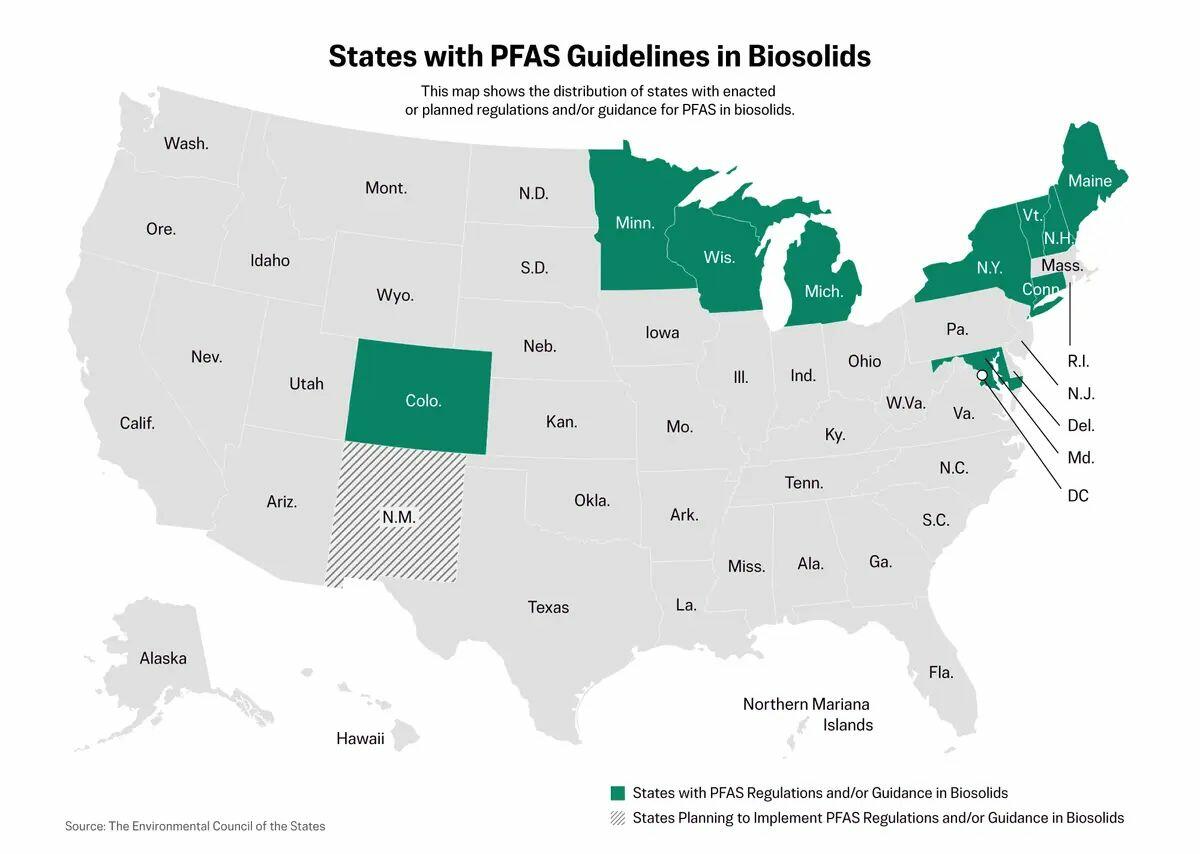 Maine has taken one of the most aggressive postures toward PFAS chemicals in biosolids. A spokesman for the Maine Department of Environmental Protection declined to comment and directed The Epoch Times to the department website.
Maine’s biosolids battle began in 2016 when PFAS were found at a
Maine has taken one of the most aggressive postures toward PFAS chemicals in biosolids. A spokesman for the Maine Department of Environmental Protection declined to comment and directed The Epoch Times to the department website.
Maine’s biosolids battle began in 2016 when PFAS were found at a  Maine’s response to PFAS contamination in biosolids could be a model for other states, according to Mya Heard, a researcher in Northeastern University’s PFAS Project Lab.
Maine took a three-pronged approach of legislative, scientific, and public policy angles, Heard wrote in a Maine Policy Review
Maine’s response to PFAS contamination in biosolids could be a model for other states, according to Mya Heard, a researcher in Northeastern University’s PFAS Project Lab.
Maine took a three-pronged approach of legislative, scientific, and public policy angles, Heard wrote in a Maine Policy Review 
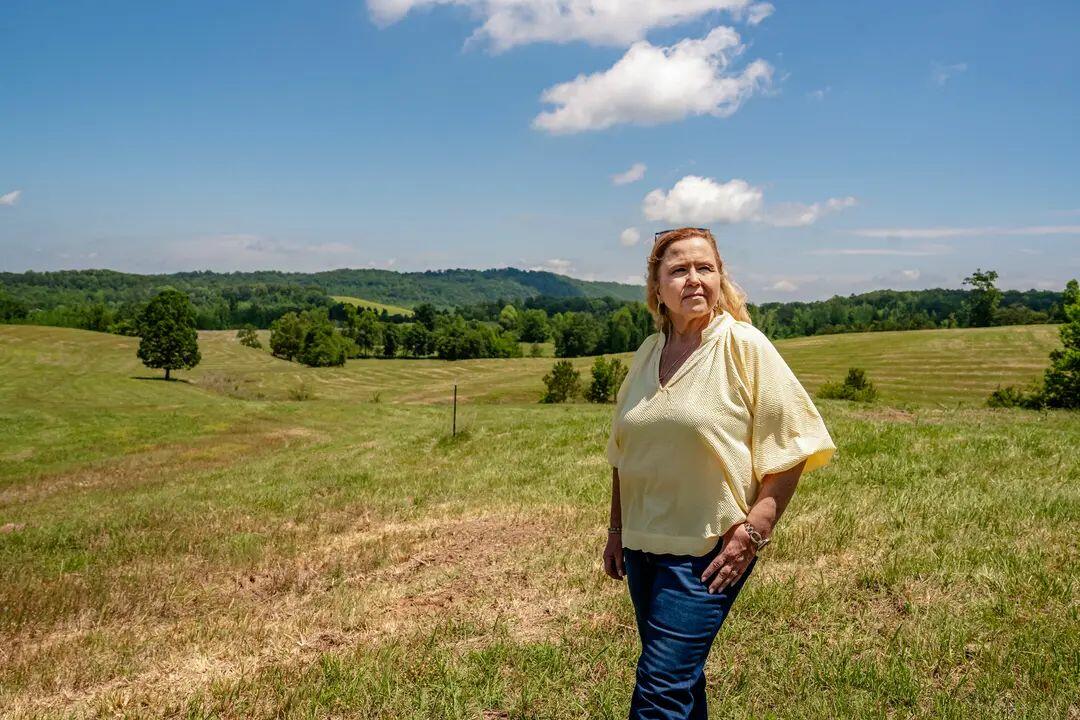 “It’s your home and you shouldn’t feel that way,” she told The Epoch Times.
Alabama Department of Environmental Management spokesperson Lynn Battle declined an interview request but stated in an email to The Epoch Times that Alabama regulations are based on the most current science.
“As appropriate and based on new or revised EPA regulations and requirements regarding activities that impact our air, water, or land resources, [Alabama Department of Environmental Management] has and will continue to implement measures to ensure its programs address the issues as noted in any Federal regulation,” Battle wrote.
In a white
“It’s your home and you shouldn’t feel that way,” she told The Epoch Times.
Alabama Department of Environmental Management spokesperson Lynn Battle declined an interview request but stated in an email to The Epoch Times that Alabama regulations are based on the most current science.
“As appropriate and based on new or revised EPA regulations and requirements regarding activities that impact our air, water, or land resources, [Alabama Department of Environmental Management] has and will continue to implement measures to ensure its programs address the issues as noted in any Federal regulation,” Battle wrote.
In a white 
 Participants in the treatment group had their potassium levels raised to 4.5 to 5.0 millimoles per liter (mmol/L) through diet, supplements, and/or medication.
The treatment was conducted in patients who had an implantable cardioverter-defibrillator (ICD), which is a surgically implanted device larger than a pacemaker, a more common implantable device.
A pacemaker is a small, surgically implanted device that helps regulate a slow or irregular heartbeat by sending electrical impulses to maintain a steady rhythm. An ICD, on the other hand, monitors the heart and delivers an electrical shock to correct dangerously fast heart rhythms, which can prevent sudden cardiac arrest.
Over an average follow-up of 3.3 years, patients who maintained higher potassium levels experienced significantly better outcomes, according to the
Participants in the treatment group had their potassium levels raised to 4.5 to 5.0 millimoles per liter (mmol/L) through diet, supplements, and/or medication.
The treatment was conducted in patients who had an implantable cardioverter-defibrillator (ICD), which is a surgically implanted device larger than a pacemaker, a more common implantable device.
A pacemaker is a small, surgically implanted device that helps regulate a slow or irregular heartbeat by sending electrical impulses to maintain a steady rhythm. An ICD, on the other hand, monitors the heart and delivers an electrical shock to correct dangerously fast heart rhythms, which can prevent sudden cardiac arrest.
Over an average follow-up of 3.3 years, patients who maintained higher potassium levels experienced significantly better outcomes, according to the 


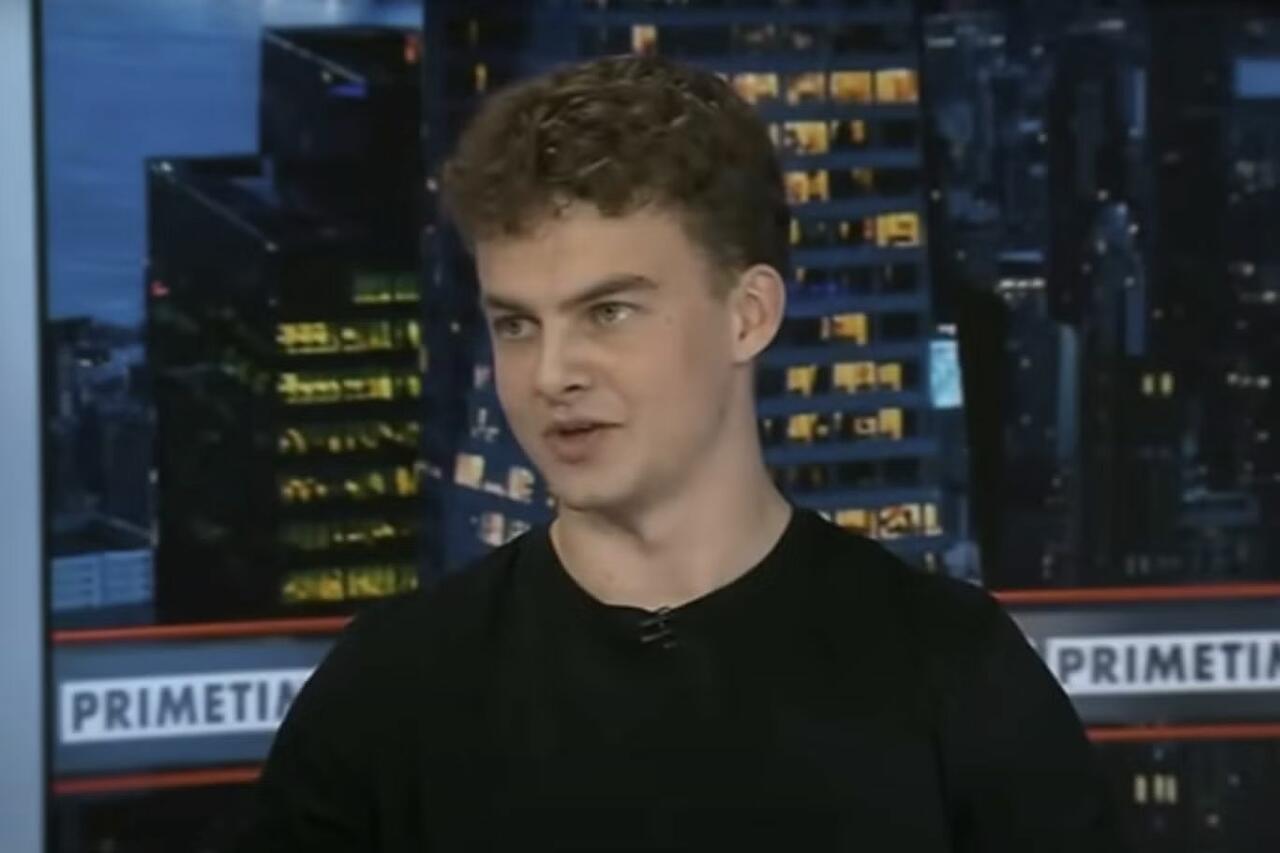 The decision drew sharp criticism from President Trump, who said Wednesday afternoon; "That's terrible," adding "the judge should be ashamed."
The defendants, both 15-years-old, pleaded guilty to various charges related to the attack on the 19-year-old Musk protégé, Edward Coristine.
BREAKING - DC Judge Kendra Briggs has allowed the two “teens” who jumped Edward ‘Big Balls’ Coristine to avoid jail and sentenced them to simple probation, stating her job is to “rehabilitate,” not punish.
The decision drew sharp criticism from President Trump, who said Wednesday afternoon; "That's terrible," adding "the judge should be ashamed."
The defendants, both 15-years-old, pleaded guilty to various charges related to the attack on the 19-year-old Musk protégé, Edward Coristine.
BREAKING - DC Judge Kendra Briggs has allowed the two “teens” who jumped Edward ‘Big Balls’ Coristine to avoid jail and sentenced them to simple probation, stating her job is to “rehabilitate,” not punish. 
 US Attorney for DC Jeanine Pirro said the decision to sentence the pair to probation was "shocking."
White House press secretary Karoline Leavitt lamented on "The Charlie Kirk Show," "One of the big issues in D.C. is these juveniles, they just get a slap on the wrist," adding "This administration has a completely different philosophy. We need law and order."
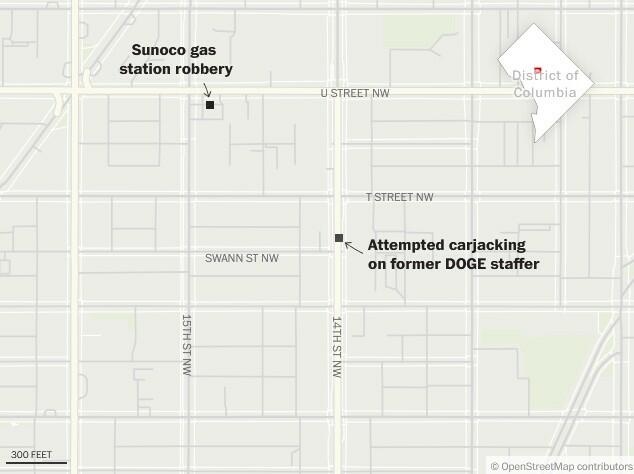
The two teens were part of a group wreaking havoc along a busy nightlife corridor in D.C. about a mile from the White House in the early hours of Aug. 3. No other juveniles have been charged. -WaPo
"The two of you were together with a larger group of younger people who decided to basically terrorize U Street," Biggs told the teens during a hearing at DC Superior Court Tuesday afternoon.
The night of the incident, the two teens approached Big Balls and another person on Swann Street in Northwest Washington in the predawn darkness.
"Let me get your car! Let me get your car," said the teens. While Coristine's friend was able to jump in the car and lock the doors, the teens beat the shit out of Big Balls.
In a Wednesday night post on X, Coristine posted "This senseless crime must be stopped," adding that many of the people involved in the attack remain on the streets, unprosecuted.
"That night could’ve gone far differently. Think of your daughters and mothers," he wrote. "The same group attacked people before and after us, breaking ribs and stomping heads."
The teens must perform 90 hours of community service, stay away from each other, and stay out of cars unless they have the owner's permission.
Lol. LMAO even.
US Attorney for DC Jeanine Pirro said the decision to sentence the pair to probation was "shocking."
White House press secretary Karoline Leavitt lamented on "The Charlie Kirk Show," "One of the big issues in D.C. is these juveniles, they just get a slap on the wrist," adding "This administration has a completely different philosophy. We need law and order."
The two teens were part of a group wreaking havoc along a busy nightlife corridor in D.C. about a mile from the White House in the early hours of Aug. 3. No other juveniles have been charged. -WaPo
"The two of you were together with a larger group of younger people who decided to basically terrorize U Street," Biggs told the teens during a hearing at DC Superior Court Tuesday afternoon.
The night of the incident, the two teens approached Big Balls and another person on Swann Street in Northwest Washington in the predawn darkness.
"Let me get your car! Let me get your car," said the teens. While Coristine's friend was able to jump in the car and lock the doors, the teens beat the shit out of Big Balls.
In a Wednesday night post on X, Coristine posted "This senseless crime must be stopped," adding that many of the people involved in the attack remain on the streets, unprosecuted.
"That night could’ve gone far differently. Think of your daughters and mothers," he wrote. "The same group attacked people before and after us, breaking ribs and stomping heads."
The teens must perform 90 hours of community service, stay away from each other, and stay out of cars unless they have the owner's permission.
Lol. LMAO even.
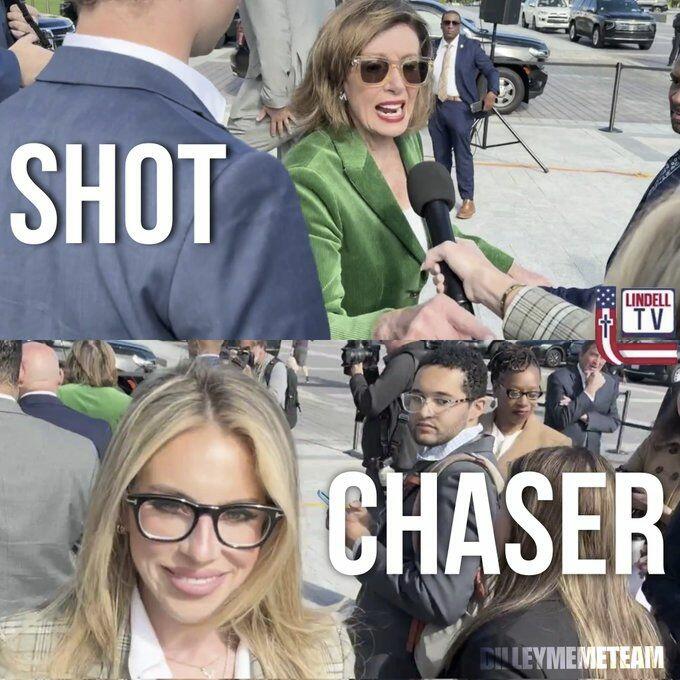 "Congresswoman Pelosi, are you at all concerned that the new January 6th committee will find you liable for that day?" asked LindellTV's Alison Steinberg.
"Are you at all concerned about the new January 6th committee finding you liable for that day? Why did you refuse the National Guard on January 6th?" she continued.
Pelosi whipped around and told Steinberg to 'SHUT UP!'
"I did not refuse the National Guard. The president didn’t send it. Why are you coming here with Republican talking points as if you’re a serious journalist?" Pelosi shot back.
BREAKING: Nancy Pelosi SNAPS at OUR Reporter - Points in Her Face and Hurls Insults
When our reporter pressed
"Congresswoman Pelosi, are you at all concerned that the new January 6th committee will find you liable for that day?" asked LindellTV's Alison Steinberg.
"Are you at all concerned about the new January 6th committee finding you liable for that day? Why did you refuse the National Guard on January 6th?" she continued.
Pelosi whipped around and told Steinberg to 'SHUT UP!'
"I did not refuse the National Guard. The president didn’t send it. Why are you coming here with Republican talking points as if you’re a serious journalist?" Pelosi shot back.
BREAKING: Nancy Pelosi SNAPS at OUR Reporter - Points in Her Face and Hurls Insults
When our reporter pressed