Black Customers Outraged By New Carnival Cruise Line Rules Limiting Ghetto Behavior
Black Customers Outraged By New Carnival Cruise Line Rules Limiting Ghetto Behavior
The fatigue is real. In recent years the unwritten rule among most vacation goers interested in a week-long cruise was to stay far away from boats with cheap tickets. Why? Well, no one has been allowed to say why publicly, but the mountain of video evidence on social media sends the message loud and clear - A certain subset of black customers cause big problems and ruin everyone else's peace.
It's not "racist" to point out observable facts, and the viral "black fatigue" discussion is not something that can be easily dismissed. It's not just whites complaining - It's everyone, including other black people.
Ghetto behavior is epidemic and intolerable. So much so that corporations are starting to take notice and calculate the cost/benefit ratio of marketing to the fatigue subset. Of course, they won't say it outright, nor do they need to.
Carnival Cruise Line has become a magnet for black vacationers largely due to deep discounts on 3-5 day tickets. In 2015, the average cost per passenger was around $168 per night (more if you calculate today's inflation). The cost was even higher depending on the ship and the destination. In 2025 the average cost is as low as $50 per passenger per night. The damage done to travel related industries because of the pandemic lockdowns is often blamed for the price cuts.
The cruises have also garnered a reputation as a "block party" on the water with many black customers expecting some "rowdiness" as part of the experience.
 However, Carnival introduced new passenger rules in June, and some critics and activists assert that these restriction specifically
in an effort to ward them off. New rules include:
Zero tolerance on smoking marijuana onboard ships.
Minors cannot be in public areas without a parent after 1am.
Personal folding fans and the "Boots On The Ground" line dance are banned due to noise.
Bluetooth speakers in public areas are banned due to loud music disrupting other passengers.
Disruptive guests can be removed without a refund and possibly fined.
Numerous customers claim that Carnival DJs will no longer play rap music, though Carnival denies this.
Critics argue that the new rules are designed to make black passengers feel less welcome. Others argue that the new rules are not racially motivated and are simply designed to make assholes feel less welcome. Common complaints about Carnival cruises include loud and obnoxious mob behavior, fighting and a lack of cleanliness. As a side note, in 2024 the CDC released a report on the most unsanitary cruise ships and Carnival ships held
spots on the list.
Black People CRY RACISM After Carnival Cruise BANS GHETTO Behavior!?
Look, I’m gonna keep it real — Carnival Cruise Line is catching heat over some new rules, but let’s talk about what’s really going on.
They banned big speakers, certain music (yes, rap), marijuana and even…
However, Carnival introduced new passenger rules in June, and some critics and activists assert that these restriction specifically
in an effort to ward them off. New rules include:
Zero tolerance on smoking marijuana onboard ships.
Minors cannot be in public areas without a parent after 1am.
Personal folding fans and the "Boots On The Ground" line dance are banned due to noise.
Bluetooth speakers in public areas are banned due to loud music disrupting other passengers.
Disruptive guests can be removed without a refund and possibly fined.
Numerous customers claim that Carnival DJs will no longer play rap music, though Carnival denies this.
Critics argue that the new rules are designed to make black passengers feel less welcome. Others argue that the new rules are not racially motivated and are simply designed to make assholes feel less welcome. Common complaints about Carnival cruises include loud and obnoxious mob behavior, fighting and a lack of cleanliness. As a side note, in 2024 the CDC released a report on the most unsanitary cruise ships and Carnival ships held
spots on the list.
Black People CRY RACISM After Carnival Cruise BANS GHETTO Behavior!?
Look, I’m gonna keep it real — Carnival Cruise Line is catching heat over some new rules, but let’s talk about what’s really going on.
They banned big speakers, certain music (yes, rap), marijuana and even…  — Brandon Tatum (@TheOfficerTatum)
The people who complain about such broad, common sense rules are essentially self reporting as the very people that no one wants around. Being trapped on a boat and surrounded by a massive ocean requires behavioral limitations on everyone, but for some reason only a certain group of customers is complaining about being forced to behave for the sake of others.
American society is growing tired of the antics of this demographic. It's no longer cute, or a matter of "cultural differences". Expectations are finally being enforced and free passes on bad behavior are being canceled.
Thu, 07/10/2025 - 06:55
— Brandon Tatum (@TheOfficerTatum)
The people who complain about such broad, common sense rules are essentially self reporting as the very people that no one wants around. Being trapped on a boat and surrounded by a massive ocean requires behavioral limitations on everyone, but for some reason only a certain group of customers is complaining about being forced to behave for the sake of others.
American society is growing tired of the antics of this demographic. It's no longer cute, or a matter of "cultural differences". Expectations are finally being enforced and free passes on bad behavior are being canceled.
Thu, 07/10/2025 - 06:55
However, Carnival introduced new passenger rules in June, and some critics and activists assert that these restriction specifically Black Passengers Feel Targeted By Carnival Cruise Line Rules - Travel Noire
CDC releases list of 2024's least sanitary cruise ships: Have you been on one? | New York Post
X (formerly Twitter)
Brandon Tatum (@TheOfficerTatum) on X
Black People CRY RACISM After Carnival Cruise BANS GHETTO Behavior!?
Look, I’m gonna keep it real — Carnival Cruise Line is catching heat over...
X (formerly Twitter)
Brandon Tatum (@TheOfficerTatum) on X
Black People CRY RACISM After Carnival Cruise BANS GHETTO Behavior!?
Look, I’m gonna keep it real — Carnival Cruise Line is catching heat over...
Tyler Durden | Zero Hedge
Zero Hedge
Black Customers Outraged By New Carnival Cruise Line Rules Limiting Ghetto Behavior | ZeroHedge
ZeroHedge - On a long enough timeline, the survival rate for everyone drops to zero

 This development comes at a crucial time for the region: Trump wants to return US forces to Afghanistan’s Bagram Airbase; there are newfound concerns about the










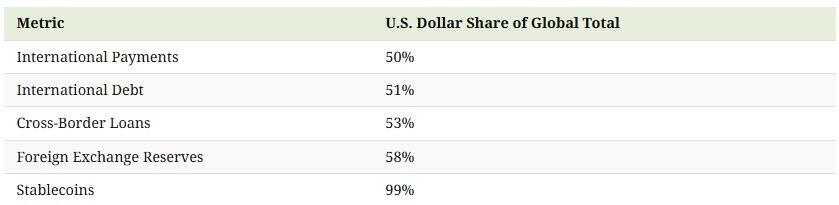
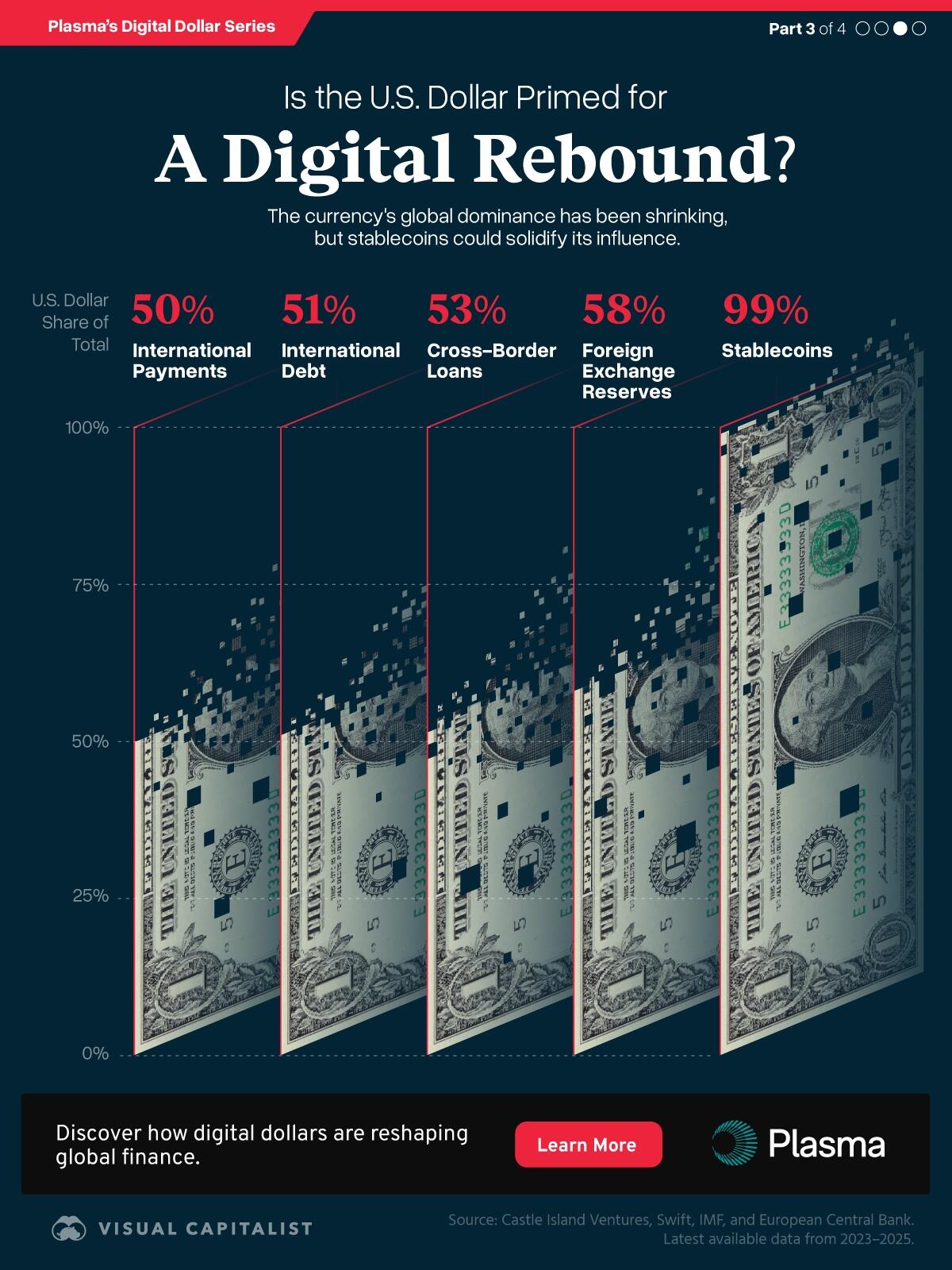 The U.S. Dollar on a Global Scale
As a share of global totals, the U.S. dollar’s prominence across five major financial indicators varies.
The U.S. Dollar on a Global Scale
As a share of global totals, the U.S. dollar’s prominence across five major financial indicators varies.
 Source: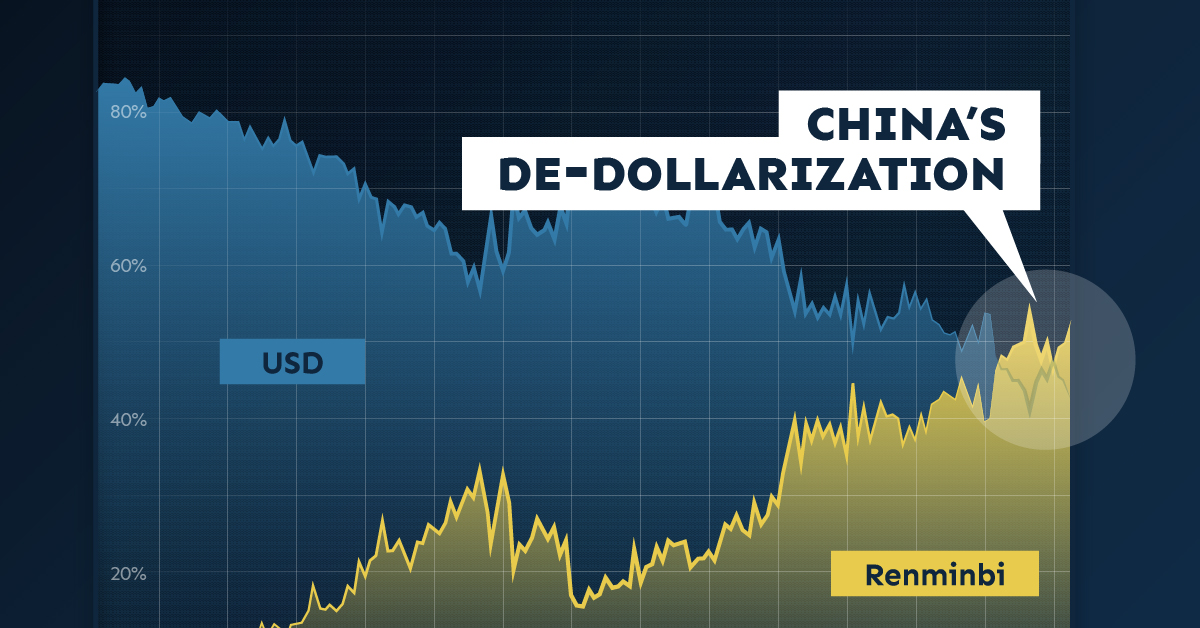

 While the Israeli military will secure the perimeter, the Netanyahu government is looking for some type of international organization(s) to take charge of the interior, to include overseeing the distribution of aid, an enterprise currently managed by the shadowy Gaza Humanitarian Foundation with the IDF dishing out mass killings of Palestinians approaching the aid points;
 Though the implementation phase is apparently now imminent, the idea of corralling all of Gaza's population into Rafah and then moving them out has been circulating since the very beginning of Israel's response to the Hamas invasion of Oct 7 2023. A Ministry of Intelligence policy paper dated Oct 10 2023 and obtained by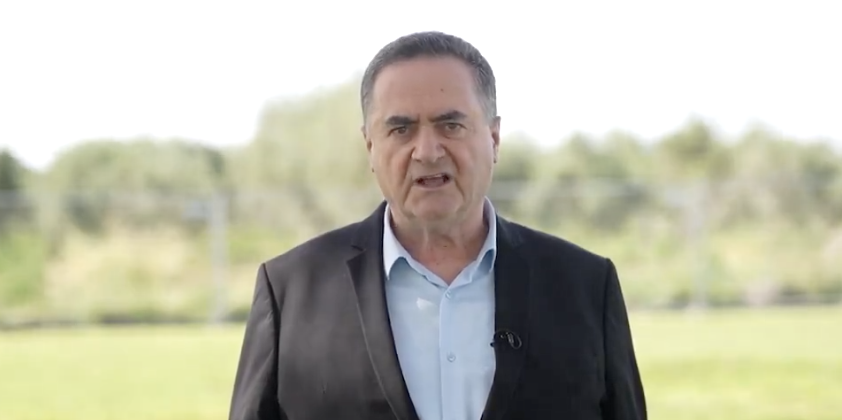
 However, this comparison ignores key structural and contextual differences between the two countries and their governments. Below is a detailed explanation of why the situation in the United States under Trump is different from that of Argentina under Milei and why criticisms of Trump’s strategy are unfounded.
1. The Committed Budget: Biden’s Legacy
It is hard to understand why European libertarians fail to grasp such a basic concept as the “fiscal year”. The U.S. fiscal year begins on October 1, and the Biden administration took advantage of this to ramp up spending.
When Trump took office in January 2025, 97% of the federal budget for that year was already committed or spent. This was due to the Biden administration’s approval of several “Full Year Continuing Resolutions”, which left most funds and expenditures locked in for fiscal year 2025. Thus, Trump had no room to make immediate and drastic cuts, as most of the budget was untouchable until the next fiscal cycle.
Despite this, in 2025, discretionary spending reductions equivalent to $541 billion were carried out, and the accumulated deficit between April and May 2025 was 97% lower than in the same period of 2024.
2. Mandatory and Discretionary Spending
Mandatory spending (which includes programs like Social Security and Medicare) had already been increased by the Biden administration, and this increase took effect between February and December 2025. The U.S. fiscal year starts in October, and Biden implemented most of these increases through Continuing Resolutions (CRs) and the extension of existing programs, consolidating and, in many cases, increasing federal spending in key areas.
These resolutions included over $100 billion in funds for federal disaster assistance programmes, $29 billion for FEMA’s Disaster Relief Fund, and $10 billion in economic assistance for agricultural producers.
At the end of 2024, Biden approved a $54 billion (8%) increase in major mandatory spending programmes such as Social Security, Medicare, and Medicaid, as well as the extension of Obamacare, all applicable to 2025.
The Environmental Protection Agency (EPA) budget grew by $21 billion (700%), and the Trump administration was only able to act on $14 billion that was discretionary.
It is essential to remember that Biden did all this without a new budget law, simply by maintaining and extending existing allocations.
Biden’s proposed 2025 budget included additional increases, but these were blocked because they did not receive congressional approval.
Trump needs congressional approval to reverse these increases and reduce spending. That is what the “Big Beautiful Bill” includes. On the other hand, discretionary spending, especially in defence, was also committed, further limiting the new government’s immediate room for action.
The Big Beautiful Bill includes the first reduction in mandatory spending in the last sixty years—$1.6 trillion—and $2.4 trillion in discretionary spending.
3. Initial Fiscal Results
Despite these restrictions, the Trump administration achieved certain advances: in April, the second-largest fiscal surplus in history was recorded, and although a deficit reappeared in May, the deficit between March and May has been slashed compared to 2024. This indicates that measures were already being taken to improve the fiscal situation, mainly through higher revenues from trade agreements and private sector growth.
4. The “Big Beautiful Bill” and Deficit Reduction
It is astonishing that some libertarians and Austrians criticise the Big Beautiful Bill by buying into the Keynesian narrative that there will be no improvement in revenues, growth, employment, or investment from deregulation, trade agreements, and tax cuts.
That some libertarians deny the Laffer curve and the boost from deregulation surprises me. The Big Beautiful Bill incorporates $7 trillion in committed investments from trade negotiations, which also attract $4 trillion in tax revenues over the legislative period and a stimulus effect on the economy that results in an increase in tax revenues in the baseline scenario of $1.2 trillion.
Contrary to what some critics claim, the “Big Beautiful Bill” will not increase the deficit but will significantly reduce it.
A reduction of $1.6 trillion in mandatory spending and $2.4 trillion in discretionary spending is expected between 2026 and 2027. Additionally, an increase in tax revenues is anticipated thanks to deregulation, tax cuts, and new trade agreements, which will strengthen economic growth and employment.
We liberals, libertarians, and Austrians should be less critical of the greatest effort in reducing the State, liberalisation, deregulation, spending cuts, and tax reduction since 1990, but above all, some should not buy into the narrative that denies the positive effect on revenues and growth from deregulation, tax cuts, and trade negotiations.
5. Comparison with Milei: Similarities and Differences
Milei was able to implement immediate cuts because he inherited an open budget and extremely high inflation, which allowed him to reduce public spending in real terms by not adjusting it for inflation. Argentina’s budget does not include the provisions that the Biden administration incorporated, so President Milei was able to carry out a 30% reduction in public spending immediately and with unquestionable success, especially by eliminating subsidies, public works, and non-automatic transfers.
In contrast, Trump inherited a budget that was already committed and much lower inflation (less than 2.5%), limiting the impact of not adjusting spending for inflation.
If we compare both administrations, a very similar effort has been made. Trump has reduced public spending by 5% in the first quarter, and savings exceed $540 billion. By the end of his term, President Trump will have carried out a reduction in public spending equivalent to Milei’s.
Both leaders have promoted policies of tax reduction, deregulation, and the promotion of investment and employment. However, Trump’s tools and room for manoeuvre have been conditioned by the U.S. institutional structure and the decisions of the previous administration.
6. Conclusion
The policies of Trump and Milei share the goal of reducing public spending, fostering growth, and improving employment, but the starting circumstances are radically different. Criticising Trump for not applying an immediate “chainsaw” ignores the budgetary and legal constraints he faces in the United States. What matters is recognising that, within his constraints, Trump is implementing historic cuts and pro-growth policies that will positively impact the U.S. economy in the medium term.
My messages to those who attack the Trump administration for not being liberal enough are as follows:
Name a single U.S. administration that has successfully implemented a comparable approach to deregulation, tax cuts, and spending reduction while also passing a significant reduction in mandatory spending through both Congress and the Senate.
Buying into the Keynesian estimates of fiscal impact is curious. Denying the positive impact of reducing imports, increasing exports, and collecting more from trade agreements is surprising. Denying the economic and fiscal boost from deregulation and tax cuts is unforgivable.
However, this comparison ignores key structural and contextual differences between the two countries and their governments. Below is a detailed explanation of why the situation in the United States under Trump is different from that of Argentina under Milei and why criticisms of Trump’s strategy are unfounded.
1. The Committed Budget: Biden’s Legacy
It is hard to understand why European libertarians fail to grasp such a basic concept as the “fiscal year”. The U.S. fiscal year begins on October 1, and the Biden administration took advantage of this to ramp up spending.
When Trump took office in January 2025, 97% of the federal budget for that year was already committed or spent. This was due to the Biden administration’s approval of several “Full Year Continuing Resolutions”, which left most funds and expenditures locked in for fiscal year 2025. Thus, Trump had no room to make immediate and drastic cuts, as most of the budget was untouchable until the next fiscal cycle.
Despite this, in 2025, discretionary spending reductions equivalent to $541 billion were carried out, and the accumulated deficit between April and May 2025 was 97% lower than in the same period of 2024.
2. Mandatory and Discretionary Spending
Mandatory spending (which includes programs like Social Security and Medicare) had already been increased by the Biden administration, and this increase took effect between February and December 2025. The U.S. fiscal year starts in October, and Biden implemented most of these increases through Continuing Resolutions (CRs) and the extension of existing programs, consolidating and, in many cases, increasing federal spending in key areas.
These resolutions included over $100 billion in funds for federal disaster assistance programmes, $29 billion for FEMA’s Disaster Relief Fund, and $10 billion in economic assistance for agricultural producers.
At the end of 2024, Biden approved a $54 billion (8%) increase in major mandatory spending programmes such as Social Security, Medicare, and Medicaid, as well as the extension of Obamacare, all applicable to 2025.
The Environmental Protection Agency (EPA) budget grew by $21 billion (700%), and the Trump administration was only able to act on $14 billion that was discretionary.
It is essential to remember that Biden did all this without a new budget law, simply by maintaining and extending existing allocations.
Biden’s proposed 2025 budget included additional increases, but these were blocked because they did not receive congressional approval.
Trump needs congressional approval to reverse these increases and reduce spending. That is what the “Big Beautiful Bill” includes. On the other hand, discretionary spending, especially in defence, was also committed, further limiting the new government’s immediate room for action.
The Big Beautiful Bill includes the first reduction in mandatory spending in the last sixty years—$1.6 trillion—and $2.4 trillion in discretionary spending.
3. Initial Fiscal Results
Despite these restrictions, the Trump administration achieved certain advances: in April, the second-largest fiscal surplus in history was recorded, and although a deficit reappeared in May, the deficit between March and May has been slashed compared to 2024. This indicates that measures were already being taken to improve the fiscal situation, mainly through higher revenues from trade agreements and private sector growth.
4. The “Big Beautiful Bill” and Deficit Reduction
It is astonishing that some libertarians and Austrians criticise the Big Beautiful Bill by buying into the Keynesian narrative that there will be no improvement in revenues, growth, employment, or investment from deregulation, trade agreements, and tax cuts.
That some libertarians deny the Laffer curve and the boost from deregulation surprises me. The Big Beautiful Bill incorporates $7 trillion in committed investments from trade negotiations, which also attract $4 trillion in tax revenues over the legislative period and a stimulus effect on the economy that results in an increase in tax revenues in the baseline scenario of $1.2 trillion.
Contrary to what some critics claim, the “Big Beautiful Bill” will not increase the deficit but will significantly reduce it.
A reduction of $1.6 trillion in mandatory spending and $2.4 trillion in discretionary spending is expected between 2026 and 2027. Additionally, an increase in tax revenues is anticipated thanks to deregulation, tax cuts, and new trade agreements, which will strengthen economic growth and employment.
We liberals, libertarians, and Austrians should be less critical of the greatest effort in reducing the State, liberalisation, deregulation, spending cuts, and tax reduction since 1990, but above all, some should not buy into the narrative that denies the positive effect on revenues and growth from deregulation, tax cuts, and trade negotiations.
5. Comparison with Milei: Similarities and Differences
Milei was able to implement immediate cuts because he inherited an open budget and extremely high inflation, which allowed him to reduce public spending in real terms by not adjusting it for inflation. Argentina’s budget does not include the provisions that the Biden administration incorporated, so President Milei was able to carry out a 30% reduction in public spending immediately and with unquestionable success, especially by eliminating subsidies, public works, and non-automatic transfers.
In contrast, Trump inherited a budget that was already committed and much lower inflation (less than 2.5%), limiting the impact of not adjusting spending for inflation.
If we compare both administrations, a very similar effort has been made. Trump has reduced public spending by 5% in the first quarter, and savings exceed $540 billion. By the end of his term, President Trump will have carried out a reduction in public spending equivalent to Milei’s.
Both leaders have promoted policies of tax reduction, deregulation, and the promotion of investment and employment. However, Trump’s tools and room for manoeuvre have been conditioned by the U.S. institutional structure and the decisions of the previous administration.
6. Conclusion
The policies of Trump and Milei share the goal of reducing public spending, fostering growth, and improving employment, but the starting circumstances are radically different. Criticising Trump for not applying an immediate “chainsaw” ignores the budgetary and legal constraints he faces in the United States. What matters is recognising that, within his constraints, Trump is implementing historic cuts and pro-growth policies that will positively impact the U.S. economy in the medium term.
My messages to those who attack the Trump administration for not being liberal enough are as follows:
Name a single U.S. administration that has successfully implemented a comparable approach to deregulation, tax cuts, and spending reduction while also passing a significant reduction in mandatory spending through both Congress and the Senate.
Buying into the Keynesian estimates of fiscal impact is curious. Denying the positive impact of reducing imports, increasing exports, and collecting more from trade agreements is surprising. Denying the economic and fiscal boost from deregulation and tax cuts is unforgivable.
 The missile launch and maritime attack appear to be coordinated escalatory actions by the Iranian proxy group across multiple domains—air and maritime.
An update on Iran-Israel-U.S. tensions: The situation has calmed since the U.S. stealth bomber airstrikes on three Iranian nuclear facilities. However, President Trump stated on Friday that Tehran has yet to agree to nuclear inspections or cease uranium enrichment.
Trump told reporters on board Air Force One that he believed Tehran's nuclear program had been "set back permanently," although he warned Iran could restart at a different location.
Looking ahead, Israeli Prime Minister Benjamin Netanyahu is scheduled to visit the White House on Monday, where a potential ceasefire deal could materialize to end the 21-month war in Gaza. Trump has previously announced a "final proposal" for a 60-day ceasefire.
The missile launch and maritime attack appear to be coordinated escalatory actions by the Iranian proxy group across multiple domains—air and maritime.
An update on Iran-Israel-U.S. tensions: The situation has calmed since the U.S. stealth bomber airstrikes on three Iranian nuclear facilities. However, President Trump stated on Friday that Tehran has yet to agree to nuclear inspections or cease uranium enrichment.
Trump told reporters on board Air Force One that he believed Tehran's nuclear program had been "set back permanently," although he warned Iran could restart at a different location.
Looking ahead, Israeli Prime Minister Benjamin Netanyahu is scheduled to visit the White House on Monday, where a potential ceasefire deal could materialize to end the 21-month war in Gaza. Trump has previously announced a "final proposal" for a 60-day ceasefire.
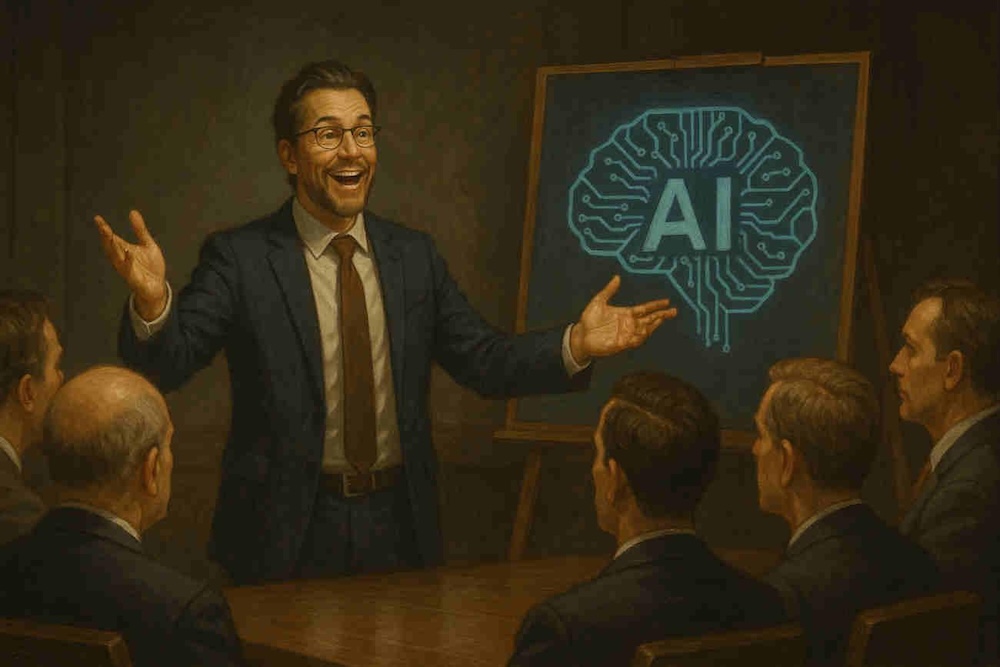
 Both points are correct with numerous caveats. AI has been driving the stock market to record highs, but the market has the look and feel of a super-bubble. The crash could come anytime and bring the market down by 50% or more.
That’s not a reason to short the major stock indices today. The bubble can last longer than anyone expects. If you short the indices, you can lose a lot of money being wrong. But it is advisable to lighten up on equity allocations and increase your allocation to cash in order to avoid the worst damage when the crash does come.
On the second point, AI will make some jobs obsolete or easily replaceable. Of course, as with any new technology, it will create new jobs requiring different skills. Teachers will not become obsolete. They’ll shift from teaching the basics of math and reading, which AI does quite well, to teaching critical thinking and reasoning, which computers do poorly or not at all. Changes will be pervasive, but they will still be changes and not chaos.
The Limitations
Artificial Intelligence is a powerful force, but there’s much less there than meets the eye. AI may be confronting material constraints in terms of processing power, training sets and electricity generation. Semiconductor chips keep getting faster and new ones are on the way. But these chips consume enormous amounts of energy, especially when installed in huge arrays in new AI data centers. Advocates are turning to nuclear power plants, including small modular reactors to supply the energy needs of AI. This demand is non-linear, which means that exponentially larger energy sources are needed to make small advances in processing output. AI is fast approaching practical limits on its ability to achieve greater performance.
This near insatiable demand for energy means that the AI race is really an energy race. This could make the U.S. and Russia the two dominant players (sound familiar?) as China depends on Russia for energy and Europe depends on the U.S. and Russia. Sanctions on Russian energy exports can actually help Russia in the AI race because natural gas can be stored and used in Russia to support AI and cryptocurrency mining. It’s the law of unintended consequences applied to the short-sighted Europeans and the resource-poor Chinese.
AI Lacks Common Sense
Another limitation on AI, which is not well known, is the Law of Conservation of Information in Search. This law is backed up by rigorous mathematical proofs. What it says is that AI cannot find any new information. It can find things faster and it can make connections that humans might find almost impossible to make. That’s valuable. But AI cannot find anything new. It can only seek out and find information that is already there for the taking. New knowledge comes from humans in the form of creativity, art, writing and original work. Computers cannot perform genuinely creative tasks. That should give humans some comfort that they will never be obsolete.
A further problem in AI is dilution and degradation of training sets as more training set content consists of AI output from prior processing. AI is prone to errors, hallucinations (better called confabulations) and inferences that have no basis in fact. That’s bad enough. But when that output enters the training set (basically every page in the internet), the quality of the training set degrades, and future output degrades in sync. There’s no good solution to this except careful curation. If you have to be a subject matter expert to curate training sets and then evaluate output, this greatly diminishes the value-added role of AI.
Computers also lack empathy, sympathy and common sense. They process but they do not really think like humans. In fact, AI does not think at all; it’s just math. In one recent experiment, an AI computer was entered into a competition with a group of 3- to-7-year-olds. The challenge was to draw a circle with the tools at hand. Those tools were a ruler, a teapot and a third irrelevant object such as a stove. The computer reasoned that a ruler was a drafting instrument like a compass and tried to draw a circle with a ruler. It failed. The children saw that the bottom of a teapot was a circle and simply traced the teapot to draw perfect circles. The AI system used associative logic. The children used common sense. The children won. That result will not vary in future contests because common sense (technically abductive logic) cannot be programmed.
High-flying AI companies are quickly finding that their systems can be outperformed by newer systems that simply use big ticket AI output as a baseline training set. This is a shortcut to high performance at a small fraction of the cost. The establishment AI companies like Microsoft and Google call this theft of IP, but it’s no worse than those giants using existing IP (including my books, by the way) without paying royalties. It may be a form of piracy, but it’s easy to do and almost impossible to stop. This does not mean the end of AI. It means the end of sky-high profit projections for AI. The return on the hundreds of billions of dollars being spent by the AI giants may be meager.
Sam Altman: Innovator or Salesman?
The best-known figure in the world of AI is Sam Altman. He’s the head of OpenAI, which launched the ChatGPT app a few years ago. AI began in the 1950s, seemed to hit a wall from a development perspective in the 1980s (a period known as the AI Winter), was largely dormant in the 1990s and early 2000s, then suddenly came alive again in the past ten years. ChatGPT was the most downloaded app in history over its first few months and has hundreds of millions of users today.
Altman was pushed out by the board of OpenAI last year because the company was intended as a non-profit entity that was developing AI for the good of mankind. Altman wanted to turn it into a for-profit entity as a prelude to a multi-hundred-billion-dollar IPO. When the top engineers threatened to quit and follow Altman to a new venture, the board quickly reversed course and brought Altman back into the company, although the exact legal structure remains under discussion.
Meanwhile, Altman has charged full speed ahead with his claims about superintelligence (also known as advanced general intelligence (AGI) with the key word being “general,” which means the system can think like humans, only better). One way to understand superintelligence is the metaphor that humans will be to the computer as apes are to humans. We’ll be considered smart, but not smarter than our machine masters. Altman said that “in some ways ChatGPT is already more powerful than any human who ever lived.” He also said he expects AI machines “to do real cognitive work” by 2025 and will create “novel insights” by 2026.
This is all nonsense for several reasons. The first as noted above is that training sets (the materials studied by large language models) are becoming polluted with the output from prior AI models so that the machines are getting dumber not smarter. The second is the Law of Conservation of Information in Search I also described above. This law (supported by applied mathematics) says that computers may be able to find information faster than humans, but they cannot find any information that does not already exist. In other words, the machines are not really thinking and are not really creative. They just connect dots faster than we do.
A new paper from Apple concludes, “Through extensive experimentation across diverse puzzles, we show that frontier LRMs [Large Reasoning Models] face a complete accuracy collapse beyond certain complexities. Moreover, they exhibit a counter-intuitive scaling limit: their reasoning effort increases with problem complexity up to a point, then declines despite having an adequate token budget.” This and other evidence point to AI reaching limits of logic that brute force computing power cannot overcome.
Finally, no developer has ever been able to code abductive logic; really common sense or gut instinct. That’s one of the most powerful reasoning tools humans possess. In short, superintelligence will never arrive. More and more, Altman looks like just another Silicon Valley salesman pitching the next big thing with not much behind it.
Both points are correct with numerous caveats. AI has been driving the stock market to record highs, but the market has the look and feel of a super-bubble. The crash could come anytime and bring the market down by 50% or more.
That’s not a reason to short the major stock indices today. The bubble can last longer than anyone expects. If you short the indices, you can lose a lot of money being wrong. But it is advisable to lighten up on equity allocations and increase your allocation to cash in order to avoid the worst damage when the crash does come.
On the second point, AI will make some jobs obsolete or easily replaceable. Of course, as with any new technology, it will create new jobs requiring different skills. Teachers will not become obsolete. They’ll shift from teaching the basics of math and reading, which AI does quite well, to teaching critical thinking and reasoning, which computers do poorly or not at all. Changes will be pervasive, but they will still be changes and not chaos.
The Limitations
Artificial Intelligence is a powerful force, but there’s much less there than meets the eye. AI may be confronting material constraints in terms of processing power, training sets and electricity generation. Semiconductor chips keep getting faster and new ones are on the way. But these chips consume enormous amounts of energy, especially when installed in huge arrays in new AI data centers. Advocates are turning to nuclear power plants, including small modular reactors to supply the energy needs of AI. This demand is non-linear, which means that exponentially larger energy sources are needed to make small advances in processing output. AI is fast approaching practical limits on its ability to achieve greater performance.
This near insatiable demand for energy means that the AI race is really an energy race. This could make the U.S. and Russia the two dominant players (sound familiar?) as China depends on Russia for energy and Europe depends on the U.S. and Russia. Sanctions on Russian energy exports can actually help Russia in the AI race because natural gas can be stored and used in Russia to support AI and cryptocurrency mining. It’s the law of unintended consequences applied to the short-sighted Europeans and the resource-poor Chinese.
AI Lacks Common Sense
Another limitation on AI, which is not well known, is the Law of Conservation of Information in Search. This law is backed up by rigorous mathematical proofs. What it says is that AI cannot find any new information. It can find things faster and it can make connections that humans might find almost impossible to make. That’s valuable. But AI cannot find anything new. It can only seek out and find information that is already there for the taking. New knowledge comes from humans in the form of creativity, art, writing and original work. Computers cannot perform genuinely creative tasks. That should give humans some comfort that they will never be obsolete.
A further problem in AI is dilution and degradation of training sets as more training set content consists of AI output from prior processing. AI is prone to errors, hallucinations (better called confabulations) and inferences that have no basis in fact. That’s bad enough. But when that output enters the training set (basically every page in the internet), the quality of the training set degrades, and future output degrades in sync. There’s no good solution to this except careful curation. If you have to be a subject matter expert to curate training sets and then evaluate output, this greatly diminishes the value-added role of AI.
Computers also lack empathy, sympathy and common sense. They process but they do not really think like humans. In fact, AI does not think at all; it’s just math. In one recent experiment, an AI computer was entered into a competition with a group of 3- to-7-year-olds. The challenge was to draw a circle with the tools at hand. Those tools were a ruler, a teapot and a third irrelevant object such as a stove. The computer reasoned that a ruler was a drafting instrument like a compass and tried to draw a circle with a ruler. It failed. The children saw that the bottom of a teapot was a circle and simply traced the teapot to draw perfect circles. The AI system used associative logic. The children used common sense. The children won. That result will not vary in future contests because common sense (technically abductive logic) cannot be programmed.
High-flying AI companies are quickly finding that their systems can be outperformed by newer systems that simply use big ticket AI output as a baseline training set. This is a shortcut to high performance at a small fraction of the cost. The establishment AI companies like Microsoft and Google call this theft of IP, but it’s no worse than those giants using existing IP (including my books, by the way) without paying royalties. It may be a form of piracy, but it’s easy to do and almost impossible to stop. This does not mean the end of AI. It means the end of sky-high profit projections for AI. The return on the hundreds of billions of dollars being spent by the AI giants may be meager.
Sam Altman: Innovator or Salesman?
The best-known figure in the world of AI is Sam Altman. He’s the head of OpenAI, which launched the ChatGPT app a few years ago. AI began in the 1950s, seemed to hit a wall from a development perspective in the 1980s (a period known as the AI Winter), was largely dormant in the 1990s and early 2000s, then suddenly came alive again in the past ten years. ChatGPT was the most downloaded app in history over its first few months and has hundreds of millions of users today.
Altman was pushed out by the board of OpenAI last year because the company was intended as a non-profit entity that was developing AI for the good of mankind. Altman wanted to turn it into a for-profit entity as a prelude to a multi-hundred-billion-dollar IPO. When the top engineers threatened to quit and follow Altman to a new venture, the board quickly reversed course and brought Altman back into the company, although the exact legal structure remains under discussion.
Meanwhile, Altman has charged full speed ahead with his claims about superintelligence (also known as advanced general intelligence (AGI) with the key word being “general,” which means the system can think like humans, only better). One way to understand superintelligence is the metaphor that humans will be to the computer as apes are to humans. We’ll be considered smart, but not smarter than our machine masters. Altman said that “in some ways ChatGPT is already more powerful than any human who ever lived.” He also said he expects AI machines “to do real cognitive work” by 2025 and will create “novel insights” by 2026.
This is all nonsense for several reasons. The first as noted above is that training sets (the materials studied by large language models) are becoming polluted with the output from prior AI models so that the machines are getting dumber not smarter. The second is the Law of Conservation of Information in Search I also described above. This law (supported by applied mathematics) says that computers may be able to find information faster than humans, but they cannot find any information that does not already exist. In other words, the machines are not really thinking and are not really creative. They just connect dots faster than we do.
A new paper from Apple concludes, “Through extensive experimentation across diverse puzzles, we show that frontier LRMs [Large Reasoning Models] face a complete accuracy collapse beyond certain complexities. Moreover, they exhibit a counter-intuitive scaling limit: their reasoning effort increases with problem complexity up to a point, then declines despite having an adequate token budget.” This and other evidence point to AI reaching limits of logic that brute force computing power cannot overcome.
Finally, no developer has ever been able to code abductive logic; really common sense or gut instinct. That’s one of the most powerful reasoning tools humans possess. In short, superintelligence will never arrive. More and more, Altman looks like just another Silicon Valley salesman pitching the next big thing with not much behind it.
 Al Jazeera’s Resul Serdar, reporting from Tehran, clarified that it's as yet unclear just how many IAEA inspectors left the country in this 'final' wave of departures.
"The language used doesn’t clarify whether all or only some of the staff departed, but it appears that a number of them are still in Iran," he
Al Jazeera’s Resul Serdar, reporting from Tehran, clarified that it's as yet unclear just how many IAEA inspectors left the country in this 'final' wave of departures.
"The language used doesn’t clarify whether all or only some of the staff departed, but it appears that a number of them are still in Iran," he 


 On Tuesday Trump said that Israel had agreed to the terms required for a 60-day ceasefire with Hamas, during which both sides would aim to work toward ending the lengthy war which has been raging in the wake of the Oct.7, 2023 terror attacks.
A Hamas official on Thursday told the BBC that the Palestinian militant group is now "ready and serious" to reach a deal if it ended the war.
That was in reaction to President Trump having said that Israel has agreed to the "necessary conditions" to finalize the proposed 60-day ceasefire in Gaza.
Trump said the US would "work with all parties to end the War" - in a post on Truth Social. However, no details have been given on this particular ceasefire plan. Israel has not confirmed it agreed to any specific conditions as of yet.
"I hope... that Hamas takes this Deal, because it will not get better - IT WILL ONLY GET WORSE," Trump wrote. But what will the consequences be if Hamas refuses - more bombing of the Gaza Strip?
Some details revealed in Israeli media have been presented
On Tuesday Trump said that Israel had agreed to the terms required for a 60-day ceasefire with Hamas, during which both sides would aim to work toward ending the lengthy war which has been raging in the wake of the Oct.7, 2023 terror attacks.
A Hamas official on Thursday told the BBC that the Palestinian militant group is now "ready and serious" to reach a deal if it ended the war.
That was in reaction to President Trump having said that Israel has agreed to the "necessary conditions" to finalize the proposed 60-day ceasefire in Gaza.
Trump said the US would "work with all parties to end the War" - in a post on Truth Social. However, no details have been given on this particular ceasefire plan. Israel has not confirmed it agreed to any specific conditions as of yet.
"I hope... that Hamas takes this Deal, because it will not get better - IT WILL ONLY GET WORSE," Trump wrote. But what will the consequences be if Hamas refuses - more bombing of the Gaza Strip?
Some details revealed in Israeli media have been presented 

 The review, commissioned by CIA Director John Ratcliffe in May 2025,