
The Real Estate Recession You Haven't Heard About (Yet)
The Real Estate Recession You Haven't Heard About (Yet)
Authored by  ,
Real estate and construction are considered bellwethers of the overall economy. Recently they’re not looking good – and this isn’t an isolated issue. It’s a warning sign of a crisis that could ripple through the entire economy…
,
Real estate and construction are considered bellwethers of the overall economy. Recently they’re not looking good – and this isn’t an isolated issue. It’s a warning sign of a crisis that could ripple through the entire economy…
 The housing market is a https://www.builderonline.com/money/economics/housing-market-is-main-driver-for-the-u-s-economy_o
than any other single asset class.
So any unusual or unexpected developments in the real estate market get attention. Because they’re extremely important for the majority of Americans – far more important than abstractions like GDP or unemployment.
That makes recent updates on the state of the housing market concerning…
Housing affordability is near record lows
I don’t want to be the bearer of bad news, but it’s important that you know the truth of the situation. Today, the typical American family cannot afford a typical home. From an article at https://www.moneytalksnews.com/most-us-families-cannot-afford-median-priced-homes/
:
As housing prices continue to climb, a startling 70% of U.S. households now find themselves unable to afford a home at the median price point of approximately $400,000, according to the National Association of Realtors.
That’s over two-thirds of U.S. households that can’t afford homes smack in the middle of the price range. We aren’t talking about McMansions here, we’re talking about what we used to call “starter homes,” much less expensive properties.
To give you a more solid grasp on those numbers:
About 94 million households simply can’t afford to purchase a median-priced home.
In fact, to afford “median-priced” homes in the U.S., the household income needs to be at least $110,000 per year. To afford a home that is less than half of the median price requires a household income of about $61,000.
Many Americans simply aren’t making that kind of money, not even on a household basis. Worse still, it takes significantly longer for a family to save up enough for a downpayment.
For comparison purposes:
1970-1985: The typical family could save 10% of their income for five years and accumulate a 20% downpayment
2023: The typical family saving 10% of their income will need eight years to collect a 20% downpayment
Note that those numbers are incredibly variable based on location (isn’t everything in real estate?) The average family cursed to live in New York City will need 19 years to save up a downpayment, where some Midwestern cities like Tulsa are much more affordable (4-5 years).
Affordability is a major challenge right now. It’s a stark reminder of how many people are struggling financially. Especially after several years of brutal inflation – and, of course, inflation’s impact on home prices.
And what happens when prices rise faster than our ability to pay? Supply starts to build up…
Homebuilders and realtors are facing recession
We know that is the case by just https://www.axios.com/2025/06/18/trump-tariffs-deportations-housing-market
.
In May, builders broke ground on new homes at the slowest pace in five years
Building permits issuance also hit a five-year low
In June, sentiment among homebuilders dropped to the lowest level since the pandemic lockdowns!
Mike Shedlock has the
about how the decreased numbers of new homes that builders are starting:
Total: -19.6% from September 2022
Multifamily: -25.8% from August 2023
Single Family: -24.9% from June 2022
To put that into perspective, nearly one in five homes that were being built… aren’t. Not anymore.
When families can’t afford to buy a home anymore, supply backs up. Prices fall. Profitability for the major homebuilding firms becomes a real concern.
Why did prices surge? I mentioned the pandemic-era inflation earlier – that’s a major factor. But far from the only factor:
The housing market is a https://www.builderonline.com/money/economics/housing-market-is-main-driver-for-the-u-s-economy_o
than any other single asset class.
So any unusual or unexpected developments in the real estate market get attention. Because they’re extremely important for the majority of Americans – far more important than abstractions like GDP or unemployment.
That makes recent updates on the state of the housing market concerning…
Housing affordability is near record lows
I don’t want to be the bearer of bad news, but it’s important that you know the truth of the situation. Today, the typical American family cannot afford a typical home. From an article at https://www.moneytalksnews.com/most-us-families-cannot-afford-median-priced-homes/
:
As housing prices continue to climb, a startling 70% of U.S. households now find themselves unable to afford a home at the median price point of approximately $400,000, according to the National Association of Realtors.
That’s over two-thirds of U.S. households that can’t afford homes smack in the middle of the price range. We aren’t talking about McMansions here, we’re talking about what we used to call “starter homes,” much less expensive properties.
To give you a more solid grasp on those numbers:
About 94 million households simply can’t afford to purchase a median-priced home.
In fact, to afford “median-priced” homes in the U.S., the household income needs to be at least $110,000 per year. To afford a home that is less than half of the median price requires a household income of about $61,000.
Many Americans simply aren’t making that kind of money, not even on a household basis. Worse still, it takes significantly longer for a family to save up enough for a downpayment.
For comparison purposes:
1970-1985: The typical family could save 10% of their income for five years and accumulate a 20% downpayment
2023: The typical family saving 10% of their income will need eight years to collect a 20% downpayment
Note that those numbers are incredibly variable based on location (isn’t everything in real estate?) The average family cursed to live in New York City will need 19 years to save up a downpayment, where some Midwestern cities like Tulsa are much more affordable (4-5 years).
Affordability is a major challenge right now. It’s a stark reminder of how many people are struggling financially. Especially after several years of brutal inflation – and, of course, inflation’s impact on home prices.
And what happens when prices rise faster than our ability to pay? Supply starts to build up…
Homebuilders and realtors are facing recession
We know that is the case by just https://www.axios.com/2025/06/18/trump-tariffs-deportations-housing-market
.
In May, builders broke ground on new homes at the slowest pace in five years
Building permits issuance also hit a five-year low
In June, sentiment among homebuilders dropped to the lowest level since the pandemic lockdowns!
Mike Shedlock has the
about how the decreased numbers of new homes that builders are starting:
Total: -19.6% from September 2022
Multifamily: -25.8% from August 2023
Single Family: -24.9% from June 2022
To put that into perspective, nearly one in five homes that were being built… aren’t. Not anymore.
When families can’t afford to buy a home anymore, supply backs up. Prices fall. Profitability for the major homebuilding firms becomes a real concern.
Why did prices surge? I mentioned the pandemic-era inflation earlier – that’s a major factor. But far from the only factor:
 are less affordable than the pre-pandemic 3% rates
 means families are less likely to spend their money
The
means families are less likely to spend their money
The  means foreign investors are less likely to lend to American mortgage companies
https://www.expressnews.com/business/article/tariffs-building-materials-increase-home-prices-20383225.php
as much as 9.3% to today’s too-high home prices
Anecdotally, fear of https://www.constructiondive.com/news/ice-raids-jobsites-impact-construction-workers/749786/
sites (according to reports, some 20-50% of the construction workforce are illegal immigrants)
According to Brown, other factors impacting the housing market are “new Trump-era factors, including tariffs and deportations, that are holding back construction and limiting supply.”
To be fair, we can’t reasonably put the blame for the whole situation at Trump’s feet, but it’s pretty clear that we’re in the
means foreign investors are less likely to lend to American mortgage companies
https://www.expressnews.com/business/article/tariffs-building-materials-increase-home-prices-20383225.php
as much as 9.3% to today’s too-high home prices
Anecdotally, fear of https://www.constructiondive.com/news/ice-raids-jobsites-impact-construction-workers/749786/
sites (according to reports, some 20-50% of the construction workforce are illegal immigrants)
According to Brown, other factors impacting the housing market are “new Trump-era factors, including tariffs and deportations, that are holding back construction and limiting supply.”
To be fair, we can’t reasonably put the blame for the whole situation at Trump’s feet, but it’s pretty clear that we’re in the  from failing economic policies of previous administrations to the economic upturn Trump promised us.
As he also promised, the transition is far from a smooth and painless one.
Homes, wages and purchasing power
Inflation alone (that is, destruction of the dollar’s purchasing power) wouldn’t be as severe an issue if household incomes kept up. Unfortunately, they haven’t – here are
from failing economic policies of previous administrations to the economic upturn Trump promised us.
As he also promised, the transition is far from a smooth and painless one.
Homes, wages and purchasing power
Inflation alone (that is, destruction of the dollar’s purchasing power) wouldn’t be as severe an issue if household incomes kept up. Unfortunately, they haven’t – here are  :
For decades, home price appreciation has been outstripping earnings growth. In the last 25 years, home values have more than tripled. The steepest climb came between 2020 and 2022, when pandemic moves and ultra-low mortgage rates spurred a buying frenzy across the country.Meanwhile, median incomes from 2000 to 2023 did not quite double.
That’s why we’re seeing such an affordability gap.
Now, I’m the first to blame the Federal Reserve’s inflationary policies for economic issues like this. Unfortunately, the Fed’s current efforts to tame the inflation they created is hampering home sales, too!
In recent years, the housing market has been stalled by what’s known as the rate “lock-in effect.” Anyone lucky enough to have a sub-4% mortgage rate at a time when prevailing mortgage rates are closer to 7% is reluctant to give up that cheap rate in a move. That effect has kept for-sale inventory depressed.
It’s no wonder that home builders aren’t optimistic about the current home buying market. Between too-high prices and above-zero interest rates, homebuyers are caught between a rock and a hard place.
This is bigger than just the homebuilding sector, though. A depressed housing market is an early warning sign of a struggling economy. I’m not just speculating here, either. Remember the https://penpoin.com/economic-depression/
?
More recent memory offers the Great Recession, a severe economic downturn that began with the collapse of the housing market in the United States. While not as prolonged or severe as the Great Depression, it still caused significant economic hardship, with unemployment rates reaching nearly 10%.
We watch the housing market for exactly this reason. It’s our canary in the coalmine of the American economy.
What we can do when the canary stops singing
Sure, it’s easy to fall into doom and gloom thinking when you see numbers like this. Some of my friends think I’m obsessed with bad news… But I’m really not. I do my best to point out the important economic stories you might not see on mainstream media, and to show you how and why these stories matter.
I encourage you to remember one thing: While we cannot make major changes to our nation’s economy, we can take control of our own personal economies.
Successful people have talked about this idea for years! Focus your attention on what you can change rather than worrying about what you can’t.
An imminent housing-led slide into recession may or may not be in the cards for us. If your savings are well diversified (especially if you’re a homeowner!), your overall financial stability can endure regardless of the booms and busts of the broad economy. One of the best choices for that kind of diversification, in my opinion, is physical precious metals. Like real estate, gold and silver are one of the few financial assets you can own outright!
* * *
As central banks continue unprecedented money creation, protecting your purchasing power becomes critical for retirement security. Physical gold IRAs offer a tax-advantaged solution, allowing you to hold tangible precious metals with intrinsic value independent of currency fluctuations. To learn more about how physical gold could help protect your retirement portfolio,
from Birch Gold Group.
Wed, 06/25/2025 - 07:20
:
For decades, home price appreciation has been outstripping earnings growth. In the last 25 years, home values have more than tripled. The steepest climb came between 2020 and 2022, when pandemic moves and ultra-low mortgage rates spurred a buying frenzy across the country.Meanwhile, median incomes from 2000 to 2023 did not quite double.
That’s why we’re seeing such an affordability gap.
Now, I’m the first to blame the Federal Reserve’s inflationary policies for economic issues like this. Unfortunately, the Fed’s current efforts to tame the inflation they created is hampering home sales, too!
In recent years, the housing market has been stalled by what’s known as the rate “lock-in effect.” Anyone lucky enough to have a sub-4% mortgage rate at a time when prevailing mortgage rates are closer to 7% is reluctant to give up that cheap rate in a move. That effect has kept for-sale inventory depressed.
It’s no wonder that home builders aren’t optimistic about the current home buying market. Between too-high prices and above-zero interest rates, homebuyers are caught between a rock and a hard place.
This is bigger than just the homebuilding sector, though. A depressed housing market is an early warning sign of a struggling economy. I’m not just speculating here, either. Remember the https://penpoin.com/economic-depression/
?
More recent memory offers the Great Recession, a severe economic downturn that began with the collapse of the housing market in the United States. While not as prolonged or severe as the Great Depression, it still caused significant economic hardship, with unemployment rates reaching nearly 10%.
We watch the housing market for exactly this reason. It’s our canary in the coalmine of the American economy.
What we can do when the canary stops singing
Sure, it’s easy to fall into doom and gloom thinking when you see numbers like this. Some of my friends think I’m obsessed with bad news… But I’m really not. I do my best to point out the important economic stories you might not see on mainstream media, and to show you how and why these stories matter.
I encourage you to remember one thing: While we cannot make major changes to our nation’s economy, we can take control of our own personal economies.
Successful people have talked about this idea for years! Focus your attention on what you can change rather than worrying about what you can’t.
An imminent housing-led slide into recession may or may not be in the cards for us. If your savings are well diversified (especially if you’re a homeowner!), your overall financial stability can endure regardless of the booms and busts of the broad economy. One of the best choices for that kind of diversification, in my opinion, is physical precious metals. Like real estate, gold and silver are one of the few financial assets you can own outright!
* * *
As central banks continue unprecedented money creation, protecting your purchasing power becomes critical for retirement security. Physical gold IRAs offer a tax-advantaged solution, allowing you to hold tangible precious metals with intrinsic value independent of currency fluctuations. To learn more about how physical gold could help protect your retirement portfolio,
from Birch Gold Group.
Wed, 06/25/2025 - 07:20
Birch Gold Group
The Real Estate Recession You Haven’t Heard About (Yet)
Housing and construction are considered the bellwethers of the U.S. economy. They’re not looking good – here’s why it matters…
The housing market is a https://www.builderonline.com/money/economics/housing-market-is-main-driver-for-the-u-s-economy_o
than any other single asset class.
So any unusual or unexpected developments in the real estate market get attention. Because they’re extremely important for the majority of Americans – far more important than abstractions like GDP or unemployment.
That makes recent updates on the state of the housing market concerning…
Housing affordability is near record lows
I don’t want to be the bearer of bad news, but it’s important that you know the truth of the situation. Today, the typical American family cannot afford a typical home. From an article at https://www.moneytalksnews.com/most-us-families-cannot-afford-median-priced-homes/
:
As housing prices continue to climb, a startling 70% of U.S. households now find themselves unable to afford a home at the median price point of approximately $400,000, according to the National Association of Realtors.
That’s over two-thirds of U.S. households that can’t afford homes smack in the middle of the price range. We aren’t talking about McMansions here, we’re talking about what we used to call “starter homes,” much less expensive properties.
To give you a more solid grasp on those numbers:
About 94 million households simply can’t afford to purchase a median-priced home.
In fact, to afford “median-priced” homes in the U.S., the household income needs to be at least $110,000 per year. To afford a home that is less than half of the median price requires a household income of about $61,000.
Many Americans simply aren’t making that kind of money, not even on a household basis. Worse still, it takes significantly longer for a family to save up enough for a downpayment.
For comparison purposes:
1970-1985: The typical family could save 10% of their income for five years and accumulate a 20% downpayment
2023: The typical family saving 10% of their income will need eight years to collect a 20% downpayment
Note that those numbers are incredibly variable based on location (isn’t everything in real estate?) The average family cursed to live in New York City will need 19 years to save up a downpayment, where some Midwestern cities like Tulsa are much more affordable (4-5 years).
Affordability is a major challenge right now. It’s a stark reminder of how many people are struggling financially. Especially after several years of brutal inflation – and, of course, inflation’s impact on home prices.
And what happens when prices rise faster than our ability to pay? Supply starts to build up…
Homebuilders and realtors are facing recession
We know that is the case by just https://www.axios.com/2025/06/18/trump-tariffs-deportations-housing-market
.
In May, builders broke ground on new homes at the slowest pace in five years
Building permits issuance also hit a five-year low
In June, sentiment among homebuilders dropped to the lowest level since the pandemic lockdowns!
Mike Shedlock has the The Number of Housing Units Under Construction Is Rapidly Collapsing – MishTalk
HousingWire
Homebuilders have no motivation to grow permits with 7% rates
New home sales showed growth last month, but the homebuilders have no desire to grow housing permits or starts with 7% mortgage rates.
CNBC
Homebuilder sentiment nears pandemic low as economic uncertainty plagues consumers
Sentiment among the nation's homebuilders fell due to stubbornly higher mortgage rates, tariff concerns and economic uncertainty among consumers.
Fortune
Trump's trade war could spiral into a debt war that sends interest rates soaring, former White House official warns | Fortune
"This makes Treasury markets a ripe target if negotiations result in prolonged conflict."
Birch Gold Group
Is the Latest Economic Turbulence a Recession Warning?
Recent economic turbulence has rattled investors – should we be concerned? Is this transitory, or a sign of something worse?
Yahoo Finance
Why the housing market is so stuck, in 4 charts
Homebuying activity has been weak all spring. These charts explain why.
Move to an IRA in Gold and Silver | No-Cost Information Guide
Learn how moving to an IRA backed by physical Gold and Silver can help you retire as planned. Request a no-cost information guide today
Tyler Durden | Zero Hedge
Zero Hedge
The Real Estate Recession You Haven't Heard About (Yet) | ZeroHedge
ZeroHedge - On a long enough timeline, the survival rate for everyone drops to zero
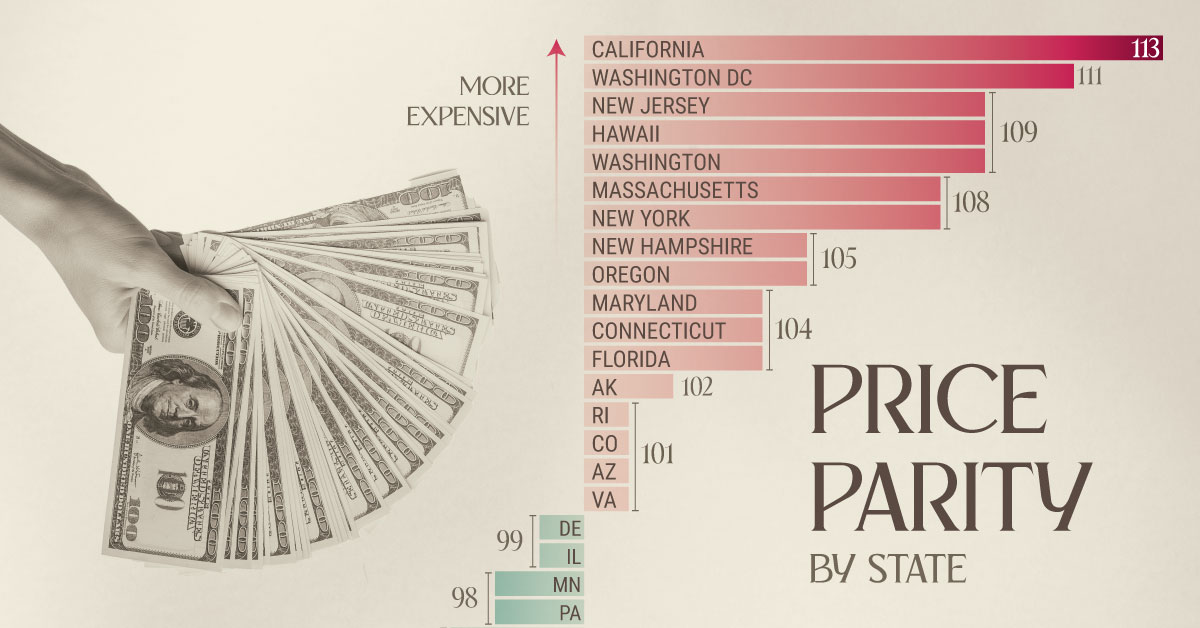
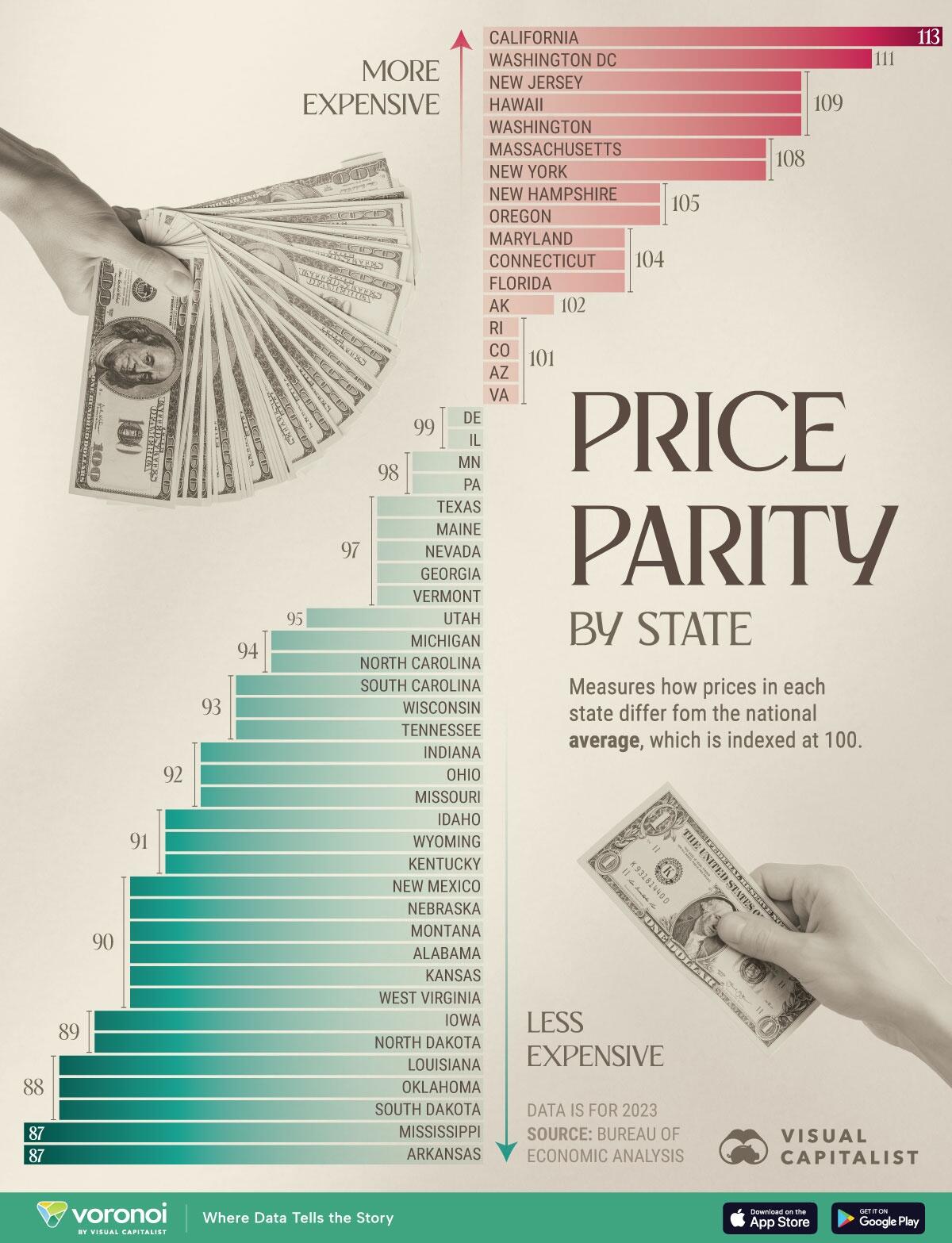 How Price Parity Compares Across America
To show the differences in prices across the country, the BEA compared each state to the national average, represented as 100 as of 2023.
State
Regional Price Parity (U.S. = 100)
California
113
Washington DC
111
New Jersey
109
Hawaii
109
Washington
109
Massachusetts
108
New York
108
New Hampshire
105
Oregon
105
Maryland
104
Connecticut
104
Florida
104
Alaska
102
Rhode Island
101
Colorado
101
Arizona
101
Virginia
101
Delaware
99
Illinois
99
Minnesota
98
Pennsylvania
98
Texas
97
Maine
97
Nevada
97
Georgia
97
Vermont
97
Utah
95
Michigan
94
North Carolina
94
South Carolina
93
Wisconsin
93
Tennessee
93
Indiana
92
Ohio
92
Missouri
92
Idaho
91
Wyoming
91
Kentucky
91
New Mexico
90
Nebraska
90
Montana
90
Alabama
90
Kansas
90
West Virginia
90
Iowa
89
North Dakota
89
Louisiana
88
Oklahoma
88
South Dakota
88
Mississippi
87
Arkansas
87
Ranking as the nation’s most expensive state, prices in California are 13% higher than the national average.
In particular, California’s housing rents are 58% higher overall, second-only to Washington, D.C.. at 69% in 2023. Typically, housing is the primary driver of price disparities across the country.
At the same time, Californians pay more for groceries than any other state—at around 10% higher than the U.S. average.
Ranking in third is New Jersey, driven largely by its proximity to New York. In addition to high housing costs, a separate report shows that people in the Garden State pay 32% more for household bills like utilities and health insurance than the U.S. average.
At the other end of the spectrum, southern states like Arkansas and Mississippi offer some of the lowest costs of living. In August 2024, the
How Price Parity Compares Across America
To show the differences in prices across the country, the BEA compared each state to the national average, represented as 100 as of 2023.
State
Regional Price Parity (U.S. = 100)
California
113
Washington DC
111
New Jersey
109
Hawaii
109
Washington
109
Massachusetts
108
New York
108
New Hampshire
105
Oregon
105
Maryland
104
Connecticut
104
Florida
104
Alaska
102
Rhode Island
101
Colorado
101
Arizona
101
Virginia
101
Delaware
99
Illinois
99
Minnesota
98
Pennsylvania
98
Texas
97
Maine
97
Nevada
97
Georgia
97
Vermont
97
Utah
95
Michigan
94
North Carolina
94
South Carolina
93
Wisconsin
93
Tennessee
93
Indiana
92
Ohio
92
Missouri
92
Idaho
91
Wyoming
91
Kentucky
91
New Mexico
90
Nebraska
90
Montana
90
Alabama
90
Kansas
90
West Virginia
90
Iowa
89
North Dakota
89
Louisiana
88
Oklahoma
88
South Dakota
88
Mississippi
87
Arkansas
87
Ranking as the nation’s most expensive state, prices in California are 13% higher than the national average.
In particular, California’s housing rents are 58% higher overall, second-only to Washington, D.C.. at 69% in 2023. Typically, housing is the primary driver of price disparities across the country.
At the same time, Californians pay more for groceries than any other state—at around 10% higher than the U.S. average.
Ranking in third is New Jersey, driven largely by its proximity to New York. In addition to high housing costs, a separate report shows that people in the Garden State pay 32% more for household bills like utilities and health insurance than the U.S. average.
At the other end of the spectrum, southern states like Arkansas and Mississippi offer some of the lowest costs of living. In August 2024, the 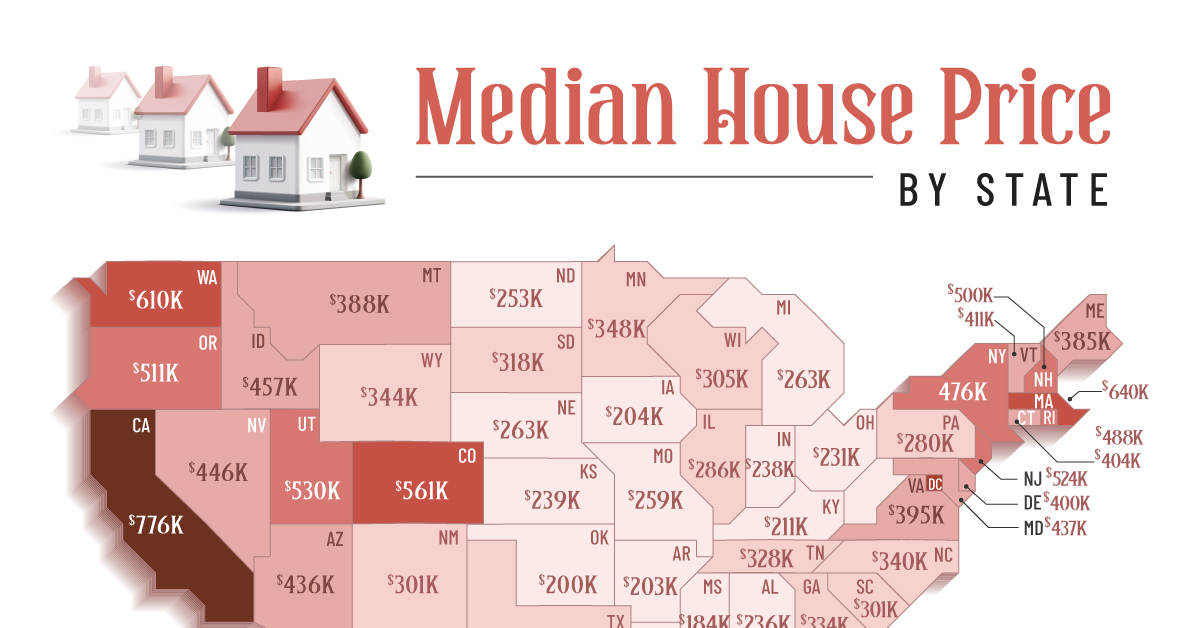

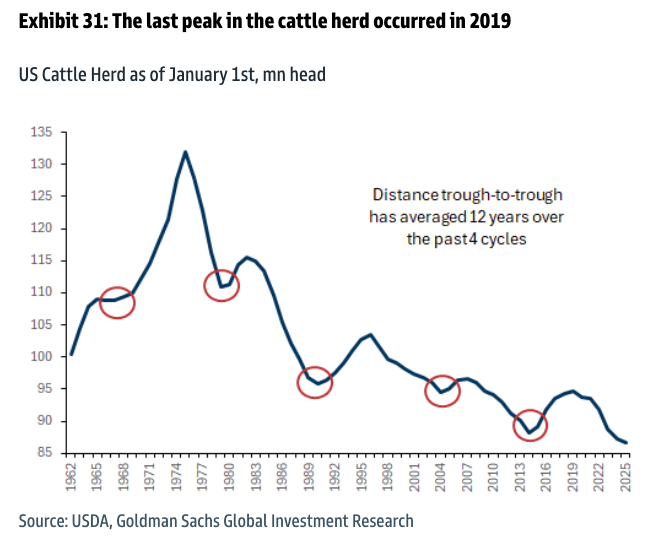
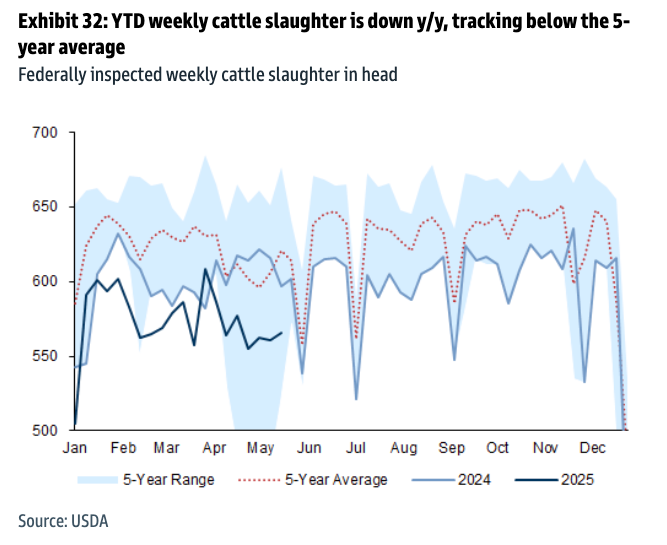
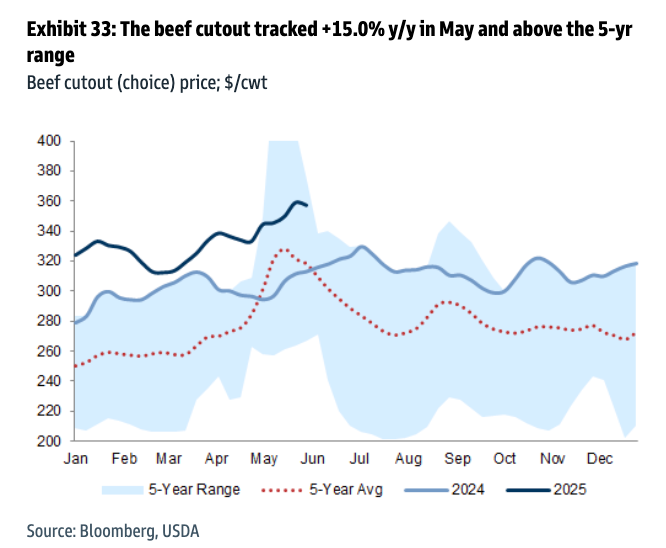
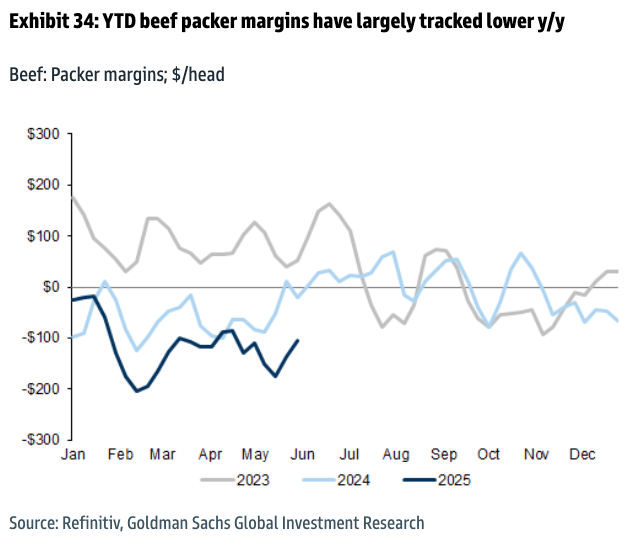
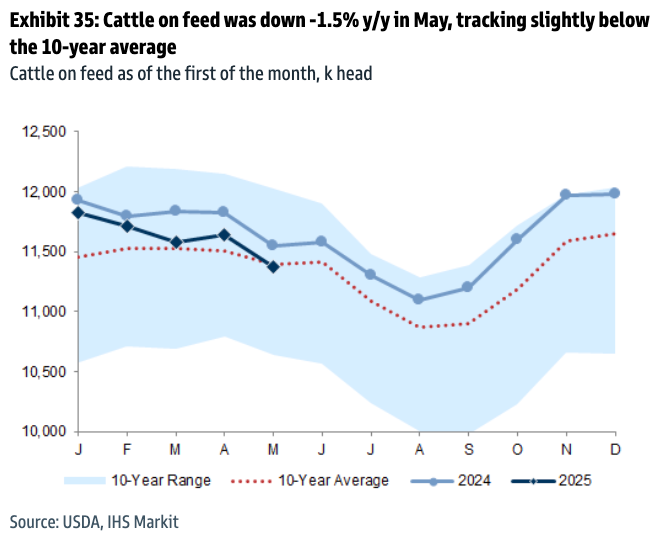

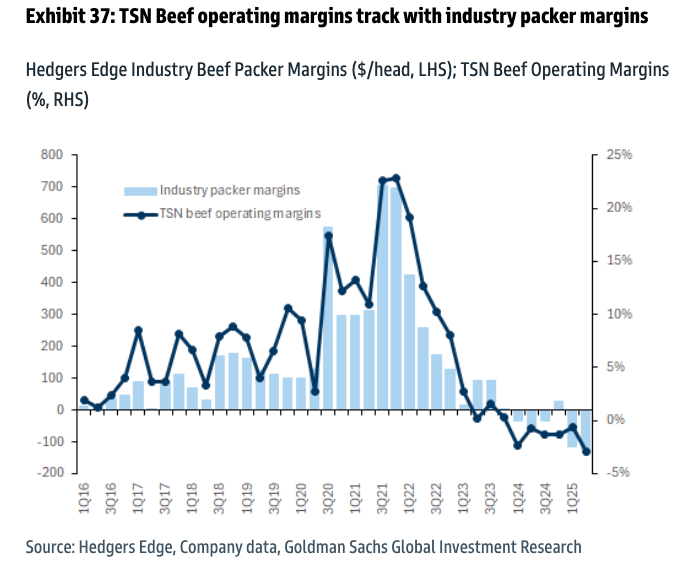
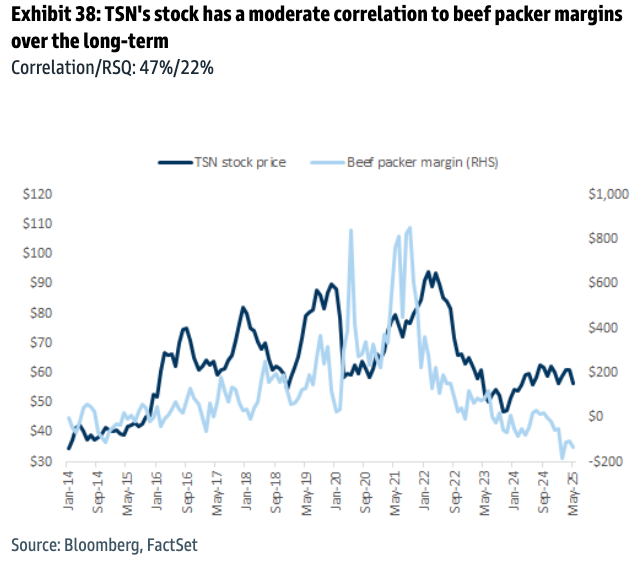
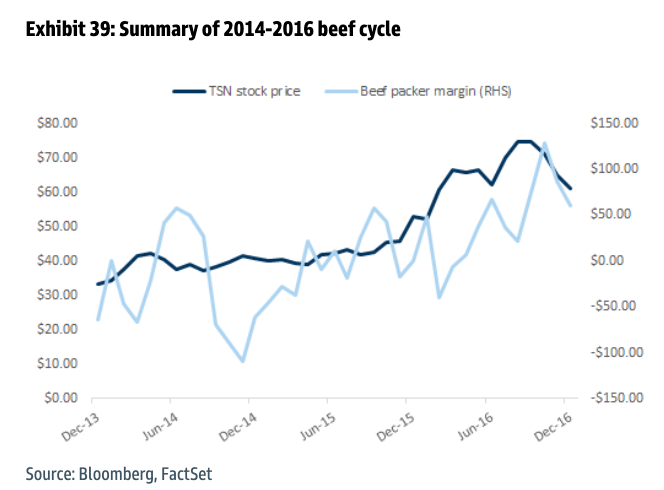

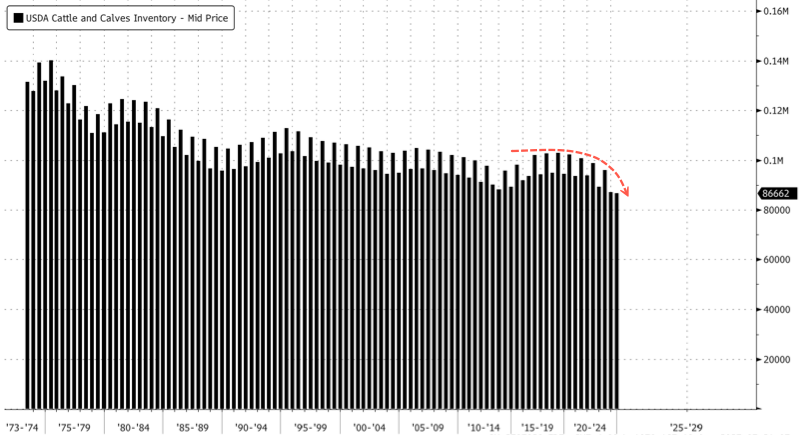 At the supermarket, USDA data from the end of May showed the average price for a pound of ground beef reached yet another record high of nearly $6 a pound.
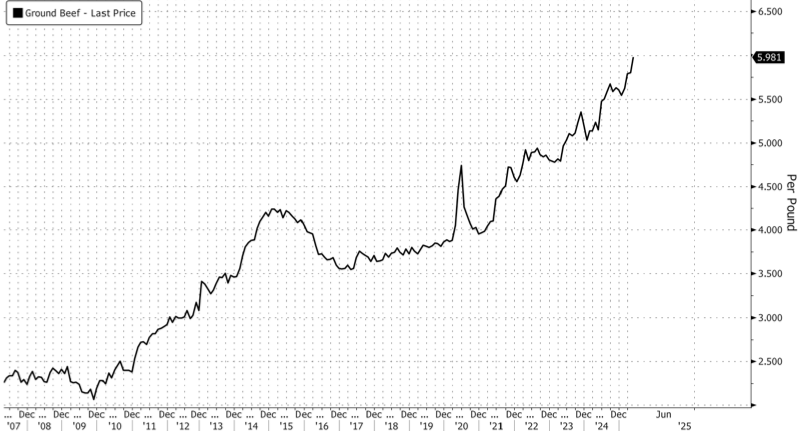 While analysts expect a cyclical low in the beef cycle, that doesn't mean the industry is out of the woods just yet—tight supplies and elevated prices are likely to persist for years. Now is the time for consumers to secure local supply chains, even if that means getting to know the rancher down the road.



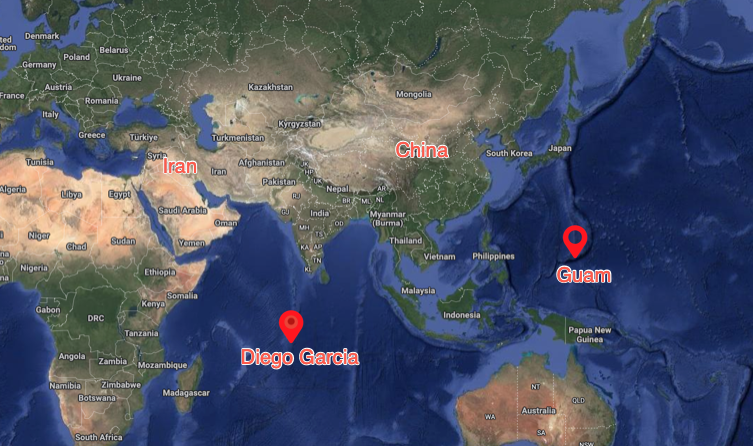 "President Donald Trump, who has said he will make a decision on U.S. involvement in the Israel-Iran conflict, is expected to return to the White House on Saturday afternoon. The president is expected to receive intelligence briefings with the National Security Council on Saturday and Sunday as he considers possible actions against Iran,"
 Previous staging of B-2s at Diego Garcia:

 My sister’s response made me laugh: "People do call him crazy. He simply doesn't care.” The funniest part is that I don't even write the craziest stuff I research—just the stuff I can back up with sources and/or my own personal observations. I always try to stay rooted in logic, reason and facts though—I'm clear when I'm speculating and when I'm not.
This same guy has sent me dozens of private messages over the last 4 or 5 years challenging me on stuff I share online. I'll respond with source material or common sense, and then—crickets. He disappears. If I say something he doesn’t want to hear, he vanishes like a child covering his ears. Over the last few years, I’ve been proven right about most of what we’ve argued about, and he’s been wrong. But it doesn’t matter—he’s got the memory of a gnat and the pattern never changes.
But he'd never make that challenge publicly, never risk being seen engaging with my arguments where others might witness the conversation. This kind of private curiosity paired with public silence is everywhere—people will engage with dangerous ideas in private but never risk being associated with them publicly. It's part of that reflexive "
My sister’s response made me laugh: "People do call him crazy. He simply doesn't care.” The funniest part is that I don't even write the craziest stuff I research—just the stuff I can back up with sources and/or my own personal observations. I always try to stay rooted in logic, reason and facts though—I'm clear when I'm speculating and when I'm not.
This same guy has sent me dozens of private messages over the last 4 or 5 years challenging me on stuff I share online. I'll respond with source material or common sense, and then—crickets. He disappears. If I say something he doesn’t want to hear, he vanishes like a child covering his ears. Over the last few years, I’ve been proven right about most of what we’ve argued about, and he’s been wrong. But it doesn’t matter—he’s got the memory of a gnat and the pattern never changes.
But he'd never make that challenge publicly, never risk being seen engaging with my arguments where others might witness the conversation. This kind of private curiosity paired with public silence is everywhere—people will engage with dangerous ideas in private but never risk being associated with them publicly. It's part of that reflexive "

 I remember teachers threatening us with our "permanent record." We laughed—some mysterious file that would follow us forever? Turns out they were just early. Now we've built those records and handed the recording devices to children. Companies like Palantir have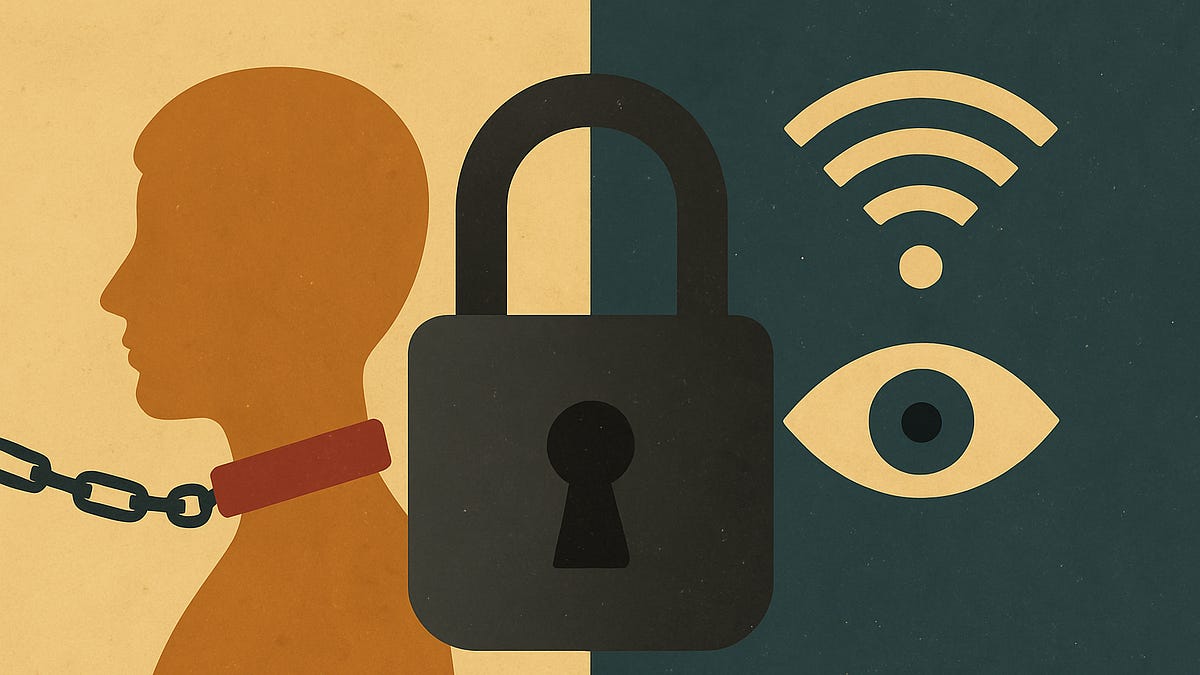


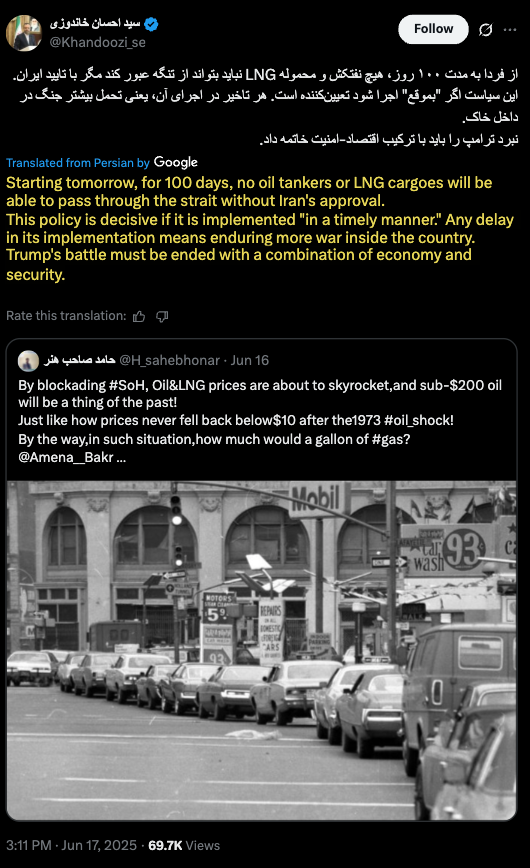 Such messaging, especially when paired with the Islamic Revolutionary Guard Corps (IRGC) naval activity in the region, raises the increasing probability of IRGC actions targeting commercial shipping lanes in the strait. This escalation could serve as the catalyst that turns
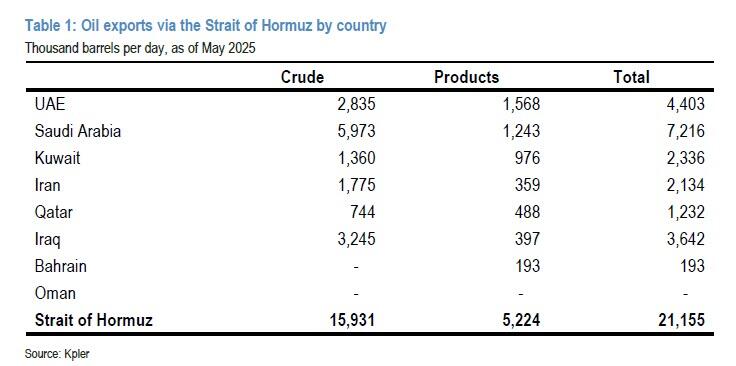
 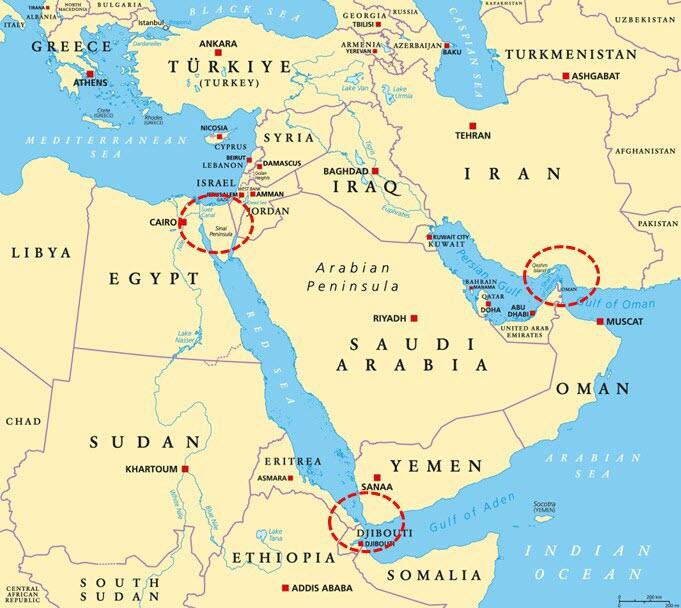 The skinny waterway—at its narrowest point it is only 21 miles (33 km) wide— separating the UAE, Oman and Iran, connects the Persian Gulf with the Indian Ocean, and facilitates the movement of some 30% of the world's seaborne oil trade and 20% of the world's LNG supply (Table 1).
 Widespread GPS jamming has been reported across the strait for the last several days:
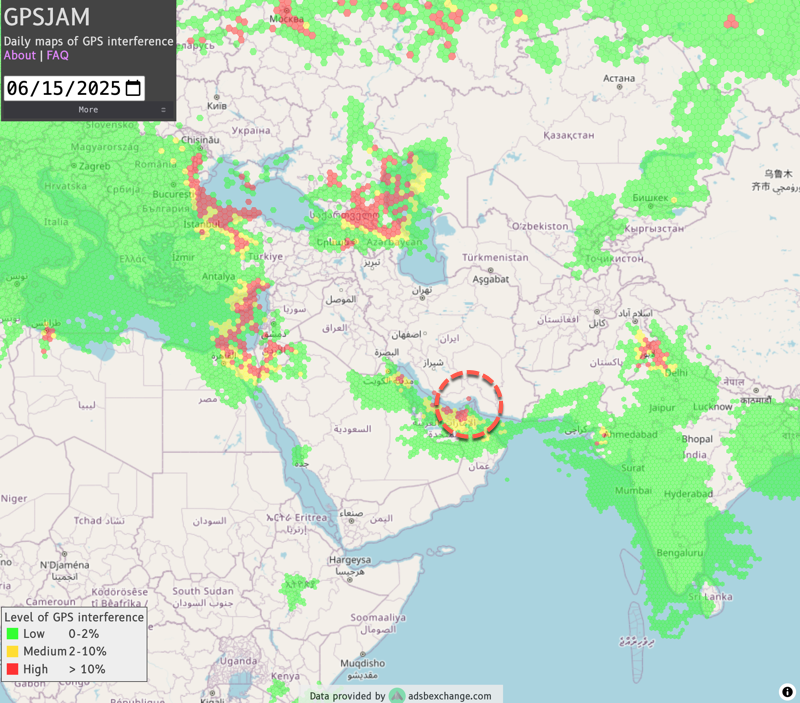 Which unfolded into a maritime disaster early Tuesday when crude oil tanker Front Eagle slammed into the port quarter of the tanker Adalynn, sparking a massive fire on Adalynn, and concerns about a potential ecological disaster have surged.

 They have no fear of the government getting too much control because there will never be a reason the government would want or need to control them.
They don’t fear communism or fascism primarily because they don’t know what those two ideologies clearly mean, and besides, that would never happen in a free society—which they are ready to give up anyway.
Of course, to all of us shrew-types, we practically lose our cookies thinking about living in a society where basic freedoms have been stripped away, or where the government, or any other authority, has power over our movements, our money, and our fundamental existence.
When we hear someone say, “I don’t care how much control the authorities have, I have nothing to hide, and I do nothing wrong, therefore it is not something to worry about for me,” we blow a gasket.
Don’t they know?
Don’t they know that when the control over the masses surely does take effect it won’t matter a tinker’s damn if they “have nothing to hide” or “don’t do anything bad.” Oppression comes in many flavours, and its primary purpose is not to punish wrongdoing, but rather to keep people, in a very general way, compliant and under control.
Control sets the tone of the behaviour of a society. A good example of this came about during the Canadian Trucker’s Convoy. People who donated to that cause ran the risk of having their bank accounts frozen. (I was one that this happened to.) Was donating to a “cause” such as the Trucker’s Convoy a “bad thing”—was it against the law, was it criminal? In a free society, protesting (peacefully) and standing up against any sort of injustice an individual finds abhorrent is one of our fundamental rights as citizens of a free country.
However, punishing people who do something the government does not approve of sets a bar that indicates what is acceptable and what is not. People seeing friends and family being punished for contributing to a cause such as the truckers convoy, will categorize their activity as the activity of “a bad person”—whereas before the punishment was laid upon them (the freezing of their bank accounts) these same people would have had no trouble wearing a pussy hat and marching against Donald Trump.
They find what the government did (freezing accounts) as “reasonable” and they tell themselves that whoever contributed was a “bad person” and deserves to be reprimanded.
There is no better word for this than indoctrination: people are being taught what is right and wrong, and being taught what the punishment is for being wrong. It is much like training a dog, but not with positive reinforcement (although there is a lot of that going on as well) but with negative reinforcement.
Needless to say this negative punishment starts out mildly. And this is the thing I figured out—people don’t know yet what the real punishment is going to be for wrongdoing, and for straying away from the desires of the agenda. They have never experienced real suffering at the hands of their captives, so they don’t know what is in store for them. None of them have lived in North Korea, or Soviet Russia, or Nazi Germany, or Mao’s China. None of them know what it means to live a life in any of these environments where you don’t have to be a criminal to be seriously persecuted and physically punished for just being.
Well, neither have the shrews (more than likely anyone reading this is a shrew). So, what gives? This is the part I have not yet figured out. I have a few theories, but most of them are rather lame. One theory is that shrews are more aware of history and world events than their sheep brethren. I can’t imagine that this is as true as it would need to be to have any sort of impact. But I have noticed that the shrews I have met are very well informed about totalitarian regimes—current ones and past ones. Shrews seem to be more well-read than the sheep-types—history (as mentioned), philosophy, psychology, biography, classic literature, etc. Maybe there are a few Nora Roberts romances in there, but not many.
I am sure there are lots of shrews who haven’t read a book since High School, but that doesn’t seem to be the truth. It isn’t book reading altogether either, it is just information, awareness, and understanding that seems to be prevalent. Combine that with common sense and critical thinking, and you may have a viable formula there for shrew-ness.
Like I said, I don’t think I have that one figured out yet. But I do think there is some viability to the idea that the sheeple don’t really know what they are handing over to the agenda. They don’t know what politically inflicted pain feels like. And they are rather certain that this sort of pain is not down the pike.
Of course, there are always strange anomalies to these theories.
Why are the same people obsessed and terrified that Trump is going to make this oppressive, fascist, totalitarian world for them, where they will all, if they are lucky, writhe in pain on the streets, deprived of food, water, and any sort of decency in life?
This is strange, for sure, as it makes no sense that if they are so terrified of this happening with Trump, they can’t see it with Carney in Canada, Merz in Germany, Macron in France, Xi Jinping in China, and Starmer in the UK. Of course, they have no problem seeing it in Putin of Russia. But Zelenskyy of Ukraine is the hero of all time. Go figure.
So, I guess I was wrong. I haven’t figured this out at all. Oh well, back to the drawing board.
Todd’s new book The View of the Shrew launches later this month, and is available for pre-order, or you can enter a draw to win a free copy by signing up to his mailing list
They have no fear of the government getting too much control because there will never be a reason the government would want or need to control them.
They don’t fear communism or fascism primarily because they don’t know what those two ideologies clearly mean, and besides, that would never happen in a free society—which they are ready to give up anyway.
Of course, to all of us shrew-types, we practically lose our cookies thinking about living in a society where basic freedoms have been stripped away, or where the government, or any other authority, has power over our movements, our money, and our fundamental existence.
When we hear someone say, “I don’t care how much control the authorities have, I have nothing to hide, and I do nothing wrong, therefore it is not something to worry about for me,” we blow a gasket.
Don’t they know?
Don’t they know that when the control over the masses surely does take effect it won’t matter a tinker’s damn if they “have nothing to hide” or “don’t do anything bad.” Oppression comes in many flavours, and its primary purpose is not to punish wrongdoing, but rather to keep people, in a very general way, compliant and under control.
Control sets the tone of the behaviour of a society. A good example of this came about during the Canadian Trucker’s Convoy. People who donated to that cause ran the risk of having their bank accounts frozen. (I was one that this happened to.) Was donating to a “cause” such as the Trucker’s Convoy a “bad thing”—was it against the law, was it criminal? In a free society, protesting (peacefully) and standing up against any sort of injustice an individual finds abhorrent is one of our fundamental rights as citizens of a free country.
However, punishing people who do something the government does not approve of sets a bar that indicates what is acceptable and what is not. People seeing friends and family being punished for contributing to a cause such as the truckers convoy, will categorize their activity as the activity of “a bad person”—whereas before the punishment was laid upon them (the freezing of their bank accounts) these same people would have had no trouble wearing a pussy hat and marching against Donald Trump.
They find what the government did (freezing accounts) as “reasonable” and they tell themselves that whoever contributed was a “bad person” and deserves to be reprimanded.
There is no better word for this than indoctrination: people are being taught what is right and wrong, and being taught what the punishment is for being wrong. It is much like training a dog, but not with positive reinforcement (although there is a lot of that going on as well) but with negative reinforcement.
Needless to say this negative punishment starts out mildly. And this is the thing I figured out—people don’t know yet what the real punishment is going to be for wrongdoing, and for straying away from the desires of the agenda. They have never experienced real suffering at the hands of their captives, so they don’t know what is in store for them. None of them have lived in North Korea, or Soviet Russia, or Nazi Germany, or Mao’s China. None of them know what it means to live a life in any of these environments where you don’t have to be a criminal to be seriously persecuted and physically punished for just being.
Well, neither have the shrews (more than likely anyone reading this is a shrew). So, what gives? This is the part I have not yet figured out. I have a few theories, but most of them are rather lame. One theory is that shrews are more aware of history and world events than their sheep brethren. I can’t imagine that this is as true as it would need to be to have any sort of impact. But I have noticed that the shrews I have met are very well informed about totalitarian regimes—current ones and past ones. Shrews seem to be more well-read than the sheep-types—history (as mentioned), philosophy, psychology, biography, classic literature, etc. Maybe there are a few Nora Roberts romances in there, but not many.
I am sure there are lots of shrews who haven’t read a book since High School, but that doesn’t seem to be the truth. It isn’t book reading altogether either, it is just information, awareness, and understanding that seems to be prevalent. Combine that with common sense and critical thinking, and you may have a viable formula there for shrew-ness.
Like I said, I don’t think I have that one figured out yet. But I do think there is some viability to the idea that the sheeple don’t really know what they are handing over to the agenda. They don’t know what politically inflicted pain feels like. And they are rather certain that this sort of pain is not down the pike.
Of course, there are always strange anomalies to these theories.
Why are the same people obsessed and terrified that Trump is going to make this oppressive, fascist, totalitarian world for them, where they will all, if they are lucky, writhe in pain on the streets, deprived of food, water, and any sort of decency in life?
This is strange, for sure, as it makes no sense that if they are so terrified of this happening with Trump, they can’t see it with Carney in Canada, Merz in Germany, Macron in France, Xi Jinping in China, and Starmer in the UK. Of course, they have no problem seeing it in Putin of Russia. But Zelenskyy of Ukraine is the hero of all time. Go figure.
So, I guess I was wrong. I haven’t figured this out at all. Oh well, back to the drawing board.
Todd’s new book The View of the Shrew launches later this month, and is available for pre-order, or you can enter a draw to win a free copy by signing up to his mailing list 
 As for the future, what confidence and certainties can we have for our children and grandchildren?
Countries might not exist in any recognisable form as a new world order is cemented. But it is not only borders that are being undrawn. When Francis Fukuyama declared the ‘end of history’ on the fall of communism, perhaps he was inadvertently priming for the globalists’ most dramatic impact on humanity: the erasure of time. As warned by David Fleming, whose philosophy of continuism offers a unifying rationale for preserving humanity against the technocratic onslaught, ‘chronocide’ is a strategy.
As social animals, human beings create society. Over generations, each community establishes and maintains its customs, beliefs, roles and relationships. While ideologically progressive humanists emphasise that we have more in common than our differences in race, religion or region, a person from one culture cannot simply move to a place of different culture and expect life to go on as normal.
The crucial component of society is time, measured in lifetimes of immersion. Indeed, human beings + time = culture.
In this equation, important factors may be understood as nature or nurture in the human-temporal complex, such as terrain, resources, climate, commerce, conflict and technology. Each society writes and curates its history.
In the classic dystopian novels of Nineteen Eighty-Four and Brave New World, the past was deleted by design. Winston’s job is to revise records of events to comply with the current narrative, as it evolves. In Aldous Huxley’s futurism, babies are born by machine, and the idea of a woman giving birth is disturbing.
As the Marxists of the Frankfurt School realised in the 1920s, and as every management consultant knows, nothing really changes unless the culture changes. Social bonds and traditions are bulwarks against radical plans imposed from above. Piecemeal, incremental policies are prone to regression to norms, but major restructuring or other shocks to the system break social connections and shatter stability. The more dramatic and sudden the change, the more readily resistance is overcome.
Year Zero wipes the slate of our human story clean. For uncompromising totalitarians such as Pol Pot in Cambodia, this was a necessary means of shifting the people from a traditional agrarian existence to a communist order. Anyone harbouring relics or attitudes of the past was exterminated. While schoolchildren are taught (uncritically) about the Holocaust, generally they are uninformed on the trauma of extreme collectivisation.
Chronocide is the deliberate slashing and burning of everything in our culture – both the visible stem and branches above ground, and the underlying roots. We are being deprived of our continuity as families and fraternities, because such human connections are an obstacle to the technocratic mission. An atomised society is literally taking time out, in the following ways.
1. An Orwellian information war is being waged against the ordinary people. Facts derived from experience, common sense or critical thinking become ‘misinformation’ or ‘hate’. Knowledge handed down through generations is denigrated as unscientific old wives’ tales or prejudice from an intolerant past. The young, most heavily targeted by propaganda, are encouraged to reject time-honoured truths.
2. State-led behavioural psychology operations (‘psy-ops’) bewilder and frighten people, detaching them from settled knowledge and understanding. Placing the populace in uncharted territory, as in the Covid-19 pseudo-pandemic, puts them at the mercy of the powers-that-be. A worldwide deadly contagion could not be remembered by any living person, as the Spanish influenza outbreak was over a hundred years ago. In emergencies the authorities take control, and life is never the same again afterwards.
3. Safetyism suffocates culture, by replacing festivities steeped in heritage with managed events. Bonfire nights are cancelled if there’s any wind blowing, village fetes are stopped if there’s a risk of someone having an allergic reaction to homemade jam, and vigorous children’s games such as ‘British Bulldog’ are banished from the school playground. The insurance industry, through high cost of cover, helps to curtail activities that displease the authorities.
4. Dehumanising architecture proliferates on the skyline. On a scale much greater than in the social engineering of the 1960s, when swaths of terraced housing were replaced by concrete blocks and communities were moved en masse to new towns, construction is ever-upward. The physical landscape may retain remnants of the past, but churches, banks and pubs have closed, and the high street is in creeping desolation. Lessons from the recent past about the problems of high-rise living have been discarded. Smart Cities are being developed, with forests of steel-and-glass apartment blocks.
5. Expropriation of people’s property and assets is transferring all wealth to the elite. The World Economic Forum tells us that ‘you will own nothing and be happy’, but someone must own the capital. Generational inheritance will end, as shown by the extortionate tax on farms that have stayed in family ownership for centuries, forcing landowners to sell.
6. Mass migration has led to many people of the host country feeling marginalised and alienated. Despite the platitudes about multiculturalism, social cohesion has declined as the identity and loyalty of recent incomers is tied to their kith and kin, with little sense of shared belonging. That’s what our rulers want. Rootless cosmopolitans (the ‘Anywheres’ described by David Goodhart) always prefer things foreign or exotic to the predictable and homely, but now shire folk and the indigenous working class (‘Somewheres’) are finding themselves in a timeless Nowhere.
7. Rapid technological development is displacing people from physical to virtual reality. While the present is most visibly changing in demographic transformation, the near future poses an existential threat to humanity, making inter cultural tensions seem like a picnic in the park. The future, if the technocrats get their way, is transhumanism.
The United Nations Convention on the Prevention and Punishment of the Crime of Genocide (1948) defines genocide as the killing of a national, ethnic, racial or religious group. But there is also the concept of cultural genocide, as devised by Raphael Lemkin, entailing ‘systematic and organized destruction of the cultural heritage’.
A culture can be wiped out without a shot being fired. The technocrats have been playing a long game, preparing for a post-cultural, post-temporal future. Chronocide is a crime against humanity.
As for the future, what confidence and certainties can we have for our children and grandchildren?
Countries might not exist in any recognisable form as a new world order is cemented. But it is not only borders that are being undrawn. When Francis Fukuyama declared the ‘end of history’ on the fall of communism, perhaps he was inadvertently priming for the globalists’ most dramatic impact on humanity: the erasure of time. As warned by David Fleming, whose philosophy of continuism offers a unifying rationale for preserving humanity against the technocratic onslaught, ‘chronocide’ is a strategy.
As social animals, human beings create society. Over generations, each community establishes and maintains its customs, beliefs, roles and relationships. While ideologically progressive humanists emphasise that we have more in common than our differences in race, religion or region, a person from one culture cannot simply move to a place of different culture and expect life to go on as normal.
The crucial component of society is time, measured in lifetimes of immersion. Indeed, human beings + time = culture.
In this equation, important factors may be understood as nature or nurture in the human-temporal complex, such as terrain, resources, climate, commerce, conflict and technology. Each society writes and curates its history.
In the classic dystopian novels of Nineteen Eighty-Four and Brave New World, the past was deleted by design. Winston’s job is to revise records of events to comply with the current narrative, as it evolves. In Aldous Huxley’s futurism, babies are born by machine, and the idea of a woman giving birth is disturbing.
As the Marxists of the Frankfurt School realised in the 1920s, and as every management consultant knows, nothing really changes unless the culture changes. Social bonds and traditions are bulwarks against radical plans imposed from above. Piecemeal, incremental policies are prone to regression to norms, but major restructuring or other shocks to the system break social connections and shatter stability. The more dramatic and sudden the change, the more readily resistance is overcome.
Year Zero wipes the slate of our human story clean. For uncompromising totalitarians such as Pol Pot in Cambodia, this was a necessary means of shifting the people from a traditional agrarian existence to a communist order. Anyone harbouring relics or attitudes of the past was exterminated. While schoolchildren are taught (uncritically) about the Holocaust, generally they are uninformed on the trauma of extreme collectivisation.
Chronocide is the deliberate slashing and burning of everything in our culture – both the visible stem and branches above ground, and the underlying roots. We are being deprived of our continuity as families and fraternities, because such human connections are an obstacle to the technocratic mission. An atomised society is literally taking time out, in the following ways.
1. An Orwellian information war is being waged against the ordinary people. Facts derived from experience, common sense or critical thinking become ‘misinformation’ or ‘hate’. Knowledge handed down through generations is denigrated as unscientific old wives’ tales or prejudice from an intolerant past. The young, most heavily targeted by propaganda, are encouraged to reject time-honoured truths.
2. State-led behavioural psychology operations (‘psy-ops’) bewilder and frighten people, detaching them from settled knowledge and understanding. Placing the populace in uncharted territory, as in the Covid-19 pseudo-pandemic, puts them at the mercy of the powers-that-be. A worldwide deadly contagion could not be remembered by any living person, as the Spanish influenza outbreak was over a hundred years ago. In emergencies the authorities take control, and life is never the same again afterwards.
3. Safetyism suffocates culture, by replacing festivities steeped in heritage with managed events. Bonfire nights are cancelled if there’s any wind blowing, village fetes are stopped if there’s a risk of someone having an allergic reaction to homemade jam, and vigorous children’s games such as ‘British Bulldog’ are banished from the school playground. The insurance industry, through high cost of cover, helps to curtail activities that displease the authorities.
4. Dehumanising architecture proliferates on the skyline. On a scale much greater than in the social engineering of the 1960s, when swaths of terraced housing were replaced by concrete blocks and communities were moved en masse to new towns, construction is ever-upward. The physical landscape may retain remnants of the past, but churches, banks and pubs have closed, and the high street is in creeping desolation. Lessons from the recent past about the problems of high-rise living have been discarded. Smart Cities are being developed, with forests of steel-and-glass apartment blocks.
5. Expropriation of people’s property and assets is transferring all wealth to the elite. The World Economic Forum tells us that ‘you will own nothing and be happy’, but someone must own the capital. Generational inheritance will end, as shown by the extortionate tax on farms that have stayed in family ownership for centuries, forcing landowners to sell.
6. Mass migration has led to many people of the host country feeling marginalised and alienated. Despite the platitudes about multiculturalism, social cohesion has declined as the identity and loyalty of recent incomers is tied to their kith and kin, with little sense of shared belonging. That’s what our rulers want. Rootless cosmopolitans (the ‘Anywheres’ described by David Goodhart) always prefer things foreign or exotic to the predictable and homely, but now shire folk and the indigenous working class (‘Somewheres’) are finding themselves in a timeless Nowhere.
7. Rapid technological development is displacing people from physical to virtual reality. While the present is most visibly changing in demographic transformation, the near future poses an existential threat to humanity, making inter cultural tensions seem like a picnic in the park. The future, if the technocrats get their way, is transhumanism.
The United Nations Convention on the Prevention and Punishment of the Crime of Genocide (1948) defines genocide as the killing of a national, ethnic, racial or religious group. But there is also the concept of cultural genocide, as devised by Raphael Lemkin, entailing ‘systematic and organized destruction of the cultural heritage’.
A culture can be wiped out without a shot being fired. The technocrats have been playing a long game, preparing for a post-cultural, post-temporal future. Chronocide is a crime against humanity.

 NIH Director Jay Bhattacharya did not respond to repeated requests for comment, but an NIH spokesperson confirmed the agency is shutting down the CREID grants. “Though the grants have been properly terminated, money will be released to the grantees to assure safe shutdown of these programs in terms of biosafety and security,” said an NIH spokesperson, adding that pandemic preparedness remains important but the dangers of health comorbidities in infectious disease outbreaks was further underlined during COVID. “Strengthening overall health through proactive disease prevention offers a more resilient foundation for responding to future health threats—beyond reliance on vaccines or treatments for yet-unknown pathogens.”
Tony Fauci announced the formation of CREIDs in 2020, awarding 11 grants worth around $17 million, with
NIH Director Jay Bhattacharya did not respond to repeated requests for comment, but an NIH spokesperson confirmed the agency is shutting down the CREID grants. “Though the grants have been properly terminated, money will be released to the grantees to assure safe shutdown of these programs in terms of biosafety and security,” said an NIH spokesperson, adding that pandemic preparedness remains important but the dangers of health comorbidities in infectious disease outbreaks was further underlined during COVID. “Strengthening overall health through proactive disease prevention offers a more resilient foundation for responding to future health threats—beyond reliance on vaccines or treatments for yet-unknown pathogens.”
Tony Fauci announced the formation of CREIDs in 2020, awarding 11 grants worth around $17 million, with 
 Andersen echoed Monteiro’s statement days later, associating “conspiracy theorists” worried about a possible lab accident with people who doubt the Moon landing.
 The paper would go on to become one of the most heavily cited scientific papers in 2020. However, emails made public through freedom of information act requests and by congressional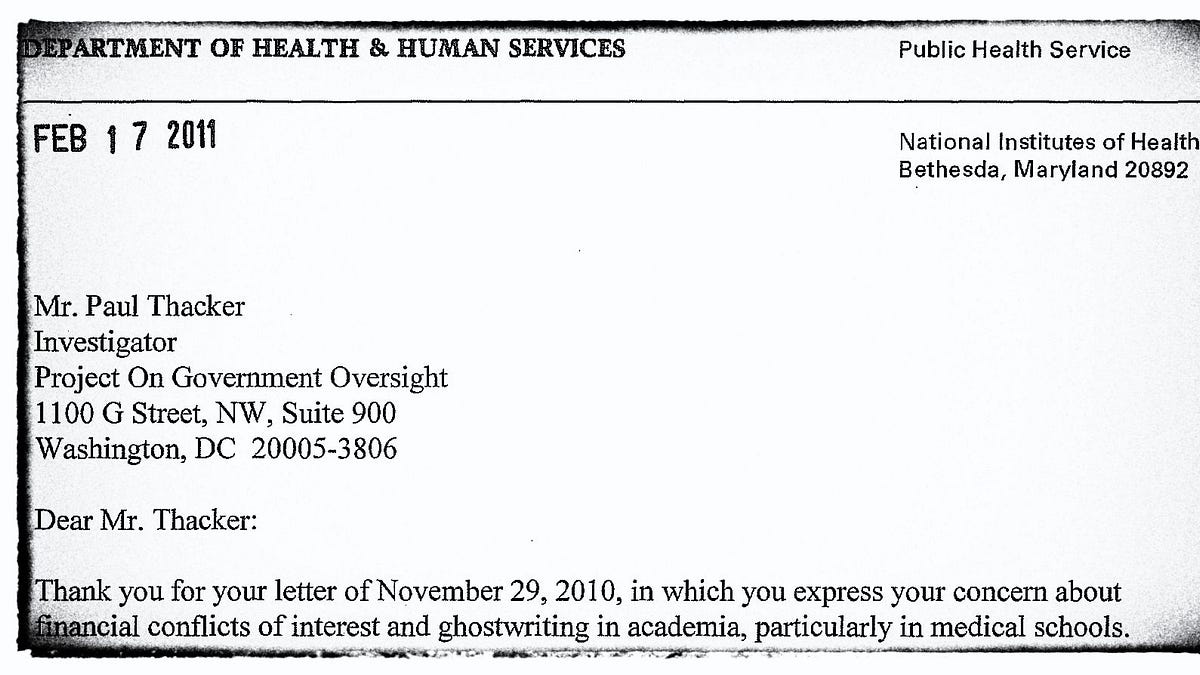

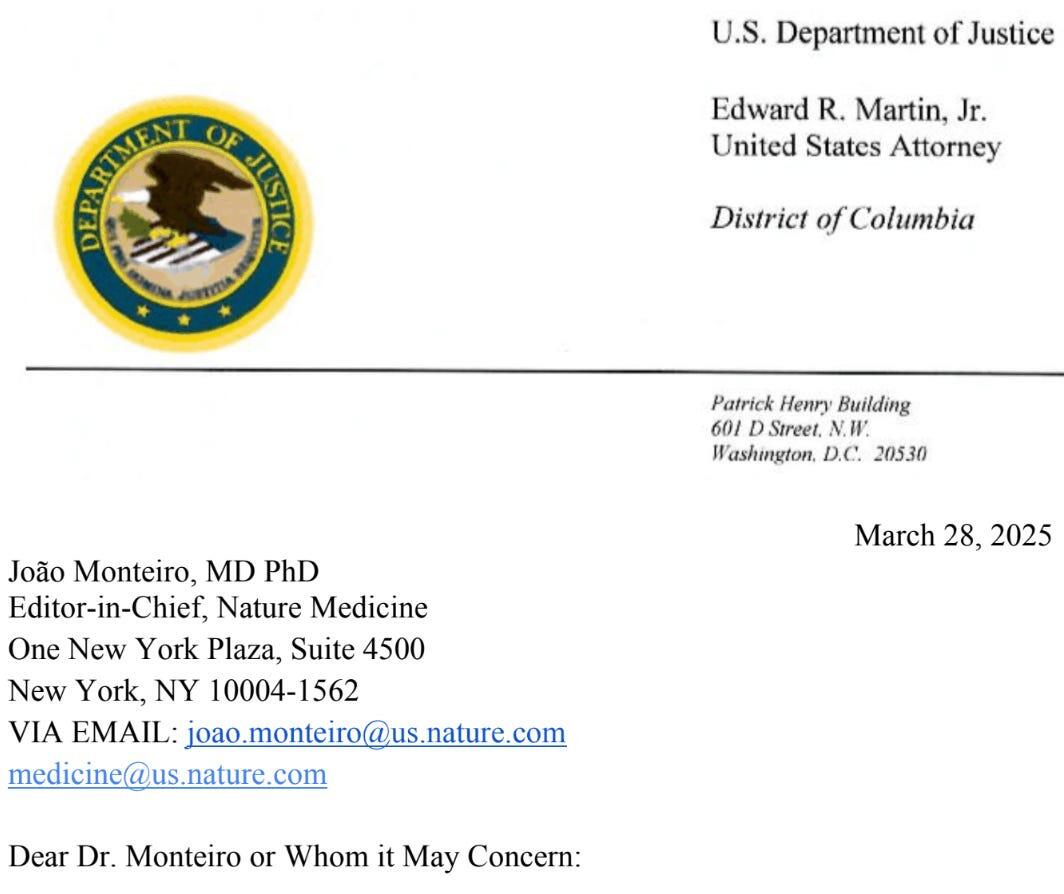 Justice Department officials opened the inquiry as they suspect the paper may have been a quid pro quo, published by the authors to dismiss the possibility of a lab accident in exchange for the Fauci CREID grant. Andersen addressed these bribery allegations two years ago during a congressional hearing.
“There is no connection between the grant and the conclusions we reached about the origin of the pandemic,”
Justice Department officials opened the inquiry as they suspect the paper may have been a quid pro quo, published by the authors to dismiss the possibility of a lab accident in exchange for the Fauci CREID grant. Andersen addressed these bribery allegations two years ago during a congressional hearing.
“There is no connection between the grant and the conclusions we reached about the origin of the pandemic,” 
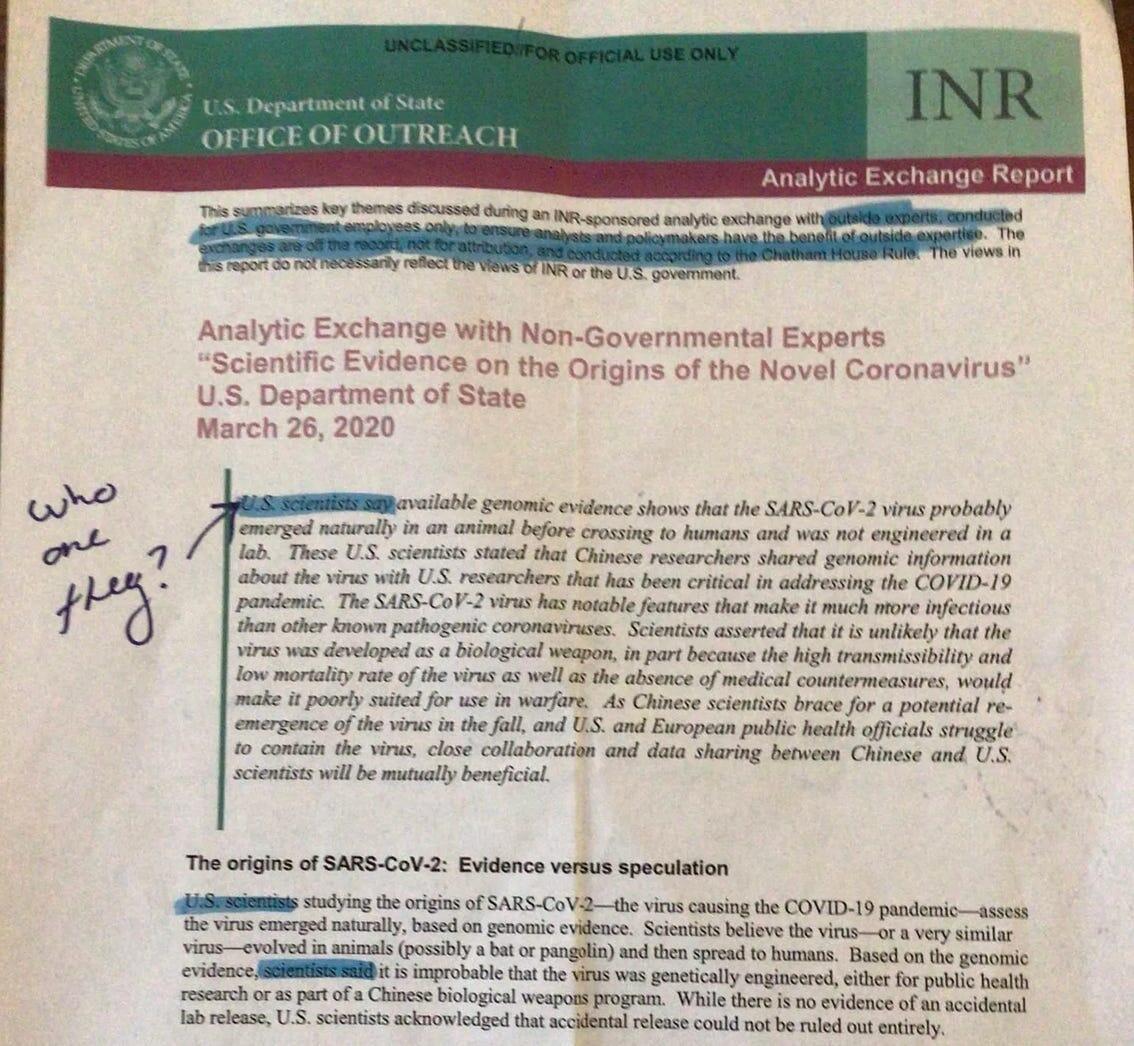 “Did we have a foreign national parading into the intel agencies and convincing senior officials to not look into a matter?” said a State Department official who is not cleared to speak to the media. “That’s a counter intelligence matter. We need a professional law enforcement investigation.”
Andersen’s involvement came to light in a late 2020 email sent by State Department official David Feith in which Feith wrote that Andersen had briefed State for their March 2020 INR report. “In fact, I'm told that in a briefing organized by INR earlier this year, [Andersen] said that several features that had initially raised questions in his mind were subsequently put to rest by more detailed analysis,”
“Did we have a foreign national parading into the intel agencies and convincing senior officials to not look into a matter?” said a State Department official who is not cleared to speak to the media. “That’s a counter intelligence matter. We need a professional law enforcement investigation.”
Andersen’s involvement came to light in a late 2020 email sent by State Department official David Feith in which Feith wrote that Andersen had briefed State for their March 2020 INR report. “In fact, I'm told that in a briefing organized by INR earlier this year, [Andersen] said that several features that had initially raised questions in his mind were subsequently put to rest by more detailed analysis,” 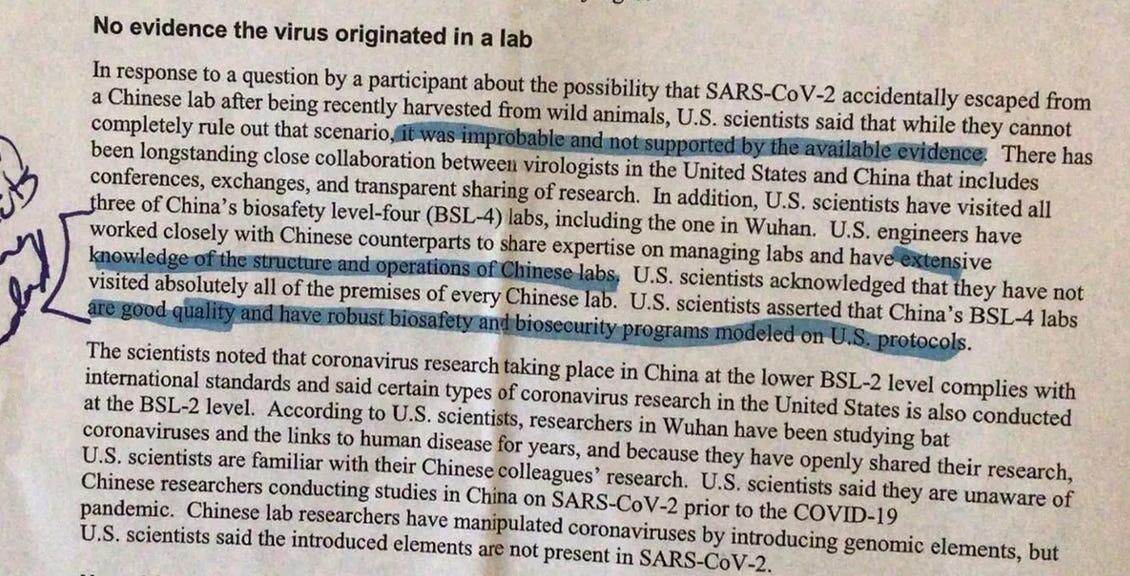 But on April 16, 2020, a month after briefing the State Department,
 Researcher Andreas Martin Lisewski with Germany’s Constructor University
 Andersen’s Oslo talk was


 Earlier this year, President Donald Trump and billionaire entrepreneur Elon Musk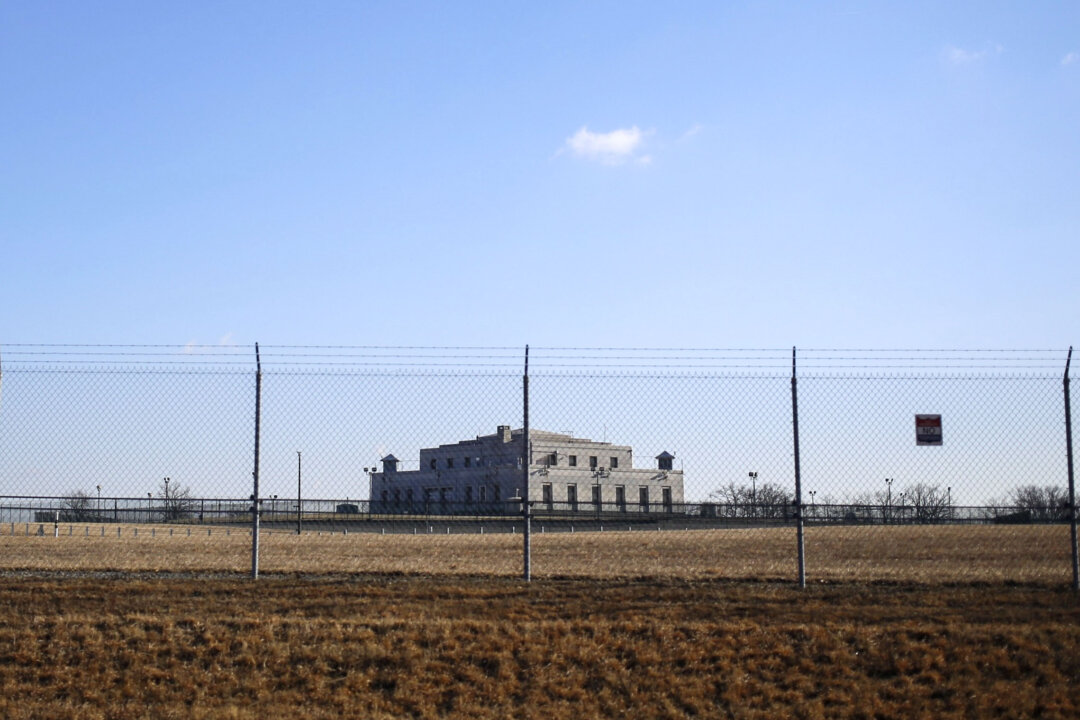

 Three 1-kilogram gold bullion bars at a gold dealer's shop, in Birmingham, England, on Dec. 13, 2023. Christopher Furlong/Getty Images
The last full audit of Fort Knox’s gold holdings was in September 1974. A physical inspection was performed by then-Treasury Secretary William Simon, who also invited congressional officials and the media to tour the location and inspect reserves.
Independent organizations have stated that the audit conducted more than 50 years ago did not compare serial numbers against official records, examine the gold bars for purity, or perform a final tally of the gold bullion.
“The history of the ‘audits’ reveals red flags: lost records and broken compartment seals without explanation or reauditing,” Jp Cortez, the executive director of the public policy group Sound Money Defense League, told The Epoch Times. “As Money Metals gold researcher Jan Nieuwenhuijs has meticulously documented, these practices wouldn’t pass muster at a private depository.”
U.S. officials, including Treasury Secretary Scott Bessent, have pushed back against claims that domestic gold holdings are not subject to audits.
In an
with Bloomberg Television, Bessent said that the U.S. government performs an annual audit of the country’s gold reserves.
“We do an audit every year. ... I can tell the American people on camera right now, there was a report, Sept. 30, 2024, all the gold is there,” Bessent said in February. “Any U.S. senator who wants to come visit it can arrange a visit through our office.”
The Treasury’s Office of Inspector General published a
Three 1-kilogram gold bullion bars at a gold dealer's shop, in Birmingham, England, on Dec. 13, 2023. Christopher Furlong/Getty Images
The last full audit of Fort Knox’s gold holdings was in September 1974. A physical inspection was performed by then-Treasury Secretary William Simon, who also invited congressional officials and the media to tour the location and inspect reserves.
Independent organizations have stated that the audit conducted more than 50 years ago did not compare serial numbers against official records, examine the gold bars for purity, or perform a final tally of the gold bullion.
“The history of the ‘audits’ reveals red flags: lost records and broken compartment seals without explanation or reauditing,” Jp Cortez, the executive director of the public policy group Sound Money Defense League, told The Epoch Times. “As Money Metals gold researcher Jan Nieuwenhuijs has meticulously documented, these practices wouldn’t pass muster at a private depository.”
U.S. officials, including Treasury Secretary Scott Bessent, have pushed back against claims that domestic gold holdings are not subject to audits.
In an
with Bloomberg Television, Bessent said that the U.S. government performs an annual audit of the country’s gold reserves.
“We do an audit every year. ... I can tell the American people on camera right now, there was a report, Sept. 30, 2024, all the gold is there,” Bessent said in February. “Any U.S. senator who wants to come visit it can arrange a visit through our office.”
The Treasury’s Office of Inspector General published a