Fake News Narrative Of "Empty Ports, Empty Shelves" Suffers Spectacular Implosion
Fake News Narrative Of "Empty Ports, Empty Shelves" Suffers Spectacular Implosion
It was about one month ago, when as stocks tumbled, economists rushed to catch down to the sliding market by doing what they do best: chasing prices (in this case lower) by slashing their economic forecasts (most notably Goldman Sachs) a move which we mocked at the time, and correctly predicted it would be about a month before these same economists made an "unrecession" their base case once stocks rebounded.
Will be so slightly awkward when all the banks who made a recession their base case this week, make an unrecession their base case in 1 month.
— zerohedge (@zerohedge)

X (formerly Twitter)
zerohedge (@zerohedge) on X
Will be so slightly awkward when all the banks who made a recession their base case this week, make an unrecession their base case in 1 month.
It took less than a month for this forecast to come true, and now that stocks have erased all of their post Liberation Day losses, one of the most closely followed people on Wall Street, Goldman's chief economist Jan Hatzius, said on CNBC on May 2 - just weeks after declaring that a recession was his base case for 90 minutes - that "The most recent information is certainly consistent with the economy not going through a recession right now".
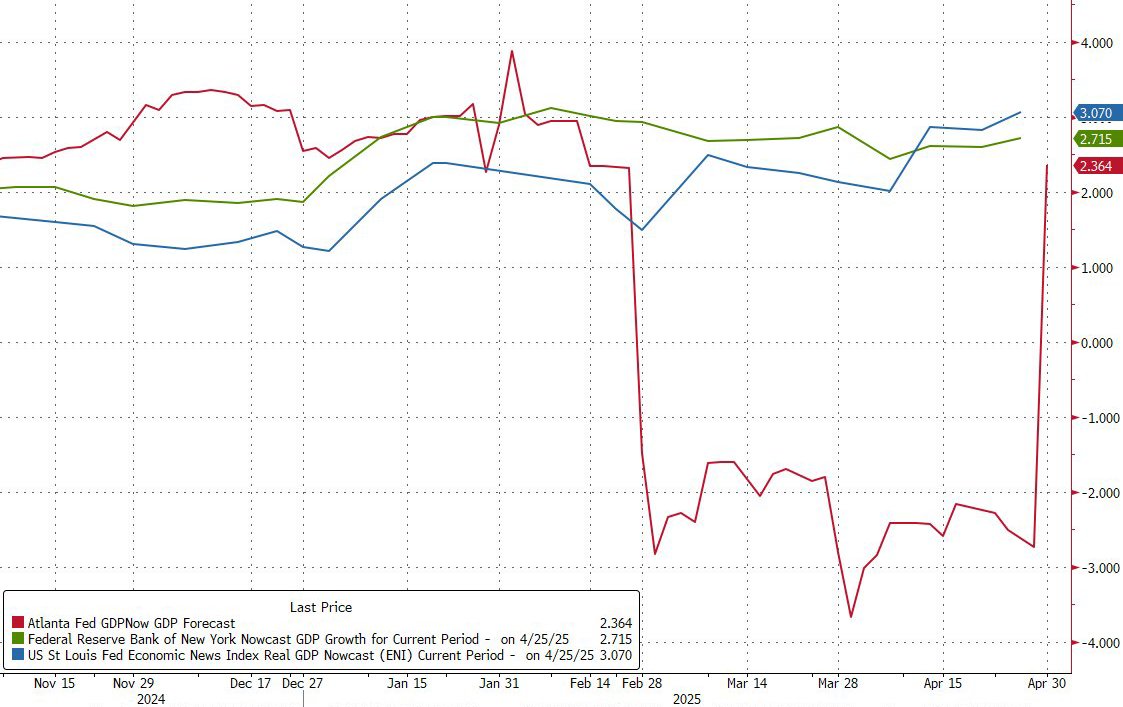
Of course, the concurrent surge in the Atlanta Fed real-time GDP tracker from -3% (which was dead wrong to where Q1 GDP actually printed) to +2.4% in Q2, only cemented a non-recession base case...
Regional Fed GDP tracking update
X (formerly Twitter)
zerohedge (@zerohedge) on X
Regional Fed GDP tracking update
— zerohedge (@zerohedge)
X (formerly Twitter)
zerohedge (@zerohedge) on X
Regional Fed GDP tracking update
... because the technical definition of a recession - two consecutive negative quarters - meant that with Q2 GDP set to print well in the green, the earliest the US could be declared to be in an official recession was some time in early 2026 when the Q4 2025 GDP number would come out.
This was devastating to the liberal wing of the economic profession, not to mention the mainstream media, all of whom had decided that a Trump recession was imminent, and so they had to pivot to something else that would trigger a daily doom and gloom narrative.
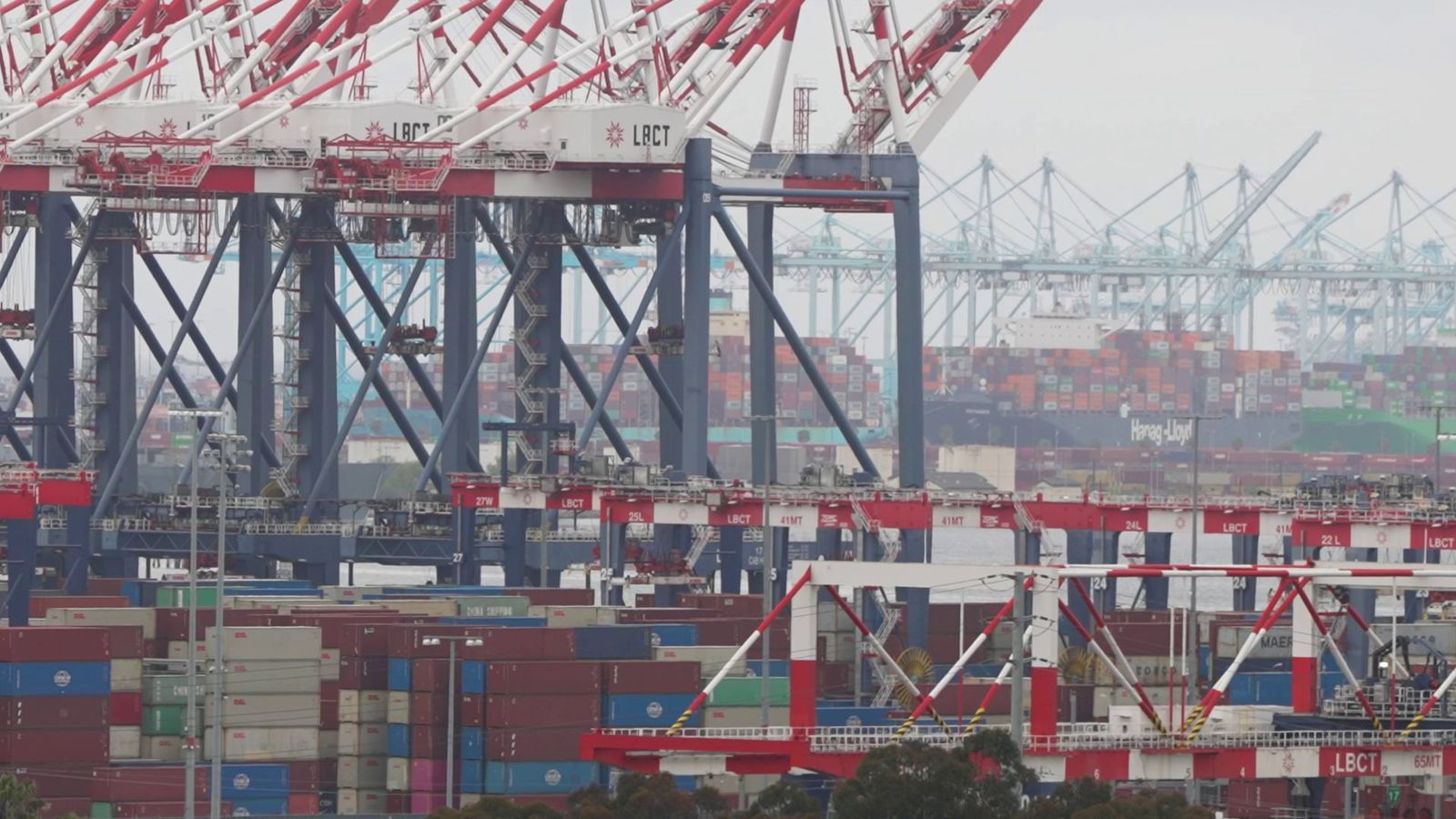
That something was the hypothesis that with trade war between the US and China raging, it was only a matter of time before west coast ports were empty, as no Chinese containerships would come to the US, and the result would be a covid-like panic scramble for products (remember the legendary toilet paper runs) amid a historic inventory destocking.
It was as if the media turned on a dime, and with the "looming recession" narrative suddenly left in the dust, it was instead replaced with story after story about the looming port crisis that would, gasp, result in covid-like empty shelves everywhere across America!
"
Sky News
Trump
A lorry driver in California tells Sky News: "We're already seeing work slowing down. How are we going to survive?"
."
You get the picture.
But that was just the beginning, because the liberal media was only just starting its fearmongering campaign to get Americans to panic and to rush out and start stockpiling toilet paper once again. In other words, the "independent press" was hoping to cause the very catastrophic outcome it was "warning" about.
Nowhere was this more evident than on MSNBC where anchor and former Deutsche Bank bond salesman, Stephanie Ruhle, no longer an expert intimately familiar with Under Armor (
https://www.wsj.com/business/media/under-armour-kevin-plank-stephanie-ruhle-66cb65b5
), but now a full-blown trade guru, declared that "Donald Trump has been told look at the cargo ships coming in to Seattle, the port of Los Angeles, pick the port. Those ports are getting fewer and fewer ships with less and less cargo. And unless he turns this around, three weeks from now, you walk into a store and we're going to have a covid-like supply chain crisis, and Trump is looking for an exit."
"Unless he turns this around, three weeks from now, you walk into a store and we're going to have a covid-like supply chain crisis, and Trump is looking for an exit" -- here's the

X (formerly Twitter)
Stephanie Ruhle (@SRuhle) on X
Host of @11thhour on @MSNOWNews M-F 11PM EST, MS NOW Snr Business Analyst, former: @Bloombergtv, Deutsche Bank, CSFB. L❤️ver of odd #s & even p...
— Aaron Rupar (@atrupar)

X (formerly Twitter)
Aaron Rupar (@atrupar) on X
"Unless he turns this around, three weeks from now, you walk into a store and we're going to have a covid-like supply chain crisis, and Trump is lo...
But, as always happens, it was CNN that finally took this "broken telephone" narrative to its absurd conclusion, when the media outlet that has become the butt of all propaganda jokes declared that "
https://www.cnn.com/2025/05/10/business/zero-ships-china-trade-ports-pandemic
."
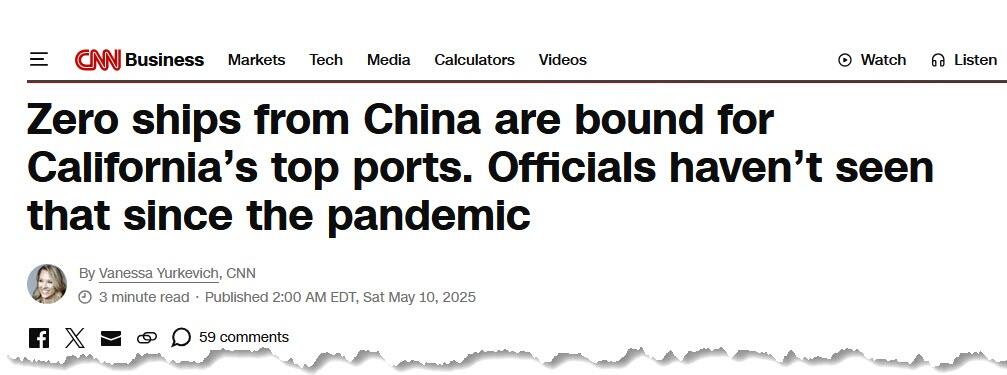
... an article written by CNN's Business and Politics correspondent,

X (formerly Twitter)
Vanessa Yurkevich (@VanessaCNN) on X
Business & Politics Correspondent @CNN
Send tips to: vanessa.yurkevich@cnn.com
RT ≠ endorsement
, who like MSNBC's Ruhle above, is now a full-blown expert on naval commerce and logistics as a quick scan of her latest articles reveals.

So up until this point we had stayed away from this idiotic discussion, which merely demonstrated how little understanding so-called experts actually have of a nuanced and complicated topic as trade and global commerce.
However, CNN's idiocy was the last straw.
But before we go there, a quick look at what has been really taking place.
First, regarding the claim that west coast ports have seen a sharp drop in inbound traffic, there certainly has been a modest decline in February and March inbound traffic, but a decline from a near-record print in January, which in turn was the result of inventory restocking ahead of what most retailers knew would be a trade war. After all, Trump had made it clear about a year ago that he had every intention of restarting trade war with the world, and especially China, and only someone watching CNN would be surprised by the recent sharp spike in tariffs, a move which incidentally was never meant to be permanent but was a strategy meant to inflict max pain and get trading partners to the negotiating table. In any case, the total inbound traffic to California ports shown below is hardly the apocalypse the liberal media has been making it out to be (and even Reuters discusses this in "
https://www.reuters.com/business/near-record-us-container-import-streak-expected-snap-may-due-tariffs-2025-05-08/
").
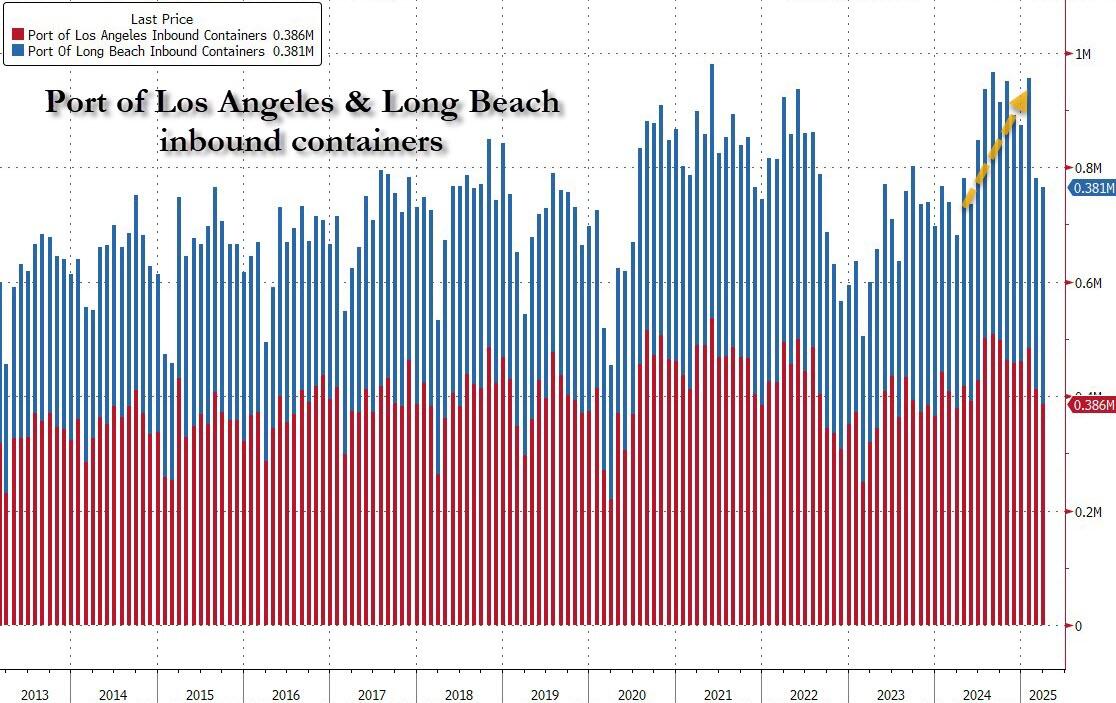
Then, addressing the topic of imminent product shortages, this was another fake news narrative meant to spark panic and chaos, and resulting in just the outcome the media was "warning" about. Because if it hurts Trump, it's great for MSNBC and CNN... and of course China, which begs the question: just how much "ad dollars" and/or sponsorship have these media outlets received from Beijing and Chinese companies in recent months. As the following charts from Deutsche Bank demonstrate clearly, what has been taking place in recent months - and why we are now seeing the reverse - is record prebuying and excess imports...
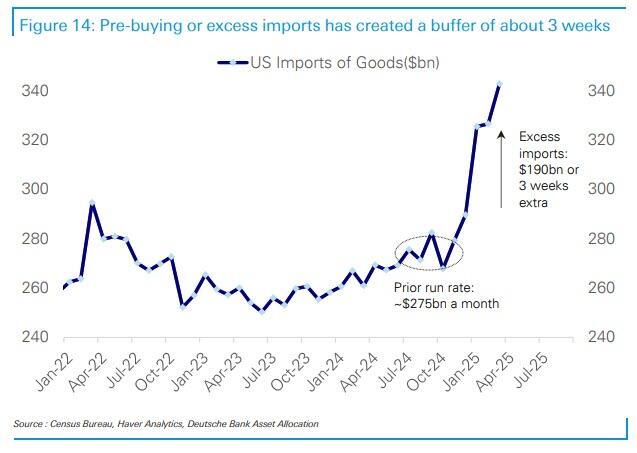
... which according to Deutsche Bank has led to precisely the opposite outcome than the one MSNBC and CNN have been blasting: there is excess inventory in the supply channel, enough in fact to last weeks if not months, assuming a full-blown collapse in global trade, which of course would never happen absent a covid-like shock.
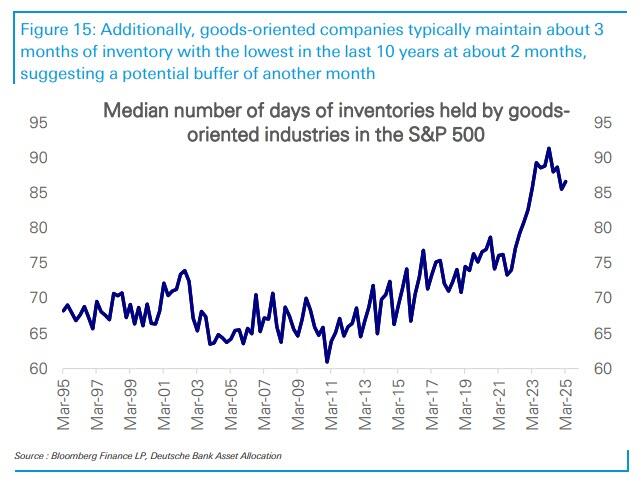
Additionally, if and when retailers end up liquidating these billions in excess inventories they have accumulated just for this contingency, the outcome would be wildly deflationary, and hardly the inflationary shock so many "experts" predict (that's the topic of another post, and we'll get to it eventually).
Going back to the media's favorite topic of dropping cargoes from China, it wasn't just us that countered the popular narrative: so did Standard Chartered's Steve Englander who wrote last week that "the lurid headlines on the drop in cargoes from China may be misleading."
That's because as we noted above, the volume of laden cargo now being shipped from China to the US is down almost 50% versus mid-April 2025, but the mid-April level was very high, and while you will never hear this on CNN, the current level is about on a par with much of 2023. In fact, Englander said that "the current pace as the low end of normal over the last couple of years." Only again, hardly the apocalypse Kevin Plank's favorite media body
https://www.wsj.com/business/media/under-armour-kevin-plank-stephanie-ruhle-66cb65b5
portrays it to be.
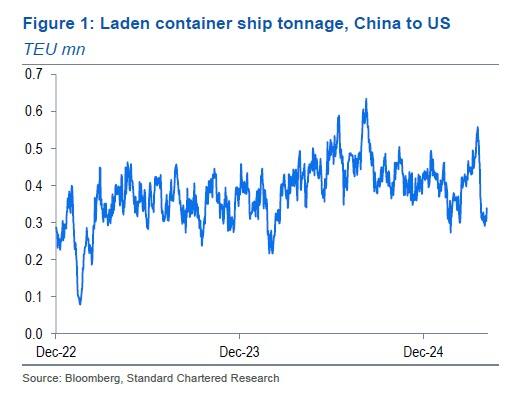
There's more: another thing you would never hear on MSNBC or CNN is that if the early-May pace of shipping to the US is maintained though end-June, the cumulative amount shipped in H1-2025 would be 18% higher than in H1-2023 and only 5% lower than in H1-2024. So far this year, the tonnage shipped to the US is 40% higher than in 2023 and 9% higher than in 2024. Indeed, as noted above, and as Englander observes, "US importers may have an inventory buffer until tariffs are negotiated downwards."
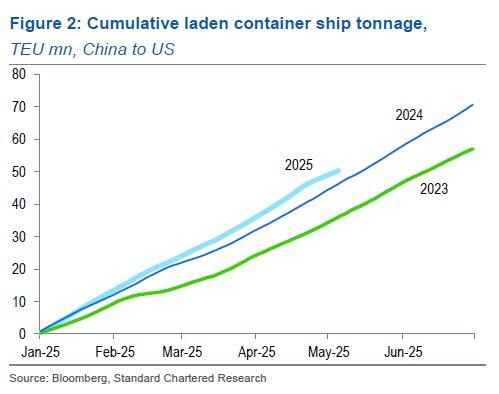
Taking a step back, if only for the benefit of our CNN and MSNBC readers, the big picture is one that even if the US were to lose all Chinese imports - an outcome which nobody anticipates as it would destroy China's economy as Reuters admitted last week - the outcome to the US would hardly be devastating. Yes, prices would rise, but overall the US would be able to handle it. Here, again, is Englander explaining why:
US imports from China are about 1.6% of US GDP in value terms. If inbound cargo stays at early-May levels, then H2-2025 imports will be 85% of 2023 levels (in volume terms) and 67% of 2024 levels. So the import volume shock would be 0.25% of GDP relative to 2023 and 0.5% relative to 2024. And keep in mind that there may be substitution from elsewhere. There may be temporary delays as US importers figure out the practicalities of dealing with the new tariffs, and shipping may be down temporarily because importers stocked up ahead of tariff implementation.
There is little precedent for this kind of tariff shock, but our judgement is that the US economy can handle it. We agree that disruption is likely from tariffs and that any benefits are uncertain, but we don’t think that the US economy will fall off a precipice because of a shock of this magnitude.
Remarkably, none of the so-called experts predicting doom and gloom in recent days spent even a minute to consider this eventuality. Which is also why the left's attempt to spark widespread panic by focusing on Chinese imports had largely been a dud... and why it forced the media to escalate its claims to ever more ludicrous proportions, until we got the CNN story that there were "zero ships from China are bound for California's top ports."
And this is where we drew the line because it takes about a 10 second google search on any of the marine tracking websites such as
MarineTraffic: Global Ship Tracking Intelligence | AIS Marine Traffic
MarineTraffic Live Ships Map. Discover information and vessel positions for vessels around the world. Search the MarineTraffic ships database of mo...
to find out this is total bullshit. And the fact that CNN didn't even consider that not all of its readers are absolute idiots who would accept its lies with zero pushback, is what was most remarkable.
Below is a chart from Bloomberg showing all the Dry Cargo/Container ships that have recently left China, and are currently in the water, headed for Wast Coast ports.
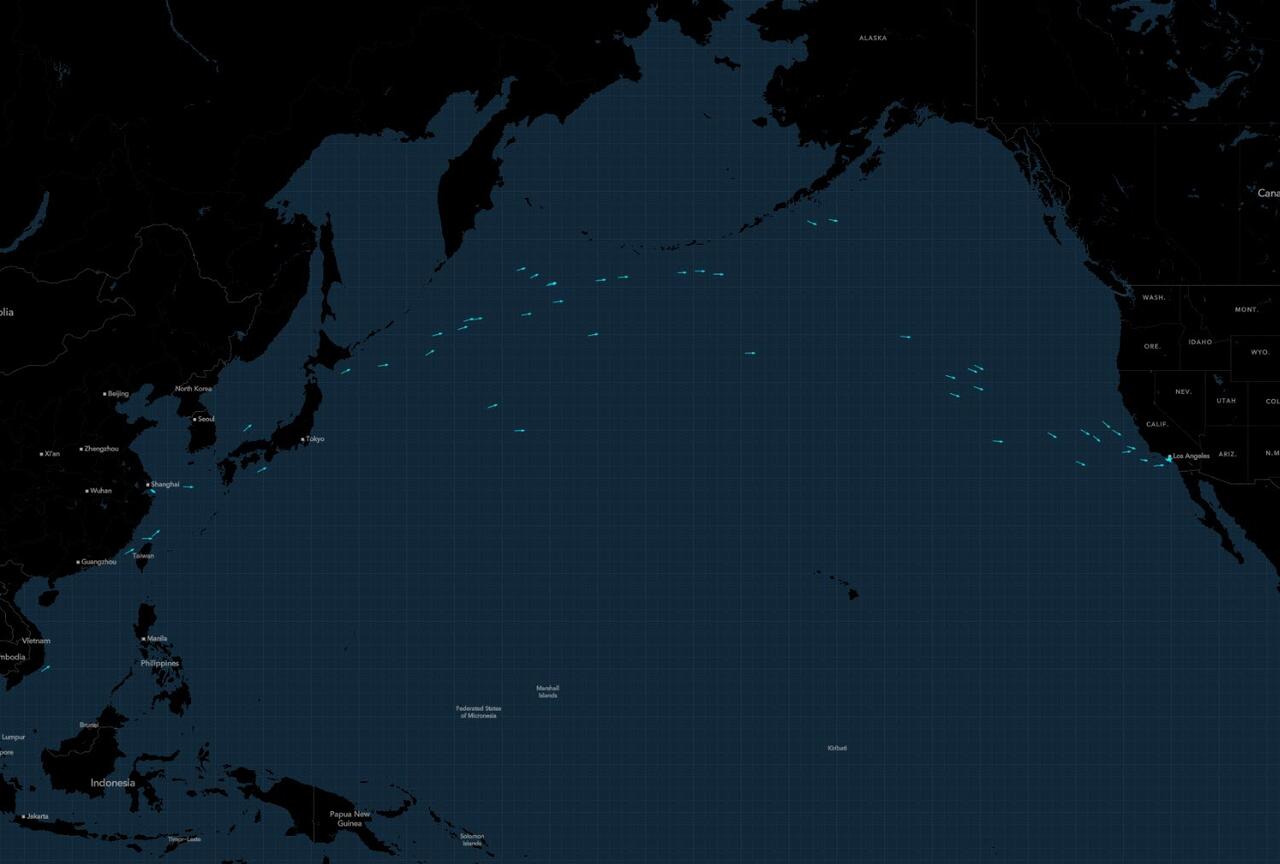
According to Bloomberg, there are no less than 52 cargo ships currently sailing from China to California and the West Coast, with the full list shown below.
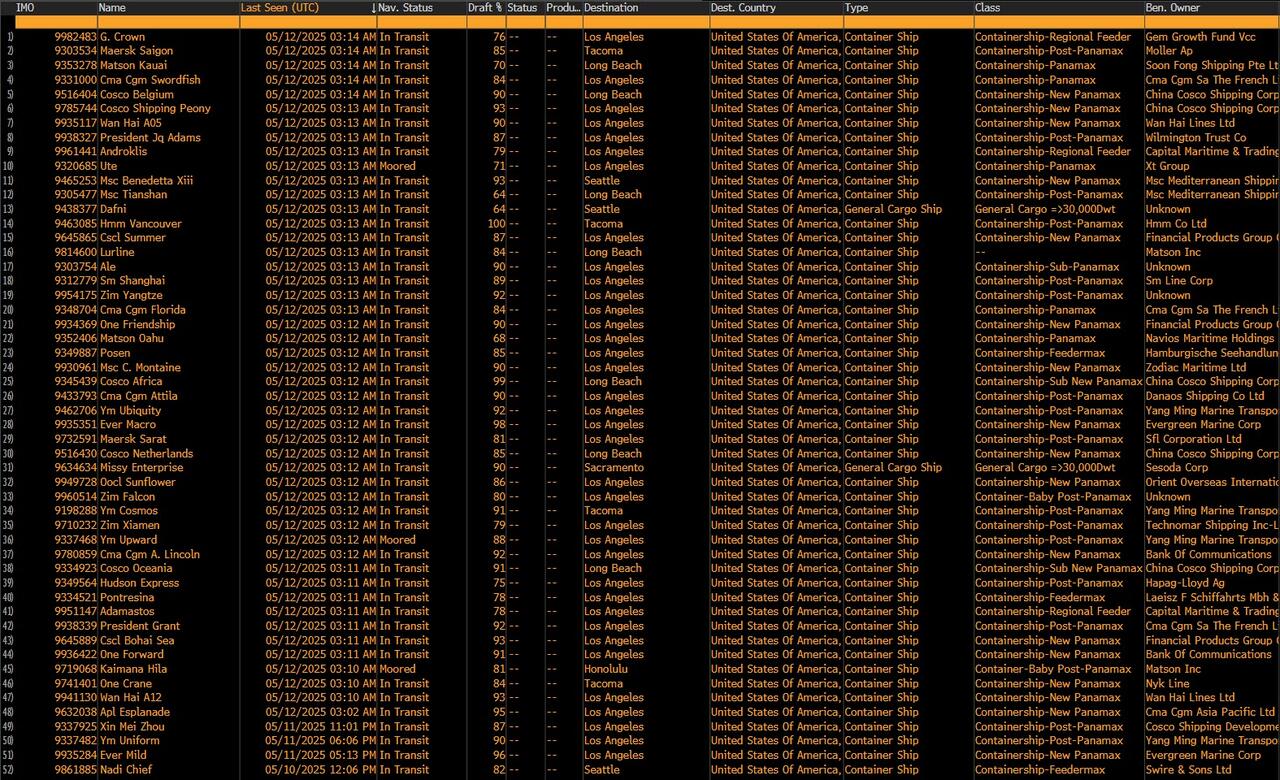
It goes without saying that 52 is quite different from the zero ships headed to the US, as
https://www.cnn.com/2025/05/10/business/zero-ships-china-trade-ports-pandemic
, and to put that number in context, here is what the average number of ships heading across from China to the US has been in 2025:
January 59 ships
February 56
March 55
April 55
And now May is 52. So that drop - from 55 to 52 - is supposed to be the "covid-like emergency" that the mainstream propaganda media is urging Americans to run to their local Walmart and stock up on 1 year of toilet paper?
But it gets worse for CNN, because while we can understand if they don't have access to Bloomberg, or even google as a result of recent cuts in USAID funding, they could have just gone to the Port of Los Angeles website to look at the public Port Optimizer data which shows that contrary to fake narratives of collapsing global trade, the import volumes for the week of May 18-24 are up 19% from the previous week and up a whopping 56% from a year ago.
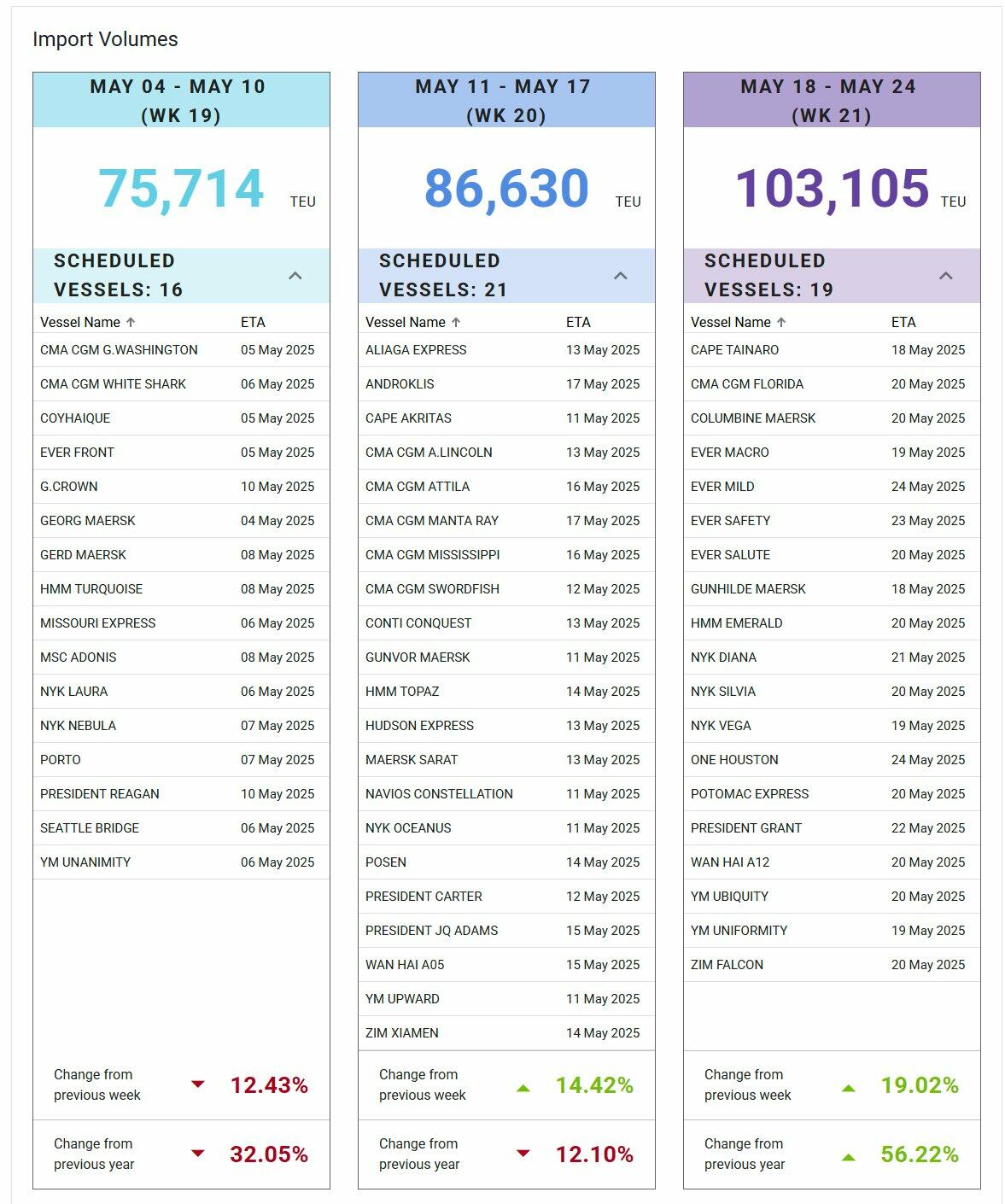
And another way of showing it: here is the total number of container ships sailing from China to the US (in TEUs). The number on May 11 is higher than where it was in 2024 and the same as May 2023. But you won't hear any of that on CNN.
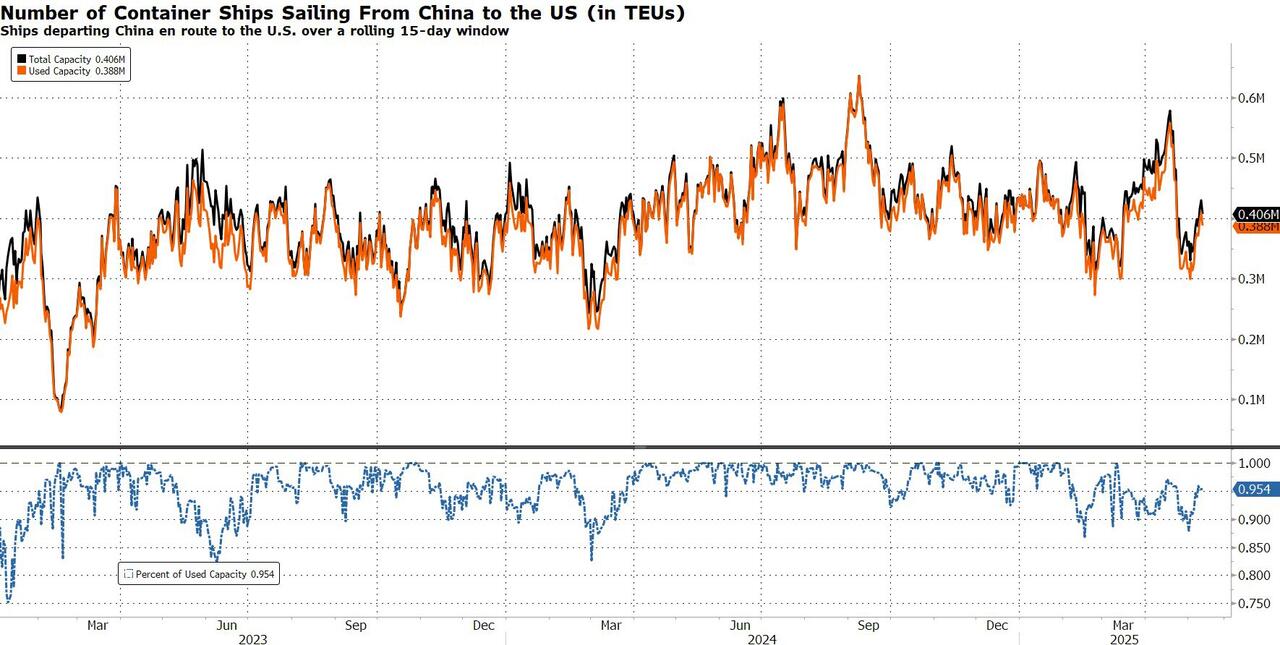
Instead, this is what you will hear on CNN:
"On Friday morning, West Coast port officials told CNN about a startling sight: Not a single cargo vessel had left China with goods for the two major West Coast ports in the past 12 hours. That hasn’t happened since the pandemic."
Only this attempt to spark panic (while evoking the covid pandemic for obvious reasons) is also dead wrong: first, consider that there are currently 52 ships transiting the Pacific from China to SoCal, in line with historic numbers: the trip takes 20 days which means 2.6 ships sailing each day or one ship every 9 to 10 hours. So a 12 hour period is not unusual. And, as Sal Mercogliano points out, while no ships may have set sail for California on Friday, a quick look at Marine Traffic shows that three ships - Cosco Africa, Ever Safety and Ever Mild - are all leaving China for SoCal this weekend. So much for that "startling sight."
6/The story said 41 ships were scheduled to sail, but on Friday it was zero. This does not mean the 41 are not sailing. A quick look

X (formerly Twitter)
MarineTraffic (@MarineTraffic) on X
The #1 ship tracking service in the world. Available on the web https://t.co/YmiB0QyZJp and mobile app https://t.co/YVWnhe7LDs
— Sal Mercogliano (WGOW Shipping) 🚢⚓🐪🚒🏴☠️ (@mercoglianos)
https://twitter.com/mercoglianos/status/1921308576997351543?ref_src=twsrc%5Etfw
We could continue but you - unlike CNN - get the picture: transpacific trade may have slowed down, but it is nowhere near the full ground stop observed for a few weeks during covid, not even remotely close.
Meanwhile, the entire discussion about empty ports and empty shelves is completely moot because
https://www.reuters.com/business/autos-transportation/trade-talks-begin-chinese-exporters-prepare-get-goods-moving-us-again-2025-05-09/
even before the news of this weekend's US-China trade talks breakthrough hit, "China-based shipping agents have resumed buying container space for goods headed for the United States after a series of U.S. tariff-induced cancellations, as Beijing and Washington head for trade talks in Switzerland."
And here is
https://www.reuters.com/business/autos-transportation/trade-talks-begin-chinese-exporters-prepare-get-goods-moving-us-again-2025-05-09/
what we said several days ago: "Since late April, however, traders have stepped up buying of shipping capacity, locking in space from mid-May, according to two China-based executives with freight forwarding firms."
Or precisely what we said a week ago.
Ships sailing from China to US hits 2 week high. But Long Beach was supposed to be a ghost port
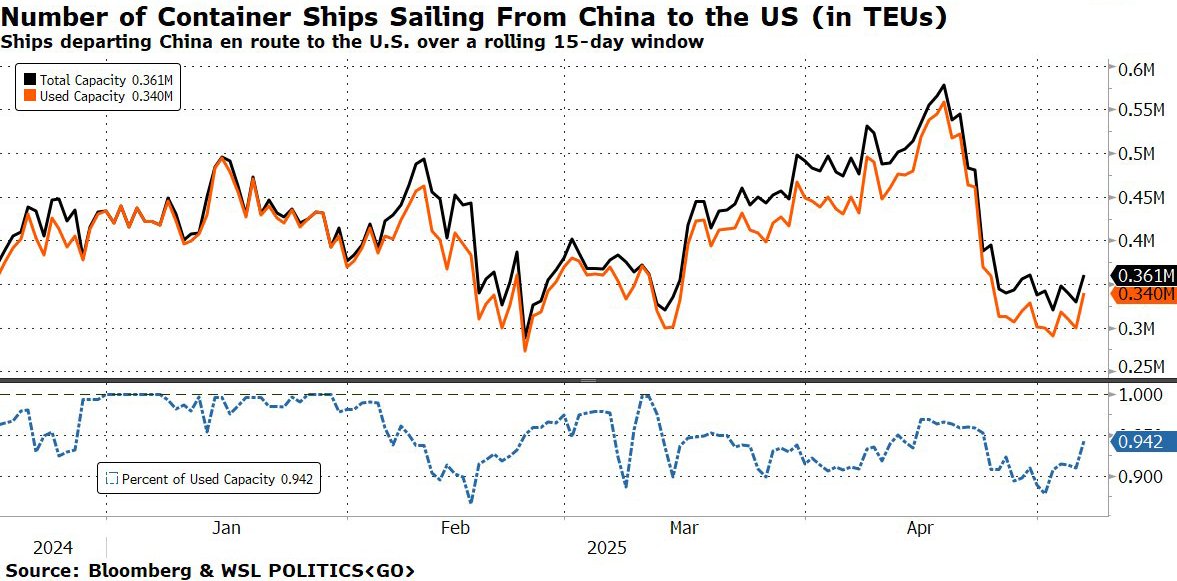
X (formerly Twitter)
zerohedge (@zerohedge) on X
Ships sailing from China to US hits 2 week high. But Long Beach was supposed to be a ghost port
— zerohedge (@zerohedge)
X (formerly Twitter)
zerohedge (@zerohedge) on X
Ships sailing from China to US hits 2 week high. But Long Beach was supposed to be a ghost port
And remarkably, and contrary to anything you may hear on CNN or MSNBC, shipping from China to the US is actually set for another surge! According to Dominic Desmarais, chief solutions officer at Liya Solutions which connects small and medium-sized companies with suppliers in China making everything from furniture to titanium products, prices could go up by $500 per container after May 15 as shipping activity recovers.
So much for CNN's fake news.
We'll leave readers with another far more critical discussion topic, namely whether tariffs lead to inflation, something about which we will have more to say in the coming days since this has become a focal point of much economic debate in recent months, not just in the political arena but also inside the Fed.
And while Fed Chair Powell appears to be very "confused" once again, claiming that tariffs are inflationary with the same erroneous conviction he previously argued "inflation was transitory" - we will instead point you to the recent work of Javier Bianchi, senior research economist at the Federal Reserve Bank of Minneapolis, who thinks tariffs are not just a negative supply shock, but also a negative demand shock, and argues that the optimal monetary policy response to tariffs - which lead not to inflation but threaten recession - is to cut rates. For much more on this critical issue read "

Under a stiff tariff, boosting the economy takes priority over inflation for a central bank | Federal Reserve Bank of Minneapolis
A look at “The Optimal Monetary Policy Response to Tariffs”
", something we are 100% certain neither CNN or MSNBC will never do.
Tyler Durden | Zero Hedge
Zero Hedge
Mon, 05/12/2025 - 00:16
Fake News Narrative Of "Empty Ports, Empty Shelves" Suffers Spectacular Implosion | ZeroHedge
ZeroHedge - On a long enough timeline, the survival rate for everyone drops to zero

 to the secretary of the Department of Energy, Trump said, “Water conservation requirements for faucets, showers, bathtubs, and toilets ... make bathroom appliances more expensive and less functional.”
“‘Efficiency’ standards render other American appliances like clothes washers and dishwashers less useful, more breakable, and more expensive to repair,” the White House said in a
to the secretary of the Department of Energy, Trump said, “Water conservation requirements for faucets, showers, bathtubs, and toilets ... make bathroom appliances more expensive and less functional.”
“‘Efficiency’ standards render other American appliances like clothes washers and dishwashers less useful, more breakable, and more expensive to repair,” the White House said in a  on Trump’s memo. “The Federal Government should not impose or enforce regulations that make taxpayers’ lives worse.”
 the memo orders Energy Secretary Chris Wright to review and rescind rules limiting water use in showerheads, faucets, dishwashers, toilets, urinals, and washing machines, or return these rules to the bare minimum required by the Energy Policy Act of 1992.
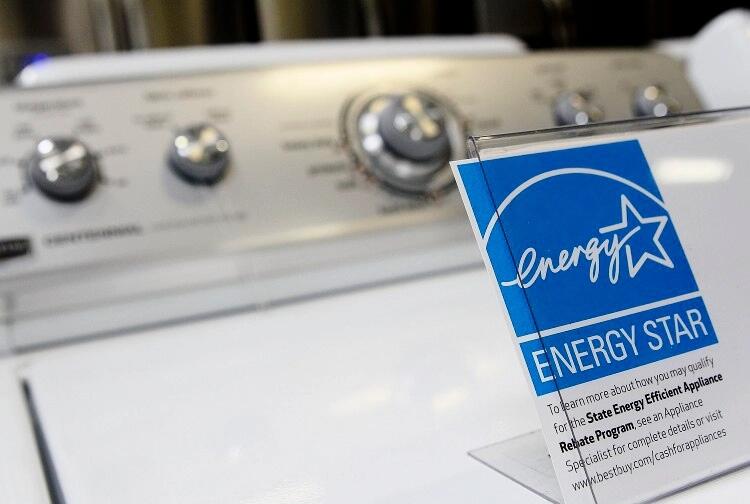
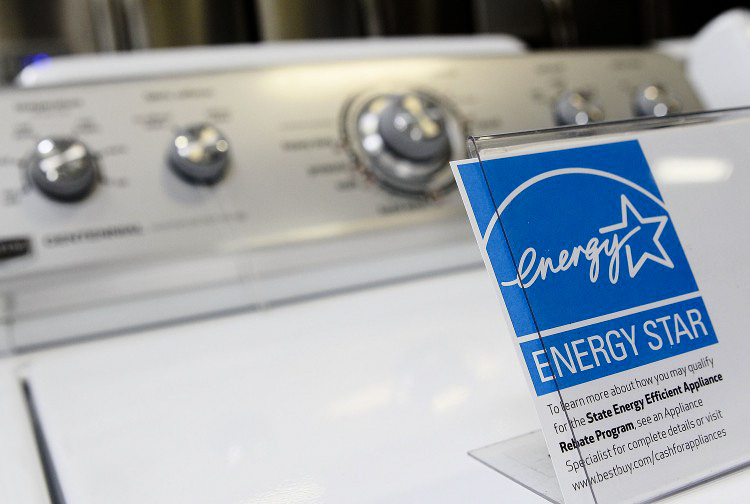
The executive order will have a major effect on the Energy Star program, which is managed by the EPA in coordination with the Department of Energy. Under the program, the EPA establishes energy efficiency guidelines, and appliances in a given category that meet these specifications can display the ENERGY STAR logo.
Trump said that his directive would help increase the effectiveness of bathroom products, saying that standards imposed in the aftermath of the 1992 legislation had reduced consumer choice and made products less functional than they were before the legislation.
“Ultra-efficient washing machines cost at least $100 more according to the Department of Energy,” the White House fact sheet states. “Updated dishwasher regulations caused those appliances to take two hours or more to complete a normal load of dishes—about twice the time of pre-standards models.”
Earlier, on Jan. 20, Trump signed an executive order to “safeguard the American people’s freedom to choose from a variety of goods and appliances, including but not limited to lightbulbs, dishwashers, washing machines, gas stoves, water heaters, toilets, and shower heads.”
The same day, Trump signed several measures passed by Congress under the Congressional Review Act repealing rules from President Joe Biden’s administration related to energy efficiency.
The measures repealed regulations on gas water heaters and walk-in coolers and freezers, as well as energy conservation standards for some appliances and some consumer products and commercial freezers.
“It’s all about common sense,” Trump said as he signed the legislation while flanked by Republican lawmakers.
The rescission comes amid an ongoing reorganization of the EPA under Director Lee Zeldin.
In a video, Zeldin said that before the Trump administration, the regulatory agency was spending $63 billion “including all sorts of political green slush funds”—although it cost only about $8 billion to $10 billion to run the agency.
“This reorganization will bring much needed efficiencies to incorporate science into our rulemakings and sharply focus our work on providing the cleanest air, land, and water for our communities. It will also save at least $300 million annually for the American people,” Zeldin said.
Such an exclusive focus on air, land, and water cleanliness is a departure from the focus on climate change that has defined the agency in the past, and fits into Trump’s larger commitment to reducing regulations that the president has said harm American energy production and use.
Mon, 05/12/2025 - 14:05
the memo orders Energy Secretary Chris Wright to review and rescind rules limiting water use in showerheads, faucets, dishwashers, toilets, urinals, and washing machines, or return these rules to the bare minimum required by the Energy Policy Act of 1992.
The executive order will have a major effect on the Energy Star program, which is managed by the EPA in coordination with the Department of Energy. Under the program, the EPA establishes energy efficiency guidelines, and appliances in a given category that meet these specifications can display the ENERGY STAR logo.
Trump said that his directive would help increase the effectiveness of bathroom products, saying that standards imposed in the aftermath of the 1992 legislation had reduced consumer choice and made products less functional than they were before the legislation.
“Ultra-efficient washing machines cost at least $100 more according to the Department of Energy,” the White House fact sheet states. “Updated dishwasher regulations caused those appliances to take two hours or more to complete a normal load of dishes—about twice the time of pre-standards models.”
Earlier, on Jan. 20, Trump signed an executive order to “safeguard the American people’s freedom to choose from a variety of goods and appliances, including but not limited to lightbulbs, dishwashers, washing machines, gas stoves, water heaters, toilets, and shower heads.”
The same day, Trump signed several measures passed by Congress under the Congressional Review Act repealing rules from President Joe Biden’s administration related to energy efficiency.
The measures repealed regulations on gas water heaters and walk-in coolers and freezers, as well as energy conservation standards for some appliances and some consumer products and commercial freezers.
“It’s all about common sense,” Trump said as he signed the legislation while flanked by Republican lawmakers.
The rescission comes amid an ongoing reorganization of the EPA under Director Lee Zeldin.
In a video, Zeldin said that before the Trump administration, the regulatory agency was spending $63 billion “including all sorts of political green slush funds”—although it cost only about $8 billion to $10 billion to run the agency.
“This reorganization will bring much needed efficiencies to incorporate science into our rulemakings and sharply focus our work on providing the cleanest air, land, and water for our communities. It will also save at least $300 million annually for the American people,” Zeldin said.
Such an exclusive focus on air, land, and water cleanliness is a departure from the focus on climate change that has defined the agency in the past, and fits into Trump’s larger commitment to reducing regulations that the president has said harm American energy production and use.
Mon, 05/12/2025 - 14:05

 The group said Ocalan should be allowed to manage the disbandment process. It also requested solid and integrated legal guarantees to ensure the success of their decision.
"At this stage, it is important for the Grand National Assembly of Turkey to play its role with historical responsibility," the PKK's statement said.
"Similarly, we call on all political parties represented in the parliament, especially the government and the main opposition party, and civil society organizations to take responsibility and participate in the peace and democratic society process."
This historic announcement came after a 40-year-long conflict between Turkey and the PKK. The group initially sought Kurdish independence but later shifted its goal to autonomy and greater rights for Kurds within Turkey.
Over the decades, various governments, including that of Turkish President Recep Tayyip Erdogan, attempted to resolve the issue through legal settlements, but these efforts were unsuccessful, and tens of thousands of lives were lost.
Since 2016, Ankara has managed to corner the PKK in northern Iraq by employing sophisticated technology such as drones and signal intelligence capabilities, as well as establishing dozens of military outposts that restrict the group's freedom of movement and infiltration across the border.
A source familiar with the matter told Middle East Eye that the PKK's announcement was initially set to be released on Friday, as the government had made some preparations, but internal PKK bureaucracy delayed its release.
Ocalan, 76,
The group said Ocalan should be allowed to manage the disbandment process. It also requested solid and integrated legal guarantees to ensure the success of their decision.
"At this stage, it is important for the Grand National Assembly of Turkey to play its role with historical responsibility," the PKK's statement said.
"Similarly, we call on all political parties represented in the parliament, especially the government and the main opposition party, and civil society organizations to take responsibility and participate in the peace and democratic society process."
This historic announcement came after a 40-year-long conflict between Turkey and the PKK. The group initially sought Kurdish independence but later shifted its goal to autonomy and greater rights for Kurds within Turkey.
Over the decades, various governments, including that of Turkish President Recep Tayyip Erdogan, attempted to resolve the issue through legal settlements, but these efforts were unsuccessful, and tens of thousands of lives were lost.
Since 2016, Ankara has managed to corner the PKK in northern Iraq by employing sophisticated technology such as drones and signal intelligence capabilities, as well as establishing dozens of military outposts that restrict the group's freedom of movement and infiltration across the border.
A source familiar with the matter told Middle East Eye that the PKK's announcement was initially set to be released on Friday, as the government had made some preparations, but internal PKK bureaucracy delayed its release.
Ocalan, 76, 



 "The discussion that has been raised about dismantling Iran's entire nuclear facilities is unacceptable to us," the Iranian president



 Emergency authorities
 As for Putin's declared V-Day ceasefire, Moscow is still alleging that Ukraine broke it. "During Russian President Vladimir Putin’s unilaterally declared Victory Day truce from May 8 to May 11, Ukrainian forces attempted five cross-border incursions into Belgorod and Kursk regions, all of which failed, according to Russian officials," Russian media


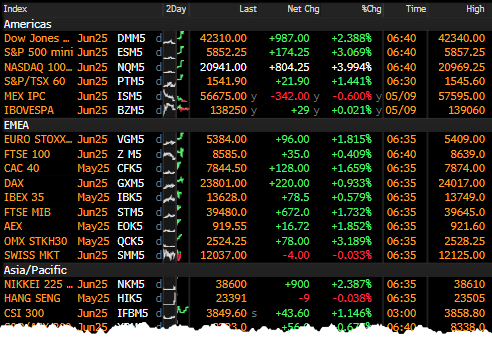
 "In our view, equity markets are returning to where they would have moved to if Liberation Day had not happened and Trump had just applied the 10% universal tariff," said Roberto Scholtes, head of strategy at Singular Bank.
Scholtes noted, "Corporate fundamentals are healthy, first quarter results have substantially surprised on the upside, and there's plenty of cash to be invested."
"This deescalation is much more positive than anticipated (GSe: 54% U.S. on China tariffs and 34% China on U.S. tariffs) and the market is reacting as such. We are seeing a clear reversal in short USD positions as U.S. recession risks reduce (GSe was 45%!) and risk-on sentiment rises. DXY rallied over 1%, S&P futures surged 3%, 10y UST rose to 4.43%, gold tumbled ~3%," Goldman analyst Yichin Tsai told clients.
S&P 500 futures are up 3%, and Nasdaq futures are up 4%. European stocks are in the green.
"In our view, equity markets are returning to where they would have moved to if Liberation Day had not happened and Trump had just applied the 10% universal tariff," said Roberto Scholtes, head of strategy at Singular Bank.
Scholtes noted, "Corporate fundamentals are healthy, first quarter results have substantially surprised on the upside, and there's plenty of cash to be invested."
"This deescalation is much more positive than anticipated (GSe: 54% U.S. on China tariffs and 34% China on U.S. tariffs) and the market is reacting as such. We are seeing a clear reversal in short USD positions as U.S. recession risks reduce (GSe was 45%!) and risk-on sentiment rises. DXY rallied over 1%, S&P futures surged 3%, 10y UST rose to 4.43%, gold tumbled ~3%," Goldman analyst Yichin Tsai told clients.
S&P 500 futures are up 3%, and Nasdaq futures are up 4%. European stocks are in the green.
 The move toward lower tariffs and easing trade tensions between the world's two largest economies follows Sunday's negotiations, during which both sides reported making "

 According to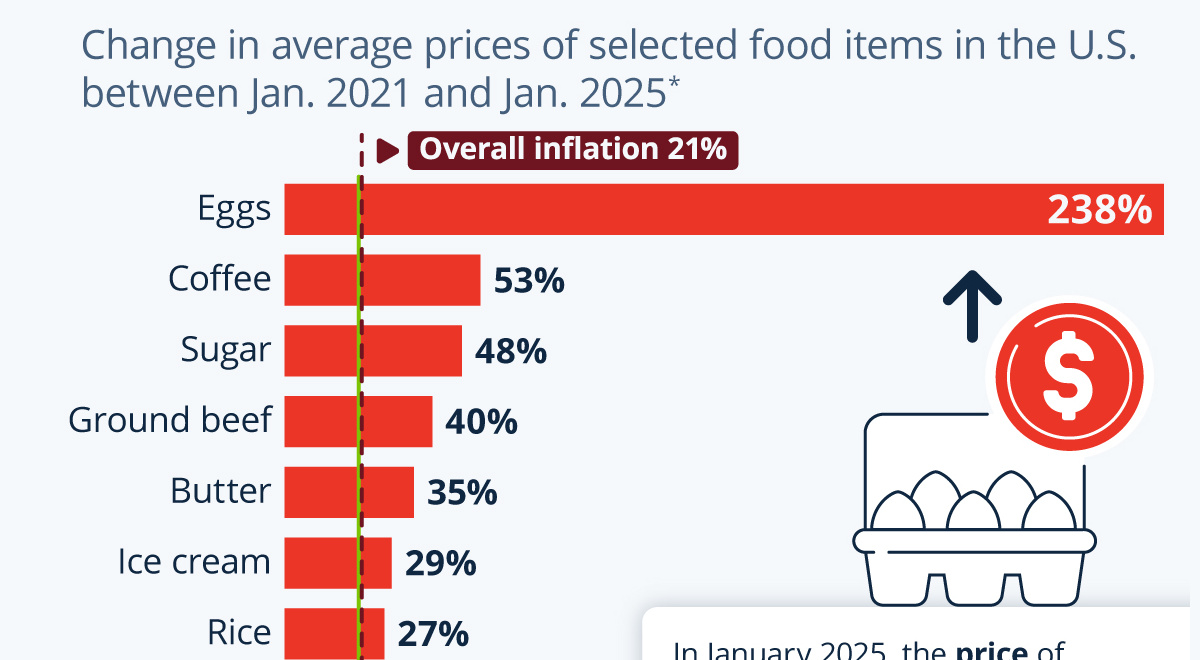
 Switzerland Tops the List
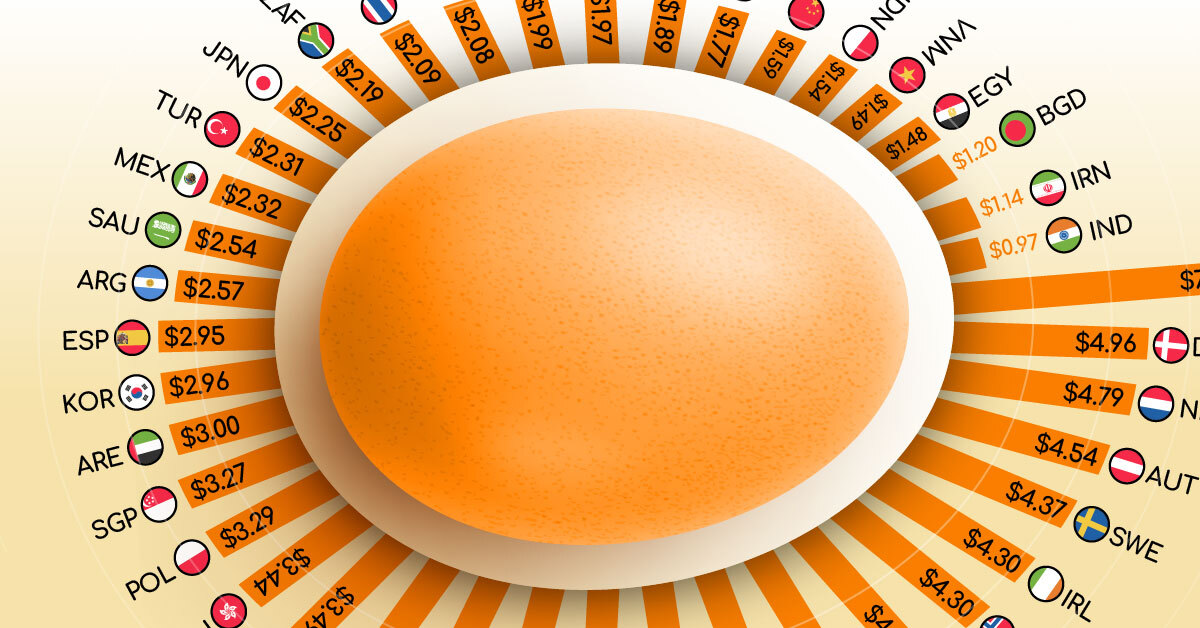
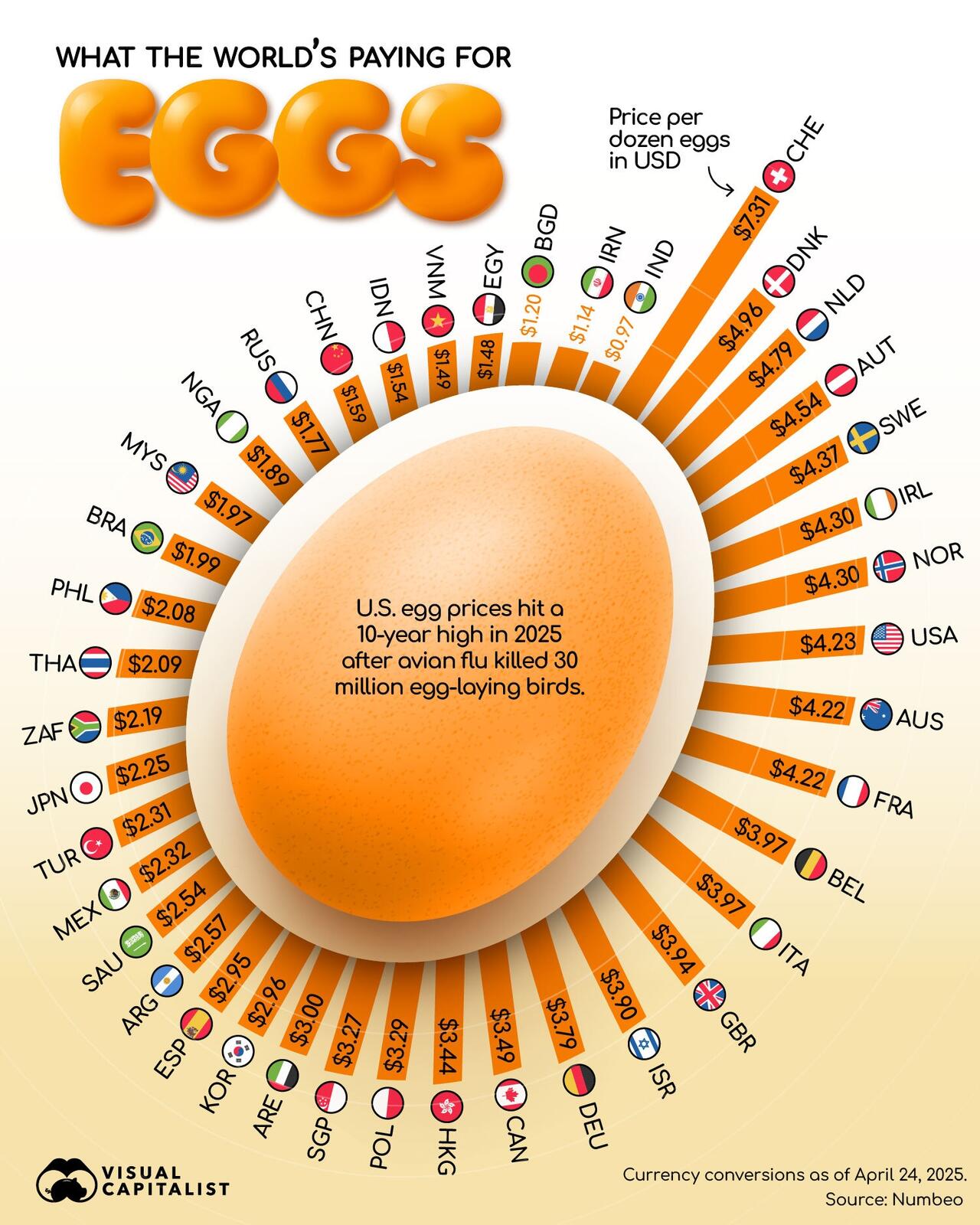
Switzerland tops the global chart, with consumers paying an average of $7.31 per dozen eggs—the highest price globally and nearly double what shoppers pay in neighboring Italy.
On the other hand, India offers the lowest egg prices, with a dozen costing just $0.97, reflecting broader affordability in emerging markets.
Rank
Country
Price (USD)
🥇 1
🇨🇭 Switzerland
$7.27
🥈 2
🇳🇿 New Zealand
$6.40
🥉 3
🇮🇸 Iceland
$6.23
4
🇧🇧 Barbados
$5.39
5
🇩🇰 Denmark
$4.93
6
🇱🇺 Luxembourg
$4.91
7
🇳🇱 Netherlands
$4.76
8
🇦🇹 Austria
$4.54
9
🇬🇷 Greece
$4.39
10
🇸🇪 Sweden
$4.34
11
🇳🇴 Norway
$4.32
12
🇦🇺 Australia
$4.27
13
🇺🇸 United States
$4.25
14
🇫🇷 France
$4.22
15
🇹🇹 Trinidad & Tobago
$4.20
16
🇮🇪 Ireland
$4.20
17
🇺🇾 Uruguay
$4.17
18
🇨🇾 Cyprus
$4.17
19
🇮🇱 Israel
$4.03
20
🇬🇧 United Kingdom
$3.94
21
🇧🇪 Belgium
$3.93
22
🇮🇹 Italy
$3.93
23
🇩🇪 Germany
$3.77
24
🇸🇮 Slovenia
$3.69
25
🇸🇰 Slovakia
$3.68
26
🇭🇷 Croatia
$3.63
27
🇲🇹 Malta
$3.63
28
🇨🇱 Chile
$3.59
29
🇦🇱 Albania
$3.58
30
🇨🇦 Canada
$3.50
U.S. Prices Rise Amid Shortages and Policy Shifts
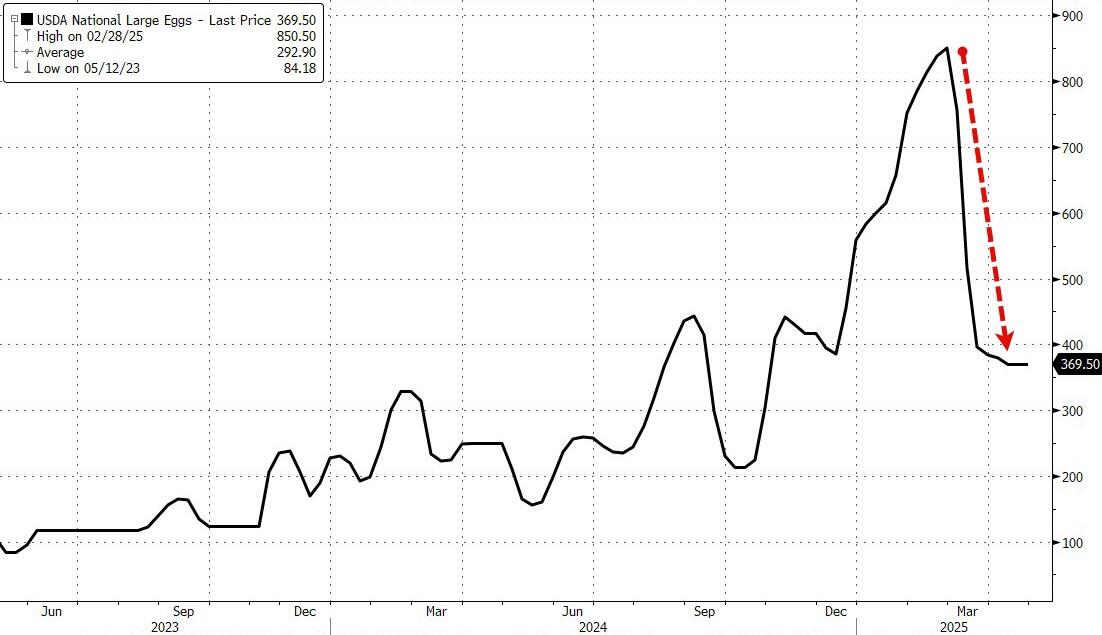
Egg prices in the United States climbed sharply through the end of the Biden administration (topping $8 per dozen), thanks to a combination of avian flu outbreaks, and supply chain disruptions drove costs higher, surpassing prices in many European nations and Canada.
The last few weeks, since President Trump took over, egg prices have tumbled back below $4 per dozen...
Switzerland Tops the List
Switzerland tops the global chart, with consumers paying an average of $7.31 per dozen eggs—the highest price globally and nearly double what shoppers pay in neighboring Italy.
On the other hand, India offers the lowest egg prices, with a dozen costing just $0.97, reflecting broader affordability in emerging markets.
Rank
Country
Price (USD)
🥇 1
🇨🇭 Switzerland
$7.27
🥈 2
🇳🇿 New Zealand
$6.40
🥉 3
🇮🇸 Iceland
$6.23
4
🇧🇧 Barbados
$5.39
5
🇩🇰 Denmark
$4.93
6
🇱🇺 Luxembourg
$4.91
7
🇳🇱 Netherlands
$4.76
8
🇦🇹 Austria
$4.54
9
🇬🇷 Greece
$4.39
10
🇸🇪 Sweden
$4.34
11
🇳🇴 Norway
$4.32
12
🇦🇺 Australia
$4.27
13
🇺🇸 United States
$4.25
14
🇫🇷 France
$4.22
15
🇹🇹 Trinidad & Tobago
$4.20
16
🇮🇪 Ireland
$4.20
17
🇺🇾 Uruguay
$4.17
18
🇨🇾 Cyprus
$4.17
19
🇮🇱 Israel
$4.03
20
🇬🇧 United Kingdom
$3.94
21
🇧🇪 Belgium
$3.93
22
🇮🇹 Italy
$3.93
23
🇩🇪 Germany
$3.77
24
🇸🇮 Slovenia
$3.69
25
🇸🇰 Slovakia
$3.68
26
🇭🇷 Croatia
$3.63
27
🇲🇹 Malta
$3.63
28
🇨🇱 Chile
$3.59
29
🇦🇱 Albania
$3.58
30
🇨🇦 Canada
$3.50
U.S. Prices Rise Amid Shortages and Policy Shifts
Egg prices in the United States climbed sharply through the end of the Biden administration (topping $8 per dozen), thanks to a combination of avian flu outbreaks, and supply chain disruptions drove costs higher, surpassing prices in many European nations and Canada.
The last few weeks, since President Trump took over, egg prices have tumbled back below $4 per dozen...
 Emerging Markets Offer Relative Bargains
Despite global inflation, several emerging markets remain egg-price havens. In Brazil, Russia, and China, consumers pay under $2 per dozen, making eggs a highly accessible protein source for large populations.
To learn more about food prices, check out this
Emerging Markets Offer Relative Bargains
Despite global inflation, several emerging markets remain egg-price havens. In Brazil, Russia, and China, consumers pay under $2 per dozen, making eggs a highly accessible protein source for large populations.
To learn more about food prices, check out this 
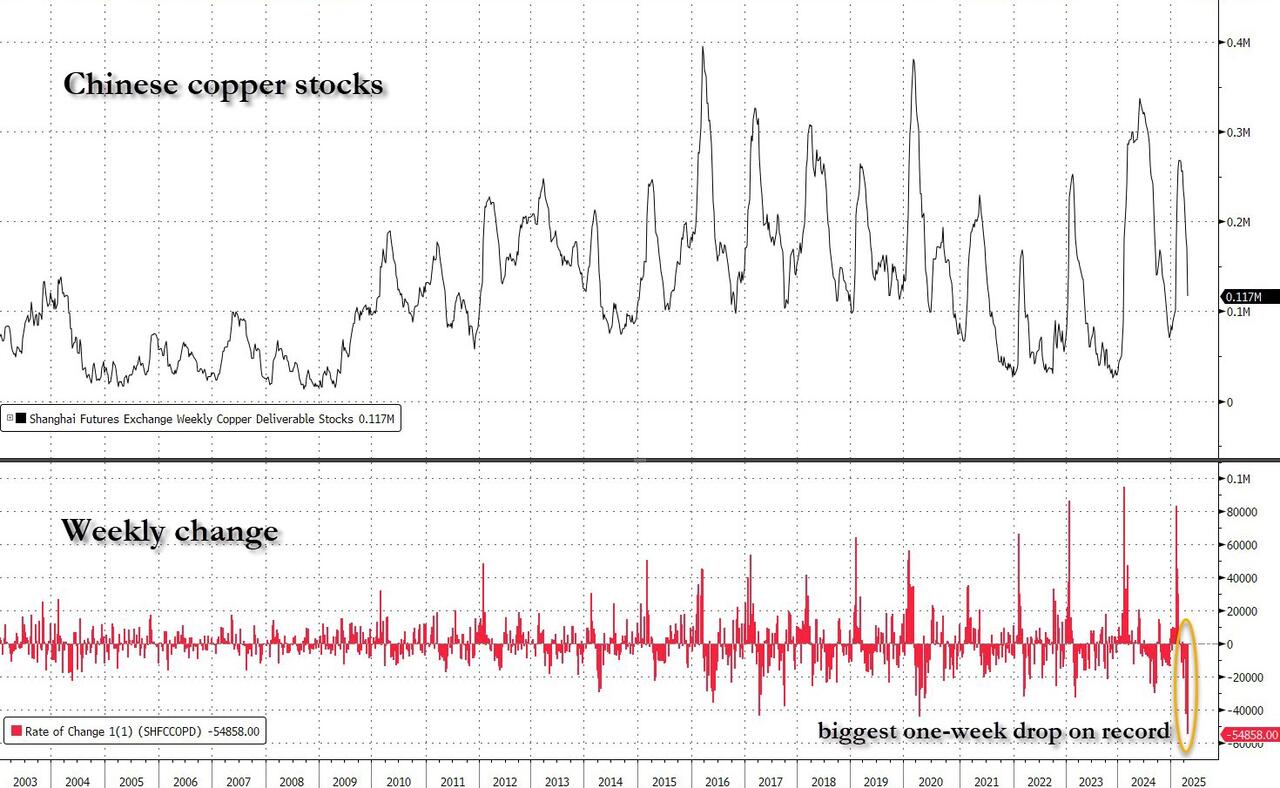 This “is potentially going to be one of the greatest tightening shocks this market’s ever seen”, Snowdon said. Beijing had a “razor thin inventory buffer” to meet domestic demand, he added.
Ironically, copper prices tumbled after Liberation Day to the lowest level in over a year, only to surge again as copper demand in China proved remarkably resilient despite headwinds from the US-led trade war and the nation’s property crisis, with buyers taking advantage of price slumps to snap up supplies.
“The copper market remains in a tight balance, despite macro-economic difficulties,” Xiao Qianjun, vice general manager of trade business at Jiangxi Copper, a top smelter, told an industry conference this week. After prices fell recently, “spot orders from fabricators exploded,” Xiao said.
At the same time, there is growing speculation Beijing may ramp up stimulus to support the world’s second-largest economy - and especially the copper-intensive housing market - to counter more challenging overseas conditions as Trump imposes punishing tariffs, while also holding out the promise of talks and a deal.
“Demand in the spot market, from surveys of downstream users or apparent consumption, are all very good,” Angela Bi, head of Asian metals and mineral research at Mercuria said at a conference, held by Shanghai Metals Market in Nanchang, Jiangxi. Indicators “are too good to be true,” Bi added.
Meanwhile, the Yangshan premium - a gauge of import demand - recently hit the highest since 2023. And local yuan-priced futures are steeply backwardated, a bullish pattern that points to near-term tightness.
The problem is that besides soaring domestic Chinese demand, there is also massive demand for physical copper from the US. Mercuria's head of metals and mining, Kostas Bintas, said the US was for the “first time” competing with China for supplies of copper, which was likely to supercharge prices. The impact of US protectionism on the copper market adds to pressure from Chinese domestic demand and retaliatory levies that could hit vital flows of copper scrap.
Similar to the frenzied record deliveries of physical gold to Comex, metal traders have been importing massive amounts of copper into the US ahead of possible tariffs, which could result from an investigation initiated by US President Donald Trump into alleged “dumping and state sponsored overproduction” of the metal. He has already imposed a 25% levy on aluminium and steel imports.
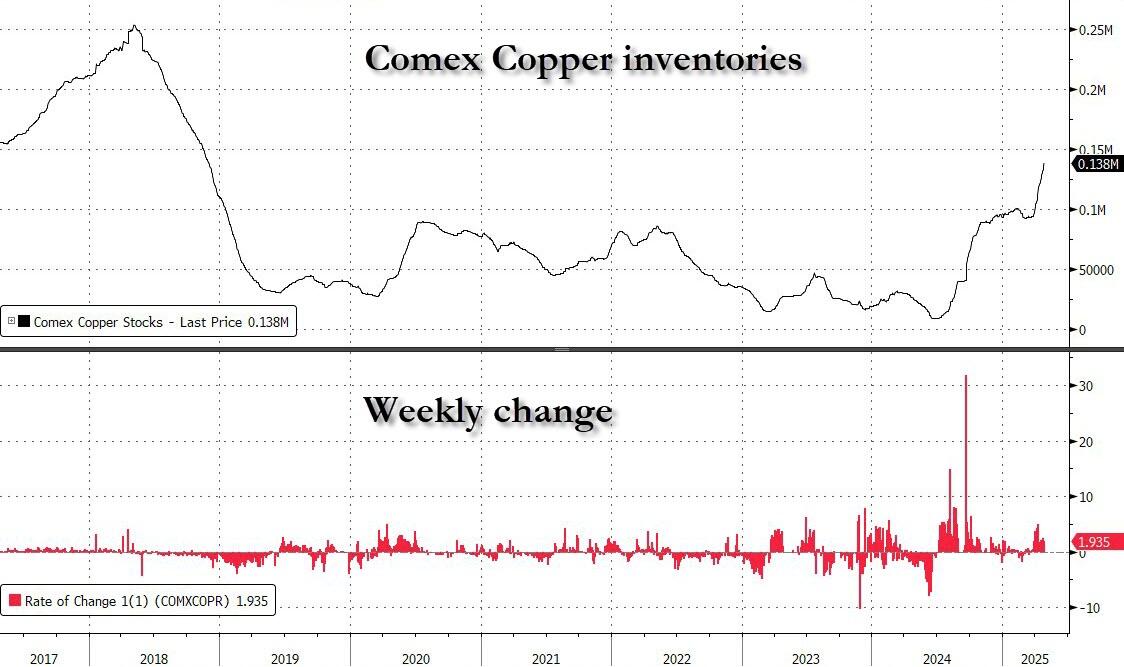
And just like gold, copper stocks in Comex warehouses in the US have soared this month to their highest level on Friday since 2018.
This “is potentially going to be one of the greatest tightening shocks this market’s ever seen”, Snowdon said. Beijing had a “razor thin inventory buffer” to meet domestic demand, he added.
Ironically, copper prices tumbled after Liberation Day to the lowest level in over a year, only to surge again as copper demand in China proved remarkably resilient despite headwinds from the US-led trade war and the nation’s property crisis, with buyers taking advantage of price slumps to snap up supplies.
“The copper market remains in a tight balance, despite macro-economic difficulties,” Xiao Qianjun, vice general manager of trade business at Jiangxi Copper, a top smelter, told an industry conference this week. After prices fell recently, “spot orders from fabricators exploded,” Xiao said.
At the same time, there is growing speculation Beijing may ramp up stimulus to support the world’s second-largest economy - and especially the copper-intensive housing market - to counter more challenging overseas conditions as Trump imposes punishing tariffs, while also holding out the promise of talks and a deal.
“Demand in the spot market, from surveys of downstream users or apparent consumption, are all very good,” Angela Bi, head of Asian metals and mineral research at Mercuria said at a conference, held by Shanghai Metals Market in Nanchang, Jiangxi. Indicators “are too good to be true,” Bi added.
Meanwhile, the Yangshan premium - a gauge of import demand - recently hit the highest since 2023. And local yuan-priced futures are steeply backwardated, a bullish pattern that points to near-term tightness.
The problem is that besides soaring domestic Chinese demand, there is also massive demand for physical copper from the US. Mercuria's head of metals and mining, Kostas Bintas, said the US was for the “first time” competing with China for supplies of copper, which was likely to supercharge prices. The impact of US protectionism on the copper market adds to pressure from Chinese domestic demand and retaliatory levies that could hit vital flows of copper scrap.
Similar to the frenzied record deliveries of physical gold to Comex, metal traders have been importing massive amounts of copper into the US ahead of possible tariffs, which could result from an investigation initiated by US President Donald Trump into alleged “dumping and state sponsored overproduction” of the metal. He has already imposed a 25% levy on aluminium and steel imports.
And just like gold, copper stocks in Comex warehouses in the US have soared this month to their highest level on Friday since 2018.
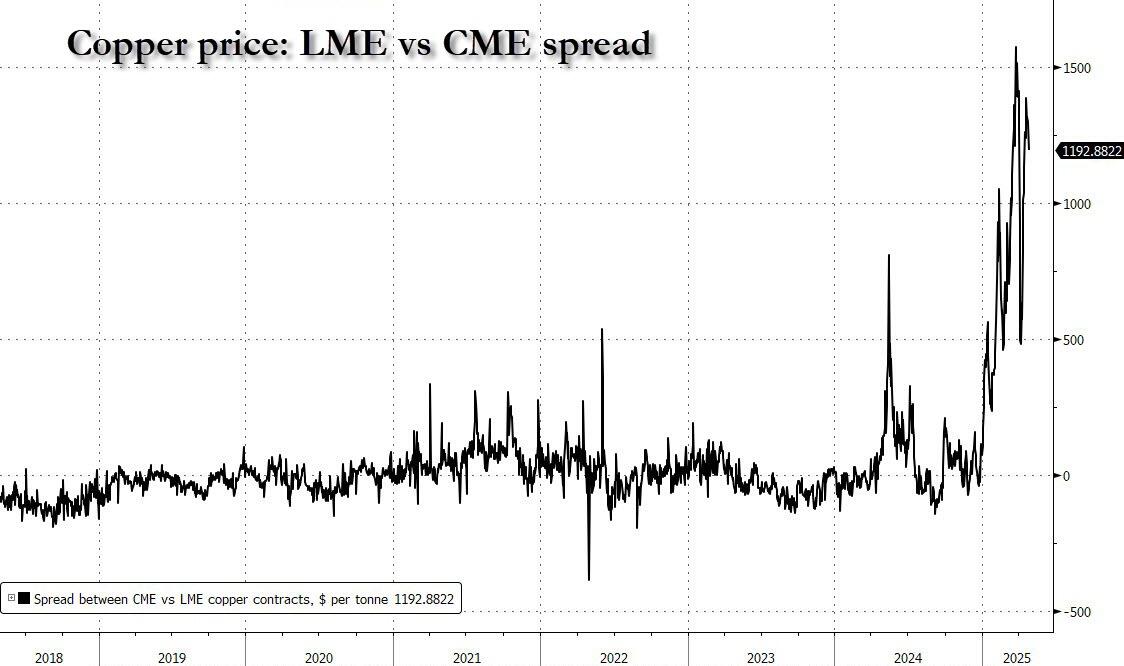
 Helping drive supplies to the US is the same arbitrage observed in late 2024 in the gold market, one created by investors' fear of tariffs, among others. This has pushed up sharply the price of the metal on New York’s Comex exchange in comparison with prices on London’s London Metal Exchange.
This spread has created an unprecedented arb for traders who buy copper futures contracts in London and sell contracts in New York. The spread stood at nearly $1,200 per tonne on Monday, having risen above $1,600 in March, well above its long-term average of roughly $0.
Helping drive supplies to the US is the same arbitrage observed in late 2024 in the gold market, one created by investors' fear of tariffs, among others. This has pushed up sharply the price of the metal on New York’s Comex exchange in comparison with prices on London’s London Metal Exchange.
This spread has created an unprecedented arb for traders who buy copper futures contracts in London and sell contracts in New York. The spread stood at nearly $1,200 per tonne on Monday, having risen above $1,600 in March, well above its long-term average of roughly $0.
 The arb has been so popular, a potential short squeeze is emerging: as the FT reports, "some traders who had large commitments to sell copper on Comex have been urgently trying to get their hands on additional tonnes into the US to cover those short positions before any new tariffs were introduced, said Bintas." Which explains the panic scramble of physical out of China and into the US... because if they don't "get their hands on additional tonnes", the price of copper could go vertical.
There could be even more chaos: retaliatory tariffs imposed by China on US imports could also hit the crucial copper scrap market, analysts said, adding to the tightness in the Chinese market.
That could worsen if the US imposes a ban on the export of copper scrap, of which it is a big exporter. It shipped 960,000 tonnes in 2024, with almost half going to China, according to commodity pricing agency Fastmarkets.
In January and February, the latest data available, the US exported 142,000 tonnes in total, compared with 149,000 during the same period last year. That number could quickly hit zero if Washington decided to impose an embargo on the commodity to hammer Beijing, which urgently needs copper to develop everything from electrical infrastructure, to AI data centers, to ghost cities.
Sure enough, Andrew Cole, a metals analyst at Fastmarkets, said he expected “a significant plunge in scrap shipments from the US to China in March to May at the very least.
“That’s what will lead to the escalation of supply squeeze in China we have been expecting to develop as the year progresses,” he said.
“Imported copper scrap stockpiles in China have dropped significantly,” said Mercuria's Bi
However, while Chinese stocks were being depleted, in reality markets would react before stocks reached zero, with higher prices attracting more imports of copper and scrap, said Snowdon.
“That comes at the point of record pull of copper units into the US. As those two forces meet that creates an unprecedented competition for copper,” he said.
The arb has been so popular, a potential short squeeze is emerging: as the FT reports, "some traders who had large commitments to sell copper on Comex have been urgently trying to get their hands on additional tonnes into the US to cover those short positions before any new tariffs were introduced, said Bintas." Which explains the panic scramble of physical out of China and into the US... because if they don't "get their hands on additional tonnes", the price of copper could go vertical.
There could be even more chaos: retaliatory tariffs imposed by China on US imports could also hit the crucial copper scrap market, analysts said, adding to the tightness in the Chinese market.
That could worsen if the US imposes a ban on the export of copper scrap, of which it is a big exporter. It shipped 960,000 tonnes in 2024, with almost half going to China, according to commodity pricing agency Fastmarkets.
In January and February, the latest data available, the US exported 142,000 tonnes in total, compared with 149,000 during the same period last year. That number could quickly hit zero if Washington decided to impose an embargo on the commodity to hammer Beijing, which urgently needs copper to develop everything from electrical infrastructure, to AI data centers, to ghost cities.
Sure enough, Andrew Cole, a metals analyst at Fastmarkets, said he expected “a significant plunge in scrap shipments from the US to China in March to May at the very least.
“That’s what will lead to the escalation of supply squeeze in China we have been expecting to develop as the year progresses,” he said.
“Imported copper scrap stockpiles in China have dropped significantly,” said Mercuria's Bi
However, while Chinese stocks were being depleted, in reality markets would react before stocks reached zero, with higher prices attracting more imports of copper and scrap, said Snowdon.
“That comes at the point of record pull of copper units into the US. As those two forces meet that creates an unprecedented competition for copper,” he said.
 The Orange County Register reported last month that Orange County will lose out on