The Media's Piss Stain Starts To Dry
The Media's Piss Stain Starts To Dry
Submitted by
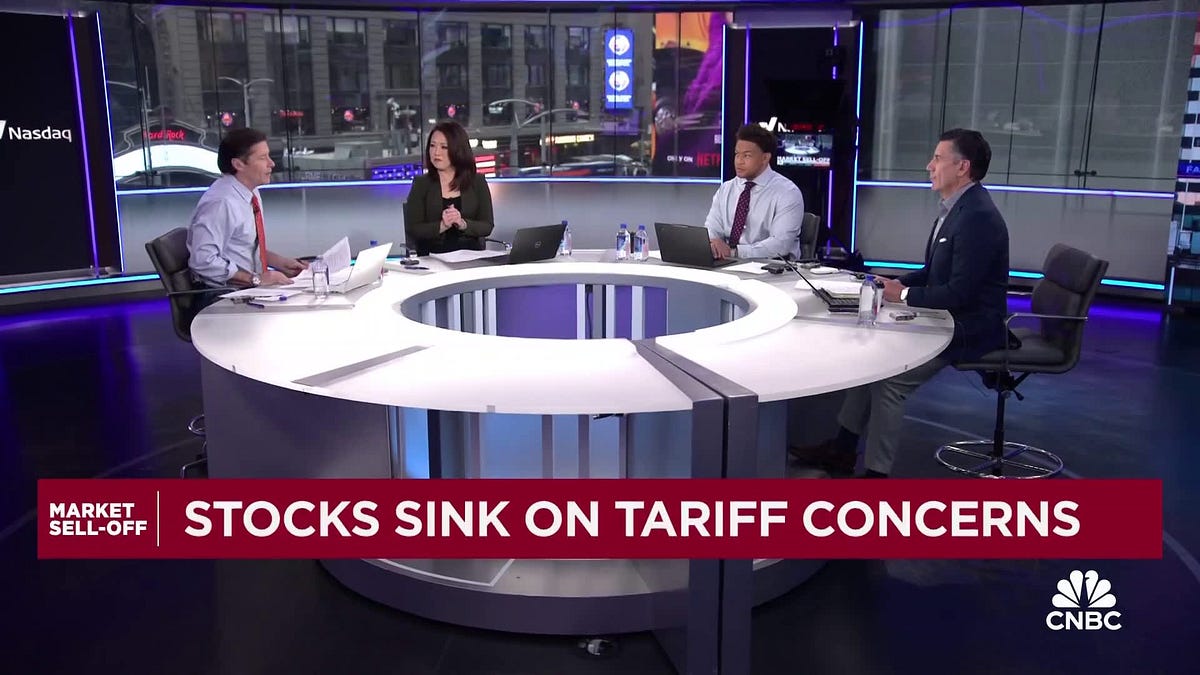
The Media's Piss Stain Starts To Dry
I can't help but laugh watching some analysts take their first deep breath in four days.
Over the last few days, I’ve been part of an extraordinarily small contingency of people
The Inevitable, Just Sooner
People rush to throw our country under the bus the second someone shakes the precious, coddled economic snow globe they live in.
over President Trump’s new tariff plan or the ensuing stock market pullback.
A couple of days ago, I
The Inevitable, Just Sooner
People rush to throw our country under the bus the second someone shakes the precious, coddled economic snow globe they live in.
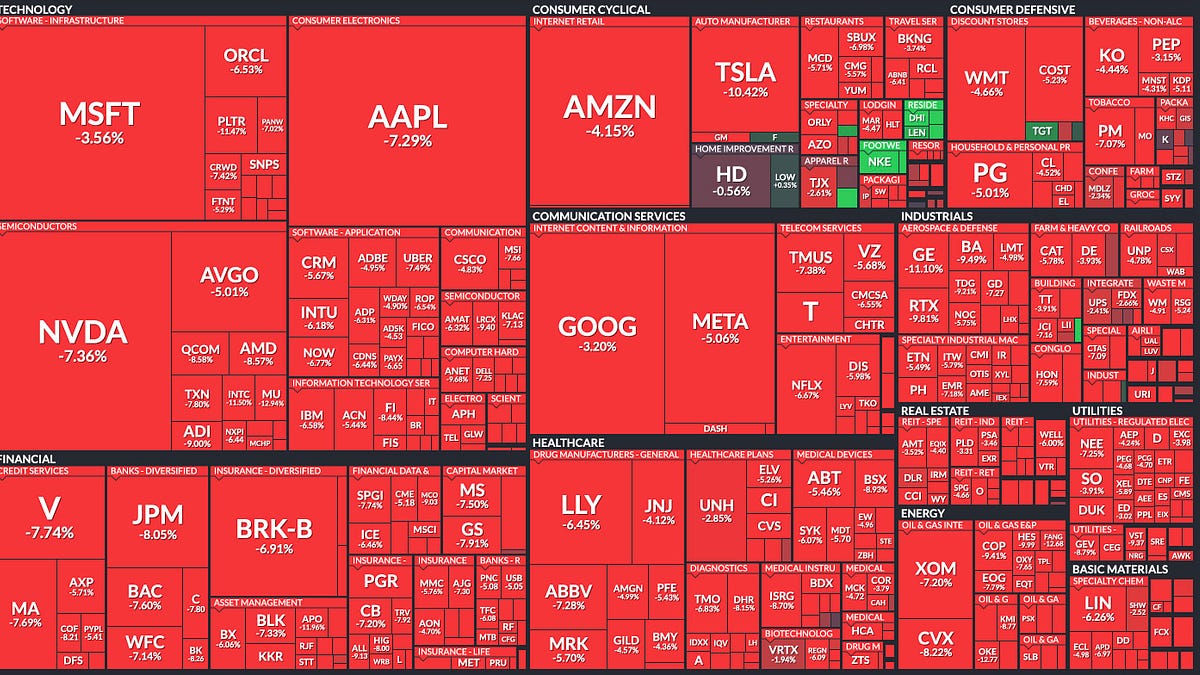
that the media shrieking hysterically about how the world was ending as a result of this trade policy was nothing more than a visceral reaction to what was happening in the stock market. It had to be. With just hours having passed since the implementation of Trump’s tariff policy, there was no real way to judge its success based on the merits.
Said another way, these things take time.
In an
The Inevitable, Just Sooner
People rush to throw our country under the bus the second someone shakes the precious, coddled economic snow globe they live in.
, I criticized Wharton PhD Jeremy Siegel—whose actual title is probably some bullshit with the word “emeritus” next to it—for coming out and declaring Trump’s tariff policy to be the worst policy decision in 95 years.
My
The Inevitable, Just Sooner
People rush to throw our country under the bus the second someone shakes the precious, coddled economic snow globe they live in.
wasn’t that he was wrong—only that it was too soon to make such a declaration.
Siegel was on CNBC again Monday this week. He started his interview by alluding to the idea that the Federal Reserve has room to cut interest rates—similar to the way he
The Inevitable, Just Sooner
People rush to throw our country under the bus the second someone shakes the precious, coddled economic snow globe they live in.
for an emergency rate cut back in August of last year. As the interview progressed, the stock market started to spike upwards on what we now know was a discredited headline about a 90-day pause in tariffs—and on live television, within the course of the five-minute interview window, Siegel had changed his tone, backing off his rhetoric and calling the now-debunked headline “terrific.”
<a href="/s3/files/inline-images/Screenshot%202025-04-08%20at%202.28.22%E2%80%AFPM.jpg?itok=4ai7bcq4" rel="nofollow"><img alt="" height="273" src="
width="500"/>"Holy sh*t! We're all gonna die!"</a>
It was proof positive that everybody—even supposedly well-adjusted, intellectual, seasoned economists—reacts first to the stock market and asks questions later.
I
The Inevitable, Just Sooner
People rush to throw our country under the bus the second someone shakes the precious, coddled economic snow globe they live in.
the same when the Wall Street Journal editorial board came out just three days after the implementation of Trump’s tariff policy and declared Xi Jinping as the “emerging winner” of this policy decision. Whether the policy works or not is one thing. But declaring winners after just three days just doesn’t make sense to me.
Today, we are witnessing the opposite: the market opened the day green, and the VIX is lower because—even though we have uncertainty about the future of these trade deals—at least the market knows that the giant shock of announcing the tariff to begin with has now passed. Everybody has been able to regain some semblance of footing, everybody knows where we stand now with other countries, and market direction going forward will be more of a prolonged response to how negotiations with other countries go.
With China being the obvious main holdout, it appears as though negotiations with crucial countries—like Japan, for instance—are already moving forward.
And so now that people in the financial media and “analysts”—who appear to get their pulse on sentiment from reading nothing but social media—are officially done pissing themselves, and the market has at least temporarily found some sort of point to bounce off of (even if it continues to eventually move lower again) their respective piss stains can start to dry, and we can move past the large shock of discomfort into the still uncomfortable, but less shocking, choppy waters of trade negotiation.
President Trump was right during his interview a day or two ago when he told reporters that sometimes you have to “take the medicine.” It is this outlook on big change being digested by markets that will help them find a bottom faster and get everybody on the same page of where we stand now—without worrying whether or not our end of the negotiating table is going to capitulate or make terrible concessions, which could actually wind up being counterproductive.
And whether or not you believe Trump’s policy is working, you have to give him credit for having the spine to stand by it. I know we have very short memories, but the fever pitch of people—media, citizens, friends, business leaders, analysts, and advisors even—who must have been begging on Thursday and Friday of last week to reverse course had no effect on an unwavering President Trump.
If you’re going to “throw a grenade in the room and then walk away” as a way of setting policy, you have to be 100% behind your decision—and for better or for worse, there’s no doubt Trump has dug in. As I s

Fearless
At this point in Trump’s life, he has gone far past being a caricature of himself and has simply believed and manifested himself into being a suc...
, I don’t know why Trump is fearless, or what drives it, but I think it’s an asset.
People on financial media this morning are bright-eyed and bushy-tailed, congratulating each other for having the fortitude to endure such tumultuous volatility. Markets are green! Flowers are blooming! The worst is over!
And these are, of course, also insane proclamations. There’s still going to be a significant amount of volatility ahead, and to suggest that the market has bottomed here is,

Trading The Shit Show: April 2025 Market Review
One CNBC guest's idea of a 'worst case scenario' is a sad commentary on sentiment.
, foolish. When the market is going up over long periods of time, it goes both down and up over shorter periods of time. When the market goes down over long periods of time, it makes lower lows and lower highs, going both up and down over shorter periods of time.
Doing something like proclaiming the Fed should raise or lower rates based on what the stock market is doing in one session is an extraordinarily irresponsible and dangerous way to set policy. Essentially, the entire global economy—representing $100 trillion in assets or more—hangs in the balance of what the Federal Reserve decides to do with interest rates. To watch an “economist” on live television change their tune and cavalierly throw out interest rate cuts and hikes in different directions over the course of a five-minute interview is insane.
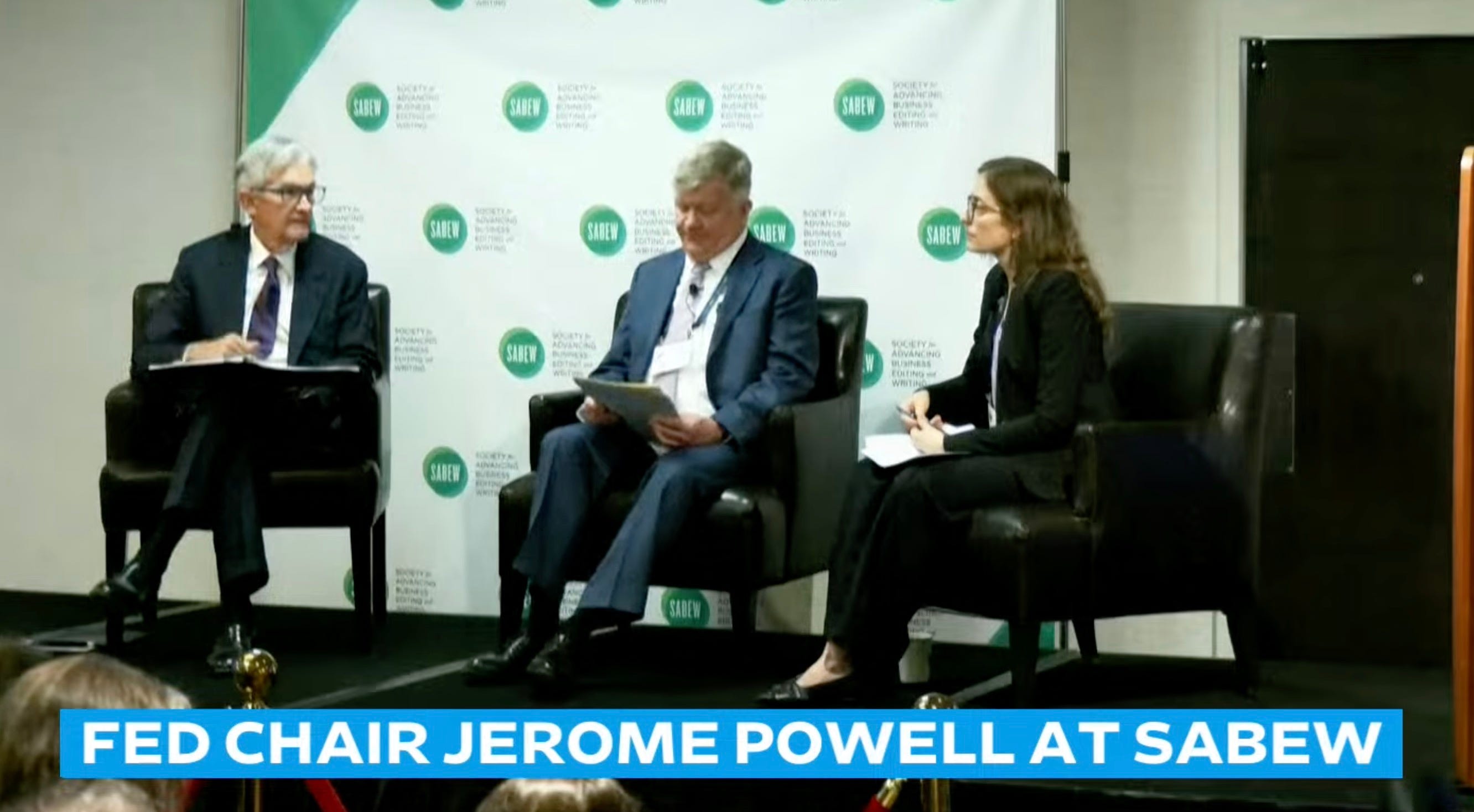
But I guess that is only to be expected from financial media who can’t help but make the story of the day whatever the market is doing that particular day. Real market veterans know: one day, one week, or one month of pattern does not make. And I’ll give Jerome Powell credit: watching his
, I thought he spoke about the market’s reaction and the Feds ensuing plans with a steady hand.
Going forward, if there’s one thing to be adamant about, in my opinion, it’s continuing to ignore reactionary responses to every individual headline that pops up about negotiations. To me, it harkens back to how people were watching and trading the number of COVID deaths as they occurred, minute by minute, in real time.
Looking back now, it’s easier to paint with much broader strokes: you should’ve bought stocks on the crash in March 2020 and sold them recently when the Shiller price-to-earnings ratio nearly hit 40x. It wasn’t so easy to discern that on a minute-by-minute basis in 2020, however.
As the days, weeks and months pass by, order and trends will emerge from this tariff fiasco. This is why I don’t bother arguing about the formula the Trump administration used to implement the tariffs, nor do I argue about specifics. The point of the policy was to recalibrate our standing in the world of trade and that’s what it’s doing. We’ve made the message crystal clear, and we have postured accordingly. Already, nations are coming to the table to try and work through the problem. Trump himself said it right yesterday, proclaiming something to the effect of: “If this is done right, it will only have to be done once.”
As I’ve been saying, regardless of how trade negotiations go, I still believe the stock market to be overvalued based on historical averages. But this doesn’t mean that there aren’t bargains out there in individual names and sectors. When undergoing such a massive macroeconomic shift, capital is going to move, valuations are going to change, and the market is going to look different on the other side of this policy negotiation than it did before.
Taking a longer view, I think cooler heads are going to prevail, and by the end of summer, things will have calmed down significantly. So as for me, I’m going to keep my cool head. The hysterical media was acting last week like it was a guarantee this trade war was going to last 100 years. It’s been four or five days, and we’ve already got people at the negotiating table.
I’ll look for value if the market moves lower or higher from here. As I said before the tariff war even began, I believe the market could still fall 30 or 40% from here easily—towards the historical P/E average near around 16x earnings. And once the deals start getting consummated, then I will start to judge the effectiveness of the negotiating tactic that the President is employing.
I judge effectiveness by how and when these new policies will be implemented and whether or not they are a net positive for the country after the fact. So for me, the answers are still yet to come. But for the lot of individuals who use the stock market as their mood ring for the day, at least they have a day today to let that piss stain from last week dry up a little bit.

QTR’s Disclaimer: Please read my full legal disclaimer
About - QTR’s Fringe Finance
Liberty. Finance. Bullshit. Click to read QTR’s Fringe Finance, by Quoth the Raven, a Substack publication with tens of thousands of subscribers.
with my best effort to uphold what the license asks, or with the permission of the author.
This is not a recommendation to buy or sell any stocks or securities, just my opinions. I often lose money on positions I trade/invest in. I may add any name mentioned in this article and sell any name mentioned in this piece at any time, without further warning. None of this is a solicitation to buy or sell securities. I may or may not own names I write about and are watching. Sometimes I’m bullish without owning things, sometimes I’m bearish and do own things. Just assume my positions could be exactly the opposite of what you think they are just in case. If I’m long I could quickly be short and vice versa. I won’t update my positions. All positions can change immediately as soon as I publish this, with or without notice and at any point I can be long, short or neutral on any position. You are on your own. Do not make decisions based on my blog. I exist on the fringe. The publisher does not guarantee the accuracy or completeness of the information provided in this page. These are not the opinions of any of my employers, partners, or associates. I did my best to be honest about my disclosures but can’t guarantee I am right; I write these posts after a couple beers sometimes. I edit after my posts are published because I’m impatient and lazy, so if you see a typo, check back in a half hour. Also, I just straight up get shit wrong a lot. I mention it twice because it’s that important.
<a href="/users/tyler-durden" rel="nofollow">Tyler Durden</a>
Wed, 04/09/2025 - 07:20
The Media's Piss Stain Starts To Dry | ZeroHedge
ZeroHedge - On a long enough timeline, the survival rate for everyone drops to zero

 All you have to look to for confirmation of this is their own words and those of their supporters.
This video could have been hours in length.
You could throw a rock at YouTube and hit a video of a Democrat saying this stuff.
🚨WATCH: The best way to define to define the Democrat brand is to let Democrats define it — themselves.
All you have to look to for confirmation of this is their own words and those of their supporters.
This video could have been hours in length.
You could throw a rock at YouTube and hit a video of a Democrat saying this stuff.
🚨WATCH: The best way to define to define the Democrat brand is to let Democrats define it — themselves.  — Western Lensman (@WesternLensman)
  You could throw a rock at YouTube and hit a video of a Democrat saying this stuff.
So much material, so little time.
— Western Lensman (@WesternLensman)
You could throw a rock at YouTube and hit a video of a Democrat saying this stuff.
So much material, so little time.
— Western Lensman (@WesternLensman)  What are they?
TOXIC. domestic terrorists. weak and woke. violent. the party of mayhem. that about sums it up.
add criminals. corrupt. anti-American. mentally ill, racist, and we sealed the definition.
— pebbles (@jbamban)
What are they?
TOXIC. domestic terrorists. weak and woke. violent. the party of mayhem. that about sums it up.
add criminals. corrupt. anti-American. mentally ill, racist, and we sealed the definition.
— pebbles (@jbamban)  How is that a REdefinition?
— Bob James (@rockyfort) https://twitter.com/rockyfort/status/1910310932758090159?ref_src=twsrc%5Etfw
Oh yeah, that’s it.
Democrats are the party of violence and hate.
— Spitfire (@DogRightGirl)
How is that a REdefinition?
— Bob James (@rockyfort) https://twitter.com/rockyfort/status/1910310932758090159?ref_src=twsrc%5Etfw
Oh yeah, that’s it.
Democrats are the party of violence and hate.
— Spitfire (@DogRightGirl)  The dems I know are all eating up every negative thing claimed about Trump and his actions. All panic all the time about whatever the latest "Trump is evil" lies may be. I'm sure they're already convinced that he's guilty of inside trading in this stock market tariff goofiness.
— Matthew Siekierski (@mattsiekierski)
The dems I know are all eating up every negative thing claimed about Trump and his actions. All panic all the time about whatever the latest "Trump is evil" lies may be. I'm sure they're already convinced that he's guilty of inside trading in this stock market tariff goofiness.
— Matthew Siekierski (@mattsiekierski)  Their base now consists of blue haired crazies who have a penchant for assassination.
* * *
Your support is crucial in helping us defeat mass censorship. Please consider donating via
Their base now consists of blue haired crazies who have a penchant for assassination.
* * *
Your support is crucial in helping us defeat mass censorship. Please consider donating via  .
Thu, 04/10/2025 - 13:00
.
Thu, 04/10/2025 - 13:00

 Before the 90-day pause for countries excluding China, Rosenblatt Securities analysts forecasted that the most affordable iPhone 16 model with a retail price of $799 would cost as much as $1,142 - or about a 43% rise.
"This whole China tariff thing is playing out right now completely contrary to our expectation that American icon Apple would be kid-gloved, like last time," Rosenblatt analyst Barton Crockett wrote in a note to clients.
Trade data via the supply chain platform Sayari shows that Foxconn India is a major Apple supplier.
Before the 90-day pause for countries excluding China, Rosenblatt Securities analysts forecasted that the most affordable iPhone 16 model with a retail price of $799 would cost as much as $1,142 - or about a 43% rise.
"This whole China tariff thing is playing out right now completely contrary to our expectation that American icon Apple would be kid-gloved, like last time," Rosenblatt analyst Barton Crockett wrote in a note to clients.
Trade data via the supply chain platform Sayari shows that Foxconn India is a major Apple supplier.
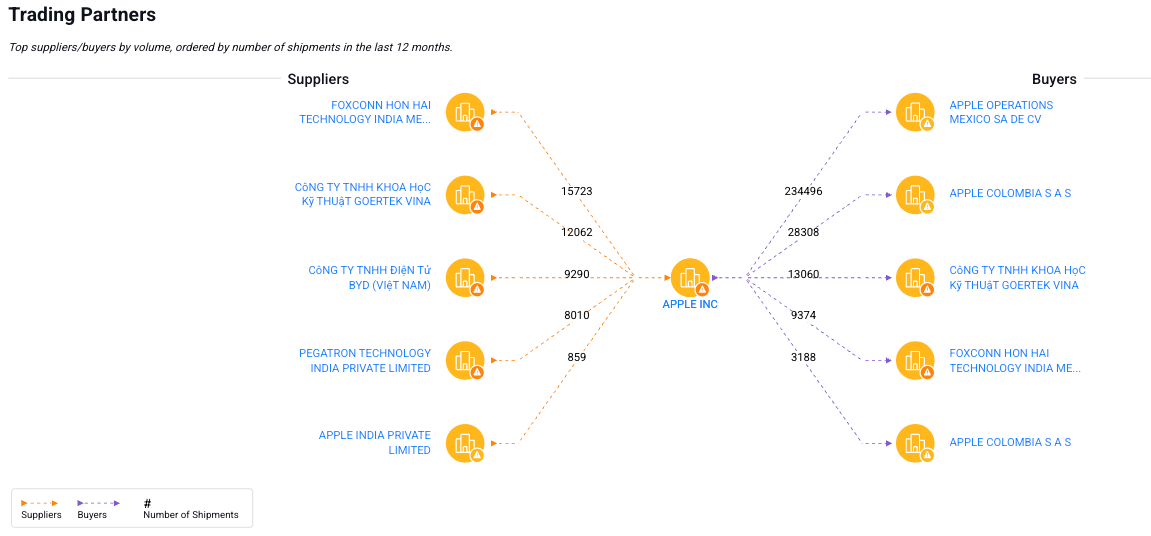 Counterpoint Research estimates that Apple sells 220 million iPhones per year worldwide, and about a fifth of total iPhone imports to the United States now come from India, and the rest from China.

 Pyramid took out the loan from JPMorgan Chase in 2014 to finance Destiny USA’s expansion. It has only made interest payments and failed to refinance or repay the principal as required, due in part to the mall’s declining value amid retail closures and e-commerce growth.
Recall about a month and a half ago
Pyramid took out the loan from JPMorgan Chase in 2014 to finance Destiny USA’s expansion. It has only made interest payments and failed to refinance or repay the principal as required, due in part to the mall’s declining value amid retail closures and e-commerce growth.
Recall about a month and a half ago 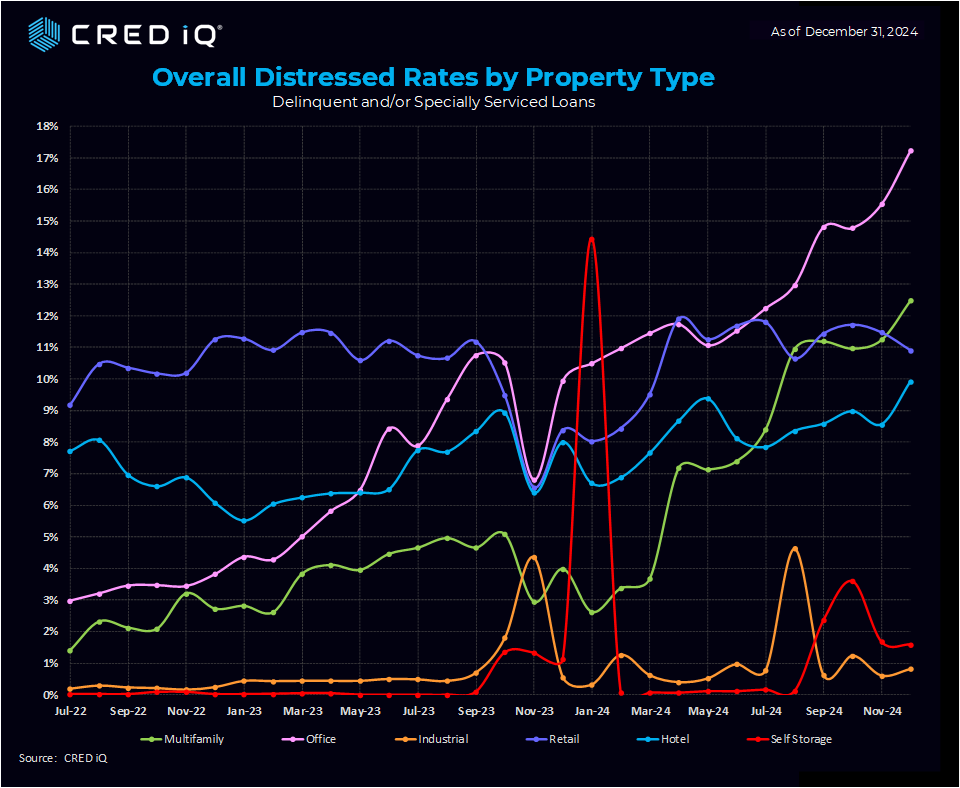
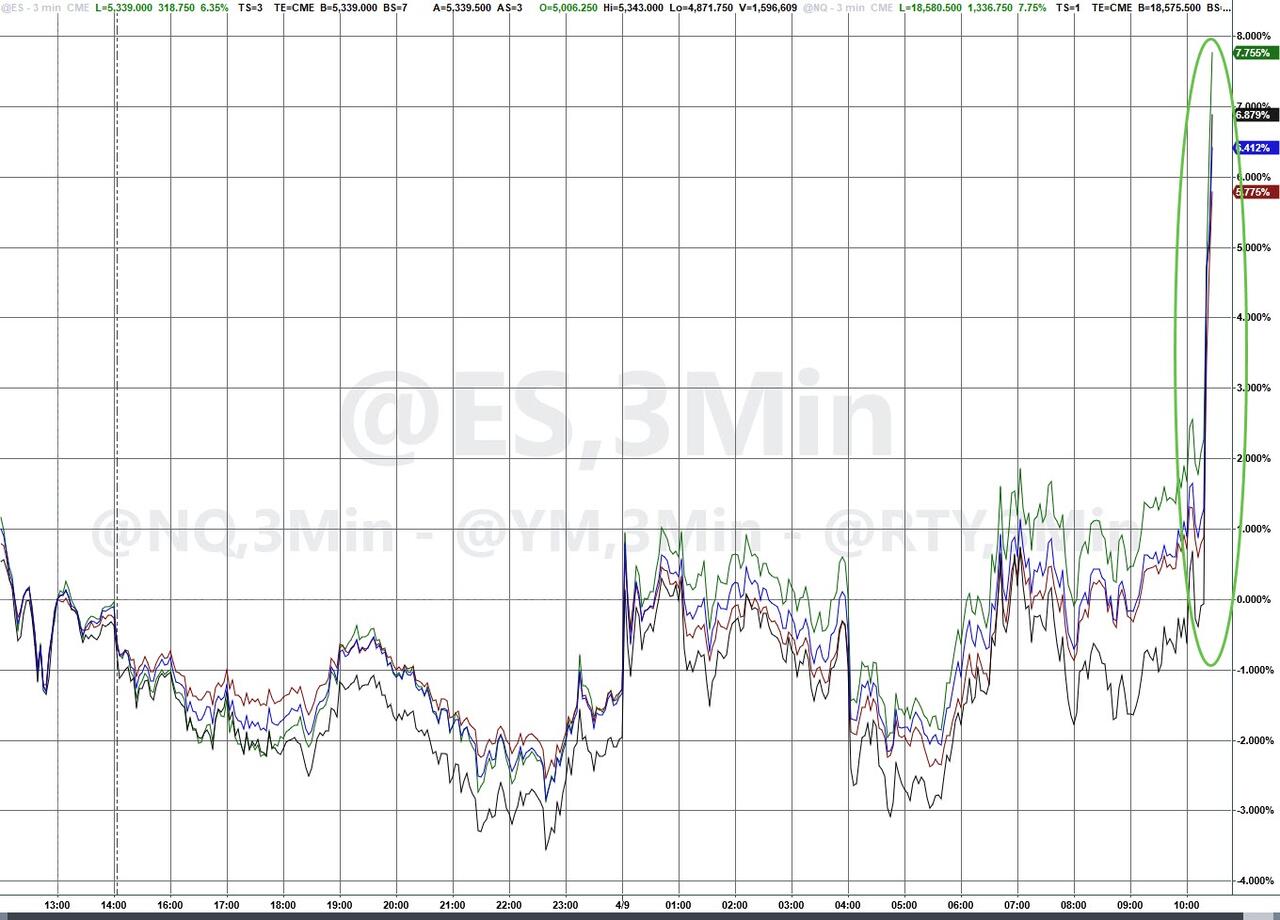 ...cutting losses post-Liberation Day in half...
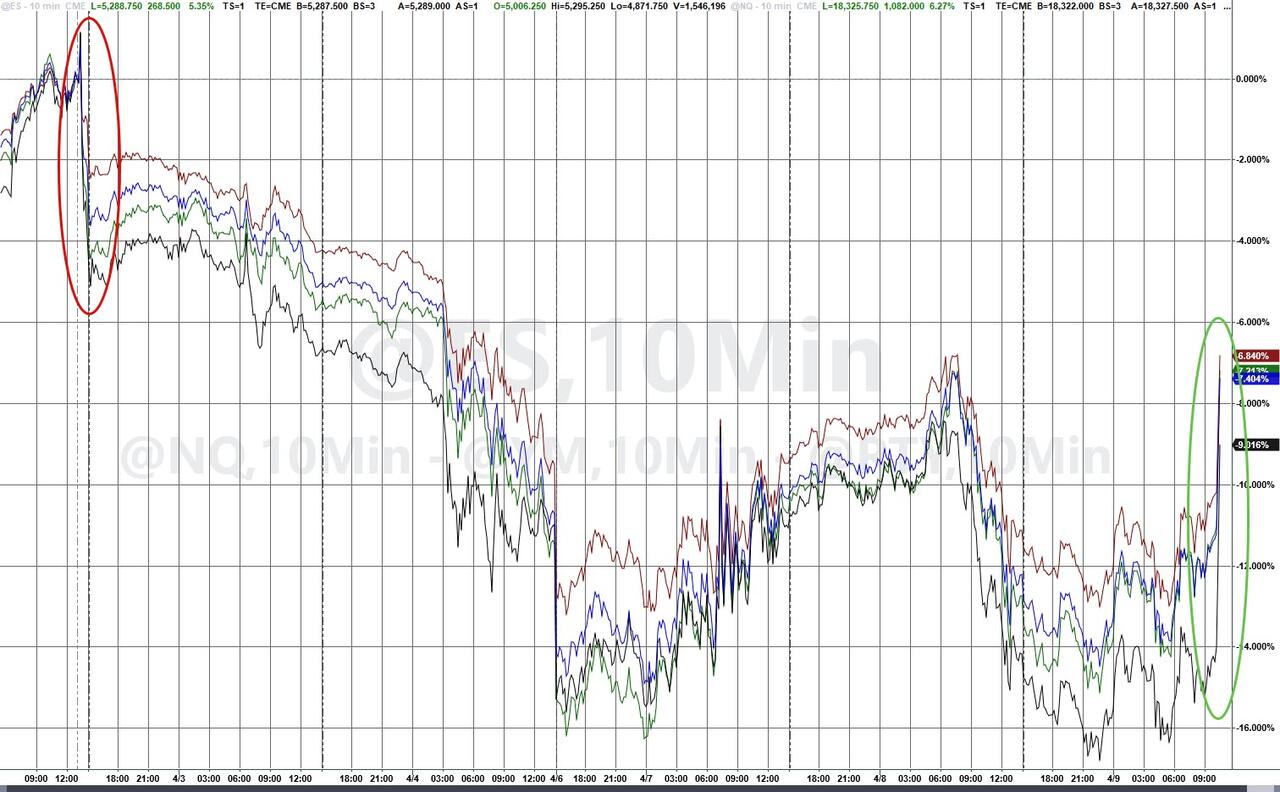 * * *
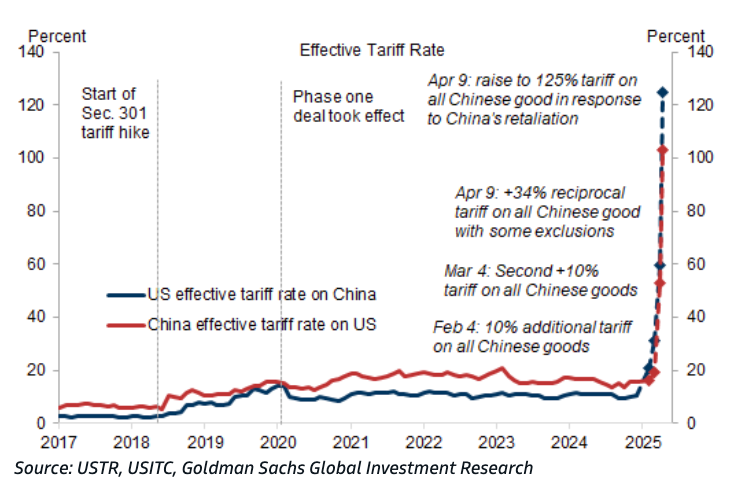
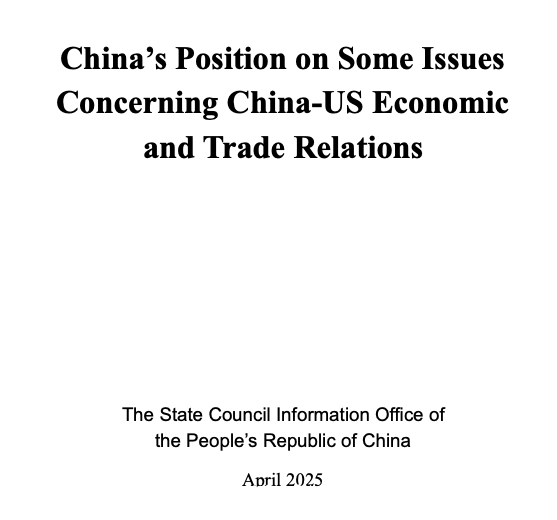
Update: After Beijing’s overnight inaction in response to President Trump’s new 104% effective-rate tariff on Chinese goods—and the release of a white paper on trade between the two superpowers—there now appears to be a response from the Chinese side.
*CHINA RAISES TARIFFS ON US GOOD TO 84%
— zerohedge (@zerohedge)
* * *
Update: After Beijing’s overnight inaction in response to President Trump’s new 104% effective-rate tariff on Chinese goods—and the release of a white paper on trade between the two superpowers—there now appears to be a response from the Chinese side.
*CHINA RAISES TARIFFS ON US GOOD TO 84%
— zerohedge (@zerohedge) 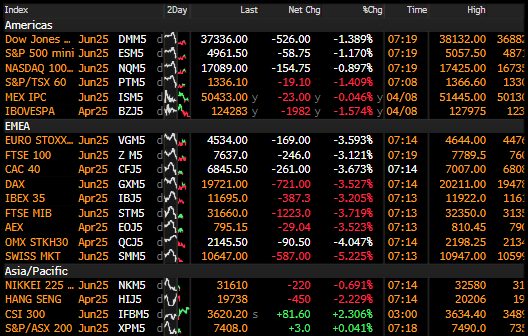 Rollercoaster of headlines for S&P500 futs...
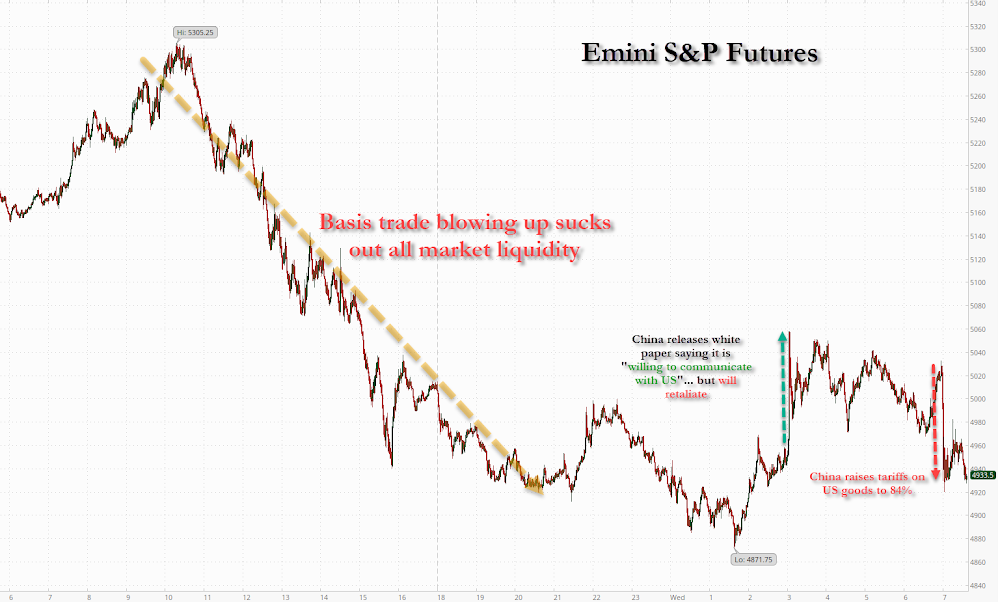 And what a mess. The PboC has been propping up Chinese markets, while the Federal Reserve has been stuck in wait-and-see mode as the basis trade unravels (read:
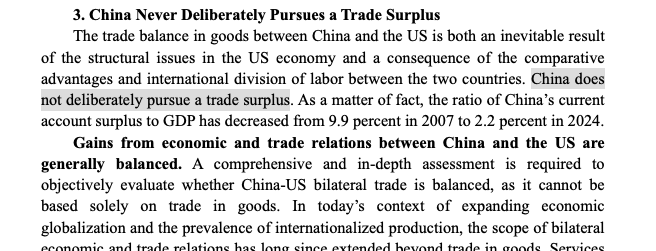
  "China does not deliberately pursue a trade surplus," the white paper said, adding, "The trade imbalance in goods between China and the U.S. is both an inevitable result of structural issues in the U.S. economy and a consequence of the comparative advantages and international division of labour between the two countries."
 Chinese state media

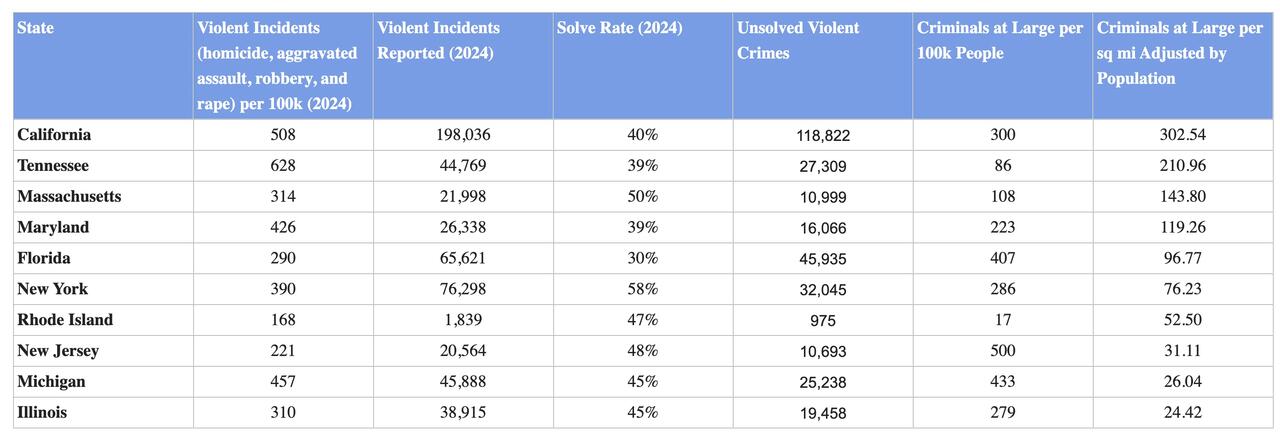 New York comes sixth with 76. Though it boasts the highest solve rate (58%) of the group, its large population drives high total incidents.
The
New York comes sixth with 76. Though it boasts the highest solve rate (58%) of the group, its large population drives high total incidents.
The 

 Saltzman explained that China has been able to advance its space capabilities quickly because it has a “Western Pacific mindset,” pooling all its resources and advancing all capabilities in that region. In contrast, the United States has more global concerns, according to the Space Force commander.
“The modern battlefield has to account for the space domain,“ he said.
”If we can’t continue to protect our use of the domain and we can’t deny an adversary, it’s going to be tough to meet military objectives in any of the other domains.”
In his written
Saltzman explained that China has been able to advance its space capabilities quickly because it has a “Western Pacific mindset,” pooling all its resources and advancing all capabilities in that region. In contrast, the United States has more global concerns, according to the Space Force commander.
“The modern battlefield has to account for the space domain,“ he said.
”If we can’t continue to protect our use of the domain and we can’t deny an adversary, it’s going to be tough to meet military objectives in any of the other domains.”
In his written 
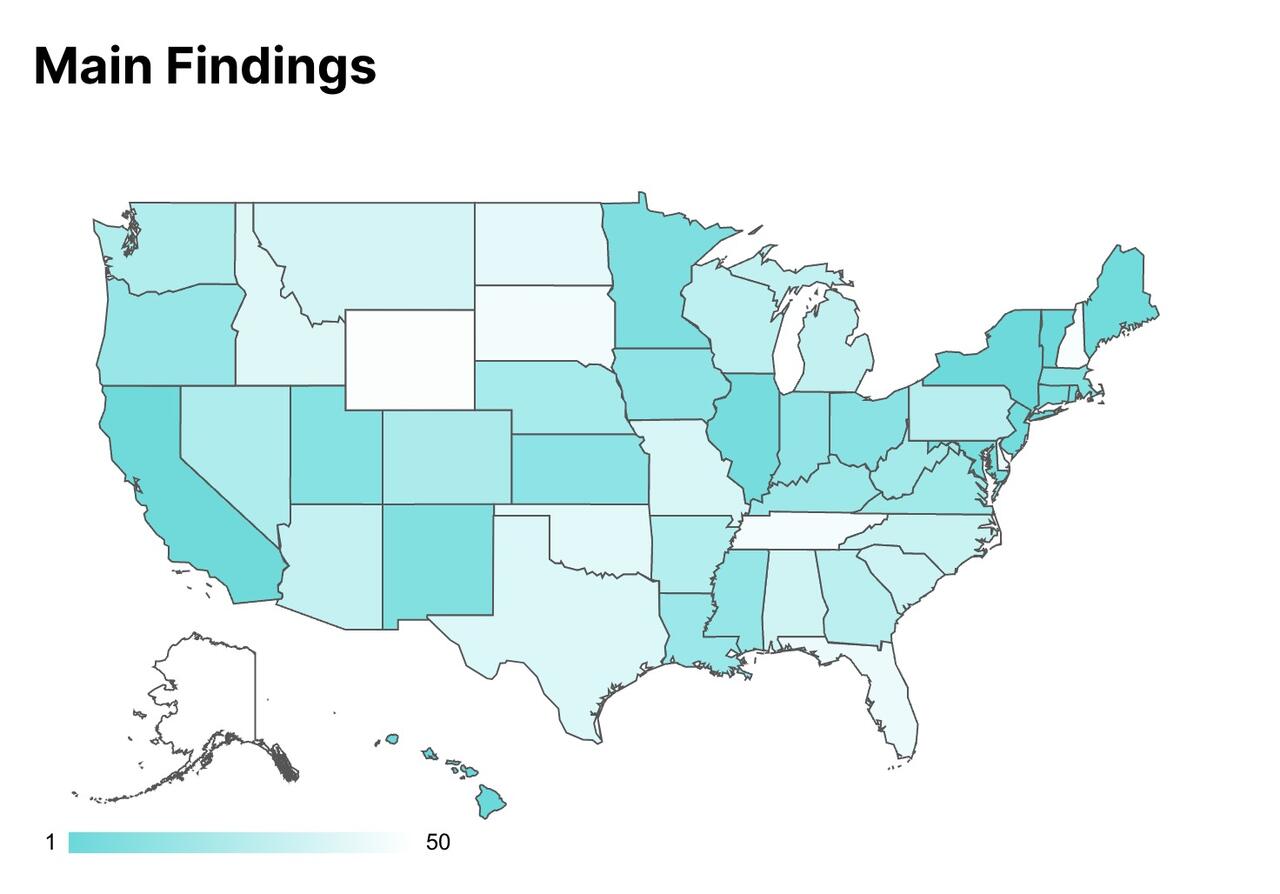 At the opposite end, Alaska has the lightest tax load. With no state income tax, and modest property and sales tax burdens of 3.5% and 1.5% respectively, Alaskans pay just 4.9% of their income in total.
Wyoming and New Hampshire follow closely behind, with total tax burdens of 5.79% and 5.94%, respectively. Wyoming similarly benefits from having no income tax, while New Hampshire, despite its steep property taxes — the second highest in the nation — offsets this with extremely low sales taxes and no general sales tax at all.
Other low-burden states include Tennessee, South Dakota, and Florida, all of which also forgo a state income tax. Tennessee residents pay only 6.38% of their income in total taxes, while South Dakotans and Floridians pay slightly more at 6.46% and 6.49%, respectively. Delaware also ranks low at 6.52%, due in large part to its minimal sales tax burden — the second lowest in the country.
These states reflect a broader trend: the lowest-taxed states often avoid personal income taxes altogether and keep consumption-based taxes in check, making them attractive destinations for taxpayers seeking to maximize their earnings.
When it comes to income taxes alone, New York leads with the highest burden, taking 5.8% of residents’ income.
Vermont ranks highest for property taxes, collecting 5% of personal income. In contrast, Alabama offers the lowest property tax burden, claiming only 1.4%.
At the opposite end, Alaska has the lightest tax load. With no state income tax, and modest property and sales tax burdens of 3.5% and 1.5% respectively, Alaskans pay just 4.9% of their income in total.
Wyoming and New Hampshire follow closely behind, with total tax burdens of 5.79% and 5.94%, respectively. Wyoming similarly benefits from having no income tax, while New Hampshire, despite its steep property taxes — the second highest in the nation — offsets this with extremely low sales taxes and no general sales tax at all.
Other low-burden states include Tennessee, South Dakota, and Florida, all of which also forgo a state income tax. Tennessee residents pay only 6.38% of their income in total taxes, while South Dakotans and Floridians pay slightly more at 6.46% and 6.49%, respectively. Delaware also ranks low at 6.52%, due in large part to its minimal sales tax burden — the second lowest in the country.
These states reflect a broader trend: the lowest-taxed states often avoid personal income taxes altogether and keep consumption-based taxes in check, making them attractive destinations for taxpayers seeking to maximize their earnings.
When it comes to income taxes alone, New York leads with the highest burden, taking 5.8% of residents’ income.
Vermont ranks highest for property taxes, collecting 5% of personal income. In contrast, Alabama offers the lowest property tax burden, claiming only 1.4%.
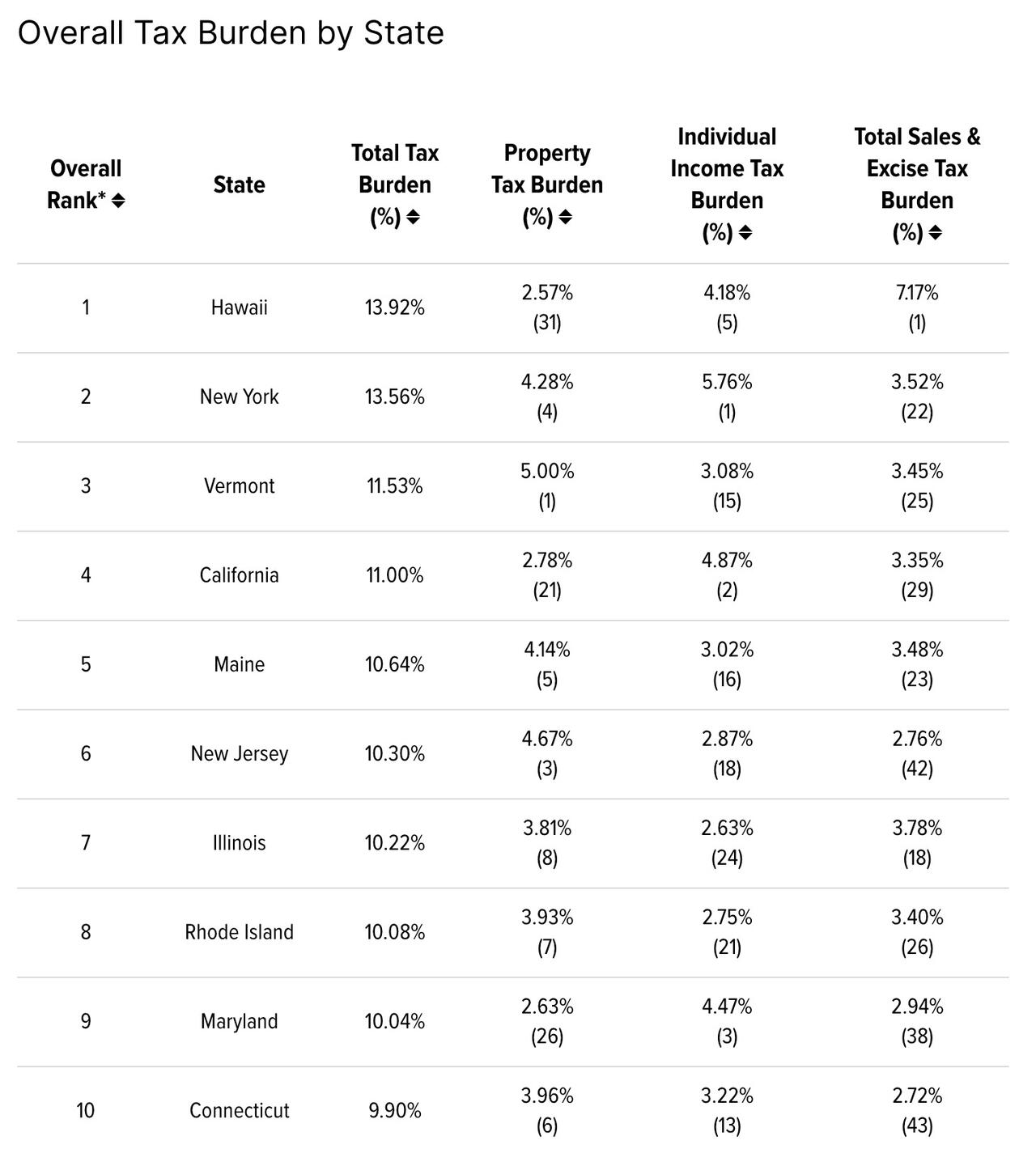 For sales and excise taxes, Hawaii again leads, with residents paying 7.2% of their income annually. New Hampshire sits at the other extreme, with no general sales tax and minimal excise taxes, amounting to less than 1% of income.
The
For sales and excise taxes, Hawaii again leads, with residents paying 7.2% of their income annually. New Hampshire sits at the other extreme, with no general sales tax and minimal excise taxes, amounting to less than 1% of income.
The 
 What does “stability” mean? At its core, stability demands three pillars:
Reliable collateral: The tangible assets that back the token.
Transparency: The ability for anyone to independently verify reserves.
Consistent peg maintenance: Robust safeguards against depegging, where a stablecoin’s market value strays from its fixed ratio with the underlying asset.
Without these foundational elements, stablecoins are little more than speculative instruments masquerading as safe harbors. In 2022 alone, billions in value
What does “stability” mean? At its core, stability demands three pillars:
Reliable collateral: The tangible assets that back the token.
Transparency: The ability for anyone to independently verify reserves.
Consistent peg maintenance: Robust safeguards against depegging, where a stablecoin’s market value strays from its fixed ratio with the underlying asset.
Without these foundational elements, stablecoins are little more than speculative instruments masquerading as safe harbors. In 2022 alone, billions in value