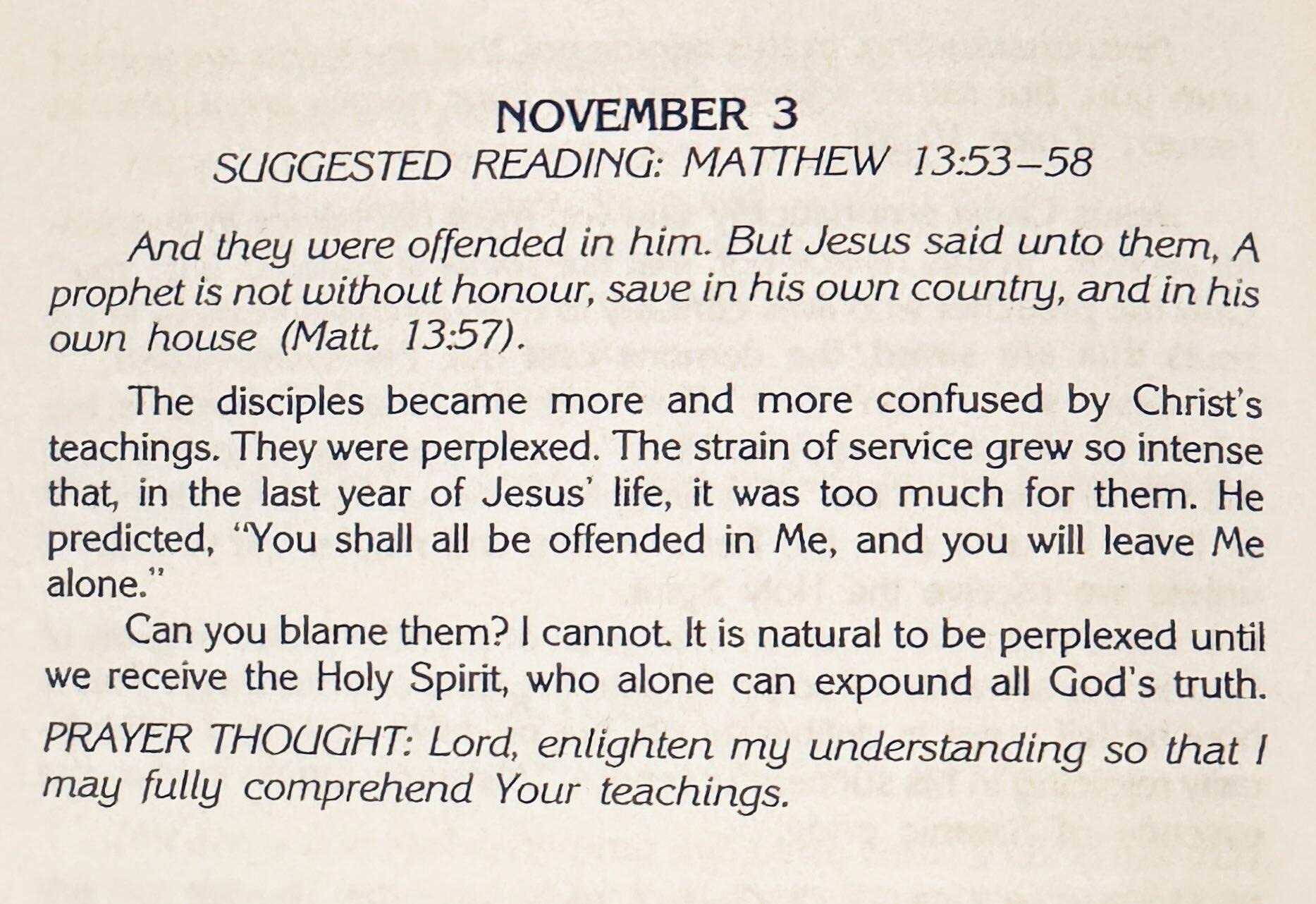
On Sunday, November 3, 2020, my then pastor described communications he regularly receives from a Rwandan friend. They always follow a pattern: epistle-like greetings followed by descriptions of the most mundane stuff imaginable—the rains have come, a stranger appeared in the village, etc. I was struck by the realization that life in a village enables the understanding that local, personal events are significant.
In too large a crowd or too fast a pace—or in too vast a world—the
significance of the events of each individual’s life is lost. Imagine then, the devastating impact of a major metropolis on the recognition of one’s own value in the eyes of each other. Imagine comparing one’s personal concerns and crises to the scope of all
the world’s problems.
In prayer we are reminded that the Architect of the Cosmos lowers his gaze to attend the concerns of his youngest or loneliest child—those seemingly insignificant are revealed in the light of Christ’s
countenance to be equal to presidents and tycoons.
“[Jordan] inveighs against a common phenomenon: using a confessional affirmation as the criterion for Reformed identity without regard to its role within a functional biblical theology.”
R. R. Reno, “Foreword,” in The Glory of Kings: A Festschrift in Honor of James B. Jordan, ed. Peter J. Leithart and John Barach (Eugene, OR: Pickwick Publications, 2011), xv.
This is why I appreciate Jacques Ellul:
"On the one hand, he was unveiling a dark vision of technological totalitarianism that pulls every facet of Western culture (and every person) into its vortex; on the other hand, he was presenting a theological vision where human freedom and responsibility could lead to a hopeful future."
Ted Lewis, "Foreword," to Jacques Ellul et al., Presence in the Modern World: A New Translation (Eugene, Oregon: Cascade Books, 2016).
Baptism is useful in drawing out this cross-covenant applicability of the sacramental signs because it is explicitly associated by Scripture with Noah and the Ark, with the Mosaic Covenant, and with the New Covenant. The lesson we ought to learn is that this biblical view of the covenants and their signs, applies not just to baptism, but to all the signs/sacraments of the covenants/promises of the Covenant/Promise.