Day 5 - What's this Bitcoin thing & why does it matter?

Day 5 - What's this Bitcoin thing & why does it matter?
As the Global Bitcoin Lead on the Financial Freedom team at the Human Rights Foundation, I’m deeply immersed in the world of Bitcoin.
Just Bitco...
As the Global Bitcoin Lead on the Financial Freedom team at the
@HRF, I’m deeply immersed in the world of Bitcoin.
Just #Bitcoin. Not blockchain, crypto, Web3, or DeFi.
Why Bitcoin and Not the Others?
You might be wondering, “What’s the difference between Bitcoin and all those other terms?” Well, there’s a huge difference, both in spirit & implementation.
In future posts, I’ll dig into that, but for now, I’ve chosen to focus narrowly on Bitcoin. Honestly, it’s enough to keep me busy for a lifetime! Why go searching for what’s not lost (and yes, please read that last part with a Yoruba accent)?
What Bitcoin Really Is
Bitcoin is a decentralized, permissionless, censorship-resistant, open-source, peer-to-peer system of electronic cash.
It was created by the pseudonymous Satoshi Nakamoto, who didn’t just build it—he handed it over to the community and walked away over a decade ago. By removing himself from the picture, Satoshi ensured Bitcoin’s true decentralization.
Only 21 million Bitcoin will ever exist, with new ones mined approximately every 10 minutes by a global network of computers solving complex mathematical problems. Each Bitcoin can be broken down into 100 million satoshis, and you can send or receive the smallest fractions across the world with ease.
Why I’m Excited About Bitcoin
Most people focus on Bitcoin’s price in relation to fiat currencies like USD, Euro, or Pounds. But for me, the real excitement lies in its ability to transfer value globally without needing a third party like a bank or Visa/Mastercard.
As an African, I’ve seen firsthand the challenges of trading with neighbors using foreign currencies like the USD. Bitcoin, on the other hand, is neutral—it’s not controlled by any one country, it can’t be printed excessively, and central banks can’t devalue it.
No one can block my access to send or receive Bitcoin, no matter where I am in the world.
And perhaps most importantly, there’s no central team that can suddenly steal everything and disappear into the sunset. Bitcoin’s design makes that impossible.
What’s Next for Bitcoin?
We’re still in the early days of Bitcoin, and some of the smartest minds are working on improving the network and addressing real-world challenges using it.
I’m grateful to be part of this journey, especially when it comes to empowering human rights activists and everyday people fighting to hold governments accountable.
I’m here for the long haul, and I’m excited to see where Bitcoin takes us next.

 The grants cover decentralized #Bitcoin mining, technical education, decentralized communications, independent media & privacy-enhanced financial solutions for human rights groups, focusing on key regions in Latin America, Asia, and Africa 🌍🌏🌎🎁
View Article → View Article →
The grants cover decentralized #Bitcoin mining, technical education, decentralized communications, independent media & privacy-enhanced financial solutions for human rights groups, focusing on key regions in Latin America, Asia, and Africa 🌍🌏🌎🎁
View Article → View Article →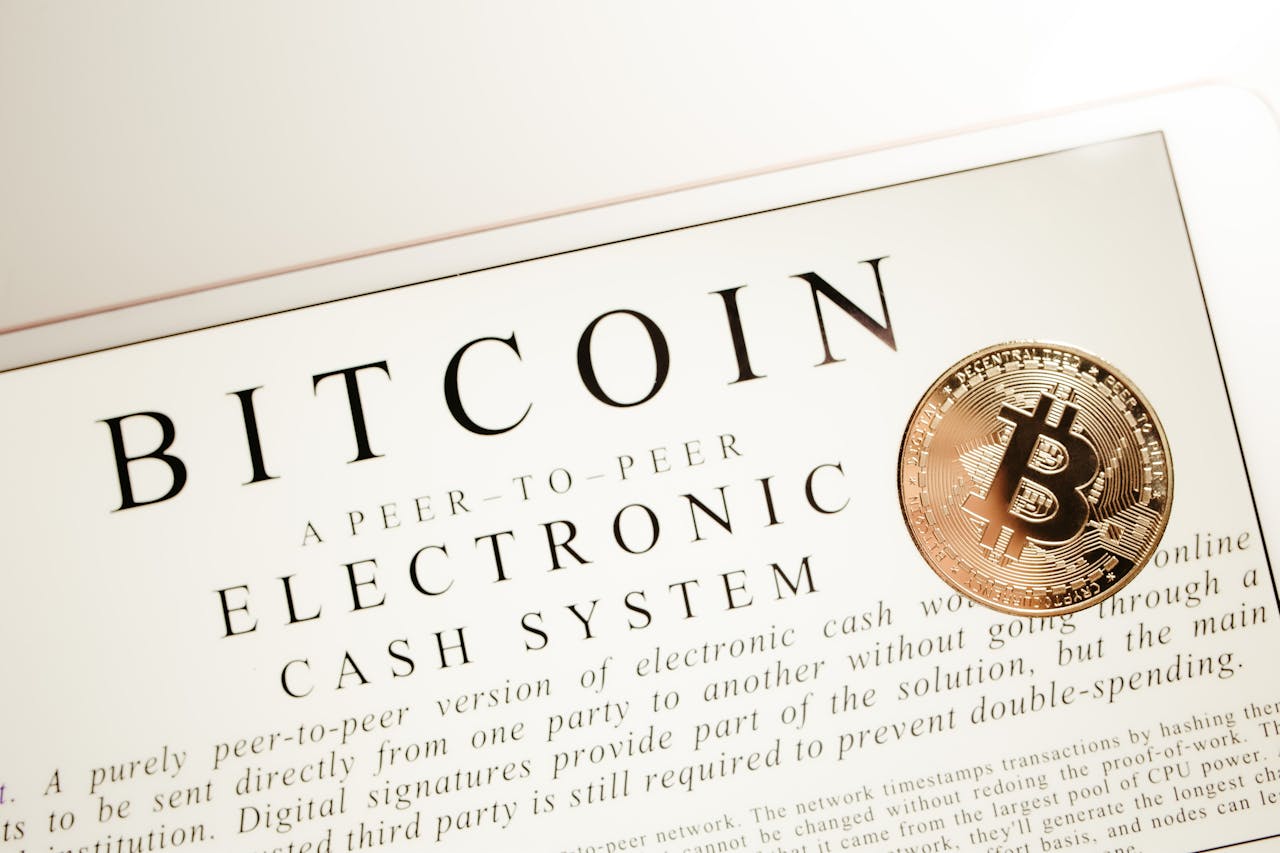
 About 2.5 years ago, I embarked on a transformative journey into the world of Bitcoin, and it all started with a simple conversation.
The Spark: A Recommendation Request
I was asked to recommend someone to run operations for Qala, a new program designed to train African software engineers for careers in Bitcoin development.
Up until that moment, I only knew of Bitcoin as a digital currency and investment asset but had no idea about the technology or the community of developers behind it.
The recommendation request triggered my curiosity. After all, how could I recommend someone for something I didn’t fully understand?
Little did I know that this would be the beginning of an exciting journey down the Bitcoin rabbit hole.
A New Realization
I began by downloading The Bitcoin Standard and diving into a few blogs.
The more I read, the more I realized just how vast and revolutionary the Bitcoin ecosystem really was.
It is not just a digital asset; it is an alternative to our broken global monetary system, a system I believed is responsible for many of the challenges facing my beloved Africa.
Bitcoin, Satoshi Nakamoto's peer-to-peer electronic cash system, offers a way out. But for Africa to benefit, we have to engage this new technology as producers, not just consumers—unlike how we have engaged previous waves of technology.
Qala was aiming to equip Africans with the skills to become value creators in the Bitcoin space, but it needed the right leadership and guidance.
Perfect Alignment: My Background in Learning and Development
Having recently stepped away from day-to-day operations at CcHub, I had completed a research-based Master’s in Learning Science at the Paris University School of Interdisciplinary Research. My research & thesis focused on what motivates young adults in Africa to engage in informal learning.
This new Bitcoin program aligned perfectly with my interests in African development, capacity building and education. It wasn’t just a good fit; it felt like a calling.
Taking the Leap
So, instead of recommending someone else for the job, I offered myself… and I got it!
To be continued…
About 2.5 years ago, I embarked on a transformative journey into the world of Bitcoin, and it all started with a simple conversation.
The Spark: A Recommendation Request
I was asked to recommend someone to run operations for Qala, a new program designed to train African software engineers for careers in Bitcoin development.
Up until that moment, I only knew of Bitcoin as a digital currency and investment asset but had no idea about the technology or the community of developers behind it.
The recommendation request triggered my curiosity. After all, how could I recommend someone for something I didn’t fully understand?
Little did I know that this would be the beginning of an exciting journey down the Bitcoin rabbit hole.
A New Realization
I began by downloading The Bitcoin Standard and diving into a few blogs.
The more I read, the more I realized just how vast and revolutionary the Bitcoin ecosystem really was.
It is not just a digital asset; it is an alternative to our broken global monetary system, a system I believed is responsible for many of the challenges facing my beloved Africa.
Bitcoin, Satoshi Nakamoto's peer-to-peer electronic cash system, offers a way out. But for Africa to benefit, we have to engage this new technology as producers, not just consumers—unlike how we have engaged previous waves of technology.
Qala was aiming to equip Africans with the skills to become value creators in the Bitcoin space, but it needed the right leadership and guidance.
Perfect Alignment: My Background in Learning and Development
Having recently stepped away from day-to-day operations at CcHub, I had completed a research-based Master’s in Learning Science at the Paris University School of Interdisciplinary Research. My research & thesis focused on what motivates young adults in Africa to engage in informal learning.
This new Bitcoin program aligned perfectly with my interests in African development, capacity building and education. It wasn’t just a good fit; it felt like a calling.
Taking the Leap
So, instead of recommending someone else for the job, I offered myself… and I got it!
To be continued…
 One of the mantras I live by is, “You develop best when you are developing others.”
I deeply believe that teaching others is the most powerful way to deepen your understanding of any subject. This belief has guided me throughout my life and eventually led me to pursue an MSc in EdTech/Learning Science.
Teaching not only benefits those you’re sharing knowledge with, but it also accelerates your own learning and growth.
Here are some reasons why I find teaching as such a transformative practice:
1. Teaching forces you to learn the subject more deeply.
When you teach something, you can’t just gloss over the basics—you need to know the topic inside and out. Preparing to teach others pushes you to dig deeper into the material, helping you discover nuances and details you might not have noticed before. It challenges you to not only understand but also explain concepts in a way that others can grasp. In the process, you gain a richer and more thorough understanding of your subject.
2. Repetition makes knowledge stick.
One of the best ways to make knowledge stick is through repetition, and teaching gives you plenty of opportunities for that. Every time you explain a concept to someone else, you’re reinforcing that knowledge in your own mind. The more you teach, the more ingrained that information becomes, solidifying it in your long-term memory.
3. Answering questions helps you explore new angles.
Students often ask questions that make you think about your subject in new ways. Sometimes their questions lead you to ideas or areas you hadn’t considered before. This back-and-forth exchange not only keeps the material fresh but also expands your own understanding as you explore different aspects of the topic.
Remember, teaching isn’t just about passing on knowledge. It’s about reinforcing your own understanding, deepening your expertise, and continuously learning from the people you’re teaching.
So, if you know something worth sharing, don’t hesitate—start teaching!
One of the mantras I live by is, “You develop best when you are developing others.”
I deeply believe that teaching others is the most powerful way to deepen your understanding of any subject. This belief has guided me throughout my life and eventually led me to pursue an MSc in EdTech/Learning Science.
Teaching not only benefits those you’re sharing knowledge with, but it also accelerates your own learning and growth.
Here are some reasons why I find teaching as such a transformative practice:
1. Teaching forces you to learn the subject more deeply.
When you teach something, you can’t just gloss over the basics—you need to know the topic inside and out. Preparing to teach others pushes you to dig deeper into the material, helping you discover nuances and details you might not have noticed before. It challenges you to not only understand but also explain concepts in a way that others can grasp. In the process, you gain a richer and more thorough understanding of your subject.
2. Repetition makes knowledge stick.
One of the best ways to make knowledge stick is through repetition, and teaching gives you plenty of opportunities for that. Every time you explain a concept to someone else, you’re reinforcing that knowledge in your own mind. The more you teach, the more ingrained that information becomes, solidifying it in your long-term memory.
3. Answering questions helps you explore new angles.
Students often ask questions that make you think about your subject in new ways. Sometimes their questions lead you to ideas or areas you hadn’t considered before. This back-and-forth exchange not only keeps the material fresh but also expands your own understanding as you explore different aspects of the topic.
Remember, teaching isn’t just about passing on knowledge. It’s about reinforcing your own understanding, deepening your expertise, and continuously learning from the people you’re teaching.
So, if you know something worth sharing, don’t hesitate—start teaching!