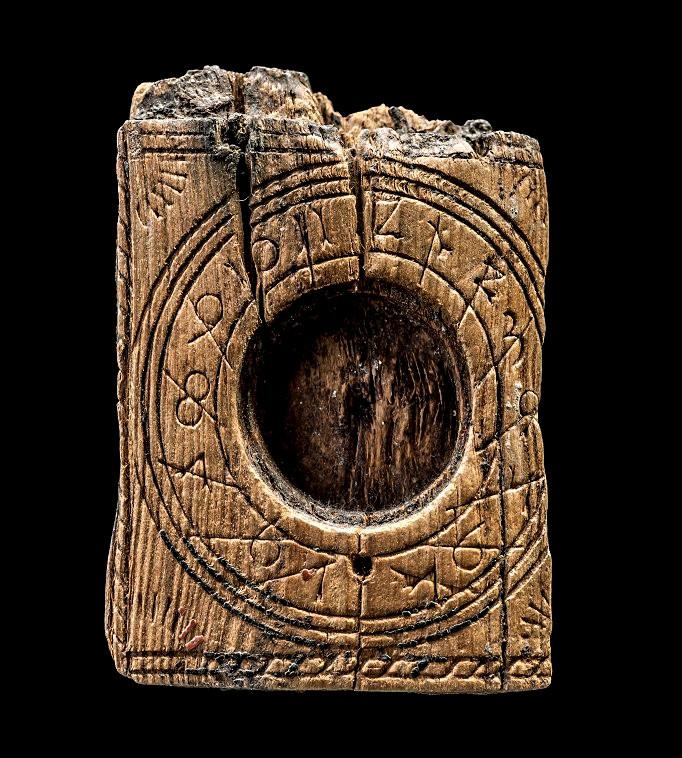
A late medieval pocket sundial from Freiburg. The portable sundial once contained a small compass in the circular recess, helping to align the sundial along the north–south axis so the correct time could be determined. 📷 Archäologisches Landesmuseum Baden-Württemberg image
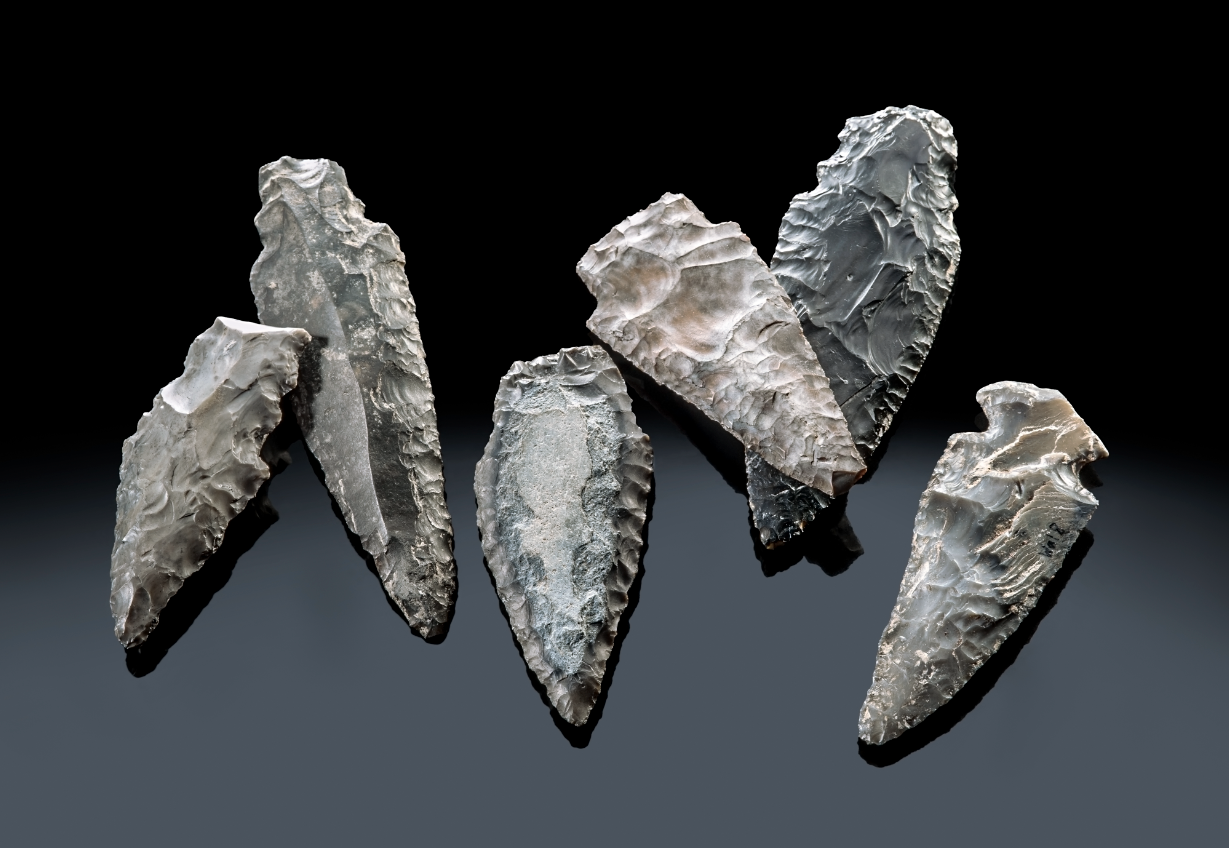
Neolithic flint dagger blades from various sites around Lake Constance. The wooden handles have not survived. The flint material was sourced from the Southern Alpine region, highlighting early trade networks and cultural connections between the Alpine Foreland and the Southern Alps during the Neolithic period. These daggers represent the skilled craftsmanship and wide-ranging interactions of prehistoric communities. 📷 Archäologisches Landesmuseum Baden-Württemberg #archaeology image
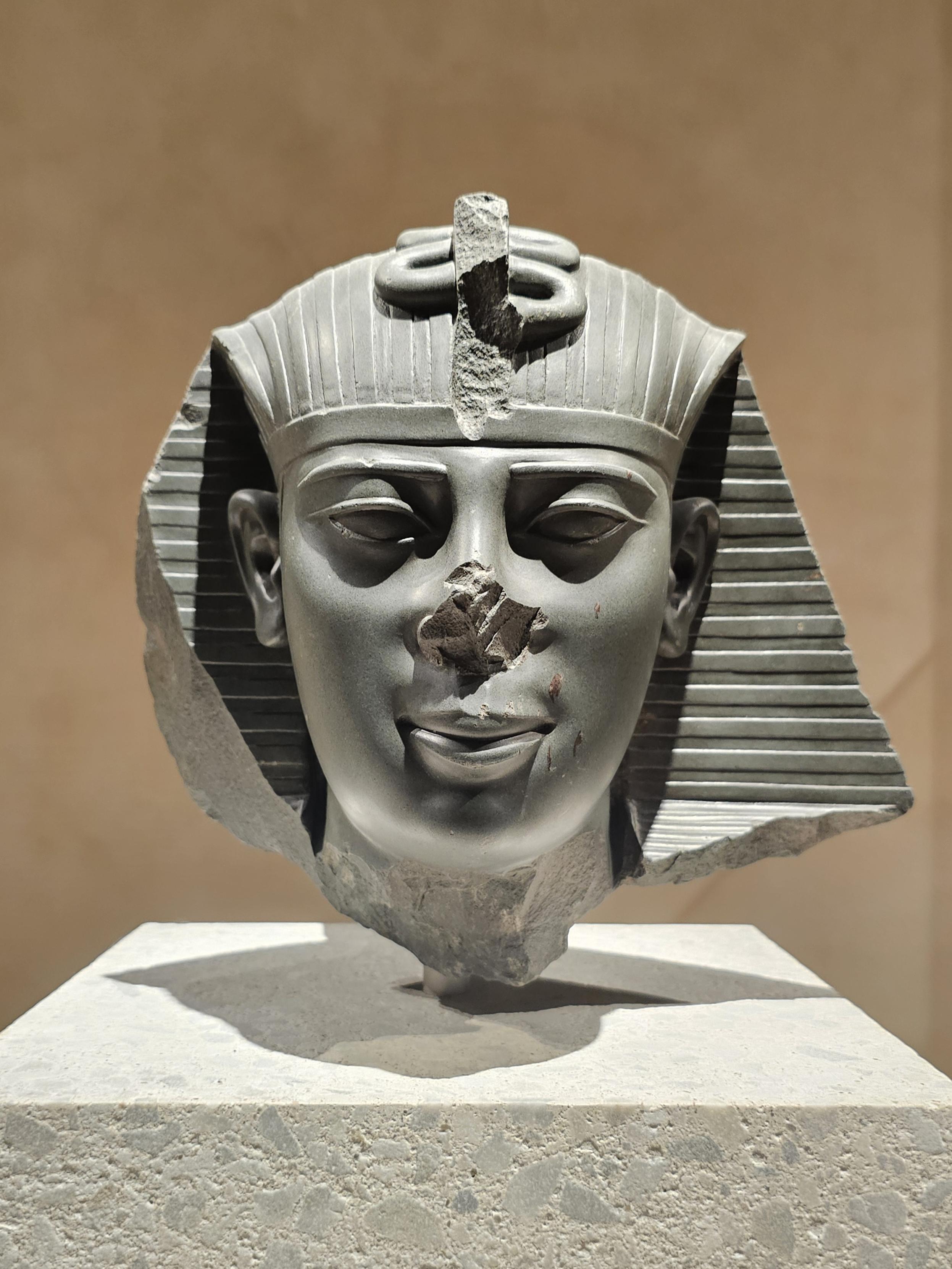
This stunning head is part of a life-sized, free-standing sculpture and exemplifies an idealized portrayal of a ruler. This head has been attributed to Pharaoh Amasis (570-526 BC), who ascended to the throne through a military revolt. His rule then brought a new era of peace to the country. On display at Neues Museum Berlin 📷 me image
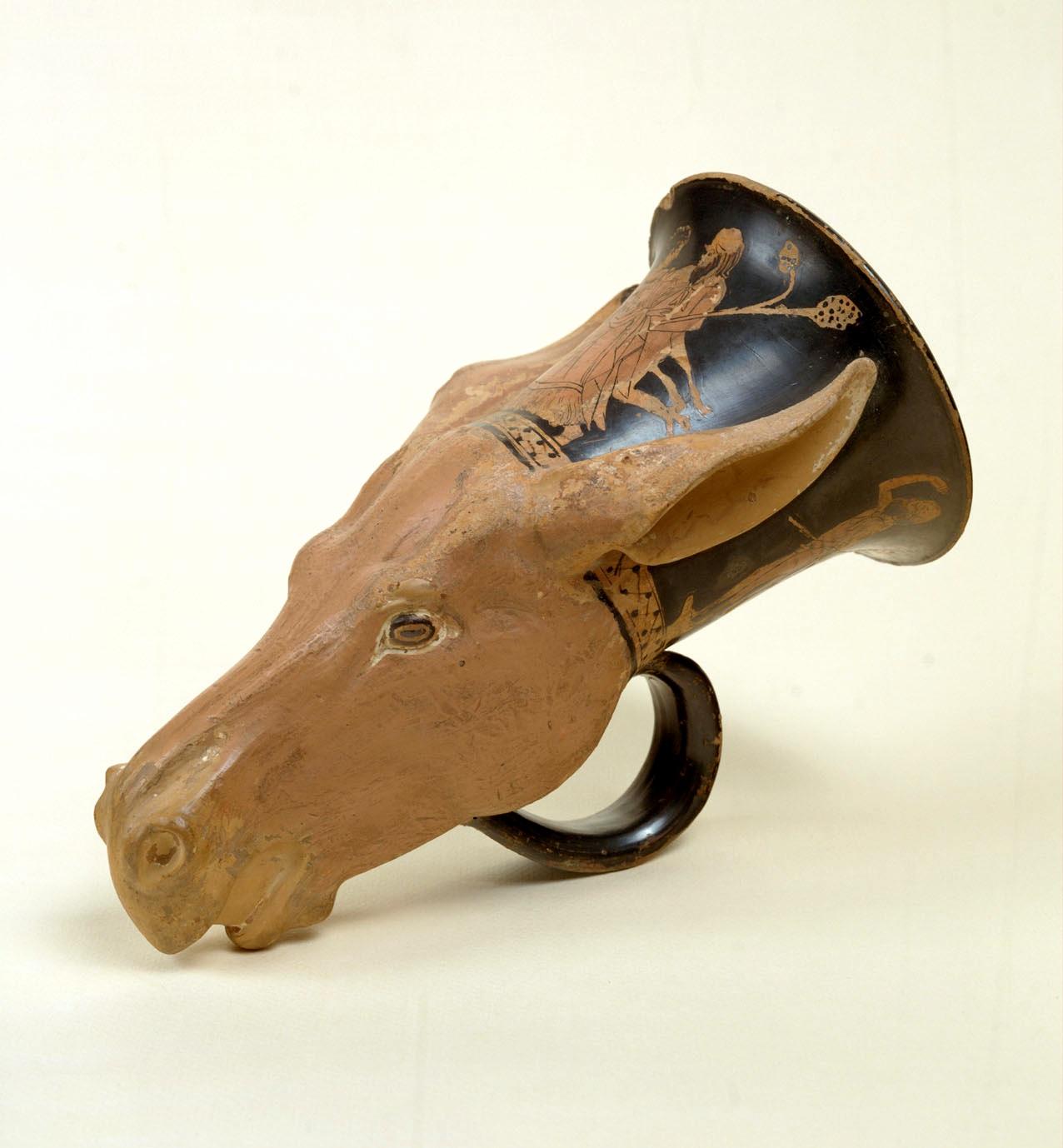
What a gorgeous #Greek rhyton in the form of a #donkey's head! Dating ca. 450 BC. Vessels such as this one were used in drinking parties. Since they didn't have a base, the content had to be consumed before the vessel could be put down 📷 Kunsthistorisches Museum Wien image
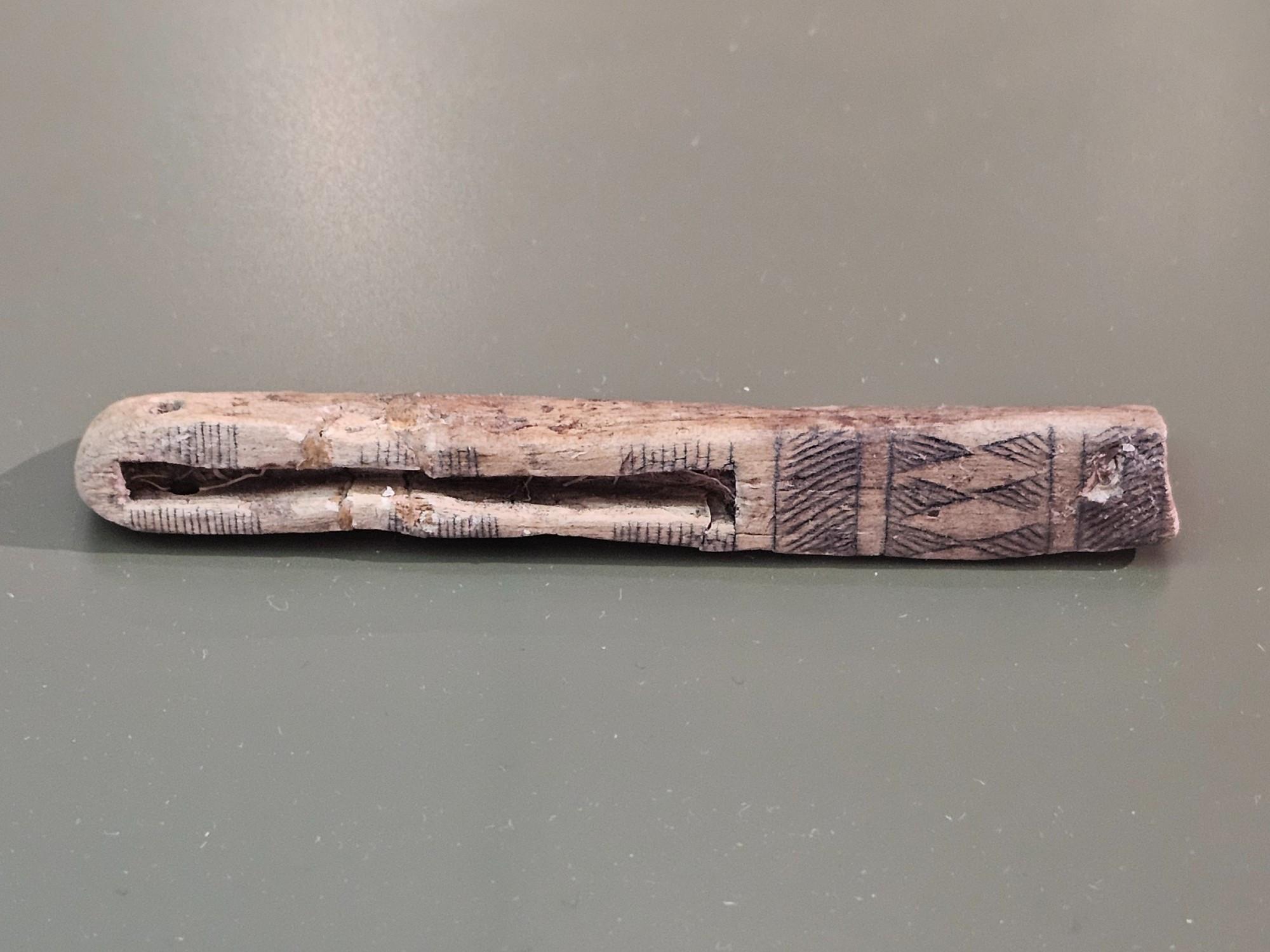
What could this be? The label simply describes it as a ‘decorated part of a item of unknown function made of maple wood’. A lot of effort clearly went into decorating it, whatever it was. Any suggestions? Found in the Bronze Age pile dwelling settlement of Ludwigshafen-Seehalde, 2000–1600 BC #archaeology image
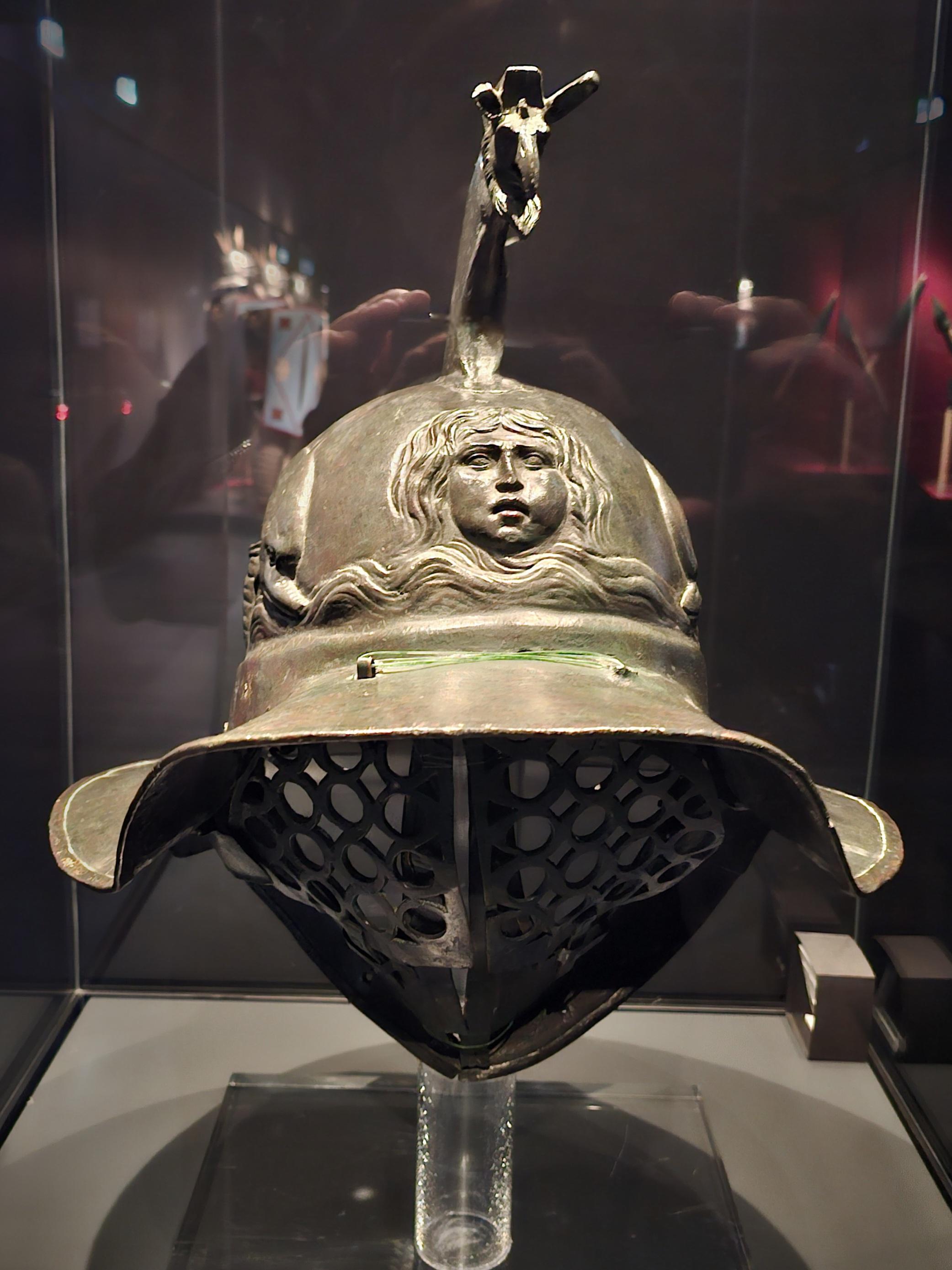
A helmet of a Thraex gladiator found in the gladiatorial barracks in Pompeii. The different classes of gladiators can be distinguished by their armor and weapons. A Thraex was equipped with a small shield and a short, curved blade. The helmet has a griffin crest and protective two-part visor. Gladiators usually fought in particular combinations, like the Thraex against the Murmillo. Currently on display at Archäologische Staatssammlung München, on loan from MAN Napoli. 📷 me image
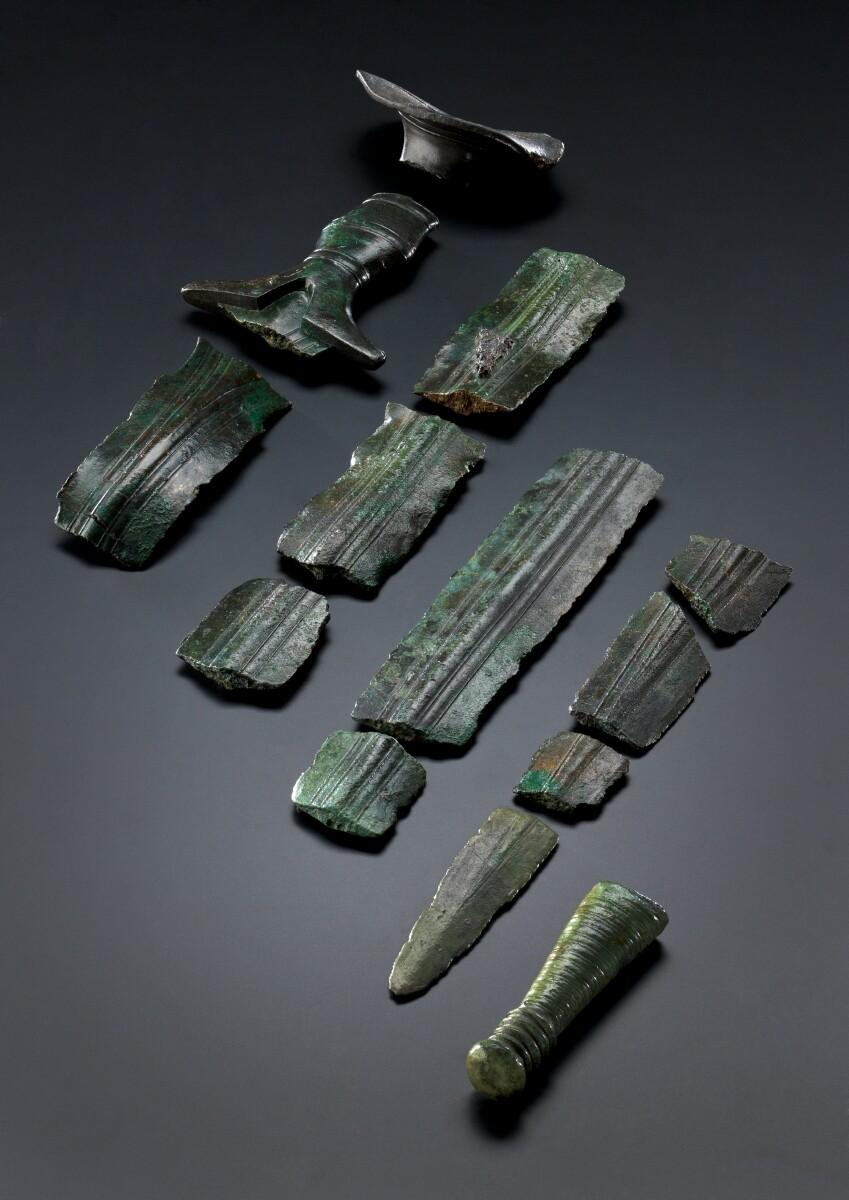
An intentionally destroyed #BronzeAge #sword found in a burial at Blaubeuren-Asch. Bronze Age weapons deposited in burials were often bent or hacked into pieces before placed into the grave, in this way they 'died' with the owner. Dating 9th century BC. 📷 Landesmuseum Württemberg 🏺 image
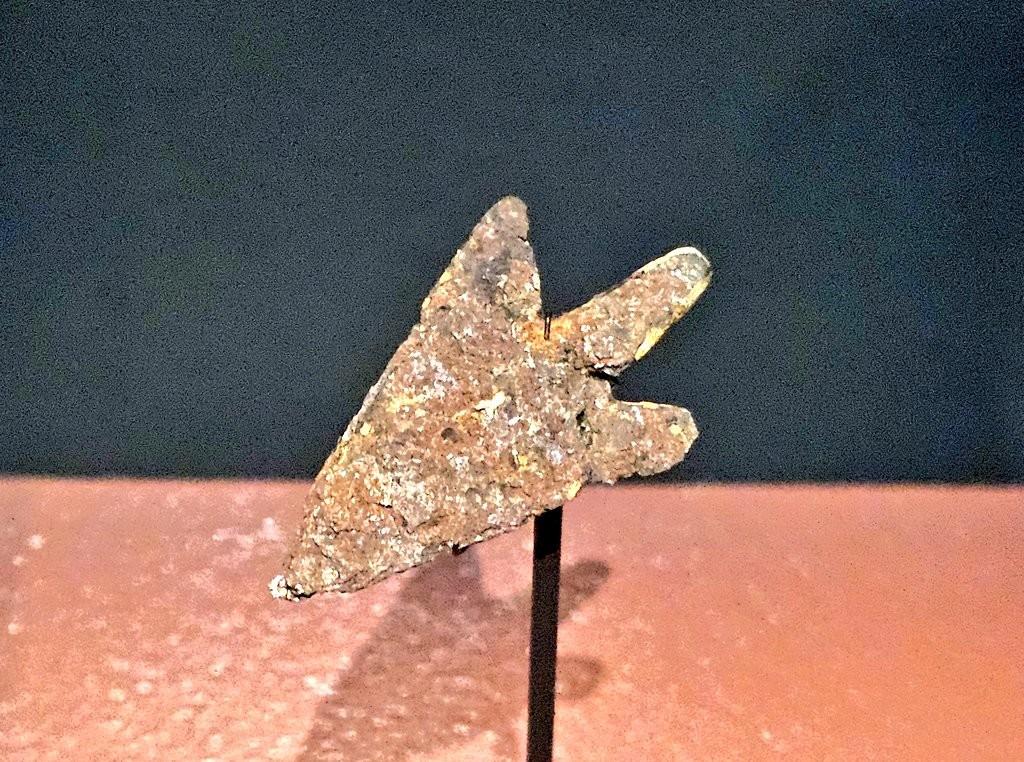
#FindsFriday! An arrowhead made of #meteorite iron: around 1,500 BC, a meteorite struck #Estonia. A fragment of it arrived - presumably in the baggage of an amber trader - at what is now Lake Biel, #Switzerland. An arrowhead was then made there from the cosmic iron. From Mörigen, 900-800 BC. 📷 me image
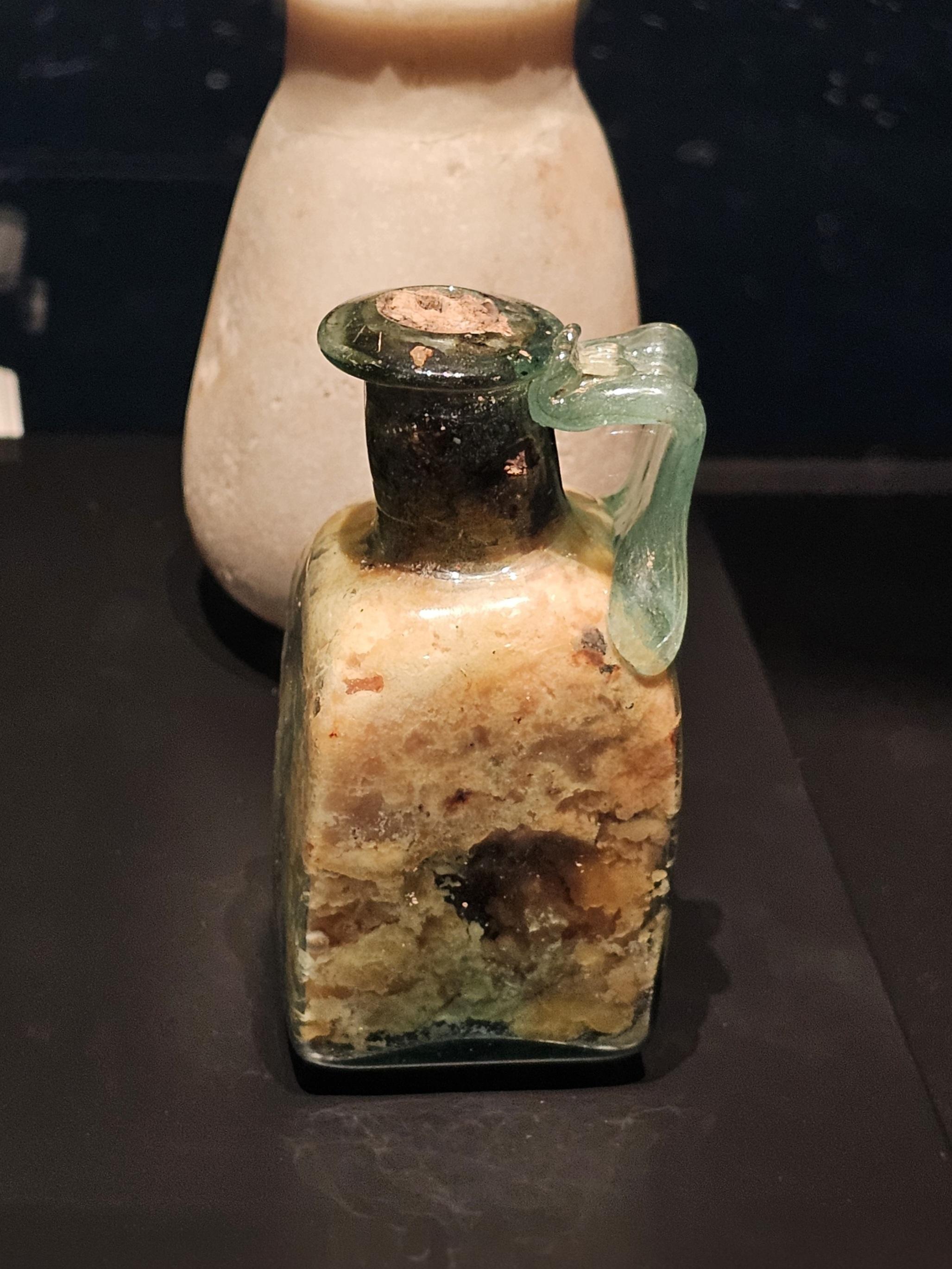
Some archaeological finds may appear unremarkable and ordinary, yet they often are more interesting than any treasure, such as this Roman glass square bottle remarkably containing a rare find – preserved ointment. The waxy mass of fatty acids and glycerine contains plant fibres from wood, pollen and seeds. Found in Wederath, dating 1st century AD. #archaeology image
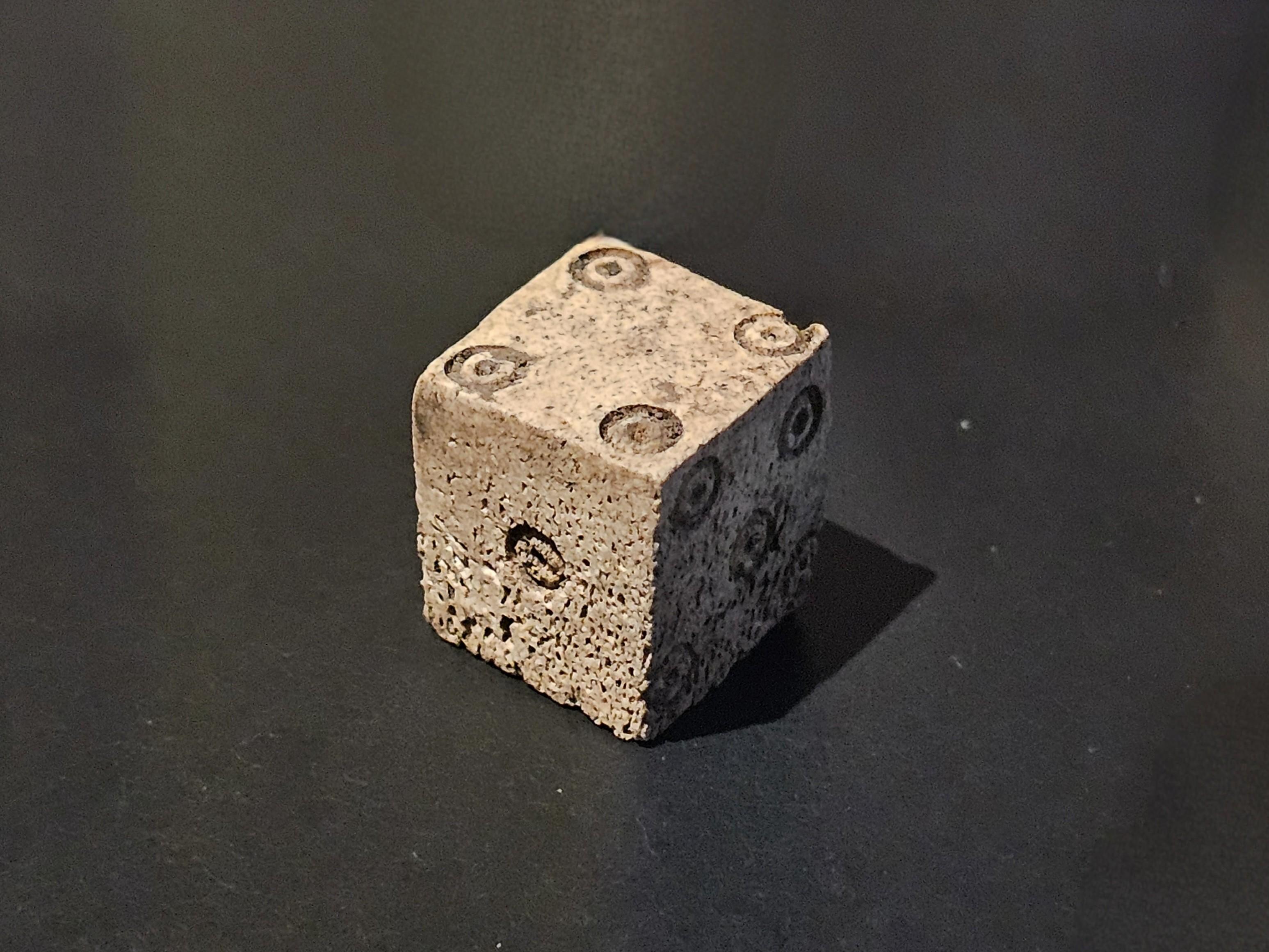
A die made from animal bones, found in Burgstein Castle, dating 11th century. Just like today, opposite sides of a die always add up to 7. Dice were quite popular among all social classes during the Middle Ages. In the early 10th century, for instance, the scholar Ekkhardt IV of Sankt Gallen documented a dice game played between Bishop Salomon of Constance and Archbishop Hatto of Mainz. 📷 me #archaeology image