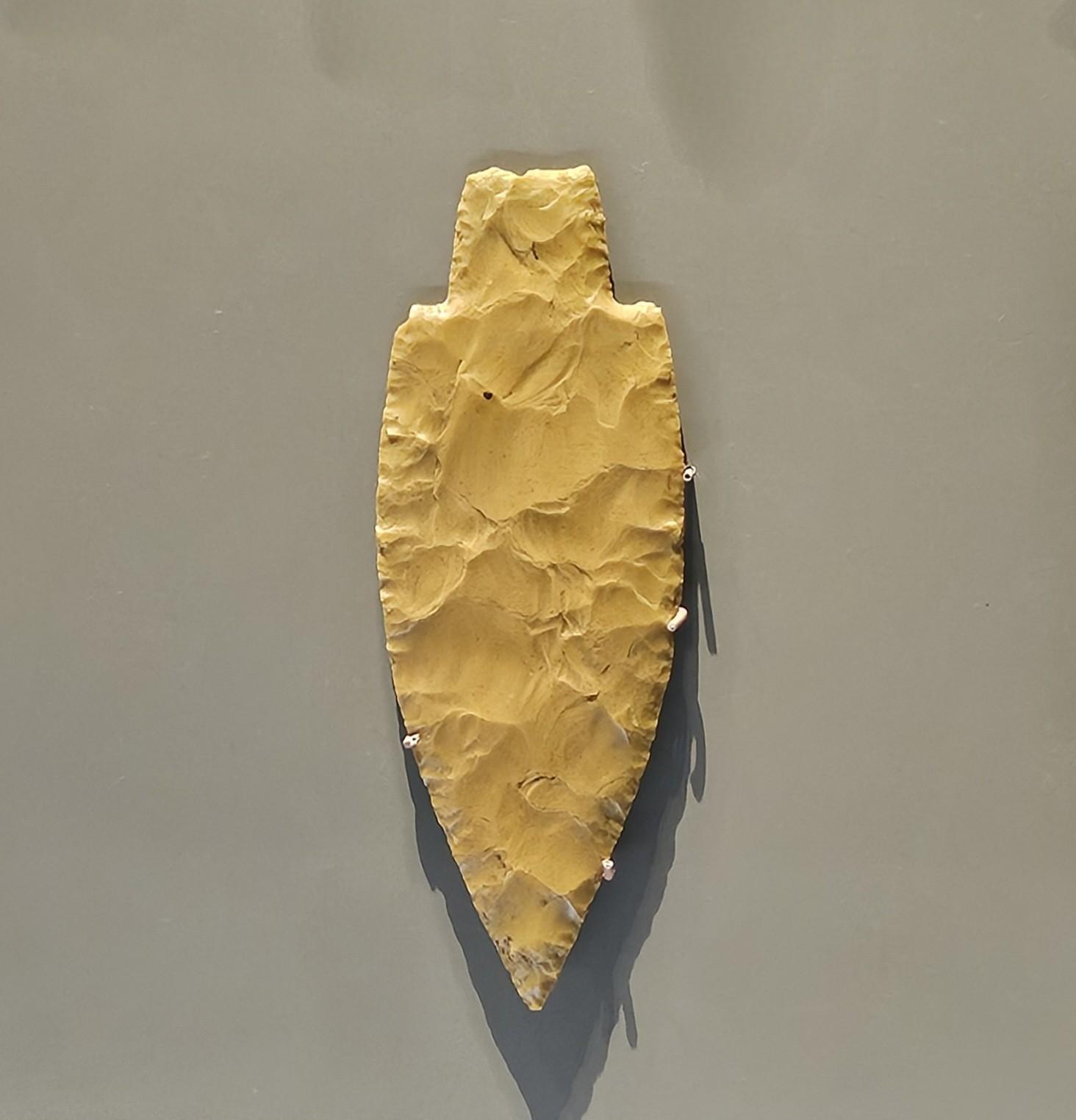
A late Neolithic dagger found in the pile dwelling site of the Roseninsel, Bavaria.The blade is made of flint from the Monti Lessini, upper Italy.
Dating 3500 - 2700 BC.
On display at Archäologische Staatssammlung München
📷 me
#archaeology
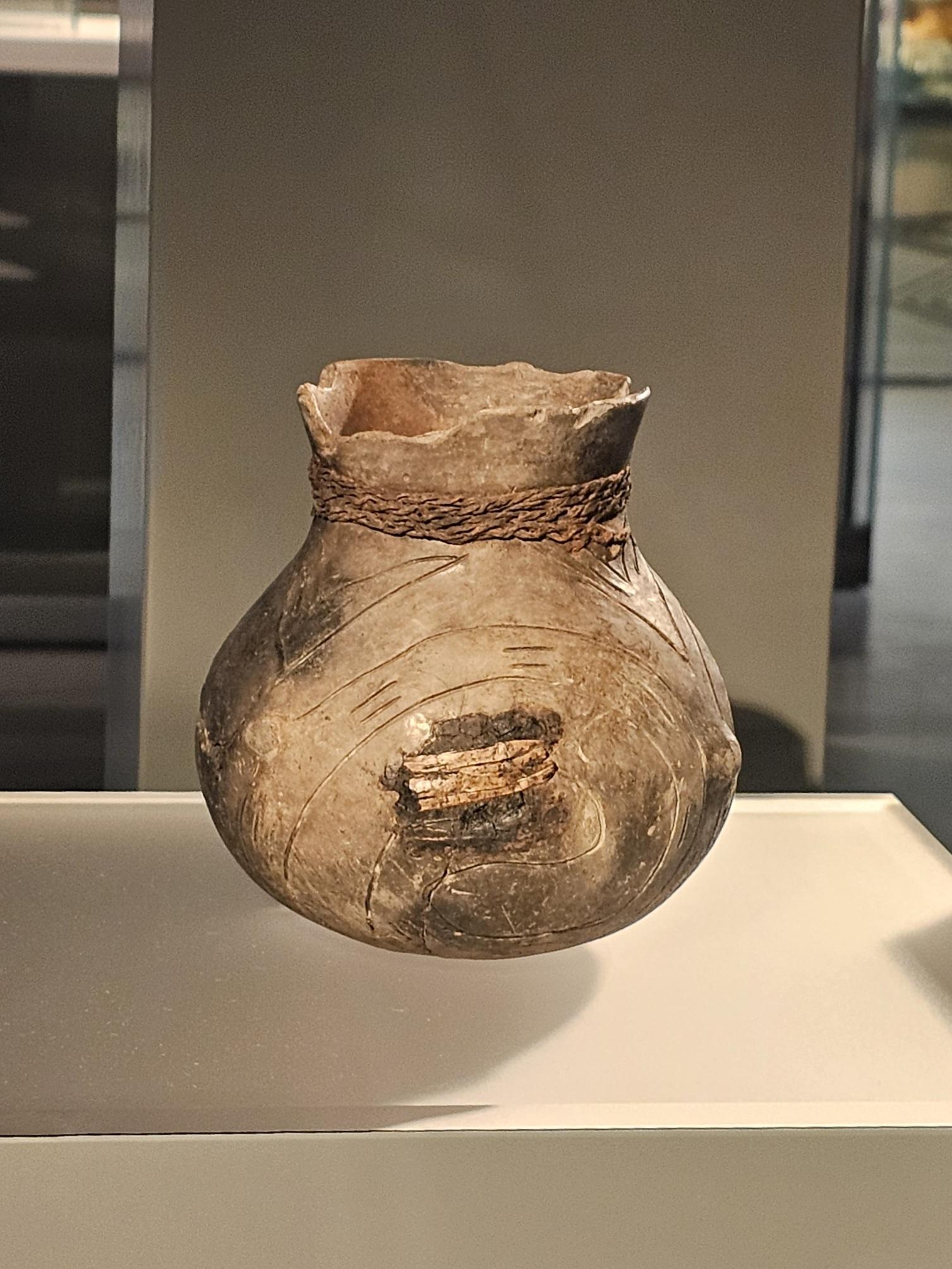
A complete pottery vessel, featuring repairs mid-body and a cord tied around its neck.
Found in a Neolithic well in Altscherbitz, Saxony, dating 5100-5000 BC. Multiple complete vessels have been discovered within the well. They may have been intentionally placed there as part of a ritual associated with the well's closure and subsequent filling.
On display at Staatliches Museum für Archäologie Chemnitz
📷 me
#archaeology
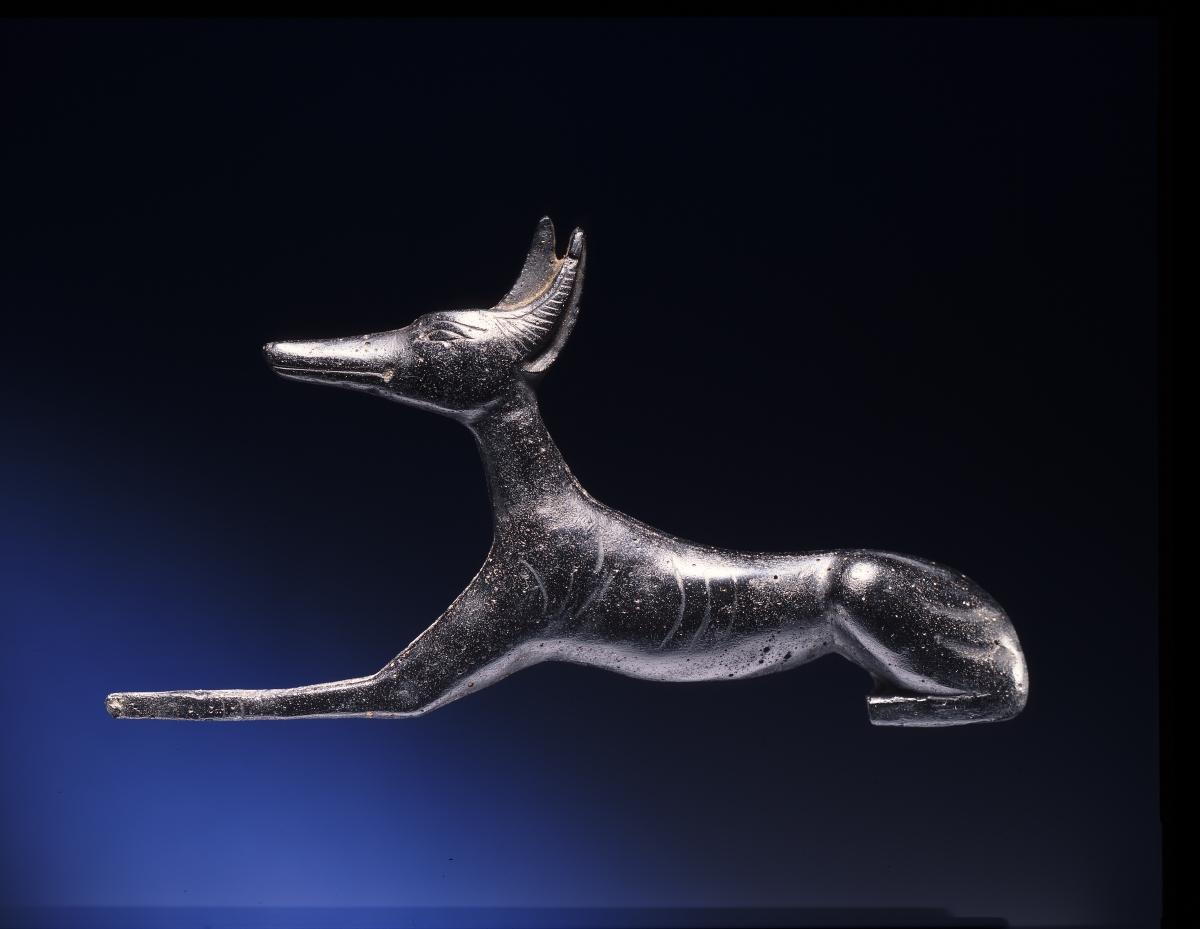
An #Egyptian glass inlay of a jackal. Jackals were linked with the dead, because they were present in the desert regions near to the cemeteries. The most popular jackal-shaped god was Anubis, the god of embalming. Dating 5th -1st c. BC.
📷 Landesmuseum Württemberg
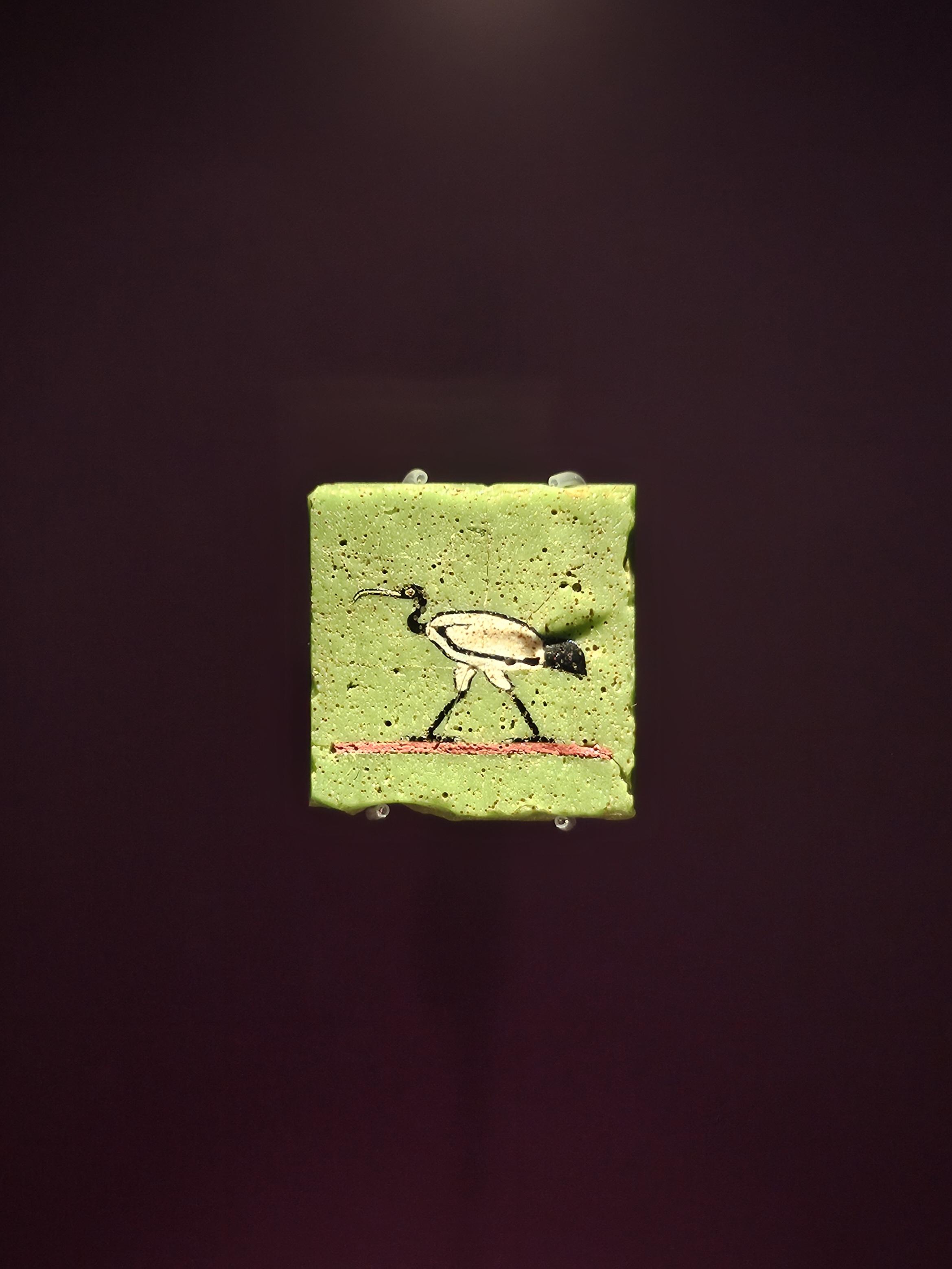
Fascinating world of ancient #glass ! A small-scale but colourful mosaic glass inlay depicting an Ibis. This inlay, originating from a workshop in Roman-era Egypt, was discovered in Tawern, near Trier, Germany.
The ibis was considered a sacred animal of Thoth, the Egyptian deity associated with wisdom, writing, and the moon.
Mosaic glass inlays were used to decorate caskets and furniture.
1st century BC / 1st century AD
On display at Rheinische Landesmuseum Trier.
📷 me
#archaeology
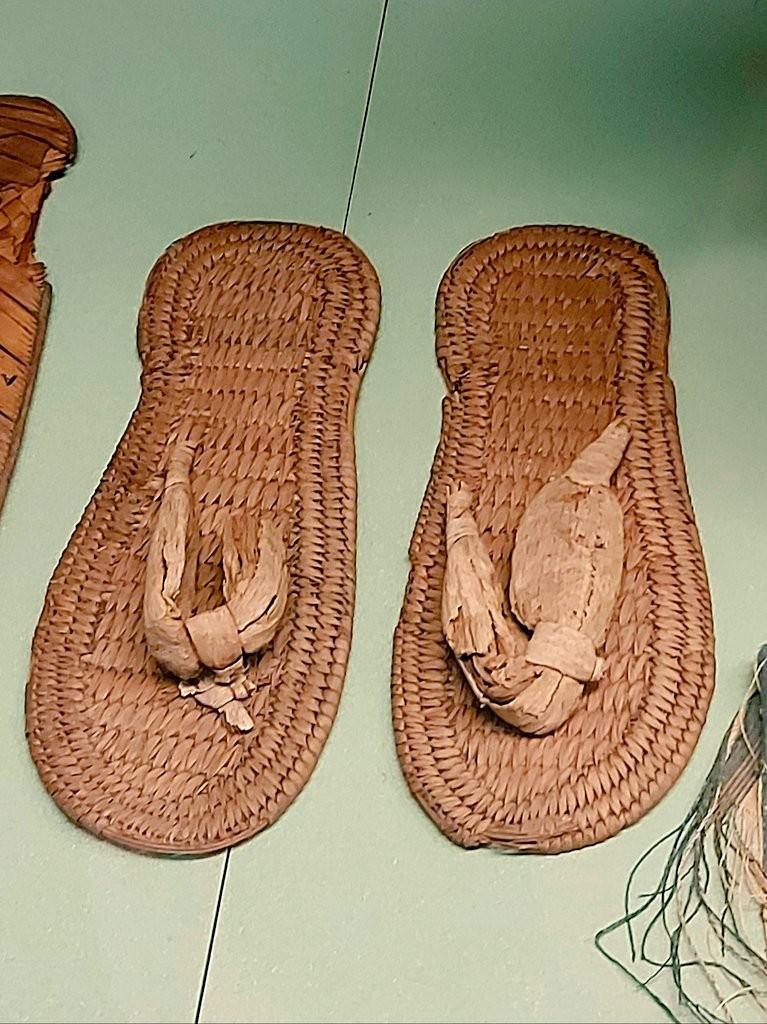
Nothing has changed - #Egyptian flip flops 😃: a pair of sandals made of woven reed and palm leaves. Dating around 1000 BC. It has been remarkably preserved because of Egypt's arid desert climate.
On display at National Museum Copenhagen.
📷 me
🏺
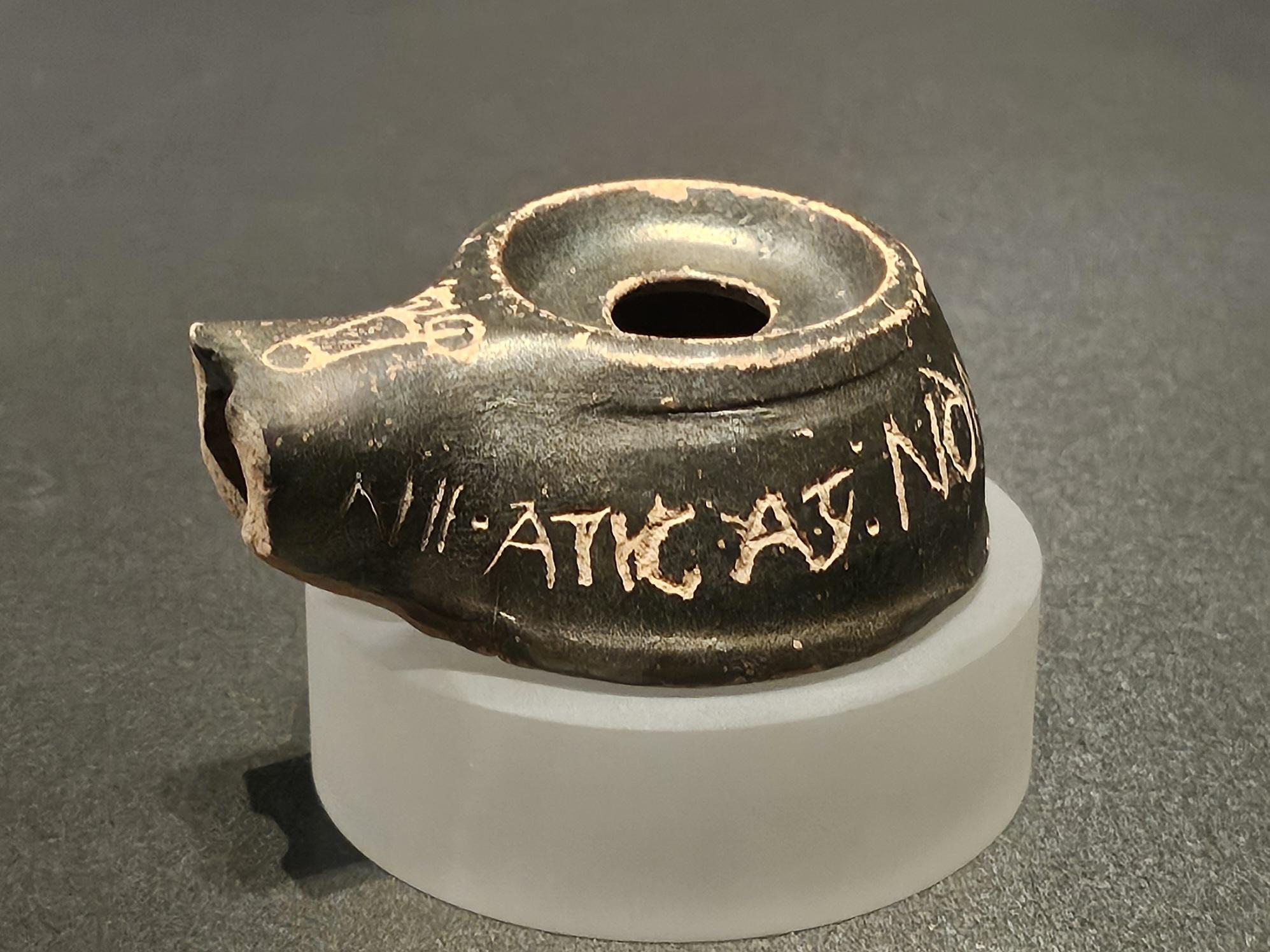
I just leave this for #PhallusThursday: A Roman oil lamp featuring an inscription and a phallus.
The inscription reads "ne atigas non sum tua marci sum" (don't touch me! I'm not yours; I belong to Marcus').
From the Esquiline necropolis in Rome, 2nd century BC
📷 me (Musei Capitolini)
#archaeology #RomanArchaeology
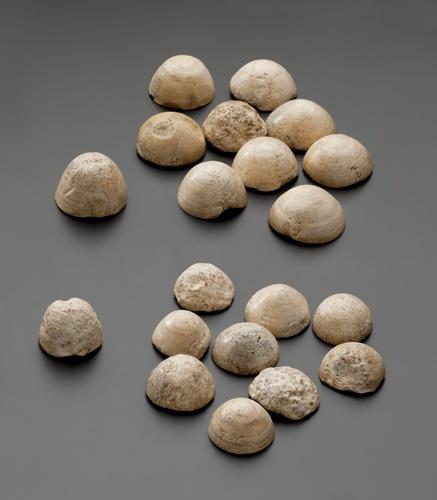
Some 1,500 years ago, a child was buried with a set of game pieces made of animal bones.
Single game pieces are frequently found in early medieval graves in south-west Germany, but complete sets are rare.
Found in Herbolzheim, 500-550 AD.
📷 Landesmuseum Württemberg
#archaeology
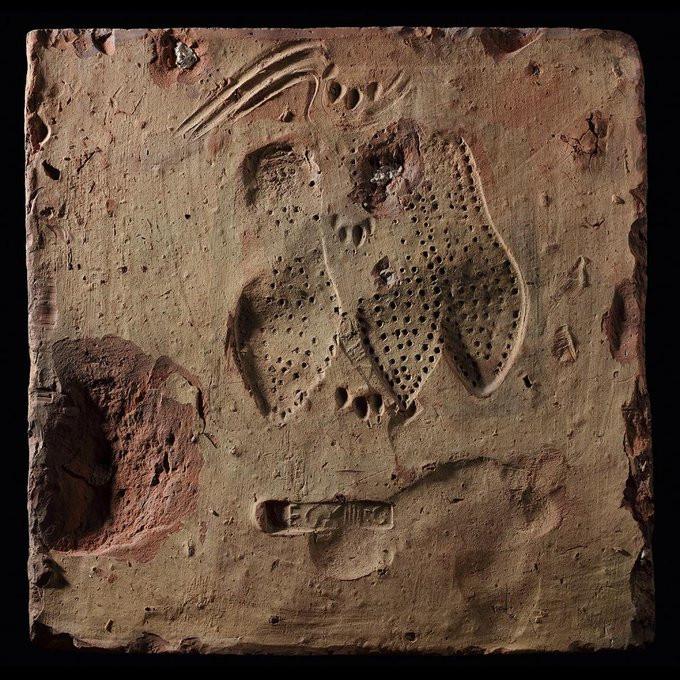
Like a time capsule: a Roman tile marked with #finger lines, hobnail #shoe prints, dog's paw prints, and a #stamp of the LEG(io) XIIII G(emina). Tiles with imprints are very common, since tiles were laid out to dry in the open air ahead of firing, where animals and people could step on them - though footprints might have been evidence to check whether the clay was set enough.
The finger lines might have been batch marks.
Found in Carnuntum, Austria.
📷 Landessammlungen Niederösterreich
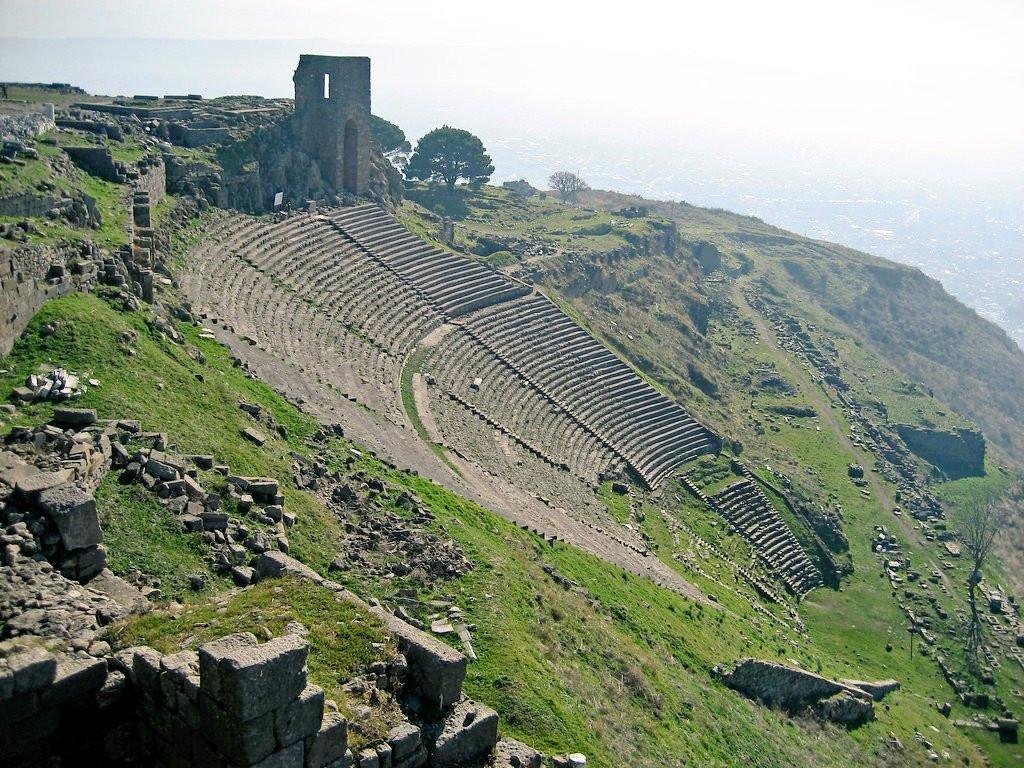
For #AncientSiteSunday the #Hellenistic theatre at Pergamon, #Türkiye, built in the 3rd century BC, alterations were made in the #Roman period. It's one of the steepest known ancient theatres. The capacity was about 10,000 spectators.
📷 C. Bredfeldt
#archaeology