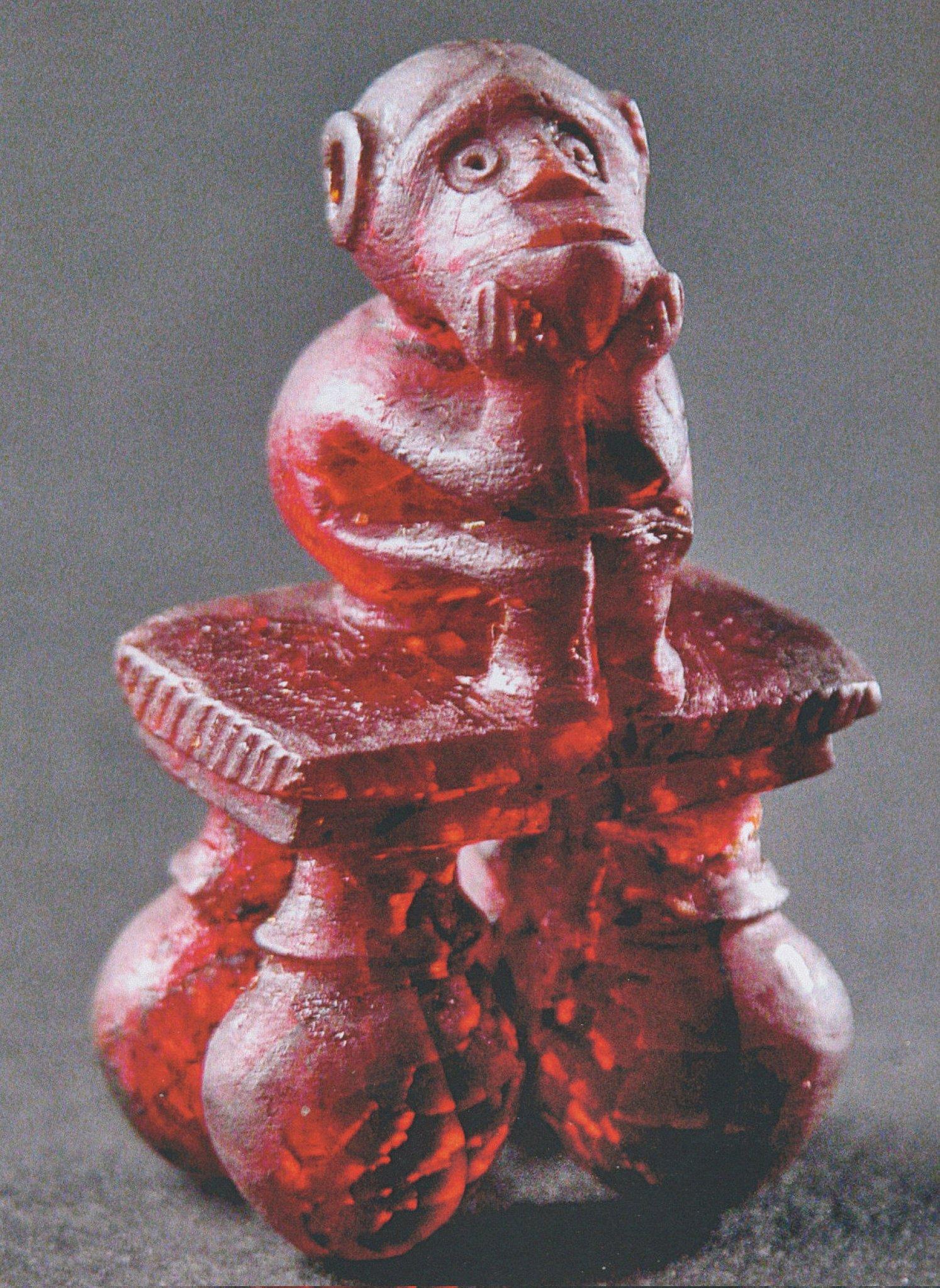
A tiny but very charming #Etruscan amber pendant in the shape of a squatting #monkey, height 4.7 cm.
Found in Vetulonia, #Italy, dating late 8th/early 7th century BC.
Photo: Soprintendenza per i Beni Archeologici della Toscana
#archaeology
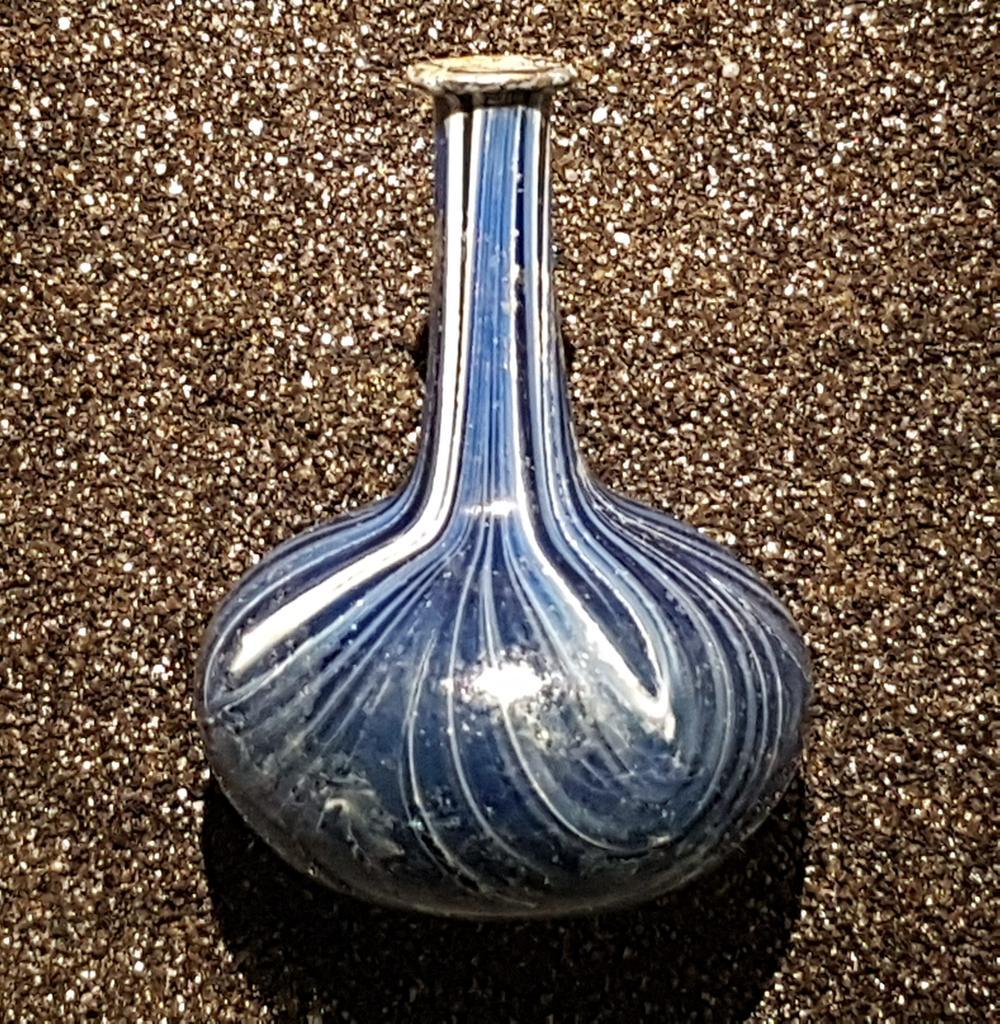
Fascinating world of ancient #glass: This delicate #Roman blue and white marbled glass unguentarium, a vessel to hold oil/perfume, was made from translucent dark blue glass with trails in opaque white, dating 1st century AD.
On display at Landesmuseum Württemberg
📷 me
#archaeology #RomanArchaeology
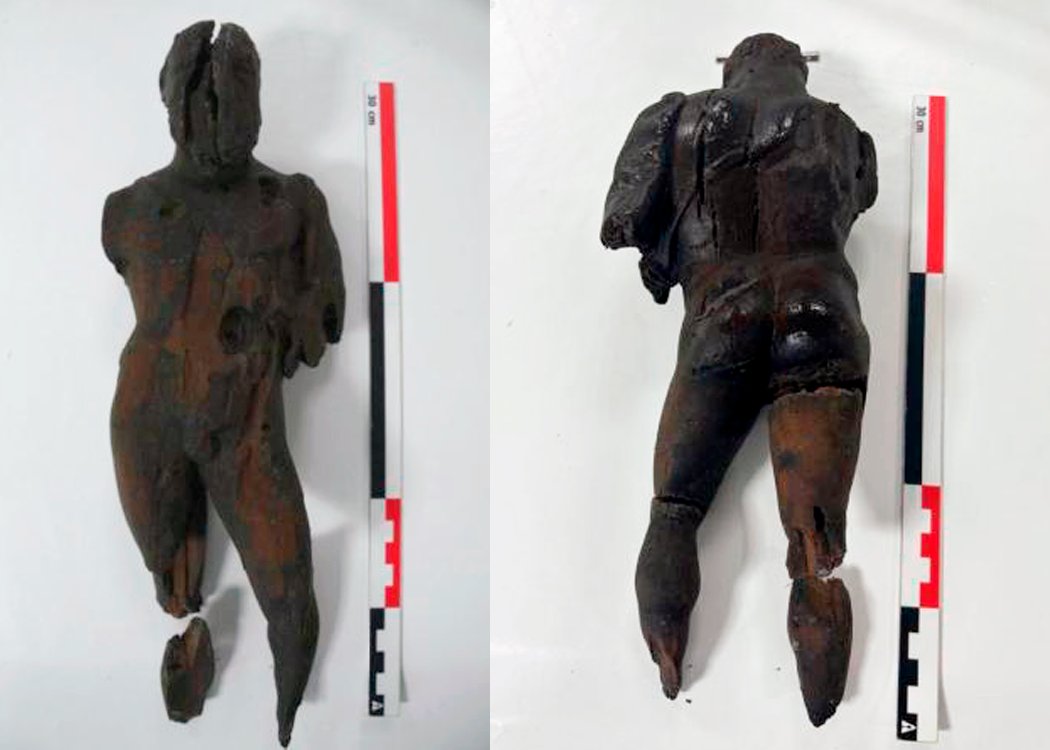
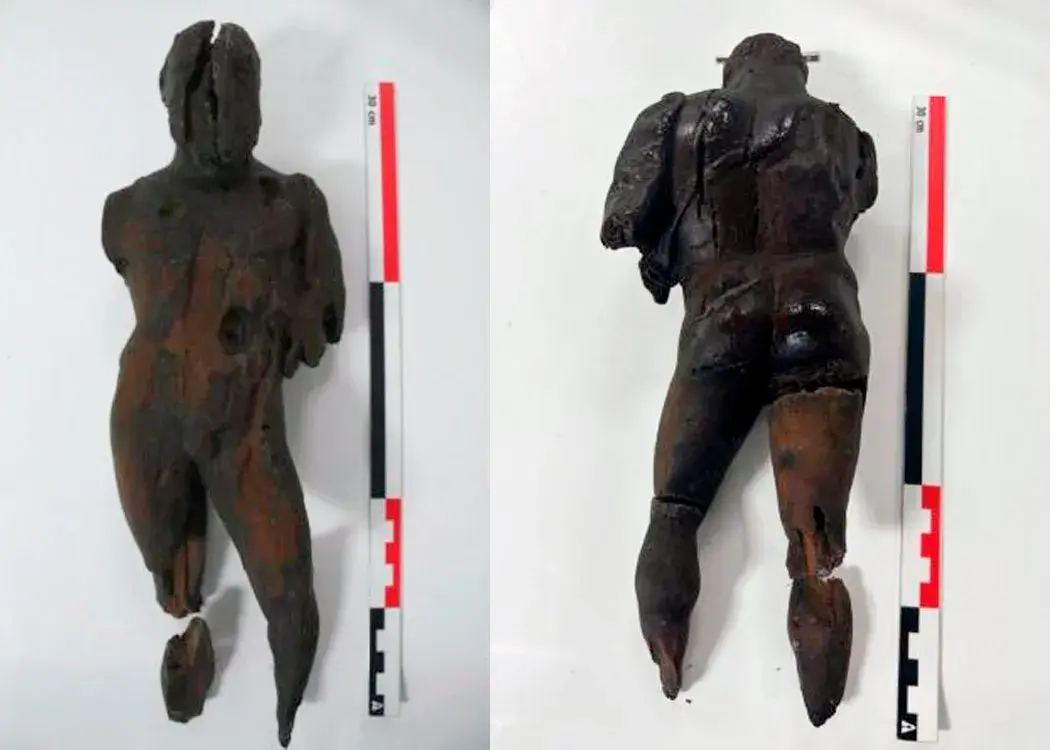
An extraordinary discovery was made in Ibiza: a 30-centimeter wooden sculpture representing Hercules. Considering the scarcity of wooden sculptures preserved from the Roman era, this discovery is truly remarkable.
The figure was found in a Roman well that was later reused as a refuse pit. Alongside the sculpture, fragments of wood, a leather sole, and plant remains were recovered.
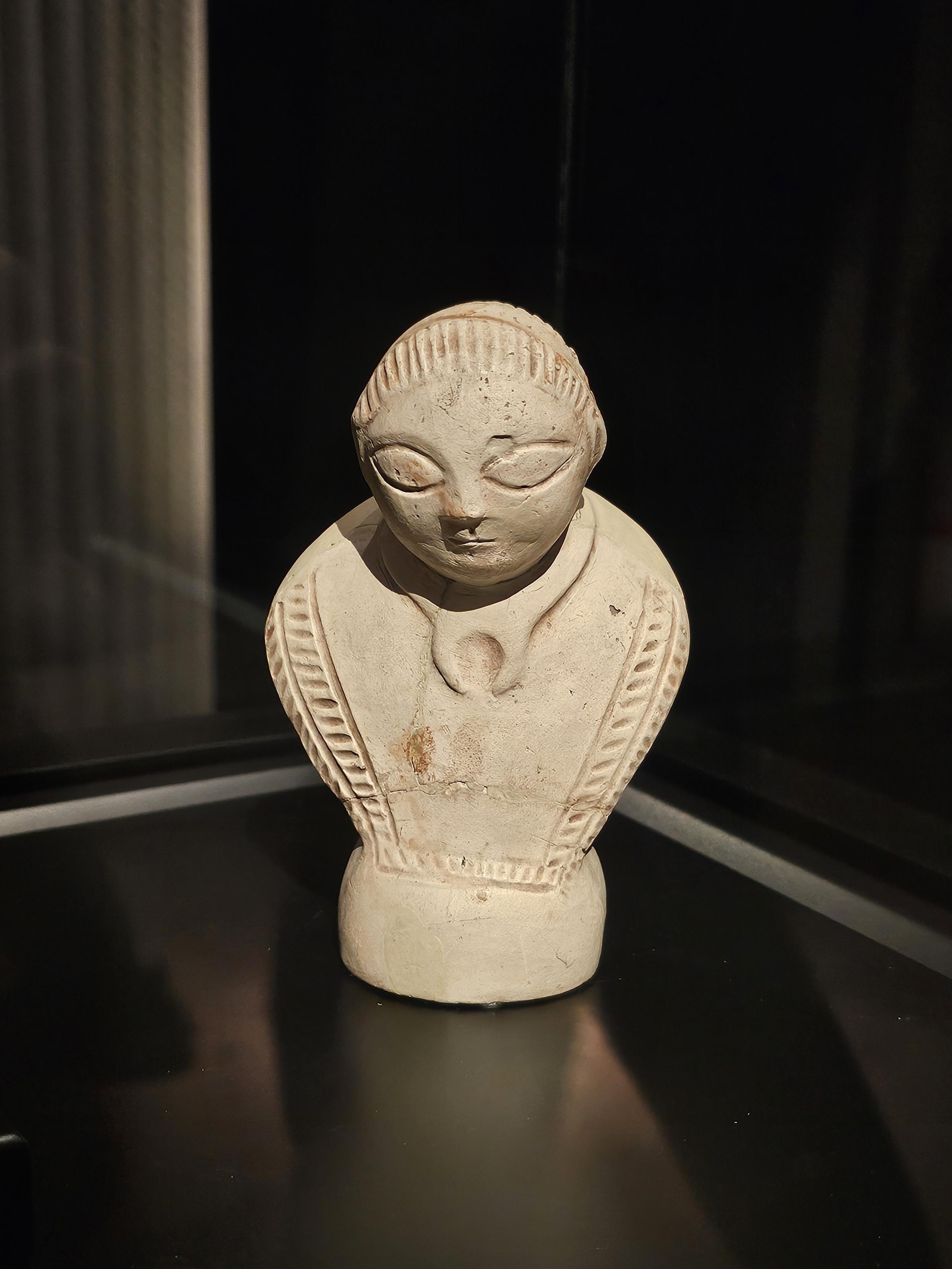
A terracotta bust of a girl wearing a crescent-shaped pendant, known as a lunula, which was typically worn by females.
Lunula pendants were believed to possess apotropaic qualities, meaning they were intended to ward off evil. The moon was a symbol associated with women, but men also utilized items decorated with crescent designs too.
Found in Trier, 2nd/3rd c. AD.
Currently on display at the Major State Exhibition "Marcus Aurelius", Landesmuseum Trier.
📷 me
#archaeology #RomanArchaeology
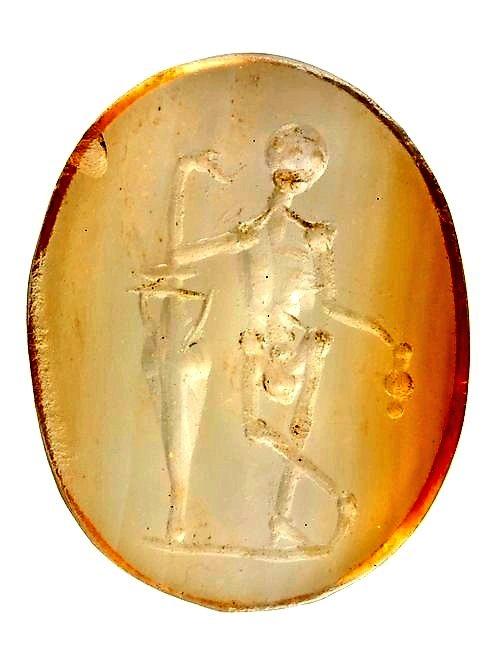
Happy #Halloween
This intaglio depicts a skeleton resting on an amphora and holding a jug. Such representations were intended to remind to enjoy life to the fullest since pleasure ends irrevocably with death.
Photo: Museum August Kestner/Christian Tepper
#RomanArchaeology #archaeology
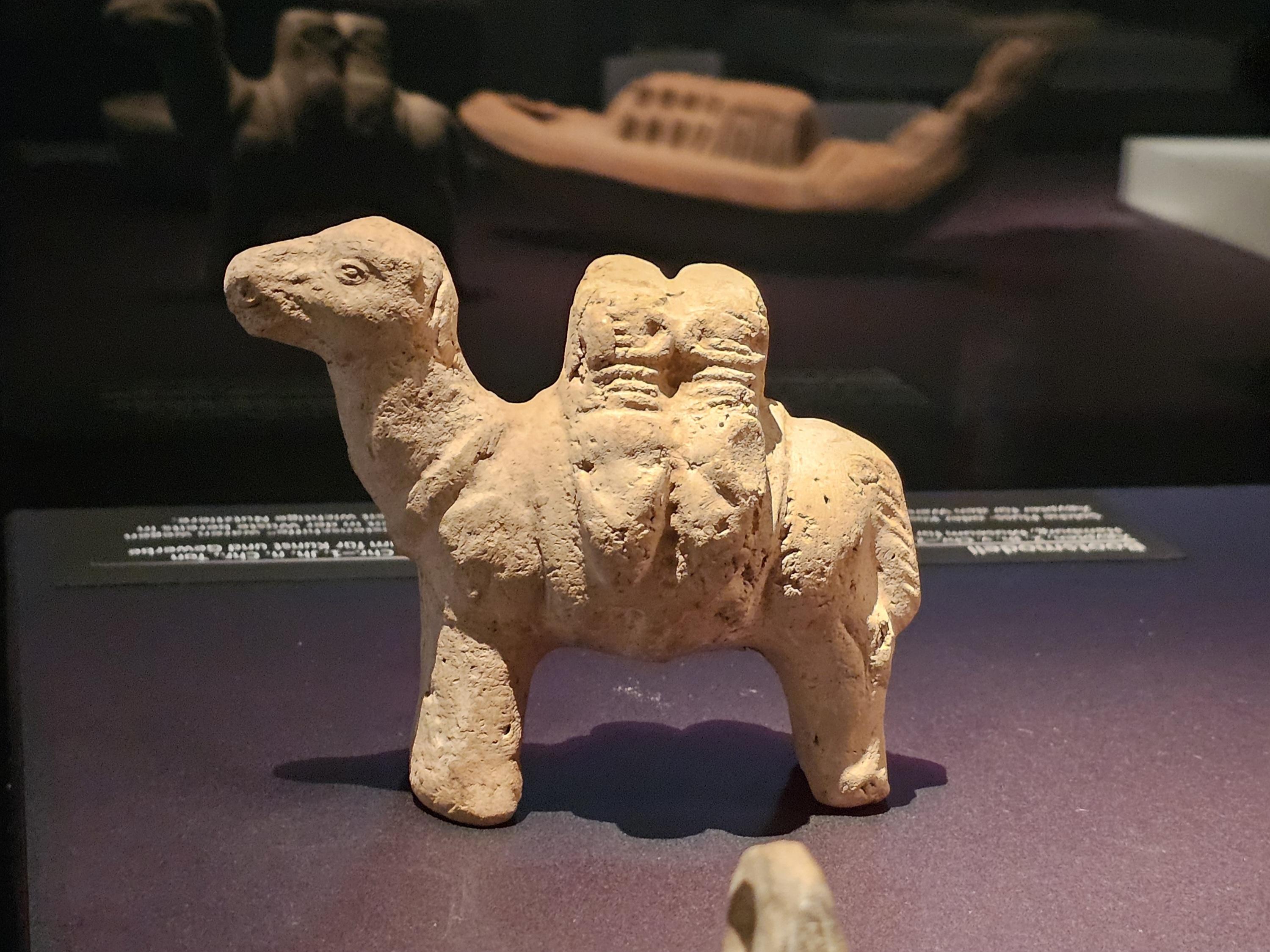
A terracotta figurine of a dromedary carrying two large amphorae on each side of a load frame.
From Egypt, Roman period, 2nd/3rd century AD.
📷 me
The photo was taken at the Caesar and Cleopatra exhibition in Speyer, having been loaned by the Museum für Kunst und Gewerbe Hamburg.