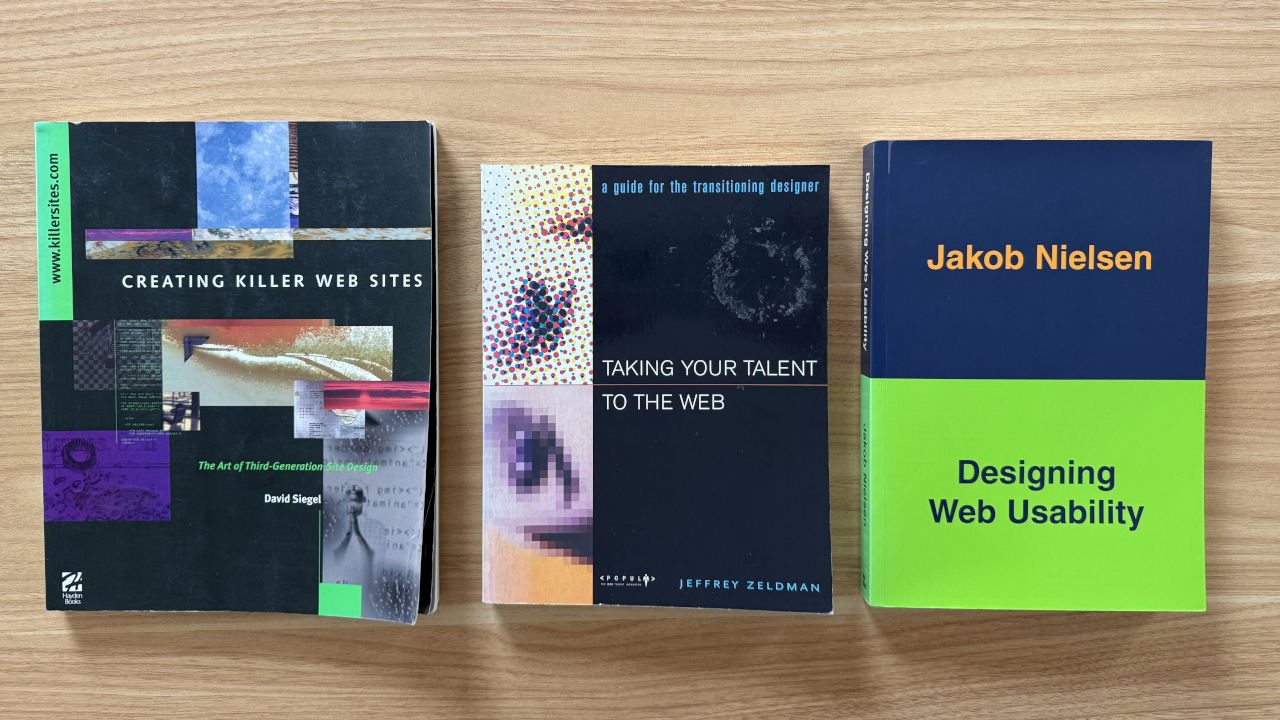
I look back on the 3 musketeers of web design in the 1990s: Jeffrey Zeldman, David Siegel, and Jakob Nielsen. Each had a distinct web design philosophy (and if you read till the end, you'll discover which one I believe 'won' in the long term). I focus in particular on 1997, which is when Flash and CSS emerged. But I also look back on the careers of the 3 gurus from our 2025 perspective.
“Remix is moving on from React
[…]
Remix v3 is a completely new thing. It's our fresh take on simplified web development with its own rendering abstraction in place of React.” 📃.md
👏 👏 👏 (via @Alex Russell and @npub1dqh3...w6fv)
How is it possible that the UK government web team is so cool and Onto It, but I spend half my days calling other UK govt departments on the phone, being on hold for 45 minutes and/or talking to bots who get things wrong, and when I finally talk to a human they say I need to call another number. Anyway, great to see 11ty being used in this way.
Back in 1997, the browser plugin RealPlayer became synonymous with "buffering" — which for 90s web users meant constant, annoying delays in streaming a video online (usually over dial-up). Funnily enough though, the buffering epidemic didn't dampen the HYPE for online video streaming that year. Wired magazine even declared that RealVideo was leading a “war with TV.” And you thought AI hype was bad...
Apparently 86% of websites have “Low Contrast Text”, making it the most common #accessibility issue (even more than missing alt text). I’m quite surprised by this, as I thought most websites still have white background with black type. Maybe it’s a font size thing in many cases…Anybody have more info on this issue?
Yikes. “As it currently stands, both the rapid growth of AI-generated content overwhelming online spaces and aggressive web-crawling practices by AI firms threaten the sustainability of essential online resources.”