#hyperperspective #hyperobject #decentraliselove #JOY image @Tim Morton
can't think of a better way to spend a summer evening in central London than visiting @Cyphermunk House and hanging out with the cool kids of #Bitcoin earlier on, after a fascinating talk on #SovereignComputing , we mingled in the #artgallery space and talked #blockchain, #privacy, #holidays, #SPOF, and #pizza on the house’s glorious patio Found the space I was missing #decentraliseyourself #fuckheteronormatives #revolution View quoted note →
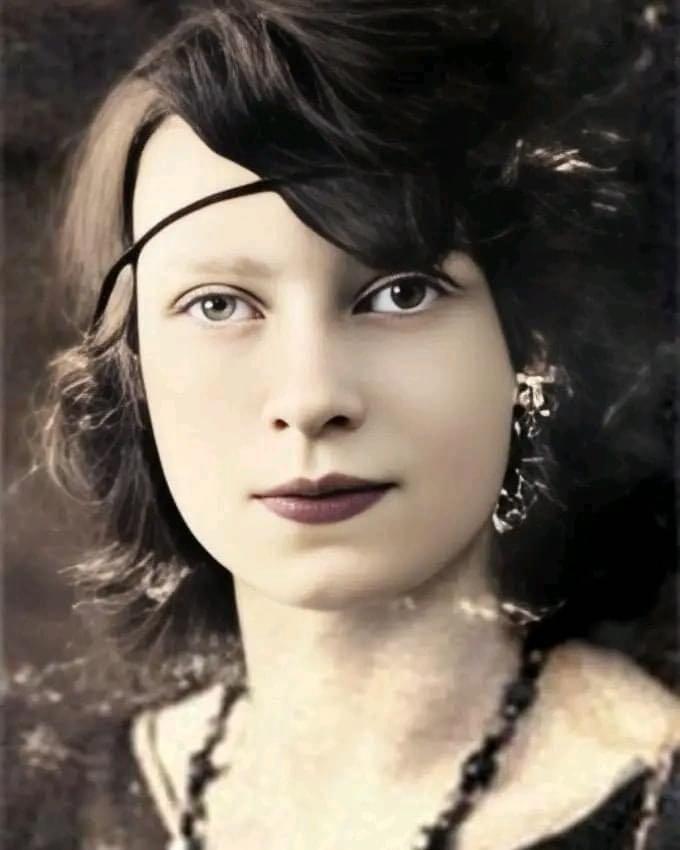
"Happiness! You don't know how I looked for it, I barely remember it myself; in serious books, in dubious beds, in the simplicity of things..." Mimosa. ★August 16, 1907, anarchist militant and nurse for the Durutti Column, Georgette Léontine Roberte Augustine Kokoczinske alias 'Mimosa' was born in Versailles, Paris. At the age of 16, she began to frequent the bars and Cabarets of Montmartre, where she became interested not only in performance and poetry, but also in the ideas of anarchism. In the late 1920s, alongside organising meetings and rallies for anarchist causes, she qualified as a nurse. She set up home with the anarchist Fernand Fortin and belonged to the “Éducation Sociale” group. Using the stage name Mimosa, she joined a theatre group that entertained libertarian meetings and festivals in France such as "La Revue Anarchiste". On September 18, 1936, Mimosa enlisted in the International Group of the Durruti Column and was dispatched to the Aragon Front, where she and the German anarchists Augusta Marx and Madeleine Gierth took care of the infirmary and the kitchens. She was killed on October 17, 1936 aged 27, at the Battle of Perdiguera near Zaragoza, Aragon, along with other nurses and dozens of foreign volunteers - including French activists Roger and Juiette Baudard, Yves Vitrac, Bernard Meller, Jean Delalain, Suzanne Girbe, Louis Recoulis, Rene Galissot, Jean Albertini, Jean Giralt, Raymond Berge and Henri Delaruelle. Following a gunfight in which all the anarchists (including Mimosa) took up arms, they were eventually captured by Franco's fascists when their ammunition ran out, then murdered and their unclothed bodies burned in a barn. Their memories will live on forever with love, whereas the anonymous, diseased creatures that killed them, are in the dustbin of history and the fight is not finished. In May 1937, as a tribute to her, a French-speaking FAI group in the Gracia neighborhood of Barcelona, ​​took the name Brigada Mimosa. • Why we want to fight. This clip dedicated to Mimosa. Libertarias. 1996. Directed by: Vicente Aranda: ... image
What part of anarchism bothers you? A: the part where you have to make decisions about your own life B: the part where you don’t get to make my decisions for me? #anarchy #revolution #JOY image
#bitcoinhouse #cyphermunkhouse image
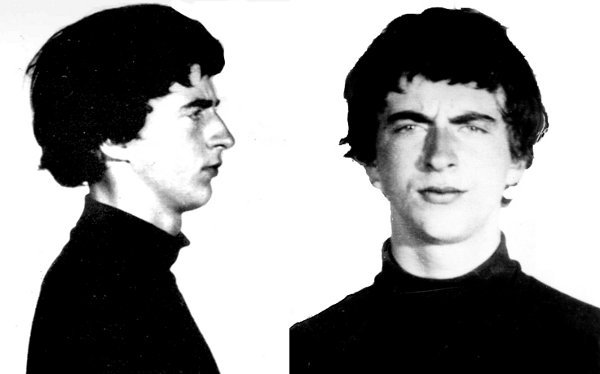
'An anarchist society is and always will be an aspiration, an ideal — a ‘star’ to follow — one that provides us with an ethical code, a moral barometer and a libertarian political template for our everyday lives. If and when a social revolutionary situation recurs again (in this country or anywhere) the role of the anarchist will be to do what they can to ensure that the social institutions required to ensure that any human society (including health and welfare,and security/defence services), function justly, fairly and as conflict-free as is humanly possible, are — and remain — fundamentally democratic, libertarian and answerable to the community. It’s not about achieving Nirvana or a Utopia, only religious zealots and ideological fundamentalists believe in the ‘rapture’ that creates the Kingdom of Heaven on earth, or the ‘last fight’ mentioned in ‘The Internationale’. Anarchists appreciate only too well how ‘imperfect’ human beings are and, doubtless always will be, which is why they reject institutionalised power structures as the bedrock for the creation of oligarchies (well-meaning or otherwise) and the corrupting of the body politic.' Stuart Christie. • On this day in 1964, 18-year-old Scottish anarchist Stuart Christie was arrested in Madrid while carrying explosives to blow up Spain’s fascist dictator General Franco. When arrested he was wearing a kilt, which confused the Spanish press in to describing him as "a Scottish transvestite." Here is his personal account of those events: • "To me, the Spanish Revolution of 1936, was the moral touchstone of the 20th century." Kill Franco! By Stuart Christie and Wesley Magoogan. In this short film, Christie recalls his clandestine journey across Europe, the secret signals and passwords he used, and his eventual arrest by Franco's secret police:
image
image
Good Morning image