👉This man was jailed for 12 years in 2019 for a drug-related killing but was out by 2025... ⚠️ Luton/Bedford: Convicted killer, Jamal Jeng, 28, has now been convicted of r-pe, strangulation and three counts of assault of a woman after his release. He has now been jailed for life with a minimum term of just eight years before he is eligible for parole. Why was he released so early? How is 8 years the minimum for this seriously dangerous man? Life should mean Life.
Julie Burchill is quite unwell by the sounds of things.
Maybe that's what I should do next time get early train 🤔 The cold on the bloody things can be brutal. https://www.pressandjournal.co.uk/fp/news/highlands-islands/6933895/oban-glasgow-cold-train-problems-highlands/ There are moments in life when you catch yourself mid-action and think: How did I get here? That moment for me came on the 5am Oban train, standing on the platform in the dark, dragging a small electric oil heater in its own suitcase. A pal had suggested it the night before – half joking, half serious – knowing how cold some the early morning trains can be. It felt like genius, as the train was freezing. Not “Scottish winter, wrap up” cold. I mean why-is-my-breath-visible-inside cold. Minus seven degrees cold. Inside the carriage. The heater went on. The carriage warmed up. Civilisation briefly returned. Spirits lifted. A small, illicit triumph against the elements. We can laugh about the heater — and we should — but it masks a bigger, dafter truth. Passengers shouldn’t be joking about bringing domestic appliances onto public transport just to stay warm. Nobody should be mentally inventorying extension leads at 5am. Not me. Not pregnant mums. Not cancer or dialysis patients. Not anyone. And certainly not the staff members that have to do this day in, day out on a freezing cold train. This is public transport. This is how people travel to hospital appointments in Glasgow, where many specialist services and surgeries are based. You should never have to wonder whether you’ll survive the journey on what we locally call the Siberian Express. Yet on parts of the West Highland Line, this has quietly become normalised.
A Bangladeshi migrant who moved his young family into a retirement home has avoided eviction for over a year by claiming it would breach their human rights. Shahidul Haque, 59, a father of nine who receives benefits for sleep apnoea and depression, moved into David Smith Court in Reading, Berks, in July 2024. The complex is reserved for residents over 55, but Mr Haque brought Jakia Sultana Monni, his 28-year-old wife, and their twin three-year-old daughters to live in the single-room flat, without permission, five months after arriving himself. Mr Haque claimed he did not realise he could not bring his family because he was not fluent enough in English to understand the tenancy agreement. He has lived in Britain since 1997. Officials at Southern Housing, which owns the complex, told Mr Haque he had breached his contract agreement, but they have been unable to claim the flat back despite taking him to Reading County Court. Article 8 has been repeatedly used by illegal migrants and serious criminals to frustrate efforts to deport them from the UK. Residents of David Smith Court have reportedly complained constantly of “excess noise” and “anti-social behaviour” from the family.
🤯 A judge has sparked fury in Italy after downgrading sexual assault charges for a migrant who impregnated a 10-year-old girl at a migrant centre. There was outrage in 2024 when it was reported that the child, from sub-Saharan Africa, had been raped at a reception centre in Collio, Lombardy. The young victim was taken to a local hospital, where a test revealed that she was pregnant before she underwent an abortion. In depositions, the 29-year-old Bangladeshi defendant claimed that he and the girl had shared some form of 'relationship' while his legal team insisted 'there was no violence'. An Italian judge has now handed him a five-year sentence, having reclassified charges against him from 'aggravated sexual assault against a minor' to 'sexual acts with a child', according to Corriere della Sera. The ruling also followed a fast-track trial which allowed the sentence to be reduced by one-third. The decision has enraged politicians, with League (Lega) MP Simona Bordonali demanding a change to the law. 'The mere five-year sentence handed down to a person responsible for the atrocious and unspeakable violence against a child leaves me stunned,' she said.
A court date has been set for the secretive Scottish Government to fight the release of hidden documents relating to Nicola Sturgeon's Alex Salmond Inquiry evidence. The SNP Executive has stubbornly refused to publish details about evidence gathered during the probe into whether Ms Sturgeon breached the ministerial code. There are two appeals currently open regarding this information, with the Scottish Information Commissioner investigating six further cases relating to the James Hamilton report. The first will be heard at the Court of Session on January 29, with taxpayer money being spent on this.
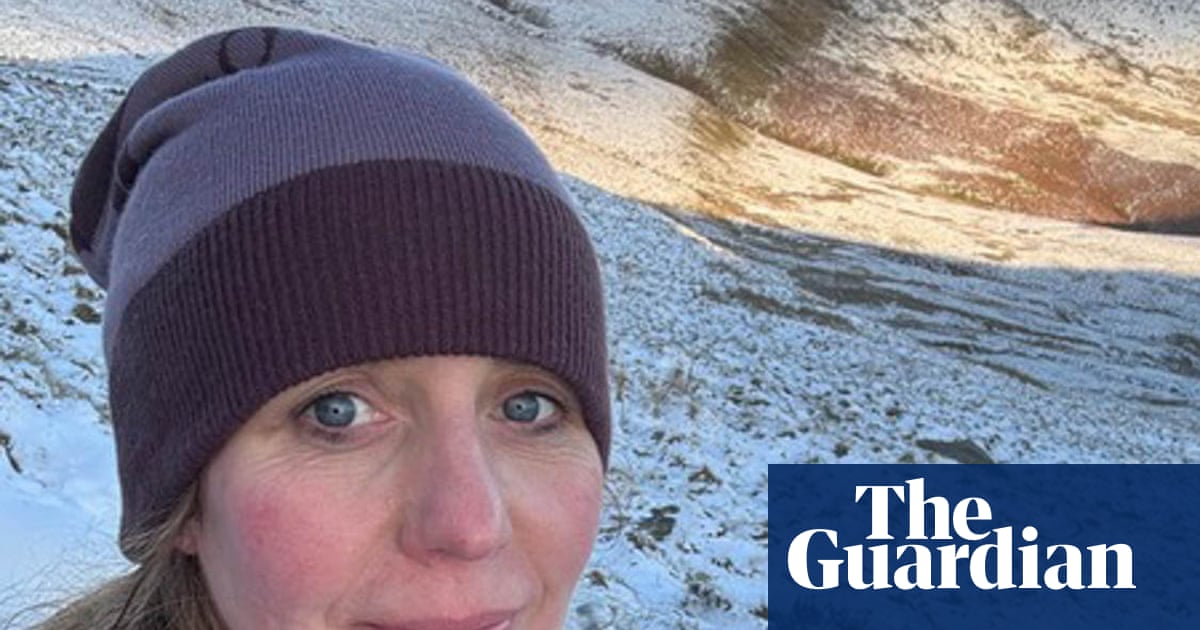
A woman was pulled out of Britain’s most gruelling ultramarathon after receiving death threats over her fundraising for Afghan women and girls. Sarah Porter was nearly a third of the way through the 108-mile Montane Winter Spine Challenger South endurance race when organisers made the “difficult decision” to withdraw her due to threats to her life in relation to the foundation she runs helping women and girls in war zones. Speaking to the Guardian, Porter said she was disappointed. “My immediate feeling was just one of shame really.” “I was very emotional,” she said, “just born from the perspective that I really felt like I’d let down the girls that I was running for and I’d really kind of got this narrative in my head and psyched myself up that what I was doing was just so insignificant in comparison to what they’re enduring.” Porter asked the Guardian not to be specific about the details of the death threats, over which police were contacted. She said she had encountered “unhappy people, threats, comments, a lot of hatred as a result of the work that we do” with her InspiredMinds! foundation, which finds humanitarian uses for AI, during a time when “we’re also seeing a huge and very scary regression of women’s rights for the first time in our history”. She added: “So this is not exceptional, we were aware this was a possibility.”
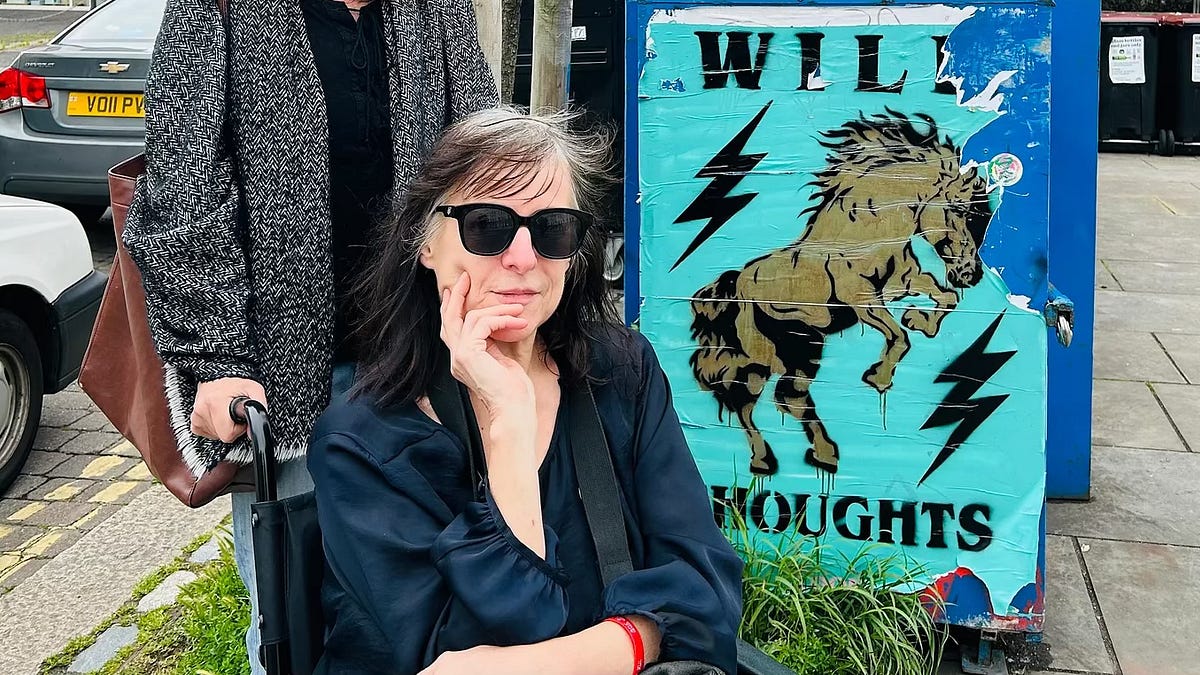
I’ve been teaching in British universities for about 15 years and over that time, I’ve watched a few trends unfold. Like when they started needing safe spaces and denying basic facts about human biology. (That’s basically over now, by the way.) Or wearing hideous footwear, and dressing in androgynous black-and-white clothing. All of it the wrong size. (It’s not me that’s mistaken, it’s the kids.) But probably most noteworthy is the dramatic increase in students entitled to special accommodations because of disability. Every year, more essays come in after the deadlines, because more students get extensions lasting weeks, even months. On Mondays I receive automated emails reminding me to be very careful when asking certain students questions in seminars, or expecting them to contribute in any way (apparently, they might not be able to handle it if I do). Despite the fact that I teach political philosophy — a subject impossible to execute without precise handling of language — the university bureaucracy says that the quality of written language needs to be disregarded when assessing some candidates’ coursework. All of this, and more, is due to accommodations made under the rubric of disability. This explosion has not been driven by campuses suddenly becoming wheelchair accessible. (I happen to be a wheelchair user myself, and so I assure you that I take disability very seriously.) Instead, students are being diagnosed with impairment disorders relating to their ability to learn. And of these, four constitute the bulk: attention deficit and hyperactivity disorder (ADHD), anxiety, depression, and non-profound autism spectrum disorder (ASD). So what is going on? The truth is, it’s complicated. And as a result, two of the most common answers just won’t do. The first answer (which The Atlantic reporting leans towards) is that it’s basically all a scam. Here’s the thing: students with registered disabilities are eligible for deadline extensions, extra time during exams, and a whole raft of entitlements regarding seminar attendance and participation. Having realised that students with impairment diagnoses get such special consideration, sharp-elbowed middle-class parents reckon it is a sure-fire way to win their offspring competitive advantage. Shopping around for helpful diagnoses from pliant physicians, the aspirational classes respond to prevailing incentives. Cue the surge in presentation of the disorders. To be fair, The Atlantic’s assessment isn’t completely wrong. Sometimes the lengths to which privileged parents will go for their kids are truly astonishing, especially in the United States.