
The Continual Learning Problem
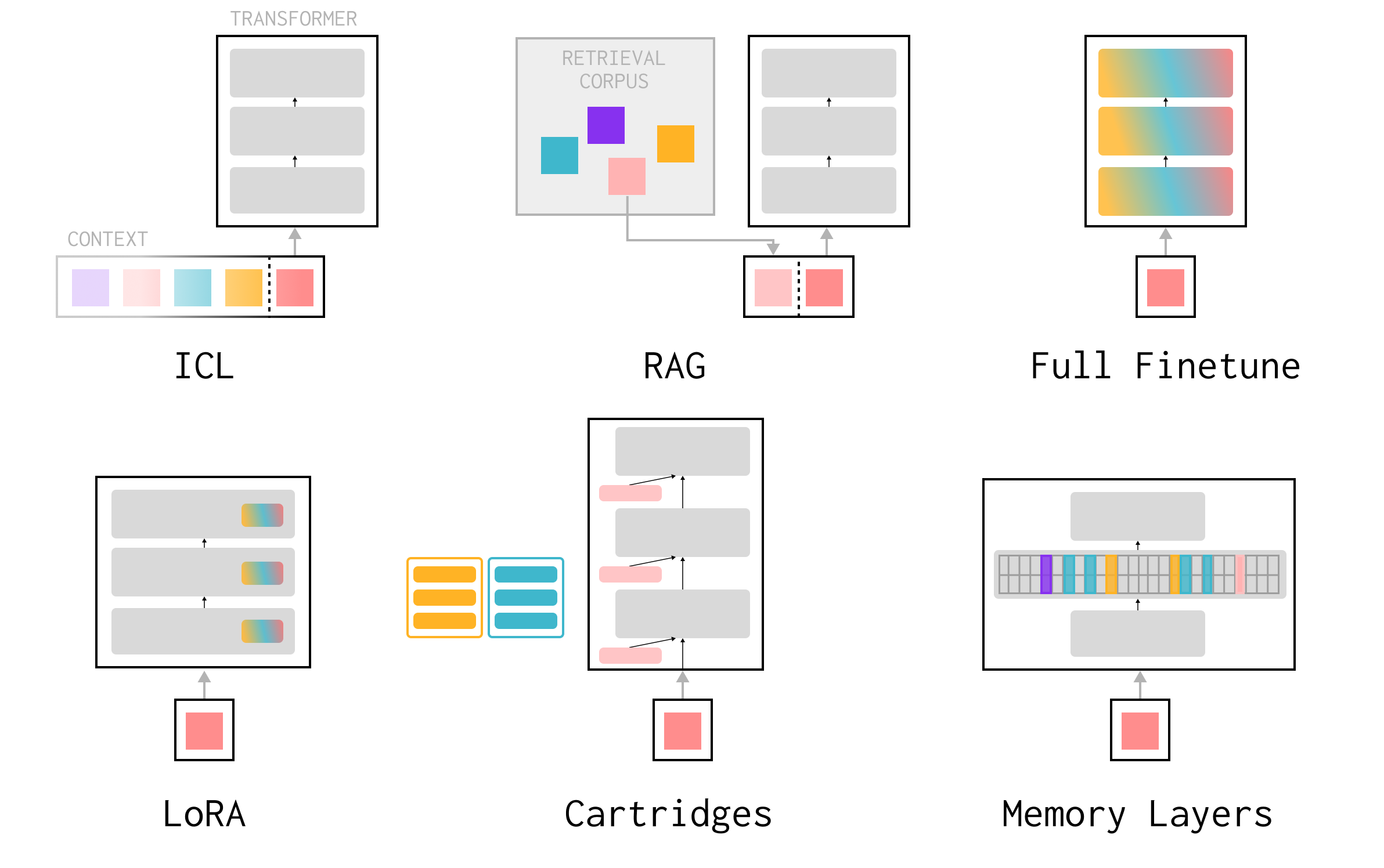 
If we want to move towards a world where models are “always training” and continually learning from experience over time, we need to address a basic challenge: how do we keep updating the parameters of a model without breaking it? In this post, I’ll motivate memory layers as a natural architecture for this paradigm: high-capacity, but sparse (few active parameters) on each forward pass. In our recent paper, we found that finetuning memory layers enables learning without forgetting much more effectively than LoRA. When learning TriviaQA facts, NaturalQuestions performance drops by 89% with full finetuning and 71% with LoRA, but only 11% with memory layers. Along the way, I’ll also discuss the challenges of the continual learning problem broadly.
Check out the paper here: [Continual Learning via Sparse Memory Finetuning](

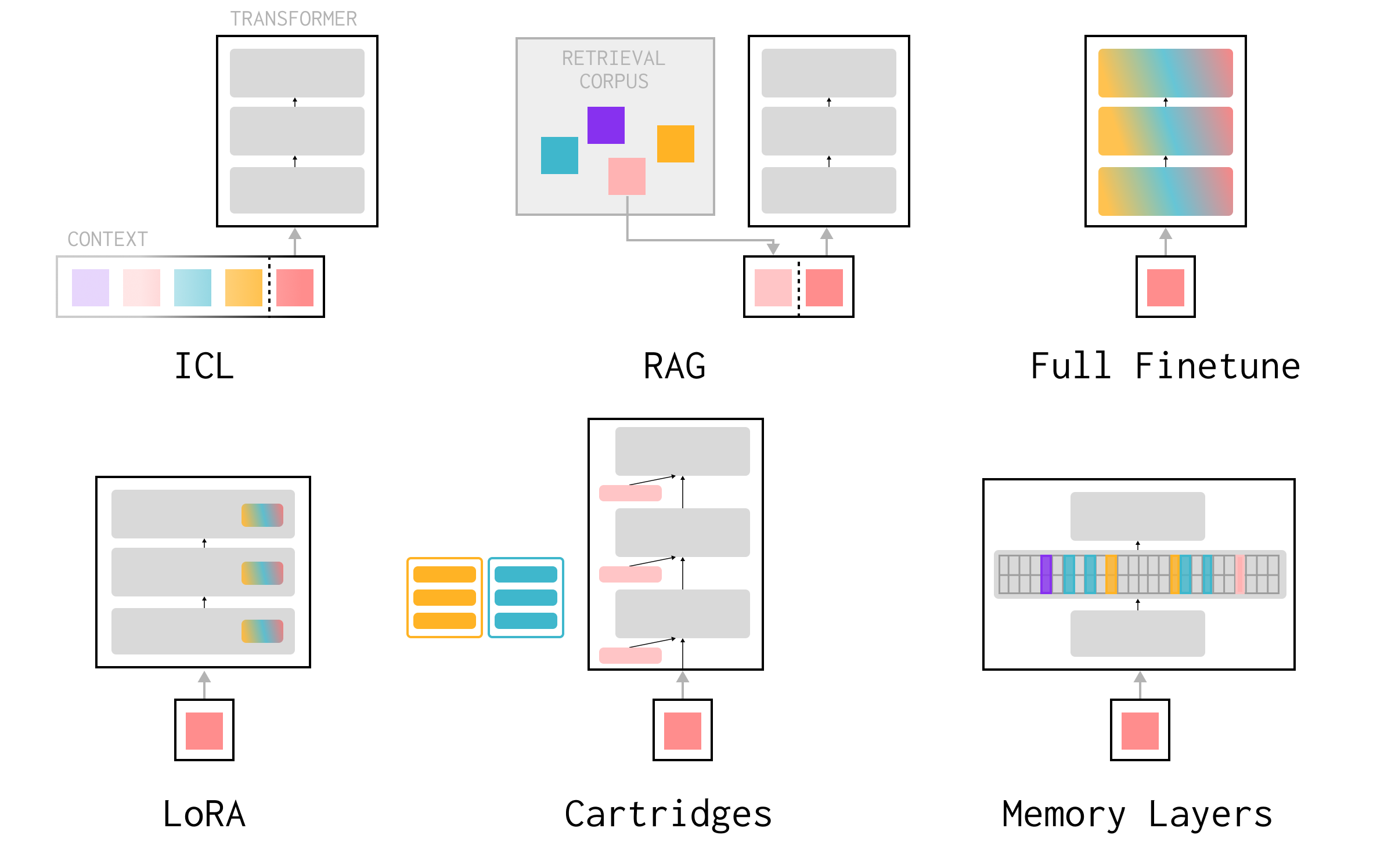
If we want to move towards a world where models are “always training” and continually learning from experience over time, we need to address a basic challenge: how do we keep updating the parameters of a model without breaking it? In this post, I’ll motivate memory layers as a natural architecture for this paradigm: high-capacity, but sparse (few active parameters) on each forward pass. In our recent paper, we found that finetuning memory layers enables learning without forgetting much more effectively than LoRA. When learning TriviaQA facts, NaturalQuestions performance drops by 89% with full finetuning and 71% with LoRA, but only 11% with memory layers. Along the way, I’ll also discuss the challenges of the continual learning problem broadly.
Check out the paper here: [Continual Learning via Sparse Memory Finetuning]( )
)

The Continual Learning Problem
arXiv.org
Continual Learning via Sparse Memory Finetuning
Modern language models are powerful, but typically static after deployment. A major obstacle to building models that continually learn over time is...
Stacker News
The Continual Learning Problem \ stacker news
Design space of continual learning approaches. If we want to move towards a world where models are “always training” and continually learning f...