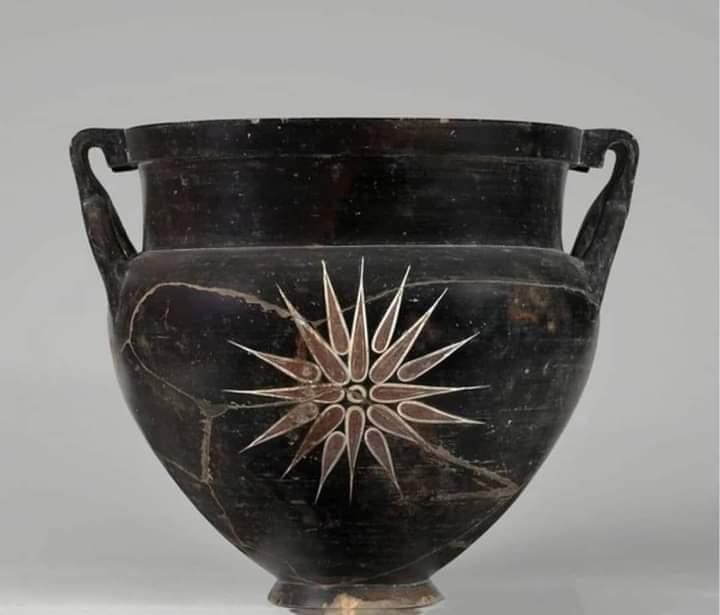
The Laconian crater with the Panhellenic Sun✴️ located at the Louvre Museum, is a stunning 6th Century BC crater featuring the Vergina Sun with 16 rays, predating Macedonia’s rise in the Greek world.
In this ancient pottery from Sparta, the sun’s rays are not just decorative but the focal point, serving as compelling evidence of the Panhellenic significance of this symbol. Its presence may also suggest a deeper connection between Sparta and its northern Dorian cousins.
#archaeohistories