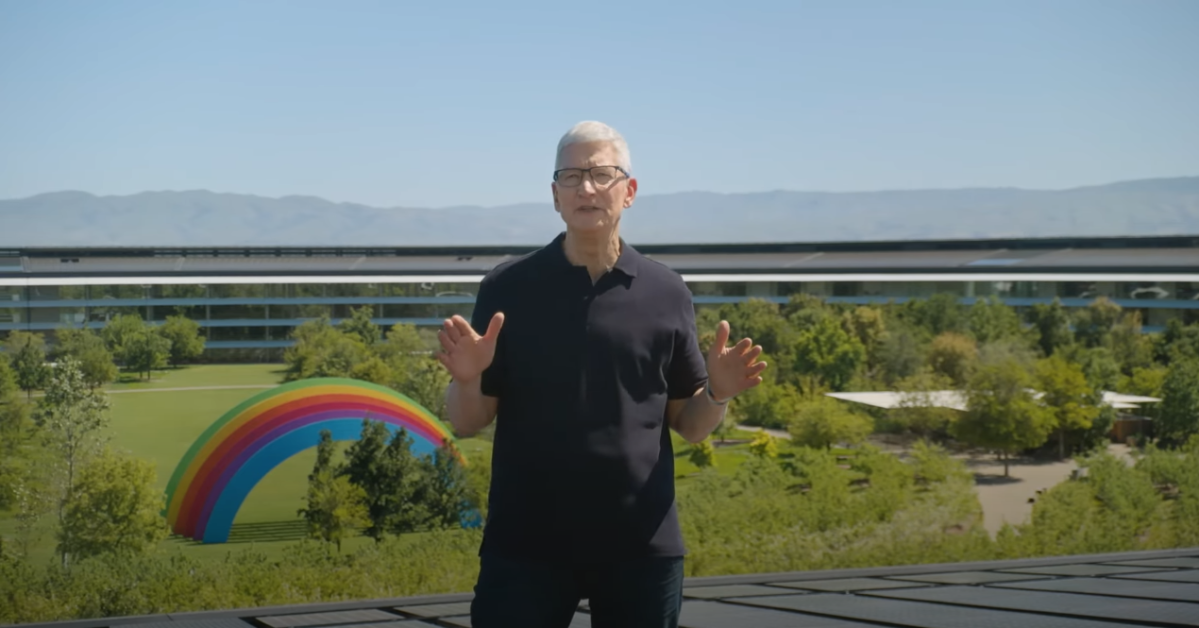
Apple Event 2024: What we expect at the iPhone 16 launch event on Monday, September 9 https://o.aolcdn.com/images/dims?image_uri=https%3A%2F%2Fs.yimg.com%2Fos%2Fcreatr-uploaded-images%2F2024-08%2F34a59ca0-5e53-11ef-ba7b-af5588b97577&resize=1400%2C733&client=19f2b5e49a271b2bde77&signature=4140d365681f5705d9da973cec7191529269ad90 For Apple devotees, the biggest tech day of the year is coming up: The Apple iPhone 16 event. It'll take place on September 9 at 1PM ET and you can stream it live on YouTube or the company's website. We'll also be live-blogging the news.  The biggest news we're expecting from Apple's It's Glowtime event is the iPhone 16 lineup. Following past events, we're also anticipating a new Apple Watch or two — maybe even three, if Apple showcases a new SE. Beyond that, rumors have been swirling about a refresh of the standard AirPod earbuds. And what about new M4 Macs, HomePods, iPad mini or even the baseline iPhone SE? Some of those may hit later this year, while others probably won't see the light of day until 2025 or beyond. But until Tim Cook takes the (virtual) stage, however, everything is pure speculation. With that said, let’s get into the most likely leaks and rumors ahead of the Apple event. iPhone 16 and iPhone 16 Pro No matter what else happens, these new handsets will take center stage during the Apple event. That’s good news for people ready for an upgrade. The bad (ish) news? The vast majority of leaks and rumors indicate that this will be another year of iterative improvements, so don’t expect a game-changing new hardware feature. Cherlynn Low / Engadget There’s likely to be four new models announced at the event, which is similar to what Apple did last year. The new phones will allegedly be called the iPhone 16, 16 Plus, 16 Pro and 16 Pro Max, according to industry analyst Mark Gurman. This is the exact same naming convention as last year’s iPhone 15 reveal, so the rumors of Apple adopting an “iPhone Ultra” moniker seem to have been greatly exaggerated. Even if Apple doesn't use the Ultra naming, the Pro models might be getting slightly larger screens, which is always nice (if you like big phones, that is). The regular Pro is likely to move to 6.3 inches from 6.1 inches, while the Pro Max should hit 6.9 inches, an increase from 6.7 inches. Finally, there will likely be a new color or two, as always. Bloomberg’s Gurman suggests that Apple is ready to ditch the blue model in favor of the return of rose gold. Separately, 9to5Mac has reported on a new "gold-colored titanium" hue for the iPhone 16 Pro model. Based on a source who apparently nailed last year's gray titanium color, they are showing off what appears to be more of a dusky sand hue than gold. On the hardware side of things, look for a new chipset that takes advantage of the company’s recent push toward AI, also known as Apple Intelligence. Beyond that, the upgraded A18 chip will be an iterative improvement, specs-wise. As is typical, the Pro and Pro Max will likely get a more powerful chip than the standard models. It looks like the base amount of RAM here will be 8GB, so as to handle those aforementioned AI tasks. It’s also been rumored that the standard iPhone 16 and iPhone 16 Plus will get the Action Button, a feature introduced last year for the iPhone 15 Pro and Pro Max. This multi-purpose button is a direct replacement for the mute switch, by default, but can be adjusted to control a bunch of different things. The Action Button can be used to to change ringer settings, turn on the flashlight, launch the camera and more. Cherlynn Low/Engadget There’s also talk of another new button, this one on the right side of the phone. This will control camera features, operating like a button on a DSLR. Reporting indicates that a soft press will trigger autofocus and a harder press will take a photo. Consumers may also be able to swipe along the button to zoom in and out while shooting photos or taking videos. It’s been reported that this camera button will only come with the Pro and Pro Max, which makes sense since the high-end models typically offer a more robust camera experience. To that end, new iPhones always get a camera spec bump, but we don’t know exactly what that will look like this time. It’s been reported, however, that the iPhone 16’s camera module could be getting a design refresh. Apple might be ditching the square and going with a vertical orientation. This might only apply to the base iPhone 16 and maybe the Plus, as the Pro and Pro Max phones tend to place a much higher emphasis on photos and videos. Apple We already know what’s coming on the software side of things, thanks to the recent WWDC event. Based on previous years, iOS 18 should be available within the week following the event. The software update features a more customizable Control Center and Home Screen. It'll also finally bring RCS support to iPhones. As for Apple Intelligence, you’ll have to wait a bit. It was announced as part of iOS 18, but it’s been delayed until iOS 18.1. This isn’t a huge deal, as that OS refresh is expected in October, but does mean that early adopters of the iPhone 16 won’t be able to fool around with AI right away. Apple Watch Series 10 and Apple Watch Ultra 3 Ever since 2016, iPhone events have also included a deep dive on the latest Apple Watch. This year looks to be no different. As a matter of fact, this is a big year for the Apple Watch. We are coming up on the gadget’s tenth birthday, so there are conflicting rumors as to whether the next entry will be called the Apple Watch Series 10 or the Series X. No matter what it ends up being called, Apple’s next standard smartwatch is reported to have a bigger screen that’s more in line with the Ultra. It’s expected that the company will ditch the 41mm form factor and introduce a 49mm design. Rumors have also suggested that Apple has completely redesigned the band system and added new connectors. This will likely make these straps easier to adjust, but there’s a downside. This move could make it so all of those old bands no longer work. Cherlynn Low / Engadget Of course, there’s going to be a new chip to power these watches, but we don’t have any specifics. It’s been suggested that these chips have been designed to accommodate Apple’s recent foray into AI, but that integration is likely to happen later on. For now, Apple Intelligence will be tethered to iPhone, iPad and Mac. There are likely to be two watches revealed at the event, which are codenamed N217 and N218. It’s possible one of these will be the Apple Watch Ultra 3, though Mark Gurman at Bloomberg says the high-end smartwatch won’t get a major redesign this time out. It’ll likely be an iterative refresh. On the software front, it looks like Apple has run into some snags while developing long-anticipated health tracking tools. Health monitoring is one of the key features of the Apple Watch, so the company has been working on new sensors to detect high blood pressure and sleep apnea. However, the tech will likely not be ready for this year’s smartwatch. Apple’s also been developing a glucose sensor for almost a decade so, who knows, maybe it’ll finally show up with the Series X. Finally, it’s highly possible that Apple announces a new version of the budget-friendly Watch SE. This was last updated in 2022, so a refresh is overdue. There has been some reporting that Apple will be swapping out the aluminum exterior with a rigid plastic shell. This should help get costs down even further. As it stands, the Apple Watch SE is $250, but Samsung’s cheapest wearable is the $200 Galaxy Watch FE. Apple may want to compete closer to that price range.  Two new sets of AirPods Billy Steele/Engadget It’s been reported that Apple’s prepping two new variants of its standard earbuds. According to a Bloomberg roundup that was published on September 6, Apple will introduce an entry-level model and a mid-tier version, which would effectively replace AirPods 2 and AirPods 3. The big news here is that both new AirPods versions are likely to transition to a USB-C case to keep pace with the iPhone and the second-gen AirPods Pro. It’s been suggested that the cheaper of the two forthcoming models would lack wireless charging, but that the mid-tier version would support this technology. This is the same strategy Apple followed with previous generations, so it makes sense. The case for the more expensive AirPods may also include a speaker, which would make it easier to find with Apple's Find My feature.  Both versions should feature similar designs, though the mid-tier variant is likely to support active noise cancellation like the Pro model. If that's the case, it's not really clear what's left to differentiate those earbuds from the AirPods Pro, but we'll find out soon enough. As for the AirPods Max, there will likely be no refresh of Apple’s high-end Pro earbuds at this event. It’s been four whole years since these premium cans hit store shelves (and they're still stuck using a Lightning port for charging), so a refresh is long overdue. Mark Gurman says they'll get USB-C and new colors eventually but the timing remains unclear. One more thing The iPhone event doesn’t typically have a “one more thing” moment, but there’s one piece of hardware that could get a surprise shout out. It’s been rumored that Apple is preparing a massive redesign of the Mac mini, which would include ditching the USB-A port, according to Gurman. Analysts have suggested that this will be the company’s smallest ever desktop computer and could be around the same size of an Apple TV streaming box. There will reportedly be two versions of the upcoming Mac Mini, one with the standard M4 chip and another with the more powerful M4 Pro chip. The base model is rumored to start shipping from suppliers this month, so it’s possible Apple will spend a few minutes on the computer at the iPhone event. However, don’t count on it. This is an event for iPhones and smartwatches and a miniaturized desktop could feel out of place. And, just like it did last fall, Apple could easily hold a Mac-specific event later this year. There's also a lot of noise online about an upcoming iPad mini refresh. Apple's smallest iPad hasn't had an update since 2021, and is currently "considered 'constrained' internally," according to Gurman. While a new model is likely to come soon, it's not common for Apple to announce iPads during its iPhone event. Beyond that, a whole bunch of software updates are about to drop. There’s iOS 18, which we’ve written about extensively, and iPadOS 18. As for smartwatches, watchOS 11 is also coming out sometime this fall. Apple already detailed all three operating systems at WWDC, but the upcoming iPhone event would be a good time to announce official release dates. One... early thing? Here's something we know for sure: Apple has a updated Beats Powerbeats Pro update coming next year. Beats teased an update to the earbuds on its Instagram account on September 4 with a short Reel. In the clip, Los Angeles Dodgers' Shohei Ohtani swings a bat while wearing the upcoming earbuds, before a "Powerbeats Pro 2" wordmark and "Coming 2025" flash up on screen.  That's it — there's no mention of specs, pricing, or a tighter release window, but we do at least see a tweaked design. You can read senior reporter Billy Steele's analysis of this glimpse here. Chances are we won't hear about this new set of buds at the iPhone event, but expect to see them adorning many more athlete and celebrity ears before long. View this post on Instagram A post shared by Beats by Dre (@beatsbydre) The Engadget Podcast with special guest Mark Gurman In preparation for Apple's September 9 event, Bloomberg's Mark Gurman joined Engadget Podcast hosts Cherlynn Low and Devindra Hardawar to talk all things Apple. The trio talked at length about the latest Apple rumors, including the new camera button for iPhone, tweaks to screen sizes, the new AirPods lineup and what to expect from the latest Apple Watch models. There's also a little more detail on the future of Apple, from next year's "super slim" iPhone redesign through to the company's burgeoning ambitions in home robotics. You can listen to the episode above, and a full transcript is available here. Update, September 6 2024, 9:30AM ET: This story has been updated multiple times since its original publishing. The updates were as follows, in chronological order: Added the time and date of the Apple event. Added some details on the iPad mini being stock-restrained.  Added a recap of the Engadget Podcast with Mark Gurman. Added a link to 9to5Mac's reporting on a new color for the iPhone 16 Pro. Added a link to Mark Gurman's reporting on the Mac mini. Added a section on the surprise announcement of the Powerbeats Pro 2. Added more details about the two new sets of AirPods. This article originally appeared on Engadget at
A Minecraft Movie trailer gives us our first look at Jason Momoa and Jack Black ahead of its 2025 release https://o.aolcdn.com/images/dims?image_uri=https%3A%2F%2Fs.yimg.com%2Fos%2Fcreatr-uploaded-images%2F2024-09%2F428e1a60-6ac7-11ef-8fbf-68a8d8a3466d&resize=1400%2C933&client=19f2b5e49a271b2bde77&signature=0122905dff9cd3d854ca00db8ffdd172c4f50fd4 It took a decade, but we finally have a teaser for the live-action A Minecraft Movie. The first look comes courtesy of a video released by Warner Bros. today that clocks in at just over one minute — but, hey, we'll take it. The film studio has confirmed its previous target, April 4, 2025, is moving forward with a theater-only release. Yes, once upon a time, it had release dates for May 2019 and March 2022, but the existence of a teaser makes us feel a little more hopeful (gullible?) this time. After a series of directors joined and left the project, A Minecraft Movie is led by filmmaker Jared Hess. The Nacho Libre director is joined by his former lead, Jack Black, who plays Minecraft Steve. Rounding out the cast are Jason Momoa, Emma Meyers, Danielle Brooks, Sebastian Eugene Hansen, and Jennifer Coolidge. Check out the teaser to get your first look at the world where, as Black says, "Anything you can dream about here, you can make." For the uninitiated, Minecraft is literally the best-selling video game of all time, with sales of over 350 million. Originally released by independent developer Mojang Studios, Microsoft purchased the studio and the game's intellectual property back in 2014 for a stunning $2.5 billion. It's an open-world sandbox will no real defined goals, letting players build anything they can dream up. Of course, there have been a number of spin-off games that have more focused gameplay. As for the movie, it's been stuck in development hell for a long time — it was first announced way back in 2014, the same year Mojang was purchased by Microsoft. Update, September 4, 2024, 12:55PM ET: This story was updated with additional historic details on Minecraft and A Minecraft Movie. This article originally appeared on Engadget at
Netflix is working on an animated Twilight TV show based on Midnight Sun https://o.aolcdn.com/images/dims?image_uri=https%3A%2F%2Fs.yimg.com%2Fos%2Fcreatr-uploaded-images%2F2024-09%2Ffabcba30-6afc-11ef-be7f-475435f5504b&resize=1400%2C792&client=19f2b5e49a271b2bde77&signature=b31189b61f2668590f5e8990c1db0636a849ab09 In case the many books and films from the Twilight universe haven't provided enough fodder for your fandom, there's a new TV project in the works about the love-em-or-hate-em sparkly vampires of the Pacific Northwest. An animated series adaptation of Midnight Sun is currently in development at Netflix. Published in 2020, Midnight Sun is a companion to the original Twilight novel, telling the same events of that book from the perspective of Edward Cullen. Yes, the sick, masochistic lion gets to share his side of the story of how he falls for the stupid lamb known as Bella Swan. The announcement from Netflix doesn't share much beyond the show's existence and the production team. Author Stephanie Meyer will be an executive producer for the series, as she has been for most other projects in the Twilight realm. The only other notable behind-the-scenes news is that Sinead Daly will be the series' writer as well as an executive producer. Daly's past writing credits include Tell Me Lies, The Walking Dead: World Beyond, Dirk Gently's Holistic Detective Agency and The Get Down. The art team can make or break an animated show's success, so I'm very curious to find out what studio will be brave enough to try recapturing the classic image of Robert Pattinson nearly losing his lunch at his first contact with Kristen Stewart and her intoxicating blood. That and other details about cast and release date will be revealed closer to the show's debut. Netflix has been putting a lot of resources into its animated programming slate. The streaming service has picked up several series inspired by video game franchises, such as Arcane, Tomb Raider and Minecraft. This article originally appeared on Engadget at
Instagram Stories are getting comments https://o.aolcdn.com/images/dims?image_uri=https%3A%2F%2Fs.yimg.com%2Fos%2Fcreatr-uploaded-images%2F2024-09%2F3d3d6960-6a1f-11ef-bbaf-c124f96ed96b&resize=1400%2C787&client=19f2b5e49a271b2bde77&signature=18d8d494bbf95e2dc8bfbbaf42f44d7bf05a968e Instagram is rolling out comments for Stories. Previously, the short-lived Stories could only be replied to in direct messages. This new feature offers a more visible way for users to interact with their friends' posts. The original poster will not receive the comments in a DM; a rep from Meta said that "comments live only on your Story." Story comments can be turned on or off for any individual post. If enabled, comments can be seen by anyone following an account, but only mutuals can leave comments. As with the Story post type, the comments will disappear after 24 hours. Small profile images of the commenters will appear at the bottom of a person's Story icon, so you'll know there are comments attached before you tap to view the post. People can still choose to respond to Stories with a DM if the user has their account set to accept those messages. There's also an option to send a DM in response to a Story comment, which you can do by swiping left on the text and tapping the DM icon. Instagram has been giving users more ways to snazz up their Stories. The posts can be created with customizable templates, get an AI-generated background or use a growing number of interactive stickers. This article originally appeared on Engadget at
A creepy, sonar-like sound coming through Starliner’s speaker posed a brief mystery on the ISS https://o.aolcdn.com/images/dims?image_uri=https%3A%2F%2Fs.yimg.com%2Fos%2Fcreatr-uploaded-images%2F2024-07%2Fb4fca590-478a-11ef-87b7-b59a05f2b759&resize=1400%2C875&client=19f2b5e49a271b2bde77&signature=3f3ab644e37f7241b4ee6ff290a995efde4f22b5 Starliner is scheduled to undock from the International Space Station and make its return trip to Earth uncrewed in just a matter of days, but it apparently still has a few new mysteries left in it to throw at the team before it departs. On Saturday, astronaut Butch Wilmore alerted NASA’s Mission Control about an unexplained “strange noise” coming from a speaker in the spacecraft, which you can hear in an audio clip of the conversation shared on a NASASpaceflight forum by meteorologist Rob Dale (spotted by Ars Technica). It starts at around the 45-second mark, ringing out on a steady beat. “I don’t know what’s making it,” Wilmore said. NASA has since said that the sound has stopped in a statement to SpaceNews’ Jeff Foust on Monday, and attributed it to an audio configuration between the ISS and Starliner. It was just speaker feedback, according to the space agency. The noise was a bit of a head-scratcher over the weekend. After confirming with Mission Control on Saturday that they could hear the sound too, once Wilmore brought his mic over to the speaker, the flight controller in Houston said, “It was kind of like a pulsing noise, almost like a sonar ping.” Wilmore then let it play for about 20 seconds more before wrapping up the call. “Just to make sure I’m on the same page, this is emanating from the speaker in Starliner,” Mission Control asked, “you don’t notice anything else, any other noises, any weird configs in there?” The astronaut noted at the time that everything else seemed normal. “The space station audio system is complex, allowing multiple spacecraft and modules to be interconnected, and it is common to experience noise and feedback,” NASA said in its explanation to Foust on Monday. “The crew is asked to contact mission control when they hear sounds originating in the comm system.” The incident had no impact to the crew or Starliner’s departure schedule, it added. The Boeing spacecraft has been docked with the ISS since early June, and engineers have since had their hands full trying to get to the bottom of the issues that arose during its first crewed flight. When Starliner finally heads back to Earth on September 6, it’ll be leaving its crew — Wilmore and NASA astronaut Suni Williams — behind on the ISS, where they’ll continue to work for the next few months while they wait for a ride home from SpaceX in February 2025. Update, September 2 2024, 2:30PM ET: This story has been updated to include a statement and explanation from NASA. This article originally appeared on Engadget at
Google is rolling out more election-related safeguards in YouTube, search and AI https://o.aolcdn.com/images/dims?image_uri=https%3A%2F%2Fs.yimg.com%2Fos%2Fcreatr-uploaded-images%2F2024-08%2Fc61c5060-6700-11ef-be9f-ea3c0e76b8ec&resize=1400%2C787&client=19f2b5e49a271b2bde77&signature=d361b2a652ecf362597d5d28ff3b6a8bb4e70715 As the US speeds toward one of the most consequential elections in its 248-year history, Google is rolling out safeguards to ensure users get reliable information. In addition to the measures it announced late last year, the company said on Friday that it’s adding election-related guardrails to YouTube, Search, Google Play and AI products. YouTube will add information panels above the search results for at least some federal election candidates. The modules, likely similar to those you see when searching the web for prominent figures, will include the candidates’ basic details like their political party and a link to Google Search for more info. The company says the panels may also include a link to the person’s official website (or other channel). As Election Day (November 5) approaches, YouTube’s homepage will also show reminders on where and how to vote. Google Search will include aggregated voter registration resources from state election offices for all users. Google is sourcing that data through a partnership with Democracy Works, a nonpartisan nonprofit that works with various companies and organizations “to help voters whenever and wherever they need it.” Meanwhile, the Google Play Store will add a new badge that indicates an app is from an official government agency. The company outlines its requirements for apps that “communicate government information” in a developer help document. Approved applications that have submitted the required forms are eligible for the “official endorsement signified by a clear visual treatment on the Play Store.” As for generative AI, which can be prone to hallucinations that would make Jerry Garcia blush, Google is expanding its election-related restrictions, which were announced late last year. They’ll include disclosures for ads created or generated using AI, content labels for generated content and embedded SynthID digital watermarking for AI-made text, audio, images and video. Initially described as being for Gemini (apps and on the web), the election guardrails will apply to Search AI Overviews, YouTube AI-generated summaries for Live Chat, Gems (custom chatbots with user-created instructions) and Gemini image generation. This article originally appeared on Engadget at
This startup wants to be the iTunes of AI content licensing https://o.aolcdn.com/images/dims?image_uri=https%3A%2F%2Fs.yimg.com%2Fos%2Fcreatr-uploaded-images%2F2024-08%2Ffcdcec30-6166-11ef-bcff-393cdbb1da9f&resize=1400%2C767&client=19f2b5e49a271b2bde77&signature=3bdebc21e124b3dfcd5a54b6c2274ba5f10acc63 TollBit The 28-year-old founders of TollBit, a New York-based startup that is all of six months old, think we’re living in the “Napster days” of AI. Just like people of a certain generation downloaded digital music, companies are ripping off vast swaths of the internet without paying the rights holders. They want TollBit to be the iTunes of the AI world. “It’s kind of the Wild West right now,” Olivia Joslin, the company’s co-founder and chief operating officer, told Engadget in an interview. “We want to make it easier for AI companies to pay for the data they need.” Their idea is simple: create a marketplace that connects AI companies that need access to fresh, high-quality data to the publishers who actually spend money creating it. AI companies have, indeed, only recently started paying for (some of) the data they need from news publishers. OpenAI kicked off an arms race at the end of 2022, but it was only a year ago that the company signed the first of its many licensing deals with the Associated Press. Later that year, OpenAI announced a partnership with German publisher Axel Springer, which operates Business Insider and Politico in the US. Multiple publishers including Vox, the Financial Times, News Corp and TIME, have since signed deals with OpenAI and Google. But that still leaves countless other publishers and creators out in the cold — without the option to strike this Faustian Bargain even if they want to. This is the “long tail” of publishers that TollBit wants to target. “Powerful AI models already exist and they have already been trained,” Toshit Panigrahi, TollBit’s co-founder and CEO told Engadget. “And right now, there are thousands of applications just taking these existing models off the shelves. What they need is fresh content. But right now, there’s no infrastructure — neither for them to buy it, nor for content-makers to sell it in a way that is seamless.” Both Joslin and Panigrahi weren’t particularly knowledgeable about the media industry. But they both knew how online marketplaces and platforms operated – they were colleagues at Toast, a platform that lets restaurants manage billing and reservations. Panigrahi watched both the deals — and the lawsuits — pile up in the AI sector, then called on Joslin. Their early conversations were about RAG, which stands for Retrieval-Augmented Generation in the AI world. With RAG, AI models first look up information from specific databases (like the scrapable portions of the internet) and use that information to synthesize a response instead of simply relying on training data. Services like ChatGPT don’t know current home prices, or the latest news. Instead, they fetch that data, typically by looking at websites. That absence of fresh data is why AI chatbots are often stumped by queries about breaking news events — if they don’t scrape the latest data, they simply can’t keep up. “We thought that using content for RAG was something fundamentally different than using it for training,” said Panigrahi. TollBit By some estimations, RAG is the future of search engines. More and more, people are asking questions on the internet and expecting complete answers in return instead of a list of blue links. In just over a year, startups like Perplexity, backed by Jess Bezos and NVIDIA among others, have burst onto the scene with ambitions of taking on Google. Even OpenAI has plans to someday let ChatGPT become your search engine. In response, Google has sprung into action — it now culls relevant information from search results and presents it as a coherent answer at the top of the results page, a feature it calls AI Overviews. (It doesn’t always work well, but is seemingly here to stay). The rise of RAG-based search engines has publishers shaking in their boots. After all, who would make money if AI reads the internet for us? After Google rolled out AI Overviews earlier this year, at least one report estimated that publishers would lose more than $2 billion in ad revenue because fewer people would have a reason to visit their websites. “AI companies need continuous access to high quality content and data too,” said Joslin, “but if you don’t figure out some economic model here, there will be no incentive for anyone to create content, and that’ll be the end of AI applications too.” Instead of cutting one-off checks, TollBit’s model aims to compensate publishers on an ongoing basis. Hypothetically, if someone’s content was used in a thousand AI-generated answers, they would get paid a thousand times at a price that they set and which they can change on the fly. Each time an AI company accesses fresh data from a publisher through TollBit, it can pay a small fee set by the publisher that Panigrahi and Joslin think should be roughly equivalent to whatever a traditional page view would have made the publisher. And the platform can also block AI companies who haven’t signed up from accessing publishers’ data. So far, the founders claim to have onboarded a hundred publishers and are in pilots with three AI companies since TollBit launched in February. They refused to reveal which publishers or AI companies had signed on so far, citing confidentiality clauses, but did not deny speaking with OpenAI, Anthropic, Google and Meta. So far, they say that no money has changed hands between AI companies and publishers on their platform. TollBit Until that happens, their model is still a giant hypothetical — although one that investors have so far poured $7 million into. TollBit’s investors include Sunflower Capital, Lerer Hippeau, Operator Collective, AIX and Liquid 2 Ventures, and more investors are currently “pounding down their door,” Joslin claimed. In April, TollBit also brought on Campbell Brown as a senior adviser, a former television anchor who previously acted as Meta’s head of news partnerships for the better part of a decade. In spite of some high-profile lawsuits, AI companies are still scraping the internet for free and largely getting away with it. Why would they have any incentive to actually pay publishers for this data? There are three big reasons, the founders say: more websites are taking steps to prevent their content from being scraped ever since generative AI went mainstream, which means that scraping the web is getting harder and more expensive; no one wants to deal with ongoing copyright lawsuits; and, crucially, being able to easily pay for content on an as-needed basis lets AI companies tap into smaller and more niche publications because it isn’t possible to strike individual licensing deals with every single website. Joslin also pointed out that multiple TollBit investors have also invested in AI companies which they worry might face litigation for using content without permission. Getting AI companies to pay for content could provide a recurring revenue stream for not just large publishers but to potentially anyone who publishes anything online. Last month, Perplexity — which was accused of illegally scraping content from Forbes, Wired and Condé Nast — launched a Publishers’ Program under which it plans to share a cut of any revenue it earns with publishers if it uses their content to generate answers with AI. The success of the program, however, hinges on how much money Perplexity makes when it introduces ads in the app later this year. Like Tollbit, it's another complete hypothetical. “Our thesis with TollBit is that if you lose a page view today, you should be compensated for it immediately rather than a few years after when a tech company figures out its ads program,” said Panigrahi about Perplexity’s initiative. Despite all the existing licensing deals and technical advances, AI-powered chatbots still make for terrible news sources. They still make up facts and confidently conjure up entire links to stories that don’t actually exist. But technology companies are now stuffing AI chatbots in every crevice they can, which means that many people will still get their news from one of these products in the not-so-distant future. A more cynical take on TollBit’s premise is that the startup is effectively offering hush money to publishers whose work is more likely than not to be sausaged into misinformation. Its founders, naturally, don’t agree with the characterization. “We are careful about the AI partners we onboard,” Panigrahi said. “These companies are very mindful about the quality of input material and correctness of responses. We’re seeing that paying for content – even nominal amounts – creates incentive to respect the raw inputs into their systems instead of treating it as a free, replaceable commodity.” This article originally appeared on Engadget at
DeepMind workers urge Google to drop military contracts https://o.aolcdn.com/images/dims?image_uri=https%3A%2F%2Fs.yimg.com%2Fos%2Fcreatr-uploaded-images%2F2024-08%2F8c000a00-60b3-11ef-bf3f-cccfd3f9261d&resize=1400%2C933&client=19f2b5e49a271b2bde77&signature=1912758b0d5445b546cc08dfa6c584731218303d Google DeepMind workers have signed a letter calling on the company to drop contracts with military organizations, according to a report by Time. The document was drafted on May 16 of this year. Around 200 people signed the document, which amounts to five percent of the total headcount of DeepMind.  For the uninitiated, DeepMind is one of Google’s AI divisions and the letter states that adopting military contracts runs afoul of the company’s own AI rules. The letter was sent out as internal concerns began circulating within the AI lab that the tech was allegedly being sold to military organizations via cloud contracts. According to Time, Google’s contracts with the United States military and the Israeli military allow access to services via the cloud, and this reportedly includes AI technology developed by DeepMind. The letter doesn’t linger on any specific military organization, with workers emphasizing that it’s “not about the geopolitics of any particular conflict.”  Reporting since 2021 has slowly revealed the scope of tech supplied by Google (and Amazon) to the Israeli government via a partnership known as Project Nimbus. This is far from the first instance of Google employees openly protesting their work being used to support politically fraught military aims — the company fired dozens of staffers who spoke out against Project Nimbus earlier this year. “Any involvement with military and weapon manufacturing impacts our position as leaders in ethical and responsible AI, and goes against our mission statement and stated AI principles,” the DeepMind letter says. It’s worth noting that Google’s slogan used to be “don’t be evil.” The letter goes on to ask DeepMind’s leaders to deny military users access to its AI technology and to set up a new in-house governance body to prevent the tech from being used by future militaries. According to four unnamed employees, Google has yet to offer a tangible response to the letter. “We have received no meaningful response from leadership,” one said, “and we are growing increasingly frustrated.” Google did respond to Time’s reporting, saying that it complies with its AI principles. The company says that the contract with the Israeli government “is not directed at highly sensitive, classified or military workloads relevant to weapons or intelligence services.” However, its partnership with the Israeli government has fallen under plenty of scrutiny in recent months.  Google purchased DeepMind back in 2014, but under the promise that its AI technology would never be used for military or surveillance purposes. For many years, DeepMind was allowed to operate with a good amount of independence from its parent company, but the burgeoning AI race looks to have changed that. The lab's leaders spent years seeking greater autonomy from Google, but were rebuffed in 2021. This article originally appeared on Engadget at
A robotics company has 3D printed nearly a hundred homes in Texas https://o.aolcdn.com/images/dims?image_uri=https%3A%2F%2Fs.yimg.com%2Fos%2Fcreatr-uploaded-images%2F2024-08%2Ff6a60620-55d7-11ef-a3f6-34020ab7e073&resize=1400%2C787&client=19f2b5e49a271b2bde77&signature=6c80863045cd386c929dbfffea0a3dd806e5b771 It’s taken almost two years but a planned community of homes made with a gigantic 3D printer in Georgetown, Texas is almost complete. Reuters reports that the homes, which are part of a community called Wolf Ranch, are being built with a large 3D printer called the Vulcan that’s 45 feet wide and weighs more than 4.75 tons. The project is part of a joint venture with the 3D printing construction developer ICON and the home construction company Lennar. It started in November of 2022 and crews are close to completing its goal of building 100 homes with the Vulcan by the end of the summer. Homeowners have already started moving into some of the completed 3D printed homes that range in price from $450,000 to $600,000. More than a quarter of the homes have been sold. ICON ICON’s 3D printer uses a mixture of concrete powder, water, sand and other materials to lay out stacks of tube-shaped concrete to construct walls and eventually a whole house. The homes are single-story dwellings with three to four bedrooms that take around three weeks to print. The foundation and metal roofs are made the old-fashioned way with human crews. Once printed, the walls look like giant stretches of corduroy, but they are designed to be resilient and sustainable even in extreme weather. They are also water resistant and energy efficient. The contemporary ranch-style designs for the houses were provided by the architectural firm BIG-Bjarke Ingels Group, according to an ICON press release. The construction process has also been streamlined over the course of the project. ICON senior project manager Conner Jenkins told Reuters that construction started with five different building crews but it’s since been whittled down to just one crew and one robot printer. The only downside is the thickness of the walls interferes with WiFi signals. Residents have had to use mesh internet routers with broadcast signals located throughout the home instead of just a single router. ICON isn’t just using its large scale 3D printer to make homes on Earth. NASA is reportedly interested in using the technology to build structures on the moon for its Artemis Moon exploration program scheduled to launch its first crew in September 2025. This article originally appeared on Engadget at
X sues advertisers for 'illegal boycott' of the platform https://o.aolcdn.com/images/dims?image_uri=https%3A%2F%2Fs.yimg.com%2Fos%2Fcreatr-uploaded-images%2F2024-08%2Fbf1b19a0-5417-11ef-a7bf-eb0c09b059fe&resize=1400%2C933&client=19f2b5e49a271b2bde77&signature=62d0373dbc2e221fa917fc74eb6d2eee7be23c76 X, whose top executives have long railed against advertisers who fled the platform amid concerns over hate speech, is now also suing them. X has filed an antitrust lawsuit against the Global Alliance for Responsible Media (GARM) and several of its members, including Mars, Unilever and CVS Health, CEO Linda Yaccarino said in an open letter shared on X. According to Yaccarino, the group engaged in an “illegal boycott” of X. “The consequence - perhaps the intent - of this boycott was to seek to deprive X’s users, be they sports fans, gamers, journalists, activists, parents or political and corporate leaders, of the Global Town Square,” she wrote. As Axios points out, GARM is part of the World Federation of Advertisers (which is also named in the lawsuit) and was created to come up with brand safety guidelines for online advertisers. The lawsuit alleges that the group “conspired, along with dozens of non-defendant co-conspirators, to collectively withhold billions of dollars in advertising revenue from Twitter.” GARM didn't immediately respond to a request for comment. It’s not the first time X has filed a lawsuit against a group that Musk has accused of stoking an advertiser exodus from the platform. The company previously sued the Center Countering Digital Hate (CCDH), an anti-hate group that published research showing that X failed to take down hateful posts shared by premium subscribers. That lawsuit was later dismissed by a judge who said X was trying to “punish” the group for sharing unflattering research. X is also suing Media Matters, a watchdog group that published a report showing X had displayed ads alongside anti-Semitic content. “We tried being nice for 2 years and got nothing but empty words,” Musk, who nearly a year ago publicly told advertisers to “go fuck themselves," wrote in a post on Tuesday. “Now, it is war.” This article originally appeared on Engadget at